Hello and welcome to the 10, 000 things. My name is Sam Ellis. I'm Joe Loh. Today we begin an epic dive into the Tao Te Ching. Tao Te Ching. Isn't that spelt with a T? It is spelt with a T. I have it on some authority that we say Tao instead of Tao. Oh. Tao, but you know. Right. Whatever. Throughout the whole thing.
Yeah. Okay. You may know it as the Tao, you may know it as the Tao, you may know it as the Tao, yeah, yeah, you may know it as the Tao, you know what, I don't think the Tao would mind,
yeah, okay, what you call it. Yeah, we're going to do an epic 25 part series of verses from the Tao Te Ching, it's really taking the 10, 000 things in a new direction.
That's right, because this poem really, well it's a poem, it's a work of philosophy, some say it's a religious text. I think it sort of has been one of the things lurking in the background of this whole show, really. And I think it casts a lot of light on things we've talked about in general, and You know, I've been getting into, like, Jung and The Shadow for the last few years, I think this text is kind of fairly originary for that stuff.
Okay, well, I'm gonna be like a, a pupil, I think, Sam, because this is your, your baby, and I have come across it, uh, in my travels, and I have read it a couple of times and loved it, so I'm happy to get into it. I did see a quote the other day, something like, with your mind know 10, 000 things, with your heart feel one reality. And that seems a bit
Dao. Oh, yeah, very much. It's about the many and the one, and the apparent oppositeness of things. So I
think it's bringing it back home from the title of the show and Maybe getting a bit weird and spiritual, because we have been mostly on the material plane for the last couple of years.
Yeah, that's true. We've talked a lot about, you know, wealth and class and psychology and dating and all sorts of things. Yeah. Worldly things.
Yeah. And you mentioned about reading this out loud in a sangha type environment. I really like the idea of a sangha and I get a bit of a sangha experience in my addiction recovery stuff. Oh yeah. But, uh, can you explain the idea, the concept of a sangha?
Yeah, okay, well, so, yeah, sangha like a, you know, a gathering and like satsanga, like, it's a, a meeting of the, a meeting of the wise or it's a meeting, it's about the seeking of wisdom. And it's about, sharing and reflecting and
so it's not but it's like a spiritual group
yes yeah that's right and you know so you might have a satsang about the bhagavad so did you
have satsang in the Hare Krishna
yeah but there's a lot of times a lot of the presentation sometimes it was like a lot of it was like a lecture format oh but you could still consider it You know satsang because you are in the company of the scriptures and so that's sort of part of the idea of it. But, uh, but such a meeting they may, you may not center it on a particular text. Uh, it might be just a meditation on things in a general sense and, but usually there is some sort of text being discussed.
so, I think the analogy might be Bible study or, yeah.
Well, in the spirit of that, I think we should read it out and just see how we respond.
Yeah, that's right, because we could go on all day about this, you know, it was published in the 4th century, uh, it's attributed to a person who might be real, Lao Tzu, who is considered, you know, one of the great sages of history, right up there with Buddha or Socrates or, you know, such names, I've got at least 20 minutes of general remarks about the text, but you know what, let's save that. Let's get into it. People are going to be like, yeah, yeah, yeah. Give us a taste, mate.
Yeah, let's give them a taste, Sam.
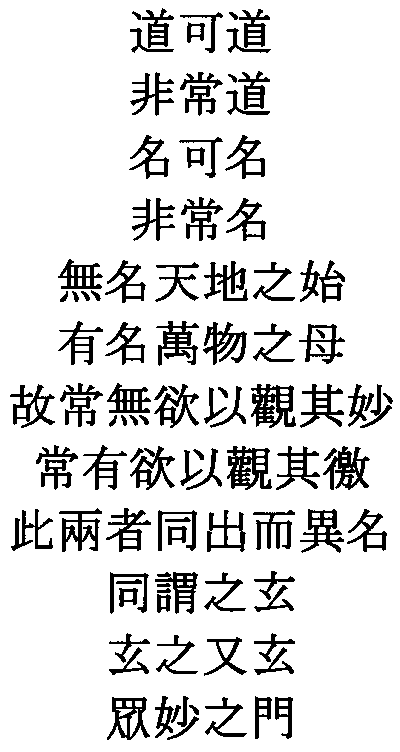
Alright. So, I'm referring to a website, Taoistic, uh, which will be in the notes. And this is a very handy resource. There's a particular page which will give you 72 translations of each verse. So, on each page, There's a page for each of the verses and there's 72 translations of the same verse on that page, right? This is very useful because we are going to be talking about this text in English But of course it was written in characters.
It was not written in an alphabet It was written in a series of pictures and we'll post the pictures So if you count them, it's sort of got this grid shape to it and there's three characters at the top and And then another 3, another 3, another 3, 6, then 6, and so on, and then it goes back to a set of 4 characters down the bottom, so really the translation of those, there's a lot of room to move there, and people have rendered it into very serious academic sort of English, people have rendered
it into something much more playful, people have sort of made it sound hip and casual, people have made it sound very mystical, other people have rendered it as like something very plain and simple. So, there's a lot of different, it can put on a lot of clothes, this text, and I think, so the one thing I'll say about my relationship with it is that when I first came across it, you know, I was interested in Buddhism and Zen in particular.
I was not interested in Taoism, I was interested in Zen, You know, I was sort of into the kind of far out mystical side of it and, you know, ancient eastern wisdom. I was basically being a bit of an orientalist to be, you know, not looking down at it, but actually, you know, Doing something almost as bad, which is to put it on a pedestal and treat it as alien and other and, you
know. Well, that's like calling your podcast from Melbourne the 10, 000 things. Yeah. There's Orientalism in that too. Oh,
agreed. No, a hundred percent. That is definitely, definitely something we should be mindful of.
I remember when I went to send it to a friend in Ireland who knows me pretty well and he said, Oh, yeah, I can't wait to listen to your pseudo Buddhist musings.
Got ya. Well, that's fair. Well, at least he can't
wait. Yeah, I don't think he ever listened. But we've strayed from the path of spirituality, Sam. I had another friend who said Hey, look, you guys have great, um, chemistry on that show, but I am not into spirit, spiritualism is what he said, which I didn't even know was a word, and so I'm not going to listen to it. And then we've barely talked about anything spiritual.
Well, I, I think that's really, I think you're right, and I think it's dreadfully, Pointless and unfair to us, to just box it like that, because I don't, I don't ghettoise this text as Eastern wisdom. I think it's more worldly and universal than that. I think it's a masterpiece. I think it's a banger.
I don't know. Yeah, when I read it, it just went straight in. But why don't you read some? It didn't
strike you as far out woo woo. It struck you as
No, just like it, it has more common sense than I have.
Exactly. Yes. This is not a religious or spiritual text. It is To me, it is a common sense set of statements. Okay, well that's a good place to start. Let's
read some.
Okay, so this is the Addis Steven Lombardo Stanley Translation 1993. Tao called Tao is not Tao. Names can name no lasting name. Nameless, the origin of heaven and earth. Naming, the mother of 10, 000 things. Empty of desire, perceive mystery. Filled with desire, perceive manifestations. These have the same source, but different names. Call them both deep, deep and deep again deep, the gateway to all mystery. What do you think of that rendering?
Yeah, so, you name something and you give birth to the ten thousand things.
Yep.
Yep.
Yep. If you
put names on things, you limit, you distort, you twist, whether you're trying to be as honest and plain as you can, it doesn't matter. So language is a problem for humans.
Yeah. It creates our reality.
And we could debate to the, you know, what degree does language determine reality, right? See, we're already miles away from spirituality. These are really fundamental. Problems in philosophy. But
if you can step back to what he's talking about, which is the nameless flow of the present moment, before you name anything, we can all sense that. And he's calling that the Tao, right? Yes. Like we can all say, and that's what I mean about common sense. It's like, ah, yes, I know what he's saying. Yeah. But the moment I try and explain it, it's gone.
That's right. And so you can't really explain it directly. I feel like what this text does is it makes claims about the nature of the universe itself. But I think it also, what it, I think what it does even better, and for me what it really is, is a description of the experience of consciousness. So, for me, this is, you know, it's a phenomenological text and it's a work of philosophy.
Well, my spiritual journey has been a journey from the past and the future into the present moment.
The
power of
now, etc.
yeah, it was Ram Dass in the 60s, Be Here Now. So the, the, the sequence of events for me was something like come into addiction recovery circles. Part of that is to meditate, be given meditation CDs. Like, that's how long ago it was, like nine years ago. How to meditate, CT. That's, that's where my spirituality was at nine years ago. Then, discover Ram Dass. Start listening, just gobbling up Ram Dass talks.
He, he's very listenable. Oh, he's He's so entertaining. He's the OG podcaster, really. Yeah, yeah,
but originally I wasn't ready for Alan Watts. It took me a couple more years to be ready.
Yeah, Watts is a different flavor. That's where I started.
Yeah. So then coming, eventually went to Japan and got recommended to read the So, Ram Dass book is Be Here Now, and then I got recommended to read Eckhart Tolle, The Power of Now, and a friend of me who was always a couple of years ahead of me on the path said, Ah, no, but Eckhart Tolle's a creepy guy, you wouldn't want to be like him, and he was looking for more role models, but when I read that book, it went straight in. Tao Te Ching, 4th century BC.
I found that, I found maybe that translation a bit more obscure than the one I read the other day. Oh, well, um, should we hit up a different one
and see
if it feels obscure? But how do you filter to know what you're looking at? Because I think we should line by line it. Yeah, no,
we're definitely going to line by line, but before we do that, I would suggest. I read a different translation which I think has been put up here deliberately right next to that one because it's quite different. Right. Alchin and Douglas. 2002. Who would follow the way must go beyond words.
Hmm. You
see, I'm digging this more already. It's quite different, isn't it? Yeah. That's what's so fun about these texts. By the time you learn Chinese, learn all the vibes of the different characters, and then, you know, apply your brain to translating it, which is both a logical and a creative task. There's a lot of choices. You've got to make choices. You can't pretend you're not making choices when you translate. Who would follow the way must go beyond words.
Hmm. Keep going.
So the previous translation, they've tried to just stick more to just the characters as they sit physically. Yeah. They've gone for shorter.
We need it to flow. We need it to sing. It sings, when I've read it, it sings.
Yeah. Well that's right. And that's why I said that the start, that there are so many different feels to the way it's translated. Mm-hmm. And that's, you know, deliberate choices. So they've here, they've gone to. A bit of trouble and, you know, a small amount of risk to sort of paraphrase it. Ah, yeah, hit me with the whole thing. Who would follow the way must go beyond words. Who would know the world must go beyond names. Nameless all things begin. Named all things are born.
Empty of intent one may be filled with awe. Full of intent one may know what's manifest. One source, different fonts. Wonders both. From wonder into wonder, existence opens. So the word font there, not like a typeface, but like a fountain, a spring, a place, you know, yeah, water comes out of the ground. It's a metaphor for wisdom.
So Lao Tze, is that how you say his name? Lao Tze. Lao Tze. Yeah. Is, uh He's diggin reality, man.
Yeah.
Like, he's really diggin it. Yep. Like, wonder. Yeah. Wonder of wonders. Yes. You know? Yes. Like, that's what hooked me into this text at the start, is like, this guy is having a good time.
They're not trying to get far out, or nail it down, they're like, going for the middle. It's like, let's get as real about real as we can. So what's
the first line? I don't know. I don't know.
Who would follow the way, capital W, yeah, must go beyond words.
Okay. First question. Are you drawn to follow a way?
Sure. Yeah,
because I certainly am. But I don't think I found my way yet.
Well, I think what this part of what this text is saying is don't look for the way. There is only the way. Don't look for the way for you. There is only the way.
Yes, I'm already following it. Yeah. So sitting here right now in the present moment is exactly where I'm meant to be. Yeah. Following the way.
Yes.
Well, that's good news.
I think it's very comforting in that sense. Now it's not saying, cool, just take your foot off the gas and just let it all happen. But it is saying that too, so it all gets very paradoxical. Like it tells you to do nothing and it tells you to do something and like it's Mm. It it, it's sort of
actionless activity.
Mm. It tells you to be fully aware of things. It tells you to be mindless. It tells you to it, it's apparently all over the place. But once you sit with it for long enough, what I find happens is you're just doing something ordinary or you know, you're just experiencing life. And then it comes to mind. And you go, Oh, that's what they were talking about.
Yeah. So I've had that experience with the Xing Xing Ming, which I sent to you during the week, the third Chinese patriarch of Zen, but they're very similar texts. Yeah.
It's coming a hundred years later or so.
So what's the next line?
Who would know the world must go beyond names. What do you think about that? I think it's, It's going to make being, say, an academic or, uh, or to sort of carry out any sort of occupation very difficult because you need names for things, but that's not what it's talking about. It's saying if you really want to, yeah, if you want to carry out a trade, you'll need names for things, but if you want to understand the world as it really is and yourself as you really are.
And others, then you should be. Yeah. You should be trying not to put, it's very labels on things as far as possibles.
It's very reductive. It is. Yeah. To call you Sam. It is. Or me. Joe. Indeed. And say, that's what, and I do it with you. I treat you as a, somewhat as an object. I think that's part
of what it's warning us about.
Yeah. Or even my hand to comb my hand, my hand.
It's divorcing it from the rest of your body.
It's also not accurate to the experience of having a hand. There's a lot more going on there than just some separated out object in space. It's like, if I think about it for long enough, the whole concept of hand just sort
of dissolves. Meaningless, that's right. And it brings to mind, um, Like I said, I think that this text is the OG of a lot of things. Like I think this text gives us a lot of stuff way down the line over the centuries and right up till now. And there was a guy called Gregory Bateson, a philosopher anthropologist who linguist, who invented, sort of pioneered this field of cybernetics, which is not what you think it's about. Cyborgs and computers.
No, no. It's about information and the human experience of information. Natural and manufactured systems, right? And so Bateson would talk about, he would say things like it's not a hand, it's a set of relationships.
Okay.
Between the thumb and each other finger. Between all the fingers and the thumb when together, it's a fist. What happens to your fist when you open your hand? What happens to your lap when you stand up?
Hmm.
So the lap only exists when you're sitting down. Hmm. the open hand, it's open until it's a fist. It's a fist until it's open. And that these are like, sure, these are handy names for things, but it doesn't capture the true essence of, you know, what it is. And so Bateson is pointing to this idea. Everything is a set of relationships. Things aren't things, they're in relation.
Yeah, yeah, yeah. And this should be
familiar to anyone who's looked into Buddhism and gone, oh, well, yeah, everything's joined.
what the illusion is, is the separate self. Yes. And, but it's persistent, it's such a persistent illusion, I can't even try and explain it to my kids. No. Like I do. But.
It's something that has to be experienced.
You're not ready to see through the illusion of the separate self until you are because you've been told you're an object your whole life.
Yes. And you've been objectified
in various ways. And you've been named. Yes. Yes. And then you've seen yourself in the mirror and you've said, Oh, that's Joe. And you know, like you've created this persistent illusion. Yes. But what you're talking about is I'm just in relation to the environment. Yes. Yes. Yes. And I'm in relation to the environment. The environment expands the whole of the earth and then the whole of the universe and there is no separation in that, in any of it.
So, where do you begin and where do you end and et cetera, et cetera.
Yeah, there, there, yeah, it's, it's hard to talk about, but it's what comes to mind. With that line from that poem.
Oh, that's right. And, you know, it's like, who would know the world must go beyond names. It's like, look, this brings to mind countless anecdotes, right? And so, you know, the Zen tradition is, is, is fond of anecdotes, uh, as ways to kind of like trigger something. Koans. Koans, right? They're little stories, they're little problems, little riddles. And, uh, You know, everyday life itself generates these things and we, we, we should be on the lookout for them.
Yes. And sort of one of the things the text is trying to get us to do, I think, is to notice absurdity.
Yeah. And
laugh at it. And this, this is just a very helpful thing on the face of it. It helps us to not get sucked in by things as much. It helps us to kind of just shake off something that could have been stressful and just, you Accept it. And it helps us get over ourselves, you know, and, you know, pull the head out of the ass. But also I think it's trying to get us to experience, reality and existence more directly and not to constantly mediate through words.
And so for example, I've been incredibly guilty of that. Yeah. More than most people, I think. Oh, totally. My brain just, yeah. Constantly naming things. And assigning value to them. It's, it's tiring
and treating other people. This is one thing I've been guilty of is treating other people of, as, Oh, how have your
ego?
Well, how are they useful to me?
Well, that's right.
You know, or are they not useful to me? Yes. Also there's an object, there's a person of turn them into an object in my mind and now I'm categorizing them as
I find them beautiful or I don't, and their value is according. Yeah, this is terrible stuff and it's no way to live and it's no way to we wouldn't want to be treated in such a way But
that's where like women over a certain age say they suddenly start to feel invisible That's right, or they
cease to be even a thing anymore. They cease to be an object of desire Therefore they cease to be an object. Yeah, that is the experience
or Ali Ali used to talk about, he used to be on this show, he used to talk about, by the
way, older ladies, not unattractive. Who said that? Anyway, carry on Joe.
She talked about being overweight and then having a completely different experience of reality once she lost the weight. And then she said, and this was interesting, and I just never trusted people after that because they would just completely ignore me when I was overweight.
It's like, it's like. It's like when Robert Crumb said on the documentary, yeah, they just like me because I'm famous. You know, like I couldn't get anyone to look at me, but that'll change when I got famous. I remember that. Yeah. And it was like, it's such a brutal doco and like a very tortured man, but like, he really pointed to some hard truths in there. And he was capable of acknowledging to himself.
Yeah, there were some benefits to fame, but it basically, there was no point in having any sort of ego about it, because it was like, oh, no, no, they're just interested in a thing that isn't actually me. But this text,
this text is before Christ.
Yes. Yeah.
And then Christ, then Christianity comes along, or it's probably in the Hebrew Bible, isn't it? But God gave names to all the animals. Yeah. I mean, it's a Bob Dylan song. God gave names to all the animals in the beginning. The
Word Makes Flesh.
Yeah, so that's completely different to what, what did it say? You have to, if you want to go beyond Who would know the world must go beyond names? Oh, I promised you an anecdote before.
Okay.
Well, that's a very different orientation towards naming things though, isn't it? Like this, this guy's saying it's a hindrance. Yes. Whereas Christianity is saying, Oh no, everything's named and numbered and Yeah.
That's right. And, uh, some would say that it, one of the, one of the most foundational critiques of Christianity is that it, it placed an undue emphasis on the word in general and the Logos, the Logos and the
Logos appeals to me though.
Sure. But actually Logos is a bigger concept than just word. Of course it, I mean, it's rendered as wisdom or, you know, but like. And there are some little bits and pieces, like in John, for example, that are a little bit more Tao, I think. And there's some imagery in bits and pieces, especially when they're talking about the Old Testament. In the New Testament, there's some freaky stuff going on there. I was
reading my Sermon on the Mount book. The other day, which we talked about on the show back in 2023.
Sermon on the Mount almost has some Dow moments where like, you know, Jesus says, like, look at the lilies of the field, you know, quite a koan what he's doing. Yeah, that's right. It's a real head scratcher. Yeah. Anyway, go on. Yeah. Sorry. I got you off track.
I can't. I mean, that was the first book I ever read about Jesus and it was, I said it at the time, but it really spun me out. Like I was having this strong experience and then I picked it up yesterday and I started reading the passages I'd saved and I thought, I actually can't go down this path. Yeah. Like I've, I don't want to join an organized religion, and I happen to have been reading about how Bob Dylan was physically visited by Jesus Christ in a hotel room in Tucson.
So did he have a quite a sudden conversion? Yeah, yeah.
Like he, someone, he was touring.
Like St. Paul. Yeah.
Someone threw a silver cross up on the stage and at the end of the show, Bob Dylan was Bob Dylan picked it up and then he carried it around with him for a few days. He didn't really know why. And then in this hotel room in Tucson, Arizona, a physical presence entered the room and he knew it to be Jesus and touched him on the shoulder while he was looking at this silver cross.
But there was no one there. But Well, Jesus was there. There. Yeah.
Well, am I willing to believe that Jesus came to earth and touched Bob Dylan on the shoulder? Yeah, probably. I'm like, who else would he touch on the shoulder?
Well, I'm willing to believe that this is what he experienced. This is what he experienced.
And then he became a, but the thing is then he became a board again. Christian. Yeah. Did one good and two bad albums. Yeah. And I'm like, I can't go into my bad album. Phase like this what Jesus said in the Sermon on the Mount is hitting me so deeply Yeah, that um, there's something like do not let your heart be frightened. Yeah, neither. Let it be afraid I'm yeah murdering that text, but it speaks to me, you know Yeah,
there's some wonderful passages like Jesus is telling
me to chill the fuck out. Everything's under control
Yeah, and and the Sermon on the Mount like it's been I think widely praised and enjoyed but also misunderstood a lot of it and I'm certainly no expert but that it's it seems that I think maybe the people don't quite grasp how radical this person was yeah well that's where he says the meek
will shall inherit the earth and blessed are the peacemakers and but also
hey quit with all the going after wealth
yeah
stop stop trying to ego actualize yourself stop trying to be big peoples just Stop. Anyway, we've got off on a Jesus sidetrack, do you want to read another line from the text? Well, you know, I think it does relate, because one of his disciples, well, not quite direct disciple, but Paul, he goes on to, you know, write a ton of letters, which forms a huge portion of the Old Testament, as you'd be aware. And, you know, Corinthians, Romans, uh, uh, Galatians, et cetera.
There's a hundred, like there's a dozen, but like, there's some really cool stuff in there I've mentioned on this show before, such as when he says, nor Gentile, neither slave nor free person, neither man nor woman. You are all one. Yes. In Jesus. So basically if you've accepted the grace or you've let Jesus into you or you're into it, you know, that it's a temple. It's a, it's a church. The church is everywhere now. It's not a place and it's in your homes and in your hearts.
And now you are all equal and you are no longer these things, these names, right? See, the names have power. Think about the first person who, you know, the first European who decided to say, these people in Africa, uh, here in West Africa, they're not enslaved. They are slaves and it implies that they are and always were and always will be and just that very word. Oh yeah, language is powerful. It's incredibly powerful.
And so when we, if we call someone a slave, we are damning them to that fate.
Yeah.
Even if you might think, no, no, it was just an objective description. No, it's not. That person was placed into bondage by
someone else. What Jesus was saying to Paul back then, or whatever, it's why, it might sound trite, and I've said it before about, I went from Ram Dass to Eckhart Tolle, and then I went into the present moment, but what Jesus is saying is, spirituality, heaven is here on earth. And it's in the present moment. And the present moment, you've got to realise this, it's infinite. Time is an illusion. It's a social construct.
We use it to organize, you know, you're at some point, your wife will come out here and tell us we've got to stop talking shit and you'll have to go and cook dinner. That's time, you know, and you can see why we resent it.
Time kicks our ass all the time. Yeah,
but it's not real. It's just a social construct. And whether it's Christianity, Buddhism, whatever, you're only ever going to find spirituality, a spiritual experience in the present moment. Yeah. Spiritual teachers were all trying to say that it's already here. Yeah. Now, Christianity goes on to say there's a, there's a, there's Life after death in a heaven somewhere else, and that's why I'll probably never sign up to Christianity, right?
And like I said, I'm actually aware, I just don't think And predestination and all that, that's like, eeeh. I just don't think me personally can go down the Jesus route safely with my bipolar disorder. Like, it's one thing to
I can see you in a loincloth on the streets of Jerusalem with your arms in the air.
I don't, you know, and the cool thing about Buddhism is they're not really looking for recruits. No. Like they don't, you can be drawn to Buddhism and just keep being drawn to it. They don't actually care whether you sign up or not. Yeah. Like unlike the Christians who'd love to have you on board.
Well, I think, I think with Christianity, if you're doing it right, there's no pressure, you know, like, and that's what I would kind of say the Taoist, this text is pointing us to, that There is just the way. And that you could do the way in a lot of different ways, but it's still just the way. You see what I mean? And that you haven't actually converted anybody, under pressure. That's not a real thing. You know? Like, it needs to be in the heart, right? Okay, what's the next line?
We'll just keep going until you have to get it cooked, you know? This one's a little more challenging. Nameless, all things begin, named all things are born. Now, if we refer to the previous translation It said, named 10, 000 things. Yeah, well, in the earlier, so the previous translation we read, nameless, colon, the origin of heaven and earth. Naming, colon, the mother of 10, 000 things. See, I prefer that rendering.
Yeah. So, say it again in that one.
Okay. Nameless, the origin of heaven and earth. Naming, the mother of 10, 000 things. This
is great. This is, this is great. This is why I love the 10, 000 things. This is why I proposed it as the name of this show. Yeah, the 10, 000 things are a distraction, man.
Yeah
They're a fucking distraction.
Yeah, it's it's a fracturing
It's also how we're gonna spend 99. 9 percent of our life is distracted by the 10, 000 things Totally and most people will never realize it and then they'll just die But it's not the main game,
you know, you know what I think People have these, the kind of stuff this text is talking about, I think most people do experience this at some point, whether they have names for it or not, and they have this, these wordless moments of wow, and
Yes, I agree.
Or they just totally surrendered to a task, you know, the dishes or whatever. Yes. And they just forget to be thinking about it, you know, and so, but whether they even, you know, Reflect on that experience afterwards. Well, I guess it doesn't matter. Yes, I
would say that. If you go into a flow state, the 10, 000 things drop away. They disappear. You were describing to me the other night when you played a keyboard concert and 40 people were in the room and they listened to you. Somewhere in there, you probably just stopped thinking about
everything else. Well, it's a great example. When I go in there, when I went in there, I was full of anxiety and ego and, All the things that could, or should, or might happen, right? And, I knew that I just had to suffer through that. And I just, what I really needed to do was just to begin. And, once I began, I could find my way out of that. And, I could get to the other place, or, well, perhaps the Tao would say, the only place.
And you're there all the time. I'll let that stop me from beginning.
It, that's, it'll do that to you. Yeah, yeah, yeah, yeah. Yes, indeed. That's what this text is trying to do, I think, is that kind of stuff. It's trying to get us unstuck. we get wrapped around the axle. You know? But it's not
saying get stuck. Be angry at the 10, 000 things. It's just saying be aware. This is my interpretation. I think you're right. Be aware that you've been distracted.
Yes, and don't hate yourself for it. Don't hate yourself.
And what you've been, yeah, I'm gonna repeat myself a lot, but yeah, what you've been distracted from is the incredible flow of the present moment. Yeah, like which is whole, it's perfect in its own way. Yeah. There's no problem in the present moment, you know, that's right. But the 10, 000 things are, yeah, once you're waiting for it, they're waiting for you.
Or rather your mind creates them. Names create them. Um, they're necessary to some degree. try not to live your whole life there and just recognize that it's, it's sort of a fractal manifestation of, it's like the one, the beam of light that gets put into the prism and then it's a spray of seven colors in there, Joe, is there, there's 10, 000, there's infinite. And you know, it's like all those colors are there to be sure. But they're not. There's just white. Light.
But also, it's these other things at the same time. Like, it's one and both, and that's not a contradiction.
Yeah. It's really good news. What reality really is, is really good news.
Yeah. I think it offers us a tremendous amount of hope and practical tools. Yeah. It was
always okay.
Yeah.
And it always will be on the level that it's talking about. What is it before heaven and Earth?
Yeah. Well, that's right. So in the previous translation, you know, the second one, nameless. All things begin named, named All Things Are Born. Mm-hmm. That's confusing. Oh, that is confusing. Well, here, move on to the next line before we do Yeah. The Archie. sorry, the BAM translation, 1958. I think this one's worth touching on because, uh, I think it tries to explain things a little. Nature can never be completely described, for such a description of nature would have to duplicate nature.
To make a one to one map of the world, you've made the world, right? No name can fully express what it represents. It is nature itself, and not any part, or name, or description. abstracted from nature, which is the ultimate source of all that happens. All that comes and goes, begins and ends, is and is not. But to describe nature as, quote, the ultimate source of all, quote, is still only a description. It's funny. This text, it's a banger. And such a description is not nature itself.
Yes. And Gregory Bateson said these words. Joe, I mentioned him before, but he said this, traveler, do not mistake the map for the territory.
The
map is not the same as the territory, right?
Yeah.
If nature is So, now we get to the part we're trying to grapple with now. If nature is inexpressible, he who desires to know nature as it is in itself will not try to express it in words. That's the line we were on before. Now, to try to express the inexpressible leads one to make distinctions that are unreal. And we see this in politics all the time, don't we?
You know, the distinction between immigrants and citizens, illegal immigrants, legal immigrants, Man, woman, black, white, these are distinctions that are on some level real and on some other level not real. Yes. Although the existence of nature and a description of that existence are two different things. Yes. Yet they are also the same. For both are ways of existing. That is a description of existence.
Must have its own existence which is different from the existence of that which it describes and so again We have to recognize an existence which cannot be described
all of it is really if you can absorb it. It's telling you to just shut the fuck up
Yeah, it's it's this guy's wrapping us in like a Logical loop. Yeah, it's gone. See the snakes eat snake eating its tail. Don't worry
in the end, you may be just dumbfounded and you go back to just being a human animal.
Well, when we're in awe, we look stupid. What's the, what is the face of awe? The mouth is open. The eyes are wide. Yeah. The jaw is slack. That is the face of innocence, but also of stupidity, but also of wonder and amazement. It's all one thing. And so, I guess they're saying it would pay to not be so clever. It would pay to be a little more simple, a little more dumb. And the word simple itself is a vague insult as a way of calling someone dumb.
Yeah, it's kind of like passages kind of just saying stop trying to figure it all out.
Yeah.
It reminds me of being on LSD, like a strong It's Brad
Pitt in, in, in Fight Club, telling Edward Norton to just let
go! Yeah. And it's like that moment of ego death on like an LSD trip, isn't it, where you're trying to piece all the pieces together, and then suddenly you just stop. And you start laughing and then the glory explodes in your mind and the ego drops away and you see it all and it all makes sense.
That's right and you know I promised you an anecdote earlier and it you know it's kind of like a more mundane version of that one where you know Sam's watching a show and he's enjoying the show and so is the other people in the room and then you know I decide to comment on my enjoyment.
Um, and in so doing, I dispel the suspension of disbelief and I, I, the, the very process of naming the experience of enjoying something takes you out of it and you know, I'm an English major for God's sake and we were trained to deconstruct and analyze texts and you know, was something I already did compulsively. poring over books and, you know, turning the words over and over and around and around in my mind and, you know, fetishizing them as objects.
so I've certainly got a great love or unhealthy obsession with language Or maybe I'm its servant. But I think I've thought over the years that I was its master, that it was serving me, but yeah, I don't think so. And better if I'm not thinking that's a funny joke. Yeah,
if you're saying, if you're saying LOL and you're not actually laughing out loud, you've crossed some kind of line.
Well, that's true. Although now that word is abstracted and it signals something else again, but like, depending on context, but, and once again, Everyone knows that the relationship is different on text, it's different on phone, and it's different in person. Here's something I'll throw at you though. That's what, that's what this is talking about.
Because somewhere in these five translations we've just read or whatever. Yeah. is a line, and Jesus said it too, you said, that all is one. Tell me this though, is the fact that all is one and the separate self is an illusion Well, St.
Paul was saying you're all one. Is that
why I can sit and watch a movie character and believe that I am that person? Yeah. Or, in my case, more likely, watch a sporting contest and identify myself with the person with the ball or the bat or the tennis racket or, I start to, I, capital I dissolves, and I start to become, I think that's why I like live sports so much, because I'm in the present moment.
We're in some other part of the world quite often and I'm connected with all the people playing the sport and all the fans in the stadium and I feel this strong connection and It's like a sense of relief too. And I think it's because the art the separate self is dissolving into that Live sporting contests, but the fact that it's live is so important, because I know I'm watching it in the instant that it happens. Experiencing it
as a replay, or highlights, or it's completely different. I
guess that's why people like live theatre over the cinema, isn't it? Whereas I'm a cinema, or was, a cinema guy.
Although cinema's interesting, I mean, I think the phenomenology of what we're, the stuff we're talking about here, I mean, this gets us into, Modernist theory of art and postmodern theory of culture and you know the fractured consciousness of the, that we live in now with media stacked upon media. Baudrillard, you know, the evil demon of images, the procession of simulacra.
And the theater has this, in its unreality, has this greater reality to it because they're literally in the same room occupying the same space. And that is in an age of, you know, incredible virtual reality, there is something incredibly radical and disarming about people in a room pretending. It's like radical stuff, but it's only now, it's perhaps in a sense, only radical when there was an alternative.
And there's something about cinema, which this is the reason why so many academics talk about it at great length, that it It has this, it has this profound effect that on people, and I think on some it has an even deeper effect. And you're one of those people, you know, like a super smeller, right? You can detect all these little things. In your case, it's like, you're not getting there through analysis. You're getting there through complete and utter surrender. to it as a reality.
So the cinema can do that for you. The live theater can do that for, for you, possibly the same person, but live sport, I think has been under theorized. And, uh, there's a bunch of Zizek, there's one or two Zizek scholars that come to mind, where they talk about live sport in a mind blowing way that really got me re evaluating it. And they kind of talk about how it's one of sort of the last. sort of rituals in a secular age and that even though it's this highly mediated experience, right?
You've got a thousand cameras and all this technology to make it all happen. But for you, you don't experience it as a mediated experience. You go directly into it, which is like matrix type stuff. Like this is, this is amazing technology.
I just watched the Australian Open Tennis for two weeks, and basically with the large flat screen TV, the tennis court just feels like it's almost there. Yeah, it fills that TV, it's a perfect shape for it, and then you just, I think you identify with whichever player you're wanting to win. Yes. And you get relief from self. Yes. And my addiction recovery is about freedom from the, what's referred to as the bondage of self. Yeah. Self is seen as the problem.
Too much self, and I will pick up a drink again. You know? Yes. Yes. It's hard to talk about. It's a bit hard to define by self, but you have some sense of what I'm talking about. Oh no,
I know exactly what you're talking about. And uh, some would call it ego.
Basically, I've got to find someone else and put them ahead of my own self.
High power. Which is
easy when I have my kids.
Yeah, well, that's right.
Sometimes easy at work when I'm working with mental health clients. Very hard most of the rest of the time, because I have no inclination to make someone else more important than me, you know?
Yes, yeah, I see what you mean. But if I do, that's
the path that leads me to spiritual relief and not having to pick up a drink and start destroying myself again. Exactly right.
Something like that. I probably haven't done it justice, but No, no, I'm going to try and add, I'm going to try to illustrate it. You know, I've had my, uh, experiences with alcohol, spent a lot of time drinking, long periods, binging, long periods just with a steady consumption kind of thing, all these different patterns, right? the words that come to mind, you know, battling it, right? And there were times when it was like, I'm the, I'm the greatest guy in the world, right?
I'm the smartest, the most charming, I cannot put a foot wrong, I can go out and have a massive night, it'll all just work out, This kind of childish or egotistical arrogance, I mean, I don't know, call it what you want, but there's, there's some sort of like too much self, right? And then, um, What's the other kind of drinking? You want to obliterate the self.
Yes.
You want to desperately want to get away from this. He's, this is the worst guy in the world. Everything he touches turns to shit. I don't want to be him. I don't want to be in him, but I can't get out of him, I'm going to try and, uh, find answers in here or rather just forget that it's a problem for a little while, but the problems just come back worse and worse.
And so You know, you can't turn yourself into the glorious thing and you can't escape yourself through worthlessness and total self abnegation and self destruction. That doesn't get you there either. You're only left with one fucking option, right? You've just got to be in yourself and suck it up. Too bad. Here's where you are. Yeah,
but you've got to, in my case and what I was taught, is you've got to basically do esteemable, if you want self esteem, you've got to do esteemable acts.
100%. You can't go around demanding respect. You can't
trick yourself, because you know what I
for all my faults You know what a piece of shit you are. It doesn't matter how much game you've got, you know.
For all my faults, I know what I Clearly now, nine years of sobriety, I know what I have and haven't done. At least for the last nine years. And sometimes that feels quite burdensome and bad, what I have and haven't done. But now it's like, okay, I've made my peace. I've done this, I haven't done that. And I want to just get on with the rest of my life, but I have to be wary of the bondage of self.
No, I agree entirely. And this is what I'm saying. Like I always found it much easier to not drink. Or, not drink excessively if I was focused on things that needed doing, not ego projections, you know, things want, desires of the mind are infinite, right? That's here in the Tao Te Ching. The desires of the flesh are limited. There's only so much food you can eat. There's only so much sleep you need, right? There's only, uh, I need a walk. Okay, I'm good after 40 minutes or whatever, right?
I don't need to walk infinitely. I don't need to eat infinitely, right? Hmm. Booze has this kind of denialistic sort of infinite quality to it and you never get there, right? But with food you get there and so often what's driving this overconsumption of whatever it is Games, screens, booze, whatever things you're going after there You're either trying to escape that, the frustration of what you have and don't have, or you're trying to manifest it somehow. Freud called it the death drive, right?
The repetition, and the doing what we don't want to do, and the not doing what we want to do. And, when Tao, it really helped me out a lot. The desires of the mind are infinite and unquenchable. You can constantly dream up trips abroad, holiday homes, all the people you could be with, travel to distant planets, writing the great Australian novel, whatever it is, see?
All the things I've just named there could not be achieved in a hundred lifetimes, let alone the other 10, 000 things I fantasized about, right? But none of which is needful, right? So what gets you out of that trap? Service to others.
Anyway, should we read one more stanza and then wrap it up?
Well, this actually relates to what we were just saying. So, that first translation, Addis Steven, etc., says, Empty of desire, perceive mystery. Filled with desire, perceive manifestations. And in the next one, Olchen, empty of intent one may be filled with awe, full of intent one may know what's manifest. Hmm, it's a little obscure. Yeah. I think I get that. Sanderson Beck says this, whoever is desireless sees the essence of life. Whoever desires sees its manifestations.
Yes, I get it. Mm. desire. Mm-hmm Is just being awareness in the present moment. Yeah. I think desire is a 10,000 things again. Yes. That's all the things you were just talking about. Yes. All the things you might
think you want. Yes. Projection and fantasy, infinitely extending throughout an imaginary universe contained in your mind. Or maybe as some say, every time you fantasize, you create an alternate reality that exists somewhere else. I mean, who knows? But the point is, it ain't here and now, is it?
Yeah, yeah, yeah.
It's not an itch you can scratch.
Yeah. Desirelessness. I like that as a, as a, as an ideal, but then I guess that's a desire to desire desirelessness. That's what the Tao Te Ching would say.
Exactly right. So, well, here's the next line. It goes right with it, of course. the first translation, right? Empty of desire, perceive mystery. Filled with desire, perceive manifestations. Right? But here's the punchline. These have the same source, but different names. And then the next one, the Sanderson Beck one is good. Whoever desires sees its manifestations. These two are the same, but what is produced has different names. They both may be called the cosmic mystery.
From the cosmic to the mystical is the door to the essence of all life. Letda gets us to the end of verse one.
From the cosmic to the mystical, think it finally broke my brain.
Yeah, I think this one did, and I think it's the mention of the mystical I don't like, but right up till then this, that, Sanderson Beck was doing alright. So let's return to our original. These have the same source but different names. Call them both deep. Deep and deep again deep. The gateway to all mystery. So he's just like really sticking to the one theme there. He's like, this verse isn't saying six different things. It's just saying one thing.
Don't be trying to understand it by calling it things. There are reasons to call things, things, but don't be thinking that gets you to understanding. you know, I think
for me, you know, it points back to pure awareness, which is actually what we are anyway, just trapped in this illusion of a skin bag and a body and all the stuff we're just going to drop and still be awareness.
That's right. And, you know, experiencing this, often torturous. thing of being simultaneously aware and being aware of being aware and being stuck with your own damn stale thoughts all the time and uh stuck with desires of the mind and the body and Resenting our obligations and resenting time itself and you know all of this and uh it's offering us a way out you know and or the way in or whatever you want to call it it's unfathomable, right? You can't get to the bottom of it. I like that.
Well, yeah, I think that's a good place to leave it, Sam. Yeah. But we can come back again either next week or we can get some listener feedback. Do you want us to continue the Tao Te Ching or move on to something else? Yeah,
look, whether you endorse it or not, we'll probably continue, but it would be, you know, something, something, some encouragement. Well, I've really
got you going with this 25 part series idea. I
hate to tell you, man, like, my passion for this is You've been waiting for someone
to say, let's do a 25 part series.
Well I thought about it at first. I was like A couple of years ago I was, you know, getting back into what I was reading parallel translations. I was just really loving all the different readings of it. Yeah. And I was like, what the heck?
But
you need me, man. I wanna read out all 72 translations of each host. You need me, I'm
the one who actually gets you focused.
Yeah. No, exactly right. You know, the, the active and the quiescent. Yeah. They're not different. They're the same. They come from the same source, different ways. They come out and they have to be combined. Right. Yeah. So, 'cause we haven't even gotten into how the Dow talks about, you know, dark and light. Positive, negative, all that stuff. But
Well, that'll be the next verse, right?
It's, we're about to start breaking the atom, right? It's, it's like, it's given us the universe and then it's gonna split the atom and it's gonna show you how, it's gonna show you how the 10,000 things come out of the one thing through the mind, and it's mind blowing stuff.
Alright, well let's come back to it, Sam.
Yeah. It's a good vibe, it's a general fuck Defyno bro, it's a hey just enjoy it, it's got all of that in it and more. Yeah. Come back for verse two. Yeah. Well that was just another one of the
That was another one of the 10, 000 things. And we talked about the 10, 000 things a lot and yeah, 25 part series in 2025. I hope people are excited. I'm pumped, mate.
I'm pumped as. All right. See you,