



 Anthony Carrano
Welcome to the IAMCP Profiles and Partnership. The podcast that showcases how Microsoft partners and IAMCP members boost their business by collaborating with other members and partners. I'm your co host, Anthony Carrano. And in each episode, I'll be talking to some of the most innovative and successful partners in the Microsoft ecosystem. The International Association of Microsoft Channel Partners, otherwise known as IAMCP, is a community of Microsoft partners who help each other grow and thrive.
Members can find and connect with other partners locally and globally and access exclusive resources and opportunities. Whether you're looking for new customers, new markets, or new solutions, IAMCP can help you achieve your goals. We'll hear their stories, learn from their experiences, and discover the best practices and strategies they use to increase customer loyalty and grow revenues. Whether you're a new partner or an established one, you'll find valuable insights and inspiration in this podcast.
We hope you enjoy this podcast and find it useful and inspiring. If you do, please subscribe, rate, and review us on your favorite podcast platform. And don't forget to follow us on social media and connect with us on our website, www.profilesinpartnership.com, where you can find information, resources, and opportunities to partner for success. Thank you for listening.
Now let's get started with today's episode. But before we dive into our interview, let me ask you a few questions. As a Microsoft partner and member of the IAMCP, what kind of approach are you taking to scale your business? And how are you developing your partner relationships to achieve those goals? Finding the right partner can be challenging, but can also be rewarding.
In fact, according to a channel profitability study, Microsoft partners derive margins 19% higher than the next closest competitor. That's a huge difference, and it shows the power of partnering. So how do you leverage the Microsoft partner network in IAMCP to support your partnerships? And how do you ensure success for your customer? These are some of the questions we'll explore in this podcast with the help of our guests, a recent P2P Award, APAC finalist, who is also an expert in partnering.
He'll share stories, challenges, and successes, and give you practical tips and advice on how to partner for success. Are you ready to join us on this journey? Then stay tuned because we have a great show for you today. Our guest is Ashish Kamotra the CEO at Titan Workspace, a Microsoft 365 app that unleashes enterprise productivity by improving the usability of M365 and Microsoft Teams. Titan Workspace was developed by Adapt Software India, a Microsoft modern work solutions partner that specializes in SharePoint, Power Platform, and M365, Teams, and Microsoft Viva.
Let's hear what he has to say. Welcome, Ashish, to the podcast today. Thank you for joining us.
Thanks so much, Anthony and Rudy, for having me on this podcast. So I feel, highly obliged to be part of this, podcast to share my IAMCP experiences.
Anthony CarranoWell, we're really glad that you joined us. Why don't we start off and, tell us a little bit about yourself and, your role in the company?
Absolutely. So I'm the founder and CEO of, Adapt Software. So we started our company in India and now headquartered in Dallas, Texas. So I generally travel a lot between India and US to take care of both the operations. Right?
So we started this company way back, I think, 2 decades back in India as a SharePoint consulting company. And then over a period of time, we graduated to Microsoft Modern Work, Solution Partners, and now delivering solutions globally. Also, we have Type Workspace as our ISP product, so which is now an area where I'm spending a lot of my time in promoting and selling that product globally. So I look after mainly operations and sales and the product side of the of the company. And then we have teams, in US as well as in India, both to take care of customers.
Anthony CarranoAnd now as, you founded the company, why did you start the company?
Why did you start the company? Because I kind of see, my history is that, I wasn't an IT guy. Right? So I was working for a very large corporation in Japan, and then I was the buyer of IT.
And then, right, sitting at the other side of the table. Right? So, and then I was very fascinated with, the IT trends coming up and the product to the softwares, and then decided to start my own company. And that's why I jumped into it without being a technical person. But I was aware that, IT is very challenging, and that that's a role I wanted for myself, actually.
Anthony CarranoMhmm. So now I know in addition to, you know, CEO and founder, I heard through the grapevine that, you're also a musician. Why don't you share a little bit about that?
Oh, yes. So I love music. So Indian classical in in a way that, and this is something came from our family that our parents and grandparents, they were all very fond of Indian classical music, and that's how we grew with the family. Right? So listening to all that. I picked a flute as my musical hobby and which is Indian classical flute I play a solo. I play in a group, but, generally focus on traditional Indian classical music, and I love it.
Anthony CarranoThat's fascinating. I know just to kinda, rabbit show here a little bit. So you mentioned it's, like, Indian classical. What what's the difference between that and and, I guess, what other people would think is, like, other types of classical music? What's distinct about that?
Look. Indian classical music when you're playing so, the the best part of that is that we we always perform within the sanctity of the rock. Rock is kind of a notation. It's it's a kind of a set of, kind of, notes, and you have to perform within that. So there are thousands of varieties of ratmas.
Right? Not one. And each has its own unique, music, alignment. Right? So you have to pick up if you pick up one, so you have to make sure that you don't go outside the boundaries of that rock. Right? And that's the scientific way of playing Indian music. See, for example, if you look at, Western Orchestra Symphonies, everybody is following notes. Right?
While a group of it is performing. But if you look at Indian classical music, performed on a stage, you'll see that there's nothing written in front of anybody. So everybody is following a set, which is defined by the classical music, and that that's the fun part of it. Right?
Anthony CarranoWell, that sounds pretty fascinating. Yeah. And I appreciate you sharing that. Now tell us a little bit about when did you join, the IAMCP?
See, my my association with IAMCP, started, I think, around 2015 or 2016 in India. IAMCP was not very popular or very big at that time. So we, Suresh, in fact, you know that. Right? So he was he started that in India much before me. From since 2016, I think we have grown, IAMCP in India, and I love being part of that growth journey and love being part of the entire growth in the business that came along with my IAMCP association.
Anthony CarranoI was gonna ask about, you know so we've got Adapt Software India, and then you have Titan Workspace. Tell us a little about the areas of specialization for for each.
Right. See, Adapt Software is a company, and Titan Workspace is the brand. So the prop so we are Microsoft ISV Modern Work. And Titan Workspace is a SaaS, B2B SaaS, which is a Microsoft 365 app.
Sits on top of SharePoint, and, basically, it is a document management and workflow automation app that facilitates, adoption of Microsoft 365 and SharePoint with its very unique framework. Right? In addition to that, we are Microsoft co sell partner and also modern work solution partner. Adapt Software in India is basically the name of a company which has two functions. 1, a modern work practice where we deliver SharePoint based solutions globally as a project, and then it has Titan Workspace as a development center, as a product company.
And, yeah. So I oversee both those both those areas.
Anthony CarranoExcellent. Excellent. I appreciate you sharing that. Rudy?
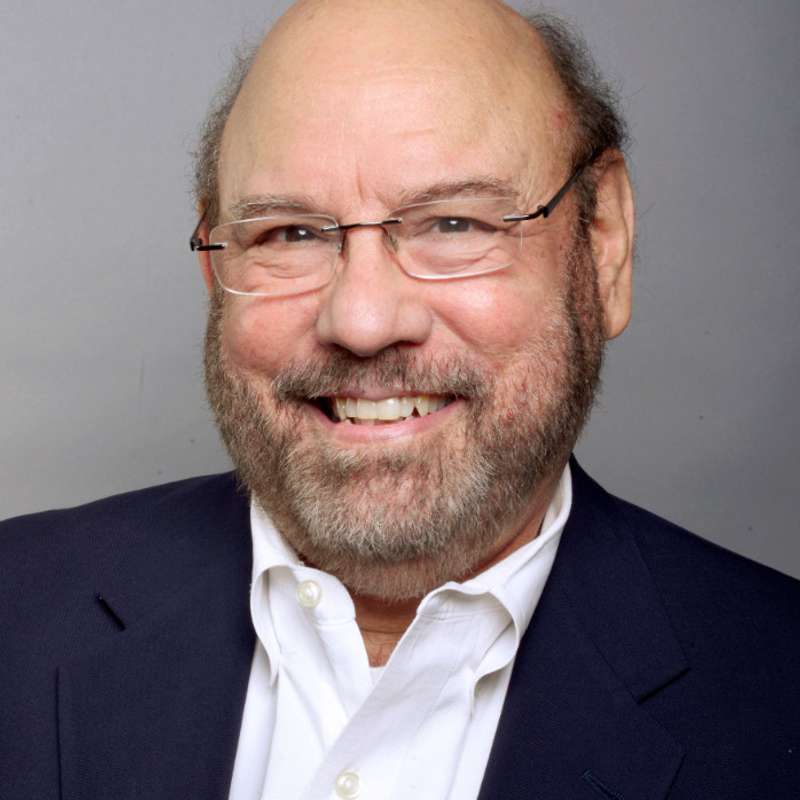 Rudy Rodriguez
Okay, Ashish. Now we're gonna dive into this nice little P2P story that we wanna talk about. So let's talk about, you know, the partner showcase that you turned in with IAMCP. Tell us a little bit about how you became an ISV, why you became an ISV, you know, developing that product, and then how you built the channel and the challenges you may have faced in building that channel to help distribute your product.
Right. So great. This is almost a summary of my journey. Right? What your asking. Ha ha ha.
Rudy RodriguezHa ha. 8 years in 30 seconds. Come on. You can do it.
Alright. So Titan Workspace was created based on our more than two decades of, consulting on SharePoint. Right? So I started SharePoint consulting company, as I said, in 2006, 2007 in India. And that time SharePoint was a very early product WSS3, Moss 2000, you know, and then 2010 came in.
It's a whole lot of journey from since then. Right? So these customers, they, they gave us a couple of ideas that if SharePoint is so complex and every customer must spend a lot of money in terms of customizations or trainings and make it working, why not to build a product that simplifies it so that at least the SMB's, which don't have those kind of deep pockets, can leverage that platform very well. Right? So, typically, if you look back in, you know, 2010 or 2006, 2008, those kind of era, SharePoint was a luxury.
You know? A big guys would buy servers, data centers, and, you know, SharePoint admins, and $1,000,000 worth of consulting and all. And we knew that if you know, when Office 365 came, we knew that it is bundled with even one single user now. Right? So even if you have $2 worth of an office you know, Microsoft, you still have a SharePoint.
Right? So the opportunity was intense. So we knew that SMB's would have it, but it will be challenging for them to unbox SharePoint. Right? So that's how the Titan Workspaces was created.
And we focused mainly on 2 areas. One was simplifying the document management experience, and the other was automation of your internal business processes using SharePoint. So these are the two core areas that we simplified and, precisely the way we thought, we are seeing the results coming up exactly. So we have customers which are now leveraging our technology to maximize the benefits of Microsoft 365. And that's that's what we love doing.
In terms of our channel and partners, you know, when you create a product as an ISV, from, like, minimum viable product, what we call MVP, you have to go through a journey of product market fit. Right? Which is takes sometimes two years. In our case, took about two and a half years, three years. What we did when we were doing the product market fit, we continued engaging our channel partners, showcasing Titan to them.
And we were we knew that they will not be ready to sell it, but we we continue to to showcase our strength, our vision to these partners that, Titan Workspace can solve a lot of their problems. And over a period of time, the partner community got nurtured. I mean, even they they were not selling initially, but off late, we have seen a lot of partners joined our partner program, and that's how how we are growing now.
Rudy RodriguezSo tell us a little bit about it because it's you know, being an ISV is a very different business than just doing the projects like we all started out in the IT space. So what are the challenges that you faced in trying to go global with with the product and the the the framework that you have to build for your company to support customers in different different countries and, different industries? Can you talk a little bit about that?
Absolutely. So the first transition as a ISV was see, in our case, we transition from a services company to a product company. Right? And that transition was very hard because services, you you get money regularly coming. But when you're building a product, especially a SaaS business, takes many, many years before you make that kind of a run rate, you know, for sustaining the entire product development sales of the company.
Right? So this transition was very hard, but we successfully, kind of work on that. As far as expansion to global, so, you know, we knew that, till the time the product market fit is achieved, there's no point in expanding to different geographies. So what we did, we initially focused on Asia and India. That's where we were very strong.
Right? And, we initially acquired almost more than 70, 80 clients here and make sure that the customers are happy. And we understood how to sell, how to position it, and, what's the right price for the product. Right? So, that was the first milestone that we achieved.
And after that, we expanded to US. And when we when we entered US, we kind of, we knew that what is the right messaging, what is the right you know, what kind of features are in demand. Of course, both geographies have different, set of challenges. Right? So India has a different set of challenges when you're selling, and US has different set of challenges you're you're selling.
Right? So but one thing was common that Microsoft operates everywhere same. Right? So that was the consistency that we could leverage. Their structure is same everywhere. Right? So if you're an ISV, one country, you understand how to operate in the other country. I think that's that's one good part. So expanding to new territory other than your home home turf is always challenging. Building new customers, building partners, That's not easy.
We, I would say that we are still at a very early stage of our product journey and the sales journey, even though we are now almost touching almost 4 years since we, from, from the first, you know, minimum viable product to where we are today. Right? So, but we we think that another one year we need to make make sure that our partners are totally aligned in different geographies with us. Right? So now with with lot of, visibility that is coming to us, we we are seeing some inbound partner requests coming.
We are partners would like to know more about the product and that's how it is.
Rudy RodriguezOh, very good. So so one of the things I heard in in in your in your explanation there was that you're still developing the selection criteria for choosing the right partner, you know, so so you 2 can align and make sure that you're delivering the product and the services that a customer really needs. Did I hear that correctly? Right.
Yes. Yes.
Rudy RodriguezVery good. Well, that's very good in working with partners, period, is that is choosing the right partners and and, going forward with them. Or do you have any plans for expanding into other geographies anytime soon?
See, we are currently focused totally on US. And, of course, India is growing. And now we have started getting lots of customers from Middle East, though we don't have any direct sales from Middle East. We don't have any rep in Middle East. In fact, couple of partners approached us in the last two quarters and signed up the partner program, and, we have signed couple of customers with them.
Rudy RodriguezAnthony, I know you've got a few more questions. You wanna go?
Anthony CarranoOh, yeah. I mean, I, when you start talking about, like, with, as you developed out, you know, you had your product MVP, and then you worked on your product in a market fit. I'd actually like to unpack that a little bit if that's okay, because I think, I know, it's not necessarily part of the a P2P story, but I think our our listeners will get tremendous value from you sharing, you know, from your experience on that. So you you hit on something really key where you said it's important to achieve product market fit first and then expand. I'd like you maybe to let's talk a little bit about that process of, like, your journey of how did you go about determining, product market fit, and maybe, like, just some of the iterations. And and if you don't maybe necessarily feel comfortable maybe talking about the specifics for Titan Workspace, maybe we can, you know, talk about the principles. So just kinda leave that up to you.
Look. I'll share my journey as a product market fit so that you know, and and can give some tips to other ISVs. Right? Especially, so whether it's Titan Workspace or any other product, I think the journey more or less is similar, right, for every every founder. When we create an MVP, it's our belief that we think there's a market for it. Right? And, when you go to initial 3 or 4 customers, they are the initial customers who will have some trust in you.
And we took a path where we went to existing SharePoint services customers. And so look, for this use case, you are paying us, let's say, $20,000. How about the same use case I have developed as an MVP, and that you can pay us $2 per user per month. And, you can try. If it doesn't work, probably you can switch to services.
Right? So these kind of small baby steps we took initially with couple of clients. And we were fortunate that we had a footprint of existing SharePoint customers where we could go, and we understood them and that we leveraged those relationships to to to, you know, take off. Interesting part starts now. You acquire these clients, 5 or 6.
Right? So but you know that your product is not complete. Okay? It's not meeting end to end cycle of the operations of the, you know, there are a lot of components to be fixed. It could be buggy. You know? It it it could have a lot of challenges. But but you still work with those clients trying to convince them to use that. Right?
Then you start getting the feedback. And when you start getting the feedback, you realize that there's a long way to go before you even scale up. Right? So the product market fit in my understanding is complete only when you sense that the repeatable business sense has come. So now you you have repeat sales coming from some of the use cases.
Right? So when you sell initially, you are all over the product. Right? You have and you focus on a lot of areas that just to understand, you know, which one would click to the clients.
And that took us almost 18 months to realize that out of 20 features that we thought were the hero features, client would need only 5 or 6. And that and that journey is, I think, most critical for a product market fit. Right? So today, if I compare my sales pitch, 3 years back, I was talking about 10 features when I opened my sales pitch to a customer. And today, I talk about 3 features. That's that's a transition that's happened. Right?
Anthony CarranoUh-huh. Uh-huh.
So it's not that other seven features are not important in product, but I generally tell my customers, look, these 3 are the the real ones that you love. Rest 7, you'll discover when you start using it. You know? And and that's the learning that that has come. So also product market fit as a repeatable business. Right? So how much sales is have you come to a point where you appoint a VP of sales, and he can go and scale it up? Right?
Because what we understood was that if the product has not completed the product market fit and you tend to scale up your sales, it will not work. And in at least in our case, it didn't work. Right?
Anthony CarranoMhmm.
So initial product market fit, I think, is a very founder led sales, you know, who understands product vision, and then he tries to fix his the gaps. And then with with us now when we got about 70 plus clients, then we thought that now we are ready to scale up sales team. So a lot of companies I have a lot of ISVs to talk to, a lot of SaaS founders in different countries, and a lot of mistakes they do is they get 10 clients and then they scale up. Right? And without understanding that it does not attain the repeatable business model.
Right? Because the sales will come to scale up. You know? In in ISV business, the first twenty sales is done by founder has to be done by founder. Nobody can can do that. Right? So if you can't sell first, Anthony, nobody else is gonna do that. Right? So that's the learning, I mean, I hope that answers some of your questions. Right?
Anthony CarranoNo. That's great. What was what's really intriguing, I gotta, you know, just because I know a lot of your your business currently is you have currently dozens of partners, right, you know, globally. But you said for this, your first twenty sales were, you know, by you as the founder. So, was it was it once you got to a place that you've you're like, okay. It's it's repeatable by you, like, reselling, like, direct, and then you opened it up to your partners to then sell it? Is that how is that how that work?
Yes. I think, this is another learning we would like to share. For partnerships, you have two2 kind of opportunity. One is services. So services are project based.
Right? The partner would get some opportunity and he'll work with you, scope and deliver it and finish. Right? So typically that's a business model. But when it comes to an ISV partnership, ISV partnership means the solution sales for a particular use case, right, which is which may or may not be very well defined and understood by customer.
The challenge with this model is that partners can bring you an opportunity, but they cannot sell initially. And as an ISV, it's very difficult for us to train initially the sales team of partners as good as we we do. Right? That means the role of partner is merely to bring us a lead. And then we we nurture that lead.
We work with that partner in solutioning. We do the pilot. We do everything. We do implementation. So in our case, what has worked is, we never burdened our partners with any sort of services or anything other than just the client management.
So our partners don't invest in technical. They don't invest in presales. They don't invest in after sales support. All they do is they have understood the product, how to bundle it with Microsoft 365, what kind of solution it is, and what kind of customers do we need, what's our target audience market. Right?
So we operate typically between a customer, you know, which has 100 users to about 700 users. That's where our sweet spot is. So a lot of our partners, we tell initially that, you know, these are the kind of customers, industries, and the use cases that you should hunt. And if you find one, bring it to us, and then we'll take it forward with the with the cost, you know, partner.
So partnered program is another important area here that we have a very structured partner program for product. It has full description of what the program is, different level of partnerships, what are the partner commitments, what is it that we can do, what is it the partner is supposed to do. And that's very clear, clearly, defined document, right, with very clear margins, how much sales and how much margins. And also that's also another aspect of ISVs that they should build, a a detailed partner program that can help them to at least, align the partner expectations very well with your sales GTL.
Anthony CarranoMhmm. So even with, you know, I mean, the experience that you have, the the framework that you've shared, and the just kind of the detailed partner program. So you have all these things in place. Do you ever have any challenges during the actual engagements? And, you know, if so, like, what were they? How did you, you know, work together with your partner to overcome those challenges?
Challenges are there, because partner is exposing his clients to us. Partner has already sold Microsoft 365 to a customer. Customer is very happy with the partner, right, for whatever they are doing. Now Titan Workspace comes into picture and partner introduces us. Right?
So we have to make sure that the partner's reputation with the client is at stake And the trust between us and the partner has to be utmost in terms of transparencies and support. We work with two type of we come across two type of partners when we go to market. One, those are modern work services partners, and they understand how the consulting works and how, you know, solutioning would work and typical nuances of the project management and things like that. Right? The second set of partners are pure CSP's.
So they are just selling Microsoft licenses, and they don't have any project management practices or Modern Works, you know, consulting practices. But they have tons of clients which need solutions like us. Right? So our approach of working with both these type of partners is different because the partner which is, you know, which which has a knowledge of project management, consulting, and he has a model of practice, he understands how the projects are executed and, you know, how the customer management and the client expectations are met.
But the partner, which has not so deep experience in execution and consulting, sometimes get frustrated because, you know, when the product gets installed and, you know, customer expectations see, you are a product company, so you have to operate within a framework of a technology. Customers keep asking us tons of new features. So we can't build every feature for every client. Okay? So product has a road map.
Right? Next quarter, two quarters down the line, what is coming. Though we can commit to our customers that, okay, today we don't have it, but a quarter later, we'll deliver it. But sometimes partners will push us. Right? That he wants this to be now. Right? So these kind of things, they do come. But I would say that, we need to fill in the gaps. Sometimes we work aggressively to fill the gaps on presales, right, in an engagement.
Sometimes the gap is filled on client expectations, setting up the right client expectations, and also educating our partner what is the right way to proceed. Sometimes we fill the gap in terms of project management, seeing that the partner doesn't have anybody who's competent enough to do the project management role. You know? So we take over that role. So I think there are a lot of failure.
There's no one single answer to your question, but I think that every partner is different. Scale is different. Right? And, also, their teams are different. So we kind of, we are still learning.
I would say it I wouldn't say that we have mastered anything of that, even though today we are working globally with about 30 plus resellers, out of which 10 are from IAMCP community in different countries. It's a mix of CSP's, MSP's, and distributors. I hope that answers some of your questions that you tried to ask me. Right?
Anthony CarranoOh, no. That was that was great, especially just sharing on the on the experiential side. And I know, Rudy's got some questions for you, like on some of the metrics side.
Rudy RodriguezYeah. So, you know, one of one of the interesting things about working through partners is, you know, not only you're you're working with a productivity tool, you know, and that's one with Titan Workspace. You've got a, by the way, I have seen the product in action, so I will full disclosure there. So I was very impressed with the with the technical capabilities of the product. But one of the things that, when you're when you're selling productivity tools is customers always ask for what's the return on my investment?
And the partner side is also looking for that return on investment too, because that's gonna drive customer satisfaction as well as revenue. So do you do an ROI analysis with your customers for each implementation, or can you tell us a little bit about how how you, approach that particular, question that partners and customers have?
Yeah. It's a great question. Right? And this is a very, very valid, topic of discussion. Right? The ROI. Look, when we approach a partner, we realize that partner is already doing something. He has a business running, and he's making money. Right? He may not need us. Right? Yeah. And Titan could be very new to him. So the first question comes is, what is my ROI?
You know, that's the first step we have to overcome that how much, you know, time is needed vis-a-vis what kind of a return the partner is going to get if he invest that that kind of time. Right? So, so we we kind of answer that in multiple ways. Generally, I don't approach it with money. Money will come. Right? I tell my partners, look. You have 100 Microsoft 365 customers. Right? And you have sold them tons and tons of licenses.
So every year, you go back to a client and the client questions the adoption. And at that time, your renewal is vulnerable. Right? Client can switch to, you know, some other CSP if you're not adding value. You forget about the price.
So if Titan can deliver some of that, you know, use cases and help in adoption, that means from a mere commodity reseller, you would graduate to a value added solution reseller. Right? And that stickiness is going to help you a lot in retaining your customer to whom you can upsell cross sell some other products. In this process, you will make some money on Titan as well because we have very high margins that we pay to our partners, and that's recurring throughout the life of the client. So that's a bigger ROI for a client, you know, partner.
So I think my conversations are never focused on how much money they are going to make. My conversations are always focused on what is it that the Titan Workspace can add value to partner's business in terms of creating a long lasting client relationships, making sure that the client sees that partner as a value valuable partner to them rather than just supplying the licenses. And I think that's where we drive our GTM with our partners. Right? So this is how my based on my learning and how I communicate to them. Right?
Rudy RodriguezI understand. I've been a Microsoft partner for over 30 years. And so one of the things you learn in working with and through partners is how to build the trust relationship and understand each partner's value proposition. So I think you explained that very well and especially from an ISV standpoint, because, again, everybody's looking for what is my value proposition and how does that how do I make it work for me?
So I thought you explained that very well. But in closing, what advice would you give to other ISVs, to build and grow partnerships like the ones you've done, that where, again, you're going to be successful. You're you have returning business, and you're seeing the growth of your company as as well.
For any product company. So I would not use the word ISV here. I can use the word a product company or a SaaS company, you know, be it Microsoft or not. So that's what I've, see, when you are trying to build a partner channel, the scale when you're small, let's say, if you are at very early stage of your product journey, Partners should be nurtured only to a point where you educate them what the product can do. Don't expect them to sell.
I never expected that the first 30 sales, anything would come from partner. Even though, you know, we got some clicks initially with, you know, business came from partners. But we never focused on chasing partners to sell. We always continued to educate our partners. So IAMCP was one such great platform where wherever the IAMCP meeting would happen, I would, you know, take an opportunity sometimes as a paid sponsor or something just to go and showcase what Titan Workspace can do without expecting that any partner would give me a lead or, you know, an opportunity tomorrow.
Right? And then we created a partner information system through different channels where we are educating our partners about something new coming right. Over a period of time, we have seen that partners have understood that this is consistently growing and he is seeing lot of new logos coming from our announcements. And something that has now started working is that some partners which initially thought that they may or may not sell Titan, but now when they're seeing that, recently Titan has acquired some of their clients directly. You know?
That's kind of a momentum that will now now is more trustworthy moment because their own client is happy and there's a product that they think that they can add value. So now this is a time so it's a slow journey. Right? So the mistake I did initially also was with 10 customers, we expand try to expand the partner network. And we burned a lot of money, to be honest.
But, the the ROI was absolutely nothing. Partners like the product, but since the product market fit wasn't completed, their effort and our effort went waste. And that's a mistake. And and then we totally stopped it. And then we said, we'll go back to partner community once we have a repeatable business, and we understand how to sell and how to communicate to client.
And that took us almost 50 clients' logos to get to that point where I can confidently say that now we are we have some sense of a repeatable business. We have also know that what kind of a partner. So today, every month I get about five or six partner requests that they are interested. Out of these five or six, I actually politely tell these partners that we are not yet ready for you. So it is not that they are they want to work with us, which is great, but we think that, we need some more time to be able to do some more confidence building with the existing partners before we expand.
So that's my my learning and my advice to other ISV's that, it's a partnership is a slow game. Right? And, generally, we have seen that partners will jump on a moving train. They will not help you to kick start the train. Okay? That's a summary. Right?
Anthony CarranoThat's funny. Oh, wow. Rudy, can I jump in with a piggyback question on that?
Rudy RodriguezGo ahead.
Anthony CarranoYou've mentioned a few there are several times in our time about the slow journey, which I really appreciate. But how do you you know, as, you know, as as you're developing, you know, your product, you're the CEO and founder, you're trying to take this to market, how do you balance that, like, when you're doing all along this journey that, like, the trigger between when to pivot versus, you know, just to continue to persevere through it, to get to that place of, where of of confidence of knowing.
Does that does that make sense, that question?
Yeah. Yeah. It is. It is. So that I think this this is precisely what's happening these days. I'm we are seeing some pivots, right, coming. We are seeing some partner models established. Right? We have partners which are doing repeat sales, right, on their own.
Okay? So that's a sign where we would say that our association with the product journey and the go to market with partner has some reached to a point where we can take a call very shortly, when to pivot and, when to scale up with full throttle. Right? So so that's we are at that. But it took a a lot of time to to get to this point. Right?
Rudy RodriguezYou know, Ashish, one of the things I really appreciate about the last couple of questions and to answer is the measured approach that you take, is so contrary to to what we see in American culture, which is sales have to go up a 100 percent every quarter and the challenges that you face there. So I really appreciate your measured approach because that will guarantee your success over a period of time, of course. But it's a very refreshing approach, and I really appreciate that. And I wanted to tell you that, you know, having been in this market for a long time, we we all set our goals, but a lot of times we don't understand how much work goes into into achieving those goals. So I really appreciate your measured approach.
See, if you look at the industry, you know, it's in the SaaS business, it is always said that, its hardest part is the first million. You know? That's the most hard part. And 99% SaaS companies don't even reach up to that point and they shut down. Right? As you said that in the US, it's always about scale up, 100% growth, 200%. It's not in US. It's everywhere. Right?
So expectations of everybody is that our growth should be super. But I would say that SaaS and that's my advice to partners that if you get into a SaaS, if you build a product which is SaaS offered, it has a compounding effect. So if your customer retention is good, that means in couple of years due to compounding, your sales will grow 200%, 300%, 400%. And that's that's beauty of the SaaS. You know?
It's only the 1st, three to four years when you are still early and product market fit and those kind of things, which kind of don't make any sense from the very high expectation VC kind of environment. Right? But over a period of time, everything would, get to that point, I guess.
Rudy RodriguezWell, definitely wanna wanna thank you so very much for for your insights today.
Anthony CarranoYeah. Ashish, this was fantastic. Thank you, I mean, for sharing, you know, about, you know, your partnership story, some of the and but also just a lot of the real great business advice, just, you know, the importance of, you know, a measured, you know, approach, and and then, you know, I love, you know, you know, obviously being as a as a marketer, you know, just the emphasis on the the steps you took for the product market fit. So that was that was great. Thank you so much for your time.
Let me ask you this just, you know, last question is how, how can people find out and, find out about you and connect with you?
Titanworkspace.com is our website. They can reach out to me at, my email ID, which is ashish@titan4work.com So you can reach out to me anytime. I'm available on LinkedIn. Ashish Kamotra is my LinkedIn profile. So you can find me, easily. I'm happy to connect partners and happy to share my advice with any product centric founder or partner, who is in the journey, and I'd love to be part of the community to help that.
Anthony CarranoExcellent. Excellent. And for those that are listening, we'll have, you know, all three of those links, in the show notes, you know, below. Ashish, once again, thank you so much. Enjoy the rest of your day.
Yep. Thank you, Anthony. Thank you, Rudy. It was a pleasure talking to you guys, and, we all love IAMCP. Right? Thank you.
Rudy RodriguezThank you, sir.
Anthony CarranoWow. That was a great episode. I really appreciate Ashish just for sharing, not only just some aspects of, you know, the good practices and principles in partnering, but a lot of great business advice and the perspective that he brought. I know in particular, I really appreciated when he was talking about evaluating partner ROI and just the importance of he said, "No. No. I wanna focus the conversation not on the money, but on the value added that helps partners create long term relationships with their clients." I just I thought that was really an excellent point, and I really appreciated that. How about you, Rudy? What what really stood out to you?
Rudy RodriguezWell, you know, I really appreciated, Ashish's measured approach to just, one in developing his channel, helping partners, educating partners to understand the value of the product and how to position it better and demonstrate the overall value of the SaaS product that they have in which we really didn't jump into too much. But but having seen and and evaluated their product, it helps partners implement a much stickier SharePoint implementation, for their customers. And that his measured approach was it took him a while to learn what the market fit was going to be for his product. Like he said, the the owner has to sell the first 20 copies, you know, first 20 products to really understand. And then that helped him then build a value proposition that partners could understand because there's there has to be an ROI to the partner, an ROI to the customer.
And he's not, you know, as, I think you've heard me say this this term amongst of ourselves, Anthony. He's not a world beater about, you know, having to grow a 100% every quarter. It's about let's make sure that this is done effectively and done right. And the money will come over a period of time. And I really appreciated that that, that measured approach because having been in the ISV space early on in my career, you know, ours was always go sell, sell, sell, and we'll fix we'll fix it later. And that doesn't always work.
Anthony CarranoMhmm. Mhmm. No. That was really good point. I mean, just to even piggyback on what you were sharing, that that point about the product market fit where you said, look, you got to achieve product market fit first, then look to expand.
And just, you know, for our audience, just the 5 areas, because we asked myself, can you give us some tips, on how you would recommend other ISVs and product developers to do that? I'll just share this here because I thought that was so on point. You know, have get those initial customers and and to the point you brought up just how the what was the first twenty or so, you know, by the founder, you know, is leading that sales effort. But then, you know, to piggyback on that, he's you know, he mentioned take the baby steps. Right?
You know, and and leverage with, you know, your existing relationships. He emphasized number 3, just the importance of getting good feedback and then iterating on that feedback according to your product road map. Number 4, it's not complete until you have a repeatable business and how he mentioned just the importance of being able to sell it over and over and over again. Not 5 times, not 6 times, not 10 times, but getting, you know I mean, he said the first twenty, you know, by the founder. In the story though, he said, look, we didn't get we didn't start expanding until, you know, we got to 70, and then, you know, we look to scale it.
And then last but not least, just the importance of refining the pitch. And I thought it was funny, and I know you and I can appreciate this because, you know, being, you know, as a marketing agency, everybody wants to give you their, you know, 5 to 10 reasons why that's, you know, they should buy, you know, their solution. But he said, no, no. We had to get ours down to when I wasn't communicating, you know, the 6, quote, unquote, main benefits, but I got it down to 2 to 3.
And I really appreciated that, especially because I know some of the challenges we, you know, we work with, you know, in helping, you know, our customers. So I thought that was really, really solid.
Rudy RodriguezYeah. Very much so. I really enjoyed enjoyed it, and and I hope, our audience, enjoys the ISV or SaaS approach to this interview because it's a different market than some of the other services that that we've talked about in our other podcast. I wanna thank everyone for joining us today, for this podcast, in this episode of, IAMCP profiles in partnership powered by Dunamis Marketing. We hope you enjoyed this podcast and find it useful and inspiring.
If you did, please subscribe, rate, and review us on your favorite podcast platform. One of the best ways to partner for success is to join IAMCP, a community of Microsoft partners who helps each other grow and thrive. IAMCP members can find and connect with the other partners locally and globally and access exclusive resources and opportunities. Whether you're looking for new customers, new markets, or new solutions, IAMCP can help you achieve your goals. To learn more, visit the website at www.iamcp.org.