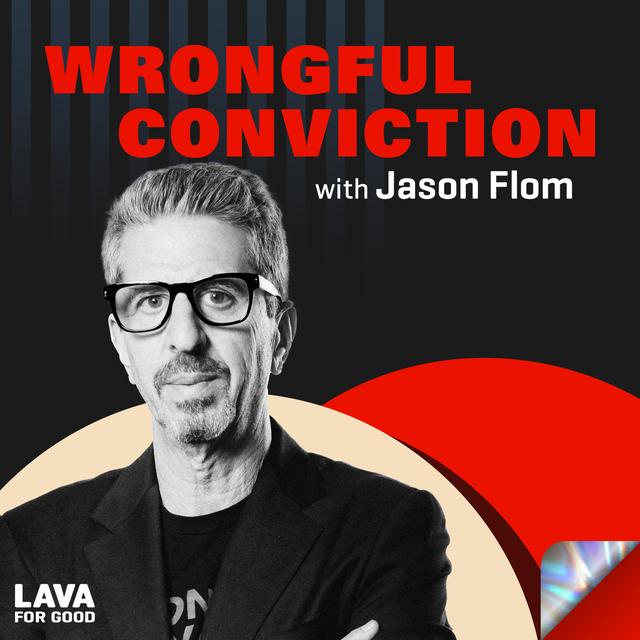



In the fall of twenty ten, a Cleveland high school basketball phenom named Octavius Williams had just begun his junior year when his younger sister turned ten. Their father and his father's girlfriend threw a big party at their apartment to celebrate on Halloween, bringing their blended family together. As day turned into night, the children's party turned into an adult party, and as things wound down, a fight began
outside between members of either family. Two people drew guns, and one man, Dennis Cole, ended up in the hospital paralyzed from the waist down. Police were told that the shooter was a young black man who had already fled the scene.
When they went.
Upstairs to speak with the partygoers in the apartment, they found and arrested a young black man, seventeen year old Octavius Williams. The victim eventually stabilized and identified Octavius from a photo array. Despite conflicting accounts of what happened during the shooting, it appears the state had cleared they got there man. But this is wrongful conviction. Welcome back to
wrongful conviction. Today's story. Well, I'll just say Shakespeare could have written this one, and it would rank up there with some of the crazy plot twists and some of his best work. And you're going to find out why as we go along in today's episode. And without further ado, I want to introduce our guests, who have two guests today, the man himself who lived through this absolutely bizarre and
insane sequence of events, Octavius Williams. Octavius, I'm happier here, but I'm sorry if you're here because of what happened to you that brought you to this point. But anyway, welcome to Wrongful Conviction.
It's a pleasure to be here, for sure. Thank you for having me.
With Octavius is Joanna Sanchez. And Joanna is the director of the Wrongful Conviction Project at the office of the Ohio Public Defender. So I imagine, Joanna, you have your hands full and I'm glad that you are here to share with us about this incredible story. So welcome to the show. Thanks so much for having us and this story. This is a relatively recent case compared to some of the cases. Listen, we have cases back from the seventies, but this one, this one happened just I mean, it's
a short time ago. It's also a long time we go twenty eleven. Of course, this is Cuyahoga County and we've heard that name again and again on this podcast. That's sort of a hotbed of wrongful convictions. And I want to go back Octavius to before this horrible night where what started off as sounds like a joyous occasion turned into this tragedy left some body paralyzed and put your life on paralysis. Really, I mean, it's an awful scenario all the way around. But your life before that
was full of promise. Tell us a little bit about the family dynamic and what was your life like growing up? What were you into.
On my life, he was said, like a regular life.
Like you know, my parents wise, everything was cool, even though they was divorced. If we was living on the West side, my dad was doing the West side. It was just we was always close, you know, so it was never a split time in between that we didn't see each other.
Like I said, everything was cool. It was two households.
I always used to go to my dad house a lot because we had a different bond than me and my mom. Other than that, they decided to send me to my own school because I guess they seen that I had a different potential than my other siblings.
I understand you were like a super talented basketball player.
Is that right? Yeah? And still is, But like that was my passion.
Anybody in my family tell I was a golden ticket.
Let them tell it.
Before I was incarcerated, I was attending this school called Margaret Island is on Chester. They gave me a shot to be on their team, and I took it. Didn't though I was at good, you know, but you know, just enough to be scouted, you know when and out of nowhere, it just taken away, you know.
So you were you were in eleventh grade when this when this, uh yeah, when it heard, Well, you were coming up in your reputation. I mean, if it's reached all the way up to New York on twenty twenty three, there must have been some excitement around your potential. So tell us a little bit about what happened that night. How did you end up at this party?
Was it?
Whose house was it at?
My dad was Ardentary and his girlfriend Consula. They threw a party from my little sister. It was her birthday, like literally like about your birthday, but we threw it on Halloween. She was turning seeing. Somehow, some way it ended up an adult party at nighttime. Every brought everybody together like everything was cool, everything was cordial. You know, everybody was having a good time. You know, there was never no problems between the families, you know what I'm saying.
But some way, somehow, out of nowhere, at the end of the party, as things were settling down, all the altercation and stuff start happening.
Yeah, this started at a Halloween party in twenty ten. So Octavius's dad, Arden, and Arden's girlfriend Kenzuela were hosting a party at their house. They had about thirty to forty family members there and as the party starts to wind down, going to about midnight, a bit of a conflict erupts and so no one really knows like why the fight started. It's a verbal fight kind of. The
two sides of the family are arguing a bit. At that point, Octavius and his dad and some others are upstairs in their apartment and this is happening down in the backyard behind the apartment. So Octavius's dad goes downstairs the backyard. He confronts one of the men, Larry, who's kind of causing some of the problems, and Larry shoots a gun and he starts shooting towards Arden, so Arden
ducks down. There's guns firing, and then when the shooting stops, a man named Dennis Cole, who was Consuela's cousin, and her other cousin, Cedric Johnson, are both shot and Dennis been shot in the chest in the back, and the police come and they say, you know who shot you and he can't say at that time more than juvenile blackmail. And you know, there's quite a few people at the party that match that description, but some of the other individuals who had been at the party by the point
the police get there, they've already left. And so at that point there's a lot of people out there just yelling names and saying, you know, was it this person was at that person? And so the police at some point hear in the name Tate, and that's Octavius's nickname, and so I think that sets them on the path toward Octavius. The police they go upstairs and Octavius is
upstairs in the apartment. He's in the bedroom with a bunch of the kids who are there, and they're like, hey, this guy matches the description in the sense that he's a seventeen year old black kid, and so they test him for gunshot residue. It comes back negative. They look for guns weapons on him, they find nothing. By this point, they've heard that the person actually did the shooting has
left the party. But even with all of that, they decide, let's arrest him, and so they arrested Octavius and take him to the police station.
They didn't know that I was underage. They took me straight to the adult jail. I know, I was scared shitless. They didn't even ask my age and none of that. They just straight took me to the big house until they realized that when they read my social that I was a juvenile. Then I had to sit there for a little bit before they transferred me back to the juvenile You know, they had you stripped down all this. I mean I felt violidd no lie, I never stood negad in front of a man before.
I mean, you were still a child, just a junior in high school, thrust into a very adult situation. And despite the negative GSR test no weapons on you, hearing that the shooter had already left the party, they just went ahead and booked you anyway, And meanwhile, the victim, Dennis Cole, was at the hospital. He had stabilized by now, and he had seen his shooter.
Now, at the time Dennis Cole was shot, there's a lot of problems that would lead to an unreliable identification. So, first of all, there's a gun involved in this crime, which we know can distract someone from really looking at the perpetrator. We also know it was dark, and perhaps most significantly, Dennis Cole had a blood alcohol of point two seven at the time that this occurred, and so he's more than three times the legal limit. And that's
the circumstances that he's observing this crime in. So Dennis Cole was shot in the chest, in the back. You know, he survived. He was in the hospital for several months. He was paralyzed, but he did survive. And so the police get there. He gives this description again. This time he adds a little bit more detail. So he says, you know, blackmail juvenile. It was one of Arden's sons, not the one with the hair. And so Arden had
several sons. Octavius has a few brothers, so a few of them are at the party and Dennis's family says, you know, if he says it's the one not with the hair, well, then that's Ricky. That's not Octavius, that's Ricky. And by this point the police are starting to get calls from people saying, Ricky Williams committed this crime. That's Octavius's older brother. But they still move forward with putting Octavius in a photo array and showing it to Dennis Cole.
The only person who is at the party who's in this array is Octavius, and he's heard the name Tate at some point in the background, so he identifies him and selects him from the photo array.
Right, so they knew that the shooter was somebody at the party. The victim had identified the shooter as quote, one of Arden's sons, not the one with the hair end quote. According to the victim's own family, what that meant was that it was Octavius's older brother, Ricky, who looks a lot like Octavius and who was also at
the party. If they had wanted to make a more reasonable photo array, shouldn't they have included at least Ricky's photo, or perhaps pictures of other people who were at the party. I mean, nonetheless, the only person in this photo array that was even at the party was Octavius. Now, the image of Octavius's was the one that Dennis Cole had gotten fixed in his mind as the shooter.
At some point several months later, they'll give Dennis a photo array that includes Ricky Williams, But at that point he's already picked Octaves and committed to that identification. So you know, he doesn't make the selection at that point either.
Well, many people think their minds operate more or less like cameras. In fact, that's not even close to the truth. And our minds played tricks on us in all kinds of ways. But among other things, we will start to tailor our memory to match influences that are shown to us or suggested to us. And so, you know, here's a guy who's been through this horrific experience of being shot twice and is now laying in this hospital bed and his as you said, his blood alcohol level, I mean,
he was really drunk. So that is the beginning of his memory sort of fixing itself onto Now.
The police had this identification, and they're really not looking at anything else at that point. They're really not considering other leads. At trial, there's multiple people who testified that Ricky was the person who was responsible for this shooting Octavius. And Ricky's little sister, Jessica, was upstairs in the apartment. You know, here's like this fight going on in the backyard, so she looks out to see what's going on and she sees Ricky back there with a gun. There's another
young boy upstairs, Reginald Ward, he's fourteen years old. He's actually the victim's cousin, and he looks out also and here's the fight, and he sees Dennis Cole go up to Ricky punch him in the face, and then Ricky shoot him. So there are people who are on the scene that night who know that Ricky Williams was responsible
for this. And what we learned looking at the trial was that the police actually started to get messages and voice mails saying, hey, Ricky Williams is the one who committed this crime, and they don't go out and talk to him, you know, they I think they said Doctavius's family like, hey, let Ricky know, we want to talk to him, but they didn't actually go find him or bring him in or try to interrogate him or even
interview him. They just kind of collected that information but still went forward investigating and prosecuting Octavius.
How lazy can you be that you have multiple people coming forward, tips coming in and they can't even be bothered to go and speak to him. And at that very moment they should have switched course. Octavius should have been freed, Ricky should have been arrested, and we should never be making this podcast right now. But that's, of course not what happened. Octavius. You were charged with attempted
murder and several other related defenses. All of this must have just I mean, how were you able to process this as a seventeen year old kid. You're not even a senior in high school yet you're just a child.
I didn't process it until I was estually in prison.
I understand that being a jail is hard, but being a jail innocent, though, and you know that you are, is way harder, real hard.
There's another sick aspect of this that I have to focus on, which is the fact that Octavius was tried as an adult because he turned eighteen before the trial began. Now, how does that make any freakingdifference. Right, he was seventeen when it happened, So in theory they could this crime could have happened when he was thirteen. They could have held him five years until trial, and we've seen that before too, but it's nuts. You can't both be a child and an adult at the same time. But they
managed to try him as an adult anyway. Now, at trial, the victim testified that you were the shooter, Octavius, but multiple other witnesses testified under oath that you were upstairs in the apartment when the fight and the shooting occurred, and the shooting obviously was downstairs, and witnesses who watched the fight from the window in the apartment testified that Key shot the victim, not you.
I didn't know that it was him that shot anybody. I didn't know that. It was for sure hard to process when when I realized that what people were saying that who it was.
So the trial lasted five days, and the jury had a choice between the perspective of all these other witnesses who were directly contradicting the victim himself, who had by now convinced himself that you were the person that had shot her, and off they went to deliberate.
I just sat there.
And the reason that I was cool and I was calm is because I had I knew that I had to keep my composure no matter what the verdict was.
But I was angry.
I'm just very good at keeping it to myself. I'm very good at hotting it. But when they came up with that verdict, though, I felt like my heart stopped just the beat or two. But you know, I got I got my air back. Never thought that I would
be the one to be incarcerated. As a fresh eighteen in there, you know, had to take the scenery in and had to get used to me being around a lot of older people, a lot of killers, a lot of rapists, and all this that I'm not used to, you know, So I had to adapt to my surroundings. And it was kind of hard, you know, because of the unexpected fights and stuff like that. You know, you're seeing movies and things like that, It's not how it is in movies.
You know, these really pop off lot nowhere.
So from what I understand, not long after your trial concluded, your brother came forward and actually confessed to shooting mister Cale.
I believe he.
Even made a written statement where he said and I quote. Shortly after the party ended, an argument occurred outside the apartment complex between my father, Ardent Terry, and Larry Johnson.
They had a few words back and forth, but once the argument reached the back of the apartment, I was right in front of the back door, and all of a sudden, Larry Johnson started shooting towards me in my father's direction, and shortly after, Dennis Cole ran at me and punched me in the eye, and I pulled out my gun and shot him out of fear for me and my family's lives because shots were being fired at us.
First end quote. Wow, that's a pretty detailed confession. And this all happened within a month or so of your trial, while you were being processed into Toledo Correctional where you'd spend a long stretch. So when you heard about this confession, I can't even imagine, Like, what was your reaction.
Was I was, oh man, and I didn't know anything about it. Oh man, I was.
I was pissed, like I was really, I was really fucking pissed, like parru because if the people would have done what this were supposed to do then maybe not wouldn't have made it all.
It's a Toldo correctial decision. Oh yeah, I was.
I was for sure deviast. That was because I was angry as hell that all of this could have been avoided.
Did you have an attorney at that time, and if so, imagine you were on the phone with him or her in seconds, going hey, get me out of here.
This is right. I tried.
I'm not going to say that in reply to my messages or whatnot, but it took weeks for me to get something back from them, you know, when they have all of this in front of them.
Yeah, it seems like one of these situations where the doors should just swing open and you should come running out into the sunshine. But of course that's not the way it works. Joanna, how did you get involved? And this must have blown your mind when you heard that there was this detailed confession as well as all this other evidence pointing to actual innocence.
Octavius applied to our project, I think around twenty twelve, and so we had a couple of students assigned to it and they started looking into it, and you know right away there's red flo for us. So the first is that the only evidence that implicates him is this eyewitness identification that has just plagued with problems. And then there's no physical evidence, and we've got these witnesses at
trial who are saying Ricky Williams did the crime. So we started investigating, and the focus of our investigation is really to confirm some of the things that happened at trial, to go out and talk to Reginald Ward and Chaffon to English and Jessicatarian say, you know, is what you
testified to a trial true? And then we wanted to consult with an eyewitness identification expert and make sure that what we thought we were seeing about the identification that we were correct, and that there were all these problems.
Right, These are all the issues that could have and should have already been known at the time of trial. But then there's this confession from Ricky Williams.
We actually went and talked to Ricky. We sent out an investigator before we had ever seen the affidavit that
he had already signed. And so our investigator goes to talk to Ricky and Ricky immediately starts talking about that night and says, hey, I committed this crime, and so he signs an affidavit right there in front of our investigator, going through everything that happened that night, which matches up exactly with what the witnesses said, which is that there was this fight and Dennis Cole punched Ricky and Ricky shot him. And so once we got that confession, yeah,
of course we thought we had it locked up. This is as clear evidence as we could get that Octavius has been telling us the truth this whole time. He didn't commit this crime, and we thought that it was clear he was innocent and that he should be released.
But of course the wheels of justice turned quickly when we're processing somebody into the system, but when we're trying to right those wrongs, they turn at his nails pace. And this is a dramatic example of it, because even in a case like this, where it couldn't be more obvious and had I'm going to say, if the police had done there jobs in the first place, if they had just gone and interviewed Ricky, they probably would have
seen a bruise if he was punched in the eye. Granted, they couldn't have gotten maybe the gunshot residue, because if they couldn't have found him that night, it would have been washed away. But this would have been a very simple case to solve, had people been interested in really solving it, as opposed to just putting a black body
behind bars. So it was submitted for review by the Conviction Integrity Unit of the Cuyahoga County Prosecutor's Office, and they, as I understand it, conducted an extensive investigation.
So around the time that we had collected all of the evidence in this case, Michael Mallley had come into office, and part of his campaign had been to take this conviction Teger unit and really put some resources behind it and make it a legitimate unit. So that's why we submitted Octavius's case. In our mind, it was like, this is clear as day. Let's show them the evidence and try to work together. And as you said, for two
two and a half years they investigated this case. They talked all sorts of witnesses, they tested evidence, We let them look at the defense files, they talked to Octavius, and in fact, a prosecutor and I actually went out and interviewed Ricky Williams together, and Ricky confessed on tape to a prosecutor.
And after wrapping up what they say we're several years of investigative work on the story behind Octavius's conviction, the CiU's internal Review Board cast a majority vote in favor of what the criminal justice system calls and our audience is very familiar with those words exoneration and actual innocence. The CiU's independent review panel concurred with it. Get this a unanimous vote. They said that Octavius Williams was innocent of this crime.
There are two panels, one internal, one made of community members, as you said, voted in favor of exoneration. And so once we heard that news, were of course elated. We think this is it. We think Octavius is coming home. He'll be exonerated. And then we learned that the elected prosecutor, Michael O'Malley, wouldn't agree to exoneration. So rather than letting Octavius out and agreeing to move the court to dismiss the charges, he agreed to let him out, but not
to clear the case. And so in Ohio that's called judicial release. So in December of twenty nineteen, Octavis gets to go home after serving about ten eleven years in prison. But still has this attempted murder charge hanging over his head.
It's nuts the fact that he went against the unanimous recommendation of his own unit that he had so highly touted during his campaign. I can't even begin to speculate what his motives are. There's a quote where he said, what is justice in this case? I think, in this particular case, we did the best we could. I think
we did what was right end quote. What in the world is he talking about and what would he possibly have been motivated by to still want to deny justice and what is probably one of the easiest exoneration cases he's ever going to see. Nonetheless, on December twenty nineteen, Octavius, you were free to go, but you weren't declared innocent. So this must have been as joyous as it must have been to finally walk out into the free air. Must have been bittersweet.
No, yeah, it was for sure that it was to know that I was at home.
It was more sweet and bitter though, you know, because I was actually outside of that place again, you know what I'm saying. And then, as I said it realized I still have the same thing hand on my head. So now that messages with my future job wise, can't get a good job with the top one Feenidly, you have to really put your neck out there.
I hope that it don't get cut off in order for you to make his meat.
The fact that they made you wear an ankle monitor and I have a thirty day curfew and two years on probation is really rubbing salt in the wound. And I think it's insulting not just to you, but to the public and to the members of the board who you know, who carefully considered this case, to the people who worked two and a half years to investigate this case.
It's yeah, it's an insult to all of those people and to everyone who cares about justice that they would double down, so to speak, on this wrongful conviction.
And one other thing that's happened recently, this just occurred in November of last year, is that all of the
community members of the Conviction Integrity Unit resigned. And they resigned because for the past couple of years they hadn't been given any cases, and because they had met with the prosecutor and talked about what they wanted their role to be, and they believed in the mission of the conviction Jagor Unit and wanted to be able to use that unit to achieve justice for people and didn't feel that they were being given the opportunity to do that,
and so they resigned. And there's no longer any community members of the unit at this point.
Wow, that's a powerful statement.
I can send you their resignation letter which has all the reasons why they resigned.
Yeah, everyone be on the lookout for that on our Instagram. I mean, how in the world could the community members of the Cuyahoga County CiU not be given any cases at all to review for years, just not even given them at all to even review. From what we know about that town, there should be somewhere between a steady flow and an avalanche of cases because it's about as
corrupt as it gets. So we for a full exoneration in Octavius's case, and maybe this episode will serve to shine some light on the Cuyahoga CiU and the wishes of those community members. We'd hate to think that the CiU over there is just a bunch of window dressing, something to be talked about around election time. Let's go
ahead and hold Michael Mallley accountable. And speaking of accountability, I'm guessing that the decision to leave this conviction hanging over Octavius's head means that they never went after Ricky.
Is that accurate? That's right?
So Ricky has never been charged with this offense. He's incarcerated for another offense, a shooting that occurred about a year after the events that gave rise to this case.
But this is a.
Person who's confessed over and over that he shot an individual on October thirty first, twenty ten, and he's never been charged with that crime.
I can't even begin to imagine what the hell anybody's thinking.
I mean, if they were prosecuting Ricky, they certainly would use these confessions as proof to get their conviction. I mean, it's the most compelling evidence that he committed this crime. But when we're talking about using it to exonerate Octavius, it's not good enough.
Of course, it's an infamous double standard that we see over and over again all through our criminal legal system. So where are we at in that fight? He's free, but that doesn't mean that you guys are just going to give up on his full exoneration.
After Octavius was released, we still went ahead and filed emotion seeking a new trial, and the basis of that was the fact that Ricky has confessed all these times and the report of an eyewitness identification expert really talking about the problems with Dennis Cole's identification. So we filed
that the beginning of twenty twenty. Then the pandemic hit, so things really slowed down in the courts for quite a long time, and eventually last May we had a hearing on the motion, and so right now we're waiting on a decision on that. It's been pending for about seven months. But if that's granted, the impact of that will be that Octavis's conviction will be vacated. And at that point, if we do achieve that, we hope that Michael Malley will dismiss the charges and that he'll be exonerated.
Well, let's hope that we don't see a judge willing to ignore this clear case of innocence, as mister O'Malley seemed so comfortable in doing before him. Now, in the meantime, with this conviction still hanging over your head, I know it's been tough looking for work. You don't have a GoFundMe or anything like that. But I'm sure there are members of our audience whould like to help in your
job search. I mean, I hope. So if there's somebody in the area that's got something, what kind of work are you looking for.
I've been looking for demolition, I've been looking for factory jobs.
You know. I just got my toe motor license, you know, so that's basically what I'm looking for.
You still live in the Cleveland area, Yeah, all right, So construction and factory type work in the Cleveland area will have ways that our audience can reach out to you just by simply going to the link in our bio. So if you're somebody who's got an idea, don't stop listening right now, put it on pause, and go write
to the link in the bio and reach out. And also if anyone with a law degree or some clout in the Cleveland area who wants to offer their help and bringing about Octavius's full exoneration, please do reach out as well. And with that we come to my favorite part of the show.
Of course.
It's called closing arguments, and it works like this. I'm going to turn my microphone off, leave my headphones on. Of course, kick back in my chair and close my eyes and just listen to any other thoughts you want to share with me and our amazing audience. Joanna, let's start with you, and then of course we'll have Octavius close out the show.
Thank you for having us today and for sharing this story. I think Octavius's case is a really sad example of how hard it can be for the wrongfully convicted to obtain relief and to get justice. As we've talked about today, his case is really straightforward. We know who did it, We've got multiple confessions from Rick, we've got the conviction Integrity Unit saying he should be exonerated, and still here he sits with this hanging over his head. It's sad,
it's discouraging. It's the role of a prosecutor to seek justice, not to maintain convictions, and that's not what happened here. But we're thankful for the opportunity to shine a light on Octavius's case, and we're still fighting. We filed emotion for new trial after he got out, and that's still pending. We're waiting for a decision on that, so that hopefully
in the coming months and years. Octavius can move forward with his life and nothing will ever make him home, nothing will ever give him those ten years back or change what happened to him. But while he's home, he hasn't gotten the true justice he deserves, and our hope is that one day we can't accomplish.
That for him.
Yeah, man, how can you say that you will free someone if you still have something hanging over someone's head?
How was that necessarily free? It's not free to meet as slavery.
You took me out of one hell hole to make me feel that I'm free, but at the same time, I'm not a lot.
Of it still hurts to this day.
Sometimes I don't speak about it, you know what I'm saying, because I'm the type of person. You know, how a man is to keep it to theirselves, to try to deal with it theyself.
That's just me.
Sometimes I have hard times. Sometimes I don't mental state wise. You know, some people, I might look normal all this other on the outside, but you know, it's a lot going on in my mind because.
I can't get out of there.
Each and everywhere I turn, I could hear and see something that will remind me of it. The other day, I went to the mall with my girl and we went there and I started getting anxious because it was a lot of people in there, and my hands started sweating.
I started.
I didn't know that they still had that type of effect on me. This was years later. It's not easy for the ones that have been there in custrated for a long time to just adapt to what's going on.
I'm still adapting. It's hard, I know that for sure.
Sometimes you have your moments where you're you're happy, your things feel easy and what not just at that, but a lot of times it's just you don't know really what's going on. You're just in the world, just the piece on the chessboard, wait for your move.
Thank you for listening to Wrongful Conviction. I'd like to thank our production team Connor Hall, Jeff Cliburn, and Kevin Wartis. With research by Lyla Robinson. The music in this production was supplied by three time OSCAR nominated composer Jay Ralph. Be sure to follow us on Instagram at Wrongful Conviction, on Facebook at Wrongful Conviction podcast, and on Twitter at wrong Conviction, as well as at Lava for Good. On all three platforms, you can also follow me on both
TikTok and Instagram at it's Jason Flam. Wrongful Conviction is the production of Lava for Good podcast and association with Signal Company Number one