


On the morning of September ninth, nineteen eighty five, Paul Hildwin, low on money and out of gas, was hitchhiking along US nineteen when a squabbling couple, Fronzetti Cox and William Haveerty, picked him up. As their argument reached a fever pitch, the couple pulled over and got out of the car. Paul used this opportunity to take a few things for the car, including miss Cox's checkbook, before leaving the couple
in their roadside scuffle. Four days later, on September thirteenth, mis Cox's nude body was found stuffed in the trunk of her car, tucked into some woods. Initially, Haveberty became the obvious suspect, until the investigation led to one of her checks having been cashed by Paul Hildwin, and a search of his house turned up the stolen items from
the car. Paul's trial council was woefully inadequate, and was further handicapped by a team of prosecutors who buried witness statements that claimed miss Cox had been alive up to forty eight hours after Paul had seen her, Among many other pieces of misleading testimony, junk science and outright lies. An FBI zerology expert falsely stated that fluids bounded the scene matched Paul, which led to a thirty four year fight to free him from death row. This is Wrongful
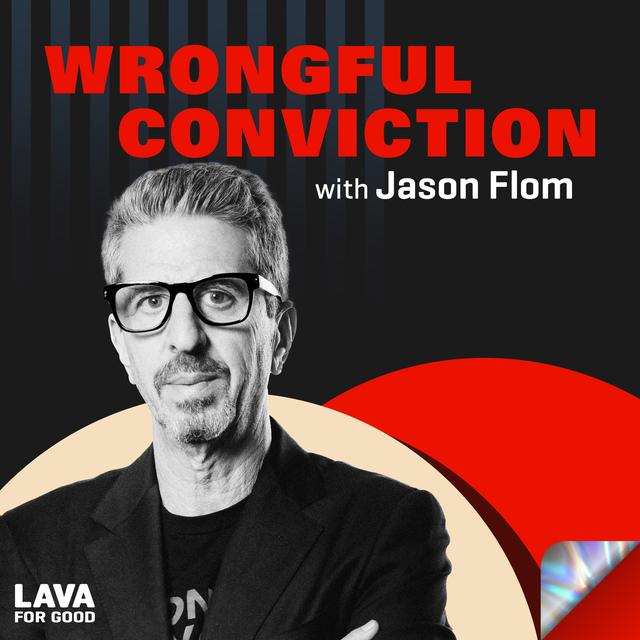
Conviction with Jason Blamm. Welcome back to Wrongful Conviction with Jason Flamm. That's me, of course, I'm your host, and today I'm really excited because we have a woman who is in our wrongful conviction community considered a legal legend. Her name is Leanne Goudie, a renowned defense attorney who has done phenomenal work on this case. So Leanne, welcome to Wrongful Conviction. And with her is her client, Paul Hildewin.
Paul served thirty five years on death row in Florida for a crime everyone should have known from the outset he didn't commit. They may have known he didn't commit it, but one way or another, he survived thirty five years on death row. He survived cancer, he survived, and he's here today to share his.
Story with us. So Paul, welcome to rafel Conviction.
Thank you, Jason. I'm glad to be here.
And Paul just informed us that he's sitting on his porch, breathing some fresh air and looking at some green grass and stuff. So I'm glad to hear that you're living your best life to whatever extent is possible. So let's go back. Where did you grow up and what was your upbringing like? And if you can bring us right up to the time that this whole tragedy occurred.
Now, I was born in a small town called Poughkeepsie, New York. I never really got to know my mother. She passed away when I was two years old. When I turned five, my father just decided he didn't want me, so he would put me wherever he could. And there was some good place that I was at, and there was some bad places. Into my teen years, you know, like all most teenagers, you know, you experiment with drinking, and it was all it's all kind of a haze,
you know. I was drunk so much. But when I turned eighteen, you know, I got in a little trouble, ended up doing a little prison time in New York. And when I got out, it was nineteen eighty four. I was twenty four years old, and I come down here to Florida to live with my father. One of the families that I lived with. Always taught me it doesn't matter what a parent does, you always have that respect because they are your parent. And I always respected
my father. I didn't really love him, but I respected him because he was my dad. So September twenty first, nineteen eighty five is when I was arrested for the crime that put me on death row for a crime that I did not commit.
And Leanne, can you walk us through this awful crime and how they managed to go off of the who would have seemed to be the obvious aspect in target Paul?
Sure. So the victim allegedly went missing on September ninth of nineteen eighty five, which would have been a Monday. And the reason why they zeroed in on that particular day is because well, her sister and her would speak practically every day. Well, the sister had gone two or three days without hearing from the victim. So the sister went over to the trailer where her sister had lived with this boyfriend, William Haverty, the living boyfriend said, Hey,
she left on Mondays. She was going to go do laundry at the coin laundry. She was going to deposit her SSI check that had come in over the weekend at the bank. The victim had a little bit of a reputation for being somebody that would frequent bars and might randomly go home with a guy, so at first the sister won to see if maybe something like that
had happened. When she still hadn't heard from the victim the next day, she went back to the trailer and insisted that the boyfriend go with her to the police department to report her missing. And so on Thursday, September twelfth, in the evening, they go to the Hernando County Sheriff's office. They report the victim, whose name was ron Setti Cox, missing, and then the very next day, which was Friday, September thirteenth, a group of boys find a deserted car with a
really bad smell. Police respond and they find the victim nude, stuffed in the trunk of the car with a ligature around her neck. The immediate suspect is the living boyfriend, William Haveerty, who was about twenty years younger than the victim, and he just appeared kind of scurly to the police, and so they focused in on him. What ended up happening was they wanted to see when she had gone
to the bank to deposit the social Security check. And so they discovered that the last check that came in on the victim's bank account was cashed by an individual named Paul Hildwin, and that he had come through the drive through of the bank on September ninth at approximately
twelve thirty in the afternoon. At that point in time, now law enforcement shifts their suspicion from the boyfriend, William Haverity, over to Paul and basically become extremely myopic and focused in with a tunnel vision only on Paul.
Right, And there was a lot of circumstantial evidence right, that was really just the result of an unfortunate coincidence, which goes back to the night of September.
Eighth, myself and three friends went to a drive in movie and I think it was a Clon Eastwood movie, Pale Rider. We left there and I dropped the young man that was I dropped him off at his house and then I started heading home. The two girls that were with me, they lived, you know, just down the street from me, so I was taking them home as well, and I ran out of gas, and I got like a dollar or something worth of gas put it in
the car. I put a little bit in the car bead to try to get a start, but the way the car was setting it was on an angle, like almost in a ditch, and the gas wasn't getting pulled up into the engine. So I went to my house, my father's house, and I had to get a battery because I wore a battery down in the car trying to start it. So I got the battery and I
got a ride back from a friend. Anyway, he got back to the car still wouldn't start, so I wasn't going to run that battery down, so we got in the car and we ended up just falling asleep.
So when he's en route to take the girls home, the car runs out of gas and stalls in front of a bar called the Lone Star Bar. It's right off of US nineteen. Paul wakes up somewhere between eight thirty and nine am. Girls are still sleeping. He decides, I'm going to walk home and see if I can either borrow my dad's truck or get some money to
try to put some more gas in those cars. So he's walking north on US nineteen and the victim and her boyfriend William Haveerty are driving north on US nineteen.
They pull over.
He tells them, Hey, I'm trying to get up to my dad's house. He gets in the back seat. They're driving to the dad's house. She and the boyfriend start arguing about he's sick of her going out with other men. She's basically telling him off. The fight is getting pretty loud and hostile Paul sitting in the back seat. In the back seat is the victim's purse. Within her purse is like a separate checkbook holder, and the victim says, I've had enough of you. She stops the car. She says,
get out. Boyfriend says I'm not getting out. Victim says she's getting out. The two of them end up getting out. They slap each other around the lift little bit. All of this is going on. At this Paul's not that far from his house, so he grabs the checkbook thing and leaves, and the last thing he sees is that the boyfriend is on top of the victim and his hands around her neck. He's like, I'm not getting in the middle of this because the boyfriend has threatened him,
and he walks home. Once he gets home, his Dad's not there, gets some leftover money, hitches a ride back to where the girls are. He buys another two dollars worth of gas. They level out the car, He puts the gas in the car, drops the girls off at home in his car. He then forges one of the victims checks, goes to the bank, cashes the check, giving his ID the checks for seventy five dollars.
Right.
So, ultimately, because Paul, you know, foolishly, let's call it what it is, took a few items from the car, a radio, a ring, and of course the that we talked about. When the attention of the authorities shifts to him, they probably had some sort of eureka moment like, oh, look at this, we got sort of, for lack of a better word, the smoking gun. And at that point, like you said, the tunnel vision sets in. He really needs a great lawyer. And that's not at all how this played out.
Right, So on November twenty first, they get a grand jury to indict him with first degree murder and they announced that they're seeking death. So this particular attorney, Dan Lewin, had just graduated from Florida State Law School. He had never done a murder case. He had never done even a serious robbery case. So on April twenty fourth of nineteen eighty six, he gets appointed to this death penalty case and they pick a jury four months later on
August twenty fifth. In between that time period, he conducted absolutely no investigation. This defense lawyer took depositions, and the significance of that is the lack of thoroughness. In addition to that, it is also clear when you review those depositions that the prosecution was not giving him all the
police reports. In addition to that, the Hillsborough County Sheriff's office decide, you know what, We're not going to use the Florida Department of Law Enforcement, which was the state agency that would do the lab work for the police agencies in Florida. We're going to send this stuff to the FBI. And it's at the FBI where they're doing the so called roology, hair examination and tool mark examinations on some chrome strips that they believe came off of the alleged victims car.
You've just identified several of the key elements of junk science that we talk about in our podcast Raflicviction Junk Science.
But there's so much more to this.
You have circumstantial evidence, you have tunnel vision, tons of junk science, and then you have incumbent defense attorney, and you also have experts that are willing to lie on behalf of the prosecution. And we know that the prosecutor at the present to the soroology report from an FBI's forensics expert who falsely claimed that bodily fluids found on two pieces of crime scene evidence, the underwear the woman's
underwear and a washcloth, both matched Paul Hildwin. The expert also claimed that Paul was among only eleven percent of the world's white male population who could have deposited the fluids, and that the fluids could not have come from the victim's a strange boyfriend. So this is a mountain of shit, I mean.
Paul, shit is the appropriate word.
Thank you. I chose that carefully.
In defense of mister Lewan on this part. They sprung on the soroology evidence that did not come out until opening statements, and he immediately objected and when they approached the bench, he said, this can't come in. I was told that the zerology evidence was of no value, everything was too degraded. They couldn't get anything of it, and now they're telling the jury that it links my client and they can't use that, and the prosecution and goes, you want to bet that's on the record, and the
judge says, yeah, no, this is opening. They can do it, and we'll address it during the trial. And then when they come to the point where he objects again during the trial, it's the friday before Labor Day weekend, and the judge says, well, you've got till Tuesday to be ready. Three days. And remember what we had to work with in nineteen eighty five. There wasn't internet research. When we researched case law. We went the old fashioned way into
the law library, which took a lot of time. So he basically gives us inexperience, unqualified lawyer three days to familiarize himself with roology, evidence and secretor and nonsecretor. You have got to be kidding me.
So September fourth, nineteen eighty six, you were found guilty, and September seventeenth, the jury, by a unanimous vote of twelfth to nothing, sentence you to death.
Even though the defense was what it was. I didn't expect that when they sentenced me to death. I just I don't know. I think my mind just shut down. After that, what I call the real living hell started. You're basically in that cell twenty four hours a day. You get three shours a week. You get to go to the yard twice a week, and it's a little tiny yard. And if you don't go to the yard, you're just in that cell twenty four hours a day, and you become desensitized.
Really.
After like the first four years, I just disconnected myself. I didn't care about time, I didn't care about holidays. I didn't you know, none of that stuff mattered. What was important to me was just surviving. After my dad passed in nineteen ninety, I didn't have a visit until two thousand and six. My life was in that cell. I did everything I ate in there. I washed all my clothes and there. I mean, my whole life was
in that little box. In nineteen eighty eight eighty nine, a very good friend of mine, Kenny Hardwick, he gave up and he was in the cell next to me, and I could see him. The windows were not in the cell. They were like eight to ten feet away from the front of the cell. The cell fronts were all open. We could talk, we could pass things back and forth. And I watched them hang himself. I couldn't stop them. I couldn't help them.
You know. I went to screaming for the police.
They come and tell me to shut my fort mouth.
This episode is underwritten by the AIG pro Bono Program. AIG is a leading global insurance company, and for over a decade, the AIG pro Bono Program has provided thousands of hours of free legal services and other support to nonprofit organizations and individuals most in need. More recently, the program added criminal and social justice reform as a key pillar of its mission.
This episode is brought to you by Stand Together.
Stand Together is a philanthropic community dedicated to helping people improve their lives. For more than twenty years, Stand Together and its partners have been on the front lines of criminal justice reform. By empowering people to take action, supporting nonprofits, and working with businesses, Stand Together tackles the root causes of problems in our communities and empowers those closest to
the problems to drive solutions. Solutions like reducing unjust prison sentences through the First Step Act, empowering community based programs and help people re enter society and now working to bridge divides in our communities. To learn how you may get involved, visit Standtogether dot org slash conviction.
I believe it was either nineteen eighty nine or nineteen ninety. Governor Martinez signed Paul's death worn and Paul has the fortuitous opportunity to have a terrific lawyer named Marty McClain, and so Marty begins to investigate. And at that point,
the state attorney is different. And so when Marty McLain issues the requests for Paul's file and all the police reports and whatever, they actually turn it over, and that's when he discovers all these things that either were not disclosed to mister Lewin or that mister Lewin just didn't bother to use, like the victim's nephew that says that he was having drinks with the victim on Monday night,
September ninth until eleven fifteen pm. Meanwhile, according to the state's theory at trial, Paul had allegedly killed her somewhere between nine point fifteen and ten in the morning. But yet the nephew is having drinks with her as the boyfriend was mad and sulking in a corner well. That never came out in trial. That nephew was never deposed by mister Lewin. The boyfriend was allowed to represent this
really fabulous relationship with Throng. So Marty McLain discovers that when law enforcement searched the victim and her boyfriend's house, there was a note in the garbage can that said if you don't like living here, you can fuck off and die. That never came out during trial. I mean it just went on and on and on. So he
discovered all this stuff. He found what's called the thirty eight to fifty motion, which is a motion to find the defense lawyer ineffective of counsel and that if Paul had had effective assistance of counsel or had received this Brady information and it had been used, it would have changed the outcome of the trial. And the judge denies both and says that Paul had effective assistance of counsel. It goes up on appeal to the Florida Supreme Court Court.
The Florida Supreme Court hangs her hat on the soroology evidence to say, no, it wouldn't have affected the outcome of the trial. In first phase. But we do find that the penalty phase was ineffective, and they grant Paul the opportunity to have a second penalty phase, and so that happens in nineteen ninety seven and the jury comes back eight to four for death. Remember at the time in Florida, it only required a majority of jurors to
vote for death. So Paul gets death again and so CCRC, the group that Marty McClain worked for, contacts the Innocence Project they get involved in. During all that investigation, they also discover another witness that said she had had a conversation with the victim at three o'clock in the afternoon on the Wednesday after she supposedly died. They also started attacking the soerology and they seek for it to get into they tested. When they do, at this point, DNA
is in existence. They discover that the DNA on the panties and on the washrag, which is what was sold to the jury in nineteen eighty six and what the Supreme Court relied upon in sustaining his guilty verdict both the first time and during the thirty eight to fifty hearing, do not match Paul.
It was February of two thousand and three, we went to the Circuit Court with the test results.
So that ends up happening that they discover, Okay, it's not Paul's biological material on this, we want you to run it through the CODA system, and they start getting pushed back from the state and the Attorney General's office. And this continues and continues to get litigated until two thousand and eleven, where finally the Supreme Court says, put
it in the CODA system. When they run the DNA into the CODA system, it matches William Haveerty, the victim's living boyfriend, and at the time he was incarcerated for sixteen counts of sexual battery for sexually molesting his stepdaughter.
And here we go again. I'm so sick of these stories where the wrong person gets locked up the actual perpetrator remains free and goes on to commit these unspeakable acts against people who never should have been victimized in the first place if the system had worked the way.
It should so then at that point Nina Morrison and Morty maclain are pushing the Supreme Court to give Paul, based on this newly discovered evidence, a new trial, with the state giving pushback under the grounds, hey, this was the sex crimes case. And finally, in June of twenty fourteen, the Florida Supreme Court grants Paul on new trial.
Okay, but now, how did this case, of all the cases end up on your desk?
Nina Morrison called me and asked, could I fly down to Tampa and meet with you and talk to you about this case. Anybody that knows Nina Morrison, she's like, Sam, I am, don't let her in your house because she's going to convince you to do whatever she wants you to do. And so she came into the office and persuaded me to agree to do this case pro bono beginning in August of twenty fourteen until it concluded on March ninth of twenty twenty.
Two, thousand and three.
The DNA proves DNA we're talking about right, was produced that proved that Paul didn't do it, or at a minimum, that the state's case was completely wrong, and that the main piece of evidence that they basedid I was proven false. And yet it took seventeen more years to bring Paul home. And then even that comes with an asterisk right.
You know, I get appointed to the case in twenty fourteen, and so the stay they still stood on the position that they felt that Paul was guilty, and so to them, the quote fair end quote option was to let him plead to second degree murder, get credit for time served, and put him on lifetime probation. So Paul's big mandate to me from the beginning was I would like to
feel grass underneath my feet before I die. And so I would talk to him about these offers the state was making and you know, explain to him why it was basically a no brainer for us to say no to that and continue forward. But we did talk about would you take anything to guarantee that you would get out?
And we have kind of talked about, well, I would plead reluctantly, but I would plead no contest to a second degree murder and time served, and I'll even take some probation afterwards, because i know I'm not going to commit any crimes, and so I'll do that. So fast forward to Friday morning before trial, March sixth, and the prosecution says to me, would he still plead to a second and time served? But we're going to want probation, and Paul was like, yes, he goes, you know, I
want the bird in the hand. I want to know I'm going to get out. I don't want to take any risks, so he pled. You know, it was totally Paul's decision. We were one hundred percent ready to proceed forward with the trial.
Paul March ninth, twenty twenty. I've watched the video of you walking out more times than I want to admit. It's so incredible. What was that like?
And when I walked out the door of the jail, I was met by Lean Goudie and kate O'Shea. I actually couldn't believe that it was really happening. And that day when we left the jail and there was the first thing I wanted to do was feel grass under my feet, my bare feet, just to walk on grass. He goes inside the jail, Well, then the prisons. I mean it's all concrete and steel.
That's it. You don't get the walk on the grass.
Yeah, it's just the simplest thing. That was a big thing for me. I wanted to walk on the grass, and as the video shows, that's exactly what they did. They took me to a nearby park, and that was the most special part about it.
Really walking on grass.
People don't understand what we take for granted every single day of our life. Closing the door by yourself, stepping on grass, smelling fresh cut grass. It made me realize just what myself included everybody takes for granted. Then Miss Goudie and her partner Kim Kahn Kato'sha and Anthony Scott, they took me to Cracker Barrel on the way down to Tampa, and I had never been to the Cracker Barrel and that was my very first that was my very first freedom.
I just want to interrupt so nobody thinks I'm at cheapskate. It was the best restaurant in Hernando County.
Thank you for clarifying that.
Now, Paul, this was touched on a bit, but I mean, it wasn't bad enough that the state was trying to kill you, but cancer.
At first, it was just recognized that I had a lump in front of my left ear and the gland in my throat on the left side was swollen up. And I went and I saw an ear, nose, and throat doctor and so he did a biopsy on both the lump and the swollen gland, and it came back to be non Hotchkins lymphoma. So I went through surgery, through radiation, then I started chemo.
You know, and thankfully you made it, but cancer wasn't done. You still had to go through it two more fucking times.
In twenty eleven or twenty twelve is when it showed up again.
The next time I believe it was.
In twenty sixteen twenty seventeen. By that time, I was used to the weight loss, the sickness, and.
No hair.
I lost every single piece of hair on my body. I looked like Uncle fester On.
Jesus Paul, You're just really fucking hard to kill y. I don't know how else I think. Yeah, I mean the state can't. Cancer can't.
He survived cancer on death row, so clearly you know God didn't want to kill him. If he was supposed to be dead, he would be dead.
Speaking of the magic of the universe, I must take this opportunity to congratulate lean on her election to the Thirteenth Circuit Court Judge Leanne GODDI.
Thank you, thank you.
Typically when you're a new judge, you do rotations through family law or one of the other areas prior to going over to criminal, but I'm being placed right in criminal, so i will be taking over a circuit criminal division. So I'm very excited.
That's amazing and it makes me so happy both for you and also knowing that someone from the defense side of the bar will be sitting on the bench.
So all the best.
And on that note, we're now going to go to the segment of our show called Closing Arguments. It's the part where I first of all thank both of you from the bottom of my heart for being here and sharing your story and of course your spirit with us. And then now I am going to shut off my microphone, kick back in my chair, close my eyes, and just listen to whatever you want to say. We'll start with you, Leanne and then finish with Paul.
You know, it was my privilege to represent Paul. I'm so grateful that Nina Morrison entrusted his case to me, and I'm grateful that Paul trusted me to represent him. I think that it's always an honor when somebody that's accused of a crime puts their trust in you as a lawyer to do the best you can for them, and I'm just very, very grateful to God, frankly, that I was able to deliver on Paul's request to be able to let him feel grass underneath his feet before
he died. And hopefully he'll have many, many more years to live and continue smelling grass and cut grass and feeling it and living peacefully and happily out in society like he should be.
Paul over to you.
Yeah, Leanne and I have talked several times, you know, about my belief in God. I believe that that's what got me through thirty five years. I also believe it be the reason why Nina Morrison was put on my case, why Leanne Goudi was put on my case. It was by the grace of God. I've been blessed so much since I've been out because of the Innocent Project in New York, the Innocent Project in Florida. They are a
nonprofit organization and because of the donations. It's one reason a big region why I'm sitting here where I live now. There's an organization that helped me find this place, and it's called the Sunny Center. They are a non profit organization and they are the ones that have helped me since I've been out. They have been there every day, every step of the way. They also need donations in order to help people in my position and exonnaies.
And you know.
They've gotten me health insurance, They've helped me get my driver's license. They're there, I mean, but they won't be there if people don't make donations.
And I believe they they.
Were put there by God as well, you know, in my life.
And I want to.
Say thank you, leek LeAnn. The freedom is so sweet. You know, you gave me back my life and I thank you with all my heart.
Always, Paul always, thank you for listening to Wrongful Conviction with Jason Flamm. Please support your local innocence projects and go to the link in our bio to see how you can help. I'd like to thank our production team, Connor Hall, Jeff Cliburn and Kevin Warnis. The music on the show, as always, is by three time OSCAR nominated composer Jay Ralph. Be sure to follow us on Instagram at Wrongful Conviction and on Facebook at Wrongful Conviction Podcast.
Wrongful Conviction with Jason Flam is a production of Lava for Good Podcasts in association with Signal Company Number one