



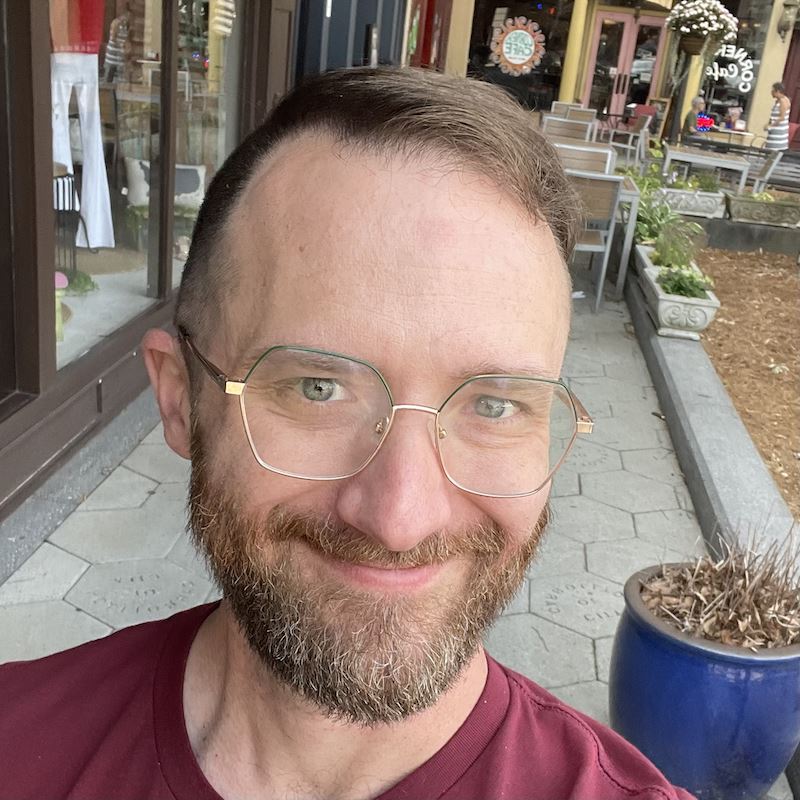
 Gene Liverman
Hello, everyone, and welcome to the volunteer technologist podcast. Here, we take a look at the different ways that people who are technically inclined volunteer outside of their primary job. Today, I'm joined by Anita Ihuman. How are you doing
 Anita Ihuman
today? Fine. Thank you, Gene. Hello.
Gene LivermanIt's nice to meet you. Would you here. Would you, take a moment and introduce yourself to our listeners?
Anita IhumanOh, yeah. Sure. So hello, everyone. I am Anita Ihuman. I am a developer advocate at, a company called Metal Gear. And, on the side, I am also, doing a lot of things in open source from community management to building programs, to contributing to research efforts, and, so many other awesome stuff that I would love to share here today. That sounds pretty interesting.
Gene LivermanSo let's maybe start with the first one you mentioned with some of the open source community work that you're doing. What are you doing in that regards?
Anita IhumanYes. So, I am con currently on the CHAOSS, board of directors, and, I got there as a result of my contributions to the CHAOSS community and, in leading efforts around onboarding, documentation, helping other persons get involved, and, so many other areas like that. I also contribute to another open source community called Layer 5 as a community manager, where I also get people, settled in with the project and also navigate their way around the cloud native community.
And, Keith, that's just about the community aspects of it.
Gene LivermanSo you mentioned the chaoss board of directors. Can you tell me what chaoss is? I'm not familiar with that.
Anita IhumanIt's a community that is focused on, developing metrics and, analytics around open source community health. Right? So the abbreviation itself stands for, Community Health Analytics in Open Source Software, and that's, like, the long form for chaoss. It's a project under the Linux Foundation, And so it has a bunch of other branches within the project, but its core purpose is developing metrics metrics models and, softwares that also supports, open source community health and standards.
Gene LivermanSo the chaoss project sounds like a pretty cool one. What kind of things are you actually doing with it?
Anita IhumanOkay. So, within the chaoss community, I am part of the DEI working group where we develop metrics around, diversity, equity, and inclusion. And some other things that we do within the working group is, develop initiatives like the popular events budget initiatives that a lot of, open source events tend to have received badges for for their DEI efforts for the various events.
We recently launched another initiative, the, projects DEI project initiative to also badge open source projects for their DEI efforts. And on the side, we also do a bit of research to understand how open source communities and, diversity, equity, and inclusion come to play.
Gene LivermanThat's, that's very important work. I'm glad to hear that y'all are working on it and putting a real focus on it. You mentioned getting different badges. What does a project or work community have to do to get one of those badges?
Anita IhumanWell, honestly, it just involve or revolves around how much, how intentional the project is about the inclusivity and then how much effort is put into achieving those intentions. And so we just bring our metrics to help us, give the community organizers or the community maintainers um, a picture so they can reflect on their efforts. Right? So our metrics are more of, like, a mural for them to look into and say, okay. This is how much we have done in terms of DEI,
looking at these chaoss metrics. This is how much we have done. This is where we're at, and, this is where we can also improve in terms of, our diversity and, inclusion within our community. So that is what the badges basically,
Gene Livermanuse for or base basically signify. That's pretty cool. You mentioned doing some research with related to that. What kind of research do you do?
Anita IhumanRight. So, sometime last year, we did, a research to help us understand the impact of these, metrics, these DEI metrics that we have developed because we have, like, over 200 metrics as as of now, and we weren't quite sure how impactful it was in real time, especially to the, persons that these metrics were developed for, which are individuals who identify with underrepresented groups.
And as a result, we're not sure how effective our metrics were, and we had to go out to find out with, like, our interview, interview campaign. And so that brought about, the research study, and we're able to come to a good understanding on how we can improve and, how well we are doing with this, study.
Gene LivermanVery cool. I'm guessing that that's leads into some of the community building stuff that you're talking about doing. What kind of community building and related things are you working with?
Anita IhumanSo, I mentioned earlier the Layer 5 community. So I have been part of that community for, like, quite some time, mostly because my open source, journey started from there. And so I, got involved in as one of those interested in contributing to the project.
But then I also realized that I could also offer help, and so I got into mentoring other persons, onboarding other persons, also, managing efforts around, making sure that the community, you know, scales, also everything involving, getting people started when they jump into the community and all of that. So, mostly, that is what I do within the Layer 5 community. And then on the side, I am also managing another DEI working group under the open source, opens the sustained open source community.
So, basically, we just started sometime last year to, discuss how Sustain can get involved in the diversity and, inclusion discussions, how we can drive efforts around that. And we recently started working on, like, a DEI handbook that can also serve as a reference for open source leaders who are willing to, you know, get into this topic of DEI and also implement it within their communities.
It's more like a guide that people could also use whenever they feel like they want to know or want to find out more about, diversity, equity, and inclusion. It's pretty cool.
Gene LivermanWhat kind of what kind of things are you doing with regards to mentoring?
Anita IhumanAlright. So, I think that's more on so on the side, yeah, on the side, I have I am a technical writer, and so I do a lot of writing from documentations to articles and so much more. And so, in terms of mentoring, I have worked with some some open source contributors to get them into contributing to the documentation aspect of projects, you know, how they can contribute, pointing them to areas that can improve on their general writing skills.
And within Layer 5 community, I was able to get so many persons engaged by, developing the the community handbook, which today is, like, the primary onboarding tool that a lot of persons are getting involved in. And so we were able to put together the community handbook and, have it uploaded. And I think that was part of, like, the mentorship. Other than that, I serve as there's this program called a Mesh Mates within the Layer 5 community, and it's like a pair, mentorship program where you're,
paired up with someone to you know, who is more experienced to point you to directions that you're not very familiar with. And so I was one of the Mesh Mates within the Layer 5 community, helping persons to navigate the project and also get involved with the, contributing aspects of it.
Gene LivermanThat sounds pretty cool. Can you enlighten me on in terms of what the Layer 5 project is? Or
Anita IhumanYeah. So, layer 5 is, a community, an open source community that develops cloud native solutions. And, one of its popular tool is probably Meshry, a cloud native management platform where you can, like, view a variety of cloud native tools, look at which one is more competitive for your software, and all of that. So they have offers, like, a bunch of solutions, basically focused towards cloud native technologies and all of that. And so that's what they do.
Gene LivermanGotcha. So what got you into doing all this different volunteer work around the organizing and all of the other stuff?
Anita IhumanWell, at first, like, every person who is trying to upscale, it was the need to get hands on experience both from real time projects. Right? And, along the way, it became more of making impact and making a difference in these various communities. Like, in Layer 5, I got hung or hung on the idea that I can also get into the cloud native ecosystem.
So that helped me in one way or another, increase my knowledge on topics around DevOps, cloud computing, and, also gave me the drive to want to learn more by taking certifications and all that and which today I write mostly about as a technical writer.
And for the CHAOSS community, it was more on making a difference because, while contributing to these various communities, right, I could see areas that so many persons were, you know, disadvantaged as a result of, you know, certain, biases or certain inequalities and difference as a result of their differences generally.
And, when I came across the CHAOSS community to, you know, help community health at large, I just knew that it was going to be the right place for me to put this knowledge that I have gained from other people's experiences and make sure less people experience this. And I think CHAOSS is doing an awesome job with that with their metrics.
And I decided to take some of the knowledge that I have from working with the CHAOSS community to the Sustain OSS where I'm currently working with a DEI working group and all.
Gene LivermanThat's really cool. How receptive have you found the different open source projects being to finding out that there are ways that they could improve or that someone is coming in and recommending some improvements to their the way they interact with their community?
Anita IhumanFrom a personal experience, I think communities have been open to, you know, accept feedback. Have been open to change, mostly because these communities have already realized that there are existing problems that they need help with. And so, most of the ideas that I have brought up within these communities are, like, ideas that fix some of these existing challenges. And so I think they have been so receptive towards these topics that or suggestions that I bring up from my experience.
Gene LivermanThat's really good. I know that's not always the case. I've not personally experienced, but I've, you know, read various tech articles about communities that were not very open to change or not open to the feedback. And, of course, those communities, generally speaking, end up not surviving the long term. The people who are doing the work usually end up just going somewhere else. So
Anita IhumanWell, yeah, those communities exist, but something that I got to learn as, during the course of that research study with CHAOSS is, most of these communities that are not very receptive to change often larger, communities that have have been built a long time ago. And these, topics of DEI were not as at the time.
But then they survived through that period, and so it's more difficult for them to, you know, open up to the change and to topics like this because, there's always this, notion that if I existed through this phase without this, what makes you think I can't make it to the next phase
with, with all these as well. Right? And so, like, from the what I gained through that research is, newer open source communities are a lot more receptive to topics like this, new, opinions, a lot more than the older and larger open source communities.
Gene LivermanWith the older communities, have you you and the group started finding ways to show them the value and why they should care about it? Is that where some of the metrics come in?
Anita IhumanYes. Very correct. That's where some of the metrics come in and also discussing more on ways that research could come into play to showcase how how DEI in general can impact open source communities. I feel like, there are a lot of research studies that showcase disparities that exist within communities, inequalities that exist, but the very few of these, research studies capture, how much growth comes from open source communities that have accepted some of these topics. Right?
And, I think, research is a way that could also be used to showcase. A lot of persons rely on facts. They want to see, okay, where is the evidence?
Gene LivermanOh, absolutely.
Anita IhumanRight. So how much growth was there, and, how were they before this topic was introduced? So, like, having that fact readily available could help a lot of persons, you know, change their notion on these, you know, ideologies generally.
Gene LivermanThat kinda makes sense, especially in an open source community. A lot of times, it's very data driven, be it the data from the poor request or issues that are opened or the data from the track record of how things have been going. And with no data, it's just one person's opinion, you know, until proven otherwise a lot of times. So that makes a lot of sense. Right. So I have one other question for you. I noticed from our conversations before the recording that you're located in Nigeria.
And so many of the projects, at least the ones I'm aware of, kinda seem to be focused around either the United States or somewhere in Europe. How have you found that working with projects that are both geographically in a very different spot and frequently in a very different time zone than where you are both from a just dealing with the time differences and from different cultures because so many of times these projects also reflect the cultures of where they're kinda founded out of.
Anita IhumanRight. That that's an interesting question. And to be honest, at first, I I found this challenging. Like, the first one year to 2 year, I was still trying to figure out the time differences, how to communicate so it doesn't come off as offensive because, there's certain ways you would communicate to someone from Nigeria that a lot other persons will see as, oh, that is offensive.
I didn't realize that, but getting into the open source community, I was like, oh, so this is a problem. I have to adjust to it. And then the time differences, sometimes you feel like, oh, this time is convenient
Gene Livermanfor a call, and then you check the time, and it's, like, 2 AM my hour. And Yeah. That that does make for a little bit of an awkward conversation at 2 in the morning. Right.
Anita IhumanAnd then I have to okay. Should I stay up till 2 AM, or I should just, you know, let it go and catch up? But I figured that having to bring up these differences made the concept of open source more open source. Because introducing that, okay, these things are different from my own point of view or from where I'm from. May some of these open source communities adjust to, you know,
contributors from this part of the world as well. Like, for Chaos community, we had to create a group called the CHAOSS Africa specific, to, you know, support more persons that are coming from the African ecosystem. So we have CHAOSS Africa, persons from Angola, persons from, Rwanda, Kenya, so many other African countries, and not just Nigeria. And so it's a lot easier for us to relate amongst ourselves and, you know, make contributions because we can relate to it.
And then we take some of these contributions to the general community when the the meeting times, you know, align with ours and everything like that. And for other communities, you just have to learn to, you know, communicate your differences, and so the community is able to,
also adjust to it. And I've seen that for some of these communities like layer 5, I witnessed that there was a lot of improvement to the code of conduct to, you know, adjust to make other persons more comfortable, to make, more other purse other persons also more, you know, feel more welcomed and supported within the community. Because sometimes you jump on an issue and then the doesn't reply to, like, after
12 hours. And you feel like, oh, maybe they they not reply because I, from this part of the world, and they don't support me or they don't accept me. But that's not the case. Right? It's just a time difference. You probably didn't know that. And so having to, like, adjust the code of conduct and also get maintenance from different parts of the world made it easy for us to, you know, collaborate and also, like,
for me to also bring in more persons that are willing to contribute to these communities from my own part of getting into the community. Yeah. I really like
Gene Livermanthe ideas you were talking about there because what kind of went through my head is it's making open source open to everyone, not just to the little area that it started out in, and that's a that's a very good thing. The diversity through a project makes for a much better outcome in general.
Anita IhumanRight.
Gene LivermanCool. Thank you so much for taking the time to chat with me today. I really appreciate it.
Anita IhumanThank you so much for having me, Jean. This was an interesting conversation. I agree, but an enlightening one also. Right.
Gene LivermanBefore we go, I'd like to thank those of you who have boosted in support for the show. It is very much appreciated. This is a value for value podcast, which means I rely on listeners like yourself contributing back to fund it. As such, I'll never charge you to listen, but producing and hosting it does cost money.
If you got value from this episode, I ask that you contribute by sending a boost through a modern podcast app like Fountain or Castamatic or via the support the show link in the show notes that are visible in your podcast app. You can also find the show notes and transcripts at volunteer technologist.com.
If you would like to come on the show or know someone I should reach out to about being on the show, please send me a message via one of the links at the bottom of the show notes. Thanks for listening.