



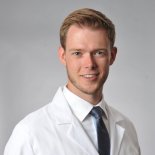
¶ Dr. Noblitt's Journey to Kenya
Welcome to UK Healthcast, a podcast presented by UK Healthcare. I'm Evo Terra. It's always good to get to know the person behind the doctor, so let's get to know Dr. Bryce Knoblett, a head-and-neck surgeon and medical missionary with UK Healthcare. doctor Noblet, thanks for joining me today.
Yes, I'm excited to be here.
Well, we're excited to learn more about you. So tell us about yourself.
So I grew up in Louisville, Kentucky, went away for undergrad and decided it was time to come back to my home state for medical school. When I first visited Lexington checking out the medical school, I really fell in love with the city, fell in love with the environment here at UK. and chose to come here for not only medical school but residency after that. So I spent nine years in Lexington before we moved away.
I know at some point in time you became an ENT surgeon, so tell us a little bit about that.
In medical school during my first year, I met Dr. Bush through a research mentorship program. And so he is the department chair here of the ENT program. And he kind of took me under his wing, introduced me to the specialty, which I hadn't really thought too much about beforehand, but really liked what he did on a daily basis and decided to pursue that same career. So several years after initially meeting him, I interviewed here for residency and stayed here for the five years of training.
Tell me about this thing I'm hearing about called Kenya here. What is this?
After finishing residency, I decided to move overseas to Kenya and work in a mission hospital. there serving an underserved, difficult-to-reach area to provide ENT care there. So I made a blog at kinyahere.org to kind of write about it and talk to my supporters about what we were doing and what they were supporting.
¶ Practicing ENT at Kijabe Hospital
When you're in those situations, when you're in a foreign country, especially one that has definite needs that aren't being filled by the people that are there on the ground right now, that's why you're there to help. What's the culture shock? Okay.
It was a big culture shock, big adjustment moving from here over there. We had three kids when we moved, now we have four kids and we've all had to adjust to life in Kenya. But where we're at in kind of a small village, there's not a whole lot of people, so it's not like a busy, crazy city. It's more of a nice, calm
forest environment. So the people are very nice. They're very hospitable. And it's been a pretty easy adjustment overall. Their sense of time is a little different than ours. So we've learned to not worry about showing up on time to things or not expect our Kenyan friends to necessarily be punctual, but that's a relatively easy adjustment to make.
What was it like in the hospital? An American based hospital versus a Kenya based hospital?
Kajabi Mission Hospital was founded in nineteen fifteen by some missionaries that went over there and they were starting in school but they also realized like, Hey, we really need a clinic here to meet some healthcare needs and it has grown substantially since that time. So now it's a three hundred and sixty three bed facility with a lot of national doctors that work there, but also some of us expatriates working there to provide
high level of care. So we don't just serve the surrounding area, but we get referrals from all the big hospitals in Nairobi and also from a lot of countries all around Africa. Patients will fly in to get their care at Kajabi Hospital.
I'm curious a little bit about training there at UK and how that impacted your work in Kenya. So tell me about that.
There are definitely some similarities between Lexington and its proximity to eastern Kentucky and where I work in Kenya, in that the large portions of our state have difficulty accessing healthcare and maybe aren't really focused on early diagnosis and prevention like we would want them to be. So Training here, getting to learn from those patients and operate on those patients with kind of advanced pathologies really set me up well to practice in Kenya where it's a lot of the same that
Patients have been delayed in diagnosis and treatment of their conditions, and so they're pretty advanced when they finally make it to us. But I had a lot of experience learning how to treat those kinds of problems as I trained here in Kentucky. Our department's pretty large. It's even larger now. I was touring the department today and I met with several of the new faculty who have joined since I finished here. And it's great that the department is growing.
Whenever you get to train under so many different people, I learned multiple ways of doing things. which has really come in handy in Kenya where you can't always take plan A or even plan B on any given day, but pulling tools out of the bag that I learned from seeing multiple different attendees treat a problem different ways.
I lived overseas for a time myself and uh had to experience medical care in foreign countries, and I was shocked how good it actually is. But one of the other things I was shocked about is how much. trade-off there is between physicians in one country coming to America and then going back to their home country and then vice versa. I'm curious, did you pick up any techniques or strategies that you adopted while you were over there?
There's definitely a lot that we do in American healthcare because we don't want anything to go wrong and this is the absolute best way to do something. And then in training we feel like, oh, this is the way it should be done, has to be done. And then you might get to Kenya and realize that all these like prophylactic things that I've been doing that I think are completely necessary, no one does them over here. And it turns out they're not necessary.
They may be nice. They prevent a problem every once in a while, but it's not like things are just not going to work if we can't use this fancy piece of equipment or use this really expensive medicine to kind of hedge our bets. the human body is pretty resilient and even with our relatively rudimentary tools there in Kijabe, we're able to perform some pretty complex surgeries and get good results.
Let's talk about some common conditions that you might have seen in Kenya. Are they very different? I mean, we talked about some extreme things, but just common things are they the same or different across?
Yeah, I mean we have all the common problems over in Kenya that we have in America, kids that need their tonsils out, nosebleeds, patients with hearing problems, dizziness. So that's all the same. I will say the main difference is there are way fewer ear, nose, and throat doctors in Kenya than there are in America. And so patients have a hard time finding an ENT doctor and
are certainly suffering with whatever condition for a lot longer before they do go. So for some chronic problems that are just treated with medicine. Treatment's pretty much the same, but for all these surgical problems that the surgery gets harder the longer the patient waits. That's the main difference there is the average time that someone has been suffering with a condition before they make it to the doctor and before we're able to help.
I would also imagine, and tell me if I'm wrong here or not, that you probably had less occurrences of children sticking things in their noses and ears, as opposed to what we have over here. Or am I wrong?
Yeah, no, that's still a common problem. In America, it's like Legos over there. It's beans. But yeah, we still have to get those out.
¶ Future of Global Health Partnerships
I know that you're part of the UK College of Medicine faculty. What's your instruction look?
The reasons for my visit today is to nail down the details for an overseas rotation for the ENT residents here at the University of Kentucky so that they can come work with me at my hospital in Kenya for a month or so and get that global health experience, see what healthcare is like in a different country. So I'm on faculty at UK so that I can oversee that rotation.
And it's about a month you say people usually stay?
We're still nailing down the details on how long it would be, but that's a pretty typical time for people to come rotate, so I think that's what we'll settle with.
Let's talk about you and Kenya for a moment. You've been there, you're here now, obviously, but you're going back there again. What are your plans? Do are you stay there for a long time, go somewhere else? What's up?
So we've been there for a little over two years at this point and we really enjoy where we live, where I work. So we don't have any plans to move. There's a really great school for our kids to go to. There's a big hassle moving all the way out there. So we're not looking to move anywhere else anytime soon.
Let's talk about personal things. This obviously is something that's important to you and for medicine at large. Why is
I've always been interested in working against global inequalities. In high school, I was able to take a couple mission trips through my school and church to go serve in an orphanage in South America and do a vision screening camp in Mexico and I guess those experiences open my eyes to what life is like for other people in other parts of the world that don't have all the nice things we have in America. And so that coupled with my choice to go into medicine led me to medical missions.
My faith in Jesus and my desire to live out my calling to serve led me to look at mission hospitals around the world. Kajabe hospital is really the only one I found that has an E and T department and so I was naturally led there'cause they have a lot of the instruments and they had a clinic already built and a microscope and everything so It was an obvious fit for where I could do the most good with my skills without having to build something from the ground up.
the more people get a chance to understand what the global majorities' lives are really like, we'd have more people like yourself out there doing great things, which is wonderful. And hopefully we'll have more of that coming. And I appreciate the fact that you're running more of the UK staff through the Kenya hospitals really to
That's fantastic. Let's wrap up by talking about the UK College of Medicine and UK Healthcare. Talk about the advancements and improvements in ENT services that's coming out of your organization.
During medical school, when I first met people in the department, there were ten faculty or so. And as I'm sitting here today, there's twenty faculty. So they have doubled in size in the past ten years, which is really amazing for the state of Kentucky.
having access to world-class healthcare right here in Lexington. These faculty have trained all over the country, done fellowships all over the country. And so we're really bringing expertise from bigger names, bigger cities right here to Lexington, so that our
citizens of the Commonwealth don't have to travel too far to get really good care. And Dr. Bush has been traveling over to Kenya for a number of years now. And so he's been taking residence with him and exposing us to global healthcare needs and how we can take things that we've learned here, treating people from eastern Kentucky over and and apply that to a Kenya context where we're treating people from rural farming villages who have never made it to the big city.
And vice versa. We're learning from the faculty at the University of Nairobi and how they deal with problems they encounter and maybe how we can apply that back here in Lexington.
Any final thoughts?
I am excited for this partnership. I'm excited to see how UK College of Medicine and the ENT department here can partner with Kajabe Hospital and the ENT Training Program at the University of Nairobi, and we can all grow stronger together.
Thank you so much for letting us get to know you a little bit better, doctor Knoblet.
Yes, you're welcome. Thank you for having me.
Thank you for listening to UK Healthcast, a podcast from UK Healthcare. We hope you've gained valuable insights from Dr. Noblet's experiences in Kenya. For more information or to support initiatives like Can You Hear, visit our website at ukhealthcare.u. I'm Evo Terra, and be sure to subscribe to UK Healthcast and join us next time wherever you listen to podcasts.