



¶ Intro / Opening
🎵 Music
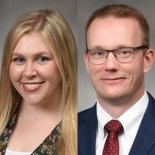
Glaucoma is the second leading cause of blindness, but how aware of it are you? Welcome to UK Healthcast, a podcast presented by UK Healthcare. I'm Nolan Alexander, and I'm joined today by Drs. Courtney Couch and Garrett Oberst, both respected doctors from UK Healthcare. Doctors, thanks so much for being with us today. How are you?
Good, how are you?
Doing very well.
Doing great. Thanks for having us.
Wonderful. Well before we get rolling, I want to make sure we're all on the same page.
¶ Understanding Glaucoma: Definition, Risks, and Treatments
Can you define what is glaucoma?
Yeah, and this is a common patient question for us as well. Glaucoma is a problem with what's called the optic nerve. The optic nerve plugs into the back of the eye and runs to the brain. So it has to take what you see and transport it to the brain. So if there's something wrong with that optic nerve, then you don't see as well as you should.
In patients, a lot of times this is most of the time it's because the pressure in the eye is too high or too high for that individual patient or too high for their eye for whatever reason. Normally a problem with the eyes drainage system not working as well as it should. That could be due to age or genetics or a multitude of other things. And
What the danger of glaucoma is that people often don't experience glaucoma. They don't experience symptoms until it's too late. And the damage from glaucoma is irreversible. So at first it affects the peripheral vision. So it affects vision kind of way out to the side. And then as it progresses, it comes closer and closer to the center of the vision and can eventually lead to blindness.
So our goal is to catch this as early as possible and to intervene in our patients, to make sure that they have good vision and glaucoma doesn't affect them throughout their
Well, as far as catching it as early as possible, who is most at risk? And how can people know when or if they should be screened?
So there are several different risk factors for glaucoma. To touch on a few, it can be a patient's age. Typically older patients are at higher risk for developing glaucoma. Family history of glaucoma can also increase a patient's risk as well. Systemic conditions like diabetes, high blood pressure can also put you at risk for glaucoma development.
I always tell patients it's really important to keep your yearly exams if you haven't formally been diagnosed with glaucoma yet, so your provider can evaluate you and see if you have any signs or maybe some suspicions of glaucoma.
In addition to that, those are all really important risk factors. Race is a risk factor. We see a higher prevalence in our Black patients, Hispanic patients. As well. As well as people that have had like trauma to the eye or multiple surgeries or if they've had a complicated eye history, odds are that does increase your risk for glaucoma in some way, shape, or form.
What treatment options are available today and how do they help protect vision?
Yeah, this is a lot longer of a conversation than we would have had probably fifteen years ago. There's a lot of different treatment options now. Classically, when people think glaucoma, they think using eye drops. Those eye drops, put them in once or twice a day, they can lower the eye pressure. That is a still a very valid first line option.
Over the last 20 or so years, really, there is a new low light touch laser therapy that can be used as a first line treatment, especially for patients that don't want to use drops or drops would be inconvenient. Or maybe they have dry eyes or they're worried about developing dry eyes. And so we do that a lot for first line therapy for glaucoma. Or if a patient's already on drops and we don't want to add three or four drops to their eyes. We can do this laser to kind of buy some time.
We often do cataract surgery that can lower the eye pressure a little bit and help us in our treatment. But there's a new category of surgery called minimally invasive glaucoma surgery. where we can work on the eyes natural drainage system, often not leaving behind any type of device or suture or anything like that.
and only adds about five minutes of time to the cataract surgery. We'll do it at the same time. So that's a big thing that we've been able to use recently. It's a lower risk surgery than our traditional surgeries that have been around for longer. And then
As we get later on, we may need to put in a new drain or bypass the eye's natural drainage system because it's just not working. I tell patients that glaucoma treatment is unfortunately kind of just kicking the can down the road and doing the next least invasive thing that we can. And so patients may start out just on drops and then they may get a lace.
And then they may need cataract surgery with uh minimally invasive surgery. And then five to ten years later, you know, they may need a drain. And it doesn't mean that anything necessarily has failed. It just means that over time the drains not working as well and it kind of continues to not work as well.
¶ Living with Glaucoma: Adherence and Ongoing Care
Well, given what you said of how much has changed over the past couple of decades, what does living with glaucoma look like? And what advice would you give to someone who is newly diagnosed?
So living with glaucoma can range from being completely asymptomatic with no visual complications or all the way down to complete blindness. So the goal for glaucoma treatment is for you to remain in that asymptomatic stage. I always tell patients the most important thing that they can do is to keep their appointments and comply with their treatment plan. With glaucoma patients, we follow them a lot more regularly than we would follow someone that doesn't have glaucoma.
And at those appointments we always do more testing that can tell us if a patient's treatment is working for them, if they can possibly be progressing. several different factors on, you know, how that patient is doing as far as their eyes. So the most important thing that they can do is just to keep those appointments and adhere with any changes that need to be made with the treatment plan.
Yeah, I think that's a big one. And luckily here we're able to sometimes partner with people in the community. A lot of our patients strive, you know, two hours or so to come here. And so Dr. Couch is in Ashland. I go to Ashland once a month and the clinic is we're really busy when we're there. But then she's able to check them in between and kind of let me know if things change and then we talk about what they need to do. And so that can be really helpful.
And we can do that even with people who we don't have an office in their area to let them follow with somebody close. That way they don't feel like they have to drive two hours every couple of months.
But yeah, d keeping the follow ups is really important. We have plenty of patients that maybe fallen off the radar and understandably so due to social things, you know, life happens and The danger, like we said, glaucoma is often asymptomatic, but then if you're coming in when you're symptomatic from glaucoma. you have in stage glaucoma. And so we want to catch patients early and and we kind of practice this like preventive medicine. Hopefully
Our patients are like, why'd they treat me for glaucoma my whole life? It never bothered me. That's the goal is for people to never even know that they had it. But but that can be a hard thing to treat and it can be frankly kind of annoying for a patient to use a drop for years and years and years when I kinda don't really see any benefit from this. But
Complying with treatments and making sure you know when things happen. And then just taking care of yourself otherwise. A lot of times patients ask, what can I do to decrease my risk? And the answer is often nothing. Often the answer is just you're pressuring your eyes too high and we just have to treat it. There are some things that can
accelerate the progression, sleep apnea, untreated sleep apnea, or low blood counts and things like that. So following with the primary care doctor is important. And then for our patients with advanced glaucoma, our optometrists here will do what's called a low vision appointment for them, where they kind of, and Dr. Couch probably knows more about this than me, but they work with patients who have severe vision loss.
It's kinda help them make the most of whatever vision they have and they're really goal oriented. You know, if your goal is to read your Kindle, then they will do everything they can to make you be able to read your Kindle. If it's to watch UK play basketball on TV. They will do whatever they can to make sure you can watch UK play basketball on TV. So they've gotten vision out of people that we didn't think was possible. And so they've been really helpful.
Yeah, gotta make sure we don't miss those slam dunks, right?
Exactly.
So you both have highlighted how important it is. And I just want to underscore it, given the prevalence of having glaucoma. And being asymptomatic, just how important it is to maintain those annual visits. I've just heard that so much in this conversation. I want to make sure that we underscore that. Is that correct?
Yeah. And some people fall into the category of a glaucoma suspect. And so it means it's somebody we're gonna follow to make sure that they don't develop glaucoma. They don't have damage yet from glaucoma, but We're just a little concerned that maybe one day they will. And so at the annual visit, it can be a long visit for patients sometimes because we get a couple different tests.
We try to stagger them if we're seeing you more than once a year, but sometimes we just see you once a year. And so we'll get a visual field test where they sit in a machine and they're presented different lights kind of in different parts of their visual field and they click a button when they do it. In general, I mean, I've done one before. I'm sure Dr. Gouch has as well, like on ourselves. It's not a fun test to do. It's like any test. You feel stressed, you feel like you're missing out.
But it provides really helpful information for us. And then we do a scan of the optic nerve as well and see if there's any damage that maybe isn't even showing up on a field yet. We could catch it really early. So Yeah, keeping those appointments is very important. And then if you miss'em, we're obviously busy, but calling in just to get it in as quick as you can for us to rescue.
So a lot of times we see patients who say, Okay, I don't have any problems with my vision. I don't think I need glasses. So they'll go five, ten years, sometimes even longer without having an eye appointment. And then you try to convey to them, you know, I think that you may have some characteristics of glaucoma.
And that kind of leads us down a whole different loop of, you know, glasses aren't really gonna fix your vision, but we're aiming to make sure that you don't have any vision loss in the future.
¶ UK Healthcare's Advanced Glaucoma Services
You both have given us a comprehensive look at how patients are treated at UK healthcare. Is there anything in your mind as far as how patients are treated that stands out and how UK healthcare approaches this, how you both approach this, it stand out versus alternative?
So we have a lot of technology that you may not have at other clinics. UK is really advanced whenever it comes to top of the line testing, all the technology there. We also have a really good rapport between each other. So Dr. Oberst and I we can communicate. I mean, we communicate almost daily about patients. They may see him every few months, but I can kind of
have those more frequent appointments in the meantime. We have a really good rapport between each other to kind of have the top patient care.
I think our access as far as where we're able to go and meet our patients is important here. I do a satellite in Ashland. I think there was one glaucoma provider in Huntington, West Virginia that moved a couple of years ago. And so now the closest is either they drive to Lexington or they drive to Charleston, West Virginia. You know, our patients in Ashland and that kind of
Pocket there.
We have satellites in Georgetown, Richmond, Somerset, London, where our glaucoma doctors will drive down there, see them and We do the surgery here, but often we're able to do some post op care there and coordinate things. And so I think our ability to do that really helps because not everybody can drive. Some of our glaucoma patients can't drive because of their vision.
And so they have to have a son or a daughter or a family friend or a neighbor take off work for a day to come bring'em. And so you want them, if somebody's gonna take a day off work, you know, you really want it to be worth their while to come see you. And so
if they can be seen closer to home, I think that's important. And then yeah, we're always looking into new technology and new things to try. I don't want to say that we're doing a lot of experimental things because we're not, but the latest things that are proven to work. Or the tests that are proven to show us whether or not there's some risk of barcola or not. We're trying to adopt all those but we
Doctors, you provided us with so many important topics and details related to glaucoma today. I just want to say thank you so much for your time with us.
Thank you.
Thank you.
That was doctors Courtney Couch and Garrett Oberst. Thank you so much for sharing your insights on glaucoma. For more information, visit ukhealthcare.uky.edu. If you enjoyed this podcast, please share it on your social channels and explore our entire podcast library for more health topics. Thanks for listening to UK Healthcast, a podcast from UK Healthcare.
🎵 Music