



¶ Intro / Opening
Another informational report.
🎵 Music
Featuring conversations with our physicians and other healthcare providers.
¶ Understanding Heart Disease & Cardiology Roles
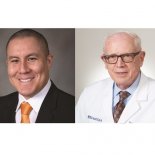
Heart disease is the nation's leading cause of death and a major cause of disability around the world, and that's why it's so important to have a state of the art cardiology department. Today we're talking about cardiovascular medicine at UK Healthcare. And my guests in this panel discussion are Dr. Francisco Hidalgo, he's a general cardiologist.
and doctor Thomas Wayne. He's a cardiologist and the director of the Lipid Management Clinic, and they're both at UK Healthcare. Doctor Hidalgo, I'd like to start with you Tell us a little bit about the current state of heart disease today. What's the prevalence and awareness as you see it? What's different now about what we know about this disease?
Well um I think like I would like to start talking a little about about the region, about Kentucky. I think like currently the situation of Kentucky is that there is a very high prevalence of people smoking
and as well of people um with uh being overweight or with obes obesity. So I think that there's like some modifiable risk factors of coronary artery disease or cardiovascular disease that can be modified compared to to other states I will say that the prevalence of either smoking or being overweight is pretty pretty very high in uh in Kentucky
So I would certainly agree if I can uh jump in and unfortunately there's still a lack of full awareness, including on the part of uh of primary care uh providers in terms of the importance and the things that we have to offer because we do have so much to offer now with statins, these newer injections, the PCS K nine inhibitors
that really can help prevent or delay the occurrence of coronary disease and yet it it's still incredible the number of times I see patients where the right thing has not been done. Constant education is critical.
I couldn't agree more and education would seem to be the crux of the understanding of heart disease, whether it's in Kentucky or really anywhere else in the country. One thing that I don't know that people really understand when they're looking for a provider, even to get tested, Dr. Wayne, is the difference between you all. Can you tell the listeners what is a cardiologist versus a cardiac?
surgeon or a cardiothoracic surgeon, or they hear the term interventional cardiologist, and they don't know what that means either.
All right. Well a general clinical cardiologist, or we just even refer to ourselves as a clinical cardiologist. is that we we are specialized in the care of patients with cardiovascular medicine. Really we don't limit ourselves just to the heart. Most of us the whole vascular system is at risk. But we are specialized in terms of of making decisions of when to refer the patient on and I'll explain to whom we refer.
And then what we can do with the very best prevention, like the use of these statins to try to delay the occurrence of coronary disease. and specific medication treatments which we will we will uh manage. On the other hand, a cardiac surgeon or cardiothoracic surgeon is specialized just in surgical procedures
on the heart. And a lot of them when we say cardiothoracic, they do some other test procedures, but they are surgeons. They will not see the patient unless someone like us or an internist or primary care v provider has referred that patient. the interventional cardiologist is one that is most highly specialized in doing percutaneous procedures on the heart that can help avoid the need for surgery such as
with a patient having uh a severe coronary disease and symptoms, doing an angioplasty with a balloon and with a stent placed over that to help keep the lesion open. That is the interventional cardiologist a lot of interventional cardiologists do see patients but their practice is directed at doing these pro these they are procedures and they help avoid the need to do a more extreme procedure, which would be cardiothoracic or cardiac cardiac surgery.
Um, I will I would like to add I I agree with Dr. Wayne's uh description of each of the of these uh of these uh physicians. Uh I would I I would uh the way that I see it is that As general cardiologists we are treating the patient medically with medications, trying to modify uh lifestyle, provide medications as Dr. Wayne is pointing out. We also try to prevent heart disease, we we prescribe medication statins to decrease the risk of uh cardiovascular disease.
Uh, but obviously as as any other field in medicine, we unfortunately we cannot just manage everything just by medications or prevention. sometimes we have to ex uh uh escalate to other options. So from one standpoint we have the interventional cardiologists, as Dr. Wang is explaining. who is the the person who especializes on in uh on doing interventions on the on the heart, especifically doing stems
or balloon angioplastys. Obviously there has been new uh advances on what the interventional cardiologists can provide to the patient and now there is including uh interventional cardiologists and also programs that are focused on doing valve replacement.
Uh on the other on the other side uh we have the thoracic surgeon which is the surgical option, the surgical approach. And obviously if medications don't work anymore on the patient or i is them that the patient will not be a good candidate for being treated by interventional cardiologists, we have the option from a city surge uh from a city s from a city surgeon standpoint.
Um so that's kinda mainly the the difference in between these these fields. I think that the most important thing about these is that uh w all of us work together. Like we work as a team uh and obviously we coordinate well the care of the patient and we we work mainly as a team rather than just working as individuals.
It's very collaborative and that multidisciplinary care is
¶ Lipid Management & Prevention Strategies
so important when it comes to patients with heart disease or preventing it. Dr. Wayne, tell us a little bit about the Lipid Management Clinic and how do you go about treating your patients? What can they expect from?
Well I you know, as f as far as the clinic, I don't run a specific clinic I see patients uh four days a week and I have built a reputation uh for for the referral of these patients so it's really more of a general term. But there is so much we have to offer now. I mean you still always want it
as the uh classic term, a therapeutic lifestyle change. But you still want the patient to start with that where they improve their diet and a perfect diet, I suggest as a very general, easy to look up uh type of diet is a Mediterranean diet and even a diabetic can modify their sugar content and follow a Mediterranean diet which has several
uh very healthy components. So you want them to start with that obviously controlling and losing their weight losing a lot of weight which is a major problem here in Kentucky which would help also control their diabetes and we have a an incredibly high instance of diabetes here And then exercise. We don't want to forget about the value of exercise.
Actually when the patient is exercising the risk cardiovascular risk does go up during that interval, but otherwise the proof is solid that exercise in and of itself helps decrease your cardiovascular risk. And that is so important. Um even though right now we have an emphasis on lowering the L D L so it's terms of lipids the the bad guy you've heard of the H D L in most cases the H D L which is the high density lipoprotein is the good guy.
and it's generally protective although there are subtleties and not always so. The L DL is the low density lipoprotein. That is the bad guy that's the principal carrier of cholesterol. And for right now, in terms of cardiovascular d disease prevention, over and above these therapeutic lifestyle changes and controlling the blood pressure, the major thing that we have to offer is a marked lowering of the L D L and the data is very clear that the low that lower is better.
So you of course you have to balance benefit versus risk in terms of your medications. Unfortunately, the statins, which are really the greatest contribution to cardiovascular disease prevention in the past century, they're fantastic. But nevertheless, ten percent of people still get some muscle symptoms. So you have to w work carefully and make sure that you still have the equation in favor of the benefit versus the risk of what you're doing. But without any question, we are prolonging lives of
delaying the development of cardiovascular disease and pr prolonging lives by these aggressive treatments. And I for the most extreme risk I cannot get the L D L too low. And yet as an example, last week I had a patient who did have a heart attack and I had D L D L in a high risk patient down at fifty five. So there's an example of how we still have so much to learn, such as inflammation and other things. But right now, getting the L D L down lower is better makes a major difference.
And I think we're saving a lot of lives that way.
¶ Health Disparities & Patient Education
Certainly is the case. And and there are, Dr. Wayne, so many new theories and it's an exciting time to be a cardiologist. As you mentioned, inflammation. That is always fascinating to me as an exercise physiologist to see. the new ways that we're looking at heart disease and inflammation. Doctor Hidalgo, next question to you. Do you see that in Kentucky there is
a disparity issue where people cause Dr. Wayne mentioned the obesity epidemic and diabetes and smoking and all of these things. Do you think that there's a disparity in awareness? and the ability to seek out providers while you're answering that question. Tell us how you want patients to reach out to UK healthcare and why it's so important that you both are there to help them with some of these issues.
Yeah, well well um I I I think that there is a significant uh well I will say that there is no awareness of how bad can be smoking for for the people helped. I feel that
Thank you.
mainly in Kentucky and other areas of probably West Virginia and uh Virginia where there has been a lot of tobacco fields, uh there we see a lot of people smoking from early ages. And it it doesn't it doesn't it it doesn't seem to them, seems to people that the smoking is something bad. And and unfortunately we here in in this region, this area, we see many people not only with cardiovascular conditions, we also see people with lung conditions, with C O P D
and other conditions in related to to smoking. I uh as as you point out, I think like there's lack of awareness so what are what is the long term damage from smoking. Um in regards also to to diet, Dr. Wayne was uh talking about diet, I feel that there's also
lack of awareness of what will be a healthy diet. I think like what uh what is more prevalent in the region is having uh food that is more consistent with high calorie with high calories intake or either like uh with high content of leapies, cholesterol, uh a a lot of people consuming like fast food
So I think that there is like for sure a lack of awareness of of these uh of these factors that can be modified, not only just with medications, but just from a from uh from a preventive pers perspective. Um in regards to how they can approach us, um So I think like uh UK has uh many, many options from a card cardio cardiology standpoint. We we have uh either a clinic at Chandler Hospital and we also have clinic at Maxwell. Um also UK has different out outreach clinics in Kentucky region.
I go to to Mont Vernon, Kentucky, which is like around like fifty miles away from Lexington to see patients. I I think that from a from an optional standpoint, uh I don't feel it would be difficult for a patient to reach us. Um we we see patients that are self referred, new patients or patients that are referred by their primary care.
So I think that there's like many options. Like the thing is the most important thing is that the patient needs to rely on somebody. I I feel that we should be providing more education or some kind of seminars to people So they they kinda they get they get aware of or they get idea of what is not healthy for them from a cardiac standpoint.
No, I agree completely with that. It's really education in the public, uh, for the patient and patients I be feel very strongly they have to they need for their own protection to be strong advocates for their care and know what to ask for. Because there really is still an educational gap with physicians and other
providers of not of being so busy in a big office and not being not either having the knowledge or not being willing to take the time to push the very best and latest treatments. So it's constantly hitting these uh points with those who provide the care because
i if we don't reach the primary care provider, uh i the that care is not gonna get given unless the patient uh happens to request a referral on their own. So we need both the patient and the provider to be aware of what is the standard of care and what is evidence based.
Certainly is true and that cross collaboration between providers is what impresses me so much about the way that you two work together.
¶ Cardiology's Future & Women's Heart Health
So I'd like to give you each a last word to to offer your best advice. And Dr. Wayne, I'd like to start with you looking forward to the next ten years. What do you think is going to be some of the most exciting areas of research in the field of cardiology?
Well the best one I can uh m mention a and that you mentioned also is is your interest in inflammation. There's actually a study with uh one of these uh chemotherapy type agents, Kana Kinemab. And it was called the Canto study, and it was strictly directed at decreasing inflammation and there was a statistically significant reduction in cardiovascular events.
Now for that patient of mine who had the infarct with the L DL of fifty five, I can't give him I can't justify from an evidence based even giving him an S N S A I D uh uh pain medication because the evidence isn't there and those medications have their risk given chronically for um causing kidney problems. But this is clearly a beautiful example of the future and I suspect
ten years from now we will still be continuing with the the statins will still be of value. These new injections, the PC S K nine inhibitors will also be ha having a lot of use because L DL lower is still better, but there will be other things that I can offer that patient of mine who had the heart attack when he should not have had it from his LDL and uh and his uh blood pressure. So that inflammation is an example that w right now for that gentleman, all I have to offer him is
thinking of some any additional medication that I can do to drop his LDL even lower and continu continuing to emphasize to him his healthy lifestyle and controlling his weight. So things will change. A a beautiful example is I'm my career spans over fifty years in cardiology and when we started cardiac surgery, fifty percent of the patients died.
uh from having the surgery. Now if we lose a patient at cardiac surgery, somebody has some big explaining to do. It of course it happens, there's a risk. But now we send a patient to cardiac surgery, we expect them to live and do well.
Isn't that amazing? I just absolutely love to hear that, doctor Wayne. And and I can hear the passion in your voice from your so many years.
in the field and it's really exciting to hear you speak about what you think is coming in the future. Doctor Hidalgo, as you wrap up for us, Please tell us what you would like to know about cardiovascular medicine, heart disease with UK Healthcare and and center a little bit for us on women, because as we know and we're learning more and more, heart disease presents itself.
and heart attacks present themselves differently in women. So what would you like patients to take away from this segment of listening to you charming gentlemen Speak about this field. What would you like them to take away from the awareness part of it all? What would you like them to know?
So uh once again I I feel like uh what I would like them to know is that obviously they're all realized that uh smoking is a bad thing. That we do have uh options to help people uh to quit smoking. Uh we can have provide counseling to people in the clinic, in the cardiovascular in the cardiology clinic at Maxwell or at Chandler.
we provide counseling or we have or uh medications that we can help uh we can try in patients to help them quit smoking. Also I would like them to take away about like trying to read more about like a healthy diet, uh hard healthy diet, I think it's very important to keep that in mind and as well of uh having a more like healthy lifestyle including exercise on their daily activities.
I think uh I agree a lot with doctor Wayne's uh uh prediction of the future where his uh cardiovascular research is going.
to
go on. And I think like most of the most of what we are going to see in the future is mainly focused on prevention. From stats research, from cholesterol medication research with the PCSkin I've that we are seeing now. from the from the inflamm inflammatory pathway standpoint, uh I I think like the most important thing is prevention. And that's the most important thing that I will I will uh would like the the people who're hearing this podcast to take uh take home.
Yeah, this is something that I would emphasize. It's I I call it a joke with my interventional and uh cardiac surgery colleagues, but it really isn't. I'm I'm here to try to rob them of getting procedures, but they still have enough business. The one other point I wanted to make is about women because my career goes back so many years where there was almost an a attitude of, Well, little lady, you can't have possibly have coronary disease.
And now we know that women when they do have a heart attack, uh the young woman to me is age fifty, if she has a heart attack she has twice the chance as a man of dying from that event. Now she gets it as an average later in life uh after menopause and then she catches up. So we need to as part of education have women understand that they are very much at risk And especially the trick with women is that they present with very different symptoms.
they also don't tend to be as susceptible to pain as men, but their their t their myocardial infarction is much less likely to present in the classic way with a mid sternal heavy chest pain and diaphoresis they may just not feel good if for an example and be a little weak so and just shortness of breath. So they present differently and the woman needs to understand that basically she is just as much at risk and if she does get coronary disease, her risk is extreme.
¶ UK Healthcare Resources and Closing
It's certainly true. And those studies were done on mostly men, as you say, and I I just want to thank you both. So much for joining us today. It's such important information for patients to hear and to hear all the exciting things that are going on at UK Healthcare. Thank you again for joining us. This is UK Healthcast with the University of Kentucky Healthcare.
For more information on cardiovascular medicine at the UK Healthcare, you can go to UK healthcare dot uky dot edu. That's UK healthcare dot uky dot edu. I'm Melanie Cole. Thanks so much for tuning in.