



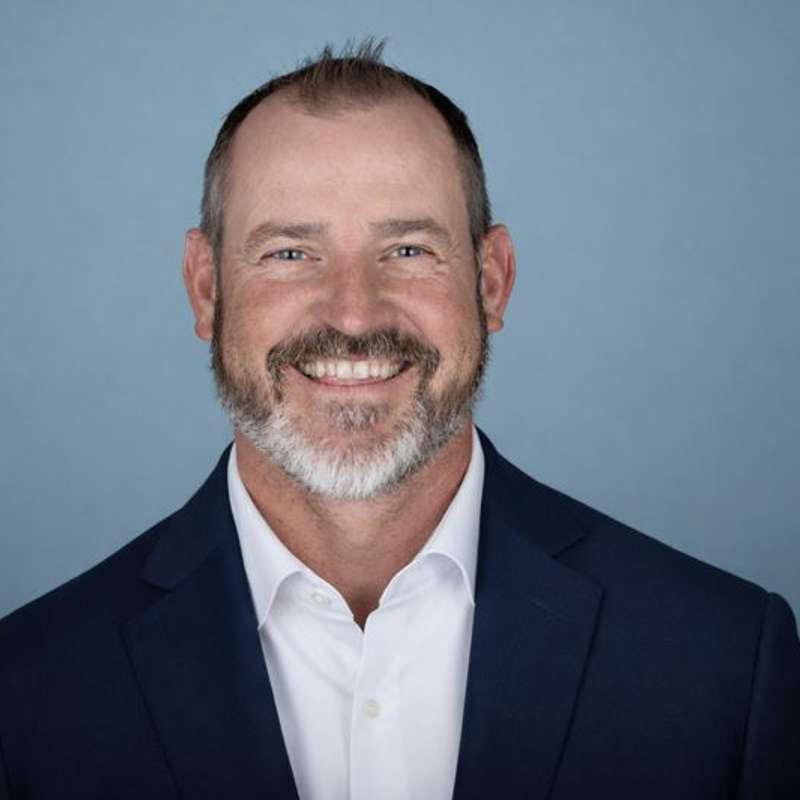
 Mike Caldwell
All right. Hello and welcome. This is Mike Caldwell with another episode of the Transformative Principal podcast, welcoming Bill Knous from Colorado. Bill, welcome. Mike, thanks so much for having me on the show. You bet. Okay, we're gonna get into your background just sh- shortly, but I thought we would just jump right into some, some rap- a couple rapid fire questions. Um, sometimes I save these till the end, but you know, let's just... let's mix it up a little bit.
Share- Yes, I love it ... share a school visit or classroom moment you'll never forget
There's a school in Durango, Colorado called Mountain Middle School, and the- they focus heavily on authentic performance tasks. And everybody who goes there, and the one time I was there, it is the most engaged, um, students that I have found anywhere. Uh, you know, middle school is often the place where people, um, either love it or don't.
Uh, all school leaders know it's like, "I'm a middle school person or I'm not." And I think a lot of middle schools that I visit tend to have solid compliance, but most people are like, "The kids are just not that engaged. We're managing more behaviors than we are deepening the thinking." And this is the one place, and again, they serve a very diverse population. They have kids fully bought in and motivated to perform on the authentic tasks that they've laid out.
Um, kids are bummed to go on s- on summer break. They're bummed to leave. And, um, anytime I think of the best classrooms, it's the spaces where the leaders and the teachers have aligned on how to create the right type of environment that does not require constant adult input, but can really center what we might call intrinsic, even if some of the motivation is extrinsic, but real motivation where students want to do the thing.
You know, I think people might say like Alpha School might have tapped into that a little bit. And, you know, there was a middle school that I saw in Columbia that had elements of that when it was doing outdoor learning. But Mountain Middle School, Durango, Colorado, for those of you that don't know it, Shane Voss is the school leader. Go and check it out. It is worth your time.
Mike CaldwellWell, I've been wanting to go to Durango, so now I have another reason to go. I've never been other than the mountain biking and some of the f- yeah, just beauty. Um, now I- now I'll know. Yeah. Mount... What was the name of the school?
Mountain Middle School.
Mike CaldwellMountain Middle School. Makes sense. Cool. Well, B- Bill, you currently serve as the senior director of quality and growth at the Colorado League of Charter Schools, but that's just one of many hats you're wearing currently. Uh, obviously as a, uh, uh, in, in addition to that, you're, you're a parent and you're also a founder and of a, of a new micro school in Colorado as well. So very, very interesting.
We'll get into kind of a lot of that and maybe the triangulation of all those things as well. Um, but you began your career as a mind- a multilingual learner, uh, teacher before moving into school leadership and obvious- and your statewide charter work. Um, what-- Let's talk about your, your history a little bit. What drew you into education? How did that path eventually lead you into the charter school growth and micro school design work that you're currently in?
I graduated from the University of Wyoming with a history degree, and everybody said, "Are you gonna teach?" And like a lot of young graduates, I was like, "Nope." I learned a lot about the world, um, and I went to go see it. So I moved to Australia and just worked and lived within that culture, and we built community there. And unfortunately, my dad, um, who was a very important part of my life, he got sick and he passed away around the same time.
And so I had to come back early from that trip, and we got to say goodbye. You know, we just talked about like, this is it. Like, you gotta, you gotta choose a thing. And so I was like, you know, I, I never really loved school. I'm a proud graduate of Denver Public Schools, but I was like, "I'm gonna go and at least sub." And so I got a, a four-day substitute job. For those of you that entered the career as subs, you know how fun that is to get your first short-term contract role.
And I, I was a science teacher for an English language development classroom at Merrill Middle School in Denver, Colorado, and this is in fall of '06, so this is under an NCLB, right, No Child Left Behind era. And the students couldn't pronounce my last name. Like, you did a great job today, Knaus, but so I go by my middle name, Lee. And by that, that fourth day, I was a terrible teacher.
Like, in terms of, of setting up the conditions for students to make connections and to learn, I was really bad at that. But in terms of relationships and making kids feel seen and valued, I was like, "I, I like this. I get energy from this." And the kids really, they were, they were sad that I was gonna leave that day.
So I went and I talked to the principal, and I was like, "Whatever jobs you have, I'm back." And then sure enough, 'cause we all know what it means to run schools, and if you run schools, that means you have folks on leave. And I got, um, four or five different long-term sub jobs, and then the next year they hired me on full-time to teach in an ELD classroom. Um, and it was the most formative work. Now again, in hindsight, I was not a good teacher at all.
I cannot say that I genuinely helped those students make significant l-language or learning gains in the areas that I wanted to, but I did help them build curiosity, and we did build relationships. I've gone to some of their weddings. A couple of them are now teachers themselves now. And that, that relational part of it for me, I was like, that's just a core function of education, right? Kids wanna have healthy relationships with adults.
They wanna have-- They wanna see themselves in different lights and professions and role models, and so I tapped into that
Mike CaldwellAll right. As we were talking, um, we got cut off by some technology issues, but you were, you were subbing, kind of found your, found your stride really connecting with kids, building relationships, and, uh, in some way that led you to leading, uh, you know, as a senior director at, at the Colorado League of Charter Schools- Yeah opening a- Yeah ... a micro school. So build the bridge. How did we get there?
Yeah. Yeah. There's the couple more chapters to this story.
Mike CaldwellYeah, no kidding.
So I really, I was very good at connecting with my students that English was their bridge language Right. So these were students from Eastern, Western, Central Africa, students from the Balkans, um, from, you know, very, very rural parts of Southeast Asia, and the only way they could communicate was through English.
But then I also had a lot of Spanish speakers, and they had a linguistic bridge, and I had a very hard time trying to, like, manage a classroom, build engagement with them, and really build, like, really strong literacy skills by the end of my second year. So, you know, I had stopped my world traveling and learning, and my dad, um, had transitioned, and I was like, he wanted me to do this, so I'm gonna go do it again. And so I went, and I got a job teaching abroad in Spain.
Um, and I was placed in a really tiny village called Finiana, which is about... It's really in the middle of nowhere. But you, you cannot get there unless you're-- It's about an hour car drive from any major city. The first day that I was there, I met my wife, and we were crossing a street called La Gran Via de Colon. La Gran Via is the same name- Yeah ... as our micro school. Yeah. Exactly. So we, we literally met at- I think when I was searching for
Mike CaldwellGran Via, I think something in
Spain
Mike Caldwellshowed up first, and it's like, "No,
Gran Via, Colorado." Hundred percent,
Mike Caldwellyeah. So, okay.
Yeah. Carry on. Yeah, yeah. And so for your listeners, right, who've, like, spent time abroad, they're, they're... I, I, I don't know. I... We, we just think that learning very much is a nonlinear pathway.
Like, you talk to any one person- Oh, sure ... about what they remember about their K-12 or even their K to 16 schooling experience, it's excursions, it's things outside the classroom, and all of the knowledge that aggregates into skills and experiences and heuristics is not formed through one-size-fits-all models, in our belief. So we, again, met in this very romantic, fortuitous way. We're still married today. We have two young boys.
Uh, you know, it is not hyperbole to say it, it did change my life and our lives crossing that street together. So we spent that year, uh... The educational experience was somewhat formative, but it was, it was more just about the immersing in culture, building the linguistic background. So then I came back, and I taught here, uh, at the New America School, uh, which our, our current governor, Governor Jared Polis, founded.
Uh, it was a charter school, and I taught there for a year, and then I was like, I... My, my wife, uh, my fiancée at the time, she had moved back to Philly, where she's from, and I was like, "We have to be together." And so I, I moved to Philly for two years, and I taught in Philly public schools. I went to Villanova. That was extremely formative, right?
For anybody who's ever served in Philly public schools, right, those amazing kids and families and amazing staff, and a really, really hard to navigate system that is rife with corruption and incompetence, and it's not the people. It is-- That is a truly s- uh, it's a system that I have... do not believe that any system that functions like that can effectively serve a wide range of kids.
Yeah. So these experiences just kept on informing us, and, you know, we-- At the time, the job market was really hard. I guess this is two thousand and eleven or something. And, uh, we both have master's degrees. She was at UPenn, I was at Nova, and we were like, "We have to go abroad again 'cause we can't get jobs here in Philly," even though we were already plugged into the system. And we ended up going to, uh, a little city called Manizales in Colombia in South America.
So for those of you international folks that know, uh, the international circuit, right? It's a part of the Big Twelve down there, and so really great school, and we had a really good, uh, visionary director, Dr. Robert Sims, who currently leads, um, like the Eastern Association on-- of, uh, International School Authorizers right now. Um, Dr. Sims, if you're listening, can't, can't wait to talk to you again soon, sir.
He b- he brought us down there, and it was, it was just an incredibly formative experience. Uh, my teaching, that was the best years I ever had. I just got a text message this morning from a student who just got the highest honor from Columbia University's architecture program Very cool. Very cool I'm tempted to r- I'm tempted to read it to you, but I'll save it for another time, Mike. Um, but it's- Feel, feel- That was really informative ... free to read it if you would like.
Yeah Yeah, let's do this Yeah Let's do this. For, for anybody, anybody who gets these things from, from your, your phone- No, those are huge ... this is just so cool Yeah, those are huge Yeah. So, so, so this is from Valeria Ramirez.
Um, and I know you all can't see this, but I'm just verifying this for Mike that this is- Yep, legit ... it's a real thing, Spence Verified This is legit Yeah Said, "Hey, Mr. Knauss, just wanted to share with you that I graduated from my master's at Columbia, and I won the highest prize in my program. I still cannot believe it.
Feels like yesterday that we were speaking about my plans of coming and how I didn't even know I was gonna make it, and here I am now." And yeah, she just wanted to share it. And so, um- Ah, love that. Love that Yeah, right? Just, like... And, and look, in anybody who's ever served, like, we all have those stories. Like, you make those connections. But those years, I got really, really good at building essential questions, at building units where kids really had to think.
I taught, like, five different grade levels, right? I taught US history, world history, geopolitical affairs. I taught the AP course. It was a ton of work, and then because of that, I had developed a lot of leadership and a lot of relationships, and my school asked me to move into leadership. And they said, "Why don't you take on the secondary school principal job?" And I, I think I'm, like, 31 or something at the time, and I was like, "This is a mistake.
Like, you all- ... you all have to know that I'm really bad at things for a couple years. It's gonna take me a while." But they, you know, it's a very communal place, and they were like, "We believe in you." And that was, that was, it was a, it was a very, very formative experience. Again, just like Merrill Middle School, Mike, those first, that first year of principalship, I feel so bad for the people that were there on the other side of my leadership.
Just, you know, like- It probably wasn't- ... weekend stays ... as bad as you think No, no, no. I think, I mean, I, I don't know. Cer- certain people, I think, are really trained up for jobs. I had always just sort of learned through doing and, and, you know, unfortunately, I think we all make mistakes in education, and that's, that's just, again, part of the nonlinear grand via. I think that is a part of, of, of each of our journeys.
Um, second year I got a lot better, you know, stronger planning, stronger relationships, better execution. We overhauled the schedule, increased the AP classes, built a, built in a, a competency-based assessment system. I mean, it was a ton of work. Wow And it was, it was really, really important We, we had some things happen at home, and we really wanted to stay, but we were like, "Ah, I think it's time to come home."
Yeah. So came, came back here in 2017, led at, uh, DSST Public Schools for six years through the pandemic. DSST, for those of you who don't know, is the Denver School for Science and Technology. Uh, it is one of Colorado's highest performing, um, college and career-focused, um, STEM networks. It's a charter network. They currently have 16 campuses. It is... It, it's not a job. Like, it is an occupation. It is serious work.
And again, I was not very good at it for the first year, and I got really good at it by the past couple years. And we, we started our family, and we kept talking about this micro-school the whole time, and then maybe I'll pause before I get into that.
But, um, you know, had, had essentially spent almost 10 years in classrooms, almost eight years in leadership, and then was like, "I, I think it's time to do something a little bit different at the ecosystem level, and then start to pilot our idea." Yeah. So that's-
Mike CaldwellLove- ... Bill Knous: mostly what brought me up to this point in my career. Yeah, love the journey. What a, what a broad, um, I guess, diverse kinda set of experiences, from even going back to your experience in Australia before you got into teaching and, uh, international schools, and then having the experience to, to lead a high-performing school in Colorado. That's, that's pretty impressive. So let's sh- shift gears a little bit.
A lot of people may or may not know kinda what a micro-school is. Um, so- Mm ... let's, let's maybe start there. What... It's, it's... It seems like a, you know, it... It's not new, but it's, it seems like it's growing in traction across the, the US- Mm ... the micro-school movement. Um, and yeah. And then specifically, what's, what is the approach that you're taking with Grand Via as a micro-school?
I love the question. I'm sure that your listeners are gonna be able to do better justice. I, I'd actually-- I have not read and, and I, I-- The best thought leaders in this space, I don't think we have a singular agreed upon definition of a micro-school other than there's agreement that it is smaller in scale.
You know, when we think about the economics behind what it takes to run any type of educational institution, public or privately funded, um, that is certainly, uh, a core element of a micro-school. I think the other thing is that most micro-schools are very much responsive to or generated by community demand. Not that larger schools can't be.
Mike CaldwellMm-hmm.
Um, and, and, and the other last thing I would say is micro-schools are certainly not new. I mean, you go back-- I, I've, I've been learning more about this. It is crystal clear that, you know, the one-room schoolhouse in itself is probably the earliest form of micro-school for those of us- Yeah. Okay ... who have researched it, right? Yeah. Right.
Um, and then, and then even like the, the sort of renaissance of it, which may appear somewhere in the '70s, but, but folks have been thinking about how to create scalable, sustainable micro-schools for years. I think, um, for us at Gran Via, what we have encountered in what it means to be a micro-school within, like, our context You know, you look at an organization like VELA and, or vela, sorry, and they've done so much great work to incubate.
We were actually a recipient of a VELA grant this past year, which is a huge step for us. Just, it's, it just, it's, it's so nice to have an organization that believes in you and says, "We see what you're doing for families and how, and how bought in you have families into this model." But if- Can you clarify, Bill, wh- when you say VE- VELA
Mike Caldwellfor our, for our audience, what i- what
is VELA? Yeah. What kind of organization? VELA is a national m- I'm, I'm gonna get this wrong, but it's like a national micro funding organization that explicitly focuses on grants of up to $10,000 for small micro community-driven models. And they have a couple key elements they're looking for. They want, they wanna see, right, that families have skin in the game, that families are bought in. They wanna see that it's sustainable. They wanna see that it's serving a unique element and need.
They're also funding things that aren't just solely about direct service delivery to kids, but within their portfolio. They went from a, like a handful of grants pre-pandemic. Now they have 5,000 different schools under their portfolio and hundreds of those that they funded. Yeah, that's amazing.
And that, that to your question, I think is this at a national level, in a post-pandemic world where a lot of families are saying like, "The local one-size-fits-all thing is not a good fit for me and my kid." And whatever their reasons are, it's a, those are almost too vast to even create like containers for. Yeah, right. But invariably, the through line into all of that is that it's about trust and relationships and what they're looking for for their kids.
And in most educational contexts, there is still not enough high quality choice for families
Mike CaldwellSo micro schools, typically five to 20, um, ch- students. I mean, it's, it's kinda, kinda varies, right? Um, and oftentimes, yeah, it is kind of the, an extension of the homeschool maybe kind of structure potentially. How, how are they funded? I mean, is it, are they private schools, public? Yeah.
A
Mike Caldwelllittle bit of
both? Yeah. Um, this isn't a... I, I'm certainly not an expert, but I've been spending a lot of time in this space here in Colorado. So the answer I would give to that really good question is, if, if you look at states that have vouchers or ESAs, educational savings accounts, right? And that's growing around the country.
There is a state-supported public funding mechanism that r- that re-empowers families to use a specific dollar amount to fund their child's education in a way, rather than sending them to their locally zoned school. And in those places, you've seen an explosion of micro schools that are doing four or five days a week, you know, in a wide range of what they're focusing on. But it, they're still focusing on literacy and math in some way, shape, or form.
Yep. In a place like Colorado and other states that do not have ESAs or vouchers, we have a different funding mechanism that is called part-time enrichment funding or homeschool enrichment funding And that part-time funding's really interesting because it's been going through lots of changes. So essentially what it qualifies for is that it's half of the local per pupil revenue. So call that approximately about $10,000 a kid.
It's more than that right now, but just for the listener's sake of understanding, and it equates to approximately $5,000 per student. It's, it's not very regulated, but that's going-- that's undergoing changes as we speak. If, if anybody Googles anything about part-time enrichment funding in Colorado, there's articles upon articles and lots of strong opinions to read about it.
But the state is essentially looking at ways to ensure that that money is going to high-quality educational options and not just funding any random enrichment idea under the sun. The other way is all privately funded. What's really interesting here in Colorado is that we have a long history of micro schools, especially here in the urban area. What we don't have a lot of good examples of is sustainable micro schools.
Mike CaldwellMm.
So here's, here's a predominant narrative that people have told me who are further along in the game. Again, and for your listeners, Granvia has been serving families since 2020, and we built very, very small. So we got two 4.0 fellowships.
4.0s is a, is a little catalyzer incubator that runs out of New Orleans, and we got their tiny fellowship and their essentials fellowship, and that money allowed us to pressure test the idea of would families be interested in outdoor programming focused on real social, emotional, um, focus, you know, call it mindfulness, call it like understanding self, other, and world, and we found that families very much wanted that.
And so we s- we literally went from six kids to eight kids to running camps to then serving families in a tiny fee for service model with caregivers and kids there to now we're serving 30 students multiple days per week, and we just got authorization to become a full-time charter school through the Colorado, um, charter school institute, what's called CSI here in Colorado.
So Granvia built this very, very slow pathway to becoming a publicly funded, sustainable model because a lot of micro school operators, just like businesses, close down within seven years.
Mike CaldwellYeah.
It's very easy to fund. It's very hard to sustain.
Mike CaldwellAre there times since 2020 that you didn't think it was gonna be able to sustain itself, or did you get, do you have any of those kind of critical moments as like, ah, are we gonna be able to open tomorrow or next week or next year?
Yeah, I mean, the, we, we like to lead with honesty and transparency. We just think that the more that we're, like, really sharing the reality that f- that we can equip people to make better decisions, and also, you know, we want people who wanna support us. And so one of the, the really honest things I would lead for your listeners, Mike, is, um, we didn't get paid to pressure test the model for four years.
So to your question, yeah, I mean, basically every month we're like, "How could we possibly have a sustainable living and raise a family?" So we've always had to keep this as a part-time nights and weekends idea. Mm-hmm. And that, that's, that's like, there's, like, a real interesting tension there- Yeah, sure ... of how do you make something real for kids and families unless you go all in on it?
Mike CaldwellMm-hmm.
And so luckily my wife is extremely talented. Again, she, you know, uh, you know, holds multiple degrees from Penn and is a trained mindfulness educator and is the opposite of me in all the great ways that, that we need to have equilibrium and balance in our relationship and our life. But we, I don't know how we would do it without both of us. So what's u- what's unique about Grandby is it, it's a co-founded model, not like a singular founder model.
I do think a lot of micro schools tend to be sole founders. Not all, but many.
Mike CaldwellMm-hmm.
You know, and just I'll, I'll give you one more example 'cause I think it's a good question. So we've worked for the last, again, years to build this model that would be sustainable. So we got the approval to become a homeschool enrichment funded micro school starting in the fall of '25, and it was a big deal for us, and we had to recruit families, and we got funded for 13 families, and we were serving 25 within a month.
So we had way more families than we had funding for, and we said, "We will be a tuition-free public and open-to-all model," 'cause that is what is core to our mission and our beliefs. When we started with our board, we, we were like, "We're gonna have $3,000 in reserves." And we've been so judicious in our management of our fiduciary responsibilities that we're now on track to carry $50,000 in reserves this first year- Wow ... which is great for a little micro-school, right?
Yeah. Like, so we- we're in a very healthy budgetary position. We also invested a ton of time and money with my board to go through a very intensive process with the local school district to get what's called a release of exclusive charting authority, lots of technical terms for your listeners, to, to this charter school institute, which is, uh, the only authorizer in the state that really understands micro-schools.
That happened on Tuesday of this past week, and we were riding high, and we were crying. We were like- Congratulations ... "We can serve more families. Thank you." But then on Wednesday, our legislature passed an amendment that essentially caps our funding for next year at 13, even though we have 30 families on our books. So we now have a $90,000 delta we have to close. Oh, boy. But here's, here's what is interesting to us.
We have always said it's a nonlinear path, and " Siempre decimos que abre una vía," which in Spanish means, "We will find a way." So our charge now is, is that we are going to figure out a different authorizing structure, work with the state, and figure out the funding mechanism, and if we can't, we're gonna fundraise our way, but we will not turn families away.
And so this is just, like, a little window into the, I think, like, the leadership mindset that we believe that we have to take into this so that we can turn it into the only thing that we do. So my wife finally, Granby, is healthy enough that she'll be able to go full-time into it next year. She's been working as an MTSS coordinator at a local, uh, called the Denver Language School. It's a, it's a, it's a prominent multilingual school here.
I will-- I'm gonna retain my role at the Colorado League because I'm still doing very important work for another year, and then maybe we'll be in a position next year to fully pivot and bring me on, you know, maybe like a .4 sort of like fractional ED until we have 60 students, and then it'll be a full-time job, and ideally it'll survive beyond our time.
Mike CaldwellGood work. Good work. Yeah, such a, I mean, parallel, you know, if you're a startup founder, whether it's education or whatever, very, very similar. I mean, you gotta just keep grinding until... and find a way, right? And, and that's what you're doing.
It looks like you, you, you see the light, um, to make it happen, but I love that y- your commitment to the vision of what you're doing and, and not turning families away that wanna be part of it, and, uh, that's so important, and that'll lead to, eventually lead to success. Well, it's already leading to success. I'm curious what, what you think. Why do you believe more families, you know, are actively seeking these smaller, more personalized public education options right now?
Um, ah, this is so-- I've, I've tried to answer this so many times, and I feel like I miss it every time. I, I think what feels challenging about this is, is I run the montage of the 100-plus families that we've served and we've talked to. We've built a form of a relationship where we know something about what's going on in their personal lives and what they're looking for for their kids.
It, uh, the, the simplest answer maybe is that everyone wants something that doesn't exist within the larger system, including within what Grand Via can offer And if I were to pull that back or maybe go like a, a click deeper into that and then look for themes, I might... There are a lot of families of students who they, they, they would likely describe their kids as being neurodivergent, diagnosed or undiagnosed.
And I think you go into any kindergarten classroom, I did a ton of school visits this year, and in high Title I schools, low FRL schools, urban schools, suburban schools, rural schools, there was this trend of kindergartners, preschoolers, and first graders and people being like, "Whoa, we've never seen these behaviors.
What-- why is our system not set up for this?" And all of the systems around MTSS and SPED and 504, everything within your traditional system, public and private and otherwise, that takes federal law, state law, and applies it to what families deserve, we actually still believe is a band-aid for the root gap that systems are not designed to serve all learners.
'Cause they're, they're funded and they're designed for the compliance and the efficiency for the adults, not for the individualization of the students. Now, there are exceptions to this. Those are probably private more than not, and then therefore they're not e- equitable and accessible to all families.
And so one of the things we just continue to reconcile with, and we don't have a solution for it yet, but we spend as much time as we physically can with families to listen and say, "What do you... Like, when your kid is their best, when they're not..." And I think all schools do this, but we do it again, and then we'll a- we'll call families and be like, "Today did-- we didn't think it went so well. What did, what, what did your learner say?
Give us some feedback." And slowly they'll open up, and they'll really start to give us feedback. They have a really hard time when they show up in the first five minutes, and no one checks in on them. When they're trying to self-advocate for themselves, and they get brushed off.
I mean, these little micro moments, and the more that we've tried to attune our program to those little, itty bitty moments that might happen in seconds in, in a, in a learner's early part of their day, it changes the trajectory. Mm-hmm. And I actually think our program has a super long way to go. Like, Granby is nowhere near the exceptional model that we want it to be in the next ten years.
But the ability to res- to respond to what families are asking, and then this idea of like neurodivergence, again, particularly for the undiagnosed, I think every s- a- any school leader knows this. Like, you are talking to families, they're s- they're telling you, "Why does nobody get this? Why do I have to wait for all these things? Why-- How come this is happening?" And if you're having to manage this big system, it is very, very challenging to be nimble and responsive to that.
So what we're most intrigued about is how do we scale the micro part where we keep the relationship super tight so the degrees of separation between decision and stakeholder are very, very tight While also making it sustainable. And we don't actually know how to do that yet, but we're gonna find a way because it's almost La Gran Via, and, like, that is our path.
Mike CaldwellYeah. Yeah. Well, I think you articulated the answer really well. So if you're looking for, for, you know, how many, how many times you've answered the question- ... I think you nailed it on that one. I think you nailed it. Um, very well done. Yeah. You know, a lot of, um, times you hear, um, you know... And I had, uh, I don't have the, the charter background that you do.
I've been kind of in, I've been in everywhere public, pri- um, traditional public and, and, and just work with charter school leaders more r- recently. But I... You often h-hear kind of questions about accountability and, um- Right ... you know, where maybe s- whether it's private or charter, whatever, they have, you know, maybe more room for innovation and, and more flexibility or autonomy, but then they're, they're questioned on the accountability piece.
Um, one of the messages or kind of things I've, I've heard from you or, or learned from you is that innovation and accountability can coexist, and oftentimes do. Um, I'm curious on your take on how can public education create room, more room for innovation while still maintaining strong accountability, um, for students, families, et cetera?
Yeah. I... Man, I appreciate this question, and I, I will prepare... I've, I've, uh, growingly stronger opinions about this as I engage with a lot of decision-makers and who are superintendents who sit on local boards here in Colorado, some of which actually in, in neighboring states, and how they're thinking about this idea to the same question of like, how do we serve all these families? How do we innovate? But how do we do it within the constraints, particularly of declining enrollment?
And so here's the answer I would give as it relates to accountability. I believe strongly that one of the biggest things that we repeatedly see is that even for people that work in charter schools or have worked in charter schools, they still are not able to know and say that charter schools, by law, are tuition-free, public, and open to all. The other thing most people are unaware of is that charter schools have to go through very, very intensive renewal periods every three to five years.
Your traditional public schools do not have to do that. And in fact, at least here in Colorado, I can name any number of examples of schools that have been habitually low-performing, not for a year or five years or 10 years, for generations Generations where grandparent, parent, and child have all gone to the exact same school and it has had the exact same outcomes. It's measured by graduation rates, by literacy and proficiency, and by college access.
How I think a lot about this is what is the purpose and how do we measure it? In many ways, I would actually posit that charter schools have lost a lot of their innovative step. Somewhat of that is a leadership challenge where people are falling into the compliance bucket of just checking the boxes without really thinking about, "What is my charge? What is my mission? How do I motivate and influence these people around me to do that?" It's very hard work for anybody who's doing it.
You know, you're sixty to a hundred hours a week nonstop and very intense, but that is a life-changing motivation to have that. In traditional district schools, when I'm there, again, I believe that they're filled with great people, some, some very strong educators, but that system is designed to create predictable compliance for the adults It is not designed to push the boundary on what's possible for kids, and if it is, then show me the data.
Here in Colorado, we continue to see that Black and Latino students, students that qualify for free and reduced lunch, if you attend a charter school versus not, you're talking about performance deltas in our state assessments of like 16 to 24 points for third and eighth graders. You aggregate that year over year, that matters for kids. Like, no one is satisfied with literacy rates in the country, or at least we shouldn't be, and charter schools have not solved for that.
But at least here in Colorado, we have irrefutable data that's been verified by the Credo study that came out of Stanford that statistically, by and large, if you are attending a green charter school, you are having year-over-year measurably better outcomes and gains and more days of learning than you are if you're not. And I just-- Again, I don't actually think it's the quality of the teachers. I think it's about the design of the system.
Mike CaldwellWell, that leads me to my next question. If you could redesign one aspect of the system to better support the... all schools, traditional, charter, whatever, and maybe it's instilling some things that are working well for, for the charter space or could even go as far as the private schools and like what, what are those things that we're not blending or bringing over to the traditional model that would make a difference in the system design?
Yeah. Um, I actually think my hunch is that most listeners would agree, except if you're a lawmaker, and then I think that you probably hate what I'm about to say. Um, but here, here's some-- I, I, I don't know if this is-- I, I, I need to think more through this, but this is my belief. When I look at-- Let's go back to the example I gave you about Mountain Middle School, right? You asked about like what's the best sort of learning environment you've seen.
When I, when I constantly think about why, and I'm telling people that why, I think There is something about what the system is designed to do for motivation for children. So let's put it into like m- simple math. There's approximately 42,000 to 64,000 instructional minutes that will happen for a given student in a given year, year over year over year. To what ROI?
And no one... Like if you're a parent, if you're an educator, I, I know in my bones that every single person can think of 1,000 examples of a child being like, "Ugh, I don't wanna go," or, "I don't wanna do that," or like, "Do I have to?"
Mike CaldwellMm-hmm.
And you look at any educational environment, public, private, h- but that's started to shift how we think about what's required and what directs and generates motivation. You cannot take a young child's brain and compel seat time and then expect that you're gonna get equal outcomes. Like it is crazy to me that we are still measuring seat time across most all of our 50 legislative bodies as the primary way in which we're gonna hold schools accountable. And why do we do that?
Because it is easy to track. 100%. And it's BS. It is BS 'cause it's not designed with kids in mind.
And so to pull one other thread through, when we talk to those parents who are like, "My kid's neurodivergent," mostly what they're saying is, "My kid can't sit still all day," which is why our outdoor program is a current fit for them for some time, may not be in a while But there is something about this notion of like, we cannot treat the, the human developing brain like it is just going to be this static seat for that many minutes every single year over and over and over for consistency and predictability, and call that good enough.
At some point, that has to break. Now, I actually think most schools would do it, like district schools too, but no one can because the law says... And then our funding follows that, and that is the thing that if we, if we said, "We're gonna do five years and we're gonna get rid of seat time. Go after outcomes. How do you wanna measure them? If you're not gonna use our way, prove it." I know it's messy. I know that we don't know how to track funding.
I know that people are gonna take advantage of the system. What else are we gonna do? The exact same thing we've done for 150 years? I mean, they're, they're just... It's like, at what point in American history is a group of us going to get together at serious levels across the decision-making spectrum that are legislative, that are local, and say, "We are going to invest in serious pilots that, that break the system.
We're not gonna hold everybody accountable to something that we can check a box around." And if you redesign systems that actually motivate kids, they'll do it. Kids are full- everybody knows this, that kids are fully capable. Which is why every school, last thing I'm gonna posit here, every school has one or more classrooms that are exceptional, right? Even, even the low-performing schools. There's always... It's like n- in that classroom, kids learn. Why?
'Cause they've done something even within that imperfect container where they've started to press the rules and shifted the motivational structure. They have the relationships, and kids are bought in, probably not to the level that they could be in a, in a better structure, but it's, it's better than it is in the remainder of those environments. And if all of those things are even remotely true, Mike, maybe one of your listeners is like, "That's it.
Let's go blow it up." We need to blow up seat time requirements at the, at, at state and district levels and give true autonomy for innovation 'cause otherwise what you're gonna have is like, you'll have the alpha-like schools that are only gonna be accessible to a tiny portion of the learning population, and that is inequitable.
Mike CaldwellYep.
So we have to figure out something, 'cause I, I appreciate what they're doing. Like, they're also tapping into this idea of like, how do you generate motivation? And it's like, "You can't pay kids. You can't just let kids do that." Well, why not? Why? Because when all of us leave school, what do we do, right? What have, what have you done in your career? What have all of our listeners done? Nobody took a standard linear path after K-12 like we had the linear path when we were there.
So everyone knows the system is incongruent. Everybody can point out flaws. But if there is one thing that I think is worth blowing up, blow up the seat time requirement Let's do it for 10 years, maybe a generation, and let's see what happens.
Mike CaldwellI'm down. Let's do it. Yeah. Whoever's listening, let's, let's make this happen. I agree. Come on,
somebody.
Mike CaldwellYeah.
Email me, and let's talk. Yeah.
Mike CaldwellI agree with you. You know, and earlier you were talking about, you know, the design of, of the system, um, and I'm paraphrasing based on my own recollection, so it's a, you know, quasi-paraphrase, but is designed for the adults and not, not the students.
And as you're talking about that, I'm thinking it's... I think of the adults as the lawmakers that are- Mm ... where, where sometimes it's convenient 'cause we can say this... We're, we have a, we have this metric that we're holding, holding schools accountable for. But is it, you know, is it actually making a difference in quality? And no, it's not, but it's easy to measure across the, the s- the system, and seat time is a really good example of that.
Um, yeah. Um, I, I agree with you on the, on the seat time, um, i- issue and, uh, and, and, and, and relieving that, that constraint or making that change. Well, we're running out of time. I- there's a billion other questions I'd love to ask you. Um, I'm really intrigued now to go to that school in Colorado, and I'd love to come visit your, uh, your Grand Via school as well sometime. What, what- Yeah.
We'd
Mike Caldwelllove- Is
it
Mike CaldwellDenver area- We'd
love to...
Mike CaldwellYeah ... I, I assume? Is that
what- We, we, we currently operate out of a couple parks. The primary park we operate is just south of, of the Denver area. It's called Westlands Park.
Mike CaldwellOkay.
Um, we, we do have multiple locations that we're propping up in the next couple years, so be sure to email me before you come out, but we'd lo- we'd love to have you out.
Mike CaldwellThat'd be cool. That'd be really cool. Um- Yeah ... so maybe two, two last questions. Despite the challenges that we've talked about with public education or just in education in general, I think there's a lot of challenges going around, um, what currently gives you the most hope about the future of education, whether it's in Colorado or, or, or nationally?
I, I continue to be pretty intrigued by what, like... I actually don't know how to define generations, by the way.
But when I think about the generation or generations of kids that are currently experiencing the schooling system, and slowly how the paradigm is maybe tilting in a slightly different course, and I think about tipping points, it, it would not surprise me if there is what later generations describe as a serious shift in the whole of education, and it's not driven by adults and lawmakers, contrary to my prior example.
It'll be driven by the folks that experienced a system, and I'm thinking about kids that were... experienced the pandemic, were born during the pandemic, who are growing up with narratives of like neurodivergence, and there's got to be third and fourth and fifth ways, and I can find different learning environments.
Like I, I'm not sure that we've seen this many families and this many things pop up within the whole of the space, and a lot of proponents of like traditional public education see this as like an attack, and it's all gonna fall apart, and I think that that is a, that's a misframing because it assumes that it's like an external enemy who's trying to break it, and that's not true. Like talk to families, spend time with families. Go... I always say dwell, like dwell with people.
We, we l- like eat, eat in their homes, use their bathrooms. They're not... Like live in the human condition with them, and then r- like rethink about what you're hearing. And, and I, I just continue to hear that families know that no one's gonna come and save them, and they're gonna find a way, or they're gonna do it on their own, and their kids are growing up with that narrative. So maybe by 2050, we, we, we do see something, and it comes from kids, right?
Which is always my favorite thing, right? I, I think about my, my alumni who just got the highest degree, you know. And when I think about her in 10th grade, she was smart and capable, but she's made serious steps to go from this little city in Columbia to getting the highest honor at Columbia University here, here in New York.
And that, that's the kind of stuff where I'm like, you can always trust in a next generation to be like, "Nah, we're not gonna, we're not gonna do the same thing." And that, that, that for me just gives me a lot of energy to think about how to support them and serve with them, uh, to be a part of something that could be meaningful for future generations.
Mike CaldwellAbsolutely. Yeah. Well said. Well, last question that we usually end on is, what does it mean to you to be a transformative principal?
I think I think about how to measure what that would mean, and the, the best leadership I've ever experienced and the few times I believe that people have experienced it that I, that I may have gotten there, it was about the ability to influence and motivate a very, very diverse group of people across backgrounds, ages, around a singular mission. And then to help them shift their mindsets from we can't because to 1% a day small steps like that, that incremental progress.
Yes. Um, if we had more time, there- man, there's some leaders here in Colorado, almost all are women, not, not surprisingly, and they're just phenomenal. Like I would follow, I would follow each one of them into an abyss if they called me right now and they're like, "We have to do something really hard."
When I think about transformative leadership, it was, it was their ability to like be the vision holder, the communicator, the relationship builder, and then to steward this thing where... I just remember sitting in rooms where like six months ago all these people were like, "Ah, this can't work." And now they're like, "We can do this, and I want...
I, I'm gonna s- I'm gonna retire at this job." And these were, you know... So like a- any time I think about the influence and motivation piece of leadership, that, that's what most, um, resonates with me when I think about it being transformative.
Mike CaldwellLove it. Love it. Very cool. Well, Bill, thank you so much for being part of this podcast today. Uh, I feel like we could have a part two and a part three. There's a lot, lot more questions- Yeah ... that I have on my list that we didn't get to.
Yeah. And for our listeners wondering why, why does Mike keep interviewing all these charter school type people, it's because I've sent invites to even your traditional public school leaders and association leaders, and, uh, the charters are the ones that are responding. So Bill, thanks for responding. For, for those of you that are listening and maybe want to be on the podcast, reach out to me. I'd love to have a conversation with you as well.
But Bill, so much g- good work happening on your end in Colorado, so thanks for the work that you do. And, uh, look forward to watching kind of what happens with, uh, Grand Via Micro School as you continue to develop that. So good work, and thanks again for being on the show.
Mike, thanks so much for having me, and take good care.