



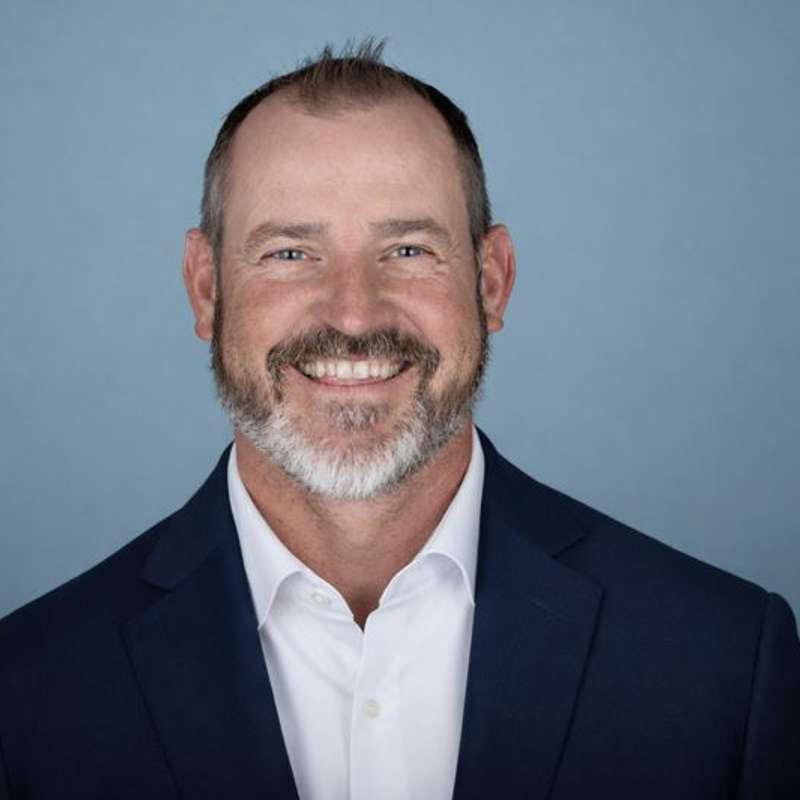
 Mike Caldwell
All right. Hello, and welcome to another episode of the Transformative Principal Podcast. Joining me today from DC, Rachel Thrash. Thank you. It's lovely to be here. Rachel, welcome. So I'm excited about today's conversation focusing on student voice and student ownership. Before we get into your background and where you're coming from, um, I always like to start with a few rapid-fire questions.
And for the audience, I gave Rachel the choice of knowing the questions ahead of time or just thinking on her feet, and she was really brave thinking on your feet. So we'll give, we'll provide, you know, whatever forgiveness needed, but I think you're gonna do just fine. But these are just kind of fun out of the, out of, you know, off the, off-the-cuff type questions. So here you go. I think there's five or six of them. Um, a book every school leader
should read. Oh, great question. I think 10 to 25 by David Yeager is one of my favorite books because I love how it leans into support for young people needs to be both aspirational and provide all the support and care
Mike Caldwell10
to 25 Yes … lessons in a book. Oh, it's amazing. I've never heard of it. Highly recommend. I'm gonna
Mike Caldwellhave to look it up. See? See, right there, first five seconds of the podcast, I already have some- s- something I, I just learned and am gonna add to my own leadership repertoire. So cool. All right. Second question. One misconception adults have about students.
Um, oftentimes that they don't care or they're not trying or they're disaffected. Every kid has… They all want to be recognized and appreciated, and oftentimes they're putting up those, those walls because they need to save their pride. So how can we make them and help them feel encouraged and bring down that wall?
Mike CaldwellCool. What's one word students wish adults used less?
Should
Mike CaldwellHmm.
Sure. I- What a library … I think that- I love that … we run in and either tell kids what they should do or think that they don't have the answers and run in with too much support before they've even given it a try, and give them all the advice that they haven't even sought yet. And if we slow down a little bit and eliminate some of-- And my daughter might, uh, my daughter might give you a, a, a side glance and be like, "Oh, Mom, sure, you never use that."
But always easier to s- Right … do with your students than with your own children. But I think when we give kids space and time to figure things out on their own and wait for them to seek our advice, then we can eliminate some of the shoulds and say, "Maybe you could try this or maybe this," and give kids more agency
Mike CaldwellI love that. I love that. Um, one school practice you'd eliminate tomorrow
High-stakes assessments Yeah
Mike CaldwellNo explanation needed there. One school practice you would expand everywhere?
Giving kids opportunities to redo anything, um, almost infinitely so that it's about learning and not about labels, and it becomes safer for kids to make mistakes. Um, so everything is more iterative
Mike CaldwellAll right. A leader who has influenced your-
Hmm … thinking. Margaret Wheatley. Um, she is someone who talks about islands of sanity, and as we're looking at how society has become so, in some respects it feels so complicated, so big, and like it's failing. How can we look towards small communities and think about the power and influence and good things that we can spark by working together in smaller, what she refers to as islands of sanity?
And that's really influenced me in my thinking about how we can be optimists and move forward, and we can share that with other educators or other kids who feel sometimes the world feels discouraging right now
Mike CaldwellYeah. All right, last rapid fire question. You could have a coffee shop conversation with any educator living or dead. Who would it be?
Oh, that's a good question. Maybe Ted Sizer and Nancy Sizer. She's always forgotten. I don't know why, but, um, how they really… I love how they simplified curriculum in many respects and really focus on constructing student-centered learning. And I'd like to see what they think about, you know, the dawn of AI, uh, uh, they- how we work with students to co-construct that.
Um, they were very influential to me in my early teaching, and so I'd, I'd like to he- hear how their thoughts have progressed.
Mike CaldwellLove it. Love it. Well, for those of you who are just joining for the five-minute version of this podcast- … there it was, so thank you. Uh, but let's jump into the rest of it. So we're gonna talk about, um, I think the overall theme is from student voice to student ownership. Um, and many schools talk about student voice.
Um, and you know, I could think of myself at, you know, my, my role as a school leader, but truly invite… You know, few truly invite student, um, to help shape the culture of the school itself, and that's one of, I think, one of your major themes, um, in, in this conversation perhaps. Um, but before we go there, why don't you share a little bit of your background for the audience, where you're coming from, a little bit of experience that kind of tees up- Absolutely
the rest of this conversation. So I am-- I've been in education for over 25 years now, and I've had an interesting journey in that I've worked both in the United States and abroad, primarily in Europe, so at the International School of Helsinki, at the American School of Warsaw, and I have somehow done everything from teaching the little ones to even teaching at a community college for a period of time.
Um, and that's really given me a, an opportunity to see how much students at every age level really wanna feel purposeful and engaged in their work. Um, I'm currently the senior director of education and innovation at Big Bad Boo Studios.
Big Bad Boo Studios started as a cartoon company, um, with the idea that if every young person had a chance to see themselves depicted in a really positive and purposeful way, um, and They get-- kids got to see stories of people interacting across multicultural groups in a way that felt healthy, that it would change society, and certainly that has happened. We've been, um, all over the world.
We're streamed on Hulu and Disney and, uh, but also we've been in international development, um, sector working. Currently, we're in Gaza. We have-- We're in the Philippines. We've been in Lebanon, Iraq, even Afghanistan, um, helping kids see that even when things are tough, it's possible to imagine yourself being a highly participatory part of your community.
Um, that work I've now brought into schools, um, and where we work on bringing cartoons as almost like a primary source to young people to get them talking and thinking about what we can do in culture, how we participate, these really human-centered skills.
But then I've also, my-- the other side of my career is that I've just written a book that's come out in May, um, called Let the Learners Lead, and how we co-create s- culture in schools with, uh, more adolescents to say, "Hey, what is not working in your school, and what can you personally do to change it?"
So, you know, the, the narrative across everything I do is how do we help young people see that they have a role in this community, in our schools, which can be really laboratories of learning, and then that can extend to their sense of agency and a sense that they matter.
Mike CaldwellTypically our life's work or, you know, kinda culminates into whether it's a book or whatever else. Um, and but there's oftentimes some, some root or experience that inspired that at, at some point, that really got you on this, this track and ultimately led you to, to focus on this body of work, write the book.
Can you pinpoint something in your, in your career or life that really, like, was the catalyst for moving in this direction, that you felt like this was kinda your, your mission as a, as a leader and as an educator?
You know, I started teaching because I always felt like, how can kids feel a sense of purpose? How can what they're learning in the classroom matter? Um, so I don't know if you were ever familiar with the Facing History and Ourselves curriculum, but I started working with it a really long time ago to, to say, "How can we teach kids…" I started as a social studies teacher.
"How can what we teach them help them face inequities in society?" And sometime- somewhere along the way, I ended up having a child who learns differently, learns with dyslexia, and, um, there was a moment in my, uh, early parenting where I was told that the school couldn't meet her needs. And I was like, "Really? This school can't-- This, this group of really highly educated people in a smaller classroom aren't able to meet my child's needs, who…" You know, all kids have wonderful capacity.
And that started me on a journey of, how can we not only help send a message that every kid matters, but create structures in schools to ensure that every kid is able to show their capacity, other kids are respectful of it? And that's been at, at the heart of everything I do in education. It's always, um, universal design for learning.
Um, it's about building a strong community, and it's about making sure we're hearing from every kid about how school can treat them better, and they can be part of a collective environment that is supportive of everyone
Mike CaldwellSo give me an example of s- of your current work that, um, if I'm a school leader, regardless of, of size of school, that would really resonate, like connect with them to, to maybe inspire them to think about something differently. Like, can you, can you kind of pinpoint some, some of the work that you're currently doing and, uh, how it's translating to whether it's improved culture or the way we work with, with, with students, with youth?
Yeah. So I'm gonna give you a, an example of working with adolescents, and I'm gonna give you an example of working with elementary kids, 'cause I think we… Developmentally they have different needs, and how we do this can be different. Um, I was working in a school in Portland, Maine. It is a charter school, uh, for math and science, and it's very project-based.
It's called, um, Baxter, uh, School for Math and Technology And they had a small cohort of kids in that school that didn't speak English as their primary language, and they were struggling with some of the group work. Everything was really project-based and very group work. So they were streamlined in all of their classes except their English class and their advisory. And their advisor really felt like they were different kids in the class where it was just them.
They were a little bit more open. They were participating. And when she would go to their other classes, they just weren't really talking, and they were being excluded from the group work. And so she called me in to work with them, and I went through a process with them that I lay out in my book of encouraging them to talk about what is hard at this school. When you look around and you say, "What's not working?" what do you notice?
And these kids who had-- even though they were friends with each other, it turned out that they had never been open about the ways that they were frustrated with the way group work was made, the way that they were respected by the teachers. The teachers were trying to help, but they were-- they started to become a little bit more open about what that felt like.
And they even said, "We don't feel like there's any opportunity to get to know the other kids outside of class. So only in this one place where I'm the least comfortable, the least confident, is where I have an opportunity to talk to other kids." And so once they started to talk about that, and then we began a process of thinking really visionarily, what would it look like if you could all feel like you had a sense of belonging?
And they would say, "Oh, I'd be my real self. I would get to show what I know." And we went through a process of designing for inclusion. And what they ultimately decided was, in fact, it wasn't just them. Even though they were extreme, other kids were also feeling a little isolated. And they noticed that because it was a charter school, there weren't sports, and that it would be really powerful if they were able to bring in some kind of a, a soccer league.
And through the guidance of working with this advisor and me, they went to the administration and proposed a soccer tournament that they could organize. And they worked with the, the, uh, neighborhood organization that had some soccer running in the neighborhood and, and they provided it for the other kids. And a month later, these kids had made friends. They felt more comfortable. By the end of the school year, I heard from their teacher they were participating more in class.
And it was Initiating a process of being open that school isn't working for everybody, that there are reasons, that they're not-- it's not mysterious why it isn't working, and there are places that you can't solve for the whole problem, but you can start to find projects that you have the power to jump into. And the thing that was-- when I talked to them later, what they were most shocked by was that the administrators cared, and the other kids were happy to have them make a change.
And then they felt like they were heroes, and they felt this sense of like, "My voice matters." Um, so that's one example. My other example is with the little ones and the younger students, um, when we have gone into classrooms, and I just did this very recently. I was working with a school in British Columbia, and we brought in some of our, our cartoon curriculum. And cartoons are fantastic because nobody isn't interested, right?
Like all the kids, even the wiggliest kids or the kids who normally when you're like, "Let's talk about classroom culture," they're gonna, they're gonna kind of put up a wall and be like, "I'm not interested in this." If they see a cartoon character having some of the same issues that they have as a child, they suddenly wanna jump in and talk about it. And once you unleash that interest in talking about it, then you can't get them to stop.
Um, so for example, I was show-- we were showing them a cartoon about-- One of our cartoons is about a 12-year-old judge named Judge Jodi, and Judge Jodi has set up a courtroom in her backyard that she, you know, litigates with a, a cardboard box, and people from the neighborhood bring in their issues. And there was an issue that one kid brought in that he was suspected of being a vampire.
He was running for class president, and another girl had started a rumor that, you know, "Have you ever seen him out in the daylight? He definitely doesn't like garlic. I'm just saying," right? So the kids are giggling because this is silly. But by the end of the episode, we're asking them to talk about rumors. Have they ever heard a rumor?
So they're contributing, "Yeah, sometimes people say something that I'm not true-- it's not necessarily true." And then that continues the conversation about some of the norms we wanna set up in our classroom, how we wanna treat each other. And I think what connects the two stories, uh, is that kids actually want to discuss the hard stuff that's happening in their lives, but oftentimes we as adults don't know how to tee that up in a way that isn't awkward. You know what I mean?
Like, kids are like, "Ugh, you, you're, you're not quite connecting with us." So if we have the tools and the resources to begin the conversation in a purposeful way, kids really do wanna help us br- build a healthy culture.
Mike CaldwellYeah, absolutely. Why do you think that's so hard? It seems so, um, simple at the, on the surface, and also at the same time so important, right? But yet I don't think it happens that often or, and certainly and maybe not in the way that you described. What's-- what kind of barriers do we need to remove or, or different ways of thinking about it that would, I guess, create more of those environments across our schools? What
suggestions do you have? So one of the reasons I think it's so hard is because we have this artificial notion in schools that adults are in charge, and when we… It goes back to that when I, when-- the rapid fire word of should. I think that when we come in and we tell kids, "These are the behaviors you should be using. This is the rule book of how to behave in school," then we give them this sense that they don't have any autonomy.
And then we didactically try to teach these really important things like empathy or how to be respectful of someone else or appreciate, um, someone else's perspective. But all of it comes into this lecturing at kids, and it doesn't feel authentic to them. Oftentimes they feel like, "Well, the adult knows that, but they don't know what I'm going through." And kids need to be part of the creator of whatever's going on.
Um, they need to be invited into… I always like to start my classes back when I was teaching by disabusing them of the notion that I was in charge of the classroom. I was like, "Listen, I hate to tell you this, but if you all decided to stop listening to me, it would be over." Like, "I, I can't control you. You can control you, but you also have a responsibility for the person next to you.
You actually control if it's a healthy learning environment for them." Um, so I think being really transparent with kids about culture, community, the capacity to learn in this classroom is something we all have to agree to. And when we break that agreement to each other, that's something we have to investigate.
And taking the time to investigate that is also something that I've noticed in the past is teachers will set up classroom norms in the beginning of the year but then never reference them again, and it just goes back to this age-old the teacher's in charge. Where I think when we flip that narrative and we say, "Hey, you know what? I'm noticing that learning isn't working here. Why? What are the elements that aren't working? Is it me as the teacher? Did I deliver something wrong?
Is it that we're distracting each other? How can we realign?" And putting that back on the kids to be part of that, um, that responsibility, 'cause it is theirs, and don't we want them to acknowledge it and practice it now so that they can build healthier communities their whole lives
Mike CaldwellSo I would imagine I have some listeners that are hearing what you're saying, and, you know, in a perfect world, yes. Yes, yes, yes, and yes. But there, but there's listeners are going, "Yeah, but you know what my, some of my students really wanna do is just stare at TikTok videos all day, and they don't wanna do algebra." And so… And, but you want me to have them create the, you know, rules of the school and, and design the culture, but that's what they care about.
So how do you counter, like this, that what you're describing sounds a little Pollyanna, and then there's the reality of what a classroom needs or looks like or what a school looks like and… Or is there something in, in the middle? How do you, how do you balance kinda that, um, counter, I guess, voice that says, "That's all great in theory, but-"
That's not how it works in the real world "… that's
Mike Caldwellnot how, that's not how it
really works." Um, what I would say is there's always going to be kids who are really struggling, right? There are kids who, beyond the TikTok kid, there are kids who really h- their nervous system has it so it's very, very difficult to be in that classroom. And, and you, again, I think some transparency around that. Um, you, you go to that kid and you say, "I notice how difficult it is for you to manage all of this time sitting here learning. How can we break that up?
What can you do to, to go 10 minutes that you're not watching a TikTok video?" Okay. So we made it 10 minutes. Everybody in the world likes to be recognized for their achievement. How do we find how that kid can feel recognized and begin to build back a sense that they're not an antagonistic presence in the class? Um, and there's a wonderful book, um, Connection Over Compliance, that's one of my favorite reads by Lori Desaultais, I think is her last name.
Um, but she really talks about how we are built for connection, and if you've developed a relationship, I think a lot of this, um, I should back up and say before we build classroom community, you better start with connection, and you better start with getting to know each person as a human so that they feel validated. Talking to them to say, "You know, what do you care about? Why do you wanna watch that TikTok video so badly? What's in there? Why are we here as a group?
Is there anything you wanna get out of this algebra class? What are the things that are hard for you?" All of those openings for engagement and feeling recognized make a huge difference in kids wanting to contribute to a healthy community.
Mike CaldwellAbsolutely. Yeah. What, what you're saying resonates. I recall as a, as a principal, one of the big focuses, uh, for us was that every student was, um, noticed, named, and known, and it has to start there, right? And that they feel noticed, and you know their names, and they know that the adults know their name, and they also know them, know who they are beyond, um, the Mrs. Jones algebra student or whoever else.
It's like wh- what, what, what more, you know, what… There's so much more to each, each child that you really need to try to get to know. Um, and then that obviously helps in relationships and connectivity and then ultimately building community as well. So I love it. You recently built, wrote a book, so, and it's launching, or did it launch last summer? Last month. Last, last month. Yes,
came out May, May 2026. It's out. It's out. Very fresh off the press It is my first book Nice.
Mike CaldwellIs this your first book? Okay. So what inspired you to write it, and a little bit about it?
What inspired me to write it is I was working with-- I, I had been at the International School of Helsinki, and I oversaw all of student leadership and, uh, student engagement. And I was leaving the school, and we had done a lot of work with the student leadership, and so they were, they were part of so many different initiatives, and it was a wide swath of children.
Um, so they were helping adults figure out, you know, how to build an annex, but they were also weighing in on what the next field trip was gonna be, and they were also running BIPOC listening circles all through their own… You know, we invited them in, but it was very much based on their own initiative. And that had been a real change from a traditional student council model.
Um, and our kids were really excited about it, and they wanted to make sure that in the transition to new leadership in the school, and as some of them were graduating out, that they captured what they had done in-- They wanted to make it somewhat of a guidebook. So these kids start looking through, okay, well, what are constitution, student leadership constitutions that could serve as a model?
And they're looking through… I mean, it was before, just slightly before AI, so they didn't just look it up. And they're looking at, they're googling different models. And this one girl, who has been very involved for three years in student leadership, starts to notice this pattern in all of these student council constitutions, where you have to have a grade point average of three point five. Oh, you have to have a grade point average of three point five.
You have to be one of the excellent students. She's like, "I wouldn't be able to serve in the vast majority of these student councils." And yet she was highly involved. And I think that we have the-- And this was among many aha moments, but we laughed. Like, I was able to laugh with those kids and say, "Why should serving your community be a privilege and not an opportunity?" And we have so many barriers.
We love to think about student leadership as a simulation, whether it's MUN or it's speech and debate or it's student council elections. It's all simulation of things that are happening in the real world, but it's not actually changing anything in the school for the k- Need it most. And oftentimes it sets up a system in which we're only hearing for the kids from whom school is really working. Those kids who are already popular, those kids who already are good at sports or good at academics.
And so what makes us ever change anything? What makes us ever say, "You know what, kids? Help tell me as an educator what's not working for you. Be courageous to stand up for the person next to you." And so that's why I wrote the book, because I think that we have really antiquated systems of student leadership that are primarily about writing it on a college resume so that you can say, "I was picked instead of someone else," instead of, "I changed the community for the better."
Mike CaldwellI love that. So is this book, um, targeted towards kind of the student body, ASB kind of, um, program leader? Is it a s- book for principals? Is it parents? What, who's, who's the audience, and what are they gonna walk away from this book
with? Yeah. So the book, the audience is, uh, parents are a very secondary audience. I would love for them to read it, but the real audience is, um, student or leaders, principals, um, educators who are leaders in the community, student council advisors, advisors and teachers, and those people who are looking to help kids find their voice now so that they can make a change in their community.
Um, and so the book includes ways to help kids feel a sense of responsibility for the community at large, not just for their own resume or for service projects that are gonna make them look good. But how can I actually change the school so it's better not only for me, but maybe for a kid who really doesn't feel a sense of purpose here? And I can see that take place. Um, the book includes a lot of tools for engaging, first connecting, right?
Because we just talked about unless you're connecting with your students and kids are connecting with each other and feeling safe, they're not gonna try to make a change. They're not gonna speak up for anyone. And that's also the work we do at Big Bad Boo, that creating a safe space to talk about how school is working. And then it goes into how do we then start to problem solve through design thinking? How do we say what could be better? And let's envision.
I think sometimes our learners tend to be more traditional than our teachers about what's possible. 'Cause they've seen school depicted in TV, they've heard from their parents, and they're like, "No, you know, there's one student council president, and we should all vote." And when you say to them, "Why?
Why can't everyone have a voice?" And you push them to think about what could happen if every kid felt responsible for this community, then they begin to design for, "Oh, well, then everyone would feel like they had a place to eat at lunch, and lunch wouldn't be a really awkward place." Um, kids who were new to the community could feel like someone was actually there to help them out, and they'll help you think about the little details that would improve the culture.
Um, and so that's part of the book. It, it helps go through the design process and provides tools for teachers to begin those discussions purposefully. And then I think oftentimes what happens with, um, any kind of student initiative is it's very difficult to get it from the idea to actually happening. Kids aren't project managers. Oftentimes teachers aren't, or you're a principal, and you have 40 kids who wanna do something. How are you supposed to help them?
So I've broken down, um, the steps of building change so that kids are looking to what do I actually want to accomplish? Who are the people I need to talk to? Um, is there a room I need to reserve? You know, some of those really detail-oriented things that they need to partner with an adult in the community and think through all the steps. And that allows the educators to serve more as mentors than just either step back or step in too much. It, it helps think through a project.
Um, and then ultimately, there's even tools for presenting the project in the community. So if you're gonna give kids… If you're gonna tell kids that they have a chance to change something, you need to give them a little bit of a scaffold for what is it, who's your audience? Who are you… Are you going to the board? Are you going to the middle school assembly? How are you gonna sculpt your message in a way that resonates with them?
And of course, all of these are just really good practice in how to organize purposeful change and how to engage with community.
Mike CaldwellI love it. So you have, um, within the book, tools, um, templates if you will, that the maybe adult leader within, within the school can work with the students to guide them to actually move from, I guess, nothing to idea to actual action, um, that'll hopefully make an impact within the school. That's-
Absolutely built within the book. Yes. And it starts from the very beginning of- Yeah … if you only have six kids who are willing to do anything in the school, i- there's a tool called Expand the Circle. And so it encourages the educators and the kids who are already involved to say, "Hey, let's look around. Who's part of student leadership and who isn't? And what are maybe some of the barriers that are keeping some kids out?" And that's a great question to be asking kids.
Um, they'll bring up things like, "Well, you know, a lot of kids don't wanna give up their recess." Well, is that the only time we can give an opportunity for student leadership? If you really have all the energy in the world, you can't be a student leader? So is there a way we could include their voice? Um, is it because this friend group isn't represented? Could we invite them in?
Um, and really helping kids recognize that sometimes it's an invitation that's done with intention that expands a circle. And that's also to help educators recognize that.
I have so many examples of going to a child who didn't show any proclivity towards student leadership, and I tapped him on the shoulder and said, "Hey, you know, Philip, I know you're not the kid who always gets his work in, and I know that perhaps you're, you're not feeling as included by your, your peers, but I also know you have a lot of really cool opinions. Would you just come and give me, like, be a little bit open?" And that invitation to come in is so rewarding to kids.
And they might tell you no 20 times, but then there's an initiative they're interested in. And if the door is open, and if we're not so structured that it has to begin at the beginning of the year, end at the end with an election, we can start to bring in a lot of other voices
Mike CaldwellI'm curious, have you thought about writing a companion book that's ver- that's specific to the student audience? Hmm. So something that Whether it's an independent student that just wants to make change in their school and doesn't know how to start or doesn't even know, like, how do I, how do I influence the adults, uh, the adults that have the keys to the school?
Um, or a book that an advisory group of students could read as a book study, um, to help guide their thinking and in- inspire them because sometimes they wanna make the change, but they just don't know how, and if they don't have the adult that's leading it and a companion book to help that adult, sometimes it's difficult. I would love to s- maybe it, it exists, but given your work, I would love for you to go write another book. It's okay.
It's okay. You know, I mean, you've wrote one, but- I, I love, I love that idea … that was, that was, that was so last month You know, I'll tell you one thing about the book. Um, the, the designer who brought my tools to life was a former student, and she actually is a student at the Savannah College of Art and Design, and she worked with me in student leadership. So to your point a little bit about- So cool … the tools, they are intended to be written for both a student and adult audience.
So a lot of the tools kids can initiate on th- their own. Like one of them is how do you run a meeting with purpose? 'Cause kids don't know how to do that, right? We, we throw them in, and we say, "Have a meeting." A lot of adults don't even know how to run a meeting with purpose. So it helps them break down like, "Okay, everybody share your idea now. Let's do a little brainstorm." There's even a tool for what do we do when we have disagreement? Like, how do we come to some collective decisions?
Um, and working with this young person who had just been in student leadership and continued in university, she was able to say, "No, no, no, that's not how students think. You need to do it this way." Or she would say, "Oh, this is great. I wish we had had this.
I, I see the kernels of where you were doing this with us, but we didn't…" Because a lot of this stuff is practical, and a lot of teachers could create it, but when do you have time to do that, right? So having a template to work with and even to work with your kids, "Is this gonna help us? How do we improve it?" I think goes a far way toward engaging discussion, having people feel like they have some say, uh, know where to get started. But I also love the idea of a student companion.
My next book actually I'm really considering writing it on siblings 'cause I think that that's kind of the co-creation in a family of how does everyone have a voice regardless of who you are in the family and how you wanna show up.
Mike CaldwellI like that. All right. Yeah. Now you have two books to write. I'll get 50. All right. That's, that's great. Well, as we- we're kinda rounding out, um, I wanna make sure that we leave, which y- we already have, but you know, real concrete, practical application for our leaders that are listening. So for tho- that principal that's listening today, and they wanna begin co-creating culture with students tomorrow, um You know, where should they start?
What do you think is kind of the first big step that, or even small step, that they should take to really do that and go beyond, yeah, we hear their voice, we take surveys, we ask questions in the hall, but really move to students having, um, yeah, that, that ownership and, and impact in what, how our schools operate, culture, everything else that you talked about? I
think it starts with proving to students that what they are suggesting is going to make an impact. Because to your point about we survey them, kids are surveyed over and over again. But when… I don't know if I've ever felt like I answered a question on a survey and then came into the space where maybe that opinion was represented or not, that it made me feel proud.
It doesn't make me feel like a, a valued member of the community to certainly, to just be one of many who said, "I would prefer more chicken at lunch." Um, so I think that as a, a leader or a teacher, and a teacher is a leader, of course, think about something that you actually could use student opinion to improve. And start small.
Bring in, invite in a body of students and say, "I want your help in designing this better." And then make sure that it's really evident how their opinion made a difference so that they feel like it was valuable. And I would also say don't make it a whole year initiative, right? Make it short, make it clear, announce it to people, make them feel proud, and be radical. Choose a, a different group of kids.
We have a tendency to go back to the same four kids over and over again 'cause that's who we trust. I had a, a student say the most heartbreaking thing. I was working in a school, and he was designing a committee of people to change something, I think it was tech policy. And he told me that we were going to only choose kids who got all A's or more. And I was like, "Why?
Why those kids?" And he said, "Those are the only people the teachers will trust." I was like, "That isn't true," but that's what the kids believe, so we have to break that perception. So what is your l- small initiative? Is it the way that the bikes are set up?
I mean, it doesn't have to be the most major thing, but invite those kids in and then show that it happened and start that process of integrating student voice purposefully in the way that school shows up and people know that they made a change. And then they feel like it matters that they're there
Mike CaldwellAbsolutely. Yeah, you reminded me, like, one of my last three or so years as, as a school principal, we had this open space, and I was at, at a Catholic high school at the time. We had this open space that was just dirt, and, um, I had this vision of creating this outdoor garden space. And, you know, I can mow my lawn, but I'm not a professional gardener by any m- means. Um, and so we went to the, I guess it was the Um, I'm tr- trying to think.
It was one of our classes that, um, I'm, I'm blanking out on whi- which class it was, and we did like a three-week design challenge, and they put it-- we put them in teams of four in this one particular class. Like, each took a stab a- as a team to design the space and what it, what it could look like.
And, uh, we ended up… I mean, all, all the designs were, were unique and amazing, but we, we ended up taking aspects of each one of them, building it into the plan, putting out for, you know, proposal to get, you know, to get the work done and, and all the things. And it was such a fun process, and the kids loved it. And, and they were also part of-- they wanted to be part of actually building it as well. So they went beyond designing it and really wanted to be part, part of it beyond that.
And then it e- it ended up kind of cascading from there, where we got some of our religious classes involved, even our engineering classes involved, you know, on the tech-- uh, not on the software tech side, but on the, you know, on the more of the structure, kind of building some different things for the, for the space. And it ended up being a really cool, collaborative kind of experience.
And it's one of my… You know, when-- as you're talking about, that's what, what resonates with me and how rewarding it was for me as a leader just to help kind of bring them to the table and then just let them see where w- see where it went. You know, let-- l- leverage their ac- their, their, their brains and, and their passions and, and it was, it was so fun. I loved it. So thank you for, uh, inspiring that and also
bringing that memory to life for me. Oh, absolutely. And I love to think about those kids, like all the learning they would pursue once they're like, "Oh, what I'm doing matters. What I'm doing is gonna have a long-term impact here." So now I'm really curious, right? Like, and, and even, I mean, uh, you know- Yeah … we've gone a long time without mentioning AI, and this is the field of education, so how can we? But wouldn't-- isn't that a great use of it purposefully? You know?
And then they're using it because they're pursuing something, not because they're trying to copy or replace. And, and then they can check the knowledge of it. Did it actually work or not? So like, how are we engaging? That's why I think culture and community is so inspirational for kids, because it what, it's what impacts their sense of, do I wanna be at school tomorrow? And if they don't wanna be at school, all the research shows that they're not gonna do well academically.
It's gonna-- it's the most important thing. I, in fact, read a study the other day that even humor is so significant in kids' academic achievement. Because if you feel light and engaged and connected, but how do we connect with other people unless we're doing something purposefully together and we're supporting each other?
Mike CaldwellYeah, 100%. Well, maybe last couple questions. Um, you've been in education for a long time. What gives you hope right now for
the future of education? Oh, so much gives me hope. My, my young-- my two children give me hope because they are so curious about how we can harness what's happening in technology, how young people are getting so sick of these top-down structures, and they're coming together in ways that are more purposeful.
Um, so what gives me hope is if there was ever a time… For a very long time, progressives in education have been saying, "Let's move away from high-stakes testing, from ranking kids." Well, a lot of the technology is making that feel pretty silly right now, and so we-- if we're going to give kids vigorous learning opportunities, and I'm shifting away from rigorous into vigorous, w- it needs to be personalized, and it needs to adjust to kids and help them feel like it matters.
And so I think we're waking up finally as an industry to build those things, and it's gonna be hard, but it's the good, exciting work that bonds you with the kids you're working with, bonds you with your colleagues. And you called me a Pollyanna earlier in the podcast, I am one, but for quite good reason, and I think there's some good research backing when kids… No, I'm just teasing. To clarify- I'm teasing … I didn't call you a
Mike CaldwellPollyanna. I said there's a hypothetical listener
that might think this idea is- It's true … Pollyanna-ish, but, uh- I call myself a Pollyanna because I've seen- No, I got you. … extraordinary things happen with kids when they feel like they have a say in what they're, they're learning to do matters. And it isn't just an artifice, but it's real work
Mike CaldwellYeah, absolutely. Well, we're on the Transformative Principal podcast, and I can't let a, a guest go without answering the final question, um, that my predecessor Jethro Jones always asked. Um, what does it mean to you to be a transformative principal or transformative leader? A
transformative leader is somebody who turns to the community to say, "We're in it together, and all of us need to be part of moving forward. So how-- what's your role? How can I empower you to be part of this?" Um, because I think that's being honest about who has capacity to make change, not one person. Um, and a transformative leader is vulnerable about the things they need help with so that there's space for other people to move in and shine as well.
Mike CaldwellWell said. So your book is out. Um, why don't you tell the audience one more time the title
of your book and where they can find it? It's Let the Learners Lead: Empowering Student Voice to Co-Create School Culture. Uh, they can find it on Routledge, where it was published, on Amazon, um, Books-A-Million, Walmart, you know, all those websites They can find me- And where can they find you? … I am at Big Bad Boo Studios. I am the director of education and innovation, but I also have my own website, cocreateschools.com, and I'm on LinkedIn, Rachel Thrash.
Though my, my name is spelled R-A-C-H-A-E-L, which is always confusing
Mike CaldwellYep. Well, we'll put all that information- … not yet until it's confusing. But yes, thank you for sharing that information, and we will include that, all of those things in the show notes so they can find your book, and they can reach out to you if they'd like, uh, further dialogue on this topic. So Rachel, thank you so much for being part of this Transformative Principal podcast episode today. It's been a joy getting to know you and learning about your work.
Thank you, Mike. So thank you. Been all my ple- pleasure
Mike CaldwellAll right. For our listeners, join us next time. Appreciate you listening