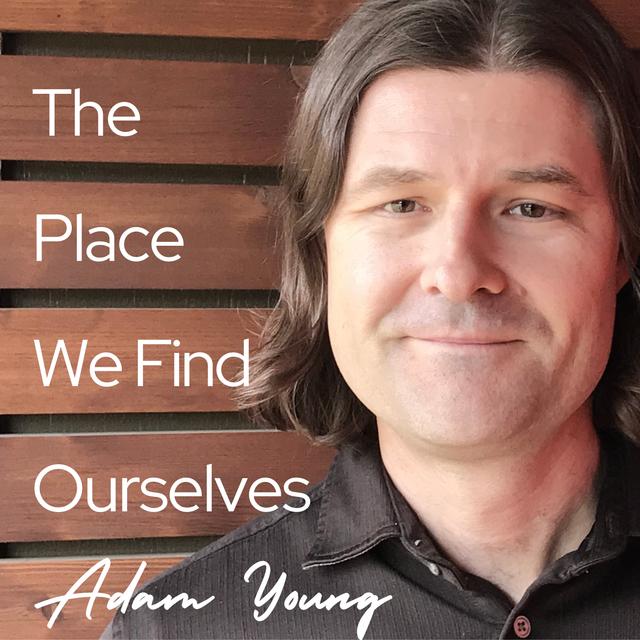
The Place We Find Ourselves podcast features private practice therapist Adam Young (LCSW, MDiv) and interview guests as they discuss all things related to story, trauma, attachment, and interpersonal neurobiology. Listen in as Adam unpacks how trauma and abuse impact the heart and mind, as well as how to navigate the path toward healing, wholeness, and restoration. Interview episodes give you a sacred glimpse into the real-life stories of guests who have engaged their own experiences of trauma and abuse. Drawing from the work of neuroscientists such as Allan Schore, Dan Siegel, and Bessel van der Kolk, as well as psychologist Dan Allender, this podcast will equip and inspire you to engage your own stories of harm in deep, transformative ways.
Last refreshed: ⓘ
Follow this podcast in the Metacast mobile app to refresh it and see new episodes.
Don't just listen to podcasts. Learn from them with transcripts, summaries, and chapters for every episode. Skim, search, and bookmark insights. Learn more
"Affect" refers to your moment by moment experience of your internal bodily sensations. Think of affect on a scale of 1-10, where 1 represents completely numb and shut down and 10 represents panic, rage, or terror. On this scale, 5-6 represents a slight feeling of relaxed excitement—you are alert, present, and attentive. When you become dysregulated, your body's greatest need is to return to a regulated state in that 5-6 zone. Affect regulation lies at the core of feeling like you can control yo...
Jason reflects on why he began engaging his story and what that process looked like for him. Jason began addressing his story as part of a story group... but (surprising twist) his father just happened to be a participant in that group! In today's episode Jason talks about why his growing up years had such a big influence on his adult life, and what the path toward healing and wholeness has looked like. Support the podcast
Hope is flat out agonizing. Hope requires that you groan inwardly while, at the same time, waiting expectantly. The alternatives to hope are a deadening of desire and a growing cynicism about what you can really expect from life in this world. Indeed, most hope is squashed by the simple phrase, "I'm just being realistic." But our war with hope inevitably leads to God: will God respond to the cries of my heart? Support the podcast...
In my second conversation with Andrew Bauman, we engage the whole question of "What does it mean to actually grieve?" If you enjoy my conversation with Andrew, you may want to either pickup a copy of his forthcoming book called Stumbling Toward Wholeness or spend 37 minutes watching his beautiful film A Brave Lament which is also available on Amazon. We talk about both the book and the film today. Support the podcast...
If you take your story and your wounds seriously, then sooner or later you will find yourself disoriented by tragedy and heartache. The invitation at this point is to lament. When was the last time you just poured out your feelings to God—before editing your words, before making them consistent with some sort of theology? It takes more faith and trust to take our sorrow to God than it does to push down what we are actually feeling. And the surprising result of lament is a renewed sense of freedo...
One of the consequences of trauma is that we tend to do great harm to ourselves—and particularly to our bodies—after the trauma. Today, Andrew talks about the reality of self-contempt and the damage it does to our hearts. We discuss the necessity of honoring our stories with kindness and care, and the importance of engaging our bodies in the process of healing. We also talk about pornography in the context of our stories. Support the podcast...
In today's episode, I talk to a fellow therapist named Scott. Scott leads groups for men who have a history of sexual abuse. Today, Scott talks about part of what it looked like for him to engage his own story of sexual abuse. In particular, we reflect on the importance of listening to our bodies in the battle to overcome the shame inherent in all sexual abuse. We end by talking about the necessity of coming to bless our bodies rather than curse them. Support the podcast...
In today's show we take a deeper look at how our hearts have been wounded and what the path to healing looks like. Guided by Isaiah 61, we see how our wounding is linked to the particular ways that we find ourselves enslaved. I conclude by reflecting on what is involved in walking the path of healing. The bottom line is that you don't have to wait until heaven for the healing of your wounds. Support the podcast
One of the byproducts of trauma is that you lose a sense of being able to trust your body. You begin to distrust your gut knowledge of what is true because the people around you question your reality. In today's episode, Janet explains how this has played out in her life, past and present. Support the podcast
This episode delves into implicit memory, a foundational aspect of our psyche that operates automatically, even before birth, contrasting it with conscious explicit memory. It reveals how implicit memories, formed by past experiences, particularly in childhood, act as an "anticipation machine" that shapes our present perceptions and emotional reactions, often leading to what we perceive as "overreactions." The discussion also explores how to identify these unconscious influences through bodily sensations and emphasizes that true change in implicit memory comes not from cognitive understanding, but from new, repeated experiences.
Gary explains what brought him to begin engaging his story. Through counseling with Brent Curtis, Gary came to realize that there were several characters in his life story who had a profound influence on his heart and life. Gary tells a story that happened when he was 10 years old, and he explains how he made a commitment at the end of that story which would enslave him for years. Support the podcast
Sometimes, "the place we find ourselves" is a place of anger at God. Some of us grew up in Christian sub-cultures in which anger at God was not allowed. If you were angry at God for too long, you had a sense that there was something wrong with you. As a result, many Christians feel ashamed if they find themselves angry at God. However, if you engage the heartache and pain of your story, there will inevitably be times where you are angry at God. Sooner or later, if you are emotionally honest, you...
In today's episode, I have a very honest and vulnerable conversation with Robyn about sexual abuse. We talk candidly about how our bodies respond with arousal even when there is profound violation occurring. Robyn tells the story of confronting her family about the abuse and not being believed. She then shares how her posture toward the 13 year old girl has changed over the years and what prompted that change. It's a beautiful conversation. Contact me at adamyoung4@gmail.com My website: adamyoun...
Explore the profound impact of early life experiences on adult relationships through the lens of attachment theory. This episode breaks down the three insecure attachment styles – avoidant, ambivalent, and disorganized – explaining their origins in childhood caregiver interactions and their lasting effects on how individuals connect with others. Learn to identify your own attachment patterns and understand the underlying reasons for relational struggles, paving the way for personal growth and healing.
In today's episode, Tracy courageously shares one of her stories with us. Born to a family longing for a boy, the war against her femininity began early. Tracy learned that attention with her father could be won by performing well in sports, dressing in boys' clothings, and wearing her hair short. One day, in an effort to belong with other sixth-grade girls, she wore a dress to school. The reaction of her peers deepened her desire to stay away from dresses and femininity. She made a commitment t...
The way you attached to your primary caregiver shaped your brain more than anything else. Attachment refers to the manner in which you connect with others. It's the emotional bond that you develop with the people you are closest to—the people who are there for you and who truly know you. We are biologically driven to attach to others in order to survive. When we perceive threat or danger, we are hard-wired to maintain proximity to someone who will be there for us, and who truly knows us. In this...
Gary began engaging his story in a deep way when he was in his 50's. In this episode, Gary shares a story of being humiliated by his elementary school teacher with his Mom standing right next to him. It is a story of mockery, but far more a story of being unprotected by his mother. Gary discusses his journey of finding kindness, and even awe, for himself as a boy. My website: adamyoungcounseling.com Contact me at adamyoung4@gmail.com . Support the podcast...
Mandy talks about how and why she began to engage her story. And then she reads a story from her own life… a story about being bullied in elementary school—a story that had a major impact on how she began to see herself and relate to those around her. Mandy talks about the necessity of finding words for the harm that one has experienced and the importance of bringing one's pain to God. She goes on to explain how she needed the help of another person to fully engage her own story. In other words,...
Adam Young discusses how a child's story begins with their parents, outlining six core relational needs vital for healthy development: attunement, responsiveness, engagement, affect regulation, handling negative emotions, and willingness to repair. He also explains two relational styles—dismissal and parentification—that arise when these needs are unmet. Understanding these dynamics reveals how early family experiences profoundly impact one's attachment style, self-perception, and adult relationships. This episode encourages deep reflection on one's childhood story to foster greater self-understanding.
It turns out that the practice of reflecting on the story of your life actually promotes healing in your brain. There are two reasons for this: Brain health is a function of the degree to which all parts of your brain are connected with one another. The process of reflecting on your story, sharing your story with another, and hearing another's reaction to your story connects neural networks that were previously separated. In other words, the key to healing is connecting. Engaging the core storie...