



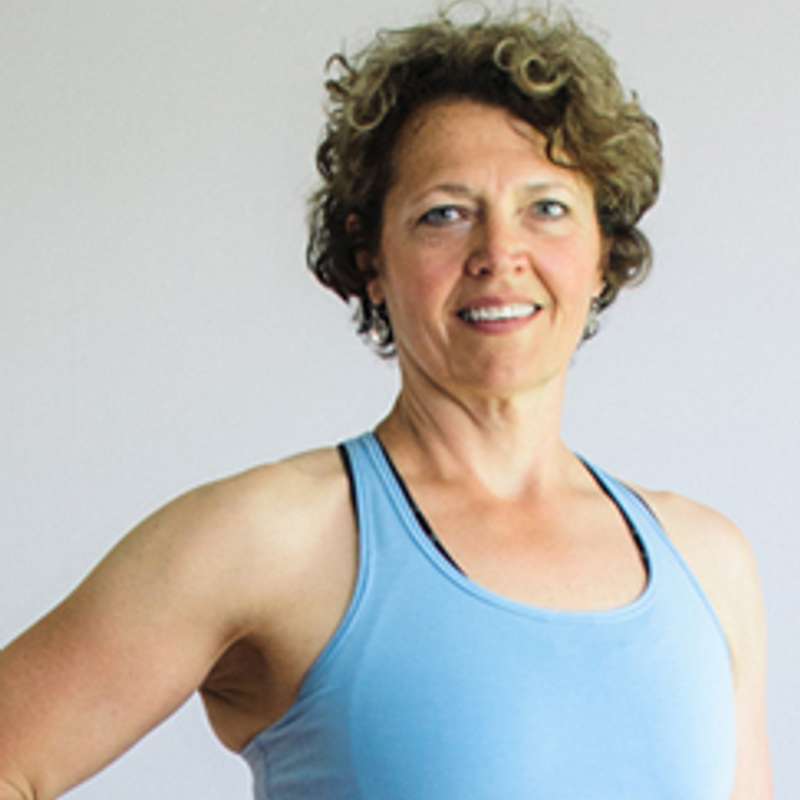
 Pam Strand
Hello, my name is Pam Strand. I'm your podcast host, and I would like to welcome you to the Longevity Gym. The Longevity Gym podcast is devoted to helping you stay strong and healthy as your body ages, so you can live longer, stronger, and better. In today's episode, I want to talk about breathing. Improving our breath and intentionally breathing in specific ways is a path towards greater health, strength, and resilience.
It's estimated that we take anywhere from 17, 000 to 30, 000 breaths a day, or an average around 25, 000. Over the course of the year, if you do the math, that means we take over 9 million breaths a year. That's a lot of breathing. Have you ever given any thought as to whether you are breathing properly or not? I am sure if you suffer from a respiratory disease or a respiratory ailment, the thought of how well you are breathing is close to your mind and heart every day.
But for the rest of us, I'm sure that it's not very often that we think about the breath we just took or the next one we are about to take and wonder if we are getting it right. Could we do it better? For the vast majority of us, the answer is yes. James Nestor is a journalist who has researched breathing for decades. In his estimation. It's about 95 percent of us that have some form of dysfunction in our breathing mechanics or our breathing patterns. So yes, we can be doing it better.
Life and the aging process in the body tend to disrupt our healthy breathing patterns. Many of us end up being shallow mouth breathers and by shallow, I'm not referring to someone's personality, but the situation where we breathe predominantly into the upper lobes of our lungs and we breathe in and out through our mouths This comes about for a variety of reasons. Here are three big ones. I think one in modern day life, we spend a lot of time hunched over our computers and electronic devices.
And even if we're not at our computers, we do spend a lot of time seated and likely not in the best posture that's conducive to good breathing. That hunched over position limits the range of motion of our diaphragm and limits how much our lungs can expand to get a full deep breath into the lower lobes of the lungs.
That hunched over position that we get when we sit a lot limits the range of motion of our diaphragm and limits how much our lungs can expand in order to get a full deep breath, especially into the lower lobes of the lungs. That's where relaxation in our bodies is triggered. Two, chronic stress, not to mention the stress that's triggered by staring into our electronic devices for many hours a day, also creates shallow mouth breathing.
The upper lobes of the lungs have the sympathetic nerve endings. If we breathe chronically into the upper lungs or do what It's called chest breathing. We are actually revving up the stress response in the body and it becomes somewhat of a vicious cycle. The more stressed we are, the more we breathe into the upper parts of our lungs and the more we breathe through our mouth.
And then the third big thing in my mind that causes us to develop what might be considered dysfunctional breathing patterns is as we age, we tend to adopt a more shallow breathing process. where our breaths are shorter and not as deep as they were when our bodies were younger. These changes can be a result of decreased lung capacity that comes about through the aging process, the loss of strength in our respiratory muscles, and postural changes, that collapsing inward or that hunching over.
And we tend to breathe through the mouth When we get older, maybe because of nasal congestion, even changes in our jaw and tooth structure and decreased muscle tone in the mouth and throat. As with most things with the body, we get what we train our bodies for. In essence, our lives are training our bodies to breathe shallow breaths through the mouth. As a result, our breath becomes less than what it has the potential to be. Shallow breathing through our mouths isn't wrong. In fact, we need it.
It's what revs up our bodies to take action or it's least a part of that process. As I mentioned, the upper lobes of our lungs have the sympathetic nerve endings, which means when we breathe quickly into this area of our lungs, we're triggering a stress response. The fight or flight response, and it gets our bodies revved up, ready to go to go slay our dragons, or to make sure that there's plenty of oxygen and energy for our muscles to work really well in case we need to run away from danger.
But those aren't the situations of everyday life, but we are breathing as if they are. And if we're not aware of how our breathing changes as we age, we lose the opportunities or the opportunity to train our bodies to breathe differently. I really do think breath work or breath training is a really easy, accessible, age friendly practice that improves our overall health and strength. So what is a better, healthier way to breathe than breathing through our mouths and breathing shallow?
Science is showing that it's breathing in and out through our noses and using the diaphragm as the major mover of air in and out. This way of breathing is called nasal diaphragmatic breathing. There are enormous health benefits when we breathe through our nose and with our diaphragm while we are awake and when we are sleeping. Here's just a few of them. It lowers blood pressure and our resting heart rates. It increases the oxygenation in our blood.
It lowers stress and triggers relaxation in the body and mind. There is evidence suggesting that nasal diaphragmatic breathing leads to improved cognitive performance and brain function. Breathing this way also helps manage GI and digestive issues and helps manage respiratory diseases such as asthma and COPD. Nasal diaphragmatic breathing has been shown to help manage sleep disorders.
We can better regulate our emotions when we breathe this way, better manage anxiety and mental health challenges. It also helps manage lower back pain and making sure our lower back stays healthy. And breathing through our noses warms and humidifies the air before it gets to the lungs. And it also filters out irritants and molecules associated with viruses and other diseases. And finally, our dentists may be happier because nasal breathing has been shown to reduce tooth decay and gum disease.
It's hard not to come to believe that improved breathing mechanics is free medicine. It feels that way to me. So how do you exactly do it? Figuring out the process to breathe through your nose is pretty straightforward. You close your mouth and the body automatically knows to shift to nasal breathing. It may not be very comfortable at first, especially if you have a respiratory condition or ailment.
And at first your brain might get a little fussy about Feeling a significant decrease of oxygen coming into your body. If you practice nasal breathing while you are walking or exercising, you may need to slow down for a bit before you can ramp up your speed again. But the body will adapt and will increase its efficiency in using oxygen and breathing less, which is a good thing. Small incremental steps are important here and always do what is safe and healthy for your body.
Talk to your doctor if you're unsure about changing your breathing patterns. Breathing with the diaphragm seems to be the trickiest part for most people, especially if it's not used as much as it could be for breathing. Like any muscle, it gets weak when not exercised, and when not exercised, the communication between the brain and the diaphragm also becomes weak. So practicing breathing with the diaphragm strengthens the muscle and improves the neuromuscular communication.
And the more you do it, the more likely it becomes your natural, more dominant way of breathing. The diaphragm is a unique muscle as it is dome shaped. It's attached to the front, the back and sides of the body. It's the dividing point between the thoracic cavity where your lungs and heart are located and the abdominal cavity. Where your organs such as your liver, stomach, your intestines and kidneys are located.
In the front of your body, you can find it by tracing the sternum, the bone that runs down the center of your chest, tracing your sternum to the end. The top of the dome is connected right behind there. Then if you trace the edges of your ribs as they go down and out, you are tracing the front edge of the diaphragm. The diaphragm is also connected to the inside of your lombar spine. That's why diaphragmatic breathing is important for the lower back, for the health of the lower back.
When we breathe, the diaphragm contracts and creates a downward pull and an outward push that allows the lungs to fill. When the diaphragm relaxes, it moves up, our ribs move in, pushing air up and out of the lungs. This up and downward moving of the diaphragm ends up being a gentle massage of the organs in the belly. And it's also thought to be helpful for managing digestive and gut issues. If these are issues for you, talking to your doctor about diaphragmatic breathing might be helpful.
So diaphragmatic breathing is commonly referred to as belly breathing. While your belly definitely moves in and out as you breathe this way, it is a slight misnomer to call it belly breathing because there's outward and inward movement at your ribs. Diaphragmatic breathing is really a 360 degree process in the body. The diaphragm, like any other muscle, gets weakened when it's not well exercised, but it can be strengthened strengthen, but it takes time and consistent practice.
And there's also a little bit more to it than simply focusing on the nose and the diaphragm. It may also take some stretching and bending and twisting the torso, as long as that is safe for your bones, to make sure that your torso is supple enough, For the ribs to move in and out when we breathe. I have found this part of the body to be fairly stiff and rigid for people including myself.
We tend to want to stretch our glutes and our lower body, not so much the upper body, but it's helpful to do that. We also need to learn to relax the belly. After all of the effort in the gym to work the abs so that they're flat and strong, and training ourselves to hold in our bellies so we might look trim and taller, it may feel a bit intimidating to think you need to relax the belly when you breathe.
Strong core muscles are a must for strong diaphragmatic breathing, but all our work in the gym to strengthen them combined with our sitting posture, that hunched over posture and holding our bellies in may also mean that they are tight and need of a little stretching. There are many resources that can help you improve your breathing techniques and your breathing mechanics. I know of three books that can be very helpful. I'll list them in the show notes below under resources.
I already mentioned the journalist James Nestor. He's written a book titled Breath, the new science of a lost art. The book is really fascinating. he shows and documents a lot of health benefits to nasal diaphragmatic breathing. He also talks about the health consequences of breathing shallow through our mouth. The other part of the book that I found really interesting is that he shared how human breathing has shifted, unfortunately for the worst, over the last centuries and decades.
The other two books, The Breathing Cure by Patrick McCohen and Breathe by Dr. Belissa Vranich have a lot of good guidance in measuring your breath, assessing it, and in doing exercises to develop nasal and diaphragmatic breathing. All three books also identify tools to help you breathe, such as mouth tape. And then there are also breath coaches. I'm a breath work teacher and someone who's happy to help someone improve your breathing mechanics.
If you feel like that's something you want to improve, just simply email me and we can start a conversation. I believe an important first step and an ongoing exercise is to check in with your breath on a regular basis, get to know it and to keep tabs on how it's doing. This type of exercise is commonly known as breath awareness work. Once you check in with your breathing and get to know it, you'll have a sense on where to put your efforts to improve the process.
You can practice noticing your breath throughout your day when you're walking, driving, exercising, sitting at your computer, doing chores. And you can also take a few quiet moments during the day to check in and scan your breathing. I've created a guided breath awareness session that I am sharing in the next episode of this podcast, episode 19. I'm posting it at the same time as this one. So once you've finished listening to this episode, you can go right to the next one for some practice.
But as a separate episode, it's also easier, I think, to be able to return to it, to find it. So I hope you do come back to it more than once because you can do this session over and over as part of your practice of developing your awareness of your breath. Plus it's a nice stress buster helping you to relax. Before we end, I want to provide some safety guidelines.
While breath work is a very safe modality, if you have any concerns, you should check in with your medical provider to make sure it's safe and healthy for you, especially if you have respiratory issues or diseases, epilepsy, mental health challenges, or cardiovascular disease. And if you are pregnant, it also is important to check in with your doctor. Some breath techniques are better for you than others. Follow what you know is safe and healthy for you and your body. So that's a wrap.
Thanks for tuning in and listening. As always, please email me if you have any questions. My email is Pam at strandfitnessonline. com. My email is also in the show notes below. And if you're interested, and I hope you are, and you're not already on my email list, please sign up for the newsletter. My emails keep you updated on the most recent Longevity Gym podcast episodes and also announce ways to work with me. Thanks for listening.
I hope you tune into the next episode, episode 19 for some breath awareness, and I will see you next time.