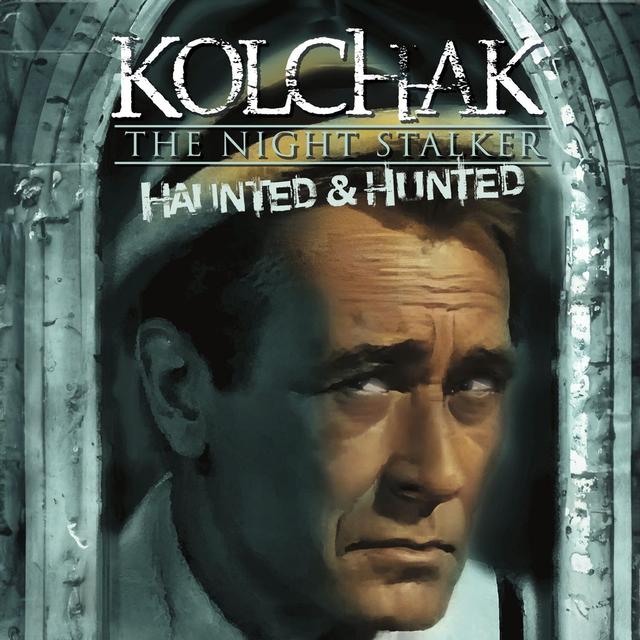



Hey, folks, welcome to a special episode of the cull Chac Tapes. Yes, we were back when we were talking to Paul Terry. He is the author of quite a lot of things. If you want to see all of his work, go over to Paul Terryprojects dot com. Paul has recently written a cold Check series of short stories. They have been collected in a volume called Colchack The night Stalker, Haunted and Hunted. It is a fantastic book.
I really enjoyed reading this one. I was so glad after all this time to finally dive into the world of Colchack literature other than the stuff that jeff Rice wrote. Thank you so much for listening, and I hope you enjoy this episode. And if you enjoy Carl Colechak and The night Stalker, definitely go back and listen to the rest of our episodes of our at colchaktapes dot com. Thank you so much for coming on. I'm really excited to talk to you about your Collchack work and other things.
I would love to know a little bit more about you and your background, because you do a lot of things. I'm not sure if you're aware of that.
I tend to tell people when they ask that question, I tend to say, I just I like making things.
I like telling stories.
Is I guess that sort of covers the breadth of it all, But it really it feels normal to me because I've always done it.
It's being a kid at school.
I've always enjoyed doing something that they're supposed to be on the curriculum. And then outside of studying or writing essays, making music and so forth, and so going through into adulthood that I think I just thought that was normal.
So we just keep it, kept multitasking.
Your stuff usually relies on other sources in order to have that platform. But then I think you've also done original fiction as well. Is that correct?
Yeah, the Cold chat Book, the Haunted and Hunted sort of short story collection. That's my first prose fiction proper, if you like. But I've always wanted to dabble into
that world and do more of that stuff. And that comes from pults, from many different things, from and they'd say, when you're a kid and you're always writing stories and being creative, and then going through to doing more creative writing with collaborations in different mediums, though filmmaking being involved a pretty use of working with directors on their scripts and things, and then co writing on some of those projects.
But you're right, yes, a lot of my other books and writing work was more in the sort of making of space or as an editor, which I was for a long time. You're editing other people's work and you're figuring out your own sort of like voice of storytelling and how you like to report information, and so yeah, I think it's just it's one of those things where I always say this to young writers, is write everything.
I've written books that are tailored four kid Top ten books kind of things like that, as well as making of books about film and TV shows that cover different mediums for things like Last things that more sort of horror and comedy likes Theebe Hollow or thrillers like The Blacklist. I tended to say yes to a lot of projects
and then worry about how to do it afterwards. Tested I think that's how I like to work in the creative art, that you go, yeah, sure, yeah, I'd love to do that, and then you hang up and go how would that work? But I think definitely a big influence on pitching even these stories for culture. Obviously, I loved the show when I saw the reruns in the
UK and the nineties. But I had been writing very intensely in character voices for the X Files book that I did with the Abrams, the first one the Official Archive, and so X Files is my favorite show of all time, and so it was a dream project to pitch. What that did was actually get me, you know, back to school and really figuring out what are the rhythms, How does Molder speak, how does Scully speak? Carries that different?
How were they speaking an official reports? And so I think years of doing that, studying those patterns just put me in the right headspace as well as other previous projects to say, you know what I've been developing, I guess off camera as the phrase away from the official career, my own IP, my own fiction ideas, And so the culture book felt like a great bridger because it is a licensed book, it is a licensed character, but it was an opportunity to say, as a fan, what other adventures?
What are the cases could call Collcheck find himself falling into and as he does, And you.
Talked about the voice of Moulder and Scully, but the voice of Collcheck is so distinct, and you get that perfectly. You nail that voice. I can hear Jere McGavin in my head.
Oh thank you. That that's the greatest reviews. As long as someone thinks that he loves the show that that means a lot to me to thank you.
I did work very hard on that.
I'm curious what was the secret of unlocking callcheck? What methodology did use to bring him back to the page.
The similar process to when I did the XOS books. It's really you're rewatching the.
Episodes and you're writing notes constantly, and I describe it as you're watching or you're rewatching things through a completely different lens. So when you're when you're rewatching a show or a film that you love and you're just enjoying it for what it is, or when you're doing it professionally for this particular task, it's really I love sound, I love language, so I'm really aware of trying to drill into those things, and it's really just taking copious notes.
It's really just figuring out there's lots of catchphrases that he comes up with, of course, and Daran McGowan's cold check. That is if like the actor and the written character just become one. Don't know, you can't imagine anyone else being cold joke, and so it's terrifying when you give yourself that to do it. But it's a good it's a good fear, I think, because you really feel like you have to honor that character. You can't mess it up, but you have to actually get Ryan. But yes, lots
of note taking. I tend to really drill into. The kind of catchphrase is the way that he talks in loops, the way he drills things out, like he says strike one, strike two, or he says item and then does translation, and that gives you a kind of foundation of what things he likes to say. But then I was really drilling hard into he's very economical with language. He's very specific.
He's almost like he's a great reporter. But if he was a writer, if he was a novelist, he'd be an amazing writer because he has great visual language, and he sees things as they are and just calls them out in a re almost poetic ways sometimes, and within that there's a sort of as he calls things as to what they are. If something's sprightening, all with a lot of tension. He liked to build that drama and call it for what it is. But at the same time,
there's that wit, there's that swagger. It's a big balancing act, and these things take a while and you start throwing down ideas about how how he would craft something. But I really love the first person perspective for this style. It feels very like hard boiled, very detective thing, and for me that just felt like a real treat to go, Okay, we can how do we keep that really present? How
do we keep that energy through short stories? And I've always loved the short story format and short film format because you have to do a lot in a short period of time, and I think for a cold shirt case, it's perfect because that also was in my mind that
rewatching the episodes the movies of course as well. Watching the episodes, you get a sense of time being quite compressed and quite kinetic, and that because there's terrible things happening, I think, and Carl Culchet wants to solve it and stop them, and so that was a big influence as well. I think a couple of my stories take place over quite a narrow period of time, but I think that's an advantage for this kind of story, and I think
that and it's just a personal preference. And there are the rights that have done very different approaches to Culchut that have been wonderful. But but for me, how I like to write, and my love of horror and tension and drama and mystery especially, I think when you have a mystery, you're trying to lay out to the audience that's in the horror space that you want them to lean in and try and solve with you. It's it's more powerful to keep it a little bit more condensed in the timeframe.
The other thing I was going to say was it's snatch stick it out does feel like karl And then yeah, not only are you capturing the characters, but then putting them in these situations to have them like Karla and Vincenzo as well, because you also capture of Vincenzo's voice very well, but to them put them in these new scenarios that we've not seen them in before, where it's new ghost stories, new spook stories, new creatures that they're investigating.
That's a whole other challenge to this, and I commend you all of these stories were very compelling.
Oh thank you so much.
It's yeah, Vince, I think what helps a lot of the performances in the writing of the show is so strong. Did you say, Tony, there is just he's indelible, He's just there again. Rewatching the episodes for Kyle Void, of course, was absolutely you can't have these stories of that Vincenza being a present. I wanted to modulate how much he's a presence in the stories because it's like seasoning, isn't You got to get the sevening just right. You don't
overdo things. And the same with Emily and Ronald. Did they appear a couple of times, but I'd love to hear that. I'd love to hear that you feel that way about that. It is not stick And for me, as a fan and as a writer, whenever there's a a temptation to do sort of Easter ragg style things, terrified of ever drifting into the sort of member berries. Oh look, we're ticking off things that we're making the
fans cheer and go hooray. That's a good reference. I always wanted any kind of Easter Egg to be very organic and very natural, so that it really is about the characters driving the story forward or it's just integral to the story. And so that was another guard rail I put on myself, so don't get tempted by doing too many things. Just did something subtle that feels like
it fuels it. And Bencenzo, especially with the book stars with the Haunted Airport story, just the idea of what would that odd couple be like coming back from something that what one person with Vincenzo I thought was incredibly important, and the other being Carl, being like, can we can I just go home? I just I don't want to how did this project come to you? I just I
like to give myself crazy challenges. I had a concept for a short which actually was the last short of the story promises, the one set in Paris in France, and the actually the kernel idea for that story goes back in years, goes back almost a decade where I was actually in Paris. It was in twenty thirteen with two dear friends and we were in Notre Dame and we scaled the staircases described in the story, and just those goggles are incredible, and you see photographs of them,
but seeing them not closed, they're so eerie. They're so strange that even the fact they were created at the tour is so odd, and a story idea was just stuck in my head since that trip was just there's all these signs around anything about museums which say, do not touch this piece of artwork, do not touch this because they're ancient, and I thought, what would happen if you did, as in, could something quasi supernatural happen if you broke the rules and you did actually touch a gargoyle?
So the story idea for that what goes way back? So twenty thirteen.
And then as story ideas, do they tend to linger and come and go in your head? And then I think I was just watching some Cold Tack and was thinking about this specific story in the context of maybe making it a short story. There was nothing to do with Coldjack, and then rewatching Colchak, it just felt, oh, my goodness, it should be a Cold Chack tele because it's almost an impossible mystery that I had in my head. How do you what is happening? How do you solve this?
He's the guy, he's a very good report that, he's very observant, He'll crack the case. And I pitched it to Moonstone, who had the license for Coldchack at the time, and the response I got was, yes, it's a short story. We don't tend to just publish into short stories. We tend to do a collections. And again, me being me, I thought, why don't I reply to the email and say they fired? Did you four more stories with that
constitute enough word count stories for a collection? And the answer would yeah, give me some other log lines for stories. And then again you see this pattern. I think to say yes to things and then worry later about how I liked the challenge.
I pitched four.
Other stories as log lines once I'd figured out the kind of range of supernatural stories that I wanted to write about, and based on those log lines, the editor publisher at Moonstone said yes. And I was away with the races last year and they came together really quickly. I think there was something I was very excited about doing them, and I was I think that also fuels creativity, when you're really inside the head of a character, And so I really dug back into those rewatches and was
really fleshing out. I really wanted these fine stories to exist. Almost I think it's an echo of when I do my music projects. So I really get obsessed with track listing and how music flows between tracks, and so with this book, I wanted to make sure that the short stories that was the order that they worked. If you remix the order, it wouldn't quite feel as good. And
so there was a specific flow to those stories. And as you say, the kind of monsters or supernatural qualities or whatever it is that he encountered that.
Moves through those stories.
But yeah, it's one of those cases of almost a cold call, I guess, in a kind of cold tech way of saying, hey, editor, I've got an idea.
Do you want to print this? And thankfully it worked out.
What's interesting because not only are you Carl inside of the head of Carl Colchak, but then you're also God and you're the one who's setting up these situations. You're the one who's throwing these blockers in front of Carl. So when you are doing this, do you have the whole thing planned out? Or do you just see how Kurl moves through this world?
It's definitely the latter. It's definitely character first. I always I have like a kernel about I like to give any creative story and working on that's original. I like to think about a problem that's insurmountable, a mystery that's impossible, and then think about what would the character, how would the character approach the first encounter with said mystery, with
said problem, And yeah, you're absolutely right. The character of Carl Kolchak, and then you the characters that he encounters, they almost get you know, writers writing very different ways, I know, but the way I tend to like writing is I let him. I let the Carle voice lead the whole story. And so when you're reading these stories, when he encounters someone else, the new character whatever it is, or decide to do something, I like to frame it under the auspices of that's what Carl colcheck we do
in that moment, and then this happens. And then if there's a blackout or this thing happens, how would then he react? And then how does that inform how the story and moves Howard? I love the mystery genre. I love the horror genre a lot. But I think that as we all do as fans, sometimes you can see the tenth pole, where you can see the structure if it's story first, if it's these characters are just drifting through a story to get to a twist reveal.
Or whatever it is.
So I really wanted to make sure that it's character first all the way, and hopefully when people read these stories, they'll see that it's not always the same outcome. It's not always and that's also something that I wanted to break away.
For the show.
There is in some episodes a similar structure to how he escapes or solves the problem, which is indicative of that genre. But when you have an opportunity to write new short stories with this character you love, I wanted to break the rules a little bit, and like you said, I was excited to put him in situations that, in some respects might feel familiar to fans of the show and the character, but in other respects may feel like I've never actually thought about Carl being in that situation.
How would he get out of it? And honestly, that's what I asked myself, if you put Carl, if you have Carl Carl break down in the middle of nowhere and something terrifying start's happening, how does he deal with it where there's no one else to help him.
So that kind of.
Idea I noticed. The of course, the settings of the stories are very important, at least for me trying to figure out where Carl is at in his career at this point. How important was setting for you and especially time period, because that has to be another challenge for you.
Yes, that was actually really interesting discussion with Moonstone Books, because again, when you're dabbling in the world of a licensed character, you are told a lot of things that you wouldn't know as a fan. And so I learned that in the nineties when jeff Rice was still around at the Creative Culture. Of course jeff Rice the genius was. It was with Mark Dewidziak, who was a writer and
added of many books and the cultcho phenomenon mythology. They collaborated on this concept that basically after the end of the TV series they did move to Hollywood. They moved to this thing called Hollywood Dispatch, and the crew essentially all moved there and the rules got really set in terms of the licensed comic books and pros. That happened from the sort of late nineties onwards, I think it was.
And so again I didn't know that, but it was incredibly fortuitous because I live in Los Angeles and so hearing that, oh, okay, the Hollywood Dispatch.
Oh, this is.
Exciting because, to be honest, that was a huge influence just knowing that information and that you had to frame things around that location and you couldn't riff on flashbacks to Chicago or whatever. It was all about the here and now in the Hollywood Dispatch was great because I've been to Catalina Island a bunch of times. It's a very evocative, inspiring place for stories. Anyway, I'm fascinated by
the UFO phenomenon. I know there are sightings around Catalina, So that idea was like, Okay, we should re dabble in some way hit that's territory. But then just thinking about different areas that are not too far from LA that could be conceivable that the fans would think, yeah, that works if there's something that's Fresno based, or even the Lake Tahoe story. It's a long drive, but it's
not like a five day drive. So for me, it was looking at the map, but it was thinking about locales, thinking about environments in terms of an isolation of environments or like an expansive, beautiful setting. I really wanted to mix things up a lot, and in terms of throwing Kolchak into situations. As we said, he was dead, sir on he was going to solve this or get out of this, but maybe he hadn't really encountered this kind
of thing before. And in that respect with monsters, I love that the show tackled a lot of classic monsters or riffs on classic monster mythology. And it was another challenge that I really wanted to rise to, which was, Okay, we'll do things. We'll do some kind of haunting thing that's obviously related to a ghost in some respect, but I wanted to challenge myself as well on riff on new mythologies.
I wanted to come up with.
There's a phrase that I think it was in the TV show Fringe, and I think it was also then adopted by the TV show Sleepy Hollow. But this phrase called twistery where they take actual history and they just bend it slightly. So that I love this concept, especially with Colchak's stories, because he's a reporter that the reader is thinking as they're reading it, I'm being told something historical, but is this completely real or is it completely fictional
or somewhere in between? And so I love that as a writer I love doing that kind of research and just hold things on top of one another. That's true of all the stories. There are things that are absolutely true and things that are absolutely you know, a question mark, and there are things that are completely invented. But I'm not going to tell you I'm gonna I'm not going to ruin the magic trick and telling how those things sold out.
But in terms of the period, You're right.
That was a real challenge because I was thinking about if it's the nineties onwards Heathen Hollywood Dispatch, he's a lot older. And it was another rule I was told by a Moonstone, which is a terrific rule, which is we never specify the year. You can specify calendar dates with days and months whatever, but we basically act like it's the present in quotes, it's just happening. And as a fan, I wanted to keep that seventies vibe in the stories, that things feel like they have that period.
I absolutely didn't want to go near anything that would technologically not fit in that space, but just make sure the rules of the story feel like for me. I just wanted to do a great companion into the vibe of the TV showing the movie. So I wasn't interested in even leaning near the sort of late sentits or early eighties ideas.
It was just, this is just Coljak's world. We'll live in that. Yeah.
I can't see Colchack using computer. I can't see him googling. I can't see him using a cell phone. That would just be wrong. If he sends a text to Tony that.
Yeah. No, Honestly, if I'd have been sold, that was the rule.
I maybe I don't think I would have been thick on the project because you think I want to stay in that analogue space. And I love the idea of him finding a payphone or asking to use the phone at a motel, whatever it is. It just feels that's the character, isn't it. Like he said, it just doesn't really fit.
Those were the struggles he had to go through, just finding a pencil, his notebook, the tape recorder. Even though you don't think of them as trappings of Colchack, they are trappings of Colchack. The time period is an essential part of them, and I think that's probably where the newer one got into trouble.
Sometimes, Yes, I think, yeah it was.
I think I did see a couple of the episodes of the new one, But I think it was it was so different that it almost if you joined the show ten minutes in it hadn't seen the opening or hadn't heard the character names, I think you'd be forgiven for thinking it was a completely different remix or approach of new characters, which I guess that was there. That
was their idea and their approach. But like you say, yeah, there's just there's something about those challenges which he faced as a reporter that it's not that no one believed him, it's the fact that he was. There was so many other things that he had to deal with on a minute by minute basis and let her know the overall arching of can we stop this MOUs to killing people?
I'd like to that one of your challenges wasn't necessarily there, which is budget. If you if this is a Carl Colchak story, you can take him to Paris so you don't have to worry about what are the production costs in order to get Darren McGavin in front of the Eiffel Tower.
Yes, absolutely, that is a That story was really fun in that respect because I had been to Paris and but again the just the some of the imagery of Paris is so evocative of literally that story with the most fun in terms of locations because you get maps out. You literally bring maps up and I'm figuring out the real hotel where he's staying. How does that inform the story? Like how far is the way from Notre Dame? Could something conceivably have happened between those two events? Where would
other people he encounters, where would they live? How does that inform the stories too? You start looking up where the reports some certain among the things, so you really, as you say, without a budget, you can really go to town in terms of short story and just have him encounter things that would be a lot more expensive to put on camera for Shure.
Yeah, that was one thing that we always complained about on the call Jack Tapes was invisible monsters. There were so many invisible monsters because it was a lot cheaper.
They had great stories.
But I totally know what you mean, and it's almost like the match of Minido, the reveal of the those photographs will send but wrobably the most sort of striking thing of that whole episode because it's I guess it's the payoff and as a fan, you're going, oh wow, this thing's gigantic and it's this this god essentially with this eyeball just staring out of the montage of photos or the But that's always fun as well when you're thinking about the unseen and describing those things is always
a great challenge as well instead of worrying about I guess it's my love of Jaws. That's my favorite movie. So I love the idea of just slowly eking out the tendrils or something, especially with the first story, having the specter or the mystery or the antagonist just slowly come into the frame or tron it to spoiled thing too much it's people or listening haven't read this, or
a ques to read it. That's one of my favorite things to do is that don't don't show anything all at once, just do the Jaws thing, just slowly eke out what the mystery is. And then when there is a reveal, it should be that brody chumming the water moment. It should be terrifying, but the character the carhold to be what is happening, and also for the audience going, oh my goodness, this is actually more terrifying than I expected.
Though Carol is no slouch when it comes to the supernatural. There's a lot of times Okay, yeah, I've seen this kind of thing before.
And that's exactly right. And having I think that was also a motivator.
You just poked my brain.
I think that it was a big motivator in doing new things, in doing creature or phenomena that is at least a sidestep away from what he's encountered before, just to jar him a little bit, just to have him going, Okay, yes, I know slacker when it comes to seeing the horrifying things. But wait a second, this might be on a level that I don't even understand, because that kind of just refreshes the concept, doesn't it, of the reporter surviving the supernatural?
With you being such a prolific writer, how long did it take you to put this project together?
Ah?
Let me think, reversing my brain in the wayback machine, it was all twenty twenty three last year, so I think the story and the collection promises was probably there's probably a couple of months in terms of everything. But from the very start, Okay, let's figure out how is this parastory gonna work?
The other four stories.
Were actually in total around i'd say maybe eight to ten weeks. They came together pretty quickly, I think because once you're inside that world in their headspace, you're again there's just a fever pitch quality to it.
You're going okay. And I think because.
One thing I will say was I was really happy with the Paris story, the final story, which is called promises Promises. But there's also a problem with that when you go okay, I've written a quotes unquote like spec script for a coll Chack story, and then like an idiot, you pitch doing four more and then you go, well, I want those to be as good as this one. But I feel like I landed this. Is it even possiblity four other ones? But I think that was all just good creative fuel to go They have to be
because I also, I'm my biggest critic. I don't put out any books or music that I don't stand by and say, yes, I think this is of a decent quality. Yeah, I think all that sort of nightmare fuel of failing was just great kinetic fuel to get the thing done. And also because when you are pitching for the stories that have to be so different to the Paris one. For me, that's just crazily, very invigorating, because you're going I have to, as you say, the colors of the rainbow.
We have to figure out all these different tones. One note I got was great was moved from Moonstone, which I completely agree with in terms of there's been so many other great Moodstone adaptation things for culture with comics and prose, the two things i'd say that I really loved the feedback from the first story, which didn't have story notes, but was yeah, culture works the best when it is scary. This is about essentially a horror mystery genre.
It's not comedy. That's not what the character is.
That's not the show. But also Carl has to lead.
Things through the stories that he encounters. If there is a collection, have a kind of palate cleanser, have something that doesn't necessarily have a familiar structure to it. And so the fourth story for me was my kind of the odd story moment, which is called Kindness Can Kill You.
And I won't spoil what the story is, but for me, that was a completely different scenario that Carl hasn't countered before and just broke the formula of the reporter getting wind of something and investigating something that it's a character being thrown into situation that he is absolutely no preparation for at all and is completely stuffed in many respects. And for me, that's just a great writing challenge to go is that a story? How can you make that
interesting story? And obviously he does survive because he's a protagonist. You want to kill Cock or Jack, but what is the exit strategy in those kind of scenarios.
That's true too, it I didn't even think about that as far as the tone of those first two TV movies is so different than the tone of the TV show, So it definitely felt like you were going more for that horrific tone of those first two films.
I wanted the quirky humor to come out of characters interacting or just Carl's thought processes in terms of when he has that great any monologue with the voiceover or we either get a sense of him recording something on a tape recorder from the voiceover motif, or it's just his thought processes. And I think he's such a witty character in terms of the drafts, if you like, of
he's reporting. But yeah, that these situations are we see Carl terrified, or we see Carl wide eyed, but he's never super confident unless he's I love the way that when he's cracked a theory, when he thinks, Okay, maybe this flash is going to work for these aliens, maybe I'm going to try the Or he has a revelation and he's trying to plead with someone that say, know, this actually is going to help us, this actually is going to solve the situation. But yeah, I definitely I
enjoyed Moonstone, sort of true north of that going. Don't veer too much into comedy, don't veer too much into other genres that are away from the horror genre, because it really is. The beating heart of the show is the monsters, the fear, and the disbelief. If he's encountering things which no one else is believing, not even his editor publisher thinks there's a shred of truth to it, that's just a great anchor to keep going down the road.
Of Now that you've been in Carl Kolchak's head, do you want to go back? Is there more call chack coming out from you?
Nothing planned yet, but I definitely could be tempted. Yes, I think I should again do that thing of saying yes now on the podcast and challenging myself to see whether I could do it another story or collection of the short stories. But if it never happens, I'm so thrilled that this exists, because, as I say, for what I thought was going to be one story became the collection of five that I'm really proud of. And it's a thrill to hear that you enjoy them. That's the it's
always terrifying thinking polease. Fans know that it's a fan writing them, and it's a fan trying to do his best. So if you enjoy them, that's fantastic.
It doesn't feel like fan fiction. It doesn't feel like something I could fine on the internet. These are real, actual stories, polished, beautifully paced, super well written. So thank you for doing that.
Thank you, sir. No, that's can I have that as a pull quote? I'll put them on post.
Talking about how prolific you are. What are you working on right now? Because you've got so many different projects that you do.
There is the volume two of the X Files, the official Archives, which I'm still busy hard working out. That's been a long project and ongoing projects since the first volume.
So that's that's a really exciting one for me because it's the entire mythology of the X Files, going back from season one or worth through the season eleven, presented in a similar way to Volume one in terms of these are the reports that the agents are filing with some twist and turns surprises should we stay in this particular volume because when you're handling the mythol the X Files, there's a lot of things which aren't necessarily which can't
necessarily be handled as exact reports. There's some other ways to handle those things creatively. Music wise, I just did a really fun soundtrack for there's another podcast called Return of the Pod, which is a begin of the Star Wars led podcast but become more of a kind of pop culture podcast, and they wanted a new main scene that expanded to being a bunch of cues of themes for their shows. That was really fun to do because
they're great guys. That's a really fun show. And there's a film that's crony in pre production called Kilter, which I'm attached to as a composer, So that's shooting in about eight weeks, which is a short which is basically a proof of concept for a feature, which is a director called Bartley Taylor, who I've worked with before.
Great director, great creative.
The rest of the year is nice and busy, which is always nice, and I love to be able to balance between books and music projects slash film products because they do inform each other. A lot of people think it's very chalk and cheese, but it's not. They're very much about structure and storytelling and pacing, like you say, and so I think that the more eclectic things that I do just for myself, I feel like it informs the other projects really well and just improves everything.
Where's the best place for people to keep up with you and your work?
Probably the main website is Paul terryprojects dot com that sort of has everything covered. So it's just got all of my yeah, my bookwork, my music work, and anything in between. You can just figure out, have a click around and if there's anything that takes you fancy.
Paul, Thank you so much. It was a great talking with you today.
Thank you so much having me on the show. I love the show, fan of the show, so it's a great It's a great opportunity to be on your show.
So thank you.
Up a
Coup sh