



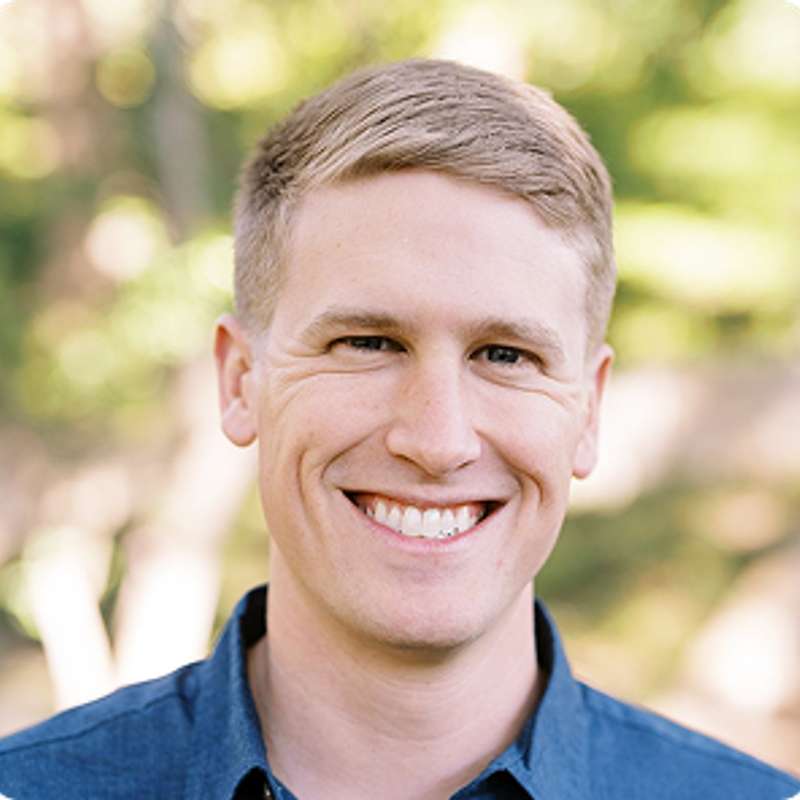
 Lane Kipp
Well, welcome to the All Access Podcast. Uh, I'm excited to have another guest with us today. A couple guests with Plan with Purpose, uh, one of our, our newest additions to our portfolio. Uh, I was telling the guys before this call when we went through our evaluation process this last year, there was a group that. Stood, uh, highly above the rest as far as impact, especially with the, the metric we use and that was Plant with Purpose.
And so I'm really excited to, uh, learn more about, about them and, uh, I'll let the guys, uh, introduce themselves. But, uh, miler Corey, thank you for taking the time to join us.
Thank you. No, thank you, Elaine, for letting us be here with you.
Lane KippYeah. Well, uh, we'll start with you, millware. Tell us, uh, a little bit about yourself and your role at Plant with Purpose.
Hmm. Yeah, it's a little bit of both in the same, uh, um, I was born in Colombia. I came here to do my grad school in, um, in, uh, molecular genetics with marine mammals. And I, uh, um, I, while I was going to my church, I, there was a group. There was a table about plan with purpose, and I did about flues at that time, flues of plan with purpose.
And so I, I got to meet Scott, our CEO and, and got to understand that the, there was an intersection between the work that I was doing from a conservation perspective, from an environmental perspective with what, with, with the possible scope of, of Loreta at that time. So. Um, I've been, um, I mean I can go deep in this, but I've been working with Plan with Purpose for 17 years. I've been volunteering, uh, with Plan with Purpose for since 20 2001 when I started my grad school.
And, and yet I'm currently in the role of, uh, vice presidents for international programs. Uh, but yeah,
Lane KippAwesome.
just like a small version.
Lane KippYeah, that's awesome. Miler. I didn't know that about the, the marine biology background. Uh, my, I'm in my background's in the marine space as well in the engineering side, ocean
Oh, I see.
Lane KippI, when people ask me, what is ocean engineering? I say, well, we design oceans of course. And obviously not true. I, but that's, uh, that's awesome. Milner. Uh, that's really, really cool. Now, Corey. Uh, tell us a little bit about yourself. We've had some fun conversations the last few months, so, uh, yeah, Corey.
Yeah, thanks Lane. Uh, my name's Corey Chin and my formal education was in environmental studies, uh, specifically natural resource management and conservation. And I also studied geography. Uh, but I've been at Plymouth purpose for just over 11 years. I started as an intern, uh, hosting booths and everything, like the one miler visited. And my current role is within the international programs division. I lead our M and EF. Thanks.
Lane KippYep. And, uh, so ME monitoring evaluation, I want to dive deeper into that 'cause you guys do it really, really well. And honestly, you're an example to a lot of groups out there and to us as well about how to do that. Well, you've done some really interesting studies, uh, miler. Can you, as far as the, the plan with purpose model and what you guys do, it's really unique. Can you give us a, like an overview of the model?
Yes. Um, yeah, I would say that we are, we're a faith driven, agree, ecological, community centered development organization, right, in which we are. We aim to restore livelihoods and ecosystems by, by working with, uh, small holder farmers in conditions of poverty around the world. So that would be kind of like the. Yeah,
Lane KippGot it. And.
I can, I can go into what it is, but
Lane KippYeah. Well, tell us what it looks like on the ground specific, like, I guess start at the watershed level, which, you know, as I was learning about, you guys had to learn about the watershed model.
Mm-hmm.
Lane Kippwhat is a watershed? Why a watershed? What that, share more about what that looks like.
Correct. So, so if we, if we're attempting what I said before, we are attempting to facilitate a process of restoration. And we have to take into account that a family or a community is nested within, within a bigger space, within a bigger community. So if you're really aiming to, to be a part of the process of, of restoration, you really need to be, we need to be thinking systemically. So the watershed model attempts to delineate an area, um, big enough.
With some characteristics that give a sense of cohesion, like culture, environment, trade crops. Um, so the idea is that, that by deploying the work that we do in the areas of, of regenerative ag, agriculture and areas of, of community development, of human development, the idea is that by, by planning at a territorial, at a big scope level.
You are, you are not only addressing the micro, the family, the family based issues, but also you're attempting to, to catalyze change at a significant level that maintains the changes that you catalyze at a smaller level. so so the idea is that that by, by understanding that that communities are nested by families are nested within a bigger community, within a bigger environmental community, ecological community.
Within a bigger human community then, then the idea is that, that the work sustains over time. So, so that's kind of like, uh, what we attempt more of a territorial level than family, family, community, community.
Lane KippGot it, got it. Now Corey, at the, uh, with the program itself, you know, so you've got. A reforestation component, a saving screw component, spiritual renewal component. Ag, uh, I'm trying to remember the terms you guys used for it, but like ag component, uh, improved agricultural methods. Uh, tell us I guess more the programmatic level, what that looks like all together with plant with purpose.
Yeah, so, uh, you described it well and I, I think how it works is we use the VSLA. Savings group methodology as a platform, and we provide regenerative agricultural training to those groups as, as well as partnering with, uh, local institutions like the local church, church leaders and schools. And with them we promote, uh, care of creation, peace, and reconciliation. And we have trainings on identity and vocation. And so we have an agricultural curriculum that's called Seeds of Change.
And it incorporates, uh, regenerative ecological techniques as well as, uh, training on what a watershed is and the importance of, of seeing it through that lens. And we're nearly done finishing a spiritual renewal curriculum that incorporates the creation care, theology of work, and identity of and vocation trainings.
Lane KippAwesome. Awesome. And I guess we should say a little bit of context of where you guys are working. I know we specifically are, are partnering with you guys and, uh, Burundi, Tanzania, uh, Ethiopia, and the DRC, but you guys are in a few more countries than that, right?
Correct. Yeah. We're currently working in Mexico, Dominican Republic, Haiti, um, at the ones that you mentioned, Ethiopia, Malawi, and Thailand. So a total of nine countries around the world.
Lane KippGot it. Got it. Yeah, I, um, first I have to say the. I really gained appreciation for reforestation and care of creation in Haiti where I lived, uh, on the border of the DRC. Actually, we had to evacuate through the DRC, uh, when we couldn't make it to the airport. And when you cross the border at the DRC, uh, I'm sorry, Dr. Uh, immediate change in the topography, uh, and it's pretty wild. And obviously there's a. You see the, the poverty level changes as well.
So it, it, yeah, gained a huge appreciation for how important the landscape is to these communities. And I, I would honestly say I'm still gaining that appreciation. I think I will when I go and, and see you guys work in person in Tanzania, but, um, so I'd love to hear more about, okay.
So we heard about the program, what you guys do, but the Impact, which is where we, you know, really, uh, just saw Plant With Purpose stand out as we're looking at those indicators and you guys taking m and e very seriously. So, uh, Cory Miler, whoever wants to take it on the, you know, the indicators you guys are looking at when you think about ideal outcomes, um, what that looks like at Plant with Purpose.
Um, I think it's, I, I think it's worth clarifying if we step back for a little bit, it's worth one of the values. I'm usually kind of careful about. How much time can I take to explain all this kib? So, uh, Elaine, so, so. Mm.
Lane KippYou're good. Take your
Yeah, so I'm being a little, uh, I'm being a little, uh, syn Synaptical. But anyway, all that to say that I want, I, I, one thing that I, that I wanna make sure that we, that we consider a value of plan of purpose is that, uh, we see monitoring, evaluation, and research very much part of programming. We don't see it as an additional component. We don't see it as a, as a, as a luxury. We see it as an integral component of programming.
So. So from the beginning, from, from the essence that we, we conceive the work that we do from that perspective, we actually, uh, take the lesson from biological systems. There's no biological system in, in, in, in, um, in, in life in organisms that doesn't have a self-regulating, um, uh, a self-regulating, uh, process. So we very much, uh, uh, think about it from that perspective, the, the perspective of impact, the perspective of. Of outcomes.
All, all these things are, are mapped out in our theory of change. So when we, when we sit down, when we think about how do we want to catalyze the change in partnership with the community, we take into account, um, those pathways and the logical steps that go into explain the change that we wanna see. So in essence, very much the impact, though the system that we have in place are very much to capture the change that we're trying to catalyze. So, so that's the, the, the basic stuff.
I'm gonna let Cory talk more specifically about the framework and the work that we do, but I just wanted to make sure that, that, that you understand that one of our values as an organization is that one
Lane KippYeah.
is, is there's no, there's no this or that. There's the program that is completely merged with, with the concept of, of regulating itself so that we can improve what we do, and so that we will make sure that we are doing what we say that we do without what we hypothesize that we do.
Lane KippExactly. Yeah, that's one of the, I mean, it was very obvious in, in, in getting to know Plant with purpose, that connection of, Hey, we're measuring this to see how we can improve. And, uh, I love that. I really encourage other groups to like, Hey, uh, take that on. See monitoring through that lens. Uh, Corey, when we think about, okay, what do we measure to figure out what do we improve?
What are the metrics you guys have found to be really helpful in, in learning and um, and just seeing how, how is our program doing?
Yeah, I, I think when you talk about metrics, uh, I think it's important to remember that the metric is no more or less important than the process and method to get that metric. And we like to say that, um. Hm. Bad data is worse than no data at all. So the quality of what you're collecting really is the essence of its utility. But as you know, we really like using MPI.
Lane KippMm-hmm.
Um, but we don't just measure and look at MPI. We're interested in socioeconomic conditions changing, and so we're looking at things like income assets, savings amount, uh, we're looking for environmental conditions to change. And so we measure things like agricultural practices, uh, things like conservation, agriculture and agri forestry. And we're also looking for spiritual or social changes. And so we're looking for internal transformation and community cohesion.
And I wanna mention, I, even though they're, they're shorter term outcomes, I don't wanna overlook significance of indicators like tree planting.
Lane KippMm-hmm.
And so we're looking at. Not just the number of trees, but the species planted. And all of these are planted voluntarily by farmers. Uh, we look at savings group metrics like amount saved, uh, equity loan utilization, et cetera. And I think these are good examples of things that we don't do ourselves, but we facilitate and they're indicators of the growth that's enacted by the participants themselves.
Lane. Something else that I'd like to add. Kinda like bringing it back to the concept of the watershed model is that, um, we carry out the impact evaluations of the, or the monitoring of what we do, uh, let's say that the hypothetical scenarios that if we work with enough people in a wa in as a watershed, that usually goes anything between 150 to 350 square kilometers and we want to see changes sustained and reflected in, in the whole.
In the whole, uh, territory, we're, we're, we're also taking into account that there is, there is an element of, of, um, multiplier effect or an elephant, an element of. There's no need to see the changes in every community if they're represented within the sub watershed, because there's already a natural cohesion within that environment.
So besides working on developing, um, working, um, uh, to develop those changes, to facilitate those changes, we're also, we also wanna see as a measure of impact, how things are moving around, how things are. Are, are being reverberated across the space, even with a, with partic within, with people that are not directly participants of us. So that's an element of that.
Within, within the sub watershed, within the concept of, of the changes sub watershed, we, we want, we want these changes to be represented in a significant, in a significant matter. Because our, our hypotheses is that if there's enough representation, then. Then we don't need to work with a hundred percent of the people to see the changes over time. So I see. I think that's one, one consideration to have in mind as we think as, as we think about how we work. Um.
Lane KippYeah. Yeah. That's uh. Really fascinating. I'm curious to know what are some of the most interesting things you have learned as far as that the community as a whole, knowing, not everyone went through the program, but that ripple effect, uh, we're the most interesting findings. You guys have learned that, okay, because we did this with this group of people. Now the community as a whole is, is is X, Y, and z. Are there any interesting things that.
That you found out that maybe weren't, uh, maybe you did expect it, but, uh, anything that stood out.
I can tell you one thing, and Corey can tell you 10 things, but one thing, one thing that, that I, that it might be obvious, the obvious things are the most difficult to explain, but. Is that when things work, people wanna do them.
So, for me, the, as we deploy in a, in an area, after, we do community readiness assessments and participatory appraisals, and even if there's not like a significant participation, as people start seeing how the, lives of the other people start changing, suddenly things just explode. Meaning that, suddenly people are literally, Doing a queue to be, to apply to work with us. So that's something that I really appreciated that the effectiveness of the work, is the biggest way to propagate the work.
So it's, so Go ahead Corey. I don't know what else, but.
Yeah, I think one that comes to mind is, so as Miler stated, our assumption is that if we've achieved a critical mass in a watershed and we've been working there long enough to facilitate change, we expect to see change amongst participants and non participants. And so that's how we, of course, approach our impact measurement.
And an example of something that we learned recently, we ran a, pretty large DID study measuring change in five treatment watersheds in the DRC in comparison to a, control non-treatment watershed, and the reduction in poverty that we saw in only three years of programming across. Again, we're measuring the entire watershed population, participants and non participants. So across the whole population, we saw a 75% reduction in MPI in just three years.
And so we were honestly quite surprised by that. And based on that experience, we're looking to try and better understand what exactly is the optimal time that we should be programming in a watershed. And that might vary between cultures and contexts. Um. But we're, we're actually running an experiment now to try and better understand that.
Lane KippNice. Awesome. Well, I'm eager to hear what you guys find out. Uh, I'd love to touch on, uh, you know, when I talk about MPI, so that's a multi-dimensional poverty index. Uh, a lot of people aren't super familiar with that. Um, you guys are very familiar with that. So that was a, a really great connection with us. Uh, what was it about? The NPI, I know you guys have kind of like a modified version of that, but yeah.
Share the, the history of looking at the NPI as a a, a good tool to help measure impact.
Maybe, maybe, uh, if I can start, Corey, I think that, um, we are an organization that we understand the complexity of, of what poverty is. We embrace that complexity. We don't, we don't shy away from it. We don't want to simplify it. When we think about poverty, we don't think about poverty just from a socioeconomic perspective. We're thinking about it from a perspective of relationships and, and dysfunctional relationships.
But so we, I, uh, we felt that the MPI really embraced this complexity and tried to to, to put it in a language that was easy to understand with a single metric. So I think that, that, as I said, much more than like, oh, these people are using MPI or we think this is good. It comes from, from the belief that we understand that what we are addressing is multidimensional and, and requires a multidisciplinary approach.
So, so the idea, so the concept of MPI, the concept of, of finding a way to reconcile, uh, different indicators or metrics in a way that would be easy to, uh, that we, that would be easy to, to communicate, I think was part of the essence of why we use NM PI.
Lane KippGot it. Got it.
Maybe, maybe Corey can talk about a little bit about the mechanics or of some specific indicators, but, but as I said, in the essence, it's very much aligned to how we think, how we think the problem is, and how we want to approach.
Lane KippRight, right. Yeah. I mean, it's what I mean the UN when they define, I have this conversation all the time, especially in the impact investing space about poverty. Uh. And we have to define what that term means. So when I was starting all access and doing this research, you know, that's what the UN is using. When they say 1.1 billion people live in poverty, you know, there's the World Bank number out there as well. But, um, the data behind the NPI is really fascinating.
You know, seeing at a subnational level what they're measuring through these surveys. Um. So, yeah, Corey, uh, yeah. Specifically I guess the modified what you guys have taken and improved this to, uh, to what you guys are doing about the MPI.
Yeah, we took the original U-N-D-P-M-P-I methodology and adapted it to try and better suit the rural context specifically. And throughout that process, which was many years ago now. We found a lot of value in, there's some MPI training materials from UNDP that provide best practices for actually modifying and adapting it. They have best practices for indicators, for thresholds and for waiting. And so that was really helpful. And what we came up with is comprised of 12 indicators.
Four of those are, I think, identical, uh, from their original MPI and I think those are nutrition housing. Education and access to clean water.
Lane KippRight.
And we're using the same calculation method where you have not to go too deep, but you have the deprivation threshold for each indicator. You score each household. You come up with households that are quote unquote mult, multi-dimensional, deprived, and then multiply that with the quote unquote multi-dimensional headcount ratio.
Lane KippRight. Which do you guys, uh, uh. Which is a interesting conversation we've had this past month about the threshold that, one third, you know, if, if they're deprived in, you know, more than a third of these, that counts as multiculturally poor. Uh, those who are less than that are not. We've had to wrestle with the censored versus uncensored headcount. Now we're getting really in the weeds. But how, love to hear Corey, your, uh.
Yeah. What you guys, what was helpful for you guys in, in looking at that?
I can't say we have compared sensored versus not sensored we, we do use the sensored deprivation score with one third being the cutoff. Um. Yeah, we haven't, we haven't played around with, with both options. I think you may have gone deeper than we have actually.
Lane KippWell, I don't know about that, but we, we wrestled with, okay, if, if there's a group, a population out that out there that is. of clean water, uh, in a certain area, but because of certain other things, they may not be deprived in a few of the other ones that are weighted higher, you know, because all 10 of these on the NPI are not weighted the same.
For example, education, if they may have access to education, but they don't have access to, uh, solve these other things that are really important, especially in disease prevention. We didn't know the right answer there. And uh, something else we learned was. If we looked at a percent reduction in MPI, it highly favored, uh, places with smaller populations because obviously if you help, uh, a hundred people out of extreme poverty in a smaller country, that's a larger percentage.
So it, it, uh, somewhat unfairly favored. Smaller countries and smaller subnational regions. So we're, we're learning, I mean, these are all improvements we made in this last few months that we honestly didn't have before. So, uh, I think you guys have helped us, like, encourage us in the right direction of making those improvements. Uh, so it's, it's really cool to see what you guys are doing with the NPI and especially, I'd love to hear.
More about, so you talked about the, the, the DID, is that the RCT and the DRC that you guys did? Uh, last year or a few years ago, or a different one?
Uh, so we actually, we don't usually use the term RCT even though it, it pretty much is. Um, we, I mean, a DID is part of an RCT. We do a DID everywhere, not just in the DRC. That's our standard methodology now, and the way that we approach that is by randomly selecting treatment watersheds and then randomly selecting control watersheds from a pool of selected eligible watersheds based on community readiness assessments. And so there is a randomization element there.
And then we will go in and apply random sampling across the entire population within those watersheds, like we already talked about. Um, I forget exactly what your question was. Whether the DID was in the DRC?
Lane KippYeah, but I think you, you, uh, you clarified it, but. I know you guys did a pretty extensive study there that, uh, I know I think like 37% crop yield improvements and, and so forth. And, um, yeah, I, the, one of the last things I'd love to hear more about, and guys feel free to share more about what you're doing, is the regenerative farming techniques, because that's newish to us, uh, and trying to get a better picture of what that means.
So, so before I, before I can talk a little bit about it, uh, lane, I, I wouldn't, I wanted to say about the whole, the whole, uh, thought process that you're going with your team about. The MPI. Um, though we care about the metric by itself, we care, we, we, we pay more attention to the trends over time. Meaning that, that we, we, and again, this, anytime that you're doing statistics, anytime that you're doing. We, we want to, we want to, we wanna see we're measuring a process over time.
So the change over time that Delta using what if, if it using the MPI or using any specific metrics that go within the IPI or that are simply part of our framework is we really wanna see that. So as you, as you, um, contend or, or work with your team. That's something that, that we've really, uh, we, it is been very insightful for us to start thinking about the picture once you step out. Like how, what is the trend over time? And then, then, then Pat start, start kinda like jumping out to you.
Anyway. That's just, just as a, something that, a process that we went through that we've, that we've learned a lot from that. That's one thing. So seeing things more as a movie as opposed to just a picture.
Um. As it relates to regenerative agricul, uh, regenerative agriculture, one of the reasons why I like to use the word agricul in what we do is because I've been using it for, for 20 years, and, and I very much appreciate the movement in which, in which it, it moved away from a certain perspective ology into a, a scientific dis discipline. Into, into something that you can actually. Uh, uh, well, it's a, it's a science discipline.
So, um, as we think about regenerative agriculture, the term, we believe it's very much aligned to the intent that we have with the work in the community. Um, I'll make the link with Agricul in a second, but basically by promoting, by working with, with, uh, local producers, farmers, family, farming families, to use techniques that are not. Exploitative but are, are, are thinking about the longer term our thinking about sustainability.
You have to, you have to implicitly use techniques that restore the areas in which you are, because basically that's the only reason why we're working there, because the areas are already depleted. So, so what we like about, about using that term is because it really encompasses the objective of working with specific in a specific way that is not simply.
Addressing a food security is issue in the now, but in order for us to think about food security in the future, you need to be able to restore the areas, the agricultural landscapes in which those farms are nested. And again, it's another point in which why we think at a territorial level, like. There's a term that I like that is called geographic solidarity. And Corey actually helped me, uh, go through this process with the local team and communities in Haiti.
We're up in the mountains, uh, of Leo, uh, above Leon, between GaN and Jael. And we are working with all these people and we're, we're looking at satellite pictures and we're asking people to point us where their farmers are and, and, and we're, and we're here pointing out and people say, oh, my farm is here. Oh, my farm is here. And we're, we're showing that. That the work that we do up here upstream actually affects the work that they're doing there.
So suddenly they, this process facilitating an awareness of, of what I do affects what they do, what, what, how they live. So the idea of of of, of thinking about territorially, the idea that, that the work that I do actually is restoring something that not only provides for me, but for someone else. Promotes this idea of, of solidarity that it only was catalyzed by seeing things from a different perspective.
Anyway, so forgive me that I'm taking so long, but, but, but the whole idea of, of the reasons why I like using agricul is because Agricul takes that into account. Agricul thinks about a food system and agriculture production system that is nested within an ecological system that provides all the, uh, provides all the indispensable, um, ingredients or. Or elements for that farm to thrive.
So, so that's why, that's why we think that that the word regenerative much more than a buzzword, it really is descriptive and is tied to the objective that we're trying to do as an organization.
Lane KippNice.
What would you, what else would you say, Cory?
No, I have nothing to add to that. That was great.
Lane Kippyeah, miler, you, you, uh, nailed it there. That was really helpful. Thanks for, uh, explaining it's here to, uh, good to hear the word jock mail as well. Um, so yeah, it's, um, I'm just really encouraged by you guys. Thank you for. Uh, going, the lengths that you guys do to, uh, help, you know, my friends in Haiti, uh, look at their, their farming that way.
And, uh, I'm just really encouraged by it, especially at a time right now where I think I would say charity is under a spotlight of, and, uh, really discouraging spotlight to. Uh, to shine the spotlight on you guys. And what you're doing is an encouragement. I mean, you mentioned scientific standards behind what you guys are doing. I mean, this is, um, really impressive work.
I know you guys are, uh, would probably say you have a lot to learn, but you guys have taught us a lot and so keep learning, keep up. Your work and what you're doing. We're excited to come alongside what you're doing. Um, Corey, keep pushing me on the m and e stuff and, uh, helping me improve there, but I mean, just for those listening, we added plan with purpose to our portfolio this last year. And so you can, uh, come alongside what they're doing online with us.
So specifically we're partnering with them in Burundi, uh, DRC, Ethiopia and Tanzania. This is a. A fairly large scale program, like 61,000 farming households involved, and so you can learn more, uh, on their page on our website. But thank you guys for what you're doing. Thanks for taking the time to join us here and, uh, appreciate what you're doing.
Thank you
you so much, lane.
Lane KippAll right guys, I'll talk to you soon.