



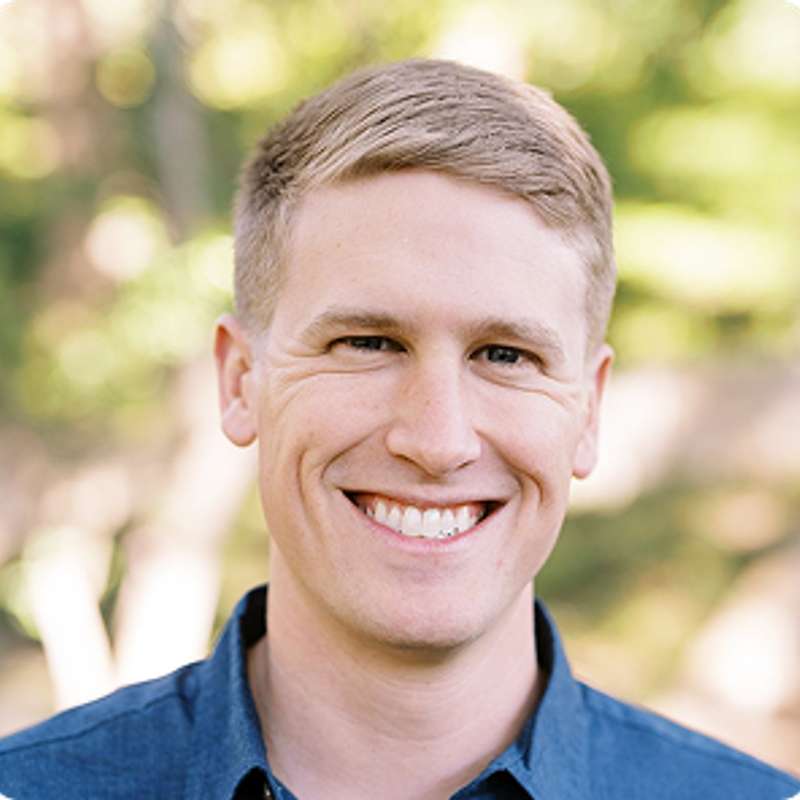
 Lane Kipp
All right. Welcome to the all access podcast. Uh, thanks for, for being here. I've got a never thirst here with me today. Really excited to learn more about what they're doing and share what they're doing. Uh, before we jump into that, I did want to thank one of our sponsors of all access that helps make. This podcast and all of our stuff possible, you know, the fund, a hundred percent efficient. That's DMRE. Um, they're here in Dallas and Houston, several other places.
They help with brokerage services for multi family residential and industrial land. And they're awesome. We love DMRE, but, uh, Matt Letourneau, Jason Barry with Neverthirst is here. I'm really excited to talk with them. Jason's calling all the way from Australia. Where in Australia are you from? Jason?
Lane, I'm from the state of Queensland and in the, about an hour out of the capital Brisbane.
Lane KippGot it. Got it. And Matt, what country are you from over there with your Auburn
of Alabama, the great country of Alabama, specifically the, uh, educated in the Auburn region of, of Alabama. And, uh, you know, we're trying to, we're not quite Texas status where we can feel like we could sit, you know, secede, you know, and be our own country where you are Elaine, but, uh, you know, one day maybe.
Lane KippOne day. One day. Still SEC country. Who knows?
Welcome to the SEC, by the way.
Lane Kippyeah, I appreciate that. Maybe the SEC will let in Australia as well. Who knows how large they're going to make it. Anyway, uh, we'd love to hear as much as we can about Neverthirst, what you guys are doing, how you do it. Uh, Matt, can you share kind of a little backstory and kind of a big picture overview of what, who Neverthirst is and what you guys do?
High level overview of never thirst was there were three businessmen that were all in church together here in Birmingham. Uh, and, uh, they heard a sermon preached on Psalm 2, uh, where the challenge was, have you, uh, disconnected God's blessings in your life with God's purposes for your life?
And that led them on about an 18 month journey where they were, They were subjected to, uh, and witnessed just abject poverty all over the globe, uh, committed themselves to prayer, asked the Lord what he would want them to do, and if, you know, what their role was in that. They ended up in Sudan, which is now South Sudan, were exposed to the water crisis, and that's really where the vision of Neverthirst was born.
They came back and said, you know, we really want to solve a very practical problem, which is these people are, Drinking, uh, dirty, disgusting water, which is making them sick. It's causing their babies to be sick. It's causing a myriad of other problems like the lack of ability to find consistent work, the lack of ability to get any sort of education. Um, obviously the disease, um, on the long walks to water, you know, that's where the, these ladies and girls were encountering traffickers.
Uh, and so, you know, just this one The domino of being able to provide clean water, safe water, you know, ended up knocking down these other dominoes, uh, in social issues, and so they wanted to do it through the church, um, and platform the underground church pastors and believers in these countries that were unreached with the gospel. So they came back, formed a board, raised an initial fund, and, uh, went to work, and that was about 2008.
which anyone listening to this would know is just the perfect time to start a nonprofit was in 2008, but the Lord was faithful. And, um, you know, 16, almost 17 years later, we're, you know, we're still functioning at a very high level and the Lord has been gracious. And we've been able to serve a little over one and a half million people, uh, with an eye to serve an additional. Two million people over the next five years, uh, if the Lord is so gracious to us.
Lane KippWow. Wow. One point. I guess I didn't realize that. 1. 5 million. And yeah, share a little bit more about how it's growing outside of South Sudan, where you guys are at, as much as you're willing to share.
Yeah, I'll share. And then I'll let Jason take the wheel on some of this other stuff. But, uh, you know, the instability of the government and, um, civil war in Sudan, which ended up dividing the country, uh, became problematic for us to continue to work long term, uh, in South Sudan. Um, But we did end up expanding to other countries. Our focus is exclusively in what missiologists would call the 10/40 window, which is at 10 and 40 degrees latitude on the world map.
Those would be the countries that would be considered the most unreached when it comes to ability to access the good news of the gospel of Jesus. Uh, and also unreached in terms of inability to access safe drinking water.
And so we operate exclusively in that area of the world, which is generally, if you're unfamiliar with that term, North Africa through Central Africa, across the Middle East and across Southeast Asia, uh, working in three distinct African countries there and also, uh, three distinct Asian countries. Um, we've done work in the Middle East. Uh, we've done work outside of that window in the In the past, but just in the last few years, we've really locked in on.
That's where we're called to to work is in that geography.
Lane KippGot it. Got it. Yeah, that's awesome. Obviously a shared passion, uh, and value of ours. Now, Jason, uh, why don't you take us down to the ground level? Like if we were there in person with Neverthirst, what would it look like? How you guys do what you do? You know, working with local church and with local partners. Yeah, give us as best of a picture as we can of what that looks like on the ground.
Let's take it right down to a lady who right now is probably, it's, it's morning in Australia, but if it was morning in Chad, she would start her day in, uh, the village outside of Diwali, uh, she'd probably be, you know, loading up, uh, either a donkey with a few jerry cans or herself, and she would start walking. And, um, often leaving Children at home. Often the eldest child could be eight, nine years old and they're caring for the baby.
Uh, the husband, maybe if he has employment is a goat herder. He's out working, looking after the goats and the mother has that burden to walk and she will start walking too. And I've been with Matt and we have traveled to Chad and we have seen these water sources that dry up. Chad, yeah, Chad in the Sahel region is one of the driest places on earth. They only have one wet season, and that wet season, when it comes, it's good rain.
For eight, nine months of the year, it's incredibly barren and dry. So that woman will start her day walking, and that return trip alone could be two to three hours in Chad. In Ethiopia, it could be six to eight. So for us, we start finding those areas where have, where women are faced with extreme burden to collect water. We then come alongside, uh, indigenous local organizations who know the people on the ground.
They are registered with the government as licensed non profits, uh, sorry, non government organizations who, uh, work alongside, uh, communities, uh, they are skilled in engineering. And then our role is to come alongside them and design a strategy together. So we will target a region like the Bali Chad, um, or like Halaba in Ethiopia.
And we will find a region where the need is great, where we can be for five years minimum, uh, to ideally solve the water crisis in that area and reduce that burden, what, what may be now to two to three hours down to less than 30 minute return trip, or in some cases, we are trying to increase our level of service to pipe water to the household. So water is actually bought directly to the home. So I guess from a. Right down level to that lady who's walking to how we then interface with partners.
We select them. We work with them. We design a strategy and program. Uh, and then we'll set a goal to achieve full coverage at least at a basic level of water within five years. Um, and then I really work closely with Matt and the team in HQ and, uh, they then come alongside, uh, the Neverthirst community who generously say we're on board to fund that and help you guys see that woman no longer walk that two to three hour trip.
Lane KippWell, I appreciate you sharing it in the form of a story because that's really important. I think it's a lot of us miss when we talk about the water crisis, which I think we should talk about a little bit more here. I don't think a ton of us really understand grasp the reality of what that means and the toll it takes and how important safe drinking water is and how much of a killer it is as well, especially in kids under five.
But yeah, could you Just from your own perspective, Jason, on the water crisis, uh, just your, your vantage point, kind of what you've come to realize about it, you know, having been there on the ground and seen so much across the world and what it's really like.
Yeah, my wife and I were fortunate to live in Cambodia for many years and that was when the water crisis hit home for me. Um, even in our own home, we were on the outskirts of Phnom Penh, uh, in the city and we regularly would, the piped water supply would regularly go off. Uh, even in the city, which was meant to be filtered and treated water, you couldn't drink the water in a major city of two million people.
When I started traveling out to the villages and actually realizing that, You know, I was living an incredibly privileged life in Phnom Penh City with intimate water flow of semi clean water compared to women in villages all around Cambodia who were walking to collect from surface water. And, you know, that really broke my heart for, um, The burden that we have and the opportunity we have to solve what really is a solvable crisis.
And when I look at a global scale now, you know, a lot of work has been done by a lot of great organizations, but we're still at it today. 703 million people are collecting water every day from an unsafe source being either surface water or, um, uh, open well, uncovered well. And for us, that's 703 million people. They are the people we're trying to serve in those countries Matt mentioned in the The 1040 window. So, yeah, those those situations are real.
Um, again, a lot of great work is being done and I think we're learning a lot about what is actually good work as well. But the burden that we strive for every day is how do we bring that 703 number down to nothing?
Lane KippYep. Which is, uh, why we're partnering with you guys, because we share that as well. And I mean, 703, that's like twice as It's like double the United States, uh, which is pretty, pretty wild to think about. We get people ask us all the time why we don't work in the United States. And it's like, well, when's the last time you drank water from a puddle? Uh, you know, or you had to go get water from a puddle or a river for your baby. Um, so that's why. Hopefully we never work here.
Uh, is kind of my typical answer. But.
going the opposite direction that we would have taken a bad turn
Lane KippExactly, exactly. I want to hear more about the living water aspect as well, because I know that's really important to you guys. Um, can you share a little bit more? Matt, feel free to pitch in. Um, how you guys incorporate living water into what you do.
sure. Um, so, you know, I guess, you know, we, we believe that the Bible is true. We trust, you know, that, um, you know, the church triumphant is marching forward, you know, in the midst of persecution. And even if you, you know, look at acts one and, you know, just seeing, uh, and, and, and I say in the scattering of the church, you know, the persecution of the church, it's like God's people.
Yeah. Yeah. Even in these unreached places, they're there, they're being persecuted, they're many times underground, um, and so when a traditional missionary, like a western presence, a western missionary, uh, you know, folks like us, we couldn't go over there and have much effect, right? I mean, we couldn't even get access to the country necessarily or have a reason to live in a lot of these places long term. Um, just because of, you know, what, what are we actually doing there, right?
In terms of, of, of work. Uh, but, you know, there are people in these countries, Christians largely underground in some, some of the countries we work in, uh, that have a heart for their own countrymen. Uh, and if they go to them and say, Hey, we, we would love to tell you about the good news of Jesus Christ and his gospel, um, they would be. greatly persecuted and sometimes killed for their faith.
And so what we're simply doing is we through our partners, you know, who are all locals and indigenous people, like Jason said, giving these men, um, a platform to be able to go to their own people in their own country and have a reason to be in these unreached villages, these very rural villages. Um, and, and, and have a platform to be able to be heard with the message of the gospel because they are meeting their most basic physical need.
And so Jason and his team have done a phenomenal job of serving our partners and their pastor part, their pastor connections and saying, what do you need in order to be the most effective in your context in order to share the gospel? And uh, they give us a list and we, um, You know, these people are mostly illiterate, uh, people, so Bible translation and even physical Bibles in many cases don't really help because they can't read them.
So they need things like audio Bibles and they need things like the Jesus film loaded in their own language. And since there's no real electricity anywhere, um, we, we've partnered with another organization called Renew Outreach Ministries.
And, uh, they have solar, solar powered video cameras and speakers and projectors, uh, that can, you can set up literally in the middle of the desert in Africa and show the Jesus film, um, in native tongue with, with a tribe that you're, that, that is receiving clean water. So. Um, I'm sorry, my dog just started going crazy in
Lane KippThat's all right.
a little distracted, but that's the living water piece, it's like we're really asking these underground pastors and Christians, what, how can we come alongside of you besides clean water to help you be effective in sharing the message of Jesus with people in your own country who don't know them, or who don't know him. And so, uh, and they tell us, and then we bake that into the cost of our programs and go and help them.
Lane KippYeah, yeah, that's, uh, why it makes sense we partner with you guys as well. I mean, uh, we definitely align with you there. It's really interesting as I, uh, I was reading a few years ago one of the, um, global poverty experts who I believe is, you know, agnostic or even atheist, but, uh, she was writing and, and, um, She even admitted that there is no long term, sustainable, economic development without addressing spirituality and faith.
Because even the places where we're partnering with you guys, I mean, Boko Haram can come through and destroy things in a night. And so, Empowering, you know, people to, or helping people follow Jesus, you know, i. e. not kill other people, not kill your neighbors, love your neighbors as yourself is, um, pretty important, obviously. And so, uh, that's why we love.
podcast, I would guess.
Lane KippYeah. Yeah. Yeah. But well, speaking of that, let's talk about the context. Um. Um, maybe Jason, you can share a little bit more about our specific partnership in, um, the Sahel and Chad and Niger, what that context is like. You gave us a little bit of a, uh, a story form, which is really helpful, but, uh, what Chad and Niger is like, but also the, the program itself, you know, the timeline, the goals, what you're hoping to do, all of that.
Yeah, good point.
I think the Sahel often is a region people, it's not a common name, it's this geographical belt or a thick, chunky belt that really extends across a certain range in Africa of countries, uh, and is one of the most driest, uh, so it's from a physical perspective, uh, it is a range where a number of countries with Chad and Niger are one of them, two of them, where access to water is a significant issue, uh, mainly because of this, the physical climate, Um, but secondly, it's also, um, in the, as
Matt said, the 1040 window where, uh, christian, christianity is and the christian church is in the extreme minority. So it's a, it's a, it's the ideal countries where never thirst is and, um, chat in Nigeria to neighboring countries. We've been active in both these countries now since I chatted back in 2016 and we started funding work in Nigeria. I think with a pilot in 21. Um, and I think we've learned over the years to Wayne Lane. When we first started, we were doing individual projects.
We would be very much working in, you know, this intervention, this community, and then we'd hear of a hear of a past or a need another community. And when Matt came on board a few years ago, Matt really shifted the direction never thirst to say, actually, I think it's going to serve us best. To have a long term presence in one region to see a greater change for the community. But likewise to from a donor perspective, donors also want to know, um, what change would be possible.
Uh, so we then have done a lot of work with All our partners in all the countries Matt mentioned, but in the Sahel, um, we have a combined strategy in Niger and Chad to serve over, I think, about 208, 000 people over the next five years would lead to, um, safely would lead to pretty much full coverage in the two regions that we're in. So what we do is we start with the partners, we decide, we get them to survey, figure out a baseline coverage now.
In some countries we work, um, the governments are very active and there is a lot of good baseline data on what actually is the coverage of water and then you set a goal to achieve full coverage. Other countries, uh, the government, uh, not through a lack of desire, just simply a lack of, um, capacity and, um, staffing ability, don't have the ability to survey every single village to give an accurate, um, Uh, baseline. So in this year, the government's very active.
Uh, and we were given a good baseline to work from in Chad. The government, uh, lacks that capacity to survey every village. So we sent our partners out to do that. So that's what we started from was first of all, what is the scale of the problem? Uh, and also then what intervention is appropriate? Um, you look at Chad and, uh, traditional hand pump would not be effective, uh, because the groundwater tables too deep number of people pulling from a hand pump is too high.
Uh, so then we had to look at a bigger intervention. So we went down the path of pipe water, uh, which is drilling down to 7, 100 m. You have to put the subtitle in to transcribe meters and defeat. Um, and, um, uh, but basically, um, we learned that in both countries, uh, To provide sustainable water supply, we needed to have a higher level of intervention. And also, too, we wanted to make sure people were reducing that burden. That lady I talked about at the beginning was walking two hours.
If we drilled a deep well and had four tap stands running off each, off each, uh, central bore, off the central bore, then those tap stands can be spread throughout the entire village, reducing the burden to collect.
Lane KippWhat am I, I might have lost Jason. There he is.
back again. Uh, I'll pick up where I started.
Australian internet?
I think basically what I was saying was I began the story with the lady walking two hours. And, um, so when we do the deep bore well, we're having four tap stands running off it. Those tap stands could be anywhere from, uh, one to two kilometers, even a mile from the drilling from the bore hole. And therefore we can have multiple water collection points around the village, reducing that collection time. So we, we have learned that, um, the style of intervention has to be relevant to its context.
Um, and then, um, we've done a lot of work with our partners. We've co funded drilling rigs to enable them to increase their scale. Um, and, uh, work on a five year plan to serve everyone in these two regions is the end goal
Lane KippGot it. Yeah, I love what you said about context driven, um, interventions, uh, cause it's, it depends. And it's interesting from our vantage point, you know, part of our process is start in the most unreached and impoverished places. And when we look at the, the multidimensional poverty index, that's what. The UN uses, you know, SDGs, all of that, and, uh, pretty much any way you filter it, Chattanooga's air right at the top, and, um,
or the bottom.
Lane Kippwhich you mentioned the water tech, yeah, the bottom, but, uh, highest MPI, uh, it's like 0. 6 in the 0. 6 range, which, um, for reference, United States is in like the 0. 000 range, um, but. You know, a lot of in our space, uh, people tend to confuse effective with cheap and if you always go with what's cheapest, you'll never work in some of the hardest places because it's more expensive. And so we always see, well, cost efficiency is important. Um, cheap isn't necessarily going to cut it.
So, um, I appreciate. That you said that and, um, I think lastly, what I'd love to touch on is, uh, just some of the lessons learned along the way. I mean, there's, like you mentioned, there's lots of different interventions. You know, we, we try to learn a lot about what, what works, what doesn't work in specific areas or the people actually want for their own lives. That's a big one. We try to listen as much as we can, but, um, we'd love if you guys would just share.
Um, some of the lessons you've learned along the way.
Jason? I'll, I'll defer to you to answer first and I'll clean up with anything that. If you don't say
I think on the program side lane. Uh, context is everything, both in the holistic transformation space and also in the wash space. Um, you know, when Neverthirst first started, we, back in 2008, probably in the water sector, I think the hand pump was the, was the dominant intervention. And, and that's, and again, that's what we were mainly doing at the time, because Again, in most contexts, that's what was people's what they were used to using. It was acceptable technology.
But as time goes on, you can see that as more people move into a community, as population migration happens, you need to adjust your intervention. So we have many countries where hand pumps are still the preferred and the most appropriate. Uh, technology in Cambodia and India in the in the unreached locations where we're working would be classy examples of that.
Um, but in, uh, I would say in countries like Chad, Niger and Ethiopia, uh, we've had to learn a lot about, um, how do we upscale ourselves to ensure we have the right, um, intervention and also we're following the UN guidelines to on, you know, safely managed and basic level of service and limited. And okay, what does it mean to have an intervention? to bring everyone up to basic, where at the maximum people are walking no more than 30 minutes. How do we get our head around thinking?
Okay, how do we design a water program? How many water points are required to hit that goal of less than 30 minute collection? So another good lesson learned from that space has been understanding what is best practice. How do we need to then adjust our interventions to achieve that? And then last, I'd probably say you mentioned before listening. I think what we do really well is we work with our partners.
We don't pretend to be the experts and everything, but we have a desire to work very closely with our partners who are on the ground. They are attending the U. N. Cluster meetings. They are part of the whole wash space, and they understand what their government also is saying is what interventions are appropriate. We want to posture to be a partner with them who listens well. Uh, we'll challenge them. Of course, we feel there are better solutions.
But at the same time, we do want to listen to our partners and then together design what will hopefully be the longest best sustainable solutions for the communities are in. So, uh, we've learned a lot. I feel we're in a I feel we've got a good foundation to continue to spring forward and go forward. And I really want to thank all access. I think you made a good point before about understanding is everything and that it.
Cheap often doesn't get a good long term result, and you guys have backed us with doing some very complex solutions in Chardonnayshire, and, uh, thank you for being with us on that journey, and it's a great partnership to continue.
Lane KippYeah, absolutely. Jason. I appreciate that.
I mean, I'll just briefly. Yeah, it's hard to follow Jason talking about the.
Lane KippIt is man. He, yeah, it is. I'll give you
accent, really. I mean, he could just be reading the phone book, you know, but it's just the accent. I got you every time.
I don't have an accent. You guys have the accent.
Um, I know that's why we're so great to listen to Jason. Um, Wayne, I would say that one of the one of the great things that I have learned from Jason is, you know, I came in without a background in You know, I'm not like a water crisis guy. I mean, I came in from business and, you know, I, I deal a lot with, uh, our major donors and things like that. And a lot of times the question is, well, if we just give a lot more money, we can solve the problem a lot quicker. Right.
And, and I, and I learned from Jason, it's like, well, yeah, it's gonna take a lot more money, but. Spending money is one thing, but spending money well is something totally different. And that's, so we've already danced all around it and, and, and established this. But, I think the, the reason why, Lane, honestly, like no one has vetted us the way that you guys have vetted us. Um, like you, you were the most intense vetting. Uh, of any outside third party organization that's ever looked at us.
And, um, and so you, you know what I'm talking about when I say this, but in terms of spending money well on a solution that is sustainable with a partner that is been thoroughly vetted and can scale the things that I've learned in this role is that like not all partners are created. And a lot of these guys in the countries that they're in, you know, there's, they're kind of survivors and their, and their mentality is survival day to day, week to week, month to month, year to year.
And for a lot of orgs that started working through partners, it was hard for, for them to think past one year of what they needed to scale their organization with personnel fi, you know, the finances, the personnel, the, the, uh, you know, the, the machinery, you know, the, the hardware, everything, uh, to get them on some sense, like believing and operating at a much higher level to serve their own countrymen.
um, so I think what I've learned is that it's 100 percent possible to get people thinking outside of a day to day, week to week, month to month, year to year survival mindset. Um, but it just takes time and, and when, uh, when you get enough of those guys able to do it, then certainly you can have a lot more money and you can solve a lot more problems in this space. Um, but it's not just like that. Uh, it, it just takes time to spend money really well.
So the last thing I'll say is Jason and his team have worked unbelievably hard over the last 18 to 24 months to create a runway for us to be able to do 100 million worth of water programming over the next five years. And so to get our partners, businesses, these NGOs in a place to where they could say, okay.
We've thought through and we know exactly where we can work, how many people are here, the exact number of water points will take to saturate this region and it will cost exactly this much money to do it. We're now at a place where it's like if someone gave us 100 million we could place it well with sustainable water programming. Um, and that's really hats off to Jason and his team and the level of quality partners that we're actually working with.
Uh, that are able to think long term and scale their businesses.
Lane KippYeah, well, I love that, Matt and Jason. And, um, yeah, we love it. I mean, that's that a $100 million is a fraction of what's out there in Christian donor advice funds and foundations. And so I, let's do it and, uh, make it happen. And, uh, yeah. And, uh, man, I mean, our, from our vantage point, the evaluation is pretty easy. You guys said, Hey, are you all working in this area? What are you doing? And then.
You all, you all have baseline surveys, you all have data, this is what it's going to cost, this is how we're going to do it, this is where we're going to do it, um, so, uh, it made the partnership, the evaluation part really easy, uh, from our vantage point, so, uh, on behalf of our evaluation team, thanks for making it easy, easier for us, uh, we appreciate you guys.
Well, we appreciate you guys. And I think we just appreciate the level of excellence that you guys are committed to for the donors that trust you to help them make decisions. You know, I mean, a majority of donors are mostly making emotional decisions, you know. Um, but you guys seem to attract a different type of donor that are Coming to you and asking how can we place money? Well, and so, um, it's needed in the space and we've been impressed with what all access has been able to do.
And like Jason said, we've been a tremendous beneficiary and we love our partnership. So thank you, sir.
Lane KippI appreciate it. Uh, Matt, thanks for sharing that. And if anybody wants to connect with never thirst, we can help them do that. That's what we're here to do. But Matt, Jason, thanks for your time today. Really appreciate what you guys are doing. Keep up the amazing work and we'll keep in touch. All right. Thanks, guys.
Thank
See ya.