



Welcome to the AAA storage podcast, your integrated real estate and development partner, exploring all things, self storage investing to bring you diversified success. Let's dive in.
Hello Paul and welcome back to yet another episode of the AAA Storage Podcast today. I'm really excited about this one because, uh, this is something that we've been talking a lot about in episodes past about how self-storage is a hyper-local. Market where you have supply and demand at a very hyper-local level. So I wanna define what that looks like in a second. I'll let you take the reins on that. However, uh, I, I think a great place to start is for investors that are listening to this.
When we typically talk about investing in, let's say, any kind of market, let's say like public equities or something. We go to the Wall Street Journal or our favorite news aggregator, and we see, oh, this is how the s and p is performing, or this is what interest rates look like. And people, uh, create these kind of, um, outlooks based on these kind of national broad aggregate statistics. Same thing can be done in real estate.
You can look at cap rates, you can look at, you know, other kind of how certain real estate classes are performing nationally. You can look at growth rates and things like that. But something you have talked about, uh, quite a few times before is. Some of that is helpful, but what we're really looking at when we think about self storage and and office industrial flex properties is what does it actually look like for that specific property within a few mile radius?
And you've got some statistics and data that you guys use when you're analyzing properties around that. So one thing that you said, for example, is. You need to look at the facility count and total square footage within one, three and five miles. You've talked about square feet of storage per capita with 10 square feet per capita, often being a saturation threshold.
You've got these other, the statistics that I find really fascinating because, um, it's, it's almost like surgical precision you have to have with where these. These properties are located and what's going on in that, that local market. And it's becoming increasingly important to do that when, uh, looking at or doing any kind of due diligence on these kind of deals because you, something you said before is you can no longer just open up a map and throw a dart and be successful in self storage.
Maybe that's, that's still the case a little bit, but with the increase of institutional demand and in higher interest rates, maybe some other things that are going on in the market. You have to be very, very precise in where these properties are located. So I wanna get into all of that. But first, what do you mean when you say hyperlocal and the supply and demand dynamics
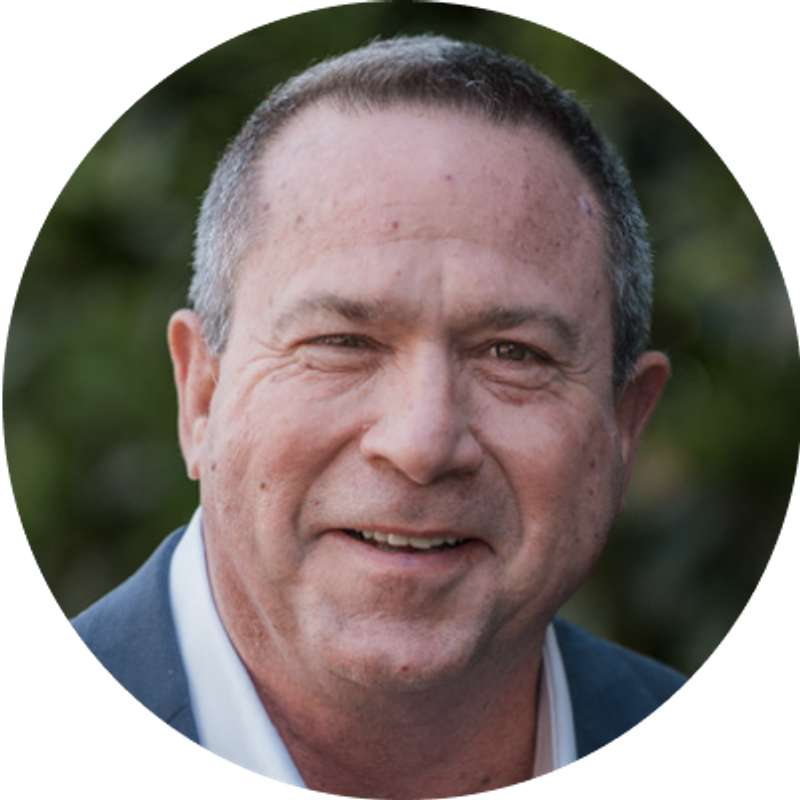 Paul Bennett
it, it, it's, it's pretty simple, Brandon, but I do think it's probably helpful, um, if somebody hadn't heard that term before. A hyperlocal market is, is simply a small, well-defined geographic area, and, and it can be defined differently for different purposes and in different industries. As you've already said, in the storage injury industry, it's really one, three and five mile Radius around a given location. Uh, there are exceptions to that.
If you get into a really rural market, people may not only be willing to, but have to drive 10 miles, 12 miles, 15 miles, uh, to get to a storage facility. Um, but typically in most markets, you're really generally not gonna get a customer outside of a five mile radius from your property. So we tend to think of, of that hyper-local market being out to five miles, uh, radius around. The location.
Yeah, that makes perfect sense. So you, you're really looking at, I mean, diving into like zip codes and real, and the tracks within that, you know, and how the demographics are looking. I mean, how, yeah, how do you guys, what are you, what are you looking for when you look at a market like that? I.
Paul BennettWell, uh, we probably, you, you've mentioned the, the. Square footage per capita. That that is certainly a figure that we look at. It's an easy piece of data to get. There are a couple of different sources in the industry that provide that data and update it on a regular basis. Uh, and that's probably the first metric we looked at. We look at when we're looking at a site. Um, however, even that has some variability to it. I think we talked about this briefly last week or the week before.
Um, different markets have different. Household utilization of storage. Um, households that tend to be volatile probably isn't the right uh word, but maybe more transitional. Young professionals, renters people like that tend to use storage more often. Um, in certain markets, think about the Florida market where you've got a high percentage of part-time residents, people who might live in New York, um, you know, during the summer months when it's 110 degrees in Florida.
But come Thanksgiving, they load up the U-Haul and they are headed to Florida 'cause they have a home down there and they want to get away from the cold weather in the Northeast for the winter. Um. Those kinds of dynamics can change the utilization. So we throw around the 10 square feet per capita number as sort of the point at which we start to get concerned about, uh, saturation.
And what I mean by that is there exist in a five mile circle, 10 square feet of self storage for every person that lives in that five mile circle. Um. However, in a market like Florida, uh, in certain markets in Texas, uh, we see that those markets can absorb up to 15 to 18 square feet per capita because the people who live in that area are two or three times more likely to use storage. So you kind of have to dig down a little bit beyond just the surface numbers, um, to make sure your data's.
Informing you in the right way. But, uh, but that is a, a key metric that we absolutely use is, is square feet per capita. You, you mentioned the macro. Uh, economic factors, they are absolutely, um, a factor at one level. For example, we've talked about the fact that moving is about 25% of the demand in self storage. One of the reasons why, um, storage has been resilient in slower economic times is that when the economy's tough and people may have lost their job, they're more apt to move.
To get another job, or they may use the fact they've been freed from a job as, as a time to move to an area they wanted to go to anyway. So when the economy slows down and unemployment's a little bit of an issue, um, actually moving kind of ticks up often, and that helps self storage, which is why we swim against the tide in those kinds of environments At the same time. Today with mortgage rates over 7%, it has slowed the purchase of new homes and new and moving.
And so it's actually had a negative effect on the supply side, or excuse me, the demand side of the equation in self storage. So those demographics matter. However, when you're talking about a hyperlocal market, there can be dynamics at the local market level that absolutely contradict whatever the higher level economic, um, metrics may be telling you. Um, right now in, in, in, uh, CILO Texas, which is outside San Antonio, we have a project that's coed in June of.
Of last year, 2024. It's been in operation nine months. Our projection showed that it would be about 41% occupied by the end of March. We sit here today on the 25th of March, and as of the 15th. It was almost 50% occupied, so nine percentage points ahead in spite of the rates, in spite of the environment, in spite of all the conversation about some markets being overbuilt. Um, it's performing actually above budget and you see that.
Because the local market dynamics have a lot more impact on the performance of a particular location than the, the macro dynamics or even dynamics at the state level. Um, you know, a regional level. Um, so at the end of the day, you kinda look at all those levels, but the, the, the, what's happening in that local community ultimately winds up being the biggest driver of success or failure.
How, how do you, how does this relate to other real estate investments or asset classes that maybe investors might be thinking about, or like, I guess another way to phrase it are, is commercial, multifamily, residential, do they have similar characteristics of this? Kind of hyperlocal dynamic, or is this more particular for self storage because of the dynamics of the actual, you know, investment, the actual asset type,
Paul BennettYeah, the first of all, there's, you know, saying in real estate that everybody has heard a million times, there are three things that are important in real estate. Location, location, location. Um, but location might be important for different reasons. With different asset types. Um, in, in multifamily, you typically want a project. You're, you're attracting customers not from a five mile radius around your property. They may be coming from five states away.
I. Um, location and multifamily is gonna be important because it needs to be close to where people are employed. It needs to be close to where people, um, the, the entertainment, the restaurants, the things they want to do outside work hours. It needs to be in an environment that's safe, you know, with low crime. Um, location still important, but they don't really care about what's happening in terms of their, their ultimate tenant within a five mile radius.
'cause they're probably not gonna draw a ton of people from. Five miles. They certainly do, but it's not what drives their business model. Um, when you look at other types of commercial real estate, look at retail, um, absolutely. Location again is important, but it's important for a different reason. And that is you want rooftops around you. You want, people are gonna shop where it's convenient, they're gonna shop, whether it's on their path to and from work or the places they're going.
Um. The other thing, uh, would come to mind is in the commercial product, we were in a B2B environment. We build a office, industrial flex product. Um, again, location is important, but those tenants are probably not coming to us from. A location within five miles of that site, they're coming to us because our site is located within a reasonable different distance from where they do business.
So if you're a landscaper, you may live in, you may live two towns over, but if all your clients are within a five or eight mile radius of our project, you want to base your operation there because it's efficient to get to them. Um, and, and back at the end of the day. But in the storage industry, it's a B2C product. It's a, it's a consumer, uh, oriented service or product, and it's a product that people expect convenience and efficiency.
And they typically won't rent a storage facility or a storage space more than five. They don't have to. In today's market, they're oftentimes three other facilities between where they live and our facility. Um, but as long as it's within that five mile radius, we, we at least have it at bat. We at least have a chance to get them as a customer. Because they're gonna do a Google search and they're gonna weed out everything that's further than five miles away.
That's right. That's right. That makes sense. So we've talked about the demand side. Uh, how, how do you, how do you approach the supply side? I mean, I know saturation at 10 square foot per capita is kind of a, um, you know, one way to look at that, but I. Are there other ways that you, you analyze the supply side or are there other trends that you see within, like you said before, like institutional investors and things like that? I.
Paul Bennettthe, the data that we have access to, um, shows us not only current inventory on the ground, but also the pipeline that's planned or in progress. Um, and it's based on permitting activity. Uh, and, uh, it's not always. Exactly accurate. Um, like for example, we had a question from one of our investors this week about some numbers on, on a particular project in terms of the square feet per capita and the pipeline data that was shown.
And part of the answer is, in this environment, probably the, the numbers say that new development's gonna be down about 25% this year from. 24. Um, and so, and a lot of projects are being canceled or delayed because they don't pencil or they can't get the debt they needed or, and so when you look at, so when I look at pipeline numbers, now you have to kind of haircut them for the reality that some of those reported projects have probably been canceled or delayed.
Um, we certainly don't get aggressive with that 'cause we don't wanna make a misstep, but generally speaking, we can get that data. It's, it's, it's, it's. It's accurate in a general sense, but I don't ever put all my trust into it. Um, 'cause the other thing that can happen is a, a a a, a location that's not in the pipeline. We build in phases. It takes us four years to get a property stabilized. Um, a property that's four years away is not showing on a pipeline report today.
Right.
Paul Bennettso we've had instances where new properties dropped into the market in year two and a half or three of a project, and it can create some, you know, some challenges. Um, but you have to market around it and you have to do a great job and give good customer service and, um, and connect in that community. I, I wanna talk about that in a minute. We, we won't do it right now, but, um, there, there are things you can do to establish yourself in that community that.
Certainly help when supply goes up and competition becomes a little more fierce.
That's really helpful. Yeah, it's, it's good to think if four years from now there's any number of things that could happen and whether it's nationally or at the hyper-local market,
Paul BennettWell, hopefully other people that are developing are not stupid and they're looking at the data too, right? I mean, you know, but, but that's not always the case. Um, but you know, hopefully when they see a market where the numbers are sort of. At a, at an equilibrium and another 80,000 square foot facility would kind of throw it over the cliff. Hopefully, either they're smart enough not to do it, or their bank's smart enough not to loan them the money to do it. So.
I like that. Okay, so let's,
Paul Bennettother protection you have, I'm sorry, but you don't have it in, in some states or some markets you do in others, but zoning becomes a barrier to entry in a lot of markets. Um, the ability to get a property zoned for self storage, um, can also. Kind of act as a barrier to entry. Um, Texas is not a heavy zoning state, so there's not a lot of that protection in Texas.
But for example, in North Carolina, uh, most communities have pretty strict zoning rules, and if it's not already zoned for a particular use, it can take you a year and a half to get the proper zoning. Um, and then, you know, that extends out when that that product might deliver into the market. So,
Gosh. Wow. Well, I'm from Texas, so I, I like, I like that we have easy zoning laws here.
Paul BennettIt is, it is one of the reasons why I actually don't love Louisiana as a market. Um, if, if, if Texas is a little bit lax on zoning restrictions, Louisiana is the wild, wild west. Um, you can ride down a road in Louisiana and see a single family home next to a seven 11. Um, and it's not uncommon. So yeah, there's absolutely no zoning in Louisiana.
I, I've heard that about Houston as well, that the reason Houston Skyline is kind of a, a, a hodgepodge is because their zoning laws are different just in the, the city.
Paul BennettIn the city itself. Yeah.
Yeah. Interesting. Okay, so we've talked about, uh, hyperlocal. What we mean by that different decision criteria or ways to analyze. Those kinds of markets. And then we've also talked about the supply side as well. So what's next? What else should investors think about? You mentioned, uh, marketing to the community because it is a hyperlocal market.
I'm assuming you mean like you want good neighbors, you know, if you're gonna be in that hyperlocal market, you want people to like that, you're in that in town. And so tell me a little bit more about that.
Paul Bennettso we've talked at different points. I think when we had David Lutz, uh, our property, our VP of property management on, we talked about the trend to remote management and how a lot of the big operators are going to remotely manage sites where you can do everything you need to do on your phone or an iPad, rent a unit. You know, pay for it, do the whole nine. Um, and I've said every time we've talked about that, that we offer that for customers that wanna do that.
But we also, in all of our sites have live on site managers. They don't just, they're just not there from nine to five. They literally live on, we build an apartment and they live on the site. Here's why we do that. And it's really, there are a lot of reasons, but in a hyper-local market, community engagement. And building relationships is, is critical. So our local managers are doing things like sponsoring the local little league. Um, there, we have a referral program.
Our managers are out a part of every week. We have two people on site, so one can be gone, uh, that are out visiting with professionals in the community and we have a referral program and they leave them that information. People sign up for the referral program, but more than anything else, they're out.
As ambassadors for our site in that community meeting, every real estate agent, every closing attorney, every moving company, every U-Haul, rental location, um, they're building relationships, putting a face with that name, um, and building a referral network in that community to, to get us customers over time. Um, participated in local events. Um, we, I, I said this.
I think last week, but we're launching a program where we're gonna host local events on our site where, where we have sites that c can accommodate. It's an idea we stole from an operator, um, that I ran across out in Las Vegas at a convention a year ago. Um, but it's, it's fantastic. Do a first responders night where you have the policemen, the firemen, the EMTs out to your site with their trucks, invite a food truck and through their networks in the community, 'cause they're.
Uber connected in the community. Promote this event. Let the parents bring their kids out. Um, climb on the fire truck, see the fireman, wear the fire hat. Have a great experience. You know, eat a taco from the food truck or a hot dog or a hamburger. Have a little, uh, a little event. Um, and it builds goodwill. It builds relationships and it builds familiarity. People have now been on your site, so they may not need storage for another two years, but if they came to that event.
Chances are you are gonna be top of mind with them in two years when they get ready to move or remodel or need storage for some other reason. So, um. Customizing and personalizing the offer of what you offer people. Now that seems hard in self storage 'cause we rent, you know, 10 by 10 or 10 by 20 boxes with a concrete floor and you know, a metal roof. There's not a lot to it. But we have a location in fund one that's just starting construction in Lago Vista, Texas.
Longa Vista happens to be on the shores of, of Lake Travis, which is just outside the Austin Metro. When you're in a location
a lake view, so
Paul BennettNo, no, that I don't think we can get a premium for a lake view, but what we do on a site like that is we typically don't do a ton of boat and RV storage,
Oh,
Paul Bennettbut in that market. We will do more boat in RV storage because it's a market where that demand is significantly higher, although it really exists everywhere, but significantly higher than it is in most markets. So thinking a little bit about what's going on in the local community, sort of what's important to people. Um, the other thing that's incredibly important is word of mouth.
Because we're dealing in a five mile radius trading area, the chances are if somebody has a really good experience with you, they're gonna tell somebody else that lives in that five mile radius. Uh, unlike if, if, if your, you know, if your market is all of Austin. Um, I, I, I don't know that. Word of mouth ultimately can be powerful in that environment, but I don't know if it's that direct and that powerful in a, in a larger, in a larger market. So we focus a ton on customer service.
We want people to have a great experience. Um. Because if they do, uh, when their neighbor says something about needing storage or, you know, when, when their buddy that they play golf with says something about needing storage, they say, Hey, you know, I, I use AAA down the road. They were great. That's the kind of, um, things that you can do and have to do in a, in a hyperlocal market to be successful.
Yeah. I love that. It's, it's great marketing, you know, it's marketing fundamentals, but in a, um, slightly different application or, or slightly different context that hyper-local market, I mean, events are always great. Word of mouth is always, you know, the most potent form of marketing. But, but especially like you said, when people actually know each other because they're within this very tight-knit community. It's really key.
Paul BennettYeah, I, I guess that's a better way to say it than what I said, Brandon, which is the, the importance of those basic marketing fundamentals is heightened in a hyper-local market. You're, you're
Yeah, that makes, that makes sense. That makes
Paul BennettYeah.
So what's, what's something else that, uh, investors might need to keep in mind thinking about? A hyper-local market, the differences between that. Um, do you have any, like, maybe if investors are wanting to get started thinking about these deals, let's say they're in your, your data room and they're looking at these deals, what is one thing that they should be paying attention to that maybe is different than traditional real estate investments because it's so hyperlocal.
Is there anything else that that comes to mind like that?
Paul BennettUm, I think it's probably worthwhile. Uh, I, uh, we would welcome investors to do whatever in depth due diligence they want. To do and we try to provide access to as much of that information as we can. I think it can be a little dangerous, um, to try to underwrite the deal as if you were the developer. Um, we, we have a, a, an investor who's gonna be a part of our final closing, and I think he worked our, our analyst group harder than I do. With his due diligence request.
Um, and, uh, and, and today actually emailed us and said, I'm in, I'm ready to go. But, which was great, but I, I think he overthought it a little bit. The, the, the, the first thing you do is pick a good sponsor that you have confidence knows what they're doing. At some level, it's just sort of a trust and verify, right? Trust them to do the really deep due diligence. You just look at it and make sure it makes sense.
But to your question, if you're looking at an an individual property or a fund like ours, I. I think it's worthwhile to do a little research on the communities that those sites are located in. Um, you're not gonna have, well, we provide access to our investors, but you can see the square foot per capita data. You can see all that. But what direction is that community headed in? How likely is it to swim against a negative tide? Um, you know, is, is that community growing?
What are, are, what's new construction look like in that community? One of the things that's driven the Green Valley project in, in SLO that I talked about a minute ago is I was just down there and you ride down the road and there are literally new housing developments going up on either side of the road for the two miles leading up to our facility.
And I, I can tell you that's what's driving the success we're having, um, is all of that new construction, all those families moving into the area, they're moving from somewhere else. Maybe they downsized, maybe they didn't, but everything they had in the old place doesn't fit in the new place and now they gotta have a place to put it. Um, and uh, so I think it, I mean, if something's in Austin proper, that's a little harder, um, to, to.
Get any meaningful sort of insight on Austin's a big city and different parts of the city have different dynamics, uh, but. In our case, we tend to build in city skirt markets. So we're in Georgetown, outside Austin. Um, we're in Lag Vista outside Austin. We're in Cilo outside San Antonio. Um, and those are smaller communities that you can, you can get a little bit better feel for in terms of where they're headed. And, um, is the, is the economy growing? Is the population growing?
Are their employers moving into the area that are gonna offer people the opportunity to find employment? Is it trended in the right direction? That would be one thing. And then. The rest of it is look at the data and, and ultimately, um, but I, I, I wouldn't encourage people to try to become a self storage expert. That's why you invest passively is basically to hire someone to do that for you.
That's right. That's right. Yeah. And it, it seems like, uh, almost secondhand data, you know, if you see a, a bunch of. Uh, houses, single family houses going up on a particular highway. Like you say, like that developer has seen something as well. They have data to, to know why they're gonna invest in that project. But it also makes me think of something, um, that when, when I was in high school, my family moved from Atlanta to a, a rural town in Georgia.
And the sentiment or culture or whatever of that town did not like new development. And so for whatever reason, it was just, they just liked the way that the town was. And that would probably be something hard, harder to see in data. But if, if you're in a really hyper-local market, knowing as much as you can about the community might be really important, which is another point. Trust the sponsor because they're doing the hard work to,
Paul BennettYeah, I, I, I tell you what an indicator of that, and that is how strict are the zoning and other real estate oriented, uh, regulations. And I, I can give you an example. Davidson, North Carolina community outside Charlotte, North Carolina, and the home of Davidson College. A, a well known around the world liberal arts, um, institution. Um. Basically. Has a do not disturb sign out.
And, and, and, and the way you can figure that out is if you go look at their zoning regulations or requirements and the hoops you have to jump through to do anything in that community, it clearly tells you that they're really not interested in a whole lot of new folks moving in. Um, and so that, that's sort of an indicator of communities like the one you're talking about in Georgia, that if you can get a glimpse of their, um.
Their zoning and permitting regulations, it'll give you an idea of how welcoming they are, how hungry they are to have newcomers in the area. So.
Fascinating. Yeah, fascinating. Okay. That's helpful. That's helpful. Okay. Anything else before we call this a wrap on
Paul BennettI, I think, I think the only other thing to say, we kind of skipped over it. It's, it's obvious at some level. Um, Google and, and I. Online searches. And that type of advertising has become more and more critically important in the storage industry over years because of its ability to drill down on a super hyper-local basis. Um, and when you hit, when you hit, um, enter on a search on Google, they know exactly where you're sitting and their algorithms are gonna feed you information on the.
Self storage sites that are closest to you, um, you know, nine times outta 10. Um, and so it, that, that tool has become really important and companies like ours spend an awful lot of money on Google ads and keyword searches and, uh, the new maps tool, uh, in, uh, in, in Google where once you enter. Uh, a search, it'll, on the right hand side of the page, it'll pop up a map with all the locations in it and a list of them and the ability to click right through to their website.
So, um, that's become a really important aspect of marketing in self stores. That's driven by the fact that it's a hyper-local market. So,
Yeah, that makes perfect sense. I do want, this is just. Me in my world, but maybe I should talk to David Lutz about this. But, uh, some people say that they're not using Google anymore to search things. They're using Chacha, bt, or Perplexity or whatever, and it's like, how do you, how do you, you know, I'm looking for self storage within five miles of me, and can AI tools surface that information? I don't know.
Paul BennettI, I, I'm sure I, I'll give you one quick comment on that, Brandon, and that is, I'm sure that's happening, but I'm, I'm old enough to remember when people said the internet was gonna kill the Yellow Pages, and it did, but it took 15 years. So I'm quite sure that people are shifting to chat GPT or or other search engines or AI driven tools, but it'll be a long time before Google doesn't dominate that space.
Fair. Which is why I love talking to you because you give me that perspective of somebody who's been there and done that. 'cause you know, I'm 34. I don't think I've ever used the yellow pages before to search anything. So, you know, I'm just, I have a different perspective, but I appreciate yours so much, your expertise and your wisdom.
'cause I, again, you've been doing this for decades, so it's, it's always nice to hear how you guys are refining your processes and what's become really important to you. 'cause you're experts at this, this is what you do.
Paul BennettYeah, that's a lot of fun. We have a lot of fun.
Paul, thank you so much. Uh, I'm excited for next episode and we'll see you then.
Paul BennettAlways. Great, Brandon. Thank you.
Thanks, man. We'll see you.