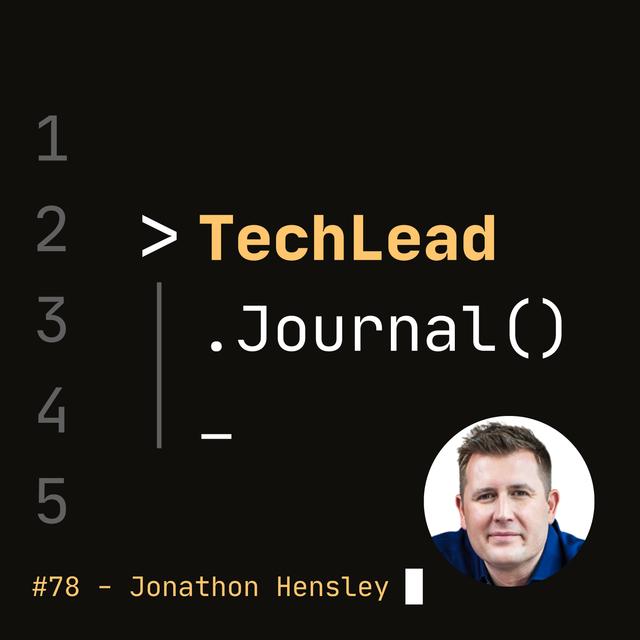



Hey, a quick message. For those of you who are listening to this episode on Spotify. I have a small favor to ask Spotify. Now allows mobile users to rate podcasts. I would really appreciate it. If you can take a quick, pause to go to the technique Journal podcast page, and leave your favorite show. Your best rating on Spotify. It will help me a lot to get this podcast to reach more people on the platform. Thanks a lot.
So you'll see this happen. Maybe you've experienced this yourself so on. Often we go into a meeting. We come out of the meeting, everyone's ready to go. And then we come back and a week later. We feel like we're having the same meeting again. We probably can all think of experience or maybe one too many that we've had where we feels like we're just doing the same thing again. Again. It's frustrating people leave their jobs because of this pattern. Oftentimes.
It's not about. What's being said, is the fact that there's not a shared understanding of what's being said? And no one is in a position or understands that it needs to be reconciled. What happens, a lot of times is this, when it does come time to getting reconciled, you are in a state of crisis.
Hey everyone. My name is Henry Surya with Robin. And you're listening to the technology, you know, podcast the show where I'll be bringing you the greatest technical leaders practitioners and thought leaders in the industry, who discuss about their Journey ideas and practices that we all can learn and apply to build a highly performing technical team and to make an impact in your personal work. So let's dive into our Journal. Hello to all of you, my good friends and listeners.
Welcome to another new episode of the Tecla Journal podcast, with me, Ojos, Henry, Surya Robin. Thank you for tuning in today, listening to this episode. If this is your first time listening to tackle, it Journal, subscribe, and follow the show on your favorite podcast app and social media on LinkedIn, Twitter, and Instagram, and if you are a regular listener and enjoy listening to the episode, It's will you subscribe as a patron at technology?
Not Dev slash Patron and support my journey to continue producing great technology, new episodes every week, based on some statistics, a lot of digital products, and services fail. And the number quoted could be as high as 70 to 90%. That is a very high failure rate. While there could be many reasons that lead to those failures. We are going to learn one of the common reason in our episode. Today, my guest for today's episode. Is Jonathan Hensley, he is the
co-founder and CEO of emerge. A digital product consulting firm and the author of alignment overcoming, internal sabotage and digital product failure in this episode. Jonathan first shared his main motivation for writing alignment, which is to understand why digital products and services fail. So commonly he then shared the concept of alignment and why it is so important for leaders to get it right in order to deliver, sir. Successful great products, and services and a fun fact.
The concept of alignment actually aligns with our biological need Jonathan. Then explain the danger of when organization is at war with itself.
And what are some of the common reasons that cause internal misalignments Jonathan shared how leaders can work towards creating alignment and why it is important to move away from monolithic product thinking, and move more towards platform thinking, finally Jonathan. Oh shit, some team alignment recipes that can help transform one team to become a high
performing product team. I love my conversation with Jonathan learning about the concept of alignment and how to avoid common internal misalignment in an organization. I think sometimes alignment is mostly assume within a team or company, but the actual effort to build a true alignment is something that any great leader should strive. For if you also enjoy and find this episode useful.
I Hu to share it with someone, you know, either your friends or colleagues who would also benefit from listening to this episode. Also leave a rating and review on your podcast app or share about this episode on your social media before we continue to the episode. Let's hear some words from our sponsor. Today's episode is proudly sponsored by skills matter. The global community and events platform with more than 100,000 software professionals here members can organize their
learning experience. Around the technology topics. They care about most you get on-demand access to their latest content thought, leadership insights, as well as the exciting schedule of tech events running across all time zones.
So whether devops our data science is your bus or you're a fan of functional programming or all things Cloud, you can make real connections with people who share your interests head on over to skills method or calm to become part of the tech community that matters most to you. It's free to join and you will find it easy to keep up with the latest tech Trends, everyone. Welcome back to another new
episode of the package. You know, today I have with me, a guest named Jonathan Hensley. He's the CEO of Evil Arch, which is a digital product agency. He helps his clients to transform. This is strategies the user needs and new technologies into valuable products and services. So, Jonathan is an accomplished writer and also speaks a lot about Top management and users digital Transformations. So he recently published a book titled alignment.
And today, we'll be covering a lot about the book and why it is important to have alignment. So Jonathan, welcome you to the show, really looking forward to learning from you about
alignment today. Thank you so much for having me on the show Henry. So first of all, maybe Jenna that, if you can help to introduce yourself by people who are not aware about you yet, maybe telling us more about your highlights or maybe turning points in your career that you Would like to share with all of us, sure. So, I am originally from San Francisco, grew up in the heart of Silicon Valley, right in Palo Alto. My career started at a very young age.
I was a nerd at heart from the very beginning and at a time, growing up in Silicon Valley, where I could go to the campus for Hewlett Packard and do software. Meetups, with these incredibly brilliant Engineers who would take a kid under their wing and Trade for parts to build computers and talk about the latest approaches of writing
software. And so I had this very early passion that started with technology because of where I was that led me into a lifelong pursuit of using technology to help people improve the way that they work and live a huge turning point. In that process passion. I would say for me with the emergence of the internet and then also the.com bust in The early 2000s where I saw really amazing transformation taking place.
There was many people who were really upset and overwhelmed with this big bubble bursting in this transition. What you started to see is an incredible industry.
Take its first step towards maturing where Innovation was at the heart of it. It really instilled to me at a very young age as a young, professional the opportunity to understand the psychology of how new OG impacts and the way that we live and work, how you do business, when you're in the technology sector that has become a driving force of curiosity for me, ever since, I've never let go of that incredible feeling of being a part of that time, and seeing
the companies that had huge Office Buildings full of people one day and gone the next, and then in entirely new, stream of innovation and Entrepreneurship come through in a very short period of time right after and to be a part of that. That to see the evolution of Hardware software coming together in that time period. It's one of my greatest memories and really did set the tone for my entire career.
Really interesting that you actually grew up in the center of the Innovation side of the world. So to speak. So Silicon Valley was well known since the beginning of due to that you have seen it ups and downs, I guess. And now it's kind of like UPS again, with all this space and Technology changes. I'm sure you have learned a lot of things in Silicon Valley, but what You tell for people who haven't been there before, what will be the best description of Silicon Valley?
Or maybe it's culture. I think the Silicon Valley culture. It's changed a lot. It went from the idea of starting a tech company out of your garage, which is the beginnings of many famous stories, and it's evolved into this incredible AP. Better for Innovation and coming together with Venture Capital. It's become an epicenter to bring people together from all.
All over the world to want to contribute to technology and be a part of it. And I think that the Bay Area has an energy all of it cell that is very hard to produce or recreate. You can see it and feel it, anywhere you go. There's a conversation every coffee shop about the next big Tech thing that's happening or solving that problem. What?
I loved most personally about that environment is that there's this constant pursuit of solving, the next problem and I think that it creates such a unique place in the I've had the benefit of traveling around the world and speaking a lot in teaching and being a participant and learning from so many other great people. But San Francisco is unique in its own way of how people come together to do.
Just that and solve problems. And I think it will continue to be a very special place for a very long time. Thanks for sharing that. So for me, I myself have an experience with looking there. So it's really great to see a such passionate people, you know, looking together and trying to solve the next big problem. So, moving onto the book that you just recently published. This shit's titled alignment. Maybe you can share a little bit. Why did you write the book?
What kind of problems that you saw and you try to convey as a message in the book? Sure. So the book came out of a labor of love. I originally started the process about three years ago and writing this book and it was out of my own curiosity and the work that we do it emerge around understanding why do digital products and services? So commonly fail so depending on the statistics you would People say that products fail anywhere between 70 and maybe 90 plus percent.
We worked with a lot of amazing people who have consistently beaten those odds, and they haven't just delivered one great product. It's been successful. They've delivered multiple products in their careers. And so when you look at that, there's an incredible story behind that data about what's happening and what's different. We had been a part of many successful products. We'd worked on some really challenging products and I wanted To step back and understand the bigger story.
So, what started as a passion project to really deep dive into the study of failure, quickly became a process of interviewing product, managers designers engineers and Executives Chief product officer, CEOs, and cios of companies. And starting to try to understand, and codify what was happening differently inside of the companies that could continuously deliver great products and services that Name the goal of the book is to bring that forward.
So that leaders had a guy in a way to collaborate and Inspire and work with their teams and for product teams who felt stuck to take ownership of the conversation and have a tool that they could use to work up Street and bring new insight and knowledge to management and Leadership to say, there's a different way to think about some of these things that can help us be successful. And so, that was really Lee.
What the book became all about is becoming that tool for product leaders and teams to work together to create great products and services. So you mentioned a very interesting statistics. I think this traditionally in the past, they say it, projects always fail and I'll digital products, and services. Also, still statistically very highly likely to fail, like you mentioned, 70 to 90 plus
percent. That is actually pretty high to me. So why do you think all these things happen technologies have improved a lot. People also have learned So many people just pouring over knowledge on the Block's webinars and all that. Why still? It's not soft why digital products still fading? Well, there's a lot of common
answers to that. I would say the most common answer that you would hear from people is that there's a lack of Market fit while that is, I think a huge issue and I don't want to make it any smaller than it is because it is substantial. Honestly. I think it's because a lot of companies skip the fundamentals. What they're Doing is that they're looking for shortcuts and quick wins. They're emphasizing the approach from their vantage point.
If you're a product leader and you have an engineering background, you're going to come at it from an engineering point of view. And if you're a great product manager, who's maybe a great business analyst, you're going to come from it, from an analyst perspective. And so there's nothing wrong with that.
But the challenge is, is when you become that product, Or that product manager you need to now have the responsibility to bring a holistic point of view to how that product is created around solving, whatever. The problem is that product helps fulfill and the fundamentals of that get missed a lot. They get missed in business. And then what happens is when those things get missed, instead of having empowered product teams that are really there to
solve problems. What you end up, having is teams that are fulfilling the requirements working towards Hope instead of outcomes, some might take that harsh, but it's completely true. The work becomes ungrounded, two foundational principles that are essential to allow your team to
solve problems. Effectively, it making sure those problems are being solved in a way that align with the market aligned with the organization's resources and capabilities and having the teamwork at its best possible level of performance to achieve the outcome that's been set forth. And so I think That there's a fundamental aspect there, that is really holding many companies back. And I also found one of the
quote, in the book. It mentioned that organizational leaders are lured by the promise of Innovations and Technology without understanding the fundamental requirements that guide initiatives to the Finish Line. I mean, yes, there are plenty of Technology, breakthroughs Innovations. Maybe we can call out like blockchain or maybe a iCloud. Do you think that all these new Innovations? Also, in a sense? And play a part in to the failure of all these digital products they do. Absolutely.
But it's actually not the Technology's fault. Let me expand on that. So there's something called a law. The idea of this is that people's expectations of Technology are too high in the beginning. When a new technology is introduced. So let's use artificial intelligence as the example. When a I was first introduced, it was introduced back in the 80s. I can remember it being a major thing. It became another theme in the late 90s and It's a major thing.
Again. Our expectations of what artificial intelligence is capable of doing in can do, has been ahead of the technology itself. For decades very shortly. Our expectations will be behind the actual capabilities of that technology, but it's taken 30 plus years for that to actually be true. And this is really something that is an incredibly common thing. So you see a new technology, get introduced our expectations in the excitement and the buzz around. And it is incredibly High.
It doesn't meet those expectations people, abandon that technology, or move away from it, to either, what they knew that would work before or the next thing, those that are in the technology to build these incredible Innovations of Technologies. They're proving their learning their in this continuous learning cycle, and then eventually they get there. And so This Promise in these expectations, Gap is really a huge thing that has to be managed correctly. When you take a leader in an
organization. Asian, they would be the leader of that organization. If they weren't really good at their job, very smart individual, able to make good decisions with very little information. It's challenging if they can't manage that expectation of that technology. And that isn't something that's talked about, it's not something that is at the Forefront of our conversations. When we talk about Innovation and new technologies and that's not how technology is sold.
Why would I sell you a promise that's going to fall flat. So there's this disconnect that happens. Very Very early on in new technologies. Those technologies have to evolve in order to meet expectations and leaders have to be able to diagnose what phases that technology in and what is its propensity to actually drive change effectively at a lower cost than transitioning from the
way that we do business today. And I think what are the fundamental maybe requirements or to speak on skill set that you want to emphasize on the book is actually called alignment. I think many people would have understood about the term alignment, but maybe Your view as the author of this book. Can you help to describe? What do you thing is alignment? And why is it so critical for people or teams to actually have this alignment for the success
of their either? Digital products or Services? Sure. Sure. I think alignment is one of the most commonly assumed things from many people. It is probably in many cases, one of the least understood. So when we talk about alignment in the context of what we're talking about today and in creating products and services, There's four levels of alignment. We have to consider, and I'll go from the inside out. So, the Inside Out approach to that we start with the individual.
How does an individual know how their work contributes to success of the product. How does that impact its customer? Its users in that product. How do they know that their work matters? That's an incredible point of alignment, that individuals need to have to be passionate to be curious.
And to know that they can It can impact through the work that they do. So whether you're a designer an engineer or a product manager or your oversee, an entire teams that individual linemen and understanding how your work matters becomes foundational and we know engaged a teams and people are far more effective at solving problems. The second piece to that is team alignment, is everybody on the team, understand their roles. Responsibilities.
Are they accountable? Do they know how cumulatively they can come? Together to solve problems and to do great things. And so that's really important. And then the third one is organizational alignment is the organization aligned. Its resources, expectations built teams empowered individuals to effectively achieve. The things that the company exists to do. If those things aren't
happening. It can be very difficult to align with the market, which is where we find market fit, and essentially a lining with our customers are our users. Being able to have enough awareness of what's the actual cost and impact of the problem that were solving. What's this new idea? How are we solving it better or differently than someone else? How does that create distinct competitive advantage or business model opportunity, or an advantage? That is hard to replicate.
This idea of alignment at all, four levels is essential and in the top performing organizations, from our research and work over the years. You find consistently that leaders from the top are working towards alignment at all times at every level and it's not a one-time exercise. It's a discipline of incredibly high impact leaders to be working on that focus of alignment at all four levels. Thanks for sharing all these fault level.
So just to recap, there are four different levels, you mentioned individual teams, organization and Market. I think it's really interesting insights. Definitely like what you mentioned, we Assume we are all aligned maybe some speech or maybe some message over the time, you know, you keep repeating yourself, but actually it's least understood not necessarily people gets to align
to the core. I also found another chord, which I find really interesting to share the book mention and Enterprise. That is at war with itself will not have the strength of focus to survive and thrive in today's competitive environment. So this is a quote from Professor called John. Oh Whitney. I find it really interesting because we can see it especially in big. Enterprise or maybe big startups, where people call it politics. So to speak. Can you maybe elaborate a little
bit more on here? What do you mean by at war with itself? Sure. Well many organizations are built around an old kind of Commander control model that is part of a byproduct of how businesses will built and how Innovation started during the industrial era. What happens is that I'm going to tell you to go do this thing and you're going to do that. Thing really well and you're going to do it. A hundred times a day. Now, that's not problem.
Solving that's production. There's a role in that in business and I get that but when we look at this today, we need to look at how do we build Empower teams that are autonomous that have the ability to solve problem, great designers and engineers and producers are expensive resources. These are brilliant men and women who need the opportunity to unleash. Their capabilities, their life experience and their expertise on the problem at hand. And so it's really essential to
do that. When we talk about a company at War, we think about, okay. Well, what happens then if I have different teams with competing priorities, where's my incentive structure for the organization? How do I actually create alignment between the product, the teams and the company? I'll give that one very specific thing. Many companies understand the idea of customer lifetime. Value. But I would say, many companies also don't understand where fits into the hierarchy of the company.
In my opinion. You have the mission or vision of the company or the product that may be the same in many cases. And then you have everything in the company from there exist, in order to achieve that Vision. Well, there is no vision that is possible of being achieved without customer lifetime value. The number one thing that everybody in an organization has to realize is no matter who you are. What division you work in how small or big your company? Everybody contributes to
customer lifetime value? It is the most important metric of all metrics because everything else is a byproduct about when it comes to the sustainability of that organization. Many times these kpis for organizations, the expectations, the roles and responsibilities are misaligning to what actually drives the vision of the company and money is the fuel. That's all it is.
The existence of the company is not to make money, that is the fuel by which to achieve that objective and if the organization is not clear about that. It's at war with itself. It's competing in cannibalizing resources. You have people who build these systems within the organizations and they poured information, or they're working counterproductive to other groups in the organization, and they're in Conflict there.
Misaligned. It's the inverse of alignment that war is happening subtly and many organizations. It's whether they're 10 people or 10,000 people. And in some cases. It's all-out War where you have massive transformation, and change taking place right now, some who are embracing that chain and four others, that creates conflict and scarcity and a lot of fear because there's an uncertain outcome of what that means.
And so this war is happening very naturally in organizations and is something for leaders to be mindful of I'm not anti I think conflict can be actually extremely healthy, especially when it's honest. I think that it has to be more about. We need to be able to challenge and go after the hard things and organizations to not allow ourselves to fall into this unintentional War within. Thanks for sharing the gifts of customer lifetime value and all
that. I mean, like companies intentionally, I believe they understand it, but in practice, or in execution, sometimes this fall all true because individuals or just misalignment of objectives or just people competing unhealthily internally and you brought up another good analogy. I find it interesting alignment and biological needs actually seamlessly synergized. Tell us, how do you find these connections between alignment of actually biology? There are.
So during my research. I was really interested in this idea. I've had an interest myself in Psychology for 25 plus years, but the essence of it, Actually happened by accident while I was researching. Well, look, I was aware that from a psychological perspective. We want alignment. We don't want conflict. We want to find connection. We want to be part of a team. We want to do great things, that part of it. Was it really that elusive.
But what happened was, I was in London and I met an individual by the name of Dan cable, who's one of the leading neuroscientist in the world, and he's also a professor at the London Business School. I was listening to him. Give a talk about. His book alive at work and he drew a connection just through anecdote of alignment. I decided I had to meet him and I had to interview him for the
book. We ended up having an incredible conversation or around, really understanding that in Neuroscience. It's been proven that the concept of alignment is actually there's a biological need for it. It goes beyond just psychology, but there's a biological component because when we create alignment and Able to solve problems we drive engagement. It activates parts of our body with cause and effect, which create a surge of dopamine and satisfaction that comes from
interaction. And so, you can break down the importance that it plays in, not just short term, behavior of people, but long-term sustainable teams and performance. When you think about this Dynamic of alignment, at a biological level, his Insight, in research related to, that was absolutely Groundbreaking and really understanding why this is so critical. One of the discussions that happen from that.
As you really understand that, if you want to apply it in practice is why empathy is the foundation of great design thinking we just don't intuitively or logically or the rational side of our brain know, when something's a good experience. We feel it. It's impactful. It changes. Our mood, it changes the way that we feel about ourselves or the Our men around us. Whatever that may be, that is a biological reaction, taking place from an experience.
So product teams have to be thinking about that and embracing that from foundationally alignment. And then bringing themselves into alignment with their customer, which is a well-documented and discuss
practice and great design. So that entire idea was in an hour, what Dan was completely just connected and became such an integral part of the book and something that Is probably still one of my favorite aspects of talking about alignment, or when I work with teams is discussing that very thing. Thanks for sharing the inside CSI. Found it really interesting as well. And for those leaders who think that your people are not interested to get alignment. I think it's actually not true.
People biologically need to get alignment so that they can be what you mentioned, about problem, solving natural creativity and things like that. So definitely people wants to align, it's about how we can get them. Line speaking about misalignment, why leaders think people are not aligned? What do you think are some of the root causes for misalignment? So maybe you have seen it in your Consulting and also your experience being in Silicon Valley.
What are the top two or three? Most misalignment reasons why people in the end did not deliver great successful products. Well, I think, the one thing I started with earlier wrong with this idea of that often, it's talked about as Market fit. And so, I would say the first real issue of misalignment. That you have to acknowledge, is that reality that many organizations do not know their users are their customers. They make a lot of assumptions
through their own lens. There's a lot of bias that comes into practice and often case of misalignment is they have yet to do the work necessary to understand the problem that they're solving for their end, customer what the impacts and ramifications are of that and what the true costs are and what they're competing for with that product. Are they competing against? Patter is at 121. Or are they competing against the psychological need or a
functional need of the product? How do they distinguish that? Are they competing for cost and time? There's a lot of ways to think about what the exchange is between the business that is offering the product and in the actual customer or user. So that's fundamentally. One of them that has to be acknowledged. The other one. I think that we see really common is just not realizing the impact.
Act of siloed knowledge, so organizational complexity in dealing with the cost of siloed knowledge. Knowledge management is a very difficult thing for organizations at scale to be able to do when that information becomes siloed, within an individual or teams. You are unintentionally locking, incredible, wealth, of information and knowledge. And a lot of that knowledge is
yet never documented or mapped. So you see a lot of initiatives have to start with things like, Journey, mapping, or workflow. Feed the things like that, just to try to pull the institutional knowledge forward. Well, that has a lot of impacts, which we can discuss that. You know, it's probably an entire show in itself. I think the other one out of the eight core root causes that we defined that I'd like to focus on at least today, is this idea of lack of a shared
understanding? Let me explain that one a little bit, every group of people or organization every industry for that matter, has its own language, its own shorthand. If you will. Has its own acronyms its way of talking about things. It's way of communicating and it comes naturally out of efficiency. But when you have a team that's evolved in an organization that's changing or you're working cross-industry.
The challenge is that my understanding of a word or an expectation, versus your expectation, may be different. It really requires individuals, at every level of an organization to slow, down the speed up, as the old saying goes, It's this idea of we need to verify By the understanding, not just what was said, but why? It was said, and what it meant in order to be able to effectively move forward. So you'll see this happen. Maybe you've experienced this
yourself. So often we go into a meeting. We come out of the meeting, everyone's ready to go. And then we come back and a week later. We feel like we're having the same meeting again. We probably can all think of experience or maybe one too many that we've had where we feels like we're just doing the same thing again. And again, it's frustrating. Three people, get mad people, get angry people, get concerned people leave their jobs because of this pattern. Oftentimes. It's not about.
What's being said, is the fact that there's not a shared understanding of what's being said? And no one is in a position or understands that it needs to be reconciled. What happens a lot of times is this, when it does come time to getting reconciled, you are in a state of Crisis. So it's important that organizations proactively think about how they build. A Common Language and manage that in usually it's not managed by the company. What happens is?
It happens organically, but once leadership or teams can take control of the common language and understand that it also requires building a common understanding their able to navigate one of the most Insidious root causes of failure when everything else is aligned. And so that becomes a really important issue. Thanks for sharing this shit, understanding, because I've also invited few leaders talking about software development. Why software projects fail as
well? So, one of the things also commonly mentioned is about communication and this shared understanding. And that's why the domain driven design is also one thing that is very popular, this take to create ubiquitous language like, bounded context. Make sure that people, either your software, developer product owner. Whatever role you have the same shared, understanding about whatever common terms that you use within the team of the organization.
So I think it kind of like ties back from software development to product management. Thanks for sharing all these misalignments. So for people who wants to know more, what are the other common misalignments, make sure to check in the book. They are, I think, in total, eight of them. Moving on from this, we know why people get misaligned. So what do you think the responsibility of leader? What can we do?
Practically to actually ensure that people get aligned or maybe what kind of actions that they need to do to achieve this? So, I think for leaders, there's a couple of really important things that go back to that idea of foundational aspects. What I've seen is a lot of the great leaders that I've had the opportunity to work with or were interviewed for the book or that I've researched, they are incredibly good at the
fundamentals. I think the first one that is really important to highlight is this idea of they really understand the difference between strategy versus planning. This idea of really getting a grasp that planning can without a great strategy in place, gives us a false sense of security and false set of expectations that can be extremely problematic for those listening.
Let me Define just very quickly what the foundation of a good strategy has to Encompass. A good strategy has to have a clear articulated Vision. It has to have a clear understanding and definition of Problem that you're solving for and has to have a clear outcome for the business and a clear outcome for the customer to find. It has to have a cohesive and comprehensive approach of how you're going to get there. And it has to have a way to
measure forward progress. That's just the foundation. I mean, strategy has so many other facets to it, but fundamentally that is critical. It's not goals. It's not projections. It's not schedules. These things are often today to the disservice. Of people that are trying to do this work there, talked about as strategies at following a framework strategy is embracing this new model. It's like that's not a strategy. That's a tool. Yes, but it's not a clearly
defined strategy. The framework, it might help. You understand what you have to fill in, but it does not take away any of the work. It's not a shortcut. So leaders at understand that are one of the reasons they can do. Such amazing things consistently is because not only They know that but they know how to delegate it. They know what their responsibilities in that were kids. So as an example, a CEO cannot delegate the vision away. You just can't do it. If they are.
It's a red flag. If you're going in that interview, ask him who wrote that Vision. Maybe lots of people contribute it but who owns it? Who's accountable for it? It needs to be that whoever's running the company. That's an essential piece versus really diagnosing understanding, the problem that you need to solve understanding the outcomes. Sanding. These other facets.
Those are things that you rely on the expertise and skills across an organization and to bring more definition and more Fidelity to that, I think is one aspect. The other one is I think that leaders today. There is a necessity to be tried lingual and what I mean by that is that leaders have to have a strong business design and Technology Acumen, and I don't mean to act, you have to be proficient in doing the work, but your Acumen has to be well.
Established in those three together because you need to be able to build effective teams, which means you need to understand what type of people skill sets and capabilities. You need in those to use. You need to understand how to hold those types of roles and responsibilities accountable to supporting the organization and you need to be able to Mentor
them and support them. So I think being trilingual and having that knowledge becomes essential for leaders, especially as more and more organizations are trying to put emphasis on Jean customer experience. As just one example, if customer experience is key in your
delivering technology product. You better know design and you better know Tech and if you don't that's okay backfill that make sure you have the right people around you build your team up so that you can do whatever aspect that you do best, but recognize that either you have that need to have that skill set, or you need to build a team that can fulfill that
necessity. So that would be to the third one is. I think that in this day and age, we have to stop thinking of products as Individual or monolithic Solutions. We have to be thinking them as platforms platform thinking. They think is one of the thing that is probably on the most bleeding edge, even though people use the term platforms all the time. There are very few companies that are actually delivering
true platform products. Today, more and more products are going to take that form going forward. And it's revolutionising the way that traditional businesses are operating. So being able to To understand that difference and being able to have that interoperability and scalability is going to become an essential skill for leaders going forward. When you mention about platform. Can you tell us more? What do you mean by platform? Because again, this term is probably commonly used, but
maybe not. Well understood. So you're talking about technology called platform or is it something different? What do you mean by platforms to? Yeah, so the idea of a platform it's often talked about as Think of it as a Marketplace. So I have two groups that innately benefit one another, but there are different types of platforms.
And so when we traditionally think of platforms, we think of these open marketplaces and Amazon is probably the most well-known one in the world or something like the app store for Apple or Google Play are great examples of platforms. We have platforms as a service for developers that are incredible. They're not necessarily the same as a two-sided Market, but they still are in. It's a platform. They enable you to abstract and
build and cumulative value. So the way that I like to think about it is understanding platforms. And the sense of what is the value amplifier in the technology or product that I'm creating that, I need to be able to have the ability to be interoperable across my product as it evolves, then. How can I build a path for that platform? That will lead to That amplification of value in the most significant way, over time companies take very different approaches.
There's one company. I absolutely love based here, in the United States, called Rackspace. They're hosting company. They do manage hosting Services. They realize that they can actually create a platform out of a branded concept, which is fanatical support. Their support structure is absolutely unbelievable and they have innovated existing Technologies of just about the
experience. How do you build a platform and they determine how they can actually amplify that value across the entire customer Journey, that allows them to deliver on their promises consistently at scale as they continue to grow. And so I think leaders need to understand that concept of platform thinking so they can understand how it applies to the business and what they're creating. Thanks for emphasizing the
importance of value amplifier. I think this is probably one of the critical things when you think about platform what things that can allow you to amplify the value. And also allows you to A lot easier, right? Not necessarily adding more people resources to it. So we know what leaders need to do, but then it comes back to the team itself, right? They need to be aligned. What do you think? Are the recipes that you can tell us to be a high performing product teams?
What do you think are? Some of the attributes that you can see from your experience teams that are really fully aligned and productive and deliver successful products. Here we've touched on several of the points. But as they relate to the team, a team needs to have a clear strategy. A high-performance teams have a clear strategy to follow their not handed requirements. They're handed problems. There are empowered to make decisions to solve that problem to test and how to solve that
problem. There's a very dangerous term. It's used everywhere. But especially I find it to be dangerous. In Silicon Valley is fail, fast and fail often. It's a management quote. Fast and fail often. What context some people take it too literal. That's when it becomes dangerous. But when you think about it, from how I test hypotheses and how I gather quickly, the best information cumulatively in the fastest, most efficient way. It's not about failure of the product or the company.
It's their experiments that aspect having that continuous learning dynamic in a team and high-performance teams as essential. What it does. Is it helps Elevate the Of competence of a team when you decentralize and you re distribute knowledge and information that's coming both from the customers and from the individual experts and contributors within a team that becomes a huge performance amplifier for a team.
The next one is making sure that you have Knowledge Management something we talked about before but something as simple as what are the flows in your product. What's the intended outcome of your flows? I will tell you probably nine out of ten product. Managers that I asked that question. Can't answer. Product manager in my opinion, should be able to answer that question without having to pull up a single document.
If you don't know what the intended outcome is for those and then why they need to be improved. We have to step back and we have to reset because the team is more focused on delivery than outcome. The delivery output doesn't matter. If we don't know, we're moving towards an intended outcome and we have a way to measure it. So the high-performance teams are embracing that Collective competence their building off of
focus and solve. You problems and they're really emphasize the proper Knowledge Management. So they can collectively be working on the same things and the right things at the right time. Thanks for sharing this attributes. So I think people sometimes, yes, we don't understand the outcome fully, we know the details of it. But yeah, we done to focus on just delivery the tosser. The next story in line, what kind of things what features to
build. So, thanks for emphasizing that we need to understand the outcome without actually pulling a document. That is also another interesting. Things that this takes that you'll just imagine 9 out of 10 product. Managers might not be able to answer you the outcome straightaway on top of their mind. So this has been a pleasant conversation. Jonathan really thank you for sharing all your knowledge due to the time. I think we need to wrap up soon.
But before I let you go, I have one last question that I normally ask all my guests which is to share your tree. Technical leadership wisdom. It could be that it could be product. Would you be able to share some of the wisdom that you think will be good to share with the audience here as a learning as wisdom, so to speak? Yeah, I would say that for my experience, after everything
that we've talked about today. I think that one of the most important things I found is a technical leader in many projects. In cases is really focusing on my team. And understanding that the most dangerous thing I can do is bring my ego and my assumptions to the table. I have found that a great idea can come from anywhere. The most powerful thing I can do. As a technical leader is to Mentor. Those who have passion for technology to really deliver incredible things.
So my job as a technical leader, I tend to find is mentoring the connection between the impact of their work in creating a place for them to fail successfully quickly and move on to realize the goal of what we're working towards that has been essential. I think with everybody that I've had the The tremendous pleasure of working with thanks for sharing this. So Jonathan for people who want to follow you or find more about the book. Maybe you can share where they
can find it online. Sure. So the book is available at amazon.com just search for the title alignment, overcoming, internal sabotage and digital product failure. Thanks for that Settle. Yeah, Jenna bed, really pleasure to have this conversation. I wish you good luck and transforming all digital products and services that you touch to be more successful and get more alignment. Thank you so much. It was a pleasure to be on the show and great to have this
conversation with you today. Thank you for listening to this episode and for staying, right until the end if you highly enjoyed it, I would appreciate if you share it with your friends and colleagues who you think would also benefit from listening to this episode. And if you are new to the podcast, make sure to subscribe and leave me your valuable review and feedback. It helps me a lot. In order to grow this podcast better.
You can also find the full show notes of this conversation on the episode page, at Tech Legion l.f website, including the full transcript interesting. What's and links to the resources mention from the conversation? And lastly make sure to subscribe to the show's mailing list on pack leader dot f to get notified for any future episodes. Stay tuned for the next technology, not episode, and until then. Goodbye.