


Today's episode of the technology on our podcast is proudly sponsored by emergence. The Journal of business agility. This quarterly publication brings you inspiring stories from the most Innovative companies and explores the themes of the new ways of working reclaiming management and humanizing business. It brings together a curated selection of exclusive stories by great, thinkers and practitioners from around the globe that can broaden your horizons and Spark. Your creativity.
Each issue is hen Illustrated. And contains 100% pure content, use the promo code tekhelet eech leads2results been percent discount on your annual subscription. Visit business agility, dot institute's less emergence to get your addition and support the publication supporting your podcast. Here's the link One More Time. Business agility, dot Institute, / emergence. What I discovered is that for leadership, then would not such
a thing. Like stack Overflow, where all the content was organized, categorized Kool-Aid. So, you can find the right answer to the right question. We are not trained in some of the things that expect for us in these leadership roles that the end going from development to
management is not a promotion. If someone is thinking about that as a promotion, they need to forget about that because it's an entirely new career when your schedule is totally different day by day, hour by hour to what you would expect from a developer is not a developer promotion anymore, is a different careers. So there is normally a lack of proper guidance for that. Hey everyone. My name is Henry Surya be Robin. And you're listening to the
tekhelet journal. The show will be bringing you the greatest technical leaders practitioners and thought leaders in the industry, who discuss about their Journey ideas and practices that we all can learn and apply to build a highly performing technical team and to make an impact in your personal work. So let's dive into our Journal. Hello, everyone. Come back here again with another episode of the technology on our podcast. Thanks for spending your time with me today, listening to this
episode. If you haven't, please follow technology, you know on your podcast app and all social media channels on LinkedIn Twitter and Instagram, you can also make some contribution and support this podcast by subscribing as a patron at technology. No, dot f / Patron, and help me to continue producing. Great content every week.
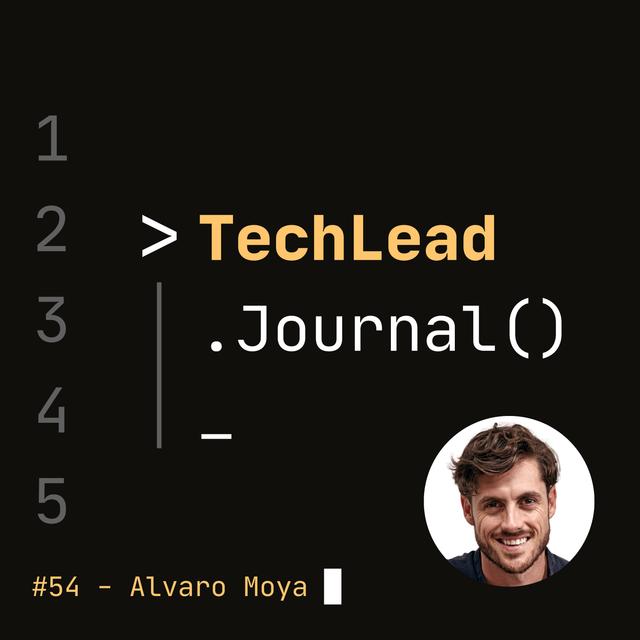
For today's episode. I'm happy to share my conversation with Alvaro Moya Alvaro is the founder of leader.com, a community that prepares, and transforms the tech leaders and ctOS off tomorrow through immersive experience. Shal and community-driven programs. In this episode Alvaro, shared the story of leader and why he decided to start it learning a lot from his own journey, and struggles working in, multiple startups and scale UPS. He then shared his View.
Technical leadership. Some of the major challenges surrounding it and why it is important for companies to prioritize on improving leadership, especially for startups and scale UPS Alvaro, also touch on how Tech leaders can create and nurture, high-performing teams with an emphasis on cultivating ownership, as well as giving some advice on how we should plan and choose our career track and progression, including great tips and practices on how we can
become better Tech leaders. It's through practicing leadership. Informally, I highly enjoyed my conversation, with Alvaro learning about how to grow an upscale technical leadership. And I hope that you will enjoy this episode as well. Consider helping the show by living it, a rating or review on your podcast app, and you can also leave some comments on our social media channels.
Though. It may seem trivial those reviews and comments are one of the best ways to help me get this podcast to reach more listeners and hopefully, they can also Of it from all the contents in this podcast, without further Ado. So let's get this episode started. Hey, welcome everyone to another new episode of the tech lead Journal. So today I have with me, Our Guest named Alvaro Moya. He's from Spain. Let me introduce Alvaro a little
bit. Alvaro is the founder of leader.com., So it's spelled Li dr.com. It's not the typical leader that you would be familiar with. It is actually an ecosystem for season techniques. Yes, so maybe I'll borrow later on, we'll be introducing. What leader is all about. Alvaro is also someone who is very experienced working in startups in sitio role. He has co-founded his own startups and at young age as well at 20 years old, so, it started as a side project.
And then later on, he work on multiple startups, acting a CDO in multiple scale UPS as well. So, today we are going to talk a lot about technical leadership CTO role and techniques in particular. So Alvaro. Welcome to the show. I'm really looking What to learning from you about how to actually become a better CTO and Technical leaders, welcome to the show. Thank you. Thank you very much. Henry, for the warm. Welcome, for sure.
I will be talking about video.com later on because at the end talking about tech leadership and being the company around that for sure I will bring examples. I will not be able to avoid it. But yeah, let's do it later. I think we're going to start with the question you prefer. So in the beginning maybe for you to introduce yourself howling more about your career. What's your journey like and maybe some highlights or turning? Senior career for all of us to learn from better get.
So I have been a little intense. I have been CTO and I recognize here a couple of parts that are most common so evolving from so what developer into senior, then at some point, getting the management path going from Tech or team lead to engineering manager, and then a building. And then at some point, maybe jumping into a fresh new, start up as a CTO. This is normally one of the most common paths for CTO, and I
followed another one. That is not so common, but definitely I made a lot of people. Following that which is I start as a developer you can or cannot leave the team, but at some point you understand that your work is in the startup ecosystem, you have decent typically on mindset and that you aren't born to do this kind of things on a much higher impact with much more responsibilities and being on the decision-making part of the
company. So just create your own seat, create your own roll, starting up, co-founding. I start off as a CTO and then by the way, even when you have no clue, getting help from a scenery, Doors or mentors, you are doing the path. And even if you are feeling, you are trying again, and again done. So, that was my path after 45 years coding in different environments, research, big corporate, a small companies. I had the opportunity to launch a new setup.
We want to contest a contest and with the money, we were able to start the operations and prepare the first MVP, so I didn't have any doubt. I started in this ecosystem world and I have never moved from there. I never look back and I am really passionate about that. See, Out point back in 2013 since then, co-founding different startups and acting always a CTO VP of engineering until the last stage is really being into big companies.
Like we folks right now last year and then helping also revolute during this year, as a Consulting manager. So, he's like my entire career as a CTO and the sub ecosystem. I usually call it from zero to unicorn. It was my goal. I wanted to be in all different stages so I know how it looks like. For every single stage which are their handicaps, which are the challenges for the company, which are the challenges for the tech team in order to keep growing and keep being more
successful. So, at some point, when I created my own thing, I had some savings on one side and also the knowledge to know with big things to avoid in order to make it as successful as becoming a unicorn at some point. So, that's my darling. And also, so thanks for sharing. Your story is very interesting. Like you started, of course, as
a developer. Most of the CTO, I would assume that they will In some technical roles in one way or the other, and then you move into startup founding your own startups and then moving on to different startups, becoming sitio, VP of engineering and all that you seem to have gone through multiple stages in the startup and Technical leadership. Maybe if there's a few things that you can share, what are the most learnings that you saw from your career Journey so far.
Things that probably is a highlight for you throughout this number of years. Given that every single decision I have made in nearly eight years. I have been the first time I was facing the challenge that we're facing that decision and I didn't have the support or the knowledge to know what to decide. I would say that the thing do not have learned. The most is to be brave. Just to take the risk.
I think that is what definitely defines my career because everything was a decision that I have never made before. Most of the times with not enough support. Most of them were not like going to destroy the company in the short term, but at the end it's a decision that will be in the company for the next eight years. Some of them. Really defining.
If the company is going to shoot by for not from which kind of people you hire after the first developer or architect in the company to decide in for a certain technology or text tag. You are setting the company and when you don't have enough background or enough expertise, but you just rely on your guards to rely on how much information you can consume in a short period of time to be a bit safer in taking the decision and you feel a bit more confident. Even if it's a fake feeling.
But for me taking risks, He's making decisions that is inherently involved in taking risks, and learning as fast and as much as possible was for me, the way to really save this Vibes. Most of the times was internet. But as soon as I was able to understand how important it is to build your network and to rely on mentors, and advisors. I was relying on then heavily. I'm building a network where I had this kind of support that. I've been saved that.
I am sharing the experience on the challenge with other so they can give me their point of view. That advice is not only relying on stack overflow. All or other websites to find answers from the other part of the world is someone you trust, someone that is really into your business, knows about your challenge is not about your context. So that information is a bit more useful than just going for some advising Corps hours, that would flow. So, when you set about stack Overflow, right?
Most of the technical leadership, wisdom, things that are abstract and vague mostly are not on stack Overflow. Could it be also the reason why you started leader.com? Maybe you can share a little bit. What does leader Dorko do? And could it be also inspired by your journey so far? It's exactly like that.
I mean, I have been raised with this open-source principles and he's giving back to the community, keep first, as the principles, or the mantras to build something meaningful, in Tech. What I discovered. Is that for leadership, there were not such a thing, like, stack Overflow, where all the content was organized, categorize created. So, you can find the right
answer to the right question. This is why we study leader dot Co has an ecosystem for this kind of rolls, so, In this patient in the Center and surrounding this version with all the kind of services or resources leaders aspiring technicians or even seasoned technicians can move in their journey to make the work standing out to make the best out of it and to really feel safer than I fail.
Taking decisions blindly. So we have this part of the chassis connecting with us in creating our own resources more like formal trainings for aspiring leaders. We have one of the few take leadership, your boards here in Europe, we offer City. Of service for startups where we are, nurturing our consultant with all the people from the community. So we offer the job there and we train them to work the way they stand up signs acting for this kind of part-time City. Oh sweetums Theo's.
So at the end. It's like putting these people in the center, which is leaders in Tech from techniques to ctOS, putting them in the center and creating a suite of services around, not only for them, but also for the people that are
looking for that. So creating this kind of symbiosis or synergies between the startups scalars and this can Oh, that, that really high in the mountain for a reason and these jobs because they stopped by because he's in is warming, the digital revolution of the Kobe is even increasing at another paste. That's why. Then he said, huge gap between offer and demand for these roles and that's what I am trying to fix one step at a time. So, as you mentioned that, I myself look in the startup.
Now, there are a lot of challenges in startups, right? Especially regarding technical leadership. I mean Tech, stack is probably one thing. But given that so many resources available. Why do you think Tech teams? He's faced so many challenges when it comes to technical leadership or even when they scale up as they hire, more and more people. What do you think are some of these challenges? One of them is the lack of proper guidance. I have mentioned, which is from TAG.
We are not trained in some of the things that they expect for us in these leadership roles at the end. Going from development to management is not a promotion. If someone is thinking about that as a promotion, they need to forget about that because it's an entirely new career when your schedule is totally different day by day hour by We're to what you would expect from a developer is not a developer promotion anymore is a different career.
So there is normally a lack of proper guidance for that internally, because in these startups Caleb's, maybe at that point, that is not still HR or not, the standard Learning and Development processes. And in the case of external, I have already mentioned, that is a lack of references in lack of standardization and the lack of a community that could really connect all these topics and standardize the roles, which are the function responsibilities and what is expected from this
kind of professional. Al's as well as you have it for a scrum Masters. That goat cheese product managers, that have created a hybrid rounded position. They have really defined and standardized to associations as well. They have prepared properly training, a lot of training in different countries certifications and it's like, more or less clear what the product manager should be doing with the product. Neither should be doing what the CPR should be doing.
They have the tools. They have the mentors. They have the network. They have the community. This is, I think not happening for leadership in Tech, and this is for me. Of the problems and the other is in this stage startups. Gaelic is always high growth, both of managers. And for engineers, you have better things to do. There is always a priority to grow the product to which New Market to put new features to compete with the big players and to go out of the MVP stage to
have a fully fledged product. And for that, you need to grow the team. This problems are big enough to really justify that all your team from both engineers and managers are encoding in really working. In on delivery, so they have no room for proper training. They have no room for the leader, for the CTO, to be the mentor of the team. And at some point they struggle with out, or they don't act in advance before they big wave of growth is arriving. And by the time they really need
to deliver. They have not prepared the team to grow. They cannot prepare the right skills in the right people that are maybe they write wants to grow into management positions or they have not prepared at hiding process in advance. So they add new managers are already. Here by the time and then
learning Court already done. They have understood the culture of the company, the Dynamics, how the company is evolving on, which are the major problems that the tech team has to fix in order to ensure this successful and organic stable growth. So I would say these kind of problems. So when you say about scaling up organically, right, I mean most of the startups, of course, started with a small team, very close relationship, whereby they all help each other even like
for technical leaders. There's not much. Leadership pressure is more about doing solving problems, building up your products. And when you skill, that's when actually, you realize that. Oh, actually, I need all these management leadership skill set within the company. So there are two aspects of cost. The first thing is about hiring an external people to come in. But how about the internal, the people who have been there? Since the beginning of the startups?
Could you maybe give some tips? How should these people who have been around in the company building up from 0 up to a certain skill? What should they? Actually upskill their management or leadership. So, in order to upscale, I think the first thing is to be clear about what is expected from them. So having clear career path, even if you are getting a borrowed from another, for example, this career path that you can find in levels dots, a formation.
The one that also published the MC stay here in the engineering manager as well. So you can find reference there so you can get your own career path easily. But once you have these already assumed an internalized by the whole team, so they understand how it's going to be. The problems and what is expected from them? You can prepare this Learning and Development initiatives, according to the skills that they need to Foster for the different roles and here in order to prioritize those
initiatives. I think getting a proper budget. If you realize that you are CTO or your HR team, if any cannot deal with training them, properly or cannot deliver all the time needed for this mentorship is looking for Partnerships. Here is where it leader can help as well, but you need to prepare a proper budget for that. You need to be clear about that. How much you are going to prioritize them growing in the Knee through the amount of money
that you will dedicate to them. So that for me is important, but the other part is having proper mentally. So for me, the most important part is that they have proper mentoring and personal guidance into the company directly from taking this onboarding in a new position. Remember is not a promotion is a new row. So taking it as when you are on boarding a new person into your company, you are taking care of them.
You are giving them a learning Corp assigning, the things little by little presenting different people. So they are getting used to the pants and Edwards. So you need to do the same for someone that is going to be a new manager. So, assignments, leader Benito, taking them by the hand, and then exposing them to the challenges. By making them feel safe that you are there, and then slowly removing yourself from the channel, from the equation, helping them as well as clarify,
the long term personal goals. So they being clear about what they want to do in life if they really want to live knowing what is there for the next stage knowing clearly, was there with
this career path. So when I meet of your day as a CTO or explaining or putting them in contact with other techniques or engineering managers may be from the company, or the department may be from another company's, if you know them, this will expose them to the Beyond role and they can decide with all the cards in their hand if they want to
continue in that path. So this will build the safety for them, this confidence that this is the path and then, they were really for shooting with all their strength, all the energy, but they need to feel safe and confident, right? And if they see that, you are taking care of them in. In this transition, you understand this transition of really risky and that you need to deliver time and Daisy Doo involving your time to help them succeed.
That is called guided discovery of this leadership role. If we need what for me, empowers them to do their best job and being confident and really sticking to the role and not looking back to development again. A lot of times. I'm sure you have plenty of experience yourself, right? So, when you walk in the startup, sometimes this kind of things tend to be put as a backlog, for example, you will find inside.
You will find issues. You will find new things that somehow gets prioritized by The Business Leaders, or the stakeholders. So, how would you, actually consciously make decision that actually, you should either budget it or prioritize time to actually improve yourself in this leadership and management. So when you are creative of that, this is the first thing, like living yourselves, living your life. Hey, I want to go that
direction. Here is the place my manager is going to support it. You have been clear about that with a company, then. You can also buy that time before later. No matter you can build these skills. Using what I call informal leadership, which is being exposed to those challenges in
other situations. So, developing those skills needed by needle, which means that you can develop yourself as a leader, not only in your eight hours, or in this onboarding process in the two hours that your manager is going to assign you for this kind of task, then 3, then 4, you can have plenty of opportunities out there to demonstrate that leadership both in the Funny and also out of the company.
So for me for these informal leadership is like, for example, what you are doing that is amazing. Like running a podcast is going to make you think about the business. So I both got in the business. It has marketing operations. It has the part of text or deciding which tools. It has The Branding part.
It has PR it has the communication with your customers, but also the communication with your provided which is the speaker's like me. So all of that is going to expose you to many other different people. Different cultures. This is going to allow you to
think in business. So improving your business vision and strategic thinking about dealing with the challenges thinking in advance where I won't be strictly journal to be one year from now, what I need to do in order to reach their I need to do these contacts and it will raise some money. I make to look for a couple of sponsors. This kind of thinking is one to deliver this. Visitation that for me is essential for this leader. So having the big picture, not
on the job. You can run a meet-up so you can Exposed not only to the learnings of running that Vita but also to the learnings of the topic organizing looking for ambassadors looking for coordinator. So coordinating a team of people with different functions. This is going to allow you to lead the team even when you are not paid for it, even when that people is just volunteers, but it's about coordinating with others, especially being
removed. So there are plenty of things that you can do out there contributing with open source, creating your own open source, repository mentoring others. That's Sure, you have plenty of platforms. Need is one of them, but you have maintained Cruz. You have Plato. If a many platforms where you can train yourself to be a mentor maybe for free, maybe
state. But at the end, what you are trying with that is learning, so learning by doing for me is the key way to learn is the most permanent and the most impactful you can do it. And all these platforms have the practices, you can get exposed to how to be a mentor. You can also read books that they recommend, but at the end you are going to learn how to Mentor by Mentor delicate,
others. By the time you need to Mentor the you know, people in your team, we are already prepared, you know, which kind of questions to do, you know how to make them be clear about their long-term goals and then you can align their goals with the company bows. So all these things can happen in informal roads and you can do this informal roads out of the company. As I said, but also into the company to can be a mentor. For other people in other departments, you can be a mentor
for your team. You can be exposed to other initiatives, out of your department, kind of cross functional image. Tips or improving the culture or implementing a new tool. In a slot to understand the Vibes in the remote environment, and you can be there. You can just need to waste your hand volunteer, and you will be involved in multidisciplinary teams. So, being exposed to people from HR for marketing is so needed to communicate with listecki. Jargon.
This is exposing yourself. This is challenging you and this is the way you can enable better communication building empathy with Junior people with people from other department, you will be In by example, is poking yourself in the team and doing things out of your job, will set a clear unsound example for all your team members. You will be developing your business Vision strategy with this kind of side hustles.
And then at the end with mentoring and having more time organization than planning, you will be delivering those skills that were me. Our most important to build I think on every all of them can be built out of your job. So by that time, devote to your manager, to say a, I am doing all of that to demonstrate. Your said that I can be a great leader. So I have taken the initiative. You don't need to teach me as much. I think I am ready now, to leave these kind of things into the
company. So I would love to be exposed to the opportunity that are happening in the future. Now, you are standing out of the other competition, you will have in the company may be fighting for this role or even you can make your manager. Thinking twice about hiding someone from the outside to manage or maybe hiding a developer tools. Aptitude you to replace you. And then promoting yourself into this technique, bro.
So as you say learning by doing I really That because most of the times when I meant the people as well, I told them that I could leadership, is not something. That is an official role. Everyone can do leadership is just a matter of putting your hands up and just do the things that you enjoy doing and also show some kind of initiatives and the most important part executing it through until the end. Because if you are doing something like this, but then Falls meet way that thing that's
not a good leadership as well. So thanks for sharing that another thing that you mentioned about. The proper guidance is actually correct. Career path, right? Most of the startups. I'm sure when they started they don't have this clear guidance off. Okay, you are a junior developer becoming mid-level senior may be an architect and all that. And you mentioned few resources like levels thought, FYI and James Daniel book. So what do you think startup should do in terms of her real guy?
Is it just a matter of building a document guidelines for them to follow or is there something more around that? The first thing for me is being aware that by the time the company needs to grow. You need to be already there. So I think in advance preview with the future that's important. And that's why for me to mentoring or being exposed to all the startups in the next stage is important. That's why I was doing this full path for CO2 unicorn to understand was there.
So knowing for sure that the company wants is growing you will need another layer that is middle management. These techniques or engineering managers between the CTO and the developers is, actively being aware of that and then preparing the ground for that if you prepare it in advance, it's okay, but at the end, it will Will be not as useful as doing it just in time. So that's why for me it's
important to get the resources. So by the time is needed with this kind of 36 months in advance, when you know, that you are already raising the funds and you as a CTO are exposed to this long-term strategy for the company. Do you know where are the deadline? Which is a timeline, right? So you can start working on that and being clear in the sea level. When do you need to start hiding and why it's important to do it in advance. When, do you need to start
growing? Some of them and delivering part of the development time, to being a spy? Leadership and why this is for me an important part. So if you have the resources now is the time. Okay, we unfold is the time to grow aggressively. We will close the round in three to six months. What do you need to do as a CTO? Okay. I know that is now three to six months. I can go back to the resources, prepare, my own career path.
Adapting those resources to my article Services is forcing it to the whole team C and with the performance reviews and the spirit and the attitude of everyone, if you can get some of them into needy and some of the times that first developers are also willing to take more responsibility because they have created a company and they also have kind of a more senior profile normally in the setup and then they can be ready to lead and if you still need some people do start the hiring
process at that point, so they are ready by the time that the company is going to move forward. And this is for me is essentially, so all the initiatives I have mentioned about, the company involved, in the people in training. The company posted in this informal leadership, for stating this kind of cross-functionally mission. Fostering free time so they can really deliver this as a hobby as well.
It's key and in this is happening in advance, by the time the company needs it. Your people is more prepared. And then the decision will be much more natural. So speaking about leadership, all leaders method is actually to build a high performance team. So when people try five, they can grow as when they do the work that they're doing and also the skill set to upgrade, people upskill them, make them motivated and all that. So what do you think are some skill set?
Sets that are most important to build and nurture these kind of high performance team. So for me, I high-performing team is by definition, a team that Oz everything that is related to them. So you need a lot of autonomy. You need them to be passionate about what they are doing. Just a company understanding, the long-term vision of the company. So they buy that vision and is the only way you can really enable these ownership for them.
So feeling themselves as Founders is the best way to force these alternate me, but they need to act with Should they cannot feel that they are just being paid every single day for working in the project or for delivering a new feature in the market or whatever. They need to feel that the company is themselves. That's why for me the message from the sea level about the long term is essential in high performing teams, and it's all about the ownership and
autonomy. So they need to prepare the ground where they can make decisions in a safe environment. They need to feel that they are not going to be punished for making the wrong decision. So they are really encouraged to make that decision. Whether is a good decision or It's a bad decision where you can really get some learnings as force it to the rest of the teams. So do as a team connect this knowledge and better view, are
improving. The decision-making of the hook on a show for me, that alternate me on empowerment. It's essential for that and then communication and processes. So, in order to have this kind of mini start up into the company, you need to be clear processes and the communication has to be really in the center of everything.
So even if you are over, communicating do unemployed more time to communicate and you should This is essential to really remove the silos and making sure that team can make all the features they need for the next spring. For example, without needing all the teams. So not having these dependencies and then the dependencies making them being delayed and not being totally responsible and
autonomous for the result. So that for me, really important for high performing teams, and then they kind of the topologies organization needs to allow for that. So you need to put the right people in those teams. So normally is this cross-functional teams, but you need to Define how you are going to work with something that is not very obvious like having back in the front end. But what about Q&A, what about devops? Every company is a world maybe for you.
Devops is more of a facility. So you just need the service to be running and maybe you don't have such a demand for new servers, for new micro services for new infrastructures. So you can have their Stables covering different teams and they were like a ticket base or you are certain the assemblies the same for Q&A. You have a lot of manual. QA, Do you have a Of automated testing. Do you need Q&A to be into a bit team? Do you need a scrum Master to be into it?
Steve or they are already self-organized and you don't need this figure of scrum Master to facilitator and block the road because they are already being able to unblock their own challenges as a team communicating with whoever. So that for me, the key part of that, you adapt it to your own needs. But deciding on who is inside who is outside and how the teams are going to organize themselves
into a full organization. That is detective, this Squats or gills from the Spotify model or is something else. This is really important and has to be, I think standardized documented in some way. But, you know, and everyone knows why the communication between the different model organizations are important between these teams across teams, informal gills, or whatever. And then having this ownership and autonomy to really be Problem Solver. So they have a problem.
They solve the problem and only if there is something that they need any manager or the CTO has to be In order to facilitate the solution only then is this thing got a name for help outside that for me. High-performing team, in terms of purely, like people way of things is having this autonomy and a clear organization that can be sustainable and they can operate on their own and on the technical side of things is about automating as much as possible.
So, every single minute someone is putting into the code. It's for a meaningful reason, is about business. Logic is about adding value, and it's not about doing repeated. Of things. So when you say about ownership and autonomy, I fully agree with that one of the challenge actually, accept the founder or the co-founding members when you hire someone from outside, there's a different level of degree of ownership because probably it's not their company. They are just paid for doing the job.
How do you actually cultivate this ownership within a company? Or do you actually filter those people from the beginning when you do interview them before they join? Or how do you actually cultivate this ownership mentality? Within the team so that everybody is motivated stops. Owning the problem solving the problem, getting it done and all that. Yeah. For my side, the first body that I put it on the interview level
as you mentioned. So for me, cultural fit is the most important part and Hyper for main my set. So, being a high-performing themselves, understanding what is for them in a high performing team, which have the benefits and they willing to be in a high performing team with top talent is essential for me. So if I don't see this fade from the very beginning and I put these cultural Radar the first interview even before the coding part.
When I see that they are going to be a great fit or no and then is the first filter for me. So doing the right questions and we need for Wishing on the personal side, putting the version in the center and being curious about other experiences where they can. So how they give the extra mile every single time for every single company, how they really fight for the company as if it was yours.
The other most important part for me when they really demonstrate down, when they will demonstrate the exam and also with these psychos cells, but they have really fun. And for learning they are taking feedback. Seriously how they can quickly evolve a solution or change the mindset according to feedback from the relevant people and not been really really a store. This for me will important in this stage. And this is what I try to get from the questions in the interview.
But later on, as I have said, for example, the sea level has the greatest possibility to inspire the people and to define the culture with every single action.
So they are leading by example. So, for me, the other way, I choose the tool that the company has are the culture is like Like the sea level is and forced to lead, by example, are the first one that needs to live those values of high-performing teams or autonomy, or giving the ownership and given that the people is expecting from them to make the rules. You need to put them on straight, really every single day that the rules are made by every single tip.
If they are making a mistake, they are openly talking about that mistake publicly in the company. They are talking more about the consequences and what they are going to do to solve it and moving fast. Then having these kind of post-mortem to get the learnings rather than just complaining about the problems or whatever, did will give others the a safe space as well for making those
decisions. So, for me, this is the way to cultivate that ownership and the other part that is also a formal role is a, why don't you put this ownership as part of the v in the performance review? Because we are very used to put clear goals of deliveries of business goals, but worried about leaving the cultural values living the values of the company. Single day and the need to bring real examples to the performance review session. So you can demonstrate how to run living those values.
And then having part of the bonus, part of the Paris related to these values, as well, as you have for the formal business goals. This is the other way. I have seen it working really great because they are able to decide how they are going to leave the value, which are the things I am going to do to leave the value of ownership or and results-oriented and then I can decide what I'm going to do.
This court in the next few months to demonstrate my team, to demonstrate my manager, to demonstrate a company that then we need the values. And I have done beautiful things for the company that are going to give benefits no matter sort of not there. But I have done it through this value. They could be just may be saying hi. For example honest it like helping to coordinate the Friday Natchez. It can be like being the one that is approaching others.
We need the time for breakfast to say to all the Departments, a guys girls. It's time from the break. We joining me or offering them water. They're so if making them feel good, making them feel at home. It's something that the CEO is doing every single day as a Founder, if that person is doing it on behalf of the CEO. This is how they're going to really firm a team to the other layers of the company. And that's why for me having it into this formal operations, the performance review.
It's important being it like breath every day. In the culture, is important feature in the right people, from the very beginning is important. And this is for me, the three keys, I would say, for ensuring that the culture of honesty of the culture of high performance. Is long-lasting is not just ones far depending on the current people that started the company. But it's also something that is fun to the new people that you are hiding. Thanks for sharing those tips and framework.
How you would do about it to increase the ownership level within the company or your team. So for many people who study their career now in the tech leadership position, be it, for example, techniques or maybe some manager of a small team. What would you say to those aspiring leaders? How would you advise them to it? Actually become a better technical leader so to speak. Yeah, so I think we have gone through many of the topic. Teddy.
And I have this framework that we call technology development framework, which is this far from Sam leadership. So self-awareness. I want to do it. I'm preparing my own plan to then informal leadership, which
is real actions. You can do even when you don't hold the form a row and then this will give you the access to formal leadership through application through moving on to another company that is giving you the opportunity, but then, at that point is About running the processes of the formal role in a better way. And keep is fighting your
people. So this framework for me with these three steps, have different things that you need to do for me. The most important of the third one is. Once you know that this is for you is about planning properly, so which is your personal sword, I mean, which are the skills that you will still need that you can get from this kind of podcast and also of other resources that you can find in the internet and a little we have tried to create but hey, what is needed for me for the
next step, take lead? I don't have As much empathy, I don't have this take overview with the sake of being, a back-end developer myself, all my life, and then a, which is the Milestones. I assigned to my cell. So in the short-term mid-term long-term, I am reaching that point. So creating your own plan, as if it was a company, you have goals to reach and you need to be really strict with them can not be admissible for you. If this is your dream, that is a much bigger dreams than your
company's, is your online. This is the best project you can be working on. You cannot allow yourself. To be missing the deadlines, just because there is a plan, this Friday. If you have committed yourself to have, for example, these forecasts you need to be there and be consistent. So for me planning properly and really executing with clear and concrete, milestones for that is the first step, then the actors on the, how to do it.
I have already gave a lot of advice about different things that you can do. And on top of that, I would say, from the very beginning, build your network, get a mentor or a couple of mentors. It's something that everyone has to Do your personal brand. Is everything you have is going to make you. Stand out is not only for marketers, is not only for Founder's. Everyone has a brand and did you are doing?
Excellent. Need to build your brand around this technique Journal that now has like this world and which, but everyone can do it. Do you have mentioned? You are working for a company? I have been working for a company while I was building my brand, but it requires time as well. So building your brand, building your network publishing being consistent with that, adding 10 to 15 people, every single week, and connecting with them. Personal level. Every single week is not going
to do anything. If you do it, just one week, but having a podcast, having a Blog running every single week, having a newsletter and connecting with 10. 15 people, every single we found connecting on a deep level knowing what they do, cause you can tell them finding these opportunities to hand all this in the ecosystem, at the end of the year, will be more than 700 Kentucky. The network.
It will be fifty two chapters of your block of your newsletter of your podcast and this will create your brand. You are working in an open source, repository, the save being consistent assigned the times, because this is your future. You are investing that file in your future. Not only time is money. You can also be learning reading and according knowledge as fast as possible. So you need to dedicate as well. Some time to make sure that every single week you are
learning something new. It can be just watching you do for episode. It can be listening to this podcast can be reading books or blogs or it can be paying for a training like a formal training to accelerate the process were to be in contact with the right people. And the right Mentor. But at the end it's all about that. And my final advice. I already said is learning by doing so practice. Don't just get the knowledge in your mind because this is such karate or many other disciplines.
Like although you cannot let carotid, just reading books. You need to practice your. We need to be exposed. You need to fail a lot. You need to really suffer these learning core. You need to fill the point where you don't know what you don't know, and you feel like a Superman. And at some point, the moment of dilution because You feel like human again and then building the final part of the journey in a more sustainable way, but you need to feel that you need to fill the challenges.
You need to face moment. We're dry struggling because this is the best way to learn. And for me, it's about being brave being exposed because any kind of fear, you have it in your head. If you feel that haters are going to criticize your blog because it's for newbies or is not technical enough fears of not being able to deal in public with this kind of communication in a podcast or being exposed in a meet-up. And then being exposed to You are not sure you will be able to answer.
At the end is just internal fears. And when you are there, you really feel 99% of the time. They will just goes right? Nothing happens. All the people really appreciate your time. Your effort to set with others, even when it's your experience and you are not the most senior guy in the room. For sure, that will be more Junior people in the room and for them. They will be useful. So at the end for me, it's about really exposure sale.
They willing to look for the opportunities and then when you have the opportunity to In front of you, say yes, say yes, face the unknown because at the end no one is dying for this kind of things. Even if you need to say no later. It's much better than I'm not even facing the challenge at the beginning. So that's my piece of advice on my set of things that I guess is what made me what I am and I'm now trying to share with others.
In case is useful for that. So as you mentioned about fear, I think I agree that a lot of people actually have this fear internally like afraid to do something. Starting up with something you mentioned in the beginning. About the framework about this leadership, but it all starts from a self leadership and self-awareness. A lot of people that I talk to especially aspiring leaders as well as they started their career that have this fundamental question. I really don't know what I want
to achieve next. Some people, even at the intersection between either individual, contributor or management track. So, for those people who really are not comfortable to seeing, or probably not aware of which part they should take. What would be your advice to them for me? Work and the mentor will have the answers communicating with other people not thinking that you need to find out. That is your duty is your responsibility to find out without help a ask for help.
If you are struggling and you still don't know, I feel he'll try to discover. What is there for you in the next step in both career paths. I did you need to make a decision. The good thing is that you can always go back. Everything that you do is going to be a step forward. You don't need to regret because everything you do in that path, even if he's wrong.
You will learn a lot of skills. You will build empathy with people that is in that role and maybe in is that not for you, is people that is going to be working for you as an individual contributor. So you are able to build the empathy and you are going to understand how they do their work. And you are going to facilitate this working in the team with the team lead and you as an individual contributor, right? Toward the end for me. It's all about the fiercest that impostor syndrome.
We always have in Tech. We always suffer it. And at the end is your imagination, right? That wants to be saved your butt. She has to be saved because there is a threads that is man has outside. But we are not living in caves anymore. The worst thing is going to happen for you. What is that as yourself? That's for me a clinical question that we moves a lot of fears in just one point. Like what's the worst thing can
happen? If I go for the individual contributor path for the next six months to try out? I have lost six months of my career. That means that as a fashion model. I will not be able to go back to that career. Six months later. This is not like that. You can always go back or just evolve and then go for that career later. If individual contributor is not for you anymore. You have been tired of that at some point or you want to have more entropy in your life.
And you want to pursue something, totally new. Whatever is the reason at the end. There is no step back. There is not such a thing, like, regretting about the steps you are doing, because for every single step, you will have opportunities to learn opportunities, to grow, people, to know. And then with that, That you will be in a much better position to take the other career whenever it is a time.
So for me, it's all about, just going forwards and surrounded by the right, people to have the good information firsthand. I like that, when you say just ask for help talking with people with your network, with your Mentor. Sometimes also people tend to try to find within themselves either reading book or just listening to podcast something like this but actually is the activity of interacting with people that sometimes pop these new ideas in your perspectives.
So thanks for sharing that. So I Always been a great pleasure talking with you, but this technical leadership. We reached the end of our conversation. But before I let you go, I have normally one question that I would ask for all my guests, which is for you to share your tree technical leadership. Wisdom. Would you be able to share with us your wisdom?
So the most of the company and this is the first thing we delivered in the market, even before having a product, we were delivering our values in a video that is now on YouTube audience. Everything is about people, the company sent trying to build an intern to encoding all this to build through my learning my experience. He's they kind of sandwiches with delivering the market. It's about putting the people
first. So jewison, either you're always possibility and why you can be called as a leader is because others that are people who attains not so work, is people decides to follow you. So you need to put that people face and you need to do everything that it takes to make that people succeed. And only when they succeed, they will be able during the Journey of succeed in themselves, delivering value for your company for your team, or for
yourself as a leader. And then you would Fascinated because you had an impact, but the first thing you were doing is trying to make them succeed. Whatever is the way for them to succeed that would be for me, the best, the First with more people, more companies being people first and orientating the leadership to working for people for the internal people. The second one would be more impactful companies.
I mean, we have no plan to be and we are reaching a Tipping Point, and if we don't build companies that are related to sustainability and being in this planet, I mean thinking that we can really Establish a colony on Mars is a jewel to pee yet. And if you are betting all your money on just that idea and keep wasting the grading, the planet. We are not going to be there,
definitely. And even if we can get there will not be all of us. So in order to prevent bigger things, I think every one of us can do their own thing for those that has a different mindset or for those that are deciding where to work for me, the most impactful company. You can work or the money for food company, the better because you can still do You love but you will be 1 and T in our survival as a species. So that's the second one.
The last one is removing the barriers between taken business. This is one of the goals of meteorite, on one side teaching leadership in Tech, and giving this kind of business Vision to take is on Tech. Needles is going to help a lot in running companies. Successful startup successfully scale apps in terms of communication, empathy and aligned Vision, whatever. But on the other side, we can also remove the body and intake for business people because they
are Afraid of tech. They think that take is a huge black box and the techies are something that has been stereotyped for years. I think we all need to also do an effort to remove the technical jargon and being able to expose the basics in Tech in our companies. So that when it is finally removed, and then business fields and power to even play with technical tools, they can have a nice unproductive conversation with it because they have ability empathy to know what they do, how they do
it through. Agile, scrum. Kanban, whatever. Which of the tools that use which are the fundamentals, the basics of software development, so they can have this productive conversation and they also feel more confident. That they know what the business is about. So building this cross Communication business, delivering lot of the vision mode of the non 10 goals in Ted, and take, delivering some of the basics of how and what they do, and why they do it to business
will be just one team. Adam easy one team, just one family with a single align goal or this is the effective way of operating a business, not having two teams trying to do the nest for the others, because they are just interrupting their workflow. At the end. They are working a line to have a single removing this body at, for me. It's critical for the success of more startups and scalars in the market. And then having this suburb ecosystem really tripping
places. Where is still not mature like Europe for example, so that's for me, the three reasons they were really love Tech and business between them more impactful, companies and more people. First companies. Thanks for sharing that it's really beautiful. When you care about the impact of your company at especially to the sustainability of the place where we lived. So thanks Alvaro for sharing that. So for people who want to connect with you, or maybe find out more about leader dotco.
Where can they find you online? I'm very active in Nicorette so you can look for Alberto Moya and that's it. I'll borrow I can either .ko is my professional email. I will be there as well. And for everyone, that is as fighting to get a former rolled in Tech leadership. We have created our own. Unity uneasiness lock.
So you can go to me.com slash Community as well and you can apply, we will be really happy to have more people from around the world setting fpses and at the ending together how to navigate these complex role where likes penis and see some CTO from all around the world. And big well-known companies are mixing with us finding needed. There may be steamed developers, but we are sitting this experiences and they are getting exposed to this kind of conversation where they can
learn every day. What I have said that it's important for me to build these walls. On the formal side. We are trying to facilitate needed as a stage for them to really interact there. So I will be there in all those channels. Thanks for also, doing these amazing things, growing up leadership within the industry within the community. So, I think it's really beautiful things. So, thanks a lot for your time. Looking forward to seeing you
again next time. Thank you very much Henry for these opportunities have been an amazing conversation. Thank you so much for conducting it in this natural and organic way. Thank you very much pleasure. Thank you for listening. Into this episode and for staying right till the end. If you highly enjoyed, please share it with your friends and colleagues who you think would also benefit from listening to this episode.
And if you're new to the podcast, make sure to subscribe and leave me your valuable review and feedback. It really, really helps me a lot in order to grow these podcasts better. You can also find the full show notes of this conversation on the episode page at technology another death website, including the full transcript. Interesting quotes and links to the resources and mentions from
the conversation. And lastly make sure to subscribe to the shows mailing list on technology, another death to get notified for any future episodes. Stay tuned for the next technique Journal episode. And until then. Goodbye.