


Mental will be is a silent pandemic. According to the who depression and anxiety caused the global economy over one-trillion u.s. dollar every year, it's time to make a difference. Learn how to enhance your life through a master class from Founders well-being. And my good friend, Sunday prowl on mental Wellness, visit Founders well-being.com / Master Class to enroll and enter tlj 24. A 20% discount be a better version of yourself and make an impact.
The ISA QB software architecture Gathering is the International Conference highlight for all those working on solution structures in IT, projects primarily software Architects developers and Professionals in quality assurance but also system analysts who want to communicate better with their developers. A selection of well-known International speakers will share their practical knowledge on the most important topics in the state of the art software
architecture. The conference takes place online, from November, 14 to 17. And we have a 15% discount code for you. Enter tlj underscore MP underscore 15 for 15 percent discount. Typically the people who are the communicators are the ones who are visible within companies. You don't want to be the engineer sitting in his or her cubicle mad, because somebody else got the promotion and pay raise, you thought you deserve, but you weren't Network within the company.
You weren't visible. You weren't talking to anyone. You thought that just being technically proficient was enough, but it's never been enough you Have to be an advocate for yourself. A great way to do that, is by being Adept at presenting in front of other people and just showing your expertise. Hey everyone, my name is Henry Surya we Robin. And you're listening to the tekhelet, you know, podcast the show where I'll be bringing you.
The greatest technical leaders practitioners and thought leaders in the industry to discuss about their Journey ideas and practices that we all can learn and apply to build a highly performing technical team and to make an impact in your personal work. So let's dive into our Journal.
Hello to all of you, my listeners and Friends, welcome to the Tecla Journal, podcast, the show where you can learn about technical leadership and Excellence from my conversations with great thought, leaders in the tech industry.
If this is your first time listening to technology, you know, subscribe and follow the show on your podcast app and on LinkedIn, Twitter and Instagram. And if you'd like to support my journey, creating this podcast, Please Subscribe as a patron at Tech Legion. O.f / Patron, According to some research public, speaking was ranked the number one fear among the majority. Body of people even higher than
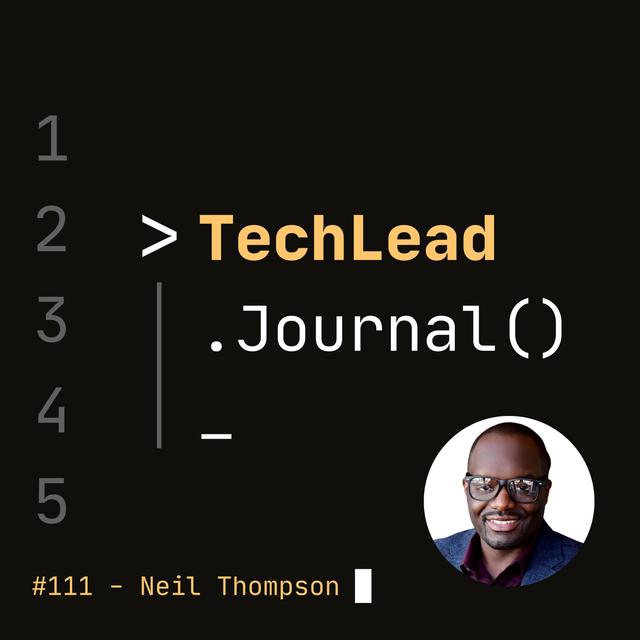
death. I had my struggles with public speaking to and have been trying to continuously improve it in the last few years. If you are someone who are struggling with public speaking or want to further improve your public speaking skills. Then today's episode is for you, my guest for today's episode is near, Thomason Neil is the
founder of the teach the geek. And a public speaking coach in this episode Neil explained the importance of public speaking for technical professionals and the Engineers. Neil share tips and advice on how we can start and improve our public speaking skills. We also discussed some common challenges when speaking publicly and tips on how to overcome them towards the end. Neil shared some tips on storytelling presenting data doing virtual presentation and
presenting at large events. I enjoyed my conversation with Neil and I believe public speaking is an essential skill for all of us to advance in our career and build personal. And if you find this episode useful or, you know, someone who can improve their public, speaking skills by listening to this conversation, please help me share it with them so that they can also benefit from listening to this episode.
I really appreciate your support and sharing and spreading this podcast, and the knowledge to more people. And before we continue the conversation, let's hear some words from our sponsors. Definitely is the top International software development conference with an emphasis on coding architecture and Tech leadership.
Else. The lineup for this year is truly stellar and features many Legends in software development names, such as Robert Uncle Bob, Martin can back Scott Hanselman, Franca subramanyam Carolyn honey, Alan Hollow Mary, poppendieck and many other prominent names, including some of those who have also appeared in this podcast before the conference takes place online. So you can enjoy it from the
comfort of your couch. We spoke to the definitey organizers and I'm happy to share That technology, you know, has got the 10% discount code for you, enter the promo code, awsm underscore tlj. When you purchase the ticket on Lieutenant e.com, here's the promo code. One more time awsm underscore, tlj. Depending on the time when you purchase a ticket early price is still available. See you there. Today's episode is proudly sponsored by skills matter.
The global community and events platform with 100,000 software professionals here members, can organize their learning experiences around the technology topics. They care about most you get on-demand access to their latest content thought, leadership insights, as well as the exciting schedule of tech events running across all time zones.
So we're the devops our data science is your bus or you are fan of functional programming or all things Cloud, you can make real connections with people who share your interests. Head on over to skills method or calm to become part of the tech community that matters most to you. It's free to join and you will find it easy to keep up with the latest tech Trends. Hello everyone. Welcome back to another new episode of the technician. Our podcast today, I have with me Neil for absurd.
He's the founder of this brand, teach the geek. So if you heard about the name, teach the geek sounds very interesting. So Neil is actually helping a lot of people to do public speaking, including Engineers. I think public speaking is something that maybe a lot of Engineers have fears within themselves. So they want to do it but somehow they couldn't do it. For whatever reasons today, we are going to cover this topic, how we can help Engineers to become may be briefer.
So to speak to become a much more confident in doing public speaking. So Neil I'm really looking forward to having this discussion. Welcome to the show. Thanks for having me so near, I always love to ask my guess too. Actually Share their Journey first, maybe some kind of highlights or turning points that you think are interesting for the listeners to learn from you. Sure. I became an engineer because my father said I should, I had no other ideas as to what I wanted to do.
After high school, I used to lie about that too because I was embarrassed by it. I noticed a lot of other people when they were asked that question, they had a lot more interesting answers. Maybe they played with Legos when they were kids, maybe they were a little box Club when they're in high school. I was not a member of any robotics club, and I don't, Recall playing with Legos, all that much. When I was a kid my father, I think thought that just being an engineer would be helpful in
just that it's a stable career. So I did it. I became an engineer like he said then he said do a masters and I said, all right, I'll do a masters and then he said do a PhD. I started a PhD by dropped out after a year and the reason I dropped out is because at this point it was just an 18 year old going into college anymore. Now, I'm 24 years old, it was a six years later at some point, you have to start living for yourself. And not for what other people want for you.
Your parents included. So it was a year of the Ph.D program. I left it. I determine what I'm going to do next. Luckily I got a job as a research associate after seven months of looking after I left that Ph.D program and I did a lot of work in a lab as a research associate, a lot of experiments, a lot of writing of protocols and reports. There was no public speaking, no presentations to be done whatsoever and I was not unhappy about that. I was quite happy about it. Actually.
All that work went on. My boss. It wasn't until that second job that I had as a product development engineer that I had to start giving presentations. When I first took the job, I didn't have to do any presentations and when I was interviewing for the job, I was not told about presentations. I thought I was gonna be doing very similar work that I've done as a research associate. But a few months into the job I was told I was going to be a project. Lie, what's the Project Lead?
The company was too cheap to hire project managers. So, they pushed that responsibility onto the product development Engineers, one of which was giving presentations in front of Senior Management on a monthly basis on project status, we're talking CEO, see Toc Moc fill-in-the-blank. Oh, all the Seas were in the audience. Giving this presentation, let me tell you. My first impression tations were absolutely horrendous.
Henry. I did not know was possible to sweat that profusely from one's body, but there, I was doing exactly that. And what made it even worse is that after the presentations, I get these questions that I thought I'd answer during the presentation but because I didn't put my presentation in a way that these people could understand. Again, these questions I was already sweating and I'm sweaty even more. There's just with sweaty mess all together.
It wasn't until my project got cancelled that I realized that perhaps this is something I want to get better at giving presentations in front of people. And so I did. I joined Toastmasters for those of you all, who don't know is an international organization that helps people with their public. Speaking skills is a great Forum to practice. And then instead of avoiding giving presentations, like I did with that first job, actively look for opportunities to give presentations.
And basically, I took everything that I learned in becoming more effective in giving presentations and I turned it into a course and I called it. Teach the Geeks to speak and is geared towards people like myself, technical people who have to give presentations, especially in front of non-technical audience. Has I realized that just having a course may not be enough. I wanted to offer more ongoing
support. So, earlier this year, I started a membership in addition to the course, people who join, well, obviously they get the course and they also get Line community. And then also monthly calls. So we can talk about all the issues that you're having with your public speaking. And that's essentially where I'm at now. Thanks for sharing your interesting story. I mean, not to mention also, you have a podcast which also covers some of the interesting topics
from other guests. Some could be related to public speaking but some could be related to engineering as well. So you mentioned that you learn from your experience, may be the hard way, right? But tell us maybe the first thing. Why is it important for all Engineers to Start thinking about doing public speaking, what's so special about this public speaking. Typically the people who are the communicators are the ones who
are visible within companies. You don't want to be the engineer sitting in his, or her cubicle mad, because somebody else got the promotion and pay raise, you thought you deserve, but you weren't Network within the company. You weren't visible. You weren't talking to anyone. You thought that just being technically proficient was enough, but it's never been enough.
You have to be an advocate for yourself because not as if the Makers are looking at you all the time to figure out what your career progression should be. You have to be the person that's driving that a great way to do that is by being Adept at presenting in front of other people and just showing your expertise. So if we take a lot of software Engineers. So my background is a lot most of engineering, a lot of software Engineers.
When they start their job, they think their job is to just write code, right? And sit there churning out stories after stories and probably doing some demo, but that's about it, right? They don't think about public speaking but They are opportunities. Like you mentioned when you had to present to your sea levels or whatever that is. So maybe if you can give some kind of tips to those Engineers who still think writing code is the only job for them and they don't have to do anything else
like resenting. Maybe some tips, how they should start thinking about doing this public speaking. Well, look for opportunities to do it for sure.
And then once you were given those opportunities, really give some thought as to the audience that you're going to be speaking in front of when I first started giving I think one of the main reasons I ended up being quite sweaty, by the end of these presentations because I didn't take into account what the people in the audience needed to know, from me at the end of the
presentations. I was just slap slides together, get up there, read them and try to get out of there as quickly as possible, but I never got out of there as quickly as possible, because as I mentioned that often we get questions afterwards. I thought I'd answered. So, I'm a big fan of really taking into account what these people need from you. When I was giving presentations in front of management, what I ended up doing doing was going to the senior Management's admins.
It's very difficult to get time with the senior managers because they're busy, but if you go to their administrative assistants, they very well know what this person wants in the presentation. So you go and ask them, what kind of information do I need to have this presentation for your boss to pay attention, and then you make sure that you have that type of information within your presentation. So that's one thing. Another thing I would mention is
timing. I don't think a lot of people really give this as much Credence of it deserves. But these are busy People. I mentioned that I had to give presentations in front of management, but it wasn't just me every project that was going on. Within the company was being presented on. This was a full day Affair. This presentation after presentation after presentation. So it was really important to take time into account or else the agenda for that day is just
going to go off the rails. So if you're given 15 minutes to give a presentation practice it, so that not only that you finished within the 15 minutes but that you leave a bit of buffer in the event that you say, Something during the presentation that you didn't practice. So if you're given 15 minutes practice let you finish within 14. So you have a minute to play with another tip. I would offer is try to minimize the technical jargon that you would use amongst your
colleagues. Especially if you're talking to a non-technical audience, they may very well not understand what you're talking about. They may not ask and if they do not ask, that's a bad size, the red flag because they may not have even listen to your presentation in the first place. And if they do ask well, now you've essentially wasted time in half I'm happy to ask those type of questions.
You could have used more. Commonly used words in your presentation to begin with, OR at least, explain what the technical jargon that you were using mint during the presentation. Thanks for those tips. So, for those of you who want to practice more public speaking, maybe you can practice some of those tips that need this shit. I understand, I know from few people that they are some challenges for people to start public speaking.
So maybe if we can spend the next few minutes to actually cover some of these common challenges, the first one is actually the very typical one. I don't have confidence maybe since childhood, they are not taught to do public speaking. They are not taught how to do presentation. Well then they don't like speaking as well. For some of us introvert, we don't like public speaking.
What kind of things that you can tell for people who are lacking of confidence, you need to tell yourself that you are improving. Don't tell yourself you suck. Could you tell yourself you suck? You will, if you tell yourself, you're improving, then you will something that I advise people to do before they give presentations is to actually Visualize themselves doing well and really helps to really put you in the frame of mind to actually do well.
So something that I do is I hold my eyes, I'll take a deep breath. And I'll picture how I want the presentation to go. I'll hit all the points that I want to, in the order. I want to hit them, the people will be looking at me, they won't be looking at their phones or looking off into space. When the presentation is done, I will give a call to action, that's clear and easily follow a
bubble. The people that ask questions I will have answers and in the event that I don't I won't Don't try to pretend like I do. I'll be confident enough to say that. I don't know the answer but I'll find out the information and find out the answer and then I open my eyes and I'm in a much better place to actually get up there in front of people to give the presentation. I mean like of course all these things will help.
Right so I think the only Edition that I would add also probably from the person themselves they need to have that motivation to want to do it because otherwise it always become an excuse for them. Not to do it, I guess the confidence part, sometimes it's a psychological. The visualization technique I think yes that's really interesting. So maybe for those of you who want to visualize how you do it successfully that can give some kind of inner motivation for you as well.
And then the other thing that I sometimes heard of course when we do presentations, most of the time is to cover our project our work. But sometimes you have to do it publicly as in like maybe in a conference maybe in a meetups something that you have done but not necessarily the most expertise that you have actually. So some of these people actually think they They should not present because they are not the subject matter expert and that's why again, coming back to the computers.
They're not confident. So maybe there are some tips for those people who actually want to present but they feel they are lacking because of the expertise. Well, in those instances I'm a big fan of doing it anyway because there's going to be people in the audience that are
experts either. And if they see you presenting and you're not before most subject matter expert, it may give them the confidence to do it to you could be Catalyst for them to have the confidence to actually give presentations. So I wouldn't let not being the number one expert in any given field. Stop you from doing presentations. There's going to be a lot of people in the audience are going to be similar to you, maybe even lower than you so you're an expert to them.
Yeah so this thing is sometimes referred as impostor syndrome, right? Because I think in Tech especially there's just so many things that we always feel like we are lacking. We are not experts. So I think, like, what you mentioned, there are so many people out there, some could be more expensive. But than you of course. But don't forget that there are a lot of people who are also studying or who may not understand the technical details that you are talking about.
So don't let the subject matter expert becomes your barrier. The other thing that I sometimes hear from people is that for those non English, speaking people language is actually one of the barrier. They think they have funny accents, they don't speak fluently or they don't do good storytelling and things like that. So, maybe some tips, how do we overcome Language barrier for those who are non-english speaking.
Well, in though, as this is I think the people in the audience will have a lot of Grace for those people, because they probably can imagine having to give a presentation in another language given that perhaps they only have one language that I'm bilingual or trilingual. It's just one language they have. I couldn't imagine going somewhere else and having to give a presentation in another language, English is my only one.
So when you hear someone with an accent, you get the sense that okay, this persons first language isn't English. And yet there, Up in front of us talking anyway that takes a lot of bravery and a lot of Courage. So I think you'll get a lot of respect from the people in the audience for doing that. And then also, when it comes to being someone who's speaking in a language that isn't your native tongue.
I would highly suggest speaking more slowly because of your accent, it might be difficult for the native speakers to understand you. So in those instances, try to speak a bit more slowly to make sure that people get what you're saying, I think the speak slowly is a good tips. Don't try to become fluent English speaking anyway because
you are not. So, instead of trying to become a person that you are not, then maybe you should leverage your situation and maybe speak slowly, maybe speak even better, right? Choose the proper language, not the technical jargons or difficult English, so that people can relate back to what you're presenting. So the next one, that I want to cover, adding some people told me about this as well, it is probably deep sir.
So they had passed through Roma. So maybe they did public speaking before they didn't do well. People probably mock them or whatever, so they feel ashame of freight to do it next time because they had a very bad experience before. So tell us how we can probably overcome this for those who didn't start well for their public speaking experience. Well, I don't know if you know this, but public speaking is the number one fear of most people.
And I think a lot of times, the reason it is that number one fears because they have one of those really bad experiences
doing. What I would say to get over, it is just it certainly will take some time but especially, if you're somebody who wants to gain visibility within a company instead of thinking about the fear and the traumatic experience, think of what you're going to get by improving your public speaking skills or your presentation skills, in most instances, that's going out, far outweigh the fear that you have and how about maybe the physical things like you mentioned in the
beginning. You'll actually was sweating a lot in the presentation. How did you manage to overcome that before you probably? Like most. So at now, probably is like a nice for you. Well, if you're a sweater wear sweaters, sweaters? Hide sweat. Really well. Right, right? Thanks for sharing all. These common tips for challenges that people commonly have from you're helping. Other people, are there any challenges that may be worth or interesting to share to the
listeners here? Sure. The use of filler words words like um you know so and like these words are common in just your conversational language but they can be Ting. The people in the audience. As you mentioned, I have a podcast. And I once had a guest on my podcast, my mother called me about this guest, this particular episode. And she said that after a few minutes, she couldn't listen to the episode anymore because my guest used so many filler words,
she found so distracting. She just had to stop. That's unfortunate because it was a really good episode but in the event that you are one of those people that use a lot of filler words, I highly suggest when you practice to actually record yourself so you can listen back and see how many Filler words, you use. So at least, you know what, your Baseline is and what you need to do to improve. It's very difficult to improve without having that sort of
measurement. And then also, when it comes to full of words, a reason to improve, it is Elementary, you have people like my mother who are distracted by them, if you minimize them, those people will listen and then the people who weren't all that bothered by them. They'll listen anyway. So at least, you'll get more people engaged in actually listening to what you have to say. Yeah, I think Philo.
What's is also something that if people are not fluent in doing public speaking, they I'll tend to think before they speak and that's where the Fela was, probably, naturally come. So I think those monsters, like, what you mentioned, have this activity, where they will count those Fela was, and at the end,
they will tell you, okay? You did so many of this video, what's and you can improve from there, but if you don't join Toastmasters like what you said, I think record yourself and play it back and then maybe you do your accounting and then you will see how you can improve from there. I saw from your website that you gave some public speaking tips. The easy public speaking tips. I think we have covered some of them but there are some I think will be useful to cover as well.
So for example, maintaining eye contact. So I think for people who present offline in an event or something like that, they have to face the crowds, sometimes it could be intense, sometimes it could be in hundreds. I think this is another fear for a lot of people because they are not used to seeing a lot of eye contacts, looking at them at one go, so maybe can tell us some tips for this one.
I am someone who struggles with eye contact, when I was in Toastmasters. I was told that when you give a presentation Ation you should maintain eye contact with someone 23 seconds. You don't know how long 3 S is until you stare at somebody for 3 seconds it seems like an eternity. What would happen with me? Is when I would do it, I would forget what I'm going to say next and then a whole bunch of bums and the other dogs would
come. You want to minimize those because you want my mother to listen. So what you would do to help with that is you don't look at people's eyes, you look at their eyebrows, they can't tell the difference. At least for me when I looked at eyebrows. It wasn't as distracting as looking into people's eyes. It just seems so you look at the eyebrows, not the eyes themselves.
I think the ad people can tell. So some tips that I use as well as time is actually, instead of looking the near end of the people, people who sit in front of you, look at the far end people, right? So, maybe that gives lesser pressure and the other thing is I think not to have eye contact to all of them. Just focus on the few who are interested in your speaking because that sometimes can also give you back motivation. Instead of you look at so many other people, some get this. Acted.
Some don't really pay attention or some, give that look that you don't like. So, I think that also gives pressure. These are some of the tips that work for me and thanks for, you know, giving this tips for looking at eyebrows. I think, yeah, people probably can't tell that you're not looking at their eye instead of recording the Audio. I think you also mentioned that we should also record the video. So, tell us why recording the video of us giving public speaking is also useful for us.
Well, I would actually suggest a video is better than just the audio, but You can only get the audio that's fine. At least with video. Obviously you get the audio to so you're able to listen back and hear all those filler words, you use, but you're also able to see yourself and see, did you do anything during your presentation just physically that you want to improve on or that you actually. Like I remember when I was in Toastmasters, I was a judge of a
speech contest. I was one of the two judges and the person who actually gave the speech, they patted the right hand on their leg, during their presentation. This is something I did not notice, but the other Judge did this is something that if this person was videoing themselves,
they would have seen themselves. It's one thing for somebody to say, you patted your leg, perhaps, you don't believe them, but if you actually see yourself doing it yourself, well, you can't really say that the person wasn't telling the truth. You see it yourself and now you have a decision to make is this something you want to get better at or not? Yeah, so that's a good point because sometimes when you are doing public speaking offline, people will see your body
language. So tell us some tips about body language, how we should do. It may be Kind of post that is commonly accepted. Is there any grudges that we should watch out for when it comes to the physical gestures? I think this is definitely person-specific, there are definitely people that use a lot. More hand gestures and they're going to be people that are distracted by the hand gestures. And then there's going to be people that want more hand gestures.
It gets, goes back to the point I made about myself and the other judge giving feedback to this first, and giving a speech. When it comes to feedback, you could very well, get conflicting feedback. You get someone who says, I like your eye contact. You get someone who says, improve your eye contact. So what are you supposed to do? You have to run all feedback through your own filter and don't feel like you have to implement all feedback that you get. Does it make sense for you?
After you looking at your video of yourself, giving a presentation, did you like your eye contact? And if so, then maybe that's not something you want to prioritize? What if you are the first in this padding, their leg with their ad? And that's something you don't want to do anymore? Well, maybe that's feedback, you should take and try to improve on that. Yeah, so you mentioned about
getting feedback. I think this is also one of your tips for many people that I know after giving presentation there feel like, okay I'm done. So, I just don't want to talk about it anymore, but I think the most important thing is also to get the feedback how you can improve yourself from there. So, tell us how we can get feedback. Is it like, we have to record all the time because sometimes the event is not ours, right? How do you get feedback?
Normally for your presentation? I'll usually just bring my camera phone and I record myself. So even if Is no recording from the organizer from the event. I'll have my own recording so I can at least see myself or at least hear myself, at least. If you're doing a presentation at work, you can ask the people in the audience. What do you like about? What I did, what do you think I
can improve on? And as I mentioned you use your own filter to then figure out what you want to prioritize getting better at. Yes, surveys. All one thing that is quite common although probably the feeling rate might not be as high but they are survey asking candidate for some of the audience. I think that also useful, don't forget that. Well maybe the kind of message that you kind of like convey to people understand it as well or not. I think that is one thing that is also important.
We have spoken about common challenges physical summer, psychological. Maybe let's go to the techniques how you can do better presentation. I mean, these days, people always tell about storytelling, maybe some tips on what kind of techniques people should use to be more effective. In terms of conveying, the message I say, you start with the end in mind. What do you want people to? Take away from your presentation
when they leave. So you determine what your call to action is. And then once you do that, you figure out what points do you need to make that will funnel naturally into what that call to action is then when you figure out what those points are, you develop your introduction, which naturally feeds into the points, which feeds into their call to action. So, I'm a big fan of starting with the end and then working backwards, any kind of coverage that you can tell about storytelling.
Because I think many people talk about storytelling, maybe from your As well. Is there anything that you can share? Sure, storytelling is something that I didn't think was appropriate for technical presentations when I started giving presentations, but I see it. Now, as almost essential, especially if you're talking to a non-technical audience. I remember when I was a kid my mother or father would read me a bedtime story before I went to bed.
I used to love it but then once you become an adult for some reason we move away from it. But if you're able to take your technical expertise or the technical data that you want to convey, Two people and put it into stories. It's going to be more likely that they'll remember what you have to say as opposed to just spitting out a bunch of dried data. Speaking about date outright,
how should we present the data? Because they are some presentations, which are, you know, a lot of data in fact, too many how should we present the data? Maybe there's a visualization technique that we should use. So any tips about presenting data of facts? Well definitely once you know, the type of Artisans you're going to be talking to that will help Determining the level of what you go into when it comes to the data.
But they're not only that. But if you have slides and you have graphs and tables, you want to give those slides or those graphs and tables titles that naturally convey, what you want the audience to take away from your presentation, you don't want to just give it any sort of just random title with a bunch of words, that they may not understand what do they need to get out of that graph. What do they need to get out of that table and give them a title that would convey that.
Thanks for sharing that because I've seen so many chats, so many data, but they Don't actually pinpoint. What exactly you want the listeners to learn from that chart? So I think giving the Q so maybe you scum coloring technique some different types of charts, it's also one art in presenting, right? So that people can actually get the insights from the data that you are showing them. So I think that's a great tip you mention about managing our time, right?
So if you are given 15 minutes, maybe we should do it earlier. How should we Pace ourselves? So do we need to rehearse many times before we do the presentation. There are some tips here on managing the time. Well, I mean, if you give it 15 minutes and I mentioned to finish within 14, you practice until you're finishing consistently in 14 minutes and then, as I mentioned, you then have that one minute to play with.
In the event that you say, something during the presentation that you didn't practice, which inevitably is the case. Another way I would try to just keep track of time, is this to know if you're using slides? When you get to the halfway point? What time are you at? So if you have, for instance, N Slides, we have 14 minutes as I mentioned to give the presentation when you get to slide 5. Where are you? Are you at 7:00?
And if you are, then you're on Pace if you're behind, then you got a quick enough with the other slides. Yeah. So managing time, I think so. So important, especially when you have a long day for those listeners, they wanna probably also refresh their mind not to be in presentation mode all the time. So I think managing our time is pretty crucial and rehearse, I think it's very important, right? Because if you never practice, then You will not be able to get
a sense. How long do you need for the presentation? These days? We have so many types of presentation, right? I mean, during the pandemic, most of the presentations will be online. So true Zoom Google meet webinar and things like that. Any kind of different tips you want to give for people who are giving online presentation. Did I really want to be somewhere where it's quiet. So to make sure that people actually hear you, you don't want to distracting backgrounds to make sure that your
background is pretty playing. You don't want to People focusing on your background. Now, what you're actually saying, what make sure that the lighting is good. So if you're going to give a presentation make sure the light is actually shining on you not the other way around. Or if you'll just look like a shadow you want to make sure that your laptop is position so that you're able to look into the camera as opposed to looking at the screen.
So if you're looking at the screen, doesn't look like you're looking at the people. I mean these are some of the tips that I would have for virtual presentations. What about conference, those giant events, where there are probably hundreds of people where there is a stage As well, and there's a mic and things like that. So these are the more elaborate events or maybe any tips for
those kind of events. Sure. Well, you definitely want to visualize success in those events because people are going to be able to see all your physical manifestations of nervousness. But even the event that you are nervous. I see that as a sign that you actually care about what you're talking about in your interested in people, really getting what you're saying, if you're not nervous as probably a sign that
you don't care all that much. If there's a stage perhaps you use the stage 2, Your advantage and move around so that the audience can actually see you up close or closer in the event that there is a Podium. Then you obviously you stick behind the podium and gear presentation there. But still make sure that you're looking at the audience, as opposed to looking at your screen and looking at your slides, get speaking about nervousness, right?
I think some tips that I learned as well, is that instead of making that as a pressure, you transform that to become an
excitement. So instead of being nervous, you see I'm excited to do this and that's why I feel a little bit uncomfortable so Thing instead of no succumbing to the nervousness, you make yourself excited instead and I think, yeah, you should care what you talked about, you should change the mindset, I just want to share what I know instead of wanting to become an expert or something like that. So I think the key message here is it's within your control.
How you can probably manage yourself so that you can give a better presentation. So Neil maybe you have helped a lot of people, right? Is there any other interesting cases that you can share here for those people who will Still want to get some more tips from you. Well you have to get out there and do it. You can't be like me during that first job being happy that your boss is doing all the presentations and you get to pass all that information that you would have presented to him.
When it comes to getting better at giving presentations. You can listen to all the podcast read, all the books. Look at all the YouTube videos until you actually get out there and do it. You won't get better. Practice makes progress. Yep. That's right. So we can always get inspiration from great public speaking, but Times. We have the challenge to actually do it. So, I think thanks for reminding that.
The thing that's really important, just do it, practice it. Sometimes you don't need to go public or with people viewing. You can also record yourself. I think this is also a key that I learned, you can just record yourself as and then watch it and learn from their do you dread yourself speaking in the recording or not? So I think that's also one tips that I learned I think speaking
about being more visible. I get a lot of people telling me that doing more public, speaking actually gives you a lot more opportunity, maybe not just within work. But because visibility in work is important, but from outside of work, you'll get more opportunity. So tell us what kind of opportunities we will get by doing more public speaking. Maybe another job if you don't like the job that you currently have. So and yeah, I mean, you can never look as well.
It's definitely great for networking. It's great for even fighting other opportunities that might be paid. There are people that started off giving presentations, because they just were interested in whatever they're talking about. I just wanted to be Front of people, but in the event that people actually want to hear what you have to say and willing, to give you money for it. Well then now you have that opportunity to do what you actually like and get paid for it too.
I think some talks can Inspire other people, right? So, I think coming back to the levels in the audience, you may have different types of people, some probably more experienced some not, but for those who are probably not at that level, as you also, probably sometimes, you can give inspiration to them and you will connect and that's why you have, Opportunities from my experience as well. Doing this podcast, I also get a
lot of opportunities. So I think for people who are still thinking of doing public speaking, I think it can give you some benefit. It's not just about your public speaking but also other opportunities. And hey, maybe you can find a cool job, they are next cool job out of this opportunity. So Neil, as we are going to the end of the conversation, I really enjoyed this. Actually, I think a lot of practical tips for those who want to do better public speaking.
I have one last question before I wrap up the I have this custom question which I called three technical leadership. Wisdom. So think of it like an advice that you want to give to listeners. May be from your experience, your expertise, what are your technical leadership? Wisdom, new be clear, be thoughtful, and listen. So, if you're somebody who is the manager people, you definitely want to be clear and what you expect out of them and what you need them to do.
So that there is no miscommunication. The you also want to be thoughtful in what you say to them to so that you don't have to apologize. Later. Because you said something that, perhaps, they might be offended by, that's going to take some time, obviously, to figure out what people sensibilities are. And then you also want to listen, you don't want to be the person who's just a talker and your ideas, the best idea, and everyone just has to implement it.
You want to listen to what other people have to say to. And once you do that, that actually informs your ability to be clear and also be thoughtful to. So, again, it's be clear, be thoughtful and listen. Well, speaking like a true public speaking, I expect big clear, be thoughtful and don't forget to listen, we are not there just to speak but also to listen from others. So again, thanks for the tips, near for people who like this conversation and they want to follow up a continue.
The conversation from you, is there a place where they can find you online? Sure, you mention my podcast so you can go to podcast.fool.com if you prefer to actually see me and my guests, you can go to the YouTube channel at Geek.com. And then there's also the actual website, teach the geek.com right. I'm sure people will miss it, teach the gig. I think it's pretty unique
brand. So, for those of you who want to learn more about public speaking, do make sure to check out Neil's resources that he just mentioned. So Neil, thank you so much for your time. I really enjoyed this conversation, hope you have a good luck to transform love people to be better.
Public speaking, great. Thanks again for having me Henry, thank you for listening to this episode and for staying Until the end if you highly enjoyed it, I would appreciate if you share it with your friends and colleagues who you think would also benefit from listening to this episode. And if you are new to the podcast, make sure to subscribe and leave me your valuable review and feedback. It helps me a lot in order to grow this podcast better.
You can also find the full show notes of this conversation on the episode page at tackling journal. The death website, including the full transcript, interesting quotes, and links to the resources mention from the Position. And lastly, make sure to subscribe to the shows mailing list on package. You know, dot f to get notified for any future episodes. Stay tuned for the next technology. No episode. And until then goodbye.