


There is a QB software architecture. Gathering is the International Conference highlight for all those working on Solutions structures in IT projects primarily software Architects developers and Professionals in quality assurance but also system analysts who want to communicate better with their developers. A selection of well-known International speakers will share their practical knowledge on the most important topics in the state of the art software architecture.
The conference takes place online, from November, 14 to 17. And we have a 15% discount code for you enter. The alj underscore MP underscore 15 for 15 percent discount become more aware of coaching, competencies and coaching skills and realize that in order to be a more effective leader, you need to be a coach done period. So what I want is leaders
managers directors senior execs. I think if you want to become a better leader than I think one of your core skills not Go skills but course go should be coaching skills.
Hey everyone. My name is Henry Surya with Robin. And you're listening to the technology, you know, podcast the show where I'll be bringing you the greatest technical leaders practitioners and thought leaders in the industry to discuss about their Journey ideas and practices that we all can learn and apply to build a highly performing technical team and to make an impact in your personal work. So let's dive into our Journal. Hello, my friends. Welcome to the technology.
Now, podcast the show where you can learn about technical leadership and Excellence from my conversations with great thought, leaders in the tech industry, and today is the episode number 105. If this is your first time listening to tackle the journal, subscribe and follow the show on your podcast app and on LinkedIn, Twitter and Instagram. And if you'd like to support my journey, creating this podcast, subscribe as a patron. On at technology.
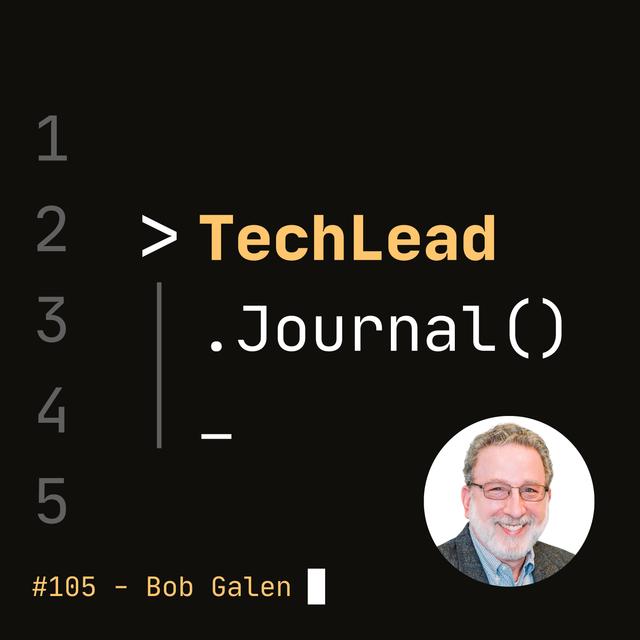
No dot f / Patron. My guest for today's episode is Bob gallon. Bob is the president and principal agile coach at our gcg and a prolific writer blogger. And also a podcaster in this episode Bob. And I discussed, many aspects of coaching and Leadership taken from his latest book, extraordinarily bad ass age.
Our coaching Bob started by explaining the concepts of HR leadership and age are coaching he shared about the Different primary coaching stances and why he suggests that coaching is really an essential core leadership skill.
Bob then went into details to describe the skills, required to become a good coach such as asking powerful questions and becoming powerful listeners towards the EM, Bob also shared some tips that we can use for coaching up and for coaching the middle managers, which in a way is like coaching the coaches, I really enjoyed my conversation with Bob to me.
This is like Like a master class session on coaching and I learn a lot and took many practical tips on how to improve myself, especially to become a better leader. And if you also enjoy listening to this episode, please help, share it with your friends and colleagues, who can also benefit from listening to this episode. It is my ultimate mission to spread this podcast to more people and I really appreciate your support in any way towards fulfilling my mission.
Before we continue to the conversation, let's hear some words from our sponsors. Destiny, T is the top International software development conference with an emphasis on coding, architecture and tag leadership skills.
The lineup for this year is truly stellar and features many Legends in software development names, such as Robert Uncle Bob, Martin can back Scott Hanselman, Franca subramanyam Carolyn honey, Alan Halep, Mary, poppendieck, and many other prominent names, including some of those who have also appeared in this podcast before the conference. Takes place online so you can enjoy it from the comfort of your couch. We spoke to the definitey organizers, and I'm happy to share that technology.
You know, has got the 10% discount code for you. Enter the promo code, awsm underscore tlj. When you purchase the ticket on definite e.com, here's the promo code. One more time. Awsm underscore, tlj, see you there. Today's episode is proudly sponsored by skills matter. The global community and events platform with more than 100,000 software professionals here members, can organize their learning experiences around the technology topics.
They care about most you get on-demand access to their latest content thought, leadership insights, as well, as the exciting schedule of tech events running across all time zones. So whether devops our data science is your bus or you are fan of functional programming or all things Cloud, you can make real connections. Actions with people who share your interests head on over to skills method or calm to become part of the tech community that matters most to you.
It's free to join and you will find it easy to keep up with the latest tech Trends. Hello everyone, welcome to another new episode of the package. You know, podcast today I have with me a guest someone called Bob gal he's actually very experienced in the a gel industry. He is well known as the coach of coaches. So if you imagine a coach, this is the coach of the coaches. So it's like Master coat. So Bob has 20 plus years in the industry has so many
certifications. He builds Community, very prominent thought leaders. He also writes a number of books and he blocks a lot as well. Also, Bob is a podcaster. So his podcast is called, Medicare is, so it's a podcast
about a gel. So today, I think we are going to talk a lot about coaching specifically and I'm really looking forward for this topic because I I really love for coaching and I Aspire myself to help so many other leaders and people as well to grow much, much better in their life and their career. So Bob, thank you so much for your time. Looking forward for this job. Henry, thank you for inviting me. It's a privilege to be here and I really appreciate it.
So I don't know if I'm a coach of coaches, but I try to coach quite a few people, I try to share my experience. So sometimes people trigger on the term agile, coaching or coaching to me, it's just more mentoring and just helping people in sharing my experience. So, I'm Excited to be able to do that today with your audience. So Bob, I always like to start by asking the guest to introduce themselves may be telling about highlights or turning points in your career.
Something that is interesting for the listeners to know about sure. So I'm about Kailyn, I started out as a software developer at a time. Before most of you were born, I'm kidding. Most of the you were born. So in the early 80s, my first job out of college was in 1980 as an assembler. Programmer, if anyone Ever heard of the worship assembler? I did that for a number of years.
I worked on mainframes actually, my first job out of school was at spare, univac and building ibm-compatible mainframes. I'm not going to tell you every week in my journey, but fast forward, as some software developers. Do I was a reasonably good software developer and architect, and people started promoting me as a leader. In a journey, became a manager after a few years and then a director at senior leadership roles in the mid 90s to late
90s, I discovered For battle. The key for me was extreme programming at the time and scrum. I was an early adopter of the extreme programming at loosen at Bell, labs around 2000 2001, but before that, in the mid-90s, I have discovered scrum based on the white paper that schwager and Sutherland or put together that the time.
I was lucky enough that I was a leader and I pivoted into agile because I had influence because I had teams are reported to me, I could make them do Agile or encourage them to do Agile. So I would experiment I am a A consummate experimenter. So I was experimenting with scrum. I was experimenting with XP practices. So I'm an early adopter that led into coaching not as a decision, but as a leader, I've always been a people oriented leader.
You know, I suppress my ego and I realized that technical leadership isn't about me. It's about the teams and how am I sort of building and encouraging and guiding teams to do Kick-Ass products basically and do great work. Magill was always a toolbox or a way. Facilitate that. So my style was complimented, I didn't adopt agile, I merged with it because agile principles really dovetails nicely with my leadership style.
That was in Me, Maybe late 90s, early 2000s around that time at maybe if out 2005, I wrote my first book, it was on an agile book, James called software and games. It was a traditional waterfall, how to get things out the door book, then I start by actual Journey. My last per job was about 12 years ago. I formed a company early on and I did part-time consultant. Ting. But I was always hitting the trenches leader. Then about 10 years ago.
I decided to stop being an Insight leader and more of an outside consultant and I've been doing that ever since. Thanks for sharing, AJ needs a list. Exciting to talk, with early adopters of certain methodologies, things like XP, a gel, and things like that. So always there's a lot of insights. I hope we can also dig deeper into this compositions. You measure something about a gel leadership. I think this is something that I want to ask deeper. So what does it mean to be an agile?
Leader? We could spend hours, probably talking about that. I teach some leadership. I'm aligned with the scrum Alliance and I do something called the certified agile leadership. I teach that I'm privileged enough to be a teacher of what they call their cow courses, which is a leadership sequence. So, from that point of view, one of the things that we try to key on, it's not a definition, but one of the central things about agile leadership is, it's not an outwardly tracing mindset.
It's an Amber Lee facing First mindset. What that means is lead yourself first. So, forget leading other people. What are you doing to master yourself? Let's use emotional intelligence, Henry, are we improving our emotional intelligence, AR, riba improving our self-awareness. I hope this makes sense. So think of it as an inside-out job. I think so many leaders. They look at leadership as being an outward thing I have to tell people what to do, it's not about me.
A lot of leaders, don't walk their talk, they'd tell people to do things with their not. King their own top. So I think a central idea and agile leadership is be agile on the inside. First, don't tell people be agile, show them what it looks like a safety for example, to experiment and to fail and to learn Henry. No, I'm saying. So are you doing that yourself? And are you role-modeling outward?
I actually think heart of a technical leader or any leaders, one of their purse possibilities and one of the more powerful coaching stances that they can have is how Are they showing up like their role model? I hate to tell you, I would people around you're watching you as a leader. They listen to what you say but they watch what you do. And what you do is so much more important than what you say.
So the good news there is if you are a great role model from the inside out that can have a tremendous influence. So that's something we talk a lot about in the class. For those who listened a jelly that doesn't mean you are a leader who adopts, a certain age of practice of methodologies is not about adopting scram and know. Inside out about scrum and then be able to deliver. So it's about, like Bob said, leading from the internal first, be agile, internally. And then you also can lead at
the people from there. So it's not from external first, but it's actually the know, it's funny, Henry, people come to my class and they want to hear scrum and kanban and XP, and they want to hear safe and scaling Frameworks. And I hardly ever mentioned those things in that second day, they're like, Bob, I thought you were gonna teach us about scrum leaders and I'm Like I'm sorry. No it's that mindset thing. We're going to explore the mindset.
It doesn't mean that the scrum or kanban isn't important but they're much easier to me their tactical, they're just methods. What's much harder for people to get? I think is the mindset of the agile leader and you nailed it. I'm Glad You observe that it's not even intentional at this point, it doesn't matter. I mean we shouldn't be talking about agile leaders in mentioning Frameworks.
It's just not that relevant. Thanks for straightening that up. So Bob you also wrote a book titled extraordinarily bad as a gel coaching has recently published. So tell us more about why you wrote this book and what about the badass in the title? So I don't know if you've ever written a book but anyone who has at least for me, a book is a lot of work. So I need energy to start a book. I need something that's bugging me or something that I'm passionate about. I've been coaching.
Being an agile coaching for decades. Basically, what I've noticed lately is the world of agile coaching, Everyone's an agile coach. If you look on LinkedIn or in Social Network, everyone has agile coaching in their title and it just bugs be. It's like what the ha it's like a buzzword. And so, to me, agile coaching is a profession, it's a craft. So one of the reasons I wrote the book and I had energy around writing it, not that I'm going to solve that problem.
But so, but I wanted to do something to raise the bar. Wave from mediocrity and agile coaching because I think coaching makes such a difference. It can be potentially A Difference Maker in teams and in organizations and cultures, we shouldn't trivialize it. So that was the Genesis behind it. Now it's still a lot of work. So along the way, I burned out a little bit, I'm like, oh my gosh, but we must be finished.
Soon the good news I partnered with a few people to co-write it with me and that was a new project for me. I had not done that before so that was kind of cool. The badass to me is indicative of Of what I'm talking about. Raising the bar and really moving from mediocrity to like high performance or excellence in agile coaching. So to me you're never done being a badass. The other thing I wanted to communicate is that your journey and agile coaching is never done.
I would argue your journey into agile leadership is never done. If you stop and say, I am an agile leader or I'm a technical leader. If you ever stop, you have just failed from my point of view if you stop learning and growing and challenging. Yourself that you've missed the point and that's the same point to me.
Now, Henry, when I've added the title, with some people around the world, maybe 50% of the people I pinged on the title, they were like all we really like badass in the title and 50% of the people were offended, or like, all my God, you know what badass means? That's terrible. So, I was stuck. I was almost done with the book and I'm like, now, what do I do? Do I keep badass, you read parts of the book ayat, sprinkled the word everywhere. And had badassery and things like that.
So like do I change it? And then I thought for at least a long weekend and I was really torn but I said you know what the heart of the book is this notion of excellence and so I kept it in the title so I hope I don't offend anyone with it. Thanks for saying this fun fact, Story the background why you chose the title to me? I think that as a so it can mean good rice, not something that always necessarily a bad connotation. So you mentioned about a gel
coach these days. So many people, That in the title and it's not just a job coach. It could be like personal coach life, coach whatever, trainer coach. But the first thing that I would like to clarify with you since you have done it. So many years, what is the definition of coaching? Actually? So many people use the other terms, like, mentoring. What? Are the difference? Actually, if there's any. So, what is your definition of coaching?
It's a good question. One of the things I anchored on in the book, so people get confused. Another reason I wrote the book is there's confusion. In Industry, there's something called professional coaching. There's the international coaching Federation and they have training and certification and it's a wonderful body. Professional coaching is sort of like counseling if you want to think about that. It's asking questions.
Basically, if you want to think about professional coaching, you never ever give anyone advice or you don't tell them what to do, you help them to discover their Journey. So there's the notion of professional coaching of asking powerful questions. So that your coaching client, whether it's Individual or a team, you could coach a group, a scrum team, or whatever, you're asking questions and it's their agenda. So, there's rules for professional coaching agile. Coaching is a superset of
professional coaching. The model that I've anchored on, is something called the agile coaching. Growth wheel. The agile coaching growth wheel has multiple stances or multiple postures or multiple instances of like how do you show up as a coach? One of them is professional coaching. Is that makes Sense. So what I just described as professional coaching, is a subset of agile coaching another subset. I'm going to call them Henry stances or competencies so competencies and stances.
But I like the word stance because it's like a posture. So, professional coaching is one posture. You mentioned one, mentoring is another posture. If I'm coaching people, I could Mentor them. Another posture is training, I can teach them and they're different to me. Mentoring is showing and partnering. Earth may be apprenticeship to
me pairing. An apprenticeship is a mentoring stance if you will, and that teaching is wrong, teaching going through a class or literally directing someone with knowledge. There's two more stances in the wheel. Both of mentoring a teaching is called guided learning. Another stance is facilitating workshops facilitating meetings. Being a good facilitator, that's an art in and of itself, is facilitating a meeting to a good outcome. There's a myriad of tools and
nowadays. As Miro and facilitation boards are wonderful ways. You can do it virtually. So having being Artful there, another stance that was new to the wheel is advising, providing advice or consulting or let me dare, I say it telling someone what to do Henry, you know what I mean? Like, to think he'll do it this way being a bit more prescriptive. Can you see the challenge with an agile? Coach is picking in service to the client in serving, whoever you're coaching. What is their agenda?
But then showing up in a different stance based on what they need. Now, I call it dancing in the stances, how I think of it as dancing. I'm not a dancer clearly, if you saw him the rest of my body, I'm not a dancer. I'm not very Nimble, but I'm mentally Nimble because in my mind, it's like dance with the client. So I may start out with what
asking them questions. I might start out in coaching stance, I hope this is helping and then if I determine that they need to be taught something, then I would switch to teaching staff. It's if I see that the class isn't Landing, I might switch to mentoring stands and show them how to do it and then I might go back to professional coaching and ask them, how did that go? How did it land for you and how do I make it better? So everyone what I just did is
that was agile coaching in that. I switched stances. If that makes sense in service to my client if that help. Yeah. Yeah, suddenly, so, obviously, I'm trying to make it less abstract Soul, you mentioned about coaching stances things like Seeing guided learning things like teaching mentoring leading. Also I think leading people show them how to do it facilitating. So thanks for sharing all the instances.
I have one interest when you mention in the beginning about professional coaching, it's not necessarily just telling the clients, but actually asking questions so that the clients know how to solve their own problem. It's not the coach agenda. So this I think is the probably distinguishing character between a good coach versus a normal or Bad coach tell us more how can lead us be more in this kind of mode because I think leaders has very crucial role in every team
and their role. One of it is to coach not necessarily always to make decisions. How can a leader show in this kind of asking question mode rather than always directing? I actually think that leaders need to be agile coaches. Now, explain what I mean by that? So one of the things, one of my biggest regrets in the book is, oh, I have many regrets The minute that you hit code freeze, the minute you hit Freese and you publish a book at least for me, I reflect.
And I'm like, oh, I made some mistakes. I wish I would have changed that. So the title we talked about the title before it has a job coaching in the title and it almost seems like the book. If you look at it on the surface the book is focused to Agile. Coaches Henry, I'm sure you read it that way. Although this is a book for agile coaches and it's a big mistake on my part. What I wish I would have done
somehow. How is communicated that this is a book of coaching skills and I think anyone could benefit so I'm not trying to turn leaders into agile. Coaches. What I'm trying to say is be aware of coaching, competencies become more aware of coaching competencies and coaching skills and realize that in order to be a more effective leader, you need to be a coach done period and it's not a professional coach, it's an agile coach. And what I mean by that is Becoming an agile coach by your
business card. But all of those stances are talked about. If you're serving the people in your team, sometimes the right thing to do is not ask them questions. Henry. Does that make sense? What if they don't have the answer? What if they don't know what if they desperately need to be taught? And you just keep asking questions? We'll how do you think you should do that? I call it death by a thousand questions.
So professional coaching is appropriate as long as it's the right stance in the Situation to serve, whoever you're coaching. So what I want is leaders managers directors, senior execs. I think if you want to become a better leader then I think one of your core skills. Not technical skills, but course, go should be coaching skills. If you look at the world in that way, then the book could be very helpful and then the wheel is very helpful because of its start, looking at yourself.
Like sometimes you have to lead in fact, if you looked at the wheel Henry in the middle of the wheel, Is something called self-mastery, doesn't that align with what we talked about earlier that agile leadership or leadership is an inside-out job. It parallels that wonderfully. So if you want to be a better Coach, it starts. By are you coachable? Are you learning yourself? Are you a good role model?
I think there's a wonderful connection between coaching not agile, coaching the business card or the title, but agile coaching competencies, and skills in a well-rounded way to leadership effectiveness. Goodness. So how do you start that? You look at the wheel, you assess yourself, you assess your strengths. I'm sure some leaders are stronger in some stances than others. That's fantastic, assess your weaknesses and then start to relentlessly improve yourself.
In fact, I would say it starts at you are a coach. So anyone is listening to this in your technical leader, I have some really bad news for you, whether you like it or not, you are a coach. So suck it up.
Except that And now, if you are coaching people, you're not coaching, algorithms your coaching people your coaching's teams, your coaching peers and your coaching leaders at the ecosystem around you, whether you like it or not, I mean, you're coaching it just by showing up and role modeling, so you're coaching even when you don't know it. So, take control of that and become a better Coach become curious about coaching, and I think that'll make you a better leader. Thanks for clarifying.
That so yes, when I saw the title of the book, I also thought that this is going to be a book about a job coaching, but when I read it, there's so many good things, the insights, how to be a good code. It touch on about competencies and skills and maybe this is also related to the a gel growth will that you mentioned. What are the some of the competencies and skills that asks technically does need to be
aware of to become a good coach. Again it comes back to the wheel so advising I'd say it starts with Self-awareness. But then asking good open-ended questions. So now I'm coming back to professional coaching. Remember that place I was talking about but it's not all about that. I would say that's a good place to start for any technical leader.
That's a good stance to check because it's not about you solving problems or it's not about you telling people what to do. It's about you helping them discover their way and I think there's an art to asking. Good, open-ended questions or powerful question? So study them. There's literally everyone a book on Amazon entitled, powerful questions. And if you ever wanted to have like 8000 questions to ask good, open-ended questions. I mean, it's got thousands of
questions. I'm not suggesting you have to read all but the point is become Artful with asking questions. The second thing I always joke in my classes asking a powerful question is only part of it. Powerful listening is the other part. I find that a lot of people. I'm going to pick on technical leader. We suck at listening, we suck at patients and Henry, not you and not anyone listening to podcasts, but other people in
the universe. And so, I think slowing down and really carefully letting your questions land, given some folks, time to think about it, actually practicing silence. Silence is a wonderful friend for everyone patients and then helping re-clarify. So do some studies and Powerful listening. There's something in the book called the coaching Arc. Think of it as a way of having a conversation structure, guide like a chess metaphor opening moves, middle game in and gave Landing it.
Think in terms when you're coaching people in coaching sessions of having an art. What's nice about that? Coaching mindset is, it's about the client very often, at least in my experience, technical leaders, they make it about the business and they make the conversations. So if you've ever had a one-on-one with someone I've made this mistake and I still can make the mistake when I'm
under business pressure. I make it about Delivery and I make it about solving problems and that's not a good one on one, or I make it about, identifying the person's weaknesses, or picking at that, or improving them. That's not coaching the client. In fact, start with what is their agenda, what can you do for them? That should be your first powerful question in a one-on-one in a coaching conversation, what is your problem? What is your challenge?
And what can I do to help? You does everyone see the switch? It's not about me as the leader. It's about me serving team member or me. Serving the team or me serving multiple teams. I can have a coaching conversation with 100 people. I can have an arc with a hundred people. It's the posture change that professional coaching sort of changes. I would say if you all entertain that, that's a wonderful way to start flipping your Leadership Model Henry. Any reactions to that.
Yeah, I mean, so many insights. I'm just listening to what you described, I'm reflecting myself because I'm so guilty of so many things that you mentioned. So for example, as Leaders we tend to Want to solve problems. Trying to improve our example, our direct reports Witnesses, or maybe the parts where they do not do effectively. The other thing is about listening, sometimes as technically there's when we ask the question, we already have a judgment and answer that.
We are getting ready to reply back to the person. I think all this is common for many leaders out. There is like a bias that we have, so thanks for mentioning that I think really, really, very good techniques, right? These powerful questions and Powerful, listening, if we can dive Deeper into each of these powerful questions. What would be some of your favorite powerful questions?
But maybe if you can, maybe teach us here, what are some of the examples or maybe behaviors that we want to dig deeper by those powerful questions. So, do so seller. Would recommend I talk about in the book. The coaching habit is another book. It's actually not a coaching product and it's not an agile book, it's not a technical leadership book. It's a generic leadership book. So it's a nice book that supports what I was just saying and what the author Came up with
he shared one of the dangers. Would powerful questions. Henry is there so many choices I've seen in experienced coaches. They spent so much time trying to pick the perfect question, because they have so many choices and it makes the coaching very awkward because you can see the person going through the algorithm to try to depict Perfect Situation. Apprised it the person being coaches, like, and you will what?
Please ask another question. So there's too many choices or there can be. So he has seven and I love the Simplicity of Of the bottle. I like to identify them as to where in a coaching art, they might be most appropriate. So the first question is to kick-start, question, what's on your mind? Beautiful question. Everyone would meet beautiful question, what's on your mind? Stop, don't tell him what's on your mind, what's on their mind? And then listen, just listen to that.
The second one is and what else? The all question? And what else? So, what's on your mind? And what else meant? Let that lay ahead. And that's setting the agenda. A room would be so that's it. Putting move question. Both of those can be nicely done in the opening moves, its setting the agenda. Oh what do you think we should cover? What do you need? The most help with. What would you like to cover in this conversation as everyone see the agenda? Is that coming from me?
The agenda is coming from who I'm coaching and I'm serving them. Now, of course, if we're in the middle of a project, I would hope that some of the things on their mind, ours, challenges that they have so that I have it. The third question is a focus question. What's the real challenge here? For you or to you. So now there are these questions that are going a little bit deeper.
I think of it as the five wise, if you've ever heard of the five ask, why multiple times you're trying to drill into understanding? So, that's a wonderful question to get below the surface on something. The foundation. Question is, what do you want? Wonderful question, probably not opening moves. Now we've moved into middle game and you could use these wherever you want but there's a place in the middle. Okay. What do you want? What would you like? See, happen is a variation of
that, right? What would help you right now? What's the priority the lazy question is? How can I help? If you notice Henry? Now, what's happening is, this is giving me permission to then provide guidance if you're with me, but I haven't gone in with my guns, blazing telling people what's wrong, and what they need to do. I'm actually asking permission as a coach. I hope this is opening, right? I'm listening. How can I help Henry you?
Talk about as Leaders. We always have, I want to help five things and they don't pick any of my five. They pick another one. Do I guide them to one of mine or do I take theirs? And the answer is I take theirs and I put mine on the show for a little bit. So there's something called the Strategic question and I love this one, it's maybe not appropriate but if you're saying yes to this what do you say no to, it's the priority question.
It's the avoiding multitasking question or Avoiding excessive work in progress question and I think it's appropriate for all of us. So if you say yes to this redesign, what do you have to say? No to. Okay, what do you have to stop doing? Let that question later on the learning question, this is a 10 game question. What was most useful to you in this coaching session? Here's something. I want more leaders to ask Henry how could I have made this coaching session better for you.
What could I have done? Better. I hope everyone is sensing all of these questions and even the way I've been playing them about, I hope you see that. It's not about me. Did you notice that? It's really about me. It's about be helping someone else, and I think that's a key mindset. So, starting with coaching and Drilling in, I'd highly recommend you read the book, it's relatively short. And you start practicing these questions in your one-on-ones.
You could use these in a group setting Etc and switch that posture from Hey everyone, I'm the boss here. I know what's going on. Switch that posture to activating your team. And my experience is that will grow the capability of your teams and they will blow your socks off. Because now it's not about you, it's about them growing but that's just me. Wow. And I listen to you explaining this 7, powerful questions. It's adapted from the book
called the coaching habit. So if you haven't heard, make sure you check it out on your book. Store, right? So the coaching habit, Advocates, 7 powerful questions. So the way Bob explained I was looking back in my one-on-one habit because I also want to improve my one-on-one skills. Sometimes it's really hard depending on the person as well. Sometimes they share more
sometimes they don't talk. So I think these seven powerful questions can be a framework for everyone who listens here, maybe in your one-on-one or in your problem solving kind of discussions, you can start with all this and the beauty is that it follows the coaching Arc. So there's a There's a middle and there's n. Thanks for sharing all this. I will make sure myself to read this book and learn more from
this powerful questions. The other skill that you mentioned is about powerful listening. I think it's equally important like I mentioned, right? So many leaders have their own biases and they don't, listen they don't listen fully so tell us more how we can be a powerful listeners. I didn't even write in the book Henry. I've been a technical manager or a leader for ears, and one of the things I used to do and I still sometimes do it. I have to fight it but were you
were talking about? I'm thinking ahead as a leader and I know what the problems and I have five Solutions. I'm waiting for an opportunity to tell everyone out of fix themselves, so I'm actually not listening to them. I mean I'm sort of listening but I'm multitasking maybe 20% of my CPU is listening and 80% of my CPU is waiting to tell them what to do. Someone told me that talking versus listening that you have idle time and it really
resonated with me even a fast. Talker is only taking up like 10 or 20% of your brain. Some people are really good at using the other 80% to observe but I'm not I have a tendency to multitask in my head so I started taking notes and I don't need the notes but I started using note keeping as a way to
take up that idle time. I hope this is helping everyone is so I actually take detailed notes and what it's doing is slowing me down so that I'm a better listener, it's not About the note, keeping it's about the note, keeping to be a better listener. The other thing is, I think it's not just think about the words, but become an observer part of powerful. Listening is observing someone's body language observing their intonation. What if someone like their hands start moving when they talk
about a problem? I like, oh my gosh, you know, I've been working on this for like five days as I listened to her, what they're doing is they're giving you extra information and you could explore that. I could say Henry. Tell me more about Your hands.
What's going on? This must be really frustrating or really challenging for you tell me more about what's going on. Everyone, if I wasn't paying attention to the his hands, or if I wasn't using it to understand, he was communicating or his intonation. If his voice goes up, that something might be happening. So I think powerful listening is not just listening to the words, but listening to body language, listening to intonation. Also listening to the emotional field.
Coaches talk about the emotional field. Sometimes even what's not said, one of my most powerful listening aspects is, what if someone didn't ask me for help, so Henry comes to me talking about a problem. He hasn't seen his children for five days. He forgot their names. He's been working 24 hours a day and sweat is coming off. And he just promises promises promises and then that's the end of the conversation. So he never asked me for help as a coach, as a leader.
Should I consider why I might actually want to reflect later and then have another conversation with Henry? It's like does he consider me not helpful, does he consider me an ogre? Is it unsafe for him to ask for help? Have I created an environment where it lacks safety or have I not encouraged him or what? There's something going on there everyone with me, Henry communicated something to me without communicating if I'm not
really listening. I think of it as having my antenna up, I need to be listening. On all channels. Maybe that's the way to think about to me. Powerful this thing. Another big part of it is in reflecting back. Telling Henry, what I heard, did you notice in my example? I observe. So part of reflection was I saw his hands moving and that was an exaggerated example. What if Henry was like this, when he was talking about dates, his eyes were down. He was looking at his feet.
Henry, are you going to hit the date? I don't know. Yeah, maybe I will. I'll try. I'll try really hard. He hasn't made eye contact. Maybe I call that out. Not in the confrontational way. Henry, you're not looking at me clearly something's going on. So what I'm doing is it's not just listening on all channels but then reflecting back and clarifying if that makes sense thinking about it, how do I get
better? Communication, how do I make it safer that to me would be powerful listening and then pay attention. I think the key thing like I said is, it's our job to pay attention something related to this. It's not Their job to clearly, communicate to me. Oh, they never told me that they never said they couldn't hit that day. They never said that they were having technical challenges. It's their job, but it's also our job to detect it as Leaders.
We need to become better. Receivers is the point. Receivership is our responsibility of. It's not just a one-way street is what I'm trying to communicate. So we have a responsibility to become a better questioner and a better listener. Wow, it's like a master class for me. Like learning how to be a better Coach or leader. I think you give some practical tips, right? Like, for example, taking notes itself is a knack for you to slow down kind of like, listen, right?
Because you cannot write notes without listening and also like being at the same time. Otherwise you use that brain to think about something else. Maybe the replies. Are you gonna answer and things like that?
That actually is quite powerful. For those who haven't practiced this, taking notes in your 11, maybe also, sometimes it's not always about giving answers Solutions, sometimes is about the person wants to is their frustrations and just blowing up the Steam and that's it, or should I give some solutions?
So maybe as an experienced coach or how do you determine whether this is the time for you to give Solutions or this is the time for you to just listen acknowledge and maybe reflect back, like you said, maybe any tips. Here's how to gauge this kind of conversation. I want to actually show you some videos for you. Inspire me Henry, there's something called ventilation. So, I've attended professional coaching classes, I'm interested in improving my coaching skills. My professional.
Drinks of and I attended something called, or Schoo RSC. It's an organizational relationship systems coaching. And it's a system, which is means groups of two or more allowing the system. To ventilate can be very helpful. So I used to shut that down because I'm uncomfortable with conflict. We need to get something done as a leader. I will shut down whining and complaining very often.
I can shut that. What I've learned is not let it go on for days but let it go on allow the system to Ali, instead of trying to neutralize it. So that's, I wanted to give a term to what you said. It's not a good habit to shut those things down. Allow them to emerge. I think is a good habit for that. Now I've lost your original question, restate your question. Yeah. So I was about to say, how do you know the time for you to give some function? Thank you. It neutralizes.
All right, so everyone I have a rule that I made up called the 95 percent rule is for coaches is for leaders. This is less of a coaching role and more of a leadership role but it applies to coaching the 95% role is out of every hundred opportunities Henry that you get two people come to you and they want your wisdom. They want your Tactical wisdom, your problem-solving capabilities, out of every
hundred times. You get five times to tell them what to do. Otherwise, the other 95% of the time, you have to shut up and help them solve their own problem. Does that make sense? So you get five opportunities and you have to keep track of these. I have not written an app but you can write an app and you can call it your 95 percent rule. I think the best strategy is to keep those five in your back pocket for the most crucial decisions.
That make sense like a, someone comes to you and you know, that they're making a fundamental mistake that will harm the business. Yes, help them Henry, get in the game, help them fix it. But that takes one away you've now, lost one of your five. This is with a high-performance team, everyone with me. I think the 95 percent rule changes based on the experience level of the team. When I use this at a company, I had really high performance
teams. So I didn't need to solve their problems, I needed to enable them to solve their own problems. If I had an inexperienced team, I would probably have the 80% or the 75 percent rule because I would need to be more prescriptive more often based on the maturity or the skill set of the team. But the point is a lot of leaders. Flip it around. They have 25 percent rule they only Oh, shut up, five times out of 100, everyone. Trusts his part of this trust that the team or the individuals
will solve their own problem. It think about it, if you've hired great people, if you've done a good job, then they are capable. They don't need you to be telling them what to do, or it be to be situational. So anyone who's listening to this, think about creating your own percent rule, where are the must-haves? But a lot of leaders Henry. In my experience, they flip it
around. It's a So, their self-worth, it's a sense of their experience, they're not honoring and trusting their teams and they're not aware of it. So that's where that 95 or the 80% rule can really help. Again disa all really insightful, Biz Dev ride from Bob about coaching for leaders out there if you don't practice all these yet. So I think also, it comes back to this psychological safety. For example, as a leader, do you
trust your people? Do you give it a chance for your people to try van their own not necessarily always for you, too? Ooh, direct. I'm guilty of this so many times as well, as a leader myself, and I think, for those of you who listen at needs time to reflect back, how can you come up with your percentage rule? It should not be lopsided 5% to listen and I never said, giving answers, but it should be motto.
It's, you know, listening and observing and driving people so that they can solve their own problems. And you brought up a good point. If we hire good people, we want them to solve their own problems. Sometimes, most of the times, especially in high performing team, so Another interesting thing that I pick up from your book, you mentioned about coaching up. I always thought that as a coach, you kind of like move
from top to bottom, right? You kind of like, advice people, give people some advice and things like that, but you also mentioned about the technique called coaching up, where you probably do some kind of coaching through the leaders, tell us more about this, what's this term? And how do we use it in day-to-day as a technical practitioners people have talked about manager, your manager, or there's Expressions that you may have heard. Third or managing up. So coaching up, is the
equivalent of that. I think downward is easy Henry. I think it's easier for us to coach, or manage down and it's much more challenging for us to coach. So, for me, peer-to-peer one of my challenges is peer to peer coaching or peer-to-peer management because I struggle with talking, they're my peers and I respect them and I don't know if I should be telling them giving them advice or having
powerful questions with them. So actually for That's actually my most difficult Direction and then there's coaching up. I have an easier time coaching up than I do. Peer to peer coaching leaders, my boss who I report to and it depends on that. I would say as a leader, we have a responsibility to coach and 360°, an agile coach has a responsibility to coach. So, as Leaders, it's that same thing, I think there's risk in the direction. So some of the directions has additional risk.
The other thing, remember I was talking about stances earlier, I was talking about this notion of stances, I think professional coaching stances. You're probably going to use it more with your team's people that report to you. I think that coaching up as much more about advisory stance and leading stands and how you're showing up to them. Are you role modeling? Are you walking your own talk? That really resonates with leaders? Like you can coach up by just showing them what good agile.
Let's talk about agile, delivery business agility, and agile teams. You can coach your boss. This by coaching Kick-Ass teams and showing them. What Excellence looks like to me, that's a coaching activity. That's a coaching up activity. It's less about asking them death by a thousand questions or something like that. So your stances need to shift. That's I think the same thing with your peer. Another part of it is being Adept with what I would call, crucial conversations or radical
Candor Having the courage. I can't tell you Henry, as an outside consultant. I'll come into organizations this Happens to me, hundreds to thousands of times. I might be coaching managers and leaders and they all come to me at, tell me their problems and their like, Bob will you tell them about it? They want me to have the crucial conversations upward IV sometimes I do, but I'm like, come on guys and gals. This is your job.
No, no, no. We want you to do it, you're so much better at it than I am, but my point is part of radical Candor and crucial conversations is Having the courage. It's your job to have these. Conversations and to become more skilled at it. Actually, a, my leadership workshops, we use a dojo format to practice having what I would call crucial conversations so that people can get a little bit more confidence in having them and improve their skills.
So that they can have those. What I would call those hard conversations. Another way to say, to speaking truth to power. That's part of our job and a lot of folks avoid that for a variety of reasons. But I think if you're in the coaching business or you're in the Leadership, is this, you have to have these conversations for your team's if not for you and not for the organization for
the health of your teams. So whatever it takes to have them now, don't go It Alone, it takes practice and skill and techniques to do that. I would recommend to books to read. There is a book called crucial conversations that has a framework for engaging in these kinds of conversations. You could think of it as an arc and then radical Candor is a wonderful book that talks about Out the Dynamics of that again, it's not just downward its
outward and upward as well. Well, thanks again for giving us recommendations of books to learn more about this and I think you brought up a good point, this difficult conversations, The crucial conversation and radical Candor. Sometimes we up for the easy way, just shut up and don't mention anything because sometimes we fear that when we say something bad to the boss, for example, they will raid us differently. Maybe they think, as a problem
maker or something like that. So I think the Responsibility for us. As a good mature leader is actually to brought up this kind of difficult conversations as well. When I listen to you, Bob, I think I can see why people tell you are the coach of the coaches, can you maybe give us some practical tips. How can we actually coach those managers as well? Because they are like the coach through the direct reports below them. So any kind of tips maybe as a
coach of the coaches. So, for example, if you're a director and you have a manager below, you and the manager has more people below them, right? How can you coach this middle? I just saw this big so two ideas, I would present one is show them. This actually comes back full circle, Henry to what we were talking about. I actually think my most powerful coaching stance and I'm discovering this in my coaching Journey. How am I role-modeling stance? It's part of the leadership.
How am I showing up? I don't have to say a word. What if a VP comes into a room that I'm coaching and they start blaming people for missing a date. And now people look at okay, Bobson, outside, coach, whatever there's a context there, how am I going to show up? You understand what I'm saying? Not what am I going to say? But what am I going to do? And how do I do it? And I have a myriad of choices. I could put my head down and check my phone. I could send that email to my
mom. I could leave the room pretend I have to have a break or I could have a conversation right there and say Henry, really blame is not going to help at all. In this situation, why don't I work with this? Team to figure out what the possible. Next steps are clearly. You're having a lot of emotion, a lot of heat. Why don't I meet with you afterwards? So I'm going to kick them off in facilitate, why don't you take a break?
So, what I've done, is stepped in and tried to facilitate a session to deescalate it, that required a lot of Courage on my part maybe Henry was about to write my check. He was about to send me money and that might not work. Well I might not get my money so there's risk for me as well, but I stepped into the risk. I tried to be congruent I wanted to deflect blame and I might even called it out. I'm like blame is not going to help us here.
Henry blame is not going to solve the problem, finding out who made the mistake. What's that going to do? Stop that. All I'm trying to do is I'm trying to roleplay here. So I think as a leader, everyone who reports to you, you are setting, I call it culture, shaping Henry. That's say you have three levels of organization below. You guess what? The culture of that organization, emanates from how you are showing up, if you are a working, Haluk and you like to
work 20 hour days. That's what you're setting. Guess. What's going to happen in the organization? You might not ever write that down. If you never talk about your family, Henry, no one will have. I'm kidding. No one will ever hurt. But if you bring some of your personal self into work, if you honor people like work-life balance, guess what happens in the culture? So my point is, I think one of the best things you can do is do that control how you show up and then give folks the space and
remind folks. Exxon, how you're showing up become a culture shaper? So, you're coaching by not coaching. The second thing I would say, is create a safe environment. So those folks can ask you for help. I used to sit in on one-on-ones with managers and they would ask me, say Bob I'm struggling with a one-on-one or I need to put someone on a performance Improvement, plan or whatever. And I'm really worried about that, I would help them with that.
I would coach them personally to help, so it's not only two things, but Role modeling and then mentoring the individuals around the ways that you're showing up because it's going to disrupt them. It's going to be hard for them to change from Bob, blame culture to an empowerment culture. So help them, that would be two ideas. Thanks so much for the tips again, like I mentioned, this is like a master class of coaching
for leaders out there. I myself feel being coach a lot today, unfortunately due to time but I think we have to cut it pretty soon but I always have one Question that I asked to all my guests which is for you to share three technical leadership. Wisdom, you mentioned about it in the middle of our conversation, I hope you do
prepare something. So take it like an advice that you want to give to all the listeners out there, especially may be related to conversation or to your experience, maybe if you can share your three technical leadership with the Bob. I intentionally didn't prepare something because I wanted to challenge myself Henry. So there's going to be a little bit of a, pause everyone while I think, but I think this is the better way. So, I think be genuine, as a technical leader, be you.
Bring your whole self to work, not just your professional skills. Be you be vulnerable. If you don't know, something show, vulnerability say, I don't know, ask for help of your teeth. One of the most powerful things as the leader you can do is ask your team to help you. It can have phenomenal results. Help me to solve this problem because you're flipping it around and it feels vulnerable, it feels like, whoa. Well, I'm a leader. I need to know everything.
So be genuine, be you bring your whole self to work. I think one-on-ones, a second thing. You're one-on-ones are a powerful change tool and we talked about that. So, look at your one-on-one interactions and I mean, one-on-one coaching sessions, you are a coach, so, darn it. Take ownership of those events and don't make it about the business. The one-on-one is about the person that you're with and about. Them and it's their agenda.
So try this experiment have powerful one-on-ones with powerful listening and make it about the other person and their agenda, lean into that and see what happens. Organizationally just look and I can carrot to you that your organization will improve but it's counterintuitive because both of those one and two are both sort of awkward to start with but try it and look at what's happening. The third thing and we didn't talk about it at all.
Today is self care. I don't know if you can be a good leader if you're not taking care of yourself. I once took a survey and took leadership culture survey 360 with a lot of people. A lot of people that I had worked with, as a leader in other companies. The survey came back and one of my weaknesses is I'm a bit of a workaholic but one of the comments of 15 people, like eight of them said Bob we don't want you to die. We're worried that you're going to die and I was like oh my God,
it's like I'm not. Care of myself. So the data showed me that but then the personal comments like really, I'm like, man, I must be doing it really. So my point is, we're not self aware of it or very often we ignore it, but your first customer your first client, your first Kochi is you, and are you taking care of you?
My observation is both. Leaders are doing terrible job me. Included of taking care of themselves, because they feel like, Their job is to take care of others, but in order to do that, it's the oxygen masks that a, for a room with Bay before you put on the oxygen mask of other people, you have to put it on yourself. So self care, first. And that's my three. Wow. That's like a perfect.
Way to wrap up our conversation because we've been talking about coaching many people assume Cochise about you helping other people, you listening other people. But you mention something really important that. The first customer the first person that you should coach is actually South so self. Get, please take care of yourself, don't burn out. Sometimes, we are in this mode and we are not self-aware, right? Sometimes we need people to also trigger us a, maybe you should
take care about yourself. So again, thank you so much. Bob for reminding us all these important advice. So for people who love to continue their conversation with you, or maybe buy your books or Consulting, any place, where they can find you online book, the best place. One place is agile moose so I have a little moniker called agile. Hyphen moose MOS seedot Cam. That's a nice landing, place to find out more about me. Thanks for sharing that again. Thank you so much Bob for this
powerful master class. I would say, and really thank you and appreciate for that. Thank you, Henry. I appreciate it. Thank you for listening to this episode and for staying, right until the end if you highly enjoyed it. I would appreciate if you share it with your friends and colleagues who you think would also benefit from listening to this episode. And if you are new to the podcast, make sure to subscribe and leave me your valuable review and feedback.
It helps me a lot in order to grow this podcast better. You can also find the full show notes of this conversation on the episode page at tekhelet Journal, dot death website, including the full transcript into resting quartz and links to the resources mention from the conversation. And lastly, make sure to subscribe to the show's mailing list on pack leader. No dot f to get notified for any future episodes. Stay tuned for the next technology. No episode. And until then goodbye.