


¶ Intro / Opening
Ford was built on the belief that the world doesn't get to decide what you're capable of. You do. So ask yourself, can you or can't you? Can you load up a Ford F-150 and build your dream with sweat and steel? Can you chase thrills and conquer curves in a Mustang? Can you take a Bronco to where the map ends and adventure begins? Whether you think you can or think you can't, you're right. Ready, set, forward. Hello, this is Matt from the Explorers Podcast.
I want to invite you to join me on the voyages and journeys of the most famous explorers in the history of the world. These are the thrilling and captivating stories of Magellan, Shackleton, Lewis and Clark, and so many other famous and not so famous adventures from throughout history. Go to explorerspodcast.com or just look us up on your podcast app. That's the Explorers Podcast.
¶ The Lavender Scare and Early CIA
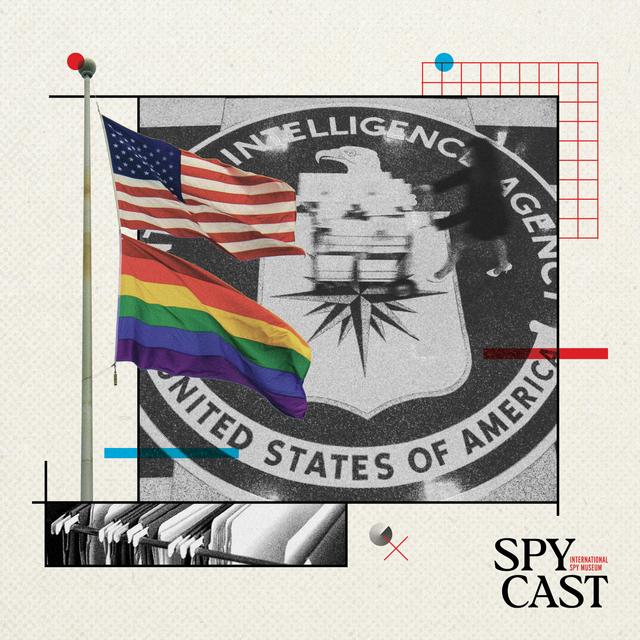
Welcome to SpyCast, the official podcast of the International Spy Museum. I'm your host, Sasha Ingber, and each week I take you into the shadows of espionage, intelligence, and covert operations across the globe. In the 1950s, parallel to Joseph McCarthy's Red Scare was the Lavender Scare. Panic over gay personnel in the federal government. Its perceived dangers led to the terminations and forced resignations of thousands. Fast forward to 1988.
a time when you could still be let go for being gay. Tracy Ballard, who worked at the CIA, headed in to take a polygraph. And then she did something that no one else ever had. She told her polygrapher, I'm a lesbian. She wasn't sure what would happen next, but Tracy became the first CIA employee to be openly gay. becoming a leader in the intelligence community's LGBTQ ranks. Tracy, what made you first want to be a part of the intelligence community?
It's an interesting question because I don't know that I set out to be part of the intelligence community. When I left high school, I joined the Army and ended up in the military intelligence field. When I got out of the service, I happened to be looking for a job. I saw an ad in the paper for the agency, and so I applied. Did you know it was for the agency? It did say it was for the agency, and I applied for that, thinking this, you know, one.
After being in the military intelligence field, I understood what it was, and I wanted to continue to contribute to know my country and national security. So I went ahead and applied for that position. Spent 35 years at the agency, loved every aspect of it. I had a hard time, struggled with them, and yet I loved what I did and what I accomplished, not just with Angle, but all the various jobs that I held. I felt that I contributed greatly to the organization.
Believed in its agency's mission, absolutely. Hook, line, and sinker. Drank the Kool-Aid. Now, if we're talking about the 80s, explain to me what it was like for gay intelligence officers if they were found out. You know, that...
Fear of being found out. You carried it with you as kind of a weight because if you were assumed to be or known to be part of the gay community, you could be fired. So you'd lose your job, you could lose your clearances. Once you lost your clearances, you would lose other opportunities. livelihood for your families. And so, you know, you carry that weight with you everywhere and you weren't as open as you could be with your fellow colleagues.
So you started self-censoring yourself. You self-selected out of conversations and opportunities because you weren't sure how it was going to go. That was all part of society, unfortunately. And because of the lavender scare, the environments within... in the intelligence community were quite oppressive.
And not just to the LGBT community, to anybody there, because if you felt like you needed to say something because you heard something you felt was inappropriate, whether it was a sexist comment or a comment. degrading anybody. Did you say anything? Maybe, maybe not. It wasn't just for our own community. It was for everyone there who could speak up and why and how that would affect their careers or would it affect their careers if they said anything.
And even a few decades later, that was still the case. That was still the case. Even after executive orders were signed stating that sexual orientation was no longer a reason to be denied access to classified information, that we could now be part of this intelligence community. It was just a piece of paper. It needed to be implemented. So there was a huge trust deficit in the intelligence communities. So people had to hide a certain part of themselves.
¶ A Groundbreaking Polygraph Confession
And what was it like for you in the moment where you decided to come out in the midst of having a polygraph? So I came out during my three-year trial period. polygraph. At that point, I had already recognized that the organization, how oppressive it could be. And I didn't want to carry that weight. I didn't want to not be who I was. Your self-worth and self-esteem are so important. And if you're hiding so much of who you are.
on an eight to 10 hour basis every day, it really takes a toll on you as a person. It's almost like living undercover. In a way it is because you're living a different... world you're living in a you're keeping stuff from people you're keeping stuff from yourself so it was very difficult but when i walked into that room i wasn't i was leaning towards coming out but i wasn't sure but as soon as i sat down i recognized that
I needed to do that, and I needed to do it for myself. It was so important for me to just be honest with myself and the agency. So what did you say to the polygrapher, and how did that person respond? When I walked in, you know, we introduced ourselves as we always do. I mean, this is already a very stressful moment. People are terrified of polygraphs. Yeah, everybody's scared. I mean, it's just a kind of a scary sensation to be, you know, be strapped into the...
the blood pressure and all of these things you're just nervous regardless whether you have anything in your background you think that should be hidden you're just nervous and she did my polygrapher asked me was there anything you know in particular i wanted to talk about And so right then and there is when I said, well, I just need you to know up front, I'm a lesbian. And so we then had a conversation about, well, you know, okay.
What does that mean? You're part of the gay community. You're in a relationship. These types of questions just to kind of get it out. And so we just had that conversation and she put me at ease. And so then when she went through her questions, I could easily answer the questions yes or no. Because that's all you can do in a polygraph is say yes or no. So it sounds like it was actually a collaborative process.
I believe for me in this case, the polygraph was a collaborative process because really they want to know that you have nothing in your background that can be used against you and considered blackmail. So it's like, well, if I come out, it cannot be used against me.
¶ The Grueling Security Review Process
And so then you got through the polygraph. I made it through that particular polygraph, and it was a few weeks later that I was called into a panel for special activities. panel to continue the security review. And that's where things got a lot more difficult. What happened? I had a panel. It was three gentlemen in the panel.
And they sit across from you and you're like, well, why am I called into this? And to me, they were asking inappropriate questions, more personal questions, kind of twisting the questions a little bit each time, changing them enough to hoping that maybe I would say something different. Regarding my family, my partner at the time, who else did I happen to know that might be part of the LGBT community? I felt that it was just...
very aggressive and inappropriate. And that must have been a really long feeling hour, hour and a half when they're asking you such personal questions in an aggressive way. Oh, absolutely. You just kind of... i don't know most people when they get nervous they you know tap their feet they're shaking their hands kind of like what i'm doing right now you're just like ah and that's kind of where you are and then the session ended
And I didn't hear from them for a few weeks. So every day I would go to work just going, okay, now what? And then there was another call, you know, a couple months later was like, come back in, we have another interview for you.
And because they had done further backgrounds, talking to neighbors as they do, it's part of the process. You already know that part of the process, but they went further and talked to more neighbors and had more questions. A couple months would go by and I wouldn't hear anything, but I had a case officer. And I would call this individual on a regular basis going, oh, okay, so what's going on? Because he just didn't know every day, was this my last day? Was I, was, you know.
Was I going to lose my job? And I'd call on a fairly regular basis, okay, to say, what's happening? Have they finished the process? Am I cleared to stay? And eventually... He let me know that my file was being shopped around within my centers, the building which I work, up into my management staff for them to provide approval whether or not I should remain employed there.
¶ Confronting the Chain of Command
And then you made a very unique choice to contact each members of this chain of command, all of these supervisors. Now, if you've never met them before. And you now have to have a sensitive conversation about your sexual orientation. How do you make that approach?
That was interesting because by then I was, well, most people know me as stubborn. So once you tell me I can't do something, I'm kind of probably going to dig my heels. And at this point, I felt like the process was set up to make me perhaps leave on my own. just get frustrated and leave. And I was like, no, this is not going to happen because I like my job. I'm good at what I'm doing. I'm adding value to this organization. So when I heard that, I was just like, you know what?
I just, I can't stand for this. So there was five manager levels above me. And I made an appointment with each one of those to say, hey, I thought you should at least... be introduced to the person or know the individual whose file is sitting on your desk. It was stressful because, you know, I didn't really know them more than except they're in my chain of command. And I had to go in and not talk about a particular business.
case if you will um or you know something to do with work i was like oh i need you to know that my name is tracy and i'm that file on your desk And I'm a real person. I'm a real person. And you should know this is what I contribute. Do you have any other questions for me?
So how did they respond? A couple of them were quite surprised and kind of taken aback. Wasn't sure because that wasn't the conversation they thought that they were going to have with me. A couple of them were. One of them in particular was very uncomfortable with the conversation.
Probably the first conversation he'd ever had with somebody coming out to him. But by the time I got up to the director's office, that one was a nerve-wracking one because it was the director. You're meeting the director of my particular center. But it was probably the easiest one. What made it the easiest? One, I had already gone through it four other times. And two is like the ease in which she put me at when we sat down. There was something in his mannerisms that really just...
put me at ease. And he didn't tell me what was going on or where he stood on the issue. But I could see that he was seeing me as a person, as an officer of the organization. And that made it a lot easier. When did you find out that... This was done. You were still in. Can you take me back to what that moment was like? You know, it was a pretty non-plus thing because, you know, my case officer called, let me know, okay.
You're through the process. In the way in which they said it, I couldn't even remember now, but there was nothing spectacular about it. There was nothing to go, yay, yay you. Even though you had basically been working two jobs here. So it was pretty nonplussed, but I do remember feeling quite relieved about that. But at the same time, it was one of those things where you came back to work and nothing really had changed. The environment in which we worked.
hadn't changed. Society and people around you hadn't changed. And so you just go, okay, I'm just going to put my head down, do my work. I don't want anybody to know because I didn't know how people would react.
¶ From Ostracization to Resource
Okay, so did word get out about you? Eventually word got out, as it does. It does get out. And, you know, I became ostracized at the building for a while. And what I mean by that is I used to walk, you know, people would chat with me in the hall as you're going from office to office or down to lunch and things like that. And that kind of ceased for a while.
People didn't want to actually be seen with me in those more casual environments. Again, the guilt by association, if you're seen with me, maybe... Maybe you're a lesbian, too. Maybe you're a lesbian, too. Not only some of the... People in the building that I happened to know that were part of the community stayed away, understandably, but some of my straight counterparts as well. And that was kind of shocking. But after a while, people started finding me to ask me questions.
What's it like to be out? How did you make it through the process? What would happen if I come out? So I became the resource for my other officers and colleagues. For the people who are coming forward to you, what have they been going through? Have they experienced any harassment or anything negative?
It depended on the officer, it depended on the facility, it depended on the part of the organization they were with. If you're thinking back in the late 80s and the early 90s, I mean, it could be hostile or just feel oppressive to so many groups of individuals. various demographics. As professional as we were, there was always somebody willing to make a comment that made everybody uncomfortable and feel completely unwelcome there.
And yet they stayed doing jobs that were stressful, demanding, life-threatening. They absolutely stayed because they believed in the organization's mission. They believed in serving their country. And they believed that they had value. They were adding value to that. In the mid-90s, I met this woman. She was about to retire after 30-some years. And she came out at her retirement because we had a conversation. To me, that was amazing. Yeah.
she told them she goes i'm a lesbian i'm in a relationship and she goes it was just this weight that i was able to walk out feeling really proud of myself, not only for what I had done for the organization, but now, you know, now they knew that there was somebody there that was typically seen as unwelcome or deviant or whatever. with the labels of society, but was actually supporting this organization in amazing ways.
When we come back, we hear the next chapter of Tracy's story and how advances in technology impacted the fate of the CIA's LGBTQ community. When did making plans get this complicated? It's time to streamline with WhatsApp, the secure messaging app that brings the whole group together. Use polls to settle dinner plans. Send event invites and pin messages so no one forgets mom's 60th. And never miss a meme or milestone. All protected with end-to-end encryption.
It's time for WhatsApp. Message privately with everyone. Learn more at WhatsApp.com. This episode is brought to you by White Claw Search. Nice choice hitting up this podcast. No surprises. You're all about diving into tastes everyone in the room can enjoy. Just like White Claw Surge. It's for celebrating those moments when connections have been made and the night's just begun. With bold flavor.
and 8% alcohol by volume? Unleash the night. Unleash White Claw Surge. Please drink responsibly. Hard Seltzer with flavors. 8% alcohol by volume. White Claw Seltzer Works. Chicago, Illinois. Running a business comes with a lot of what-ifs. But luckily, there's a simple answer to them. Shopify. It's the commerce platform behind millions of businesses, including Thrive Cosmetics and Momofuku. And it'll help you with everything you need.
From website design and marketing to boosting sales and expanding operations, Shopify can get the job done and make your dream a reality. Turn those what-ifs into... Sign up for your $1 per month trial at shopify.com slash special offer.
¶ Online Firestorm and Public Stand
So now we're in the mid-90s, and of course, technology has continued to evolve. And inside the CIA, at people's desks, they now have personal computers. How does that play into this? The computers allowed us to collaborate across the organization and across buildings. And that was the whole purpose of a number.
a number of different chat groups but they were on subject matters so there may be you know technology so we could share information and we could learn from it and we could you know solve the other issues that were going on from office to office so we could collaborate there was a there were a couple general chat rooms. It was in one of these particular general chat rooms.
that, you know, voices became amplified across the organization. And when the executive order 12968 came out, the Bill Clinton sign stating that sexual orientation was no longer a reason to deny someone access to classified information. That particular executive order created a firestorm on this one particular chat room. It allowed individuals who felt that it was wrong to have gay people in the organization.
a voice a voice across the organization some of them spoke anonymously as you could some actually signed their names to these comments and they just were horrific in such a way that we are continued to be an organization of professionals, subject matter experts. And here is somebody that was spouting such derogatory information about a subset of colleagues. And to realize when you go, oh.
that was joe who just said that they would never work with somebody who happened to be gay or and joe someone who would literally worked across the hall who could work across the hall for me or that we were deviant individuals What I didn't see was leadership on those conversations. So what I didn't see was management on there saying, you know, this is an inappropriate conversation. This is an inappropriate way to have this conversation. So what did you do?
I came out again, but this time I signed my name to my coming out. And I was not going to hide who I was just because it made them uncomfortable. And how did that go? Actually, there were a handful of people that were like, oh, I know Trace. And so there was some support in there. And there was others like, you don't belong here. And so then I ran upstairs to another colleague that I knew. And I said, hey.
you need to do this too. You need to come out on these boards. And I convinced her to come out on those boards too because to me it was time to go, you know what, we are here. And you need to know who we are. And we're probably sitting right next to you. We're probably supporting your analysis. We're probably working on the same project as you. And similar bravery that you showed during your polygraph to come out like that.
¶ Founding ANGLE, a Voice for Inclusion
What happened after that? I had been researching the agency's policies and regulations and collecting all the historic ones all the way up until 94, 95 when these new statements came out. And I took those and I took some of the information that I gathered from these boards and information that I gathered from other colleagues as I'd been talking to them over the years.
With two other individuals, we went to the Diversity Council and the EEO, and we're like, we would like to have a conversation. You're telling us we have a zero harassment policy, but this is not what we see. What can we do about it? And we got pushback. Managers had told us, you know, it's kind of the end of your career if you step up and you do this. Others were like, this is not a problem. We don't have gay people in the organization. It was fascinating.
But we did get a lot of pushback. And one of the colleagues ended up retiring, stepped away. It was just too much stress for her. The other one kind of stepped back a bit. kind of embedded herself back into her career. But I was like, no, no. I eventually realized I had a privilege because I was the one who was cleared. These other individuals had not gone through the extra step security process of coming out to security, but I was. I was like, so what are they going to do to me?
And so for me, I felt that that privilege that I held meant that I needed to stand up and be that voice for those who no longer had a voice. And so I kept showing up at meetings. at the Diversity Council, at EEO, at whatever manager I could go to and go, here's our draft. We want to be part of the Diversity Council. We want to be a resource group. We want a seat at the table. We want to have a conversation. And eventually, that's what formed Angle. Eventually, yes.
Maybe nine months to a year after that, we were officially sanctioned to be a resource group, and that was ANGLE. ANGLE stood for? The Agency Network of Gay, Lesbian, and Bisexual Employees and Allies. We wanted an acronym that could be pronounced. So ANGLE. But to us, we always included our bisexual transgender officers and our allies as well. But when you did that, it became so large of an acronym. So what did ANGLE do?
Engle was stood up to have a conversation with the organization, with management. It was stood up to work with them to implement the executive order. It was just an order. It didn't mean things were happening, right? You need people to implement an executive order. We wanted to ensure that it was being implemented so that agency officers who started coming out could remain employed with the organization.
Some people thought, oh, you're asking for special rights. It was, no, we just wanted to be treated equitably, that we had the same opportunities as everybody else. There was nothing special about it. If you had the opportunity to be your whole self, I should be able to be my whole self at work. So that was the initial reason to stand up. The other was just to...
Have one-on-one conversations with different portions of the organization at all levels. It's the one-on-one conversations that said, hey, we have a lot of similarities. We're here for the same thing. Why are you putting such an undue burden on certain segments of your population? And for officers who are operating overseas...
Some of them couldn't bring their partners with them. I remember interviewing someone who described how a person could bring their dog, but they couldn't bring their longtime boyfriend or girlfriend. Oh, absolutely. The inequities were affecting officers and whether or not they self-selected out of job opportunities and career choices. And there was a lot of self-selecting out because their families were not considered.
And the reason their families weren't considered in the same way is because marriage wasn't legal. Right. And the agency could not just unilaterally say, hey, we can offer these benefits to your spouse. your partner because the United States hadn't moved forward. And so that was a very difficult time for a lot of people to understand because the agency had made such amazing progress. The leadership was like, I get it. We need to treat everybody equitably because it's impossible.
It's imperative for our mission to have diversity. It's imperative for our mission to have our officers focused on the mission, on the problem at hand. So where is Angle now and where are its members?
¶ DEI's Disbandment and Lasting Impact
what angle and every resource group within the agency and all other. federal agencies have been disbanded. Unfortunately, the current administration doesn't believe that diversity, equity, and inclusion should be part of an organization's ethos. And so those organizations have been disbanded. Since January 20th, we have seen removal of DEI across the federal government. But did LGBTQ interests go too far at the agency?
Did it limit analysis or operations? No, not in any shape or form. I think there are some individuals who would like to say that to be. Fact. And they really believe it. And they do believe it. Did we go too far? No. I don't think there was anything that went too far. I think people believe that. But what Angle did, what the other organizations, resource groups did.
Blacks in government, the Native American councils, persons with disabilities, all of those, what they did was they just brought up inequities that were happening. And they showcased that we all had something to bring to the table. Our background helped the organization because we could look at every one of us could look at a problem.
from a different point of view. When your mission is around the world, you need to look and see and feel and understand other persons, other cultures, so that when you're gathering this information, you had a better analysis of it. And I met you a few years ago, and you and I had a conversation for Pride Month back at that time. And you told me, quote,
We always said that we were the best persons to go undercover because we lived it on a regular basis back then. There were instances where we could engage with those in the foreign field that perhaps were also in the LGBTQ community. that others weren't reaching out to. We had the ability to go in and speak to them in a way that others couldn't, where they could then trust us. I have always been in this firm belief that...
We all have something to offer. Yes. In some instances, there might be some instances where an LGBT officer could go in and perhaps in a country where being gay is a death sentence. could maybe go in and find a dissident or somebody who is willing to to work with us because they can speak their language they understand enough to go in and have conversations to get some build the trust
¶ Reflections, Apologies, and Legacy
So how are these policy changes hitting young intelligence officers? And I mean it as a comparison with the older intel officers who have seen some of these changes. From what I understand in a few of the conversations that I've had, it was a shock, the dismissal of the diversity inclusion offices. It was so quick to dismiss.
the LGBT community, particularly the trans community, it wasn't something that they had grown up with. And so what's happening is a lot of the... older generations are talking to the younger generations they're they're mentoring them they're giving them the support like we did in the old days you have support we're here
Did the CIA ever make amends or apologize to the ousted officers, whether it be from the lavender scare or in the decades before the 1995 executive order? I think what they have done... over the years, and this is really important, is they began to do the introspective that was required about if you say this is a family, if you say we have zero tolerance, if you say the diversity is so important.
You need to actually do the introspect of what have we done wrong? What can we do to improve it? How do we change our policies? How do we change our environment and our culture that actually represents who we are today? And they did that. We had leaders, we had directors and others in very important positions that began speaking out and saying,
These are my ethos, these are my values, and these are where we're going. And yes, I behaved badly at one point. We did have one manager do that. But I've seen that, and I've seen how it affected my employees, and now I know better. I'm curious to know what you would say to your polygrapher if she were listening to this.
Because that was the moment that really shifted the trajectory. It was. And I would probably, upon reflection and years of beginning to understand people and where they were, I would say, thank you. one of the first persons that saw me as a person and that, you know, being kind goes a long way. It took you really far. Yes, I think it did. I think being kind to people is the easiest thing that you can do. It's one of the most difficult sometimes, but it's the easiest thing that you can do. Yeah.
Is this the way that you want to be remembered or is this really a small part of your story that shouldn't be significant at all? My story, the work that I've done over the decades at the agency, I benefited from those who came before me. And I would like to think that others... have benefited greatly from the work that I have done and that I
have left it in great hands so that they can continue the work that's needed to create a society in which we all feel engaged and empowered and ourselves. But I'm just a small piece of that puzzle. I'm just one of the steps. Tracy, thank you so much for sitting down and sharing this. Really means so much. Thank you for having me. Thanks for listening to this episode of SpyCast.
If you like the episode, follow us on Apple, Spotify, or wherever you get your podcasts. And leave us a rating or review. It really helps. And if you have any feedback or you want to hear about a particular topic, you can reach us by email at spycast at spymuseum.org. I'm your host, Sasha Ingber, and the show is brought to you from Airwave Goat Rodeo. and the International Spy Museum in Washington, D.C. Take the next 30 seconds to invest in yourself. With Vanguard, breathe in.
Center your mind. Recognize the power you have to direct your financial future. Feel the freedom that comes with reaching your goals and building a life you love. Vanguard brings you this meditation because we invest where it matters most in you. Visit vanguard.com slash investing in you to learn more. All investing is subject to risk.