



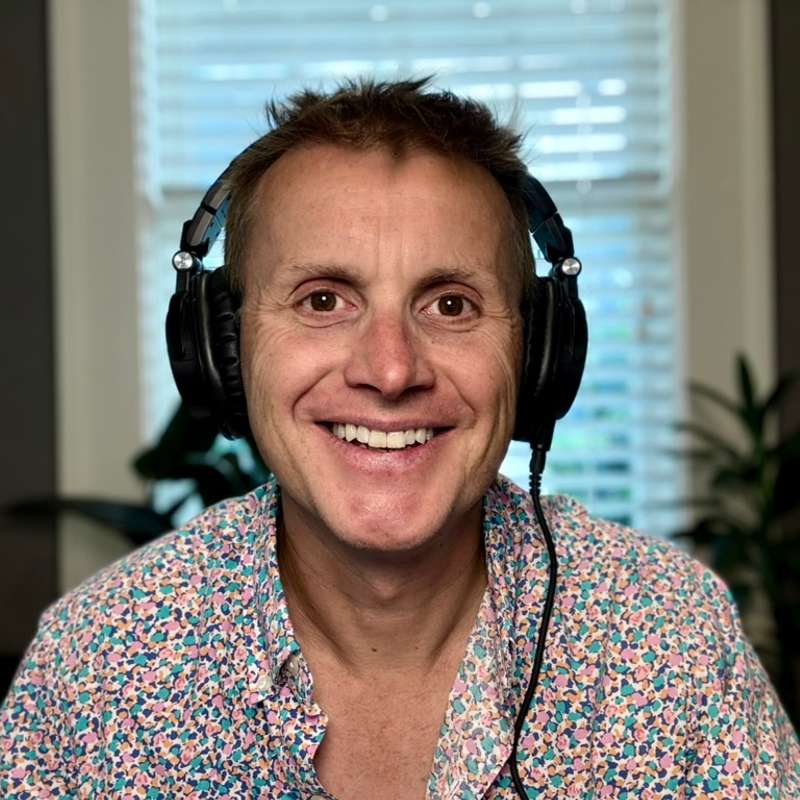
 Tony Sewell
Good day. Welcome to Space Insiders. I'm Tony Sewell.
 Rob Ruyak
And I'm Rob Ruyak.
Tony SewellAnd welcome to episode number two. How's it going, Rob?
Rob RuyakGreat, Tony. How are you doing? I really had fun last time. Was great.
Tony SewellYeah, it was good. I'm in detox. I'm in butter and patisserie detox after the family trip to Paris last week. How was Space Symposium?
Rob RuyakIt was really fun. It's always fun. The weather was really good this year. It was great to see some friends, great to see some people that you and I have known a long time in the industry. So yeah, I always look forward to it every year. It was fun.
Tony SewellAwesome. And we got a really interesting guest today, Jana Spruce. You want to tell us a little bit about Jana?
Rob RuyakYeah, I'm really excited about Jana actually. So I met her a couple years ago. She was a VP of spacecraft, which I thought was a really cool title. And I met her through another individual I know really well at Firefly. And it was at their ribbon cutting for a manufacturing facility outside of Austin for several of their launch vehicles and great person, incredible background, Collins Aerospace, worked on space suit technology and was one of the lead managers for the Blue Ghost Lander,
Tony Sewellwhich our
Rob Ruyakflight just successfully landed a couple months ago. Very excited about her. Now she's got her own consulting business. So she's focused a lot on her experience working at large companies and then startups. Wealth of experience, everything from engineering all the way to leading teams in that kind of environment. I'm really excited for us to talk to her.
Tony SewellYeah, awesome. I can't wait to meet her. So before we get to the interview, anything sort of stand out to you at Space Symposium last week?
Rob RuyakYeah, there's a lot. I think the first thing that you could really feel and you would hear from a lot of people was this rebalancing of The US defense priorities, right, on a global scale that we're all aware of. It's right in front of us in our face all the time, every day. And a lot of discussions this year was less about the aspiration of government being able to access commercial technologies and smaller companies specifically to actually really starting to do that. So for example, there were a few panels that included small satellite companies such as Hawkeye and Astronis that talked a little bit more about how they're actually trying to go after and support programs across both The US as well as international governments for national security and defense.
And so, there's a lot of discussion as always around AI, but there was also a lot more around quantum and robotics, which I thought was really interesting. So yeah, there was a lot of energy. There were a lot more people I thought would actually be there.
Tony SewellYeah, that's good.
Rob RuyakGiven the current climate. So yeah, it was a very interesting learning experience.
Tony SewellNice. I'm glad you mentioned Astronus because theirs was one of An announcement from them was one of a couple of stories that caught my eye that I wanted to talk about, and maybe we'll get a chance to pick Jenna's brain on this a little bit. There were two announcements. One, Rocket Lab announced the award of positions on two major US and UK DoD hypersonics programs. So this is another example of their, I guess, their transformation into a multifaceted aerospace business.
Their shares are up 13% on the announcement of that. And the other one was from Astranis. They're a relatively young private company specializing in geostationary satellites. They just won a $115,000,000 deal with Taiwan to deliver their first dedicated Ka band satellites. The reason I bring it up, because I think it's interesting that ten or fifteen years ago, these programs would have been going to Boeing or to Raytheon or Northrop Grumman or one of these types of companies.
And it's really interesting to see this almost kind of changing of the guard. Rocket Lab in particularly is interesting. New Zealand heritage company, they started in launch, that's a very small part of their business today. And we see, obviously, with the geopolitical situations in US policy retreat or challenges around trading with international companies this whole sovereignty thing, they're going to be in a really interesting position to capture these new space programmatic opportunities with, obviously they're winning business with The UK and US, but as other countries look at alternate sources to the big US companies. Know you've worked with a lot of these big guys before and you were formerly at Booze.
So interested in your thoughts on that.
Rob RuyakYeah. No, I'm glad you brought it up, Tony. Because yeah, and I saw Rocket Lab stock even yesterday was up like 10%. I think it's so great to see these commercial companies winning these contracts. Know, because again, like I was mentioning with Space Symposium in the previous years, there was a lot of conversation about how like we must figure out how to change and reform our procurement processes, regulations to actually access these types of companies.
But what's even more interesting is with Rocket Lab because they're not only winning contracts, but that you actually see their business pivot from a very focused business around launch, what was really core to what they do and they got really good at it and they are really good at it. Now they're trying to use some of those proven technologies and actually finding adjacencies to make other forms of to derive other forms of revenue, but in government. So this hypersonic program, and I recommend people that are listening to read more about these contracts and what Rocket Lab is actually doing now is they have something called HTCDF, the Hypersonic Technologies and Capability Development Framework. It is kind of, you could tell it's got a defense focused type of approach just by reading the acronym, they basically have taken their electron vehicle and they are not modifying it per se, but they're providing additive capabilities. So they have an integration layer for different payloads, which makes it more flexible to actually deliver very specific mission requirements and needs for defense national security customers.
And so, being able to take investment in their core product and how they make money and be able to enhance it for other types of applications is huge. And to be able to do that with a small company that is privately funded in an area like aerospace, which is very complex engineering tasks and not a lot of historical proven ways of doing that as a private company is really fun to kind of see. And the other thing I think that's really cool about it, Tony, is that they've won a UK contract around this. Because again, the, I think The US starting to rebalance their focus on defense a bit. And Europe is trying to see how they can put plans together to do a lot more reinvestment and just kind of core investment in their defense industrial base there.
Tony SewellAll right, cool. Well, the timing to talk to Jan is going to be really good. Someone that's been user at Boeing and Collins and also with Firefly and now consulting for herself. This should be a really good discussion. So how about we bring in Jana? All right, welcome back. And we're here today with Jana Spruce. Hi, Jana. How are you? Great to meet you.
Hey, thanks. Good to see you, Tony and Rob.
Rob RuyakHey, Jana.
Tony SewellAbsolutely. Rob was really kind to introduce us and we're really excited about the discussion today.
Yeah, thanks for having me.
Tony SewellSo before we get into things, I'd love just to hear just the sixty second story on your career, what you do, we can go from there.
Yeah, sure. I guess I'll start out with, I grew up in a family of engineers, so engineering was kind of the way to go. And as you know, being curious in my younger days, always was interested in how things work. And so space seemed to be the biggest challenge at that time. So I went into space industry, got aerospace engineering undergraduate degree and went to work on spacecraft.
And from there, started to be more interested in kind of the bigger picture of things and went to do startups and consulting from big company to that, which was an interesting change. And then went back and got my MBA from UCLA and then started to apply that really more towards program management, business strategy, business development. That's really where my focus is now, is helping companies both win more business and move faster.
Tony SewellThat's awesome. You've got a really interesting background. I mean, similar to me, of you got start in government and then sort of moved into, and sort of with the Naval Air Warfare Centre, and then ultimately in the last, one of the last key roles you had was as a VP at Firefly. What were some of the key moments that shaped the trajectory of your career?
Yeah, I think really it was inspiring to me early on to be exposed to such complex programs and real inspiring engineering feats, right, of what we're able to do both with aircraft systems, with some of the things that they test out at China Lake were pretty amazing to just be exposed to. I started out there in my high school. So we had a great program where my junior year, was going out after school. I worked out on base all summer. And then my senior year, spent the last half of the day was out at work.
And I was doing everything from helping with a funding office that was looking at some early, actually early AI and vision recognition systems, all the way through chasing lizards out of test cells in the propulsion lab. So a variety of fun things to do there, which was really, really got me sucked into the fun side of engineering and learning how things work. As I went on through my career, I found myself continuing to ask those questions like, how does this work? Why does it work that way? And that sort of led me into systems engineering.
And I think that that has really been sort of the overarching thing for me is understanding how a system works. Some people start out in their career and they dive deeper and deeper into something. For me, I really went sort of the reverse direction. It was like, why is this component designed this way? Well, there are requirements from the subsystem.
Why are those requirements on the subsystem? Because of the requirements of the system. Why are those requirements on the system? Well, you have a customer who has a business plan. And so when you get up to sort of that level, that's where I got really excited about seeing how those things play out and understanding what's important to my customer?
How do I help them bring value? What are their customers' needs? You can keep going through that path to really understand the why of the total solution. And then I think part of coming out of the MBA and working with bigger organizations and larger teams, you really start to understand that you throw people into the mix and now you've really got a complex system, right? Not just trying to design something like a spacecraft, but sometimes the people are the hardest part.
Rob RuyakYeah, I think what's really interesting, Jana, for attracted you to this was the complexity of all of the topics, right? All these different systems and systems of systems, but sometimes there's like a long it's a lot of delayed gratification, right? There's aspects of it, where you see it work, but there's other aspects where you might not see the final completed system over a very long period of time. So I guess where I'm kind of thinking, was there somebody or one particular icon or idol that you had that drove you to stick with it, it attracted you more and more to this and maybe even led you to think more about the business side of this?
Yeah, I think probably the biggest influence for me would be my dad. He really taught me the importance of appreciating everybody's input, everybody's contribution. And that's where you really start to see that complexity. You look at how important it is, even the small things, even as you're looking at your team, from a leadership perspective, everybody from the janitors to the marketing people to your first line engineers, everybody's got an important role to play and bringing that in, I think helps with that delayed gratification, because you start to see how important all those pieces are. And that sort of led me to one of the things that I've had a lot of fun really helping champion is what I call the super tech.
So that's that technician who's down on the floor, who's done everything, right? They've bent pipe, they can weld, they can mill, they can run a CNC machine, and those guys really know how to put things together. And they can be so valuable to a team, especially early in the process. There's a tendency, especially in a larger organization that has this very detailed process, that you wait till the end and then you show the final drawings to that technician. Sometimes your tech looks at it and goes, I can't build that.
So getting them involved early and seeing how the design can evolve and how you can learn from the design as you go, I think has been a fun
Tony SewellHow is that transition from big company like Collins really fast moving startup like Firefly. I mean, there's pros and cons with both. Online you've got resources, more resources than you can count, but on the other side, they're moving fast. I'm still thinking about that, watching the video from that Blue Ghost lander. My background is satcom and geospatial, so I'm really interested in the impact of space on the ground.
I'm not necessarily the space exploration guy, but when I saw that video, was riveted to that video. It was just so incredible to watch and it sent chills down my spine. So like, I mean, how was that experience, that sort of contrast between those two types of companies?
Rob RuyakSo Tony, you are interested in it. If it sent chills down your spine, you are interested
Tony Sewellin it. Well, yeah. Yeah.
Rob RuyakWell, I'm really interested in the fun part of space. So Tony is interested in the less fun part. I'm interested in the fun part.
Tony SewellI don't want to strap myself to a rocket and shoot myself into space. That's not one of I'm
Rob Ruyaknot saying I want
Tony Sewellto do that.
There's some unsexy parts of being an astronaut, will say. But as far as your question about big company versus small company, to me, I think a lot of it boils down to the incentives in a big company. The leadership incentives in a big company are to maintain control. You've got a large group of people and making sure they're all going in the right direction and nobody's violating any rules, nobody's screwing anything up that you should have known better. So they tend to be very interested in control and predictability and very low risk tolerance in a big company.
And the result of that tends to be that schedule is the only requirement that is flexible, which then rolls into cost and other things, right? When you start holding on too tight to everything. And so the challenge, I think, for folks who are in a bigger company like us to recognize what that environment is and as any good system engineer to be able to understand what's the real requirement. Because sometimes the real requirement is helping somebody in your leadership chain not see this as risky, rather than changing what you're doing. So being able to understand what's the real requirement and minimize those requirements as much as you can on your own projects so that you can continue to move fast even in that environment.
Then startups, smaller organizations have almost the opposite problem, right? They're crazy drive and need for results because sometimes maybe you won't get a paycheck if the results aren't there. So there's a unique drive there for speed and for action. But sometimes that lack of process can feel a little chaotic for folks. I think the trick there is to harness that drive, keep it going in the right direction, and just start to build some guardrails and processes along the way so that you're not slowing things down, you're keeping things flexible, but you're not reinventing the wheel every single time because that can also slow you down and be frustrating.
Rob RuyakYeah. So how the one thing that I was talking to Tony about before and you and I talked about this, Jan, I know I've met you a little while ago. When you're facing such a complex engineering task like Blue Ghost as we say before, maybe even the space suit technology developed at Collins. I mean, are things that you don't really have a long history of proven successes, right? How do you break something like that up into manageable parts, especially in a startup?
Because I think for me, just my gut tells me you're freer of process, you're freer of a lot of different constraints, but at the same time it's such a complicated task. You have to answer to other types of people, right? Like investors that are looking for quick return business models, where you have to generate revenue, which is very different than potentially a government program. So do you look at it differently than say you're building an autonomous vehicle where we see a lot of cars on the street, we know what they do, but a lander is very different. How do you look at it differently as an engineering task on something like a Blue Ghost?
I think the way you look at it is still very similar. There's a couple things that I've found is engineers, especially maybe your earlier engineers are a little bit nervous and they'll want to go do the easy things first. And that's really the wrong approach. The important thing is to really push your team to tackle the hardest things first. Go prototype it because you'll learn more from the hardware or the software itself, right?
Like, go run it a few times because that's where you'll fail a couple times, which is good to fail early and learn from it. Whereas I think what we've seen in some of the larger companies is they lay out this giant schedule and they have their milestones and then they break everything down into these two week chunks. And lo and behold, it takes all of two weeks get each of those things done. And everybody pushes off the hard part till the end. And then at the end of the two weeks, now you're tackling the hard part and forget it.
At that point, your schedule's just ruined. So getting people to be a little more flexible about scheduling, you still have to hold those hard review dates and those kinds of things, but give people a lot more flexibility in the beginning and push them to try those hard things first and give them a little space to maybe screw it up a couple of times, right? Because that's probably going to happen and you don't want that to be happening at the end of your design cycle. I
Tony Sewellmean, speaking of hard things, Rob and I used to work with a gentleman, Darryl Shook, who worked extensively with astronauts and you've been involved in advanced space suit technology. I think a lot of people probably don't have perspective on how challenging that sort of project is. It's not the sort of space suits we saw from the Blue Origin activity that everyone's talking about this week, different sort of space suit. But I'd love to And you sort of alluded to some of the unsexiness of being an astronaut. I'd love to just hear a couple of anecdotes from sort of your involvement in the space suit side of things.
Sure, yeah. I mean, that was one of the really fun parts of working this space suit program was we had a couple of astronauts there to sort of help and consult and some of the smart guys ever. But yeah, when the realization hits like, oh, you have to wear a diaper in a space suit. Maybe that doesn't sound quite as sexy and fun as I But there's just so many technical challenges with suits. Every choice you make has downstream impacts.
One of the things that I think a lot of people don't maybe appreciate about space suits is you have a pressurized suit, right? In order to keep your body together, you have to have pressure. So you pressurize the suit. Well, if you pressurize the suit to 14.7 PSI, you'd look like the Stay Puft Marshmallow Man. You be able to move at all.
So they want to reduce the pressure in the suit as much as you can get away with. So they actually operate suits around 4.8 or so PSI. Great. Well, when you're at 4.8 PSI, in order to have enough oxygen for your body to breathe and have access to, you have to have 100% oxygen inside that suit. And so now I hope all of your listeners who are electrical engineers are all cringing a little bit, right? Because now, do you want to put your electronics inside a
Tony Sewell% oxygen? With 100% oxygen.
Or do you want to them outside where they're exposed to the radiation?
Tony SewellOh my
gosh. The vacuum and the temperature swings. Just everything is between a hard choice and a really hard choice. So it made it really interesting to work with. There's just so many different aspects, even down to how do you choose to do redundancy, right?
I mean, you have a person's life in your hands, in your choices to design a space suit. And NASA's standard is really triple redundancy on things that are human rated. But do you really want to carry all your spare parts on your back when you're walking around in a strange environment with 1.6 gs and you're maybe more likely to fall over? So there's just a lot of those really hard choices that you don't run into in a lot of other industries.
Tony SewellYou've talked a lot about culture and sort of establishing that culture within companies and sort of integrating the different functions. And this is obviously a big part of what you do today. Can you explain how you assess company culture and how you implement culture in sort of in practice in what you do today?
Yeah, sure. There's a method that I've used for evaluating culture. And it's really helpful both when you're coming into a new culture. It's also very helpful if you're doing like an M and A type activity where you want to merge two groups together and trying to figure out where are the gaps, where are the big differences between those two groups. There's, it's so important too.
Culture really is the only competitive advantage that a company has, I think, because you can't copy it. You can't look up a patent and figure how they did it, right? It's so internal and hard to copy. But there's six different elements that I look at and evaluate for a culture. And they're really around, first of all, what's the employee orientation?
How does the company treat its employees? What things are said about employees? Types of You can look at what types of benefits or rewards or those kinds of things are there. The next thing is the customer orientation. I mean, we've probably all been places where people complain about the customers a Is it that type of a culture?
So much easier if we didn't have customers. Customers always right. Customers to deal with. How do we help the customer? So just looking and listening at what's their orientation towards our customer. And the next one is process, which I think is a little bit obvious. How rigorous are the processes? How detailed are the processes? How deep are the processes? Are they helpful?
Are they not? So really understanding how does their process orientation affect the culture. The next one is standards and accountability, and that's really how do you measure success? If you're in a startup, you might not have great data, right? Because you don't have the systems yet to collect good data, whether it's financial or process or otherwise.
And so how do you do accountability then? What things are people accountable for? Looking at what kinds of activities or behaviors get people promoted and what kinds of things get people fired or pushed aside. Those are important things to look at. The next thing that I look at is innovation. How quickly can new ideas be implemented? Are they welcomed? Are they shunned? And then the last thing is vision. You know, is there a clear vision for the company?
There's, I believe it's, there's one of the fast food places that they say like, oh, people here bleed ketchup, right? Like that's, if there are things like that in your culture that really say, How well does it stick? How important is that culture? Is it positive? Is it negative in each of those areas?
Rob RuyakSo do you have any advice, Jana, after all this experience? And I know now that you're doing more and more consulting for companies, whether it's large or small. Do you have any advice for people that work in organizations around how they can actually influence some of the culture, right? It's really difficult. I think at times, maybe even if you work at a small company and you have a particular, let's say, a principle around how you actually come to a conclusion or make an agreement on a particular decision.
What kind of advice do you give people in just kind of influencing the culture where they are once they're One
team that I was on, we did something that I think worked really well. We had a small team. We had them kind of separated because we wanted to follow a little bit different rules with that group than maybe the rest of the company was allowed to do. But we started coming up with kind of some little mantras and we would then just print them out and put them up on the wall and then we would reference them pretty regularly. So things like more accurate isn't always better.
So in trying to get that team to move fast, to make sure there wasn't analysis paralysis, people would say, well, I want to do just a little bit more. And we'd point at the wall and we're like, Nope, more accurate isn't always better. Let's just try something. Go make a part. That was one of the other ones we put on the wall was make and break the hardest part first.
So really encouraging our engineers to prototype things early and to prototype the hard things early. So I think that finding those little things, turning them into a mantra or a saying, you know you've done a good job of that when you start hearing other people on the team and maybe even people outside the team say those little phrases. But giving people that little succinct reminder and put words to it to help it.
Rob RuyakThat's really good. As an engineer, it's really difficult to make that transition from I think as an engineer, you want to have all the data, and then you wanna make a decision based on all the data. And I remember when I first started as a software engineer and I transitioned to consulting, I went from writing code to writing PowerPoint decks. And I remember I was in a foreign country, first of all, so the culture was a challenge. But I struggled a lot in making recommendations for the client because I just could not get access to all the data.
And I'll never forget it. There was a partner on the team and he said he used an expletive, but he said which I will repeat. But he said, Rob, you just need to make a decision. Like they pay us to figure out based on the data they have, based on the data that you may be able to gather to be able to come up with a hypothesis, prove, disprove it, but put a stake in the ground and never look back. And I think it's really hard, especially in the engineering environment to establish a culture where you're especially in the areas that you've been in, where again, there isn't a lot of there are very few proven lunar landings.
So being able to make decisions along the way, iterate, do the best you can and keep moving that process forward has got to be pretty challenging. Think I've been betting that kind of mantra within the culture of that you're never gonna have all the data, but we need to move towards the goal is a critical one. So that's very interesting.
Tony SewellYeah, one thing I was just gonna add too, and I thought it was interesting, I think being able to easily articulate the culture is really important. I think Rob and I have experience of being in Amazon and everything is anchored around leadership principles. And they're very easy to understand and repeat. So I think being able to actually have principles that are used and not just something that's in a little glossy on a nice web page that you just put there just for window dressing but something that anchors people around sort of common ideas.
Yeah, I think you're right. Think that the trick is to take those principles and make them actionable, right? What does that look like in the organization? Can you evaluate people on those principles? Everybody puts them up on a poster on the wall, but can you make it more real? Can you reference those in your all hands meetings? Can you really push that to be throughout the culture? That's key.
Rob RuyakSo, Jana, other thing we want to talk a little bit about is what are any emerging trends in the industry right now that most excites you? And on that topic, because I think that the other exciting part of this industry, there's a lot of young people now I think that are looking for engineering schools so that they can actually then pursue a career in this industry. It's very exciting. So what excites you the most? And also what would you recommend to young people that are in school today or looking to go to school, graduating from school that want a career in this area?
Yeah, great question, Rob. I know like this, the canned answer is like AI or something like that, right? But I think for me, the thing that I'm most excited about is I feel like we're coming, what I hope is the end of what I call the bureaucratic age, right? So many, especially of our big companies and our government agencies have just gotten so dependent on processes and paperwork and things that don't necessarily add value, that don't help you move fast. I think there's been a lot of pushback.
You see it more clearly in our industry, but I think across the board, there's going to continue to be pushback on that. Things shouldn't take as long as they usually do. And I think that's exciting for folks who are maybe just coming out of school. So my advice to them would be twofold. Number one, go make and break things, right?
Somebody who's had that hands on experience, who's got a little bit of grit, you can tell a story about how they thought this was going to work and how it really played out and how they figured out what the problem was and fixed it and did some iterations. I think that's really valuable experience and valuable to be able to articulate in interviews, all of that. The other thing that I would highlight that I think is I see some of the most interesting engineers come with a very different background. Like, okay, yeah, maybe somebody's done robotics or coding. Okay, that's all pretty generic.
But the guy who did theater and designed sets and has a great eye for graphic arts, that's a really valuable person in your organization. And so I think even folks who are looking to go into engineering or the hard sciences, develop some outside capabilities in art, in music, in storytelling, those kinds of things all become important. I write a lot of proposals and so you have to be able to tell the story, right? If you're getting up and presenting your information, right? Everybody's a little bit of a salesman at some point, right?
Because you have to get up in front of a room of your peers maybe, and maybe even some of your superiors and be able to sell your design, right? Explain why that's the right choice.
Tony SewellThat's a really good, actually, that's a really good observation because I've been a little bit, I think like STEM has become STEAM in schools now because I got kids in elementary and I was like, why have they added the A? I mean, that's a really good point. I think that's a good example
of I like STEAM if they clarify the A as a way to influence, right? It's not off by itself, but-
Tony SewellYeah, not just a
catch true. That's how you make it all more valuable, right? Now we're back to the complex system, right, of how all those things interplay.
Rob RuyakYeah. Speaking of which, remember, I think it was maybe a year ago, Jana. I think your marketing team at Firefly posted posted a story about your master welder for the launch vehicles. And I was like, that's so cool. Like you're highlighting someone that you really wouldn't you just think of the aerospace you just think of the engineers, like the aerospace engineers, people with very specific expertise in propulsion or whatever that might be.
But there was a whole story on this individual who was a master welder and how important his role was in the whole manufacturing process. It was really interesting.
Yeah. There's some magic to that, right? Yeah. His was great. We had another one that profiled the person who does all of our thermal blankets, right?
It's sewing, right? And it's funny because you go into the thermal blanket shop at an aerospace company, most people don't expect to see sewing machines. It's kind of cool to see some of that crossover, but a lot of things in aerospace, especially when you're building spacecraft or space suits, those sort of one off types of things, a lot of it is a little bit arts and crafts, right? Somebody who's good with their hands and just knows how to make something work.
Rob RuyakSo we've established that STEAM is better than STEM. Right here.
Tony SewellYeah. I like it. I understand. I've learned something today. That's really good.
That's great. Perspective.
Rob RuyakThat's good. Okay. Well, we like to end this segment usually with a fun question, something that tries to help everyone understand you a little bit more as a person, and hopefully this will. So the question for you, Jana, is if there was one person that you would prefer to travel with through space, who would that be?
I'm gonna I'm gonna have to say my husband. Oh, Katy Perry. Because what's that?
Tony SewellNo. Katy Perry.
Not Katy Perry. No. He screams too loud when you're coming back down. I'd have to say my husband. He's also an engineer, had some experience in aerospace throughout the years. But he's my rock, right? He's my number one. So would have to be him. I couldn't go without him.
Tony SewellThat's awesome.
Besides he might be a baby.
Rob RuyakThat Oh, that's even better, right? Something goes wrong, have someone to help you out.
Yeah, he might actually be able to fly the thing. That's a
Rob Ruyakgood thing to take with That's also a good answer. It's usually a pretty good answer to have your spouse as part of that. Yes. Tony, who would you have?
Tony SewellOh gosh. Probably not my wife. That's not a negative.
Rob RuyakDon't know if she's
Tony Sewellgoing to listen to
Rob Ruyakthis podcast.
Tony SewellYeah, don't know. Thanks for asking me that. I don't haven't even thought about who I'd go to space with.
Rob RuyakI I'll tell you one thing. I know a lot of people all sit on a one way mission
Tony Sewellout in the space.
Rob RuyakYeah. Alone.
It's gotta be somebody you're willing to wear a diaper with, I think. Right? So
Rob RuyakOh my lord.
Tony SewellThat adds another dimension.
Rob RuyakWell, I forgot to add as part of the question that a person could be alive or deceased. And so I think mine would be my grandfather who's behind me in this picture here. He was a phenomenal person. He passed away a while ago, but he and I, we have a lot of things in common. But one of the things we don't have in common that I really admired him for was that he was a pilot in World War II.
And he actually owned a open cockpit biplane that he flew for, I think twenty five, thirty years until he was about 76 years old. And so he was very, very cool. And I think having him, A, he would probably be able to figure out to fly whatever spacecraft we're in, but he also had this infectious laugh and love for life. So I think he would always be just a very exciting person to be with on a long, like a very long trip. So that would be mine.
Tony SewellRob, I'm gonna kill you for asking that question of me. I'm in so much trouble.
Rob RuyakIt's okay.
Tony SewellLiz was telling me how she was subscribed to the podcast this morning too.
Rob RuyakThere's an editing feature on this, Tony. It could just work and work and don't worry about it.
Tony SewellWell, Janet, thanks so much for joining us. This was really interesting. I love a good framework too, so I really enjoyed your perspective on sort of how you assess culture as well. If our listeners wanna get in touch with you, how can they contact you?
Probably the best way is find me on LinkedIn.
Tony SewellOkay. Do you know your handle off the top of your head or they can just search Janice Bruce, anyone
can Yeah, there aren't very many.
Tony SewellThat's right. We'll include a link to your LinkedIn profile in the show notes. Anyway, for our listeners, thanks for joining us. Number two in the books. Hopefully we've got some more listeners now than we did last week.
You can follow us on Apple, Spotify and Amazon Music. So make sure you follow and leave a review too. That would be awesome. Our YouTube channel is also now live if you want to see our smiling faces instead of just listening to us. And you can also find us on LinkedIn at the Space Insider Show.
And if you've got any questions or if you'd like to hear some particular topics or things that you want Rob and I to talk to at the top of the show, please send those to us. This was great. Thanks, Jana. This is awesome.
Yeah. Thank you, It
Tony Sewellwas an honor.
Rob RuyakRight. Great to see you. Thank you so much, Jana.
Tony SewellAnytime. Take care, We'll see you next week.
Rob RuyakBye bye.