



¶ The Journey of Rivada: From Communications to Space
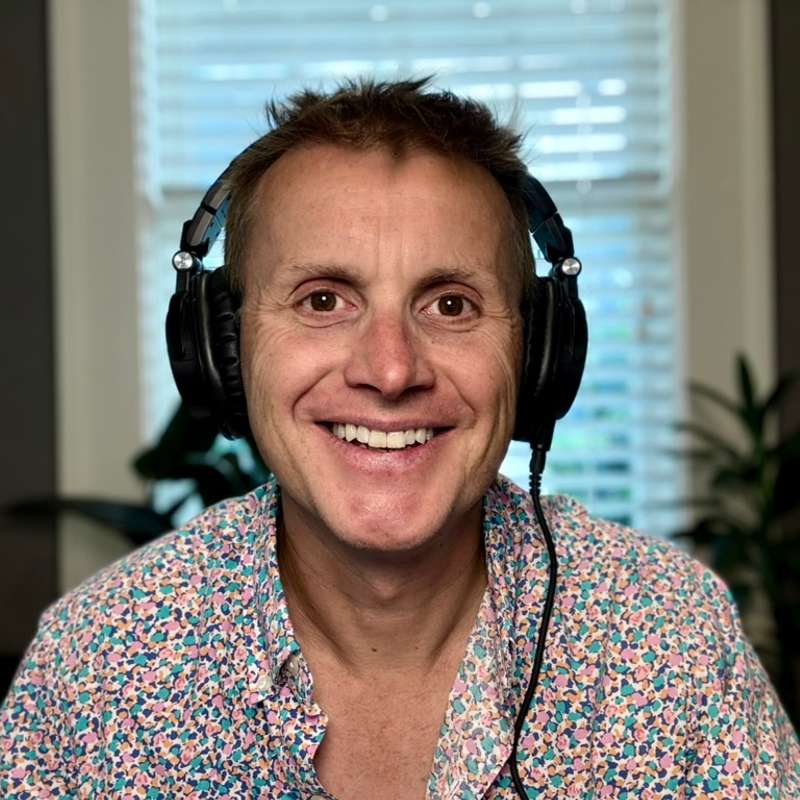 Tony Sewell
Welcome to Space Insiders. My name is Tony Sewell, and as usual, here with my partner in cry, Rob Ryriak. How are going, Rob?
 Rob Ruyak
Great, Tony. Good to see you again.
Tony SewellYeah. You too. Man, it's been a busy couple of weeks. I don't know what time time it is. I've been in hotel rooms and planes. We actually recorded this interview when I was in a hotel in in Sydney of all places. So but it was a good one.
Rob RuyakWas it good to be back?
Tony SewellYeah. It is good to be back. But just in time for Father's Day.
Rob RuyakSo Yeah. That's good.
Tony SewellYou know,
I used
Tony Sewellto spend some time with the family this weekend.
Rob RuyakYeah. It's good.
Tony SewellAnd what about you? What have you been up to this week?
Rob RuyakOh, this week was busy. We have we had our AWS public sector. Well, they call it the DC Summit now. So it was always, you know, always busy meeting with customers and and learning and and and also trying to see a lot of our colleagues that we work with. So it was really good.
If people have never been, it's it's in DC every year this time of year around June, you know, mid June, early June. Just a just a great time to come and and and learn about, you know, different defense technologies and and different software technologies all trying to stitch themselves together to, you know, to serve a bigger purpose. And in DC, it's great because, you know, it's mostly defense national security type
customers.
Rob RuyakSo it was good. It was super crowded. So it was good to see all those people.
Tony SewellYeah. I was seeing a seeing a a few of the stories on the social. So no. That's cool. That's a big that's a big show. So we've got a great interview today. We we've all we've as I said, we recorded it last week. We're meeting this week with Francis O'Flaherty. He is the managing director of Revada's space. So Francis has been with Revada since the start.
I think it will about sort of twenty years. So it was a really, really interest interesting and entertaining discussion. So I think people are really gonna enjoy this one.
Yeah. He's he's a nice guy, and and I just love that accent. It's great.
Tony SewellYeah. He's he's a lot of he's a lot of fun. He he's based in Atlanta, so we get to hang out a bit. So this was a Yeah. This is a a fun one. Before we get to that, just wanted to cover off on one of the news stories that just popped up in the last couple of days that I thought it was kinda interesting on, and you know a little about a bit about these guys. So Voyager Space, their IPO went public, I think, yesterday or the yesterday, the twelfth. Yep. Mhmm. And it was pretty I mean, it was a
pretty spectacular one, I think, in terms like, initially, the retail share price doubled at the at the release. It's pulled back a little bit, but still well above their their offering price IPO valuation of 3,800,000,000, which is pretty amazing for a a company that that that I mean, they they very clearly build themselves as a as a defense and and national security space company. But I I know you know a little bit about this. I just came to get your your insights, Rob.
Rob RuyakThis is this company is cool because personally have an interest in the intersection of investment and the space domain various technologies, whether it's hardware or software. So it's interesting to see how these we talked about this before with some venture capital firms investing in smaller startups, but this one's really interesting. There's another company, Redwire. It's kind of a I I don't wanna claim it's the same, but it's a similar kind of model where Voyage has started off as a holding company wanting to, roll up and pull together complementary technologies in the market around space like space suppliers, defense suppliers. And it's been interesting to see them kind of mature into or or start to gain a lot of focus specifically around how all of those assets can be pulled together for very specific missions.
And they talk a little bit about that if you read their, IPO prospectus, which I recommend because it's kind of fun to read about all the things that they do. But they started with that. I think they bought like seven different companies, companies such as Space Micro and Nanoracks, is what a lot of people in this industry may have
heard
Rob Ruyakof. Then a company called Altius Pioneer. There's like seven of them that I think they've acquired over time. In the prospectus, they talk about not only the fact that they want to continue doing M and A, but they're really organized around three major focus areas where they do want to do more of those acquisitions and then focus on selling to defense and national security customers, both as a which I thought I also thought was interesting, both they called out as a prime as well as a merchant supplier or a or a sub to a lot of those primes. So very flexible, I think, strategy, but yet focused.
The focus is on, they call out defense and national security, space solutions, and Starlab space stations.
Tony SewellAnd
Rob Ruyakformal I looked on their website this morning, actually. They they now have these formalized verticals with a president or lead for each.
Tony SewellSaw that.
Rob RuyakYeah. Which is which is pretty interesting. But like you said, you know, they raised, I think it was, like, a $380,000,000, I think. Right? And they said that they wanna use it for, quote, unquote, strategic projects, mostly in defense and space.
And they do call it Golden Dome, but I think in an interview through one of the press releases, they mentioned specifically that that's not the specific reason, but they did call it out. So, you know, I think a lot of people in the industry that are wondering what Golden Dome's gonna look like Yeah. And how commercial space is gonna fit into it. This is a great example right here. Yeah. Clearly, it's it's a focus.
Tony SewellI mean, I you I mean, just the the, Obviously, market activity on the IPO just shows people are thinking about the intersection of space and defense, and then you look at what's going on in The Middle East overnight. It's going be interesting just to see how these national security companies perform and how the market starts thinking about it. It's definitely had a big impact. I mean, the political situation has definitely had a big impact on defense and space companies in Europe. We've talked about that before.
So it's another data point there.
Rob RuyakDid you happen to read about Elon's tweet about the space station the other day? Think
Tony Sewellyou got it yesterday. I didn't see that one. I can't give up.
Rob RuyakWell, I wanna bring it up here because it's it's it's it was so it couldn't have been, like, more timely, but also somewhat of a sad purpose or reason for it. Know, Acxiom, another commercial space station company, has had to indefinitely delay their AX four private astronaut mission.
Tony SewellOh, really?
Rob RuyakYeah. NASA came out and said, I think it was yesterday, said that they're going to yeah. They're gonna indefinitely halt all private astronaut missions because there's a there's this leak
Tony Sewellagainst in the Russian module.
Rob RuyakI did read that. Yeah. Yeah. So, Elin Elin, Elin, posted that, yep. Now is the time. We gotta escalate. Not escalate. Accelerate the decommissioning of the space station, and he was he's calling for two years. Now for those that don't know, SpaceX is the awardee for this for for designing space yeah. For designing the spacecraft to deorbit the station. How convenient. Which is supposed to be by twenty thirties, but still, it's not that far away.
It's not far away.
Rob RuyakNo. So, I don't know. You know, a company like this that, you know, acquired, Nanorex, and there's kind of now they they they have a joint venture with Airbus, and I think it's NBA Space and Mitsubishi. There it's gonna be that's great for these guys, you know Yeah. For sure.
You know, to to, potentially move up maybe even move up. We'll have to see what NASA does, but move up some of that funding through the, what they call, the Commercial Lead Destination Program, which will be that next generation space station. So I don't know. It's it's it's gonna be fun to watch what happens.
Tony SewellYeah. For sure. Alright. Well, I think let's get to the interview with Francis. He said I think this is a this is a it was a really fun discussion, and I think people are gonna enjoy it. So we'll see you in a minute.
Rob RuyakYep. Let's get after it.
Tony SewellWelcome back to the show, and welcome, Francis. Hey, guys. Good to see you again.
Yeah. Great to see you, Tony. Good to see you again, Rob. Been too long.
Rob RuyakFrancis. Yeah. Great to see you again. Thanks for doing this.
Appreciate it. Thanks for having me.
Tony SewellYeah. You guys, you guys are doing some really cool stuff. So, we thought this would be a great, be great to learn about learn a little bit more about you and and and what you're doing at Revada. So before we get into the mission, I mean, so you've been at Revada, I think, since the start. And you didn't start off as a space company and you didn't sort of come from the space industry yourself.
So I'd just love to hear a little bit about sort of your journey with Revada and and now leading leading their their space business.
Sure. Well, it's it's funny. I've been with Revada for twenty years now. It's twenty years when we started the company, and just a little bit of background before that, I was always in comms and high-tech. Started out my career with McKinsey, actually in Australia, of all places, and then joined the Accenture Strategy team out of London.
And then got involved in some e commerce projects with Revada, ostensibly. And we started a project that was focused on delivering emergency communication solutions to initially federal and state and local agencies in The US. But interestingly, back then, the network that we built was a private network for first responders in the immediate aftermath of Hurricane Katrina. We stood up a bunch of systems down there. Because all the cellular networks were either compromised or completely inoperable.
We relied like everybody else in those situations on satellites. So our private networks use satellite backhaul, the old GEO systems. So interestingly, twenty years later, here we are full circle, essentially building private networks again over satellite. But this time, satellite is the main course rather than the appetizer or the side dish. So yeah, we got involved basically in this project through building public safety networks and federal agency networks, where it became very clear that they needed something a lot more secure than what was being deployed in the commercial arena.
And we had a number of experiences in Latin America that led us to believe there was something really interesting to be done with LEO especially, and with satellite in general. And we started looking at a project out of Germany and Liechtenstein in 2020. We got involved in 2021. And the thing that really made this so compelling for us was that the network was architected from the very instance with security in mind. And what that meant back then was we would try and mitigate as many risks as possible and avoid any of the legacy vulnerabilities, if you like.
And one of the big things that we saw and that the engineers back in the day before I was involved, to their credit, identified was that ruling out or taking out ground stations out of the network really removed a vulnerability and an attack vector that made the networks much more secure. From day one, this network was only ever designed for enterprise and government customers. And as a result, there's a lot of thought that's gone into the security of the network, the resiliency of the network, the sovereignty of the data, etcetera, etcetera. And that's the thing that got us really interested and excited. We started building a business around that.
And as you guys know better than anybody, it's a risky proposition. It's very challenging. It's very exciting. And here we are four years later with a lot of progress made, a lot of challenges still to overcome, but on the cusp, hopefully, of launching what will be a very secure and what we believe is a really needed capability, not just for government customers, but also for high value enterprise customers. So that's our focus.
We're only enterprise and government. It's not a consumer play. It's not a direct to device play. And it's for a niche market within that LEO environment, if you like. But it's yeah. It's an exciting proposition.
¶ Security and Sovereignty in Satellite Communications
Tony SewellIt's pretty amazing, like, with you sort of getting close to launching your satellites and you talk about the security and the sovereignty aspect. I mean, it's kind of prescient given sort of where we are today, like geopolitically. There's there's so much attention to to data sovereignty and and national capability. So, I mean, it seems like a like you guys, whether you did it by accident or on purpose, I mean, you you've really kinda found the met the moment, I think, with this capability.
Yeah. And look, there's obviously Starlink and, to a lesser extent, Kuiper gets all the headlines. But we always get the question, Well, how are you different? But from our perspective, even though they could be viewed as a competitor for us, they've been phenomenal because, one, just given the nature of their owner and the amount of press it gets, it's shone a spotlight on this sector and on this market that otherwise may not have been the case. And secondly, just what happened in Ukraine really proved the need for these type of capabilities and this type of service.
So timing was fortuitous. And then what we're seeing in the last six months, given this new administration and what's happening from a geopolitical perspective, everything is in play. And we have been getting a lot of calls from sovereigns, in the last six to twelve months, who realize they need this type of capability. Again, what we're offering isn't for everybody. It's a premium service, but it's certainly resonating right now.
You're absolutely right, given where we are geopolitically, I think there's a realization that pretty much every sovereign needs access to this type of capability and needs it locked down. So from that perspective, it's been the timing hasn't been the worst, put it that way.
Rob RuyakYeah. So Francis, for those that are not familiar, when you talk about Sovereign and you talk about, I guess, Ukraine as an example, what is it about the architecture you guys are providing, that supports those specific requirements? Really kind of what are they just for those that are really unfamiliar with this particular market and technology?
Sure. So the big difference between us and the other LEO providers, and indeed some of the other satellite providers, is that we don't look to offload traffic to a gateway or a ground station ever, actually. So it's a direct point to point network if that's what the customer wants. Now, if they want a ground station somewhere, we can obviously accommodate that. But really, the compelling factor and what makes us different is, as opposed to the others, is that we keep that traffic, all of the customers' traffic, essentially on their private network in space.
It goes from satellite to satellite, and from their connection at wherever they're originating that traffic, whether it's The easiest use case to put this in context, always use is a country's Department of Foreign Affairs, and they want to have a secure network connection to each of their embassies around the globe. This gives them that capability without what would otherwise be some pretty complicated challenges that they would have to overcome. And let me elaborate on that a little bit. So most of the satellite networks that are out there will look to offload traffic to the ground network as soon as they can. And that's true of all of them.
And then it gets transported over what's an extremely well trodden path in terms of coverage. There's fiber that connects pretty much certainly all of the big metropolitan areas and most of the world's surface at this stage. However, it's owned and controlled by various different jurisdictions, private entities, companies, and it's a hodgepodge of various ownership globally. And you don't always have control or full visibility to what the routing of that network might look like. And we simply take that out of the equation.
So for a very security conscious customer, they don't even have to worry about where the traffic is being routed. They have full control. And in one of the projects we're doing with one of the countries we're working with, with their military, they have full control over the routing capability of the data on their network. We don't see it, we don't touch it. They determine what path it goes, and this is all in space.
The other unique thing about what we're doing is that it is truly polar network. We're at 89 degrees, which means we have a lot of capability, a lot of capacity over the poles. And given that that is such an important strategic asset, especially for governments, It's a unique differentiator, and again, one we're seeing a lot of interest in, and it's resonating particularly well with sovereigns. So I would say that's kind of the main difference on what we're doing. The other thing, and I mentioned this at the start of the conversation, is that we're only focusing on government and enterprise.
We don't have the distraction of looking at consumer markets or direct to device or anything like that. It is a pure government and enterprise customer play, and always will be because it's a limited network. We don't have anywhere near the number of satellites that some of the bigger players have. We're not planning to have. So it is a finite resource in terms of the capacity that we will have on offer. But yeah, there seems to be a lot of demand out there, put it that way.
Tony SewellYou made a comment earlier. I thought it was good, like how, like, space is not the appetizer anymore. It's the entree. But, like, for a for a for any company, like, launching a a a constellation like this is a is a massive undertaking. Technically, financially.
I mean, before I joined, Amazon five years ago, I was with OneWeb, and they were, I mean, they had a serious financial backing, and and, unfortunately, I mean, they kinda hit the wall with COVID. But, like, can you the capital requirements to do something like this are massive, and and until you're global, you you really you really don't have a a strong proposition. Like, can you tell us just give us a few insights into, like, the the, like, the whole funding project and how you approach that because it's yeah. People would really be
¶ Funding the Future: Financial Insights into Satellite Projects
happy to hear And look, there are big numbers. There's no question about that. But don't forget what you're building is a global capability. It's a global network. And to put it into context, anytime you see a cellular market issue licenses, for example, four gs, five gs, they sell in each jurisdiction for hundreds of millions, if not billions of dollars for one country.
And then you've got the capital outlay of building that network. So I'm reminded of the four gs licenses. Was it three gs or four gs? Three gs licenses actually, when they auctioned off in The UK. The licenses alone sold for 20,000,000,000.
You know, crazy amounts, that's in one country. And that's before you put a shovel in the ground and you start building a site. The numbers for space are large, you know, they're in the billions. This project is a multi billion dollar project. But in comparison to some of the investment that's gone into the cellular world, it's actually comparable.
The capability you get, I would say, is far more advanced. So it's from that background, if you like, where we've spent a lot of time in various countries planning cellular networks, and we know the investment that's required there, where you have multiple operators building the same thing. This isn't that big a leap. And you're getting global capability with some really, really cool characteristics and solution sets. But you're right, it's challenging. There's only a limited number. The
Tony Sewellanalogy to sort of what you're experiencing in telco, though, and wireless networks is really interesting. I haven't sort of heard it talked about that way before, so and that's obviously you brought that core capability.
Yeah. And look, essentially what we're building is a network in in in the sky. It's essentially lifting that fiber network and making it much more secure by locating it and, you know, effectively cell sites in space. Now, they're all laser connected, obviously. There's differences.
But it's more or less the same thing. It removes a lot of the security vulnerabilities that you have on the ground by replacing them in It makes it much more complicated, and we are benefiting from some of the lessons that were learned from OneWeb that you referred to. We've got some fantastic people who came out of OneWeb, including some of the senior engineers. They weren't as lucky with timing as maybe we were or we are. But in comparison to the cost of building a land based cellular network, it's actually not different.
If anything, it's probably a little bit cheaper. And you get global coverage and it's space, it's cool. But having said that, it is risky. I think you'll know better than anybody the history of satellite companies, and it's not stellar in terms of their financial performance by any stage, by any measure. But we're in the middle of that process right now.
We have a lot of interest from both government investors, from strategics, and then from financial investors as well. So hoping to close that in the next probably three months and then get this thing into space. So it's very exciting.
Rob RuyakSo, Francis, you you mentioned government. Like, how hard has it been to try to sell to government? And what's been the process to for doing so, especially as you're building the capability right now?
¶ Navigating Government Sales and Geopolitical Challenges
Yeah. It's been mixed, I would say. There's been a reliance in Europe on some of the old guards, and I think there's a realization, an increasing realization, that it's just they're not going to get the job done, not in the timeframes that they want to or need to or within the budget. Everybody is familiar with the challenges that Iris Squared is having at the moment, and trying to get consensus from two dozen European countries on what the priorities should be and where the investment should go is always going to be daunting. That's been a little bit more frustrating than we would have liked, but the upshot is a lot of the European countries are now kind of realizing that they need this capability and can't wait for Iris Squared.
So we're having those conversations. I'm sure they're talking to others as well. And especially what's happened geopolitically in the last six months and with the increasingly high profile examples we're seeing out of Ukraine especially, and some of the innovative uses that they are making work from satellite perspective, yeah, I think there's going to be more demand than there will capacity for LEO services pretty soon. So yeah, we're encouraged by what we're hearing. We're talking to countries from all over the world except one or two.
And, yeah, we're very encouraged by those conversations, and we expect to be able to make some big announcements actually pretty soon.
Tony SewellBut one Francis, one thing I'm interested to ask you, like, there's not necessarily, like just from a financing and resource perspective, like, being a big and thinking about defense market. Like, being a big company, like, getting this getting something built, like, has its advantages. But I think there are companies like SpaceX that are saying that there's there's a there can be a lot of baggage that come that that comes along with that when when different sovereign countries look at, oh, do I really wanna get into bed with that company? So, like, are there advantage there must be some advantages, I guess, for for you guys being a bit more under the radar, a smaller smaller company.
Well, I I yeah.
Tony SewellHave to do do oh, are they I mean, is that an advantage in some in some ways?
Absolutely. Yeah. Yeah. Well, actually, we got out on a call yesterday with a with a government customer who cited that exact scenario. So it can work to our advantage, obviously, in some cases, but it's not always the case.
But being small and being focused and agile certainly helps. There's always a trade off between the builders and fail early, kind of break it, the term is, and perfection is often the enemy of the good. So there is always an argument to get it up there and launch and then fix it. But given what we're doing and the We can't afford to get it wrong from a security perspective because that is the whole crux of the proposition that we're bringing to the market. So it does take a little bit more from an engineering and planning perspective.
We want to make sure that we've got all the user requirements in there. Of course, every user is different. Every country is different. Every enterprise customer is different. So we're never going to be able to accommodate 100% of every customer's requirements.
But from a security perspective, we want to make sure that we go to launch with the most comprehensive package that we can and solution that we can. And that takes a little bit more time and probably a little bit more engineering than we may have originally planned for, but we want to make sure we get that right before we put these satellites into space.
Rob RuyakSo I would think, Francis, talking about the end customer and the capability to build, do you think that the way to sell your capability is with a broader or specific solution to a problem or is it just capacity and secure networks? What is the way to sell what you provide? And the reason why I ask that is I think when we've talked to a lot of people, especially startups or smaller companies, they have something that they're really focused on selling to a particular customer, but for, let's say, government customers, sometimes they're not really looking for just satcom capacity, or they're not just looking for a geospatial analytics platform. They're actually asking for, you know, tell me where the bad guy is, or, you know, tell me how to get from point A to point B and all those kinds of things. Or do I have a secure communication where I can talk about whatever that might be?
Do you have to partner with other companies and sell an end solution as a channel Or is it really about a secure network? Is that what you're selling?
¶ Selling Secure Networks: Tailoring Solutions for Customers
Yeah. Look, it's a really interesting question. And some of the conversations that we're having with some really large global customers, enterprise customers, are exactly that, we're talking about bundling the capability and then selling to their customer base or their partners. And that's certainly a fascinating approach, and it's one that we're exploring with a small number of large global enterprise customers. And then on government side, look, I would say it always comes back to the security of the network.
And that's the main question that we get asked all of the time and that we spend the most time planning and solving for. And as I said, every customer's requirement is different. So one kind of case study or use case that I'll share with you is we're essentially developing a private network for one customer where they do have pretty onerous and detailed requirements from the security perspective. But we're working with them on designing an architecture that will give them a truly private network, not a virtual private network, an actual private network, where they control the network itself. We control To put it into maybe an easy way to understand it, if I go back to the cellular world, we effectively manage the base stations, right?
We manage the cell towers, but all the traffic on the network, they will control provisioning, authorizing, routing. And that's really interesting from their perspective because nobody else is offering them that solution and they're not working with anybody else to give them that capability because it does require us giving a large element of control of the network over to the customers. Now we're not going to do it for everybody, but if the economics work, then yeah, it's really interesting. For this particular customer, the economics do work. So we'd always love to have more capacity.
I think that will always be a constraint. You can solve for it by densifying the network, and we have plans to double the amount of satellites from our initial phase one, which is 300 satellites. There's a further 300 that follow on pretty quickly behind that. And then you can add to it if needs be, but that's all we're contemplating right now. But yeah, it's a really interesting question.
I'm kind of not giving you a definitive answer, but I would say security and the security of the network will, for us, far outweigh the capacity that we have. It's always the main selling point that really resonates with And it's that that we're focused on rather than just capacity. That's where the margin is too for us. Look, there's plenty
Tony Sewellof So looking
Sorry, Tony, just one other So for example, we spoke to the team at John Deere when they were looking to issue that RFP for I think their initial deployment was for some of the assets they have in Brazil. And look, it was a really interesting exercise, but we weren't the best solution. We told them this. There's others who can provide you with this solution for far cheaper than we'll be able to do it. It's not the best use of your capital and it's not the best use of our resources.
So for them, was more of a capacity requirement. Security wasn't as high on that agenda as it is for some of our other customers. And that'll be the trade off always, the level of security required versus the amount of capacity that they would need on the network. So yeah, for us, it's always security.
Rob RuyakTony, can I ask
Tony Sewellone last question?
Rob RuyakSorry, sorry.
Tony SewellMust let you So I just wanted I mean, okay. You go. We've a bit of this connection to Sydney is Yeah.
Rob RuyakIt's okay. You're far away, dude. One last question, Francis, because again, this is a whole area that I'm so interested in and don't have a lot of background in. But I would also think though that if based on the capability providers, the security part that I understand, but if there's less interaction downlinking with the ground segment and terrestrial infrastructure, I would feel that your margins are going to be preferably You're not going to have as many costs associated with passing and cost to pass on to a customer, I'm assuming, because if you're going to either build a ground segment or you're going to partner with companies that have it, you have to pay for it. And I would think that, yeah, I'm wondering, you know, is it true that you actually would be a more, a cost effective alternative potentially for certain companies, like let's say it is an energy, it's an energy company that has all these remote well sites, like what's their alternative for connecting them?
Have to lay fiber or they have to, potentially, which is not cost effective by any means, but if you have a Revada and you need a secure network to manage all those well sites and have a single pane of glass to view all the data and see if they're operational or not, then I would think maybe Revata would be a great opportunity for them alternative for them to pay for that connectivity, and it would be more affordable. Is that true? Or
No. Yeah. Yes. Certainly. Look. By by by taking out the ground station I said the gateway element of the network, that's an expensive piece of cash, right? That's a cost that obviously we don't have to accrue and the capital expenditure that we would have otherwise spent on that
Tony SewellWell, and the licensing and all that as well, it's like, it's a huge
It is, it is. And not having to plan for that or design for that is also a big saving on resources. We probably do spend more on the payload itself and on the security capabilities of the network. So it certainly is a plus that we don't have that capital requirement on the ground. And your point about oil and gas, it's interesting because we're talking to a couple of companies at the moment who can't get capability at all.
¶ Cost-Effectiveness and Operational Efficiency in Satellite Networks
They're in the northern slopes and they want to get data back to HQ in the Southern United States. It's a huge amount of data they want to transport 20 fourseven. We've got as it happens, we have a ton of capacity because all of the satellites cross at the poles. So we're doing an interesting project with those guys. Again, it's hopefully something that we can announce in the not too distant future.
But there's really interesting use cases like that, for example, where you don't have to set up ground infrastructure. The same is true for these spontaneous network pop ups. You can imagine some scenarios that I won't go into where that might be very relevant. They love the fact that they don't have to forward deploy any of the kit. They don't have to stage any of the expensive and cumbersome equipment that would otherwise be needed.
And it's a real plus for them. And for them, time is really of the essence. So from that perspective, it makes a big difference, not only on the cost side, but setting these up really quickly and efficiently on the operational side also. So it's a big plus for that perspective also. Yeah, the licenses, Tony, as you mentioned, you know, given your history and background, it's really, really difficult and cumbersome and time consuming to get those licenses.
Tony SewellI just remember OneWeb. Like, there was an army of lawyers. Like like, there were hundreds of, like, hundreds of guys that were just like, that was their job. Like, is if you with with a consolation like OneWeb or Starlink, I mean, you're deploying hundreds of ground sites, and every jurisdiction has different rules and there's different partnerships. And, yeah, it's massive, massive undertaking.
Yeah. Know, Adam, we only have to worry about the market access licenses, which are
Tony SewellChallenging as
Yeah. So I dread to think what it must be like for the guys who are deploying dozens or hundreds of ground stations as well. Mate, this has been
Tony Sewella real It's been really interesting kind of learning about this and going a little bit deeper. I know, like, like barking for rebarter on this. I it's just, I think it's such a unique idea and I love the value proposition. It's really good.
Yeah. And just to one of the other things, you know, and I'm going to go back a little bit in history here, but we were designing a cellular network in Latin America in 2016. It was just around the time that OneWeb was making a lot of noise and bringing that capability to the market. And I remember speaking to some of the management team at the time, I've been really, really excited about what they were doing because it solved a big problem for, especially for first responders and some really, really difficult to access Latin American markets. So now I've been in a position where we're designing and building and deploying these things to be able to deliver that capability ourselves is really, really interesting, especially from a humanitarian perspective, from a disaster recovery and relief perspective, as well as the enterprise and government use cases as well.
So we're really excited about being able to provide those capabilities as well, which obviously are very, very relevant and needed in today's world.
Tony SewellYeah. Mean, look, big picture, Rob, I mean, this makes me think about the discussion we had with Brett Alexander last week and sort of talking about, like, how the opportunity for for innovation and new business models in space is really is, like, so different now than where it was sort of twenty or thirty years ago. And, like, just the fact that that some of some of these really big audacious ideas, like companies big and small can can take them on.
Rob RuyakYeah. And I and it's the other thing too is I am fascinated by the private equity VC world and how a lot of those leaders in that industry kind of think through what they call their investment theses and all this kind of stuff. And I think it's a pretty wild time to try to figure out what those different theses could look like because I think they're wide and vast and I think there's a lot of things that we still don't know right now. So when we do have a lot of these constellations and they're turning a lot more of the world population online, I I think there's going to be a lot of interesting businesses that spawn out of it. A lot of it's going to be all because of this particular industry, the space industry.
So it's exciting and it's going to be continuously interesting to see what companies like you guys are thinking through to solve problems that we know exist today, but then also potentially be set up and with infrastructure to solve unique problems in the future. It's been fun talking with you, Francis. I mean, thank you so much for the time. The one question we forgot to ask you. There's a couple of questions, but the I
Tony Sewellhaven't forgot. Yeah.
Rob RuyakThe one though is where are you from originally? That accent from Francis? Like we know, but no one else knows listening.
Yeah. The hint the hint is in the name. It's from from the West Of Ireland. Small town called Galway in the West Of Ireland.
Rob RuyakYeah. Very cool.
And you used to have family to launch site. I I I I'm I'm Oh, I bet. Yeah. I must build a launch site off of the West Coast. Nothing but the nothing but the Atlantic. Yeah. So, yeah, that's where I that's where I grew up. That's where I'm from originally, and I get back there, pretty frequently.
Rob RuyakAnd you could ease the anxiety of of launches by drinking as much Guinness as possible.
So you can get us a plane Yeah.
Tony SewellAnd restore and restoring and and and restoring land drivers.
That's There you go. Absolutely.
Tony SewellYeah. Yeah. Cool.
Whenever you guys wanna come over and have a an authentic experience in a 30 year old status symbol that would break down and leak oil, let me know.
Rob RuyakYeah. Nothing like working with machinery when you're half in the bag on a bunch of alcohol.
Exactly. Alright. Yeah.
Tony SewellLast last question, Francis. I don't know if you if you're if you're into space as a kid, but we're all we're all sort of similar vintage. So I gotta ask, star wars or star trek?
I was never a big star wars fan. I had the little Lego models and and that kind of stuff. But, yeah, star trek, I used to watch. So star trek for me. Yeah.
Tony SewellAlright. Trekking. Alright.
Yeah.
Tony SewellWhat about you, Rob? I've never asked you that question.
Rob RuyakI've always been a Star Wars guy. Me too. I can't even remember the period. Maybe it was in the eighties where Star Trek had its movies. Those I That a good one. Wrath the was Yeah, the Con was good. Return of Spock, were fantastic. The show, I feel like I would dive in and out, but Star Wars was always my favorite. Yeah.
Tony SewellThey had the they had the superior action figures too. I had yeah. I'm Star Wars Star Wars. I same to you. I I watched the the Star Trek movies, but I never got into the into the the, like, the the new generation all that. Yeah. Cool. Well, Francis, before we, before we wrap up, if people wanna learn a little bit more about you and Revada, where should they go?
Revada.com is the the obvious place. But yeah, I'm on LinkedIn. Reach out to me, send me a message, and I'll be happy to have a conversation or reply to whoever is interested in learning more. Got a fantastic team. A lot of our engineering team are based out of Europe.
We've got a HQ in Munich in Germany on the engineering side, and then we're in DC, primarily DC on The US side. So big presence in London. I think we've got 30 nationalities working for us now. So it's a really cosmopolitan international team. But yeah, by all means, reach out to me. I'm happy to get back to anybody who wants to learn more.
Tony SewellGood stuff. And we'll link to Francis' LinkedIn and Roberta in the in the show notes. So, look, thanks again, Francis. Great spending time with you and Rob today, and and thanks thanks to our listeners. And, look, remember, if you if you if you like what you hear, please please write us. And and if you feel so inclined, write a review. It'd be it'd really help us get the the spread the news about the about the podcast.
So Tony Tony and Rob, I I love what you're doing. I think it's fantastic. Really, really appreciate you inviting me on. Honored to be a guest, especially in, you know, two, five, ten years time when it's a massive success. I can say that I was, you know, one of the guys to be on the show, and I knew these guys before they were.
Tony SewellWe'll we'll remember we'll remember you.
Thank you. Alright. Well, thanks for taking the time. I really appreciate it.
Tony SewellYeah. We'll we'll see you next week. Cheers.
Rob RuyakThanks, guys. Thank you. Bye bye.