



¶ Introduction to the Entrepreneurial Journey
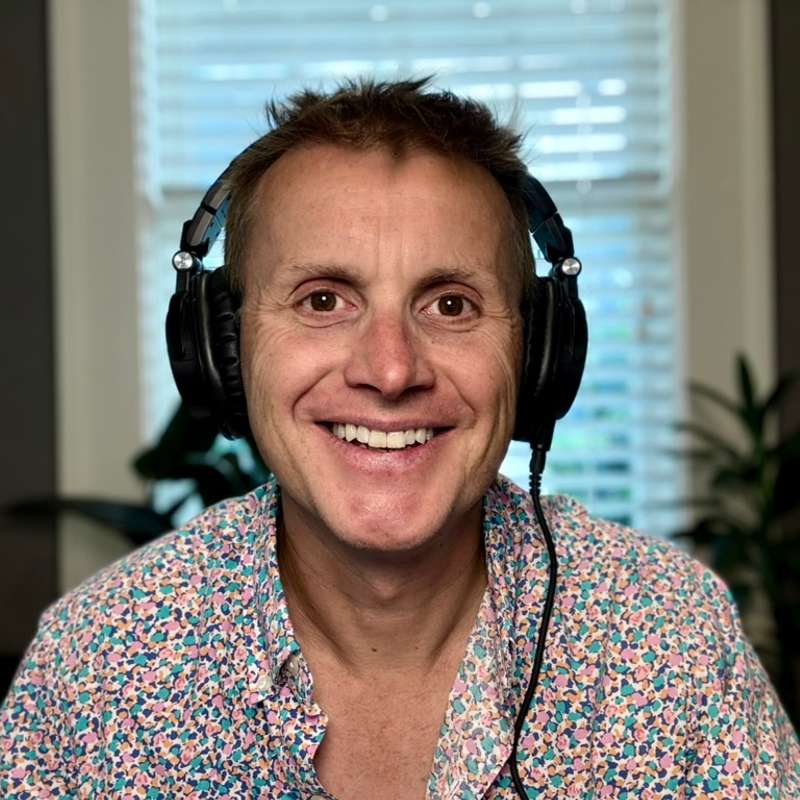 Tony Sewell
Welcome to Space Insiders. My name is Tony Suhl.
 Rob Ruyak
And this is Rob Ruryak.
Tony SewellAnd this is our very first podcast, Rob. Numero uno.
Rob RuyakNumero uno. Very excited, Tony. It's exciting. Know you for a long time. We've talked about this for a while. Let's do it. Let's do it. Let's give people a voice in what they're doing in space.
Tony SewellSuper Yeah, awesome. So Rob and I, we've been colleagues and friends for quite a few years now. We've been talking about something that we thought was really missing in podcasting in the space industry. And what we really wanted to do was interview a range of really interesting people from the space industry, founders, VCs, marketing experts, all sorts of people from different functions. Learn about what makes them tick.
Less focus on the technical space mission, or that side's really interesting. But also we want to help people understand how accessible the space industry is and and opportunities in the space industry for entrepreneurship and and startups and whatnot.
Rob RuyakYeah. And and and, you know, we have the discussion on how could space apply to solving a whole myriad of problems. You know, it's not just the rockets. It's not just, exploring space, all of which is really interesting and important. But how could space now be used for other types of use cases, other problems to solve?
And the other fun thing about it is that we're kind of still on this precipice of the commercial space industry providing value in the commercial industry, but also government where it's historically been a lot of the large defense contractors. So it's a fun time and we just feel it's a great opportunity to try to have that conversation.
Tony SewellYeah. And we've got some amazing guests lined up. We're going be doing this every two weeks. Our first guest today is Laura Crabtree. She's CEO and founder of Epsilon3.
They're a SaaS company helping to optimise workflows in space operations. She has a super interesting background. Ten years at SpaceX. I can't wait to get a few insights into that. Working at Amazon, we talk about that as being dog years, but I can what having been at SpaceX between 2010 and 2020 must have been like in the of the heyday of the company. I'm super excited about that.
Rob RuyakAbsolutely.
Tony SewellWhat we're going do though, we do that, so one thing we want to do as we kick off each of these shows is have a little bit of a talk about what's been catching our eye in the news. We've Space Symposium coming up next week. But Rob, one of the things I wanted to touch on, which is kind of incredible, in the last couple of weeks, we've just been following what's been going on in the SATCOM space in Europe. EUTELSAT shares have gone up 265% in the last month. A lot of it is a result of this new, I guess, changing geopolitical situation around sovereignty, sovereign SATCOM capabilities.
So with this IRIS program in Europe, obviously Eutelsat is going to be really central to that because they were really languishing from a share price perspective. A number of the key SACCOM players in Europe are up. SES is up 26% in the last month. OHB up 10%. What do you reckon about all this? What that's going on?
Rob RuyakYeah. I mean, you know, while while all that's happening in The US, you look at the large defense contractor, big cap stocks, they're all down.
Tony SewellRight?
Rob RuyakSo I think a lot of it is, you know, a lot of what we're hearing in the news. There's a lot of the the geopolitical dynamics that are occurring. I think there's a lot of, you know, there's a lot of uncertainty around, what does the of the new world look like for defense contractors, a defense industrial base, which frankly includes space, right? It includes a lot of commercial space companies too, because that is where they sell a lot of their capability and solutions. So I think part of it is just the uncertainty and the unknowns and the investors just trying to understand where the value is in this uncertainty.
I think it's natural to see a lot of these stocks, and it's great to see these European stocks to to see such gains, because I think the investment in European space, aerospace, and defense is much needed and something that, you know, is is really exciting for for for those in Europe where they've been building this kind of capability. You mentioned Iris as an example. Like, that's a big opportunity for Europe, big opportunity for the defense industrial base in Europe. So I think it's exciting while at the same time, a lot of this is a reflection of the unknown that I think over time is gonna be a little bit more clear. Now, talked about the space symposium.
One of the things that I'm excited about with the space symposium next week is starting to understand and listen to a lot of the traditional defense contractors speak about how they do want to disrupt the defense market themselves, And how much of that do they really mean as it relates to that? So for example, are they partnering they wanna partner more with commercial space companies? Do they wanna maybe even spin new companies out of what they do today? Are there potential acquisition opportunities? I think we're at a point in time where governments, global governments are going to now have to access more emerging tech, more innovative commercial technology, dual use technology.
Trying to figure out how they're starting to do that is something I'm really excited to see next week at the symposium.
Tony SewellYeah. Well, it'd be great to get Laura's perspective on some of this. Came from SpaceX, but she also started a career in Northrop Grumman. I watched an interview with her from a couple of weeks ago where she was talking about how fifteen years ago, the only companies in space were these big guys were Atheon and Boeing and Northrop Grumman. The whole environment has really changed. I think she's a great guest for us to have as we launch this. What do reckon we bring her in?
Rob RuyakLet's get it started. Awesome.
Tony SewellHey, Rob. Hey, Laura. Great to see Yeah,
likewise.
Rob RuyakLaura, it's so great to see you. I don't know if you remember a couple of years ago we were talking.
How could I feel?
Rob RuyakTo you? Yes.
You are one of the people that I really wanted to work with, Rob.
Rob RuyakAnd you're the one that got away, Laura. So really happy that you could join us today. Are super excited to talk to you and learn a little bit about your journey in space, specifically in, I think your background at SpaceX and other experiences you've had. Then most importantly, a couple of years ago, you started your own company, right?
I did,
Rob RuyakIt's Epsilon-three. Four
years ago, actually four years and two months officially, but more than that unofficially. Yeah.
Rob RuyakAnd I will tell you, Tony and I, we attended that Payload Investor Day conference. When was that? Was that October? Last year.
That was last year.
Rob RuyakLate last year. And I don't know about you guys, but I was very impressed with the way that they ran that whole event. It was really good. It was very intimate. I think those guys do a really good job over payload. One of the things that Tony and I, we were standing next to each other, we were listening to you on that panel. I'm trying to remember the topic. Was it specifically on entrepreneurship? I'm trying to remember.
I think it was an everything topic because we had Will Rui, we had Alex from LOFT on the panel, so the three of us. And there was just a focus on entrepreneurial space startups, etcetera, on that Yeah,
Rob Ruyakand it was great because I think that may have been the first time I actually met you in person, which was great.
¶ The Transition from SpaceX to Epsilon 3
It was, yeah.
Rob RuyakTony and I were talking about, as we think through this podcast and the value of it, I think both of us were, Tony mentioned you and it was like perfect, I think, to kick this off with because of all your experience. So thanks for joining us. Let's start off with this first question. So try to tell us what really inspired you about starting Epsilon-three. What helped you make the jump from where you were before?
Yeah, so I guess going back to 2020, when my life changed now for the better, left SpaceX after almost eleven years, and I really didn't know what I wanted to do next. If you've ever talked to somebody that worked at SpaceX, you'll know that it's sort of like a divorce. And not that I've ever been divorced. I don't have that experience. But I've been through a lot of hardships and friendships and relationships, and it feels like something is being ripped out of you a little bit.
Tony SewellEleven years at SpaceX have got to be like dog years too, I would It
is. Everybody says that one year at SpaceX is like three years in the real world. And so let's just say it was almost thirty three years at SpaceX. And I thought about what I wanted to do, and really, the big picture of what I wanted to do was continue making an impact in the industry that I loved and still love to this day. And I thought that that might be at a bunch of startups.
So I interviewed at a bunch of startups, and I interviewed at AWS. I talked to Aerospace Corp. I talked to Northrop Grumman. And the same sort of story kept coming up, which was around software. And you guys know this, but I'm not a software engineer.
I disliked very much my software classes at USC when I attended there. But through the seventeen years I spent in the industry, I developed a love for software that I didn't know I could have. And I thought to myself, Hey, all these people have problems in software, and I love software. And through my experiences at SpaceX, I had developed some internal software and also learned to test and write code in a way that I didn't learn in college. And I thought, hey, I could probably solve this problem because I have the unique experience of getting hardware from build to flight operations, and I have also experience in building software, so why don't I share that with the world?
But it did take me almost six months to build the confidence I needed to actually think I could start something that could be successful. And around the time when I was toying with, What do I do? Do I actually jump in headfirst into the deep end of this company? That's when I met you, Rob, and was still struggling a little bit with that, but had the idea and was starting to write a business plan. And then I, in that process, also met my co founder, Max.
¶ Challenges in the Aerospace Software Landscape
And Max and I thought this could be really a good thing for the industry. And we had started talking to potential customers, and then we just decided to dive in. And that was why we started.
Tony SewellI was just listening to the panel you did, Monty twenty five, a couple of weeks And it was super interesting how you sort of the backdrop of like when you started at Northrop Grumman back in the 2000s, and at that stage there was five companies in space, and it was just the cusp of new space. Then SpaceX was the leader in commercialising space. You comment about how everyone's building their software. No one was addressing the software problem or the infrastructure problem. And it kind of made me think about another friend of ours in the industry.
I don't know if you know Alvaro from Lanespace. He's been pretty vocal on social lately, sort of lamenting the fact that so many space companies are still they want all their software on prem. They still want to do everything on prem and they're not sort of embracing SaaS. Spaces are really a very hardware centric sort of industry. How have you found customers of different because you're working with customers of different sizes. How are you seeing they're embracing these ideas?
It depends on how long they've been around, really. Anybody who entered the industry in the last ten years does not want to manage on prem services. They do not want a containerized software that they have to redeploy. For us, it would be if you wanted to keep up with the progress, you'd have to redeploy every week, which is untenable. So most of the people that are on prem with us will deploy once a month, once every three months.
But the problem that they now have is that their employees that are using Epsilon-three are wanting all the changes that we're outputting, and they are not able to keep up with redeploying. So we warn them, but this is still a problem. But they still are a little bit worried about security, security of the cloud, security of ITAR information, and then all of the security reviews that they have to go through. So newer customers, newer customers being like, I've been in operations less than ten years or so around, generally just want to embrace the cloud and don't want a whole person to have to manage something like this. But incumbents or longer standing customers in some ways, not all, don't want to embrace it and yet still talk about it but then sometimes go to on prem also.
¶ Customer Adoption of Cloud vs. On-Prem Solutions
So it's a mixed bag, and we built the platform for cloud knowing that at some point we would have to deploy on prem. And so we built it for the cloud with the expectation that on prem would come. And it did a couple years later, but we still try to steer people towards the cloud because it's just so much faster and so much easier to get access and so much easier to onboard people. I think one of the main things that we want to do is allow people to move faster with smaller teams, and you can't do that if you have an on prem deployment all the time. So it goes both ways, I suppose, but I think security is important.
Rob RuyakLauren, do you see any difference in how people discuss and adopt different technologies, whether it's on prem or whether it's in the cloud or whatever that end architecture might be based on whether or not they're a government customer versus commercial? Are you still seeing that be very different and where in particular, if there's a particular area?
I think that Let's see, I'm thinking about our on prem customers. It's in the higher security spaces. So if you're working with the government in a more high security way, more compartmentalized way, you're probably going to only be able to do on prem, and that's okay. But I think in the end, all roads sort of lead back to the government. So even if you have a commercial company, they probably have a government contract of some sort.
So I think most roads in this industry lead to ITAR, which is government controlled.
Rob RuyakI
think most people should probably just embrace the cloud at this point in time, but not all will.
Rob RuyakYeah, think that's one of the things that Tony and I would We're gonna continue to explore with this podcast here and see not only where people actually all align on that end goal, but what is the journey to actually get there? What are the roadblocks to get there? Because the other thing that's I think quite interesting is there's the legacy thinking around on prem and being very focused on being comfortable with that. Maybe it is ITAR, maybe it's other things, but the other aspect is hoping that there's going to be another forcing function and potentially with a new administration, maybe there is some of that where the large legacy defense contractors need to figure out how to be more efficient, effective and mostly cost effective, especially as we start to see a lot less of this cost plus type contracting exist. And the awards change a bit more towards incentive based.
¶ The Impact of Government Contracts on Business
I personally see that as a great opportunity for companies such as yourself. Do you agree? If so, what do you think the path is there? For
us, efficiency and time savings is the biggest reason either to use the cloud or to use a commercially available SaaS product. And you can't find, in my opinion, obviously, I'm supervised, but you can't find a better team that responds to their customers than the team that we've built here because we genuinely just love this industry and want it to be able to move as fast as we know it can. And then going back to the cost plus, that was the big shift for me from Northrop Grumman to SpaceX. Northrop Grumman sort of had large I won't say blank check, but they had large contracts where if they overrun, it's okay. You just go into government and say, We overran our contracts.
You need to pay us more. We're going to deliver. Let's go with JWST, because that's the one that I can talk about the most. When I started at Northrop in 02/2004, they were building it and going to launch it a couple of years later, and we all know that that didn't happen. But when I went to SpaceX, was, Okay, we have to build My first two months there, we built cargo racks, and I was welding and riveting, and I am not a welder or riveter, but there was an all hands on deck.
We have to get this done because we have a milestone that is a payment milestone. We have to do this so that we all get paid. And you have to meet that deadline. So we were in on Friday, Saturday, Sunday until all hours of the day and night to get it done so that you get paid. And I never felt that fire at legacy companies where you have to get it done because if you don't get it done on time, nobody gets paid. We were still going get a paycheck, but the company wasn't going to get paid.
Tony SewellYeah, that's interesting. So Epsilon-three has been a bit over four years now. You've been through Series A.
¶ Building a Business: Lessons Learned
Yep.
Tony SewellWhat would have been harder to do than you expected? What were the things that kind of surprised you about the journey you've been on?
So I'm an engineer. So building the product, knowing what the product should do, listening to the customers is literally my favorite thing to do. The hardest thing to do was to learn how to build a business. I think for me, was, I'm going to go to Google, and somebody said to me, Rob, someone we know, Mike Marino, he said, Oh, you have to build a pitch deck. And I said, A what?
He said, Oh, you have to build a pitch deck. And he said, You have to look up Y Combinator. And I'm thinking, This is all gibberish. Somebody's telling me random letters, and he's like, just find the YC pitch deck and build a pitch deck off of that. And so I just googled YC pitch deck, and I thought, oh, I can do that.
And I had already built an Excel spreadsheet with who our customers would be, why they would want to use our platform. So I already had an idea of our customer profile, why they would even use it, what problems we were solving. So I already had all that information. I just had to put it in the form of a pitch deck. And then learning all of the acronyms, which I won't tell the story here, but there's a funny story with Elon and acronyms. I think if you Google it, you'll find it.
Tony SewellAnd
it was part of my journey at SpaceX, which I tried to encourage people to not use acronyms following what happened, but
Tony SewellOh, I've got look this up.
There's a whole Reddit.
Rob RuyakLook at them now, Tony.
There's a subreddit thread somewhere on the internet about the acronyms email, but there were a ton of acronyms. There's finance acronyms forever and a day. And so even now, investors, I still sometimes Google, and maybe this is a bad secret, but I still sometimes have to Google, what does that acronym mean?
Tony SewellMy favorite are the nested acronyms, without an acronym within an acronym. Was something when I was in my early army days, one of my first commanding officers, he took great delight in And it taught me to do it. When people were using acronyms in briefings, he would tell me what that means. And so many times people just didn't know what the acronyms meant.
There was a really great embedded acronym that we had at SpaceX for a communication box. And it was a bunch of NASA acronyms embedded into the SpaceX acronyms. So it was called CUCU, C U C U, and it was the COTS UHF Communications Unit. And COTS is a NASA coined kind of term. And then UHF is just a mode of communication.
¶ Sales Strategies in the Aerospace Industry
And it was just the bands that we were using. And then multi embedded acronym. Was great.
Rob RuyakSo we just went down to totally nerd acronym spiral. Do we break out two?
It's not sure I would end up with nerd stuff.
Tony SewellIt's common. It's a rite of passage.
Rob RuyakWell, one of the things I wanted to bring up, and I the book is right on my shelf, right next to me, Laura, is I remember you and I had a follow on conversation to stay in touch. And I was asking you a similar question that Tony just asked around, you know, what are some of the things that you're, you know, really trying to learn quickly? And one of them was the challenger sale. Do you remember that book? Yeah. I've got it.
Tony SewellI've got that.
It's right behind me.
Tony SewellI've got it over there
Rob Ruyaktoo. Yes. Yeah. This is not a paid ad for a challenge But yeah, I went and bought that. I read about it, it was really useful.
There's something about, I agree, there's something about, if you're learning to get into sales at a big company, if you're learning how to just sell whatever it is that you have this great idea around as a startup, it's not that easy. And I think biggest challenge, and I think in this industry, what's really makes this industry fun, the aerospace space industry, is that I think the best way to sell is make it solution focused with business outcomes. And that's like one piece. The other piece is that it's okay to challenge your customer on how they're thinking about solving the problem, which a lot of that is that book. You don't need to just be an order taker.
It's actually better not to be. Better to understand the business of the customer and try to figure out how you fit for their business True. So with that being said, where have you seen that truly benefit you to date with Epsilon three? And maybe it's a use case, maybe it's customer profile, but where have you seen that hook?
Let's see. So for us, it's really about solving the team problem. It's as your team gets bigger, how do you communicate best practices? How do you record data? And everybody has a solution in place, whether it's a Word doc that you email back and forth to a Confluence page to some in house built tool.
But the question really is, how much time are you spending on maintaining those things? How much time are you spending on configuration management or communication and collaboration that you wouldn't have to spend if you were using Epsilon-three? And how much does that cost you in time, in people, in brain power, in late nights, etcetera? And I think that's where we have to ask the question of our customer because they'll say, Oh, we're all set. Like, Oh, we have an ERP system.
¶ Engaging with Customers and Demand Generation
And I said, Well, we're not really an ERP system. We'll work with your ERP system, but we're not an ERP. Oh, we already have name some software acronym. We're not really that either, but we can work with those systems. And that is where I found a lot more success, is really more in learning about what the customer wants to be able to do and how they see solving that problem and then figuring out if we're the right solution for them because it might not be right for everybody.
And it's just about asking the question and knowing what the customer is doing. So it's about learning their process and learning how they wanna see their company work.
Tony SewellYeah. I'd love to hear a bit about how you approach the demand generation process. So we've got Space Symposium coming up next week. I think I saw you might be speaking or in a panel or something. It's amazing how that conference has really sort of become so prominent over the last few years.
I come from the SATCOM industry, and it's been interesting seeing how the SATCOM events have really kind of gone downhill. And Space Symposium has become a much bigger focus, I think, obviously with the change or the opportunity in commercial space. But it's a really expensive, it's an expensive, big investment for a small company to go to an event like that. How do think about conferences like that and the whole sort of new customer engagement and acquisition process?
I look at it as a way to meet people and talk to them about what they're doing. I don't necessarily look at it as a, you know, I'm going to go and tell you everything.
Tony SewellEx dollars in pipeline.
Yeah, I don't think about it like that. I think about it as, you know, these people are my tribe, if you will. I don't know how else to describe it, but this is the industry that I live and work in. These are the people that I like. I want to learn about what's going on in the industry, and I want to figure out if we're doing the right things.
And I use something like Space Symposium to keep learning about the industry, learn about new things that are being developed, learn about what my friends have been doing because there's a I never went to a conference when I was at Northrop or when I was at SpaceX. The first time I went to a conference, actually went to Ascend. It was my first conference, which is AIAA conference in Vegas. And that was my first ever conference, and then my second conference was Space Symposium. And the huge contrast between the two cannot be bigger difference.
¶ The Value of Industry Conferences
One is a small couple hundred person group, and the other is like 12,000 people. So I see symposium as just a way to learn about what's going on because there are so many people and you can't It's also very exhausting.
Tony SewellIs there anything in particular you're looking out for? Are we interested to see what comes out of next week? Obviously, I think there's a bit of concern about how many government customers are going to be there for
a start. Hardly talking about that. Whether the government is actually going to travel, I think they will limit. I haven't had a lot of government meetings at Space Symposium ever. And so I probably won't be meeting with anyone from the government.
But next week, I'm really focusing on the new startups and all of the people that are building new things that I haven't spoken with yet, and really excited to expand my horizons and learn about new people and new businesses that are up and coming. And I also look at it as a way to help because there are a lot of people that I know that don't know each other, so I do a lot of introductions at things like this as well.
Rob RuyakYeah, I will say, of all the industries I've worked in in my career, and I've worked in a bunch of different ones, this to me seems to be the most collegial, collaborative, friendly industry that I've ever witnessed actually. And I don't know if it's because the problems that we're trying to solve are so large or the visions that people have are so big also that it kind of creates more of that natural behavior to be more collaborative. I'm not really sure, that's something that I'm always been very attracted to. And I think the space symposium is really unique that way because I almost feel like it is a taking a breather moment where people in industry can come together and meet at the bar and have a conversation and catch And maybe they talk about their career, maybe they talk about what their companies are doing, or maybe they talk about business ideas or opportunities, but it kind of spans the whole spectrum of conversation. And that's why I always enjoy it because it's a way to really connect with a lot of people that I've met over the years that I like to work with, I'm inspired by.
So I have always thought it's a great show to attend and participate And I think to your point, Tony, it isn't as much of a what's the pipeline type of conference, right? There's plenty of those.
¶ Personal Aspirations Beyond Work
Tony SewellNeed to tell our.
Rob RuyakSo I'll have to look for you, Laura, when we're out there next I'll
be there.
Rob RuyakYeah. Awesome.
Tony SewellAll right. So Laura, this has been awesome. One last question. This is sort of outside of work. So if you could instantly master a skill outside of your working professional life, what would it be and why?
Oh, that is a great question. I might use this for an interview question. I always ask in an interview some question about the person, something that they do, something that they love. I think it might be around language, being able to speak another language. I grew up speaking Spanish, but I have let that slip. And I live in a household where I live with French speakers and my kids are learning Mandarin, and I feel woefully left behind.
Tony SewellFrench is a great one for the space industry.
I think language would be a good one. I have worked with a number of Japanese customers, French customers, Spanish customers, and German customers, and I think it would be great to be able to easily converse with all of them. And outside of work, I love to travel and I fostered a love for travel when I was working in Northrop and I lived in England. And I traveled to I don't know how many countries. I should have probably written that down, but a lot more.
I actually got my first actual stamp in my passport moving to England. And so when I was there, my passport was full and I had to get more pages, which is really
Tony Sewellcool. It's kind of sad that they don't stamp passports anymore.
Rob RuyakYeah, you have to ask. You can ask.
They do. I get stamps. Not if you're European.
Tony SewellYeah, or when I go to Australia, they don't stamp them.
Well, they say welcome home.
Tony SewellYeah, they do.
It was kind of a nice way to learn about the world, and I always tried to learn a few phrases, a few sentences, and it depends what country you're in, but some countries, people really love that you try. And some countries, they say, Oh my gosh, you speak English? I want to practice my English with you. But I think that would be a really cool skill to miss.
Tony SewellI love it. That's a great one.
Rob RuyakYeah, me too.
About you guys? You a good thing you wanna master?
Rob RuyakWell, I've always tried to master this, playing the guitar.
It's a good one.
Rob RuyakSo that's Yeah.
Tony SewellAnd I'm playing the bass. So Rob and I are gonna start a band.
Gonna start a band. I've got a piano player for you. My 10 year old's really good. And the eight year old will sing for you.
Rob RuyakAll right. Nice. Looks like we got a band figured out. That's great.
Tony SewellLaura, thanks so much for joining us. This was great. Our first podcast in the books helping to raise a trial with us. If people want to learn more about Epsilon-three, where can people find you and the company?
So we have Twitter. It's just Epsilon3 Inc on Twitter. And you can find me. I'm l l crabby, c r a b b I e, on We also have LinkedIn, and we have a website, which is just epsilon3.io. And you can chat with us there. You can find out more about product or just ask us whatever questions you
Tony Sewellhave. Awesome.
We're always open to feedback, ideas, whatever you want to tell us. We want to learn.
Tony SewellGreat. I'll post those in the show notes. Thanks everyone for joining us too for our first podcast. I hope you enjoyed it. If you did, we'd love to see you write a review or write us. You can also reach out to us at infospaceinsiders. Show. We also have a LinkedIn page, Space Insider Show and a YouTube channel. So really keen as we get rolling on this. If you've got questions or the topics you want to talk to us about, please reach out to us. But this is good, Rob. Thanks, Laura.
Rob RuyakThis was fun. This was a blast. Laura, you're the best. Thank you so much for doing this with us. This was great. Alright. We'll see you soon. Best of And
Tony Sewellwe'll see you on the next episode, which will be in two weeks time. So thanks for joining us.