



¶ Journey into Space: Daryl's Unique Background
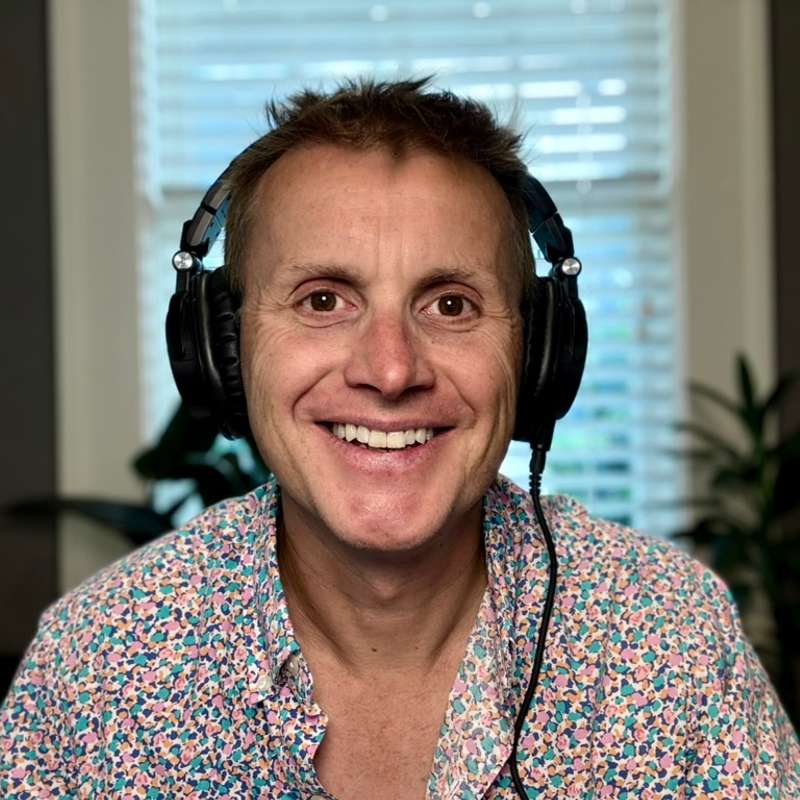 Tony Sewell
Alright. Welcome to Space Insiders. I'm Tony Sewell here with my mate Rob. How are going Rob? I'm doing great, Tony. We're here for actually our summer series of episodes at the moment. Rob and I are taking a little bit of a break through July, but we've lined up a couple of really good episodes, interviews that we've already conducted that we're going to be bringing to you over the next couple of weeks in July.
 Rob Ruyak
Yep. Really excited for these episodes over the summer, and I hope people really enjoy them. If you do, make sure you provide some feedback and add some likes as well, because we really want to make sure that we're doing the right thing, we get people interested and engage in conversation.
Tony SewellAbsolutely. So this first one is pretty special. Rob, I'll get you to give this guy a little bit of background, but wouldn't it be cool if we could talk to someone who trained astronauts? Absolutely.
Rob RuyakI met Daryl a long time ago. I actually met him at what was called the space prom, which is an annual, Goddard, space dinner they do, for awards for high school and college students. And and I met him there, and what fascinated me about him was exactly what you said. He actually, he knew astronauts. He knows astronauts, And he knows astronauts internationally that have actually flown on space shuttles and the International Space Station.
And his multi decades of history at NASA is just very unique. I mean, if you want to talk to someone that's actually been in the big pool, I think they call it the Neutral Buoyancy Lab. I mean, he's been in it. He took me on a tour of it once. He's helped train those astronauts. So, you know, whether it's fixing the outside of the station or working out as a team in deep space, it's really a tremendous amount of different unique experience that everyone would love listening to.
Tony SewellYeah, we don't talk about it in the episode, but there was one we all got to travel down to Florida together to see a launch in the early days of when we were working together at AWS. And Just to show how legit this guy is, there was a big group of us down there. We were on the beach after the launch had happened. We took a group photo. Unbeknownst to us, Darryl emailed it to one of his friends who was one of the Russian cosmonauts.
The cosmonaut printed the photo and it was kind of floating around in space. He took a picture of the photo floating around in space and sent it back to Daryl. And this all happened in the space of, like, a a couple of hours. It was it was absolutely incredible. And and I've still got the I've still got the the printout of about a photo of us floating in the in the space station, which was pretty amazing.
Rob RuyakYeah. Was so meaningful, and that's kinda who he is too. I mean, he's he's so personable. He is the ultimate extrovert. You go to anything with this guy, and he knows everybody. And if he doesn't know everyone, he wants to meet the people he doesn't know. And he's just got a really good person, a really good magnetic personality. It's really fun that we get to talk to him.
Tony SewellAwesome. Well, let's get to the episode. We hope you will enjoy it. All right. Welcome back. For this next guest, I actually think we probably should have a bottle of vodka here anyway, but Darrell, shock, great to see you again.
See you too, Tony. It's been a little while and it's great to reconnect with you guys.
Tony SewellYeah, absolutely.
Rob RuyakYeah, Darrell, thanks for doing this. You and I have been friends for a long time and I'm so excited to talk to you about this and thanks for helping us get the word out on the crazy and interesting things that are happening in space. And you have such a very unique and niche background. We definitely are excited for people to hear about it. Really appreciate you joining.
Well, thank you. It's good to be here. I've had a lot of great, you know, yesterday was thirty six years from the first day that I started at the Johnson Space Center on June. I remember that date well-being. Wow.
Tony SewellThat's amazing.
Yeah. Know, that I had to put that date on a lot of forms, you know, what was the anniversary date with NASA when we filled out various forms for HR or whatever it might be. That date, sticks with me. So Oh, that's awesome.
Tony SewellWell, that's that's kind of where we wanted to start, Daryl. I mean, your your background is so unique and it's not every day that that folks get to speak or hear from someone that has actually been in the in the operation in the sort of the mission control room. Think, like, you've been you you one of your first roles back in 1989 was as a flight controller in mission control. Just what was it like being part of history? I mean, and what are some of the most memorable things from you from those early days?
Well, you know, it's when I got there, it was twenty years, you know, that in July, July 20 was the twenty year anniversary of the Lunar Landing. And so that seemed like a million years away ago when I arrived. It was, you know, twenty years was, being only 20 at that time myself, felt like a long time ago. And now here I'm thirty six years later reflecting on that. It was amazing.
I mean, and, you know, there was still a lot of the Apollo infrastructure and people were still around center. You know, I'd see folks like John Young in meetings. There were a lot of other Apollo flight controllers that were there. And the, you know, the facilities were also very much Apollo. The old control room that you see on, you know, the Apollo days, those were still very much in operation.
The stadium seating that they had with the big consoles. And so, you know, it really didn't you you felt the history there, but it was just kind of still the standard order of operations that were happening there were just like they were with Apollo, the same systems, the same consoles. And, you know, I didn't really, you know, I knew it was something, I was part of something big, but, looking back at that, really had a chance to get a feel for what the Apollo the lunar landings and stuff and where those facilities were done and how they were done. So it was an amazing, amazing time to start with how things have changed since then. So it's a little a little
Tony Sewelltrouble Yeah. Sorry. Our listeners, probably don't know that the three of us actually worked together. We we were all sort of part of the first the founding group of the aerospace and satellite business within AWS. But still one of my favorite memories from our time together was an off-site we did down at Kennedy Space Center.
We had an official tour of the space center, the museum. And Darryl was running this little side tour giving us the inside view. But one of your specialisations, Darryl, was in EVA, extra vehicular activity, spacewalks. And you ultimately became an instructor and flight controller specialising in that. Can you tell us a little bit about why that is such a special area to work in, what are some of the risks that astronauts face?
We we had an interview with I think it it was Jana Spruce who who who worked with Rockwell, I think, as a part of some space suit design. So that was kind of cool. But, yeah, we'd love to hear a little bit some of your thoughts on it.
Well, you know, when I got in and, you know, I started out as a very mundane job doing a I was managing a book of it was flight procedures of the flight data file, and I happened to get the book that nobody wanted. It was called contingency EVA operations. And it was the book that they would go, they would hopefully never have to pull out of the locker that had all the other books in it. But was the contingency EVA operations. There were two suits that flew on every space shuttle mission regardless, because if the doors didn't close, there were a number of different procedures they had to follow to go out and close them.
So, I took that book, everybody said, Have good luck, have fun. It said, It'll never get used. In doing so, I started talking to the EVA team. I mean, I was in a different organization, and had a lot of questions, was digging into a lot of the details and the procedures and really wanted to understand it. I was supposed to manage those, that book. And eventually they said, You come over here a lot, but why don't you just stay? And do you know how to dive? And I said, Well, I can learn.
Rob RuyakSo
that's how EVA started for me. And we went right into the At that time, we had a smaller pool called the Weightless Environment Training Facility. And that was a small pool that just fit the payload bay of the shuttle. And so very small pool. And started, you know, that's where I started.
It was, you know, getting the crew prepared to use all the tools and follow those procedures, follow a pre breathe protocol that was needed. And I was really more focused on the space suit side of it when I joined that team. That's how most newer folks came in. They would come in and start training the crews on the life support system and the display and control module on the front of the suit. And so, that's where it started.
And so, I knew the ins and outs of the spacesuit, how it worked. I even built an expert system that we had deployed for a short while back when they called them expert systems. Now, I think we call it AI, but that was to follow the telemetry of the suit. You know, we would look at probably 50 plus parameters per suit. And, you know, there was different alarms and things that you could see, but the idea was is to automate that.
And we did prove it did work better. And I'm sure there are tools like that, that are really being leveraged today. EVA is very important. It was very important in those days in those contingency scenarios, but what I saw it do over the course of my time, eighteen years at NASA, was it went from kind of a phase support specialist that was only called on for a bad day, to really a capability that went up to the forefront to service space, Hubble Space Telescope, but then more importantly, the space station assembly. And so we started with some early detailed test objectives or DTO missions, and then transitioned into the actual, what we call the wall of EVA.
There was all these EVAs that had to be done. And I you can look up how many that there were, but I was involved closely with SDS ninety two. That was the 3A mission where the Z1 truss was delivered. And that was the first small truss that preceded all the other large trusts that came. So, you know, key What's a trust? Trust. Trust. Trust thing. It's a trust thing.
Rob RuyakYeah. What's a trust? In in this speak, what's a truss?
Truss is it's a it's a it's a mechanical you know, it's a it's a segment. If you look at the space station, you'll see the pressurized elements. Those are the where the crew is, but then there's a whole extensive set of truss structure that supports the solar rays and the radiators communications. That there's a huge, you know, that's what makes it close to the size of a football field. So those all came up in pieces.
They had to be connected mechanically, but then there's fluid lines and electrical lines, communications lines, those all, the EVA crews had to go out there and make those connections. So there was a lot, a whole lot of EVA. So without EVA, we wouldn't have been able to assemble space station, wouldn't be able to maintain it. That, know, Tony, to answer your question, it became an essential capability and it remains that today to where EDAs go out, you know, the EDA crew, two crew go outside, sometimes three, I can tell you about that. That was an interesting story back in SDS 49, but, and they'll go out and do a number of tasks.
Know, it could be for maintenance or new, now it's more about maintenance, in the assembly phase, it was all about construction.
¶ The Evolution of Extravehicular Activities (EVA)
Rob RuyakSo, Yeah. I think what's interesting what's so interesting about your background, Daryl, and for everyone that's listening is it's the the spate the area that you've been in, Daryl, is so unique, but the fact that you you have trained people, you have seen the technology, you've actually designed some of the technology. I wanna ask you some about some of the patents you have. But being a wealth of information around an an area that is is very unique. I mean, if anyone, you know, I recommend anyone to go search for pictures or images of the International Space Station on the inside.
It looks like a total mess. You got stuff hanging down wires, got hang, you got laptops that are kind of look like they're barely attached to anything. And you got people trying to thread the needle as they're floating through this thing to not pull a plug. So it's such a unique area in terms of engineering, terms of, we haven't really talked that much about this Tony until now is like the operations and maintenance of systems in space. So it really is, it's really unique kind of the background you have Darryl.
The one thing we really wanted to talk to you about, because this is another piece that you've been instrumental in is being a catalyst for, I think modernizing or thinking of new capability and innovating around that, that either may work on land that you wanna make it terrestrial, might wanna work in space, or maybe it's a whole new capability that will just work and provide new capability in space. So, I mean, one place I'm kind of interested to talk to you about is, you worked on space suit technology and have some patents here. I'd love to understand how you thought about that. And what was it about maybe your training background and your work with astronauts that kind of helped you design that?
So a crew member that goes outside is highly dependent on, we've got detailed procedures that they'll follow. And there's a cup checklist, as it's called, that's a, it's a paper checklist on a spring binder and they can flip through pages. Very limited. It's about maybe 30 or 40 pages long. Not terribly practical for detailed procedures.
So they tend to be really dependent on voice guidance from the ground. And that's possible with, you know, low earth orbit, they've general, or they'll have a crew member inside reading the procedures step by step, you know, every step of going out the airlock, to going outside, to tethering the tools, to turning the bolts, to getting the right settings on the power tool. Those are all orchestrated, and we practice that extensively in the pool somewhere around the range of seven hours for every one hour of time they were actually doing it. As we start looking at exploration and you start getting into like Mars and even the moon, their communication delays start becoming a problem. And so for one reason or another, one reason I got involved in the patents that I have relate to a heads up display for a space suit.
So when I left NASA, I started working with the company, Honeywell, that was a hardware provider, got a lot of background in displays for aircraft and for spacecraft for that matter. And the idea was to adapt that to a space suit. And so you can give them a rich set of information, access to that, where they can read the step by step procedures, maybe even get to a graphical depiction that might help them. But the idea was to somehow to get a rich set of information to the crew member that's in the suit. That started with a cuff checklist back in the 90s.
It was well before its time, used an LCD display with a very rudimentary touchscreen, but that still required the crew member to touch, you've got two hands that you're trying to hold onto structure or tools with, and then you've got to try touch this cuff display. So the heads up display was where we started really digging in and we went to field testing and tried different things like see through displays. If everyone's, Things like Iron Man, or those kind of displays where you see this idea where it's just blended onto the outside world. And that's been explored, but the focus we ended up on after field testing different concepts was a display that you could glance at, had a big eye box, and could display any kind of content, you know, procedures, video, pictures. And so we thought enough of it that we pursued a patent and there's actually two patents related to that that I'm named for.
¶ Innovations in Spacesuit Technology
Yeah.
Tony SewellWell, Darryl, I mean, this kind of, I mean, this, the idea of helping make the astronaut's job easier and I think people probably don't think about that. You've only got two hands and you're holding onto the spacecraft or tools or whatever. I mean, ultimately, your time at Amazon led you into the Alexa program and looking at how Alexa could be adapted for space. Can you tell us a little bit about that and how you see AI and voice technology being being used more in space operations.
Yeah. It was a little surreal. You know, I've had a lot of fun experiences over the years, and it was a little surreal when, you know, I I came over to working with you guys at AWS, and there was this project out of Alexa in space, and that flew on the Orion vehicle with no crew, but it demonstrated how that voice technology might work on a spacecraft. Alexa was inspired by the Star Trek computer. That was, that's the history of that, where that's, you know, if anyone that's seen Star Trek, they'd say computer and ask questions.
And that just is a natural way of conveying information. I think it's become more prevalent, obviously, with Alexa across, you know, it's distributed as that is, so many people using it. And I think people will come to expect that in a future space station. I mean, that is just one mode of informatics. You can ask, you can, as you know, folks know, I don't have to tell people how it works on the ground and homes with home automation, but, you know, think of that as the same thing on a spacecraft, the future spacecraft, the space tourists, or the next generation of space explorers have come to expect ambient AI, and how do you access that?
And that is Alexa and you know that that's still continuing to develop and it's becoming ubiquitous across our lives today. And that's going to continue right onto the space exploration domain.
Tony SewellIt is pretty funny how science fiction drives technology development. I I was flying back from Australia a couple of weeks ago and I watched Alien, the original Alien, and that was 1980, and they're talking to mother. That's the computer. But Star Trek far preceded that, so.
Exactly. So that's another way of getting information to the crew, things frictionless. You know, perhaps space suits will have an AI assistant as well. You know, it's with the communicate, in low earth orbit, I think it's going to become really easy, you know, with constellations like Starlink coming online, you know, you've got always on high speed internet. The devices, that's what the devices need.
We flew Alexa to the International Space Station to did a demonstration there. It was a little bit tricky to get the internet connection that was needed on that vehicle because it's not quite the internet, same internet connection you have at home. But you're going see more of a home like experience on on on the future commercial space stations.
Rob RuyakYeah. And that was with Acxiom. Right? Yep.
Yeah. That was with Acxiom on one of their ax so the z x two and ax three missions, I think. Right. Why I think yeah.
Rob RuyakThat's awesome. To work on that with you. I mean, that was really that was really fun. And and on that topic too, Daryl, with with I think Tony was getting into this too with Alexa and more maybe, providing astronauts with more, maybe normal technologies that they use, terrestrially that they can now use in space. What is your opinion on?
Because I know you've worked on a lot of projects like that with us around the hardware to software kind of maturation of technology as well in space. What are your opinions on that? Number one, maybe there's an example that you can throw in that I'm aware of. And the other one is, how are you actually translating some of these thoughts into your new role as a director of human spaceflight at Honeywell?
I think the example you're alluding to, I mean, when I came to AWS after being around hardware, space hardware providing and training and that kind of thing, I naturally levitated to the opportunity to see how we might expand the cloud to space. And so I think what you're alluding to is the Snowcone that flew also with Acxiom. Yep. The idea was to get an edge compute capability that was cloud enabled on the space station. I'm proud of that.
¶ AI and Voice Technology in Space Operations
You know, as far as I know, it's still up there and it's done a number of different, we went up there as a demonstrator and it ended up staying on board and Acxiom's used that for some other interesting demonstrations. And I think that is the precursor for a much more robust data center in space, you know, just like AWS expands, you know, via different regions. I don't know, we're up to what 30 now or so in regions around the world. Space could become that next region to address the workloads that are going to be needed for this new space economy that's just it's a pot ready to boil. I mean, with the CLDs coming online, I know there are plans for, you know, space data centers.
And so this was a great starting point, I think, and a great early demonstration that I hope folks will look back at and say, yep, that's where that was a stepping stone to that capability.
Rob RuyakAnd how are you translating that experience to where you are now?
So well, well, so much so much is changing in this this world, you know, in this it's such a dynamic environment. You know, Honeywell is, you know, we've been involved with every space, every human space mission and pretty most of the other space missions in some shape or form. Everything from life support to data systems, you know, we're on SLS and we're on Orion and we're on the gateway in different shapes and forms. So a of solutions there. Moving forward to the future of, you know, what's coming, you know, a lot of commercialization.
There's challenges to address that market because it's not, you know, these formerly known as cost plus programs that we built these exquisite solutions. Now we're challenged to adapt our legacy, this long legacy that Honeywell has to this new market. And that is challenging. I've got my work cut out for me to try to adapt to the Axioms or Star Labs, know, Blue Origin, you know, all of these companies.
Rob RuyakCommercial space stations. Yeah.
Commercial space stations, but then also, you know, exploration also. There's a lot of commercialization and, you know, adapting those products to be price competitive, lead time competitive. That's a challenge we're facing now.
Tony SewellI mean, as we wrap up, I'm glad you've mentioned the commercial space station. I mean, there's been a bit of I mean, it's been in the news in the last few days that the Axiom four mission's been delayed because of the air leak in one of the modules on the ISS. I mean, looking forward and with your thirty six years in the game, Darryl, what are your where do you see the direction of the space station going?
Well, for the Regardless, the International Space Station is, you know, slated to be decommissioned and splashed down around 02/1930. And in the meantime, there's, you know, with some of the budget cuts that have happened, the skinny budget that you've probably heard about, they've cut logistics and they're going to be cutting back on crew. So I think you're going to see a reduction, you know, at least if that budget stands, there's going to be a reduced, you know, they're going to start tapering off. I think it'll continue on until 02/1930, but that's only setting the stage for the CLDs, which are scheduled to, there's a, you know, the phase two RFP that's coming out later this year, and then a selection of- CLD?
¶ The Future of Space Stations and Commercialization
Tony SewellCan you just-
Yeah, I'm sorry, commence. Commercial LEO Destinations, that's NASA's acronym for the next commercial space That'll be an interesting, you know, there's a lot of strong players, you know, Blue Origin and Orbital Reef, you know, Acxiom's got, is in that. Vast is another one that's MERS, STAR Lab, and they're all competing. And it's going to be interesting to see how that plays out because, you know, the way that the contract is structured, they're going to, you know, the way it's, you know, they're all going to put a proposal in. It'll be interesting to see how many get selected, and then perhaps multiples get selected, and maybe they'll work together.
That's just me kind of thinking forward to say, maybe you'll have kind of an industrial office park with multiple players that have to work together. That's, again, just me. I don't think that's anything formal. But with so many strong players, with so many strong offerings, I think they all can bring something to bear. And I think that we might see some aggregation for the next space station that'll replace ISS. So stay tuned. It'll be interesting to see how that plays out.
¶ Personal Passions: Flying and Building
Rob RuyakSo Daryl, thank you so much for being with us today. This has been fun. One of the things that we like to end the show with typically is a fun question that helps the audience get to know you a little bit better. So here's your question. So you obviously love to build things and you love to get your hands dirty. I've seen it firsthand, just working with you. Do you have any other hobbies that you really care about you'd like to share with others?
Well, getting my hands dirty literally involves, I would call it more a vocation than a hobby, but I'm an airplane owner and pilot, so I enjoy flying and flying regularly. I own a Grumman well, it's an American General Tiger. It's a newer version of the Grumman Tiger. And I you know, that is a passion of mine that I enjoy. I enjoy flying the most, but I also enjoy, you know, getting my hands dirty when it comes time for annual maintenance or whatever have you.
Making that machine work like it's supposed to is kind of important. But I'm also, you know, we've got, you know, engine monitoring and navigation system on the airplane is modern. So I enjoy the, seeing, having that technology infused into that airplane and it's becoming more and more prevalent. It's amazing what you can put into one of these airplanes now. And it rivals an autopilot.
It it rivals the it rivals some of the big airplanes, to be honest with you, with some of the things that that these these smaller airplanes typically didn't have. So
Rob RuyakWell, I've always said if I'm gonna go up in a small plane and wanna feel as comfortable as possible, I'll go up with Daryl because I know that he's turned the wrenches on this thing. The guy that's flying it is gonna be just as concerned if he's the one turning the wrenches. So love seeing you, Darryl. You're such a good friend. It's so fun to talk to you about these topics and thanks for doing this with us. Really appreciate it.
Tony SewellTakes me back to the the good old days of when we when we first worked together in the in the the aerospace and satellite business at AWS.
Rob RuyakDaryl was the first hire. Daryl was the first hire. We we met at the we met at the the Goddard Space Prom.
That's right. We we needed we needed we it was great that you could come on short notice. I you you know the story where we we we had some open seats, and we were looking to to fill them, and it turned out to be a a really great evening. And that
Rob RuyakIt was.
To the time we had together. And that was a it was I really took away some great memories and and and skills and experience from that. So And hang Ivis. Yeah.
Rob RuyakWe didn't touch about the the ceremonial vodka induced celebrations that Daryl is known for. So that might have to be on Unmemorable. That might have to be on an episode too with Daryl Shuck, I think, Tony.
Yeah. Well, we didn't what we didn't into is my time in Russia, and I did spend seven years as liaison there. And I you know, I'll just say I took away a lot of experiences there as well. And, you know, the International Space Station is still very much an ongoing collaboration with Russia, despite what's happening today, so on the ground here. So I'm proud of the, you know, I'm proud of what I did during that time, getting some things done that would that enabled what we call bilateral EVA.
And I'm pleased to see that we still have cosmonauts that fly on U. S. Vehicles, and astronauts that fly on Russian vehicles. So that's, you know, international cooperation is going to be fundamental to space exploration, the deep space exploration. So, it'd be only the last note I would make is that I, you know, that's certainty. So looking forward to seeing how that plays out in the future as well.
Tony SewellYeah. And we didn't talk, that is a fascinating part of your background, Darryl. And we definitely should come back to that in future episode, but thanks again, Darryl. Really appreciate you joining us. This was really good. We gotta get together again soon. I don't know where, but we need to work it out.
And Rob, come on to Houston. I'll you can fly in that airplane sometime at
Rob RuyakOh, yeah. I'm excited to get down there. It's it's long overdue, my friend.
Okay.
Rob RuyakHow do how do if if people wanna get in touch with you and carry on the conversation, how how should they get in touch with you?
I you know, look me up on LinkedIn. I'm you know, that's probably the easiest way. I'm out there.
Tony SewellAwesome. We'll put a link in show notes. All right. Well, thanks, Daryl, Rob, and thanks, everyone, for joining us. If you enjoy the show, we'd really appreciate it if you would rate us and even write a review. But until next time, we'll see you soon. Cheers. Take care, everyone.
Thanks, guys.