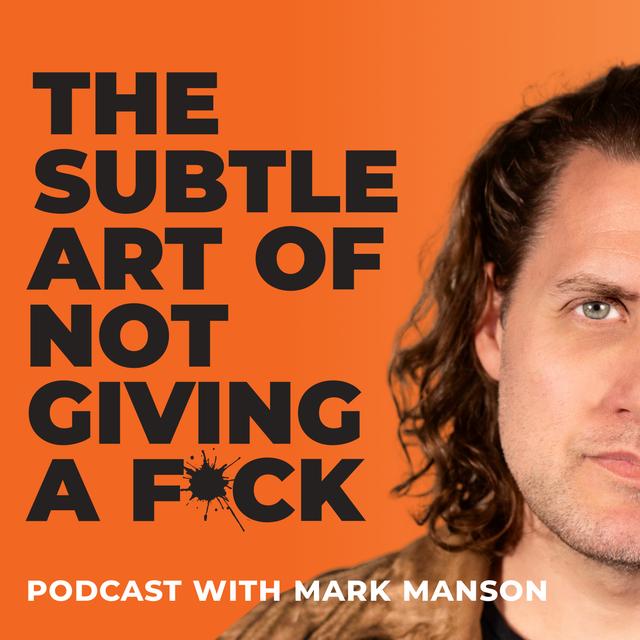



¶ The Subtle Art Podcast's End
Welcome back to the show everybody. Mark Manton here, and this is the last podcast of the Subtle Art of Not Giving a Fuck podcast. Yes, the rumors are true, the hints have been true.
all of the little breadcrumbs that I've been dropping over the past few episodes are in fact true. We are shutting down this podcast, but we're shutting it down because we're gonna launch something very new and exciting in its place. And I just wanna take a little bit of time to explain Both the reasoning why we're shutting this down and then also what's coming next.
So bear with me for a little bit. I'm going to take you behind the scenes kind of my personal thinking or my personal experience with the podcast the past year, what my reasoning has been and uh why we are making the changes that we're gonna make. And uh also why I'm extremely excited and I think you guys are gonna be absolutely thrilled with what we produce instead of the subtle art and not giving a fuck podcast. So let's get right into it. Um the first thing I wanna say is that the
it feels kind of insane to shut down something this successful. Uh I was actually looking at the numbers in in preparation for for recording this. Uh So we had seventy-five episodes, over thirty million downloads, over seven hundred thousand followers across platforms. That technically puts us in the top zero point zero one percent of podcasts, like the top four hundred-ish podcasts in the world.
is a massively successful podcast by any objective measurement, which is still a little bit wild for me to think about, uh And I also I I think it's worth saying too that Shutting this down is not a good business decision, at least in the short term. There were multiple seven-figure offers on the table from major podcast networks, major ad networks.
uh that we turned down. And uh a big reason for turning those down is gonna be clear in in a little bit. But I just wanna make it clear that like this change is really not for the money. It's not like we're not selling out in any way, shape or form. In fact, it's from a business point of view, I might I might just be shooting myself in the foot here. But I think it's gonna be worth it. I think I think everything that we're gonna be producing and putting out is
Is absolutely gonna be worth it. And five years from now, I'm gonna look back and be like, this is one of the best decisions. So when I look at why I wanted to end the show, there are two primary reasons. And the first one is honestly just purely selfish. And that is I wasn't really having a ton of fun doing the show. And maybe that was apparent to some of you, maybe it wasn't, but
it became impossible for me to ignore past a certain point. I mean, initially, say the first six or eight months, like there was kind of this honeymoon period, everything's new, everything's exciting. But like really once the show got going last summer, it was painfully aware to me that like This is just not really my thing. And We tried to experiment with formats, you know, we tried to in introduce segments to the show.
Drew and I tried to get a little bit playful and creative with some of the topics that we'd address. We started taking listener questions a lot more. We tried to get a little bit experimental with like guests that we would bring on. But it just it never sat right. The simple reason why is that I've been in this industry for almost twenty years now, and my thing, probably the reason that most of you even give a shit that I'm talking right now, is
I try to be independent minded. I try to say things that maybe need to be said and nobody else is really saying. Um I'm contrarian when maybe it's not so popular to be contrarian. I call bullshit when I see it. And in the classic podcast format of bringing on kind of star intellectual guests and thought leaders. I felt completely hamstrung to be able to do that. It it is a format that is antithetical in almost every shape and form.
to ultimately what I think I'm best at and what I enjoy doing most in my line of work. And that sucks. It really sucks to have a notable guest come on the show and start saying something that I actually kind of don't agree with or I'm like familiar with the research they're talking about, but I don't think the research is very good.
And it puts me in a really tough spot of like, okay, do I start challenging this guest and uh potentially creating like a big argument or a debate on the show, potentially alienating the guests, fans of the guest, alienating the guests themselves, making sure that they're never gonna come back to the show.
Um, do I put myself in a position where I'm like suddenly like I I didn't prep for a debate coming into this episode, but now like suddenly I'm having to put myself in a headspace of of being willing to argue and debate a really smart person. It was just not fun for me. It felt like a no win situation. I can either start to fight and make everybody miserable, make me miserable, make the guest miserable, and make uh the fan of fans of the guest miserable.
Or I can sit there and smile and nod along and pretend like everything's hunky-dory and also be miserable, right? And I I experimented with both directions and and nothing ever felt right. And and and nothing ever felt right with the audience either. And
¶ Why the Guest Format Failed
I should add too that like the whole process of sourcing, reaching out, booking guests after guest after guests, it's kind of this it's a very unpleasant treadmill. Um First of all, everybody in this space is having the same guests on over and over again. So you're fighting with other podcasts to get the same people on and then when you do get'em on, they kind of just say the same thing they said on the on the other podcast that they went on.
And if you try to get'em off the thing that they said on the other podcast that they went on, then uh, you know, they don't really wanna talk about some other thing that you you wanna talk about and it it like I understand that like really good podcasters are that like that's the skill set that they're experts at like
getting a new guest and getting them to open up in a new way and talk about something that they've never talked about or like researching really intensely and finding that subject matter that like they've never really been super public about. I just found that like I don't really care to get good at that.
That's not my thing. And I don't think it's the thing that I am best at. I don't think it's the thing I'm particularly talented at. It's definitely not the thing I enjoy. And I don't think it's the thing that you guys are here for. So what the fuck am I doing trying to do that? Like trying to like get these super spicy breaking guest interviews going. So th the the whole guest thing was just kind of
It's a little bit of a non starter for me. And don't get me wrong, like some of the guests who came on the show I had a fucking blast with and had great conversations with. But, you know, there are a lot of guests that came on that I was just kinda like
going through the motions. And It's one of those situations where I have to take my own advice and you know, I'm constantly telling my audience that the more you care about something, the better you'll be at it and the more impactful it will be to other people.
And here I am just going through the motions, working on something that I don't deeply care about. I don't think I'm super great at. And not only am I paying the price, but you guys are paying the price as well. So starting a few months ago it became w abundantly clear that some sort of pivot needed to be made. And Drew and I started talking very seriously about what if we just reboot the whole show entirely and
Start from first principles. Before I get into that though, I do I want to go on a little bit of a rant here because having been in the the self-help personal development podcast world now for a couple of years, um I'm like a little alarmed by what kind of flies in the space Not to say that like, you know, uh the the shows are bad or the advice that's being given is bad. It's just I don't think the incentives are very healthy at the moment.
So in the the creator influencer world, there's a concept that that's relatively well known in my industry, known as audience capture. And chances are you guys have seen this among people that you've followed over the years.
Often somebody will build an audience uh among a certain demographic or a certain group of people who have like some crazy belief, right? And The creator or the podcaster or the YouTuber, like they realize that if they if they just h keep hitting that c crazy topic over and over again. Tens of thousands, hundreds of thousands of people keep showing up in force and engaging with them over and over again.
And so what you see is that the influencer actually starts to take on those crazy beliefs and that personality of this like segment of their audience that they've suddenly captured. And so it's like it's almost like being brainwashed by your audience. Like you're rewarded for feeding into their kind of crazy beliefs or narratives. Uh and so the the podcaster or the YouTuber kind of convinces themselves that they believe those things.
so that they uh don't feel any cognitive dissonance when they when they keep putting out the content that that audience wants. And audience capture is a a very real thing. I've seen it happen in my industry many, many times. It's something I'm very careful about and aware of with myself that I I like really try to check myself and make sure I'm it's not happening to me. Uh
But I think there's something specific to the podcasting world that is similar to audience capture, but it's a little bit different. And I would call that guest capture, which is you end up with these incentives like
Okay, fuck it. I'll just I'll use a real person as an example because I there's no way in fucking hell I'd I would ever have this person on the show. Take Joe Dispenza for example, right? Joe Dispenza, he's like kind of the new big self help guru. He's doing these massive seminars and like arenas and stuff.
And when you look at his content, it's really it's kind of just the secret two point oh. Like it's, you know, meditate, breath work, uh, manifestation, believe in yourself, you can be and do anything. It It's a bunch of bullshit. Like we've been here before, right? But if you have him on your show, it's like a guaranteed four to five million person audience. Like his audience is massive and it is absolutely rabid. They they consume every single thing he touches.
And so I've quietly watched as multiple people in my space continually bring them on hit on their shows and let him spout his quantum theory bullshit over and over again. And I I'm not like singling out Joe Dispenses like he's not uniquely bad in any way. He's just an example, right? Because it's like I understand
those podcasters are going through. Like I know for a fact that some of those podcasters don't believe any of the stuff that he says, but they still bring him on the show and they placate him and they humor him and they let him like go on his spiel about
manifesting and quantum spirits and whatever. And then they let the the you know, the four million views or the five million downloads come in and then they, you know, they move on to the next guest. And To me that just feels like a certain level of of prostituting oneself and it's like
I find it very distasteful. But I understand the impulse to do that. Like as a podcaster myself, I want to bring on guests that are going to bring in massive audiences. And so to bring on somebody with a huge audience, I want to uh at least placate or go along with whatever they say and act as though I
agree with it or at least don't disagree with it because then that will convert their audience into my audience. I felt myself being pulled in this direction while having notable people on the show. And it just it made me feel very gross. And it felt it it went against everything that I think I stand for in this in this industry and in this market.
¶ Introducing Solved: New Ad-Free Format
And I don't I don't want to get sucked down that. And so the first thing I will say about the new show that we're gonna launch is that there will be no guests on it. That doesn't mean that we're not gonna talk to experts. We're actually gonna talk to a lot of experts. But we're gonna talk to them behind the scenes. We're gonna talk to experts who don't have audiences. We're gonna talk to academics. We're gonna talk to doctors. We're gonna talk to PhDs.
And we're not gonna bring him on the show because I don't want that to be a compromising incentive of the show. I want to be able to present people's ideas and perspectives and be able to criticize them openly and show the pros and cons of certain viewpoints and not feel socially pressured or audience pressured into
going along with certain things that maybe I don't believe in or or that frankly the research doesn't back up. Okay. Second gripe, and again, this is something that I think is a wider problem in the personal development podcast space. But I've also experienced it on our show as well, is that you can have one guest on one week and they they'll tell you XYZ and then
You have another guest on two weeks later and they say the exact opposite of XYZ. And Again, I feel put in a bind whenever that happens. I struggle like How should I contextualize this? Well shit, like is this guy lying or was the guy two weeks ago lying? Like should I ask should I bring this up? Should I argue with him about it? I I think it's it's beautiful to have podcasts with a wide variety of perspectives and views, but I do think there needs to be some cohesion or clarity around like
you know, w w what's a lo what's legitimate and what's not. Like Certain viewpoints have more evidence behind them than others. But when you present everything as just another guest saying another thing, like that gets lost in the mix. And again, I I think the context is so important and the context is not being featured. It's it's like being left behind the scenes. So when Drew and I sat down and we were like, really just what do we want to build from first principles?
And not only what do we want to build, but also like what do we feel like this space needs? What is it lacking? What is the show that needs to exist, but nobody's making at the moment? And the conclusion that we came to is that the space needs a very serious deep dive into individual topics. And when I say serious deep dive, I mean like extremely thorough, vetting multiple perspectives, vetting research from multiple places.
walking through the history and context and and train of thought that, you know, occurred from one generation to the next of of thinkers and researchers, like really giving a fully fleshed out view of a single subject. Instead of just, you know, bringing on, you know, Joe Blow academic or uh, you know, Jane Smith influencer and and asking them the same questions. Uh so we really want to do like a full, thorough, comprehensive guide to a single subject matter.
And just simply include all of the varying perspectives of experts within that single episode. And so that's what we're gonna do. It they're gonna be
¶ Solved's Vision: Definitive Resource
longer episodes and they're gonna be posted less frequently. And the idea is that every time you listen to an episode, whatever the topic is, whether it's It's procrastination or managing your emotions or discovering your values. The idea
Drew and I's North Star as we're putting this together with our team is that this should be the last podcast episode that you ever have to listen to on this subject. That if you get through this episode of this podcast on this subject, Every other podcast that comes up on that subject is gonna feel repetitive and like a waste of time.
Because you you've already done it. You've already been through the entire mix. You've gotten all the information, you have all the takeaways, and you know exactly how to implement it into your life. That is our goal. And that promise of being the last podcast you ever need, we're keeping that promise with ourselves. Our goal with every episode that we make is that we can never come back to this topic.
Or at least until there's like some new breakthrough discovery or or research, we are never coming back to this topic. This needs to be completely soup the nuts, A to Z, cover every single base. So like let's get it right. The other thing about this show is that it's gonna be ad free. This is another incentive issue, I think, in this space, uh, is that as somebody who is is doling out life advice, um there's a lot of incentives that come from sponsorship.
and a lot of companies who wanna push certain products or relationships and I mean some of'em I feel m c confident with. I mean a lot of the sponsors on this show are products that I've used or I actively do use, but there's a lot of situations where a company shows up with a lot of money and they want you to say and do some things and Again, I d I just don't wanna deal with that. On top of that, every single episode is gonna come with a full PDF summary and guide.
It's gonna have all of the sources, citations, and notes. It's gonna be a full summary of the episode. It's gonna include everything that Drew and I talk about. It's gonna have all of the book recommendations and the experts that we talk to. Some of these PDFs, we're we're working on the third episode now. Some of these PDFs are like pushing eighty, ninety pages.
They are absolutely massive. I mean, honestly, it's crazy. I I I honestly believe some of these episodes are more valuable than entire books written on these subjects. And we're just gonna give it out for free. It's just gonna be available to all you guys each month as it comes out.
So the new show, it's going to be called Solved, because the idea is that if you listen to the episode and you pay attention and you actually fucking do the thing in the episode, you do the takeaways, you implement it into your life, that area of your life should be solved. It should no longer be an open question. You should no longer feel a need to go read another book or go hire another coach.
If there's one thing that I've learned over the past year with a bunch of the live events that I've done, like m meeting a lot of you guys in person, doing a lot of speaking. It seems like the number one issue everyone has at the moment is that there's information overload, but there's no implementation. There's no clear roadmap of like, okay, well, cool. I just like listen to this. three hour conversation with this doctor, but like I don't know what to actually go do.
And so the goal of this new podcast is not only to give you all the necessary information, but it's to give you also the implementation along the way, to make it clear of like, okay, these are actually the like just the four questions you should be focusing on. And these are the three things that you should do first. And if you do this, this, and this, then you're probably good. The Solve Podcast will be launching on May first.
¶ Launch Details and Final Thoughts
If you're subscribed to this podcast feed on Apple or Spotify or any other audio platform, you will automatically be subscribed to the solve feed. We're just going to switch the subtle art feed over to solve. If you're subscribed on YouTube and watching this on YouTube, we are gonna move the solve podcast back to the main Mark Manson channel. So if you're not subscribed to the Mark Manson channel, you should go there.
Get subscribed because that's where the first solved episode is gonna be dropped on May first. We're also getting away from like, you know, every other Tuesday or Monday morning release schedules, we're just dropping episodes on the first of every single month. So the first episode will be May 1st, the second episode will be June 1st, the third episode will be July 1st.
The idea is that these are long term slow burn commitments that you guys make. You can work through an episode at your leisure. The episodes are pretty long, I'm gonna warn you. Like we're looking three, four, five hours long. But you can take your time with it. You can listen to it slowly over multiple days or multiple weeks. You can work your way through the PDF guide. Everything's gonna come with accompanying exercises and implementations. So you can like really just let it
Savor in your brain a little bit. Just like let it baste like a turkey on Thanksgiving. And finally. I I do have to say, like this this experiment, this phase of my career, this podcast has it really it's been wonderful. Uh It's something that that I I probably should have done like five years ago and and honestly if I did start this podcast five or six years ago, uh maybe maybe things would be different. Maybe I would stick with this format. Maybe we would be doing
Uh maybe we would be doing the same fucking guest treadmill that everybody else is doing. I I don't know. All I know is that like this has been a really rewarding project over the last year and a half. It's uh it's built a a a wonderful audience that that is so much more engaged than
uh a lot of other places that I post or a lot of other content that I put online. It it has introduced me to a lot of amazing people. Like a lot of the guests that I have had on are are just like awesome people that I'm so grateful that I am able to know and and and be in touch with. So it has given me a lot and I am very thankful for it. I just also think it's not the right thing for me. I don't
like this it's not a right fit. And not only is it not a right fit for me, I don't think it's what you guys want from me either. And so Solved is my attempt to A get right with what I want to make. Like this is what I would want to listen to in this market that nobody's making. So fuck it. Like let me go make it.
And I also think it's what you guys wanna hear too. I think it's what you guys are gonna be more interested in. You know, I d I don't think you guys need another like, you know, fucking morning routine and to listen to the the same dude who's been on eighteen other podcasts to promote his book. Like that's just it's not interesting to me and I imagine it's not interesting to a lot of you. So
Thank you for understanding. Thank you for tuning in over the last 18 months. It's uh it's been great. And I seriously, I can't tell you how excited I am for this next chapter. Make sure you're subscribed on all the platforms.
If you want to get an early peek at some of the PDF content, make sure you're on my newsletter. Go to markmanson.net slash newsletter. We're gonna be announcing and pushing everything all over the place. So Uh it's gonna be very exciting and the first episode is going to be on values, which I think is very appropriate considering I'm the Not give a fuck guy. So we'll see you there. Drew and I will be waiting and uh here's to a new chapter. The subtle art of not giving a fuck pod
produced by Drew Bernie. It's edited by Andrew Nishimuro. Jessica Choi is our videographer and sound engineer. Thank you for listening and we will see you.