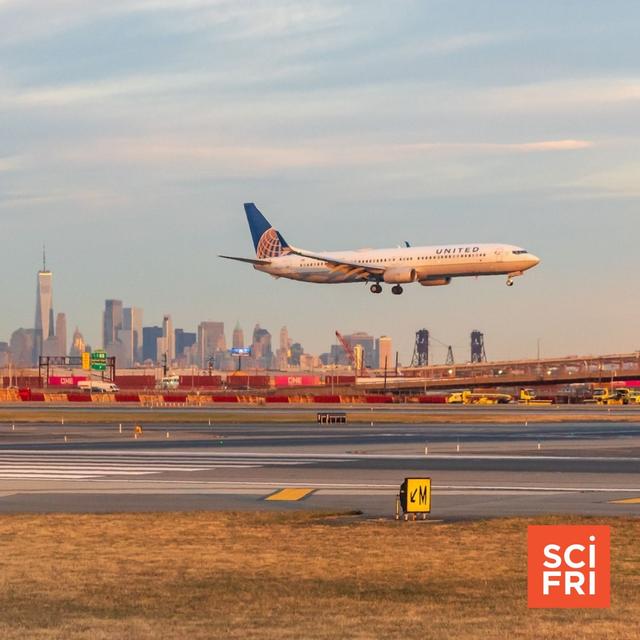
What Happens When Air Traffic Control Systems Go Dark?



Summary
Following recent outages at Newark Airport, this episode delves into the complexities of air traffic control. A former FAA VP and air traffic controller explains how the system works, the technology used (including the shift from radar to space-based), and the crucial role of human controllers. The discussion covers system reliability, backup procedures, staffing challenges, AI's potential, and the impact of funding issues, plus a compelling personal account of managing airspace on 9/11.Episode description
At the end of April, air traffic control radar surveillance and radio communication systems at Newark Liberty International Airport went dark for over a minute. A week and half later, radar went down again briefly. The Federal Aviation Administration (FAA) has since cut down the number of flights in and out of Newark. But, how does our air traffic control system work? How do air traffic controllers keep track of all of the planes in the sky? And what happens when systems fail? Michael McCormick, a former air traffic control operations manager at the FAA, joins Host Flora Lichtman to dive into the science of air traffic control.
Guest:
Dr. Michael McCormick is a former vice president of the FAA’s Air Traffic Organization, and an associate professor and program coordinator of Air Traffic Management at Embry-Riddle Aeronautical University.
Transcripts for the segment will be available after the show airs on sciencefriday.com.
Subscribe to this podcast. Follow our show on Instagram, TikTok, Facebook, and Bluesky @scifri and sign up for our newsletters. Got a science question that’s keeping you up at night? Call us: 877-472-4374
Hosted by Simplecast, an AdsWizz company. See pcm.adswizz.com for information about our collection and use of personal data for advertising.