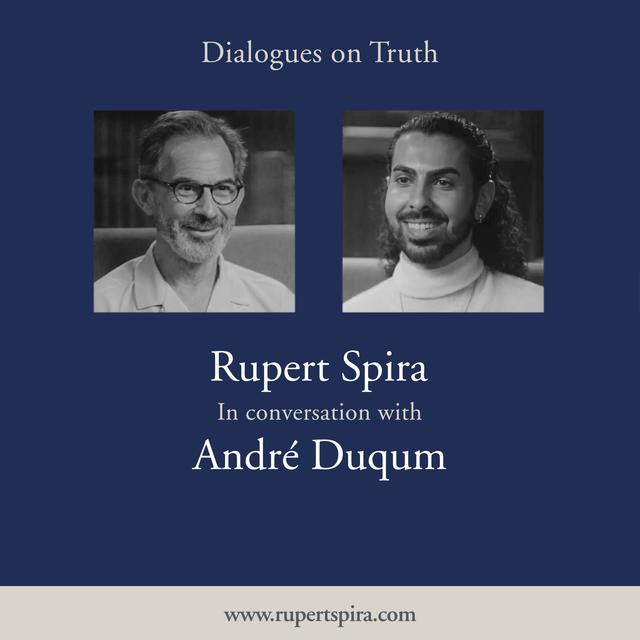



¶ Introduction to Self-Knowledge
Hey everyone, welcome back to the Know Thyself Podcast. Our guest today for many years has been inspiring countless people through his books, his talks, his retreats, and courses. And he's been supporting really us recognize the true nature of ourselves as awareness itself. The teachings of nonduality have immense implications in daily life and
It also feels like the main reason I started this podcast named it Know Thyself to begin with. And so I hope you enjoy this conversation as much as I'm about to. Rupert Spyra, thank you so much for being here. Thank you. Very nice to be here. Thank you for inviting me.
Yeah. It really is my honor. I've loved your talks and your shares and pointings for for many years. And so this is uh this is a cool moment. The question, who am I? Let's just start right there because we grow up often in an education system, learning so many things about the external world, not really given uh much Spaciousness to look inwards and to examine oneself internally. You have said that the greatest service one can render humanity is the recognition of one's true nature.
That's so profound. And I'm just curious what has led you to that conviction? All our experience revolves around ourself. And the common name we give to ourself is I, and that is why everything we say about our experience um contains the word, I am I'm having a conversation with you, I'm seeing this room, I'm experiencing s such and such. So uh ourselves stands at the at the very heart of our experience.
ourself is the most important element of our experience and and and therefore there can be no A more important question than to know the nature of ourself. Our whole life revolves around ourselves. We live our life in service of ourselves. So the most important thing to know in life is w what is the nature of the Of myself if my entire life is lived by on its behalf, if my entire life revolves around it, then
Should we not know the nature of ourself bef before we know any other thing? Could could there be a more important question than to know the nature of ourself? And and it is for this reason. Reason that that the words know thyself. Downs at the very foundation o of Western civilization. Of course your podcast isn't is named after that. So yes, self-knowledge is
I I would suggest that self-knowledge is the most important knowledge that anyone could could ever attain. And anything we know about the universe is filtered through our knowledge of ourself. As William Blake said, as a person is so they see. As we understand ourselves to be, so we understand the universe.
We can't really understand the nature of the universe before we understand the nature of ourselves. So yeah, s self knowledge is the most important, the highest knowledge and the and the greatest service. To t to know the truth about oneself must therefore be the the greatest service one could render humanity.
¶ Greatest Service: Knowing Ourselves
Aaron Powell If you could elaborate a little bit on why specifically it is the greatest service, uh what implications once one is self-realized that transforms radically all of their behaviors and the energy in which those behaviors are infused? And so, uh, why is it the greatest service one could render render humanity? As you said, the illusion of separateness starts to fall away and you realize our inherent interconnectedness and then
Your service starts to be really towards all of life around you as you see it as an extension of yourself. Yes. And so if you would like to share some more thoughts on that. Yes. So everything we know or could ever know about the universe. is filtered through our finite minds, f filtered through the uh perception, seeing, hearing, touching, tasting and smelling.
And then thought then adds its own layer of conceptual knowledge to the knowledge that our sense perceptions give us. So everything we know about the universe appears. uh through our finite mind appears in accordance with it. Our finite mind consists of
Thought and perception perception that is seeing, hearing, touching, tasting, and smelling. And it's no coincidence that the universe appears to us in the form of Lights, sounds, tastes, textures, and smells, there's a direct correlation between the our perceiving faculties and the way we perceive reality. the universe. So it's not possible to know the nature of the universe if we approach it through the finite mind.
All we will ever know when we look at the universe through the finite mind is a reflection of the limitations of our finite mind. If you look at white snow through orange tinted glasses, the snow is always going to appear in accordance with the limitation of the medium through which you see it. The white snow will always appear orange. You cannot
see the nature of the snow if you look at it looking at it through orange tinted glasses. It's not possible to know the nature of reality when we view it through the lens of the finite mind.
¶ Direct Access to Reality
And obviously knowing the nature of reality is is important. It's it's the it it's the the quest of of of of science, philosophy, the spiritual traditions. So We have to ask, is there um is there any experience we have? that is not mediated through the finite mind. Only that experience would would give us direct access to reality. Any other knowledge gives us mediated access.
to to reality and therefore cannot be absolutely true. So if we want to know what's absolutely true, we have to go to a to an experience that is not subject to the limitations of the finite mind. So Do we have any experience that that is neither a thought or or a perception? And in order to we we can't go outwards.
into the universe to uh to to find the answer to that question because everything we know appears in accordance with the limitations of the finite mind. So if you go inwards, what what happens? If we travel as it were backwards, through the layers of experience uh uh thought. feelings, sensations, perceptions, all of these are limited. So they they can only give us a a limited or relative view of reality. But if we go all the way back behind, as it were,
the the the content of of thought and perception. We we arrive at one experience. namely the awareness of being, or aware being, awareness itself. And this this This experience we have, the experience of being aware. Or aware being is the only experience there is that is not mediated through the finite mind, and therefore it is th the only access we have to reality, and that is why It's the only way to know the nature of reality.
And this this is this truth is expressed in many different ways in the in the Sufi tradition, as you know. Malayani, um whosoever knows their self knows their self. That's religious language for who whoever knows their self as they truly are knows the ultimate reality of the universe. Uh so so that's why all the the the religious and spiritual traditions, one way or another.
uh point to self knowledge as the key to to to understanding and and the principle really which on found uh civilization must be must be founded. if a civilization is going to evolve in a way that is consistent with um true. uh rather than evolve in a way that is consistent with the apparent evidence of sense perception, in other words, separation. Our world culture now is
predicated on a on a paradigm of separation, because we have allowed this our sense perceptions to dictate their model of reality. Everything and everyone is separate. That's our that's the uh the the foundation on which our world culture is based and of course we all know um this paradigm it leads to sorrow on the inside and conflict uh on the outside. So so this this self knowledge must be the uh the foundation of of of a peaceful, uh harmonious, loving society.
Meister Eckhart, we briefly mentioned before recording talking about one thing that he said was that theologians of the world may quarrel.
¶ Mystics Agree: The One Being
But the mystics of the world all speak the same language. Absolutely. And there seems to be those that speak from direct experience seem to agree, and those that study through the mind intellectually often can disagree. So what is it, I suppose, and it's a bit of a provocative question, that through immediacy of their direct experience, they get to know reality intimately as it is for all of us.
versus the finiteness of the mind you spoke to earlier, um we could disagree for millennia. Yes. Exactly. If we if we if we go through the finite mind, that is through thought and perception. Thought and perception fragment reality. and make it appear as a multiplicity and diversity of objects and selves and so i yes, i at the level of thought, th thoughts are always different. Thoughts are th there are always going to be disagreements at at the level of thought. Is is there one experience?
that is absolutely true. Is there one experience that everybody agrees on. Is is there an is there a knowledge that is prior to the differentiation of the finite mind, that is this knowledge that Meister Eckhard said is the one knowledge that all mystics agree on. And and yes, there is and it's not a um An extraordinary, mysterious knowledge that that only a a few special enlightened people had. It's the knowledge that
lives it in everybody as their very own self. It is just the awareness of being. So let me let me try and illustrate that. Let's let's take uh uh let's take a a Christian and a Muslim and and a Hindu. And a Jew, and asked them all about their life. vision uh of of th their idea of God or their vision of reality. Uh they will all have different ideas about it. And they'll they'll express their their understanding in different language, different terminology.
But if we were to ask each of these four people, turn your attention away from the content of your experience and just go back as far as you can in your experience to to the Your primary experience of yourself before any thought or perception arises, what do you find? And as long as they understood the question and participated in the in the experiment, they would all go back just to the experience of being.
And let's add in a few other people as well, uh um a saint, a criminal, an atheist. We do the experiment with a whole range of different people. We ask them to talk about their thoughts and feelings. They'll all describe different thoughts and feelings and there'll be conflict between them.
But we ask them all, turn your attention away from the content of your experience. Just go into yourself. Keep on going back till you till you come back to your to your primary experience. Not not some marvellous, extraordinary, enlightened just your Your essential experience of yourself. It's just the simple feeling of being, the experience of being, the awareness of being. And
Uh there can be no doubt, uh there can be no d difference in people's experience of being. The experience of being is is always the same experience. It's like let me give you an analogy. It's like if we were to ask Several people describe your bedroom. Well let's say you describe your kitchen. And everyone would describe the shape, the size, the colour, the contents, the the the
Everyone's description would be totally different. Now we say to everyone, okay, but now describe the space in your kitchen, which is after all the larger part of your kitchen. Describe the space. Everyone's description would be identical. Whether the kitchen was vast and spacious and airy or tiny and dark and cozy, the space is always the same. It's not qualified or conditioned by the four walls of the world.
mewn gwirionedd mae'n ymwneud yn ymwneud, mae'n ymwneud yn ymwneud. Mae'n ymwneud yn ymwneud. Mae'n ymwneud yn ymwneud. There wouldn't there's no just as there would never be any argument as to the nature of the space. in all these different rooms, so there can be no argument about the nature of being in all these different people. That is that that's the essential knowledge. All the great religions and spiritual traditions are f founded on that knowledge.
It's only when that knowledge has been overlooked and people start squabbling about ideas and the names you give to that being, that all the conflicts, all the great... religious and spiritual traditions are are founded on this simple recognition of the nature of being. And it I would suggest that also that knowledge also has to be the foundation of any peaceful, harmonious society. It it's a It it must be the foundation. It must be the paradigm.
¶ Happiness is Our True Nature
You pick a person randomly off the street and you ask them, do they want to be happy? Everyone's gonna say yes, right? And the eye that wants to be happy, many of us have different perceptions on, but we can't tend to feel it is this kind of locust of thoughts and emotions localized in our head, and we have this identity, personality structure in which we engage the world with. And it's through the perception of that separate self. that happiness is perceived to be gained through the possessions
and gain of exterior material possessions and an arrangement of relationships, something happening a certain way outside of us. Yes. And you're inviting the perspective to realize the source of who you are, which is happiness. And I often think of this metaphor of like the a lighthouse illuminating a beach. In many ways it has been said that what we are looking for is the place we are looking from.
And a lighthouse that's illuminating is almost like looking for its own light, failing to recognize that it is the source of its own illumination. And and so as we start to peel back the layers of our preconceived notions of self. To see who we are more fundamentally, that field of awareness that we can tap into. I would love for you to reflect on that and start to guide us with a direct experience of that, because I think it uh non-duality can be seen as a philosophically dense.
topic of exploration, but it's also very simple and the immediacy of direct experience one can come into contact with it. So what say you? Yes. Okay. So
¶ Analogy of Space and Being
There's one physical space in the universe. There are not numerous physical spaces. There's just one vast, boundless physical space in the universe that seems to be contained within numerous buildings. Or within numerous rooms. And each of those rooms, like the room we're sitting in now, lends a a quality to the space.
seems to as soon as the the building is is put up The building seems to limit, put a boundary around a certain portion of space, and the space then seems to Share the qualities of the building. large, small, dark lights b and and and so on. The space never actually becomes limited.
The space in this room is not actually limited by the four walls of this room. If we were to take a sample of the space inside the room and investigate it and we were to take a sample of the the vast space outside the room, they would be identical. Now, imagine that the space were aware. That and if we ask the space in this room, uh describe yourself. It would look around and it would say, I'm small, I'm dark, I'm cozy, I'm full of objects and and it's not describing itself. It's describing the
The walls within which it seems to be contained. But if we said to it, No, don't tell us about the walls and the objects and the people. Tell us about yourself. We want to know about the nature of yourself. Taste itself, become aware of itself. And if if it were then to describe its quality, it would never say I'm small, I'm dark, I'm limited. It would just say I am vast, I am without limits, I am boundless.
The space hasn't become boundless as a result of doing this. It it was always that. It just mistakenly identified itself with the four walls within which it seems to be contained, and just one clear look at itself. liberated f not from its limitations, that it it was never limited in the first place. It liberated it from the belief that it was limited.
So instead of this face now f feeling uh feeling I am I'm confined, I'm limited, I'm a fragment, I need something, uh uh I'm incomplete and so on, the space now feels I'm I'm I'm whole, I'm perfect, I'm complete, I need nothing. Okay, that's the analogy. So let's go back to our to our our experience. T tr try to make yeah co contact with this in our in our experience. Leave the analogy of this vast bandless space. Go go to the analogy of being.
C consider one being whole w without borders, um lim uh unlimited, i infinite a single being like like the single space. And that and now consider the single being. um temporarily enclosed within the within the body-mind and um mixed.
with the the content of our experience. By content of our experience I mean thoughts and feelings, uh sensations on the inside and perceptions of the world on the outside. So our sense of ourself is a mixture of of the fundamental being or being aware or awareness itself, plus the contents of experience. I would suggest that our being is like the space. It's fundamentally unlimited.
one's experience. We we could perhaps go there later. It's e it's easy to check in one's experience that one's being is is without limits. It has no it has no shape, no size, no gender, no colour. uh no age and and and so on. But in each of us, our being, our essential self is is mixed with our experience, with our thoughts, feelings, sensations and perceptions. So we don't experience ourselves as as this um complete inherently peaceful, whole,
being. We experience ourselves as a being that is limited, temporary, finite, and therefore lacking. Because we're a fragment. We we feel incomplete.
¶ The Longing for Wholeness
This mixture of infinite being plus the contents of experience makes for a a finite being. Like the space in this room seems to be a finite space. So although infinite being is is It's whole. It lacks nothing. So it's i the the common name for the absence of the sense of lack is is happiness. It it's com it's complete, it seeks nothing, it needs nothing, it's in a state of equilibrium, sufficiency, plenity.
But when our sense of ourself, our uh the fact of being or awareness itself is is mixed with the content of experience, mixed with our thoughts, thoughts and feelings, it seems to acquire limits. I no longer feel that I am this inherently free, inherently peaceful, unconditionally unconditionally fulfilled.
being or or awareness. I feel that I am a temporary, finite self that is made partly of of being or awareness and partly of the content of experience that the body and the mind. And so we feel we're a fragment. So this sense of missing something and the attendant longing to find something is the core feeling.
The separate self that we seem to be. It's the it's the one feeling that defines the the apparently separate self, this feeling I'm com incomplete, I lack something. And therefore in response to that feeling of lack, all separate selves All apparently temporary finite selves are motivated by one thing, to to be completed. to be whole again. Because because it in the memory, deep in the memory uh deep in the hearts of all temporary finite selves, th there is this memory of of of our
Of our essential nature, this memory of our eternity, this memory of our innate happiness. But but it's been it's been veiled. Our innate happiness has been veiled by the content of experience, and therefore everyone is longing. Now, to begin with in life, we we try to relieve this longing through the acquisition of objects, substances, activities, relationships and and and and so on.
And for many people, I suspect for many of your listeners, when most people, or at least many people, they've been failed often enough. by the world. The world has has failed to produce the happiness they seek often enough. They begin to suspect that happiness can't be find in the conventional world. And then we start on a great spiritual circle.
We rebrand the search for happiness in the world, the the search for enlightenment. But it's just the same thing. It it's just a it's just a a rebranding of the same longing for for something. Only now what we're longing for is a little bit more refined. And the objects or activities in which we seek it are a little bit more refined than the objects and activities that we used to seek it.
¶ Self-Recognition Ends the Search
in the world. It's no longer substances and and and so on. It's uh meditation practices and and teachers and and teachings and traditions and and uh disciplines and and and so on. But th they're all in in effect activities of the mind that we engage in for a s one a sole purpose, bringing to an end
This longing, this existential longing that lives in each of our hearts. We now call it the longing for enlightenment, for in the religious tradition we call it the longing for God, but it's all the longing for something, something that's going to put an Aaron Powell The dissolution of a separate self. most, if not all the well, I would say all the great spiritual and religious traditions, in one way or another.
say that what we really what we're really seeking is not an object, however refined and noble that object may be. It's within ourselves. And for this reason, all the the religious and spiritual traditions have elaborated numerous different pathways, basically to to to come back to the recognition of the nature of our being. Because when we recognise the the nature of our being, we we like like the the space in this room recognizing
i its essential nature. It it recognizes that it is already free, it is already whole, it is already perfect, it is already complete. And it is that recognition that brings to an end this unbearable longing. So that that is why in in one way or another all the religious spiritual traditions it uh say n know thyself. It's only that self knowledge that will um put an end to to this.
¶ Approaches to Awareness Exploration
Yeah. So let's examine a little bit deeper the direct qualities of that awareness because and perhaps if you'd like to start by What do you think is the usefulness of examining what we are not? like uh in in the realization or the dil dissolution of self and the acknowledgement of recognition of one's true nature, do you feel it's useful to examine Essentially the things that are in the space of this room that we can see and we are not, like the ephemeral nature of thought.
Aaron Powell I don't think it's necessary to examine them or to go deeply into them. The space in this room doesn't have to examine each object in this room to know that it is not essentially any of those objects. It's just enough to take one look at his side.
and see, I am obviously not the four walls in this room. I am obviously not the cameras and the lights. It doesn't need to investigate the cameras and the lights. But would would you say for people that are closely identified with their body as a separate self? For some people.
Uh I would say for for many people m nowadays, certainly for many people that are that are interested in in this, that the that the community of people that are interested in these matters has has grown in maturity over the last twenty, thirty years to such an extent that I feel that this very direct approach. Rydyn ni'n gweithio'r pethau,auauauauauauauauauauauauauauauauauauauauauau
um to one's true true nature of being or awareness itself is for many people sufficient. But I you're quite right. There there are some people um for whom their experience is so intense So distressing, so traumatic, that it's it's too big a leap. Too big a step to go straight from there. uh very distressing, traumatic experience all the way back to their being in one step. And and f for them, uh it it's it's it's important and and necessary to interpose various intermediary steps.
And and the first of those steps may well be to to e explore uh the content of their experience. The the the approach that I'm suggesting, this very direct approach, is is sometimes called that the direct path because we go directly from the content of our experience, whatever it is. straight back to the the fact of being or or being aware or awareness itself. And then what is sometimes referred to as the progressive or indirect approach would be an approach where we we go more slowly.
we we we uh th there are some intermediary steps. For for instance, to give give an example of one such step, if someone's experience is is very intense and and distressing and it's too much to ask a question such as What is it that is aware of your That question takes you straight back to the fact of being aware. Um irrespective of what you are aware of. If if that's too big a uh if the if their attention is too much.
so um identified with the content of their experience. One such intermediary step would be okay, um pay attention to your breath.
That's not such a radical question. You're you're paying attention to your thoughts and feelings and you just take your attention off your thoughts and feelings and you pay attention to your breath. It it You so you you dissociated to a degree from your thoughts and you're taking a step back from your thoughts and feelings, not all the way back to your being, but you've you've you've unhooked your attention.
from your thoughts and feelings. And you're now resting your attention on on a on a neutral object. N not a painful emotion, but but a neutral object. And and indeed a neutral object that It's transparent, it's empty, it's silent, and so on. So it's a very good object to give one's attention to. Then when one's attention has steadied on the breath for a while, you can then ask the question.
Okay, now what is it that is aware of your breath? And then you take one step back to your being. So that would just be one one example of a of a more of a more gradual approach, which is uh um equally legitimate, equally appropriate, depending on on on on the person.
¶ Awareness: Peace, Joy, Love
Yeah, amazing. So now further examining the qualities of awareness. It creates immediate freedom in the experience of that fundamental being that we all share. And uh I think it's useful to now have a more direct experience of what are these qualities. that one could a attribute to the fragrances or the the things that exude from our natural state of being of self. And um and so
Yeah. W for for those that want to go a little bit deeper in this moment to experience their direct nature, how how would you guide us to do so? So if we if we start with the the content of our experience, let's take our our thoughts. Thoughts by definition are always agitated, that that that is they're always moving. Um emotions uh and by emotions I refer to uh afflictive emotions. sorrow, loneliness, shame, fear and and and so on. So uh uh our feelings have a have a a sorrowful um
Aspect to them. So if we ask ourselves the question, um, what is it that is aware of our thoughts? What is it that allows our thoughts to be known? What is it that illuminates? What is it that knows them? That that that's what we essentially are, the presence of awareness. And the presence of of awareness is is them so here we we're we're separating our experience in into a subject and an object, but instead of considering the subject of our experience to be
The body mind, which is what we normally do, where whereas we know the the body mind is something I am a aware of. I am the the light of awareness, the the lighthouse. I'm the light of awareness that that knows or is aware of. the my thoughts, in indeed the entirety of my experience. And the awareness that illuminates or knows our thoughts doesn't share their agitation. It just observes.
uh the sun that that illuminates the earth. It doesn't participate in the in in in the whatever is taking place. It just illuminates. And likewise the presence of awareness the the the presence of awareness that is now listening to our conversation or knowing our thoughts is just silently witnessing those thoughts. through effort or practice or or discipline. It it is already such. It is just this inherently peaceful, silent, witnessing, knowing presence. Um, yeah.
sorrowful nature uh of our feelings uh i is known or lit up by awareness. And they also appear within the space of awareness. So s awareness has both this spacious quality And this um illuminating or knowing quality. The Buddhist tradition is sometimes referred to as luminous emptiness. It is empty like space, not a physical space, but it's an aware space, a luminous space that both contains all our experience and knows all our experience.
But the this this aware space in which I'm Mm sorrow and loneliness and shame and fear. exists, doesn't itself um share those qualities. Just like the space in this room, if we were if we were dancing in this room now or fighting in this room now, that the sp the space would not be modified by it. The space would remain as it essentially is. Uh And a w awareness is like that. How it might be if we meditate for thirty years. I'm talking about the awareness with which everybody
everybody, all 8 billion of us. The awareness with which all 8 billion of us. Now know our experience is already inherently peaceful and and without any any lack. It lacks nothing and and therefore we we say its nature is happiness. By happiness I don't mean an an emotion of happiness that comes and go. It's just this complete absence of lack, this complete ease, this this fullness, this sufficiency, this plenitude. So the in in that
So it's in relation to the content of our experience, in relation to our agitated thoughts, that we say the nature of awareness is peaceful. It's in relation to our sorrowful feelings that we say the nature of awareness is happiness. And w one other quality important to to mention that from the point of view of the finite mind, reality is broken up into separate objects and selves so that Finite mind that's a that's a paradigm of separation.
Whereas for for awareness it's like the space in this room. The space in this room Once it knows itself, how it really knows nothing of separ it doesn't feel separate from the space outside the room or or indeed the space in your kitchen. It it's it's from the point of view of the space there's one space. So likewise from the point of view of awareness or aware being, there's there's just That's just itself with with the it it's infinite, without borders and with all without division.
So from its experience of itself. It it there are no there's no separation, there's no otherness in it. And this absence of otherness is the experience that we refer to as as love. That's why love is sometimes said to be the the nature of reality. So peace, joy, love, these are the These are the qualities of awareness. And I'd like to add one thing to that.
¶ Beyond Qualities: The Absolute I Am
Uh strictly speaking, we shouldn't assign any qualities to awareness or name those qualities, because all the qualities and the names uh we give them are really qualities that we give to our experience, to our objective experience. It's legitimate to say that the nature of awareness is peaceful. W in contrast with our agitated thoughts. It's legitimate to say that the nature of awareness is
joy in contrast with or with reference to uh emotions. It's legitimate to say that the nature of awareness is is love, with reference to the separation that we normally feel. So these are legitimate concessions that we make. But what but what we're doing is we we're we're still um using the mind in in these cases the mind is trying to name the qualities of awareness within its own frame of reference.
However, the mind cannot know reality uh cannot know awareness how it is, because as we saw earlier, everything the mind knows is refracted through its limitations. Therefore, the mind cannot know the nature of awareness. Only awareness is aware. So only awareness can know about itself or or indeed anything else. So if we really want to know the nature of awareness, we must, as it were, ask awareness, what is your experience of yourself? That can be the only true
Knowledge of awareness. So if we were to do that, if we were to say I'm caricaturing awareness now. If we were to say to awareness, what is your i intrinsic awareness of yourself? What is your knowledge of yourself prior to the arising of experience? So thoughts and feelings and objects haven't arisen yet. Imagine they haven't arisen yet. It's just empty space. There are no buildings in the universe. There are no it's just empty space.
If we say to awareness, what is your experience of yourself prior to in other words, don't refer to experience. What is your experience of yourself? Awareness would never say I am peaceful. Because it hasn't yet known agitation. It would never say my nature is happiness because it hasn't yet known s sorry. It would never say my nature is love because it hasn't yet known separation. W what would awareness say if we asked it? W w w what what are what what is your experience of yourself?
it would remain silent. But imagine we were to depress it.'Cause they come on Tell us something true about yourself. The only thing it would say is, I am. That is a true statement about it. That's the statement that it would make about itself. If we ask the mind to tell us something about awareness. The mind says it is before. It is loving. So that's the mind viewing awareness as as an object. But in awareness's experience of itself, there are no.
other finite minds from whose point of view it it may be no there's just itself and i in its own knowledge knowledge of itself. And that must be the the the true knowledge of awareness. So th that's why it's said really that that the highest teaching i is is silence. And if we if we have to say something about truth. That that would be awareness's knowledge of itself would be the highest truth.
And awareness's knowledge of itself is just the expression. If it were to express that knowledge, it would be I am. And that that's why I am is said to be the absolute truth. All other truth, even that the knowledge awareness is inherently peaceful. It is it's relatively true. It's true relative to the finite mind's experience. But if we want a a truth that is Not subject to the limitations of a finite mind.
All we can say is I am. The I the I am is the absolute truth. And going back to our conversation about the different religions and traditions, that that That they would all agree. They would have to agree on on that. That that th th the nature of reality prior to the arising of experience. If that reality were to say something about itself.
would just say I am, which is why in the Old Testament it God's name is said to be I am. That that is the the the the highest expression of the of the ultimate truth.
¶ Mind States vs. Consciousness
Well said. the recognition of that I amness throughout our whole life and what we have memory of from being two years old to twenty to maybe one day a hundred years old, the continuity of the self that has been the same, the awareness, the I amness, the isness. The recognition of that is inherently liberating in the recognition that there is something unchanging amidst all that is changing in the apparent separation between all life.
And yet we have these different states of consciousness or filtrations with the mind that give us different, you know, the dreaming state, the waking state. Consciousness. And so when you examine these different states of consciousness, I would like to hear your opinion of, I guess, the utility and Uh I guess the yeah, the filtration levels from the dreaming state all the way up to consciousness.
Yes. I I would suggest that they're different states of m the mind. Mm-hmm. They're not different states of of consciousness. They're consciousness, as it were, i i it's like the screen and the different states of mind are the different programs that appear. So they're different.
So consciousness doesn't doesn't pass through any states. T take for instance um the transition we go through from the waking state, the so-called transition we go through from the waking state to the dream state. And the waking state where We're aware of the the the waking world, we experience perceptions of the world, sensations of the body and uh internal thoughts and feelings. And then when we when we fall as and and and we awareness are are aware of the thing.
Perceptions, sensations, thoughts and images, thoughts and feelings. Uh then w when we fall asleep, what really happens is that first of all, perceptions of the world leave us. sight, sounds, tastes, textures, and smells leave us. And then our sensations. I use the word sensations to describe our felt experience of the body. Sensations leave us. So when we fall asleep, perceptions and sensations leave us.
And only thoughts and images or thoughts and fe thoughts and images are are left. W we call that b and and we awareness. in the in the so-called dream state, instead of being aware of perceptions, sensations, thoughts, and images, are now just aware of thoughts and images. But awareness hasn't gone on undergone any change. It's just remained exactly as it eternally is. Only perceptions and sensations have been removed from it. The finite mind believes that
I've passed from one state of consciousness to another. No, not at all. It it's consciousness has just remained as it is. Perceptions and sensations have been removed, and now only thoughts and images appear. We call that the dreaming.
Consciousness hasn't transitioned between any state. And then at some point thoughts and images vanish, and we say we've now entered a deep sleep state. Consciousness hasn't entered a state, it hasn't transitioned from one. It just remains as it is, and in the deep sleep Sleep state, the so called deep sleep state. It is just
aware j just aware of being. It's not aware of thoughts and images or aware of sensations and perceptions. So consciousness remains, a as you as you rightly said, it's the it's this golden thread. that runs throughout all our uh all our experiences and and and and all our different states and whatever other states. That may be. But but conscious doesn't tr we
We awareness, I I use the words awareness and consciousness synonymously. We awareness don't don't transition through any of those states. We just remain as we always are, or more accurately as we Eternally are because in in the absence of the finite mind there's no there's no time.
¶ Universe as Infinite Consciousness' Dream
I was watching a video where you were talking about this and I wrote down what you said. If I may speak it back to you, I thought it was a very concise breakdown. Said, consider that. What we experience as the waking state is a kind of dream in the universal mind of consciousness. And that each of us as individual people are localized perspectives of infinite consciousness within infinite consciousness from whose perspective it perceives its own activity as the universe.
Yes. Okay. Would you like me to to to elaborate that? So I um I'm I'm using our experience of a of a dream. So in in a regular nighttime dream. uh you f fall asleep here in LA and you dream that you're walking the streets of Paris. But you don't experience the streets of Paris directly from your bed here in LA. In order to experience the streets of Paris, you you simultaneously imagine them within your own mind, with within your finite mind.
And then you simultaneously lo locate yourself within your own dream as an apparently separate subject of experience, from whom's perspective you see what seems to you to be the streets of Paris. But when you wake up you realise, no, it was just the activity of my mind. So the ac what is the activity of your mind appears as a material world, the streets of Paris, only from the localized perspective.
of the person you seem to be within your own dream. So your own mind divided itself into a subject and an object. And you had to do that. That's the only way you can experience the streets of Paris.
is by dividing yourself into an apparently separate subject and object and you view the object, the streets of Paris, from the localized perspective of the subject. You can't experience the streets of Paris from your unlocalized mind asleep in LA, un unlocalised with reference to the to the to the to the dream. Okay, that that's the analogy. Now consider that exactly the same thing happens but one step up.
That in just the same way that your finite dreaming mind is infinite with respect to the dream. It doesn't appear anywhere within the time and space that the dream takes place. Well consider that that and and and And that the the knowing with which you know the streets of Paris.
You you you you've localized yourself on the streets of Paris and you still know or perceive the streets of Paris, but the knowing with which you know your experience is not located in your body. It's not located anywhere in the dreamed world. It's located w in your mind a be asleep in in in LA. Now, consider that the very knowing with which each of us is now knowing this experience.
is not located in this body mind. Indeed is not located anywhere in the time and space that seems to be real from the perspective of this finite mind, that it's unlocated, that it's infinite. And it's infinite with respect to the time and space that we seem to experience in the waking state. So now imagine infinite consciousness, infinite awareness, dreaming, as it were, imagining. within its own infinite mind, th the universe, but it cannot perceive the universe directly.
Because the infinite cannot know the finite directly. There's no room for the finite in the infinite. So in just the same way that you cannot know the streets of Paris at night directly, you have to localize yourself within your own dream. The infinite, if it wants to Prior to manifestation, consider infinite awareness a a realm of of of infinite potential, in which there's no form, there's no manifestation, there's no creation. Potential is to be realized in form.
Infinite consciousness must uh simultaneously uh imagine the universe within itself and localize itself as an apparently separate subject of experience that that's all of us from whose perspective it it sees itself as the outside world. Now, from the point of view of our finite minds, the outside world seems to be something other than mind. We feel our minds on the inside and what What what is out s what we see as the world is outside the mind. We call that matter. We call that material stuff.
In just the same way that when you're on the streets of Paris in your dream, your mind seems to be inside you. The world made out of matter seems to be on the outside of you. When you wake up you realize, wow, it's all the activity of my own. The homogeneous activity of my old own mind. From our point of view, experience seems to be separated into a self and another, mind and matter, subject and object. But that's just how it is from our local
¶ Duality: Price of Manifestation
limited point of view. What's really taking place, I I would suggest, is that the one infinite whole re reality whose nature is consciousness or awareness or spirit or love, whatever we we call it, is as it were imagining. the entire universe within itself and simultaneously knowing that universe from a localized point of view. So awareness has, as it were, divided itself into a subject and an object. All manifestation can only be known from a subject object.
point of view. Ca can I go into more detail about why that is the case? Take any object. You the reason we can see an object is because we stand at a part fr at at a distance from it. Now um Try now to see your own eyes. Yes. Nobody can see their own eyes directly. Why? Simply because we cannot. You have to stand apart from something that you see. You need separation to have. You need separation. You need a subject-object experience.
The eyes are are of course not the subject of experience, but let's imagine in the context that the eyes are the subject of experience. Everything else is the is the object. Um the the only thing uh and and therefore everything else appears uh it has an objective quality to it, because we perceive it from the point of view of a subject. But but when the subject tries to see itself.
When the eyes trying to when you when when you look now to see your eyes that there's an emptiness there, that that there's a blind spot there, that there's There's no objective experience there. There's no manifestation. There's no creation. There's nothing. So it's exactly the same. In the infinite's view of itself, there is just itself, infinite, formless. There's no creation, no form, no manifestation, no If the infinite is to manifest the potential that lies within it in in form,
The mechanism by which it does that is this apparent division of itself into a subject and object. In other words, duality, the subject-object relationship, is the mechanism by which The the manifest th th the the potential that lies unmanifest in the infinite is realized in form. But it comes at a price. The in order to do just as you forget that you are sleeping in LA, you are perfectly peaceful.
and happy when you fall asleep in your bed in the lay but but you locate yourself on the streets of Paris and there you can be miserable. You can have a nightmare. your your natural state of happiness when when you're asleep in a likewise, awareness's nature if we go back to the conversation about its qualities, if if we can ascribe qualities to to awareness is nature, is is is peace. Plenitude, sufficiency, ha happiness, balance. In order to manifest it,
Potential in form. It must overlook itself. It must forget itself. It must localize itself as something temporary, finite, small, limited, located. So you could say that awareness pays for manifestation with its innate happiness. It localizes it becomes a fragment or seems, it never really does, just as your mind never really becomes a separate.
It's the same. Consciousness always remains as it is, whole, infinite, perfect, complete. But it seem it it seems to divide itself into into a subject and an object in order to to realise itself in form. But it comes at a price and that's why the separate it the the individual, the separate subject of experience, that's all of us. That's why in each of our hearts that that there is this wound, there is this longing, there there is this memory of our eternity.
Everybody why does everybody seek happiness? If we didn't know the taste of happiness, we wouldn't know what to seek. Everybody retains the memory of happiness in their heart. And if that happiness is concealed, then the the overriding. Uh uh motivation of that individual is to seek that happiness. Whether we call it happiness or God or enlightenment, it that that that's a good thing.
It it's all it's all the same search. And the search is not really for an object, a substance, a i it's it's not even for a marvellous a vision of God or it's not it's it's just a search it's just a longing to be divested. of the limitations that we seem to acquire from the content of experience and to stand revealed again a as we really are.
¶ Consciousness Learning Its Potential
I love that perspective that suffering in many ways is the price of admission that the unmanifest one consciousness must pay to have a localized perspective and apparent separation of itself. Yes. In many ways for the joy of becoming one again, um, but also on this uh the discovery uh like there's surely something that the one consciousness learns through having each unique perspective, an infinite amount of perspectives. Yes. It it learns about
the potential that lies within it. It it it and and and that's an an endless learning as each of our finite minds g go go on learn learning as there is as there is an expansion of of of knowledge in the mind. Consciousness through the agency of each of our minds is learning about the potential that lies within it. It's not learning anything about itself. In other words, it l localizes or seems to localize itself as a separate subject of experience.
uh in in order to to know itself as the universe, in order to realize the potential that lies within it. It doesn't do so in order to know itself. has to become a seem to become a finite mind i in order to know itself is is is absurd because everything the finite mind knows is by definition finite. It's impossible to know the nature of awareness through the agency of the finite mind, just like it's impossible to see white snow through orange tinted glasses.
Awareness doesn't assume the Localizing itself in the finite mind. qualities that it borrows from the content of experience. It must go back to itself. And and and that that's why this this um M most meditation practices in one way or another are are an attempt to to to travel back through the layers of experience until we get to that one experience that is prior to to thought and and perception, namely namely the awareness of being.
It seems like uh for those that are very densely identified with their body, we will continually uh
¶ Love and Shared Being
meet harsh realities kind of g guiding us, bringing us back to the essential nature that cannot be realized other through the recognition of itself. And uh Love I've heard you share is the recognition of our shared being. Yes. So do you see as love as essentially who we are or it is is it in is it in the recognition that we are it's who we are.
Love is the nature of being. Being is shared. Like like the space in this room is shared with all other spaces. The being in in all of us is is shared. We appear to be separate because we look at each other through the lens of perception. My perceiving faculties make it seem as if you're a separate body and I'm a separate body. But if we so if we believe the apparent evidence of sense perception, we're going to feel that you and I are separate.
We're g I'm gonna feel I'm a separate person and that you're separate and and and and therefore The uh it's for this reason that that not only do we love friendship, because friendship is an expression of our of the being that we are behind the the appearance. separation and and diversity. But it's why we particularly love intimate relationship, because an in intimate relationship is really it's not really
The desire uh to merge with another person or it it's really a desire to be divested of the sense of separation. And for a human being, intimate relationship is one of the ways that happens. But if we then attribute If if we believe that that the purpose of of the other is to provide love for us, then as we all know, that's the source of conflict in infant intimate relationship because the person can never Provide love.
of that shared being, but it is not a means to it. If if we use another person as a means to experience love, then then uh soon as they do something or say something that that that that we don't like or then immediately the feeling of love i is uh The love that w which was dependent on them i i is then broken and and and the relationship goes towards towards constant.
¶ Happiness Beyond External Objects
It really feels like God will pull us in through the face of many things until we realize that is what we are. You know, like the the re the intimate relationships that we have and you think about the uh The moment of orgasm, there is this complete loss of a sense of a separate self in a way, right? There's this inherent pleasure and the dissolution of Uh feeling like a boundaried, isolated. Skin encap encapsulated ego, you know?
And again, the longing for happiness where we really seek it for s through so many different things and we realize the futility of it coming back into rec the recognition of it or it originating in in ourselves. Yes, it it's um it's deceptive that there's a there's a kind of Deceptive twist in in our experience because you're right. the moment of orgasm or or any intensely pleasurable experience, we do experience happiness. We we don't just experience pleasure, we experience happiness.
So we can be forgiven. And and that that true thro throughout our lives. So, you know, when we were children, the the the ice cream, uh uh all all through our lives, we have had innum innumerable experiences. And they do all seem to have delivered the experience of happiness. So we can be forgiven, at least to begin with, thinking, well, you know, when I got the ice cream, I I did experience happiness. When when I won the game, I did experience it.
When I had this intensely pleasurable sexual experience, I did experience happiness. Therefore happiness must be caused by objects, substances and relationships and so on. But I I would suggest that that that the that the hint in all of those experiences is that the happiness we experience on the acquisition of each of those objects, substances, really it's always the same.
You know, so there there isn't a particular kind of happiness that tastes like ice cream and another kind of happiness that tastes like winning a game. or another kind of happiness that takes l tastes like sexual intimacy. That the experience of happiness is is always the same experience. And and that's the hint. That what you're actually tasting in that moment is the nature of your being. Happiness is what
being tastes like. So let me finish this. Um so what's happening, the the separate sub is a fragment uh as we Already seen it's always in a state of incompletion and therefore seeking to be completed. So it lives in a state of tension, anxiety, seeking, longing. When it gets the object, the substance, the activity or the relationship, that
Tension does come to an end because we've got what we think we want. And when that tension ends, the the the activity of the mind ceases. And as the activity of the mind ceases, We taste our true nature of happiness. And then the mind rises again and wrongly attributes the happiness we experienced to the ice cream. The game, the relationship. So after a while, then we realize: oh, it's always the same experience that the
That the object, substance, activity, or relationship just put an end to my seeking. And when my seeking, when the seeking mind subsided, temporarily, my true nature of happiness, w which was always shining, it is always shining, it's shining now, but it's veiled by the content of experience. But when th the the seeking mind
¶ Quiet Joy: Absence of Seeking
subsides, then our happiness shine. That's that's that that's the taste of being. That's the experience of joy. So after a while we we read oh the happiness is never it's not why don't I just go there directly? Well I don't need to go. via an object substance activity or I can just go directly. Doesn't mean to say that I may not still see.
objects, activities and relationships, but but I no longer do so for the purpose of finding happiness or peace or love. I do so for the purpose of e of of expressing it and and sharing it and celebrating it and communicating it. There's I I don't there's something about the word happiness in which I don't like using fully here because I think there is this cultural linguistic familiarity, seeing happiness as
dopaminergic pleasure rather than a deeper, which you're pointing to, a deeper satiation of the recognition of oneself. It is almost like The happiness you're speaking to is actually the absence of the search for happiness. And there is there is a quality of well being that exudes from it. Yeah, absolutely. I think that's a very legitimate objection. I it's more like
Just a taste of the plenitude, uh uh the fullness of one's being, the the sufficiency of one's being. I I use the word happiness just because it's the it's the common name for that experience. But you're quite right, it also has a an association w w with a um a superficial s passing state of mind. So I I I'm not a I'm not attached to to the word. Sometimes sometimes I use the word quiet joy, which which feels more Υπότιτλοι AUTHORWAVE
¶ Morality from Shared Being
Yeah. Yeah. I I love quiet joy because it it It feels I mean it feels it feels a little bit more precise, I s I suppose, for me. I in the recognition of that quiet joy, I I'm curious to hear your thoughts on morality, because in the recognition of our shared being suddenly you don't need to teach morality as you may have conventionally needed to because in the acknowledgement of our shared being, I experience you as self in many ways.
Y I do not need to be taught to hurt you just as I don't need to be taught to cut off my own hand'cause that just seems stupid, right? Absolutely. And and so what implications do you feel like the recognition of our essential nature has on how we relate to where we see it in our surroundings as well and how that changes on our daily life, how we interact with it. Yes.
Saint Augustine said Love. In response to a similar question. I don't know what the question was, but I imagine it was in response to a similar question. Saint Augustine said, Love and do whatever you want. by which he meant r recognise first of all that there is one being. And that everyone and everything shares that being. Now, as long as you lead your life in a way that is consistent with that understanding, you don't need to be told.
Don't kill anyone, don't steal anyone, don't hurt anyone, don't uh and so th those behaviors are the inevitable consequences. of the felt sense of our shared being. So the ten commandments are our...
for people who don't yet know the Ten Commandments in i in whatever form. For people that don't yet know and feel that they share their being with everyone and everyone. They th they're just meant to keep everyone Um the the the the moral precepts that that The ideally th th they're based, they should be based on this recognition of our inherent oneness, and they're just telling people how to behave in a way that is an expression of that oneness before they know that for themselves.
w when you know that for yourself then um one once and it's a progressive thing m more and more uh over a period of time and I I think it's a over an endless period of time. One's entire experience is um gradually and and progressively pervaded by this. By this recognition, it i it begins to inform our thoughts, feelings, actions, relationships and so on. And the deepening of that recognition.
¶ Transformation in Relationships
How do you engage with what used to have been the extraction of joy from relationships? Meaning if we're under the illusion that we're going to get happiness from somebody. then we're going to approach that relationship completely differently than if we come at it from the energy of sharing joy and the recognition of our shared being, then we're not looking to extract
so many things from the external world. And so from your own experience, I would love as you've grown in the deepening of the sense of recognition of who you are, how has it changed how you relate to the world? The first thing I know and and and feel about anyone is that th their being is my being and my being is their we share our being.
It's got nothing to do with whether I love them. So that's the very first thing I feel when I meet anybody or with them with with anybody, is that w I share my being with them. And then I relate. to them, um, physically, emotionally, in intellectually. Um In a way that is informed by that felt sense of our shared being.
um, which will express itself one way with my intimate companion, uh, expresses itself a different way when we're having this conversation. It expresses itself in a different way with the um the Uber driver that brought me here this morning. And indeed express itself a different way again with someone whose ideas, for instance, let's say I'm watching the news. Seeing someone express their ideas, I may disagree with those ideas vehemently.
But I s my first thing I know about that person is that I share my being with them. It doesn't make me agree with them. If I met them I probably wouldn't smile sweetly at them. But but because sometimes a Yeah. Is is necessary. But that can still come from a sense of your shared being. It's just the appropriate response. It's it's y y you may see someone that is either thinking and or behaving in a way that violates love, that violates the unity of being.
And it y you may have to uh meet that behaviour with something very forceful. Whereas uh um on the other end of the spectrum uh wi with your intimate companion, you that that that the whole relationship ha has has grown up uh um out of this shared sense of being and and the purpose of the relationship i is is to to to to to express this and communicate it and and and to celebrate.
So th th it's the same shared being, the s the the same felt sense of shared being can be expressed in many, many different ways depending on the depending on the the relationship, but it's but it's always the same shared being, the felt sense of shared being underneath.
¶ Intimate Relationships as Oneness
Now go on to go to go on to the second part of your question about how how does that look in in intimate relationship, the the the main just to add to what I've already said about that, the main thing is that I don't um I don't look to my companion to uh provide uh joy or or love for me. That's not if if I that that would be an impossible demand to impose on And what it shi it's not possible for somebody else to to produce
Or to provide happiness or or love for us and and to project that onto a onto a another person is is is a recipe sooner or later for conflict because you're going to be disappointed. They they they blink the wrong way. uh uh uh uh they react the wrong way or something and and then and then the the the the the felt sense of shared being the love is then is is then veiled by them. So I I I don't project my my uh joy or peace or or love on onto my
I don't hold her hold her responsible for it. And that keeps the relationship free of this um demand and expectation and disappointment and and keeps the relation free to be a a celebration uh of our shared being. Surely there is and the love that we share together, there's something deeper in the recognition that we otherwise may have not been able to recognize fully on our own. Do you think that's true? that uh are not yet aligned.
with the understanding that we're speaking of will sooner or later be exposed. So that's a very valuable thing that that a r apart from being a celebration of of love, a rel uh an intimate relationship, we'll sooner or later. shine a bright light on all those hidden parts of us that ha are not yet exposed to the light.
to the light of awareness. So a a relationship can be very valuable from that point of view, but an intimate relationship is is much more than that. And I I would suggest also m much more than just companionship. It i it is really at a at a human for for for most people and for many people at a at a human level it's the it's the it's the most potent Objective experience.
It's the it's the most potent experience of our of our shared being. It's the experience in which our shared being manifests most fully. this felt sense of of oneness and that uh uh deepens. In in in my experience it it it goes on and on and on deepening. In a way a marriage isn't isn't between two people. It's why traditionally a marriage is said to be a marriage in God. God is the religious name for our shared being.
So i it's it's like a sacred marriage in in which this the sense of separation um falls away progressively more and more and more in the relationship and this felt sense of our shared being shines mo more more brightly in the relationship.
¶ Enlightenment as Lucid Waking
I love that. The the a big obviously through line is the dissolution of separation and there are a myriad of different mirrors in which we can come continually as a reflection and reminder of who we are and what we are in our in our true sense. Earlier we talked about the difference between the dream state and the waking state, how from the perspective of consciousness, our waking state experiences is very much so also like a dream.
And perhaps enlightenment, if we want to use that word, and the recognition of our true essential nature is becoming lucid in the dream, meaning we become aware that we are in the dream. We're still in it, but we're no longer under the veil of just like we would become lucid in a in a dream state. Yes. That's a very legitimate...
Just going back to what you said about the waking state being a being like a dream, um the English poet William Wordsworth said, uh our birth is but a sleep and a forgetting. And he was referring to to to to just this, uh go back to the model of infinite consciousness. Uh
dreaming as it were the universe within itself and simultaneously locating itself as a separate subject of experience within that dream. So you could say infinite consciousness, as it were, falls asleep and and this is what we said that
consciousness uh pays for manifestation with its innate happiness. Uh that it falls asleep to itself. This is what what what in the Vedantic tradition is what's referred to as ignorance. I I don't use the word because it has a It it's equated in our culture with stupidity.
That's not what's in my ignorance, it means more just the ignoring. Consciousness, as it were, overlooks or forgets itself, ignores itself. It j just as you overlook your sleep you asleep in LA, you forget yourself when you seem to become the character in the in in the dream. Consciousness, as it were, forgets itself, localizes itself in the form of each of our finite minds, from whose perspective it sees itself as the world. But it's it's fallen asleep within its own dream.
So what what is from the when you're on the streets of Paris in your dream, you feel you're wide awake. You feel the streets of Paris, this is I'm in the waking state. When you wake up in the morning you had no you rest no, that was a dream, that was an illusion. But this we now feel we're in the waking time. from consciousness's point of view, which is the only real point of view.
Conscious is dreaming. W we are we are we think we're in the waking state. We're not. This is a dream. It's it's the waking dream that that that that you refer to. So in the context of that, w w would enlighten could enlightenment be considered um uh lucid waking as opposed to lucid dreaming. Yes, yes. Uh um just as in in lucid dreaming, y the dream goes on. But you're no longer located exclusively as the person on the streets of Paris. You've also taken a step back and you know you're dreaming.
Well, this is i enlightenment could be conceived as lucid waking. We we still view the world from from the perspective of a finer mind. It's the only way it's possible to view the world. But at the same time, we have taken a step back. And we know and feel that we are also the the one whole, of which all of this is an appearance.
When you reflect back on your own journey, have you has there been a predominant uh experience or two that really shifted you into uh becoming more lucid? Like did you or was it uh
gradual uh more gradual series of small moments. For me it was a a series of s uh uh small recognitions. Uh um story I tell sometimes of the Zen teacher, um uh Shunriyo Suzuki, who was He never had that moment where everything just Some people do, and and um you know we we know Rahman Mahashi is obviously what one of the uh uh um examples of Um and th those that they make there's something to talk about.
Benji, yeah, th th th this the these very sudden recognitions. But I would suggest for the vast majority of people it doesn't happen like that. And um they're obviously very inspiring stories, but there's also a a downside to them. It's that they equate enlightenment with an exotic experience. So exotic that you end up living in a cave.
regular guy. Therefore, this marvelous experience hasn't yet happened a and you go on seeking. Well in so called enlightenment or awakening is not a marvellous experience. It It's the simplest experience. It's just the recognition of the nature of being. It it's the simplest experience there. Just the simple recognition oh I used to think and feel I was temporary, finite, limited, lacking, and I re I'm I'm complete, I'm whole, I lack nothing.
I'm one with every it it it it can just be a uh the the mind cannot even notice to begin with. It can be so quiet. It only later three months. Later the mind think, oh, that's funny. I hardly ever react to anything anymore. Nothing upsets me anymore. I feel so friendly with everyone. It can be so quiet.
¶ Evolution of Meditation Practice
I think for most people it's like that. Certainly from having been speaking and writing about these matters for fifteen years or so in in my retreats and meetings, the vast majority of people just have these uh repeated recognitions, these repeated tastes of of of the nature of their being. and these and and these um they they become kind cumulative in in time are being or The fact of being aware, it ceases to be something that we
visit from time to time, in in between all our our other experiences. We we begin to to live there. We move in. We begin to live as And and the peace and the quiet joy. And the feeling of love that comes through that just just gradually becomes more and more of our felt everyday experience. And we never say, oh. Well we we never say, I'm enlightened, or we never feel I'm enlightened. And y you can't point to a time when it happened.
Uh you just you just find m it's mo becomes more and more your natural condition. That that's how On the path how has your uh r relationship with formal meditation changed because I think the formal, you know, spiritual practices and meditative techniques and contemplative meditation
um like carving time out for that is is is you know, particularly useful in the beginning stages of one's discovery and then one kind of I feel becomes meditative and it becomes less of a something we do and more of something we are. of course, still having its place. But I'm just curious what how has the uh formal know sitting down a meditation practice been for you. Um and has it, do you feel like shifted to I guess needing less of that? Yes. Yes. Okay. Um c can I
Can I talk about three different types of meditation in in order to fully answer your okay? Can I talk about three different meditations? So we spoke earlier about the the progressive and the and the direct path and and then there's another path which I sometimes refer to as the pathless path. So on the progressive path, uh meditation practice involves
directing our attention to an object. It might be the breath, it might be the mantra, it might be gazing at the sky, it might be imagining a flame. It's some kind of objective experience, we direct our attention towards it. And and there are numerous types of objective um Objective meditations, meditations where we give our attention to some kind of an object, subtle object. That's the progressive path. Then there's the the direct path, which is a a turning around of the attention.
Who who who am I? What what is it that is aware of all of these objects? So there's really only one, many forms of uh objective meditations. There's really only one direct path, although it can be formulated in in very different ways. Raman Mahashi formulated it in one way, but there are many other ways the um direct path can be formulated. But it's always the same experience at the the Turning around of attention. Not really the turning around. It's more like the sinking of attention.
Directing our attention outwards towards a an object, subtle object or a gross object. The thinking of attention, the relaxing of attention back into the source. That's the that's the direct. And then there's the the pathless path, which is uh not doing anything with one's attention. You're neither directing it towards an object nor are you tracing it back towards the subject. You are simply resting in being.
You because you've the the direct path has fulfilled or w whichever path, the progressive path or the direct path. They've fulfilled their mission. They've taken you back to your being. W once you're there, th there's nothing to do. It it's it's what Meister Eckhart referred to when he said, there you must
So all the all the practices, whatever our practice was, it it's taken us to to the awareness of being. Then there's no more practice, there's just an abidance. So self inquiry has turned into self abidance. So this self resting. Um and that's not really a path. That there's no longer a practitioner doing something or even ceasing to do something.
Resting not resting in being because there's no entity to rest in being you're you're just resting as being. So th th those are the three types of meditation. Now to answer your question. I spent uh twenty years on the progressive path practicing mantra meditation and and I loved it. It was a beautiful practice. That then kind of spontaneously at the end of that time it it turned into self inquiry. I began to ask myself the question, uh but what is it that is aware of
Who am I really? Or what is it that cannot be removed from me? Or what is always with me? The all these very different questions that lead recognition. So I then ceased stopped practicing mantra meditation, although the mantra continued the mantra continued to pop up in my mind and and indeed still does from time to time, just because I I practiced it for so many years, it was just it became like
breathing, but I stopped practicing that and then started engaging the self inquiry and and and I did that for fifteen years or so. But then uh Even that now has a has given way. I don't practice self inquiry now. I d I just abide in being a as being. That that's my it's become my It's gonna become my home. It's the place I live. I still sometimes choose to close my eyes and just rest in being, rest as being.
And someone looking from the outside might think, Oh, Rupert's meditating, but really I'm not doing anything. I'm just being what I am. I'm just being being. Just being aware being. Rwy'n rwy'n rwy'n rwy'n rwy'n rwy'n rwy'n rwy'n rwy'n rwy'n rwy'n rwy'n rwy'n rwy'n rwy'n rwy'n rwy'n rwy'n rwy'n rwy'n rwy'n rwy'n rwy'n rwy'n rwy'n rwy'. I'm still remaining as being, as awareness. And this is what they mean in the Orthodox tradition, uh, when they s speak of praying without ceasing.
A more superficial interpretation of that would be when you're out in the batch in the waking state, you're continually repeating your prayers, non that that's not what they really mean. They they they mean re remaining in touch with God's being in religious language, with God's being, with infinite being, your being. all the time. So then the really the distinction between everyday life and meditation.
It no longer holds. Although I do still sometimes just sit and close my eyes and and rest as being, but I wouldn't really be doing anything else something different from what I'm doing the rest of the time.
¶ Pitfalls of Spiritual Ego
I think that for those that have a proclivity towards the intellectualization of phil philosophy and non-duality perhaps being one of the most enticing, I guess, philosophies to latch onto with our mind as like a theory instead of coming back into the direct experience of it. Freud has the quote intelligence will be used in the service of the neuroses, meaning oftentimes the mind and its mind.
desire for more and more uh philosophical novelty and, you know, there there can be the pitfall of the intellect intellectualization of a lot of this understanding. And so I I would just like to ask you, I guess, a a couple questions about the struggles on this path. There can be this identification with this knowledge.
oftentimes to build it as a superiority complex. And there can be spiritual ego that comes online. And I feel like for many of us it's an inevitable part of our path that we encounter at some point of our journey, uh, for many.
I know I've experienced it. Um, and what do you what do you do? I guess. How do you support people that um may experience that or have or currently are experiencing a little bit of that kind of inflationary energy, um using spiritual concepts really disguised to infatuate or kind of embellish the ego in a way. I d I never have an agenda with anyone's ego.
I mean I I'm I'm familiar with with what you're what you're what you're saying. I I've I've experienced it in myself in the past when I thought that I was privy to some special knowledge. I I I now feel that. no special knowledge at all. Um, I feel that I have rather less knowledge than most people. Uh and the only thing I'm really, really sure about is just the nature of my being and and there's nothing special.
But so when I see what you're what you're suggesting in other people I I I notice it but I I have no agenda with it. I would never I I don't have an agenda with people's ego. I'm not on a mission to to uh I I see everyone as as infinite being and I just I treat them like that, however they however they
That's wonderful. And for your own personal path where you've experienced that, I suppose just reflections on that as a part of the path which we encounter. So maybe not uh how you would navigate it yourself. Yes. Uh the ego or the sense of separation cannot stand by itself. Because a as we said earlier, if pure awareness were able to say something about itself, all it would say is I am.
As soon as anything is added to the I am, instead of the as soon as the I am becomes I am this or I am that, it becomes limited. And this limited awareness is the separate. Base in this room only looks at itself, all it would say is I am. And in that experience it experiences itself as the vast base. space of the universe. As soon as you add something to the I am, as soon as you say I am small, I am dark, then the vast infinite space of the universe seems to become a temporary finite self.
As long as we just say I am, that refers to who we truly are. So we add something to it. We we become a an apparently finite separate consciousness. That's what the ego is, an apparently finite separate self. So the ego, the pure I, pure eyes cannot The ego cannot stand without identifying itself with something. If nothing follows the I am, that's pure consciousness. So the ego is always pure consciousness plus
some objective experience. So the and and that creates the ego, the the consciousness or awareness, plus thoughts and feelings. So in order for the separate self to survive, it must always identify itself with something or someone. It doesn't matter what. It can be something positive, it can be something negative, it can be I am depressed, I am enlightened, I am I mean even I I I am enlightened. is a as much ego as I am depressed because you're qualifying the I am.
The I am is I think there's no egoic attempt for survival. It it's it's a qualification of the pure I am. And and as long as the uh from the from the ego's point of view, as long as it's attached to something As long as it feels that it it's identical to something, then it survives. I am I am this, I am that. Doesn't matter what the this or the that is. It can be depressed, it can be enlightened, doesn't matter.
So even non-attachment. I am non-attached, exactly. I am non-attached. That's a position of the ego. I I am I am a teacher, that's ego. I am a student, that's the ego. I am I am plus anything is the ego or the separate self. I am divested of all objective content is the pure I am. So it's
natural. I I certainly went through it myself, that as you go from your ordinary, everyday seeking in the world, you start seeking in the spiritual tr traditions, you you're you become more refined, your understanding becomes more refined. what you're seeking becomes more refined. You just begin to identify yourself with slightly more refined objects. And of course you you mistakenly believe that this is a sign of enlightenment. It's not. It's just a more refined attachment.
And I certainly went through that. I felt at a certain state that I had I was privy to some some special knowledge, so I had some special understanding, which was just a kind of very slightly more refined ego than the ego that I used to be. And to be honest, I preferred Just regular egos. I just like um by spiritual people I mean I mean refined egos. Trevor Burrus It's ego with a uh A desire for even more refined specialness. It has no pretensions.
So but but at the same time I recognize it's it it's uh an a a natural progression for many people. I certainly fell in.
¶ Overcoming Ego: The Pure I Am
So I don't judge it when I see it, but I don't collude with it by taking an interest in it. I just ignore it. Was there a moment that sticks out for when you were coming out of it? No, I didn't notice a notice. I think it just gradually Yeah. I I I th there were I can't I'm not sure that I can give you any examples, but there were there were times when something about my circumstances reflected back to me. uh uh a feeling that I had that I was special.
I I can't remember a particular time. But I I remember that feeling often enough to think, Oh Rupert, you now you now invested your identity in having some special spiritual knowledge. So I yes, th there were definitely times when I when I feel that. Now I just feel so ordinary and regular. Do you think that all forms of attachment are essentially self-referential? Meaning Ramana Maharshi would refer to this I thought. There's this fundamental referencing of I this, I, that.
Um in relation to attachment to the physical world, um do you feel it's all self-referential? Well pu pure awareness is is prior to the I thought. However, i if awareness were to say something about itself, it would first have to give itself a name in order to refer to itself, in order to re Well, it can't really reflect back on itself because
In order to reflect on yourself, you have to stand apart from yourself and look back. So it's the s it's the finite mind that reflects back on itself. Awareness doesn't reflect back on itself. It's like the sun. The sun doesn't have to reflect on itself in order to illuminate itself. It just illuminates itself by being it itself. Like so awareness i is um just knows itself by being itself. It's only when it localizes itself as the finite mind that it has to become self-reflecting.
But so i if awareness were to say something about itself, it would first give itself a name and the name it would give itself is I, because I is the name that that which knows itself gives to itself. So I we could say is the first form. of infinite awareness in the finite mind. And as long as that I as long as nothing is attached to the I, that I represents that I is the name of of the infinite.
As soon as something's attached to it, it seems to become a finite self or a finite mind. So that the I thought is like um I see it like a like a portal. Take a prison door. If you're outside the prison, you go through the door in one direction, you lose your freedom, you enter captivity. If you're in the prison, you go through the same door in the opposite direction, you gain your freedom. I like that. The I thought is like a prison dorm. If the finite mind
takes the thought I or the thought I am and goes through that portal. As it passes through that portal, The finite mind loses its limitations and it stands revealed as the infinite So the finite mind passes through the portal I or I am and regains its freedom, it passes out of time into eternity. However, when the infinite When awareness passes through the portal in the opposite direction,
As long as it stands at the portal I, it's it's still free. But the moment it goes through that portal and acquires the limitations of experience, as long as something is added to the I am, it loses its freedom and becomes a an apparently separate self.
¶ Suffering, Meaning, and Death
Can I I want to put I guess a creative linguistic restraint. If you had to answer th these couple questions in like one sentence, what is your definition of suffering? Suffering is the veiling of our innate joy. And so similarly the cause of suffering is the overlooking of our essential nature. And the overlooking or forgetting of what we essentially are. And then the solution or liberation of that cause of suffering. Aaron Ross Powell The remembrance of our true nature.
When I say remembrance, I'm not talking about remembering something in the past. I'm talking about this deep remembrance of what we are now. Deep remembrance of what lies in the heart of ourself, but is for many people obscured by their thoughts and feelings. So this deep remembrance or recognition, not of what we might become if we practice hard enough, but this recognition of of what we are now, essentially. Do you feel that there is any inherent meaning to life outside of our own projections?
From the point of view of the finite mind, yes, there's a meaning. From the point of view of the finite mind. Yes, but from the point of view of of uh awareness, that there's no there's no meaning, there's no purpose, there's no n not not for awareness itself, but for the finite mind, yes, there is meaning. There's purpose. And that would be The primary purpose of every finite mind and indeed the primary motive of every finite mind.
is in one way or another to be divested of its limitations and to stand revealed as it essentially is, the eternal, the infinite. That's the primary motive of every finite mind. The secondary motive would be then to express the fruits of that recognition in everyday life and share it with humanity. I'm curious what you feel as we see that we have this localized perspective of awareness, right? We have the finiteness of mind. We come to remember and experience
the infinite, I guess, awareness within ourselves. What do you then perceive, I suppose, both from the m limitation of the mind and Th our true nature, the moment of death of the body. what could you have any yeah. Uh how could you get as close to absolute reality of truth of what that moment is and what happens to our portal of consciousness.
So if you going back to our analogy of space, if you think of the body as the four walls of this room, and our thoughts and feelings as the contents of this room, death would be like uh removing all the objects from this room and demolishing the building. Absolutely nothing happens to the space, it just remains as it eternally is. Some would say that what makes
a re or any room uh what makes a kitchen a kitchen, a bedroom a bedroom, a living room, a living room is the contents in which is what is in the room. Yes. Similarly, the limitation of our perceived self, our personality, um w ruperness, Andreness is the instead of the furniture of the room, it's our personality, our silliness, our uh cultural background All that seems to have been largely acquired since coming into this life from birth.
And if the walls of the building are demolished at the moment of death, would any of that uniqueness, do you think, if it's just empty space, transition into another portal? Yes. Um
¶ Individuality, Reincarnation, and Ocean Metaphor
Can we switch metaphors now? Uh to because I think the the metap of the uh um oceans and uh waves and currents in the ocean i is is a better metaphor to to respond to this question. So now instead of empty space and the the the um what we essentially are is is is the water, the ocean, formless uh um And what we are is a um uh w what we are as individuals is is a a bundle of uh
thoughts, feelings, sensations and and and so on. So imagine that that what we are is like a like like a current in the ocean. vortex of of thoughts, images, memories, feelings, sensations, and so on. Made only of the the water of the ocean, but but a localization of that water. The only stuff that's there is is is the one But we are we are a a a a localization and e each current in the ocean
Is a a a slightly different shape, slightly different configuration of energies, just just as every individual is a slightly different configuration of thoughts, feelings and so on. So each current has its own uniqueness. And when one current looks at another current it it appears as a form. It has its its own unique form and everything. Now, what happens when that current I think this is your your question, what happens the w wh wh when when when the current in in the ocean
vortex of energies. What happens when it when it dies? It it it disbands, it loses its integrity, it expands back into the ocean and um it gives up its content. to the ocean So that what before was a tight vortex of thoughts and feelings which constituted the individual, and that from a second person point of view looked like a body, looked like a form.
The the form that the energies disperse. They just they just disperse out into the ocean as as as ripples. They they it's as if the The current like it it donates. its experience to the ocean as it loses its form. I think something similar happens with us. The finite mind, the totality of our finite experience, our thoughts, our feelings, our utter uniqueness, our individuality.
our memories, which which now tightly configured in the when I look at the bundle of energy, the the bund the bundle of thoughts and feelings that you are, I I see your form and it it it um a clearly defined form. But but as the form dies, uh this tight vortex of energies, it it disperses out into the broader medium of consciousness. And and and each of our finite minds as it were donates
the entirety of its knowledge and experience to the broader medium of of com consciousness. So I don't think anything's lost. We w we lose our i i in in integrity, we use our uh our form, but but every thought and feeling it it we just donate it to the to the whole as we lose our form. How could what was simply acquired in this life, perhaps cultivated, perhaps conditioned, in the form of identity, personality, form, you said like a vortex of I guess energy of If
Those are qualities and th the wave of the ocean r you know returns, donates itself back to the ocean. It seems like what it truly is, its real essence, is the only thing that can join back with it. And so in terms of like us as individuals and our memory of self Do you think and is it in your experience uh that that carries over to other existences, perhaps another life, rein possible reincarnation? Possibly.
Uh remember all there is to a a current or a wave in the ocean i is the water. The the water never ceases being water and becomes a finite wave. It the the ocean is always the ocean. It's always so same thing. Th there is there is only the one infinite reality.
call it consciousness, awareness, infinite being. It it it localizes itself or seems to localize itself as the activities of each of our minds. But it never actually ceases to be itself. So it Just as the wave and the current is is the activity of the ocean, but always remains the the same the same Likewise, e each of us, as apparently finite minds, uh are the activity of infinite awareness. So
Nothing nothing new ever comes into existence. New forms appear, but the reality of of all of those forms of of of all of us will i i is the one infinite reality, consciousness. Just like the waves in the oceans are are just no new substance comes into ex into existence when a new wave
Or current appears. And likewise, when they disappear, nothing goes out of existence. The ocean just loses a temporary name and form. Well, when we come into existence, uh awareness a uh um assumes a new name and form and then it loses that
name and form, as as the ripples that constitute our our current or our wave um are are are dispersed into the broader medium of the ocean. And to now answer your question, there's nothing to suggest that those ripples that have lost their integrity of this form but have but have been donated to the ocean may not coalesce. Later, or some of those ripples may coalesce later and begin to form the beginning of a new wave or a new current, in which case some of the contents of the previous
Current will reappear in the new current. So the new current will have s share some of the characteristics. of the old current, because th the new current is made out of the residual energies that were dispersed into the ocean when that current dissolved. And that would be a theory of reincarnation that was consistent with it th this understanding. So that's possible, yes. And th and just w to respond to one last thing you said there, there could be some feeling of Continuity.
inherent current has has given given rise to the to the reincarnating. But the real continuity is not the content of the two currents. I i it's it's the it's the water that that is the reality of both. Just as the the sense of continuity that we have in our lifetime, we all now feel that. um a a continuity that our life has been one long life. We always feel it's been my life. We always feel I I've been the same me. I feel I'm the same me now.
as I was two minutes ago or two days ago or two years ago or when I was a two year old boy. I feel there's this continuity. It's always been me, well, what has been continued? my thoughts, my feelings, my sensations, my perceptions. Mm-hmm consider the body is is physical, ev even a physical body is changing all the time. So f from where do we get this? conviction that I've always been the same it's always me. I've been getting older, I've developed, I uh but we always feel it's it's me.
There's always a me that's this continuous thro what is that? Well the only element of our experience that is continuous is is awareness. It's it's from awareness that we derive our essential sense of ourselves.
¶ Unique Self and Human Experience
How do you then reconcile the impersonal nature of awareness with the unique expression of individual forms? there is this emerging distinction, uh, kind of being pioneered by friend uh Mark Gaffney, Ken Wilbur about the unique self. meaning we must wake up and it's inevitable to wake up beyond the illusion of a separate self.
To our true self, which we've been speaking to. And then now there is this unique perspective. Once realized the true self, there is this unique perspective in self that emerges that gets to be shared with the world. And so there is Once one awakens to true self, there is still this uniqueness in the way that uh life of the universe is seeing through your eyes. And And so I think that because there can often be this dismissal or bypassing in nondual circles.
where it's like the human experience is supposed to be diminished and viewed as this dream like illusory thing, which in in in perspective it is. Um and it it without the authentic realization of it, it kind of
Like shuns it away and dismisses it. So, what do you think about the emerging of the unique self? Yeah. I I think it's a it's a very valid point that In some expressions of the traditional non dual teaching, in some expressions of classic expressions of advait Vedanta, because it is recognized that what we essentially are is not our thought.
uh our feelings, uh the the body and so on. There is this initial turning away from the body. I'm not this, I'm not this, I'm not this. And if that's as far as the teaching gets, then this leaves us with a rejecting rejecting the world and rejecting the body. Uh but that's only that that's just that process of recognizing I'm not my thoughts, I'm not my that that's only necessary for one who was previously
completely identified with their thoughts, feelings, sensations. So as a as a as a temporary stage we have to turn away from that in order to recognize that element of our self that is that is the but then we we sh we we need to then turn back again towards the experience from which we previously separated ourselves and um realign it with this new understanding.
So we and I think that's what you're you're what you're talking about, this realignment process where where we we come back as it were to the the the person, the body and the mind that we from which we previously turned away solely for the purpose of recognizing our true nature. But now we turn back towards it and all its faculties are are still there.
If you were if if if you were um um a brilliant m mathematician before you'll still be a a a brilliant math. If if you're if you're a a good gardener, your your interest in gardening will still be there. You all all your your unique individual faculties will still be there. But now they are upgraded. I think this is what you mean by that.
Un that they're they all those faculties are no longer used in the service of the separate self that we once believed ourselves to be. They are now used in the service of the true self and its innate qualities of peace, joy and love.
So we you we then go back to to to to being a uh uh our life as an individual, but our life is then used in the service of this understanding, this love and understanding, whereas previously it was used exclusively in the service of the separate self with all its anxieties and fears and demands and so on. Chopping wood, carrying water. Perhaps something different. Trevor Burrus, Jr.: Yes. Well, you go i i you you may go back to chopping wood and carrying water, but you may also
Uh choose a different activity. You may realize actually the activity that I was engaged in before. I engaged in it solely for the purpose of fulfilling my existential sense of lack. Now that I no longer have that, I feel the fullness of myself. I don't actually want to engage in that activity anymore. It's not the right activity for expressing what I might I now want to express. You m you might choose a different activity.
Uh that you feel is better able to express your new love and understanding. So you don't necessarily go back to chopping wood and carrying wood. You don't necessarily go back to the same activity. You have the same faculties, but you use them in service of love and understanding.
¶ Relationship with Emotions
How does this similarly affect our relationship with emotions? Because some spiritual traditions suggest the transcendence of emotions, while others suggest fully feeling. Our emotions and fully feeling them. And so, what is what do you feel is the proper relationship to our emotional experience? The the emotions that um rely on the existence of a separate self at their heart. diminish in direct proportion to the diminishing of that separate cell.
So as the sense of separation um disappears, in some people it disappears like that, and in most people it's a it's a gradual diminishment. The sep the the the emotions that attend that sense of separation uh diminish. Diminish weather. Without your having Worked specifically on each individual emotion. There's a whole train of emotions, all of which r rely on the sense of separation.
for their existence. If that sense of separation diminishes, then the whole train of emotions that were dependent on it will also diminish without your working on Your feeling of abandonment, your feeling of jealousy, your feeling of lack, your feeling of because you've you've you've you've cut the root.
It's in the recognition that awareness is the container of all experience. How have you noticed emotions arise differently and how we relate to them from that s sense of recognition of our true self? Um First of all, there's less engagement with afflictive emotions because you feel more I am the space and this emotion is just an an old habit and not of of of hurt, um upset, jealousy, irritation, anger. So you feel whereas you previously used to feel I am that emotion.
And we used to s even um express this in our language, I I am sad. You now feel I feel sad. I feel the sadness. I'm not the sadness, but I feel it. So that's that's already one step back. You may not. formulated to yourself in this way, but you have actually taken a step back. You're standing in your true nature. I feel the sadness, but I'm not the sadness. So there's this distance.
your emotions that th they still arise to begin with, but they don't have that um persuasive power. You don't lose yourself in them. They still appear, they're still unpleasant. But they th they uh they appear th there's less resistance to them because
You know that's something you experience. You haven't you don't have su you don't have such an agenda with them. There's no need to get rid of them because you know that deep down th that they're a passing cloud. So you you tend to be more more um ymwneud â nhw'n ymwneud â nhw'n ymwneud â nhw'n ymwneud â nhw'n ymwneud â nhw of of emotions, that there's a allowing of them. But then in time, because we're no longer engaged
with the emotion. We're no longer feeding the emotion and in particular, we're no longer feeding the separate self around whom the emotion or on whose behalf the emotion arises. In time, those emotions begin to diminish. Because you're no longer standing as the hurt self. You are standing as the open, empty space of awareness that cannot be hurt. So then the feeling of hurt. It it it can no longer arise because the the self that feels hurt, it it you can't hurt this space.
When you feel that when you feel that space of awareness that I am can't be hurt by what someone says. Not only do you no longer need to defend yourself a w against what anybody says because you you know that it can't hurt you, but the the feeling of hurt doesn't arise so much. It really feels, at least in my experience, there's lessened there's less of this immediate reactionary energy to defend a sense of personhood.
Like when the identification has been lessened and it's not s as strongly gripped. then like you're like you're mentioning, we don't n have the feeling or the need to immediately defend it. And of course that has a profound effect on our relationships because you you say something that that um I think is untrue or unjust or unkind. And I don't immediately defend myself by attacking you. I just hear what you say. It it it may provoke a
Could provoke a feeling of of resistance, but then I and I don't em act on that. It just resistance rises, it falls, and we carry on our conversation. It may be necessary to address what you said or or or not, but but it it doesn't it doesn't break the the feeling of shared being. But normally the the emotion rises up and immediately that feeling of connection.
and the feeling of love is is is then lost, you feel hurt and angry and we all know uh w where that goes. So so yes, that has a profound not only does it have a pround p profound effect one's own internal emotional state. It has a very profound effect on one's relationships, i i intimate uh uh or otherwise.
Ramda said, if you think you're enlightened, spend a week at Thanksgiving with your family or something along those lines. It feels like we are tested most in our familiar relationships where there is The uh historic conditioning and perception of who you have been in relation to them through development. And uh and so there there's a sense of expectancy of that personhood to continue showing up. Yes. And uh is probably the most testing area or arena to see if
you can still create that sense of spaciousness when responding. Yes. And a a very good Preparation for that is n n not only when you've gone home and a for Thanksgiving and you're in the midst of your family, but even now, you know, um a month or a away or
you can think of of of members of your family that you have conflict with, that when you're together with them, th the old habits are so strong that that that you just immediately get into a state of tension with them. But you can think about that person now and when you think of them All you know about them is that they are the same being that you are. Whatever the conflicts, whatever's happened in your childhood, whatever that's happened in the intervening years, you
You f you see that person primarily as the same being that you are. That is tremendously hedious. Would you say,'cause that's very practical, like as we go home for the holidays or, you know, meet with our family, is there another additional, I guess, uh, tool we can use in the immediate moment where we would typically be conditioned to react?
¶ Practical Tools for Conflict
Um what have you found is something that we can either remind ourselves in, like perhaps that the other is self or with our breath to uh to to give us a chance at more but not just thinking of the other as as your the same being that you are, but but really feeling it. So feeling the other as your own being, irrespective of the history. That's the the best.
I think it's the best one can do in relation to the other. But in relation to oneself, in relation to the the the reactive emotions that may be provoked in you as a result of of of media, then it's it's to um resolutely re remain as this open inherently peaceful, aware, space. And and to remain to remain as that when circumstances are are easy, when when circumstances are neutral, it it's relatively easy like now to to to to feel ourselves as that.
But but the more established we are as that in relatively benign circumstances, the easier it will be to remain as that when when the bar is raised a little bit. And and really that's the That that's the test somebody once asked uh an Indian uh sage Admananda Krishnamanan, how how do we know when we're established in our true nature? And he said, and I'm paraphrasing, when thoughts, feelings, sensations, and perceptions can no longer take you away. They they've lost their power.
Experience has lost its power, objective experience, has lost its power to take you away from yourself. And usually, as you say that. Some of the some of the stickiest experiences. And therefore they're the best. places to that the w we we should look forward. But sometimes on on retreats peop people say to me, Oh, this it's all very well when we're here, these peaceful, loving, benign circumstances, but I'm dreading going home, you know, the
conflict in my way. No, no, no, you should you should look forward to that because if your peace If if you can only m maintain your peace in these loving, easy, benign circumstances, then it's it's a fragile peace, it's a state of mind, it's not the real peace. You should look forward. to going to a difficult family situation or or whatever it is to to to test your your stability in in in your in your true nature.
It seems like that shift of perception to see difficulties in our relational world as opportunities for awakening as they are. Is uh even that alone, that perception shift, I feel like changes how we engage with it. Absolutely. Yeah. Yeah. Yes. Yes. Yes. You look forward to it. It's an it's an opportunity because y you it's an opportunity. There are two possibilities. Either you lose yourself i i i in the conflict and s you know, s sorrow and
See it is the inevitable consequence that or you you you use the situation to establish yourself more fully in your innate peace. You feel your more peaceful straw. You you feel that you're being you feel the independence. Of your being. Nothing can hurt me.
¶ Balanced Path: Inward and Outward
And therefore I don't need to defend myself. I I can go fully into life. I can be open. I I'm it doesn't make you invulnerable in in the tr tr traditional uh sense of the word. You're it makes you open. You can be very sensitive. You don't need to defend yourself. Um because you know when I say no, I mean you experience, you feel at the deepest level that that you you can't be hurt. Your your peace is imperturbable, it's unshakable.
Uh you mentioned that Indian sage, I believe, who was referring to the various perceptions and experiences that could pull us away from the state of recognition. And I just wanna get your your opinion on this because I think there can be again this withdrawal of the human experience as like the place to get to. And I th and I know your take on it's really the deepening of a truest sense of of who we are and our essence.
And there is this human experience that's to be lived. I think this non-dual perspective can be seen sometimes, you know, from the outside in as sort of this inert like uh kind of boring reality that we get to. It's like, oh, it's just like peaceful people sitting over there that really don't do a whole lot. to me, getting in touch with this place intimately is very exuberant also. It is very enlivening. Um and at times, yeah, you know.
V it's very peaceful and still and that quiet Joey that we were talking to. Um But it it seems like sometimes the language that's used is almost a pushing away of aliveness when I feel like it's actually the opposite. Yes. Yes. I I I agree with Some expressions of the traditional classical Advaita teaching only emphasize
What I refer to as the inward facing path, the turning away from the content of experience. I'm not my thoughts, I'm not my peace. And that's a legitimate path. Most pathways start with that.
In order to recognize the nature of our being. That's what I call the inward facing path. But equally important is the outward facing path. When we then go back To the experience from which we previously separated ourselves, which means going back to the body-mind and to the world, being fully engaged again in activities. and relationships. And I think a a balanced path i is a balanced path in which these two approaches, the inward facing path and the outward facing path, are
But b both honored, both engaged in, both respected, but are in balance with each other. And uh traditionally I think that the Vedantic approach yw'r yw'r yw'r yw'r yw'r yw'r yw'r yw'r yw'r yw'r Ramana Mahashi uh said, um the world is an illusion. Only the Brahman is real. That that's the inward facing path, turning away from the illusory world back to Brahman, infinite consciousness, only that is real. But but then he said but but Brahman is the word.
There he's going back to the world there. You you f first of all there's the world. We turn away from the world, we go to the to to ourself, but then we go back and unite ourselves. Consciousness with the world. Consciousness is the world. But in in a lot of those teachings the inward facing path was emphasized and the outward facing path was implicit, but not often spoken about in the Vedantic tradition. In the tantric traditions, I think the opposite is the case.
The inward facing path, the the recognition of our true nature of pure awareness, is um implicit and often spoken about, but it's not emphasized in the way it is in the Vedantic tradition. But our one With the entirety of experience, including our difficult emotions and everything that comes up is is emphasized.
Uh there's something beautiful in that, but there's also a danger in that, just as there's a danger of remaining exclusively on the Vedantic approach that the danger that that you describe of th this uh negative attitude towards the body and the world, a rejection of of human experience.
Um but it's also has a there's something very beautiful about it, this emphasis on the recognition of the nature of reality. That that's really the great contribution that the Vedantic tradition made to to to to uh society. The Vedantic approach, the the danger is that the is you can get lot think you're engaging in spiritual life and actually just use it for an excuse for being lost in the content of experience. And we're in California, I don't need to describe that Um
But but the very beauty so that's the danger of it, but the very beautiful uh uh the great contribution of the tantric approach is this reintegration of the understanding with all aspects of of our life. So I feel that the Vedantic and tantric approaches. Usually um exponents of the two drift different traditions ta take take shots at each other to to try and to to t to to try and um assert their
their superiority. I I don't see it like that. I feel that there are actually two aspects of the same tradition. The one emphasizes the inward facing path, the turning away from experience, the other emphasizes the reintegration of this understanding. in all aspects of our experience. And I think a a a balanced path is is one in which these two approaches are are are really balanced.
¶ Thoughts: Reduction and Creativity
A quote that really embraces that paradox beautifully is Sri Nasargatada's uh wisdom tells me I am nothing, love tells me I am everything, and between the two my life flows. Yeah. That's beautiful. Yeah. Yeah. Exactly. In our everyday life, we have on average about sixty to seventy thousand thoughts per day. And largely we are tr troubled with the ones we are invested in. Um and uh I'm curious, similarly as we explored the implications awakening has on relating to our own emotions.
what do you feel like uh the implications to our own thought? I think our thoughts arise for many different reasons. One, uh um a response to a practical situation. Um I have to be here by ten o'clock, I'm not sure where we are, so I'm going to get there at nine thirty. I must call an Uber and et cetera, et cetera. That's a whole series of thoughts.
I don't know how many thoughts that was, probably twenty thoughts, let's say. But they were all in the service of of enabling this conversation to table absolutely nothing problematic. They're they're not particularly interesting thoughts, but they're not problematic thoughts. I I'm
invested in them for as long as they last, but when they've gone, they've gone because they've they've brought me here. I don't need to think about that then. Practical thoughts. Perfectly legitimate. There's no sense of being a separate self i in those thoughts. They just arise on behalf of the practical Um there can be c creative thoughts.
um your desire to to have a podcast and to share this understanding and to to to talk to people about this understanding and and to um everything that you need to do to to put that on. W What are you really doing? You're you're you're you're sharing your love and understanding and you're wanting not just to keep it in your own heart, you're wanting to share it with thousands of people. That that that's creative.
So th those uh creative thoughts, th they involve a a a degree of practical thoughts, your cameras and your lights and everything but but really the idea behind that it it it And you've thought a great deal about your work and who you're going to interview and you do your research and so a lot of thoughts go into that. There's no ego in those thoughts. It it those thoughts arise on behalf of love and understanding. No problem with them at all.
Um thi i if you need um i i i if you get sick or if you need if if you need lunch. Practical thoughts that arise not on behalf of a separate self, but on behalf of your body. Your body needs taking care of, or the body of anybody else that you have to take care of. Those are perfectly legitimate thoughts. But then there's one and then there are other thoughts um that arise on behalf of our love of truth. Uh our the investigative thought.
The the kind of questions that that that you've been that you've been asking me and the kind of questions that we've all asked ourselves for who am I really? I can't really be my thoughts because they're always coming and going. I can't really be my act Who am I? Or the reading we've done, all the exploring. That those are thoughts that arise on behalf of our love of truth. There's no ego.
There's just one small category of thoughts that that we have that contains at their origin and concealed within them the sense of being a temporary, finite, psychological self. And those are the only problematic thoughts, and those are the thoughts that diminish. All the other thoughts, the thoughts that are necessary for me to come to visit you, the thoughts that are necessary for you to take care of your body, the thoughts that are necessary for you to
put put on this podcast. The thoughts that that that uh you have with a friend or or or a companion to to to uh to to share your love and celebrate your love. There's no ego in those sorts. They continue. Just the thoughts that are based on the separate self that diminish. And as
a a f fairly large proportion of our thoughts do indeed arise on behalf of the separate self. There is a reduction in thinking. The mind quiet Only those thoughts remain that are in service of love and understanding or practical situation or Investigating. Yeah, thank God. It's much more peaceful when Yes. Yeah. And actually it it um Now that your mind is not occupied. for the most part with thoughts that arise on behalf of the separate self, the mind is then is then free.
For much of the time it it will just be quieter and and there'll be periods of stillness. But also you're then free to use the mind in s this is going back to your what was the phrase you that the um about the self, not the um Ken Mobile. And actually you're freer. You tend to be more creative.
Um because you because you you you've got so much more spare time and energy to use in service of your creative projects, the expression of love and understanding, whereas previously all those all that time and energy would have been spelt on your on on on your And the feelings of Yeah, it feels like there's so much energy that is freed up when we're not continually recording things mentally on a personal basis. Yes. I feel like that takes up an immense amount of bandwidth. Yep.
And like you beautifully said, that energy can then be rerouted to the unique self in the service of others and its creative impulses and a lot of those other thoughts. Exactly. Which are amazing.
¶ Timelessness, Simplicity, and Expression
Uh as we're'cause I could you know, the time is flying by with you. We've been gone for about two and a half hours. This is a Are we really? Okay. Time in time in indeed has f flown by. Yeah. Yeah. I mean on that note it really does feel The more that we're in that space of it is like a timeless experience. You live more in your being than in thoughts. The sense of time or also'cause you have a conversation like this and it it's why it th that the phrase we have, um time flies when you're happy.
When you're happy you're in your your true being. You're not in your in you you're not on the horizontal line of time in your thoughts and me. You're you're you're in the vertical dimension of being and there's no time there. So it seems that W I I'm surprised we've been here for two and a half hours a day. And on the contrary, for the times that we feel very identified in our suffering of a minute as an eternity. When's this meeting going to end?
Uh Having the context, the understanding of the conversation we just had, I'm curious. Is there anything else that you'd feel like you'd want to uniquely contribute, um, for the audience and community of listeners that are tuning into this conversation that if you have made it this point, this far into the conversation, it's uh it's quite incredible how substantial this
level of devotion of inquiry is growing on the planet right now. There is more and more of this matured deepening of a sense of self and desire to truly grow one's self knowledge. And to share that in the service of others in our own unique capacity creatively in the world, whether it's through teaching or podcasting or art and music or whatever. It could be also in the silence of
you know, beautifying your garden, whatever it is, right? Um, anything else you'd like to contribute as we're all waking up to the shared consciousness that we have? and are building towards systems in the world that are representations of love. Anything that you'd like to share? So open floor for yeah.
I think that perhaps just one thing to add. We've spoken about it a little bit, that it it's inevitable that Wherever this understanding has arisen on the planet, uh in whatever place and at whatever time, it's expressed in the language of that time. So for that reason th there are many, many different expressions of the same understanding and sometimes the
expressions are so different that they seem to conflict with each other. But the deep understanding that they express i is the same understanding. And also that as people struggled with this understanding and and asked questions about it and and didn't know what what didn't know what the Teacher or whoever it was that was it didn't know what they they meant. They would ask questions and and the person speaking about it would then develop
um methods and pathways and techniques to help them to try to uh understand it more clearly. So as a result of this, a great proliferation of ideas and methods and techniques and You referred to this earlier. It sometimes it seems to be just a sort of a a a a maze of complexity of ideas and no it's so simple. That's what I'd like to say. What is being pointed to is so simple. The complexity
is just due one to the different time and place in which the expressions have been said over the the expression of this understanding has has been expressed over the centuries. And two, uh our difficulties and objections which have caused the teachers in the past to have to elaborate all sorts of different methods and pathways and it all seems so complicated. It's so simple. It's just about the recognition of the nature of our being.
That's it. You could you could take you could take three thousand years of religious and spiritual tradition, pushed into Chat GPT and say you could you could you could feed Every scripture that has ever been written or spoken by anybody in the last three thousand years put the whole thing in itself. And say express this in a sentence.
Th th i it would give you numerous variations. But one such sentence would just be peace and quiet joy are the nature of your being, and you share your being with everyone and everyone. simplest it's just the recognition, just the simple recognition of what we are. Now at the deepest level, it's inherently peaceful, it's fulfilled, and we share it with everything, with with everything and with everyone. That's it. That's all you need to know. It feels the more that we reside in that place.
the more that we make space for something unique. true and profound to emerge from within us.
¶ Concluding Thoughts and Resources
And uh so any thoughts you have on that as we close. Well yes, and and uh not only the more we reside in that, something profound emerges within but within us, but uh as you say unique, because that that that understanding that
It's the same understanding in everyone, but it's then filtered through our particular mind and body. So we all, those of us that express it in one way or another, I don't mean just in words, but there are so many ways that you can express this love and understanding, not just in words, uh, but in in so many different ways. for those that want to really they have a a deep desire for the deepening, for th the the longing for the deepening of this recognition of their true self.
Where can people find what you're doing? You have amazing retreats and books and things and just anywhere you can point people um towards the Yes. I think over a thousand clips now on on YouTube conversations that I've had with individuals on on retreats and meetings and and guided meditations. So y YouTube is the main resource, but also on on my website Um there's a there's a a vast archive, everything I've said or written for the last
Fifteen years is there, or all my books and and but YouTube would be the place to start. YouTube and then my website, ru uh rupertsparrat.com. Amazing. And we'll link all that down in the description below. I uh I'm so grateful to be able to do this podcast where I can not only have these conversations but make friends with um individuals such as yourself and just truly grateful to have a friend and brother on the path and um
I love this conversation and the many different nuances we explored and the distillation of the simplicity that you offer as well as is uh very unique in how life is using you uniquely. So Thank you immensely for the work that you're doing and uh the continued efforts. Um and looking forward to continuing the conversation in in the future. Likewise. Well thank you very much. It's been a pleasure.