



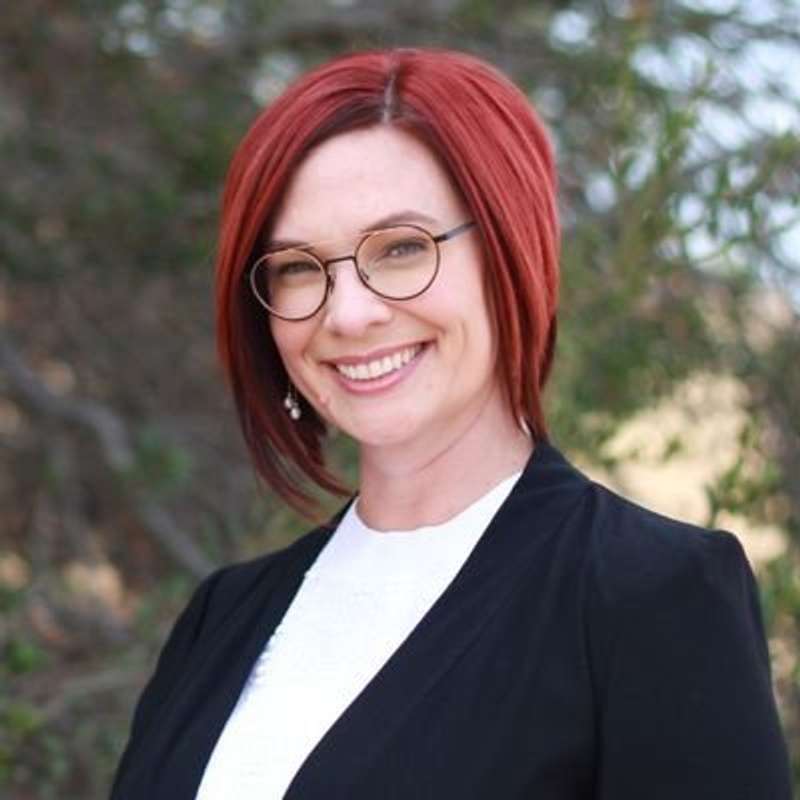
 Jessie Cruickshank
Welcome to the ordinary discipleship Podcast. I'm Jesse Cruikshank, and we love to talk about how people are responding to the call of God on their life. If you are unsure if God is asking you to do something, then this is the episode for you. So I have Jacqueline and obey Arellano, and we are going to talk today about their life as ministers in Mexico, and just the things that God is doing in Mexico, in the in in the ministry that they're working
with. So they have experience all over the world. They're going to share a little bit about that as well. Jacqueline, Ove so happy to have you on today. Thank you for being with
us. Thank you very much for having us. Thank you so much for having us. Well, ladies, first always. My name is Jacqueline Arellano, and I serve with exponential Espanol. We have been serving with exponential USA since about 2010 ish 11, and so we now have founded. OB has founded exponential Espanol in 2020. Yeah,
Jessie Cruickshankit's a great year to found something, isn't it? Let me start a new ministry. It's funny. Yeah, it was, it
was a great year. It was actually because things were just low. It was just a good year to focus on getting it, getting it off the ground. Yeah. OB, you know, leading exponential spaniel together, lead exponential Spaniel, and it's been great the last five years being on this adventure helping churches, helping Hispanic or Spanish speaking churches, be able to to go beyond addition into reproduction and multiplication of churches. So that's the area of ministry that we're
Jessie Cruickshankin, yeah. So for those of the audience that don't know what exponential is, just say a little bit more about the becoming five, and just give them a little idea of what the church planting or the church multiplication paradigm is. So
yeah. So the exponentials mission is to see that multiplication of churches becomes like the measure of success, so that more churches can become church planting churches, and be able to reach more people. There's five levels. Exponential has done research, and we've discovered there's five levels of churches, and I'll briefly go through them, level one or level churches that are in decline,
churches that are subtracting. So I mean, just like you know, the level shows that churches are declining in in attendance, in membership, in impact, in their neighborhood or community or city. Level two is a church that is plateaued pretty much. It's stuck. It's not growing. It's not in decline, either. Level three are the church of addition, those are churches
that are growing, growing in numbers and impact. Level four is a church that is reproducing, churches that are starting to reproduce who they are, what they do, reproducing churches in other parts of their city or state or country, wherever, whatever whatever vision they have. And the level five churches are the church of multiplication. Churches that are multiplying. Level five churches are churches that are reproducing. So level four but are reproducing to the the
fourth generation of church plants and beyond. That's, that's what makes them a multiplying church, church that are leaving a legacy of multiplication. There's a percentage so 80% of the churches, 80% of the churches are level one or level two, so in decline or plateaued. 13% are adding or growing. 7% are reproducing and multiplying. So level four, level five. So our mission is to see that 16% of churches become level four, level five, reproducing or
multiplying churches. So what we do is we offer resources, through books, through gathering experiences, spaces where leaders can be poured into sharing resources to help them leaders become multiplying leaders that help their churches become multiplying churches.
Jessie CruickshankI love it. And so you guys are doing that work now in Mexico,
right? So, um, yes, yes. Ish. Tell
Jessie Cruickshankus about that. Tell us about how there's a journey we're on. Yes.
So we have been serving the Spanish speaking church for the past four years. That's fully been our concentration is the Spanish speaking five years now in the United States. And so in the end of last year, we made the move to Mexico City, so we can strategically be positioned in Latin America to expand now to Latin America. So everything that we have learned through exponential USA, and then also through the work that we've been doing through exponential Espanol, now we're trying to see
how we expand into Latin America. And so that's where we're at right now. We are starting off the year trying to meet and. Be in spaces where we get to meet more Latin American leaders that are passionate about multiplication as well. So that way we can continue growing and bringing the resources that we have accumulated for the few years, the past few years, to
Latin America. Yeah. So here we are in Mexico City, in Mexico City, like you mentioned, strategic, because it is a hub that is connected to every country in Central and South America, including Mexico that's in North America. But we can, we can go to any major city of any country in Latin America. And also we can, because we're still serving in the US. Exponential Spaniel is still doing work in the US for the Hispanic churches in the USA. I'm
Jessie Cruickshankglad you didn't abandon us, not at all, not just expanded. You expanded
your tent. That's what that's all we're doing. Expanded our tent. Yeah, we're expanding. We're still committed to the Hispanic church in the US. That's not changing. So from Mexico City, strategically, we can go to anywhere in Latin America, in South America and Central America, but also we can go to any major city, and we're as connected, sorry, in the US, we're as connected as if we were living in in the US. Still. So, so it's strategic. Why also Mexico City?
Jessie CruickshankNo, no, that totally makes sense. So my question that, like the first one that comes up is, what do you find that's translating well, because it feels like, wow, that is a universal struggle or paradigm or learning, regardless of what country you're in or what people group you're working with, and then what are you finding that
seems a bit more contextualized? You're like, wow, okay, that's the thing that they're dealing with the Hispanic churches or Spanish speaking churches are dealing with in nor in, you know, the United States, but it doesn't really transfer that well to, you know, some of the the more rural parts of Central and South America. Or is it the cities that are the same? Is the
culture that's the same? Like, like, how are you? How are you discerning what translates and what needs contextualization and maybe even additional resources or specialized resources.
It's such a complex question. I can go diff we can go different directions. So culturally, it is very different than the even than the Hispanic culture in the US. Even you were saying earlier today that what's the percentage of Latinos in the
US that are immigrants from Latin America. Did you say? What was that so, out of the Hispanics, or Latin Americans that are in the United States, only 33% are non US citizens from the 65 million people Latinos that are in the US, 30% of that are non US citizen, that are essentially immigrants from a Latin American country. So
Jessie Cruickshank70% are US citizens.
Yes, US citizen or resident. They are with legal documentation into the in the United States. And they can be already third, fourth generation as well. So we've been in the United States for a few years,
Jessie Cruickshankfor a few years. I mean, I live in, I live in the West, right? I mean, I know that the border of Mexico came up to Pueblo Colorado, right? I mean, like, I'm aware of our geographic history, right?
Yeah, kind of crossed us a little. So the context for those third, fourth and generations in the immigrant even in the United States, is very different from immigrant people that are coming to the United States to the people that have been born there through generations, or were there
before even the border crossed. This is very different to what it is in Mexico and the rest of Latin America, and that's why I mentioned understanding a little bit of the his the Latino context, and the subcultures that are in the Hispanic context in the US, is necessary to understand, or even for me to say, well, let me compare the culture of Mexico, where we're in right now, or cities in Latin
America, to the US, because it's you can compare it. There's so many subcultures, there's so many generations of Latinos, and only 30% 30 Yeah, 30% are immigrants. So comparing it like side by side, it's very difficult, right? Because also within that 30% or even the 70% the the 65 million Hispanic Latinos are in the US. There's every country in Latin America represented, right? So the majority, yes, is Mexico, and then there's a few others that have high percentages. But even
that, it's difficult to compare side by side. But as far as like church culture goes, which is the area that we're serving in, it's also very different. There's this weird dynamic that I think I came to discover that I'm I don't know if it's that, it's been proved, but at least I can observe this, and it boggles my mind, and this, this will help understand the culture context, difference of churches in Latin America and in the US.
So for instance. Churches, the Hispanic church in the US, the majority of Hispanic, Spanish speaking churches, they actually look up to their churches in Latin America, their churches where they came from, whether it's their sending church, or the church where they became Christians or an influential church in Latin America, because they understand the language, the context, all that stuff, right? But they look up to them.
And then what's happening? The dynamic is that the churches that they're looking up to in Latin America, they are actually looking up at the church in the US to be influenced by them. Does that make sense?
Jessie CruickshankOh, totally, totally. It's like, who's your spiritual hero?
These ones are being influenced by that. So in essence, they could be looking directly to their neighbors and learn from them, but many are not doing that. The majority are not doing that. So that creates a huge gap between the Hispanic church in the US. Maybe you've heard this before, the Hispanic church in the US, and even a lot of culture is about 20 years behind the predominant culture in the US, right? And that
because they're looking down, so there's a delay. And then that the church in Latin America, it's about about 10 years behind from the church in the US, so then that creates a bigger gap. So that just, I mean, I don't know if I'm confusing and I'm just going long on that, but that that just a weird dynamic that we're seeing within the people that we're interacting with here, but also that we've been interacting with in the US for years, for many years now.
Jessie CruickshankSo, so then what are you what are you finding? Transfers? Where do you find the growth edge is? And what are you seeing? What the You know? What are you seeing that God is doing?
So in what transfers, I'll let you share on what we're seeing God do. But in the things that are transfers, well and easy, are principle based practices or teachings, right things that are it's more a principle rather than, Oh, let me do it, because this is my model of how we're doing it in the US. So exponential. We've, we've kind of, we have simplified the the areas where we think every church needs to focus on and multiply in those areas so that they can
experience multiplication in churches. So we try to simplify it by creating principle, you know, based resources. So for instance, multiplying discipleship, discipleship, it's a it's a huge area of multiplication that we need to, you know, address. And so that's like making disciples. And make disciples, creating a disciple, making culture, not just a discipleship. I feel like discipleship. It entails more about class, classes and that type of study, yeah, spiritual
Jessie Cruickshankdisciplines and learning, right? Yeah,
disciple making culture. It's life, doing life, inviting others into our journey. So we, we want to have, we want to share that, that level of principle of disciple making. So when we talk about disciple making, it's so simple in its essence that it can be applied in whatever context the church is working that area. And so then when we bring that those teachings and learnings to Mexico or Latin America, it's so easy to be applied in its context because we're just
removing all of the models, and this church is doing that. The church isn't that, but it's like, it's a foundational aspect
of that that makes it easy to be contextualized, right? So I think as we simplify those, those principles of multiplication, at least in our context, multiplying disciples, multiplying leaders, mobilizing the church for mission and then simplifying that, those are principle based teachings that we share, that it makes it easy to be received by any church in any context in Latin America, rather than like Well, let me
teach you how our church in the US was doing it. So you can do it even though it's disciple making, but we want to teach a model that that's what is not necessarily transferable or contextualized. So we have two spaces, right? The the Spanish speaking church in the USA, and then, of course, the Latin American church. And what I see in both spaces happening, of course, the United States being the second largest country of Spanish speakers in
the world. What we see is, what we have seen been, been observing and studying in the past few years, is how God is raising up the Hispanic church in in the United States. How is he doing that? I think we're seeing a lot of decline in this, in the church in the United States. Unfortunately, sometimes we we don't want to grasp that or accept that, because of how we were founded in the United States as a is a is how we were taught. We were founded as a church looking for the freedom
to worship, right and so, like a Christian church and so. But what we saw in the last few years is that. The Hispanic Church, the Spanish speaking church is is a church that is continues to grow. We continue to grow as as believers in Christ, and so we, we are the church it sounds so we're amazing, but we, we are the church that's kind of raising the bar in Christianity for United States. And so we we are observing that, and we celebrate that, because we know that God
is doing great things through the Hispanic church. And of course, the enemy will rise up against the Hispanics of our country, because we are the church that is rising up to be
to be able to do the works that we're doing as Christians. We hear so many times where we when we go, when we went to Spain a few years ago, and we heard that so many missionaries were coming from the Hispanic church to Spain to evangelize Spain now and help that church be established, that that made that was a confirmation that the Hispanic church is the church that's rising up to spread the gospel in the United States into other places, and so that's one of the things that we observed
as Spanish speaking church. Now, in the past few months, we're also seeing some changes in how the Hispanic church should prepare in our countries. You know, like the Spanish speaking church in Latin America, is going to need to prepare for some of the changes that are happening in the United States,
to receive all of the people that are coming. And so that's a huge opportunity for us in Mexico and beyond to prepare our churches to receive all the maybe undocumented and even documented people that decide or are deported to their countries
of origin. It's a great opportunity for the church, and I think we need to be paying attention to what's going on in the United States, because it will affect us in in the future as an as the church needs to prepare for all of the all of the people that will be coming home to their native countries. And how can we prepare for that? I think there's opportunities for evangelism, because there's going to be some that will be deported because of their records or whatever has happened
in their past. But there's also opportunities for many people that are willing to make a change in their address, to come and be the maybe the people that we use for opportunities for job employment and help people that are already here rise and be better equipped for the future.
Jessie CruickshankYeah, I mean, the last five years, right, post COVID, the most of the growth in Christianity in North America was churches planted by the Hispanic Church and the immigrant church, right? It was the most vibrant part of the body of Christ in North America. And then in, you know, 2025 we're seeing those churches not feeling safe enough to gather, right? So, so there. So our friends at World Relief just sharing that of those of people getting deported, 80% are
Christian. You. You spoke so delicately, Jack, I'm gonna let your words stand because I I would talk about it a slightly different way, maybe with a little more higher
Well, some people will accept the non delicate version from you more than from me. So we've learned our lesson through the years that the way I look sometimes portrays things very differently than what we're all trying to say. But I have to speak delicately well. I
Jessie Cruickshankjust want to acknowledge that. And I don't, you know, I want to thank you for that when and for someone, somebody else carries water again, for problems, for pain, I just always want to acknowledge that it sounds like you're preparing churches across Latin America to accept refugees from
the United States. You know people that they have never you know countries that they've never been in, countries that they haven't been raised in, even if that's what other you know at some point documentation you know demonstrates as a country of origin. It it sounds like you are seeing that as an opportunity for people with no culture and no home to to
create, home to create. I mean, if anything just teaches us what potentially Kingdom looks like, apart from what a social, you know, national culture could look like, that's like a huge thing you you guys, in fact, the only thing that you guys have is a single language, right? It sounds like so many different cultures, so many different Yes, it's, you know, the unifying factor is Spanish. And even then, I've, I've, I've been enough, most of South America in some of. Of the Caribbean, and
like, Spanish is not the same. No, it is not. I can. I can understand in some nations and in some nations, I can't. How are you processing that assignment? How are you processing that? Are you building a team right now? How can they pray for you? Yeah, that's great.
I mean, can I I'll add something that's a great question, and I think we are, we're, we're we're in the in the process of listening to that, and how better prepared for that, because we're in the beginning, in the beginning phase of all the things that's happening. It's been have it's happened before. We're not saying it's new, but the way it's happening right now, it's aggressive, and we're listening,
we're praying. And yes, we want to build a team. We want to have support, not just through prayer, for us to be able to help. And we, two people in Mexico City, we're not, will not be able to do that, but the position that we have leading exponential Espanol, being able to equip churches to know how to receive people that maybe don't even know the language in Spanish, right? They only know English. How To Best equip churches here to welcome people that are going to be not even
coming back. Some yes men, the majority, but others coming back, coming to a country they've never been in, which is, it boggles my mind that that's happening right now. So if I can say prayer for that type of support to help us equip churches better to receive people and create safe spaces where they can journey and disciple them even during their
journey. Support for prayer, for support, financial support for us to continue doing the trainings and gathering pastors and leaders to be able to equip them, not just for this, but the
other work that we're doing. Those are two, two ways that people can be praying for us. But if I can add it's really important to understand the level of spiritual warfare that it's happening with all of this, because going back to what Jack says, We're not only the second largest if we were to count only the Spanish speakers or the Latinos in the US, we would be
the second largest country, right? There's a whole other factors that we can say that if we if we can count only the Hispanic financials or economic economy, we would be the fifth largest country, the fifth largest economy in the in the world. There's already some research that that. It's telling us that in 25 years, in 30 years, the Latinos are going to be the largest minority, sorry, the largest geographic the group of people in the US. I mean, if you think about that, the
Latinos will be the largest group of people. Yeah, it'll be the majority. It will be the majority. And obviously one, there are some people that don't like that, and they want to stop that from happening. Hence, what is going on right now. Also you mentioned that Christianity in the US has been in decline for
the last 25 years. A huge factor that is starting to turn that the state of Christianity in the US is that Latino churches, the Latino people you mentioned over the last five years, Latinos, are the ones who have been planting more vibrant churches, right? So the enemy, our enemy, our spiritual enemy, does not like that. It wants to see a country in declining Christianity. So there's going to be plans that will want to halt that as you know as early as possible, to not see that
happening. So that level of what's going on behind just what we see, it's good for us to be aware of knowing that there's a greater fight that we're that we're in the midst of, beyond just the things that we're seeing, just the political things we have been talking about this for a while, but I think the Hispanic church has been trying to bring this to the attention of our English speaking only Americans that hey, you guys need to be starting something in
Spanish. Why isn't this in Spanish? Why aren't we doing church in Spanish? Why does this resource not exist in Spanish. And so I think this is, this is what God has been trying to tell the church all these years. It's happening. You know, it's happening, that what he, what he was warning us, is that they are going to try to shut that voice down. They are going to try to
shut that people, that people group down. And so I think, I think it's an important time in our as Christians to pay attention to what is happening in our country, the United States, to help them understand that they need to rise up to this location, that they need to fight back for this you know that they need to not. Shut that voice down. Because what if you shut the Spanish speaking church down the voice? It's the Lord's work that is getting shut down. It's not our work. It's not our
economy or our goodness, or whatever you wanted to say. It's literally the church being shut down. Two I think the way that we're trying to prepare churches here is just, I really believe it's a great it was crazy when 2024 ended, and 2025 stars, and we see the shift happening, and we are actually in Mexico City at such a time as this, right? That we are a couple of Mexican or Latin American American kids from the US that know both
languages, that both cultures are within us. We are just as Chicagoan as just as we are, you know, Mexican or Guatemalan, in my case, for God to bring people, and we keep seeing more people like us that were raised in the United States with our Hispanic roots and language never lost that are in in the city, and so we keep meeting different people from different places of the United States that have migrated here for whatever, whatever their reason is, whether it's for business,
whether it's political, whether it's for our work as ministers, but I think God has strategically placed people like us here to help us receive those people that will be brought to the United to Latin America from the United States. And so I think that was a great eye opener for us, when we start seeing how things are changing and happening back home, and how we're here for this season. And every pastor that I talk to is,
hey, you need to prepare. There's going to be people from the United States coming that are going to need a church as well, and some of these people don't know Spanish. So how do we prepare for
Jessie Cruickshankthat? It sounds like the kindness of God in the midst of the craziness of humanity, what is keeping your faith up? What is keeping your I don't know, joy, maybe even if you get to experience some of that. But like, what is encouraging you and what is what is keeping your head lifted? Because whenever we experience injustice, whenever a whole people group is dehumanized, like we all feel that, right,
there's, there's a secondary trauma to that. And I just worry about, you know, yeah, it may not be happening to you, but it's but it's happening in your community, in Chicago or or, you know, when you're when a people group is vilified or dehumanized that affects everybody. So how are you maintaining encouragement and in in the Lord and or even not in the Lord? Maybe it's just you go on a walk and like, you know nature is
beautiful or something like that. It doesn't have to be allowed to be hyper spiritual, but, but I think is, as in the United States, the the pain that some communities are feeling is extremely profound, and in some communities it hasn't reached it there yet, right? So, so it's not, not everyone in the United States right now is experiencing the moment the same, but it will
eventually get everywhere. And so maybe, it's a prophetic word that you know you have today, that whenever somebody listens to this, they're like, oh, that's the thing I needed to to hear, because I didn't feel the pain in in April when we're recording this. But you know when I'm listening to it now you know that that that wave has has finally reached my house. How do you guys stay out of discouragement or remind yourselves of the Lord and all of this?
Yeah, it is very personal. It does affect our families. You know it is something that we do fear for some family members, and we do get afraid for them, we know that there's life be beyond the United States. And so we try to encourage some of our family that Jesus is still king. And no matter where the no matter where we're at and no matter who's on platform or on offices, Jesus is still king. We are still his,
and so we he will still provide for us. And there is a world outside of the United States, and it is just as beautiful and just as amazing and just as plentiful in different areas. And so I, I have a few very, very close family members that I have to remind, hey, everything that we learned in the United States, we could take it to everywhere else. And these are resources that we were given for maybe a time like this. And so it's okay if there's fear and uncertainty, but there is, there
is a lord that still prepares us and still takes care of us. And I think for me to stay, uh. Um, okay, I have to avoid many, many outlets that just make me feel unloved and uncared and unwanted and visible and and vilified, you know. And so the most important outlet that I need to be plugging into is my word and my prayer life to remind me who God says I am, and I am not second classes then or a minority anything. There's nothing minor about me. Everything's pretty major in me.
So I have to always kind of remind me and others what the Lord says, who we who he says we are, and no matter who, who's who can say all the things that they say, it doesn't affect me, because I know who I am in Christ. And so that's probably the message that I would want to let others know, is, hey, remember who he says you are, and He is eternal. He's not just for a term. He has no terms, and he has no time limits. He is eternal. And he says, I am this. And so that's a great reminder
for me. So I do need this reminder as well, but it's a reminder that I also share with others so good I think also like for me, are remembering that God uses every season and he brings out specific purpose and plans that need to come to past, and it requires being having seasons that are challenging or difficult for some understanding that there's there's always purpose in the midst of it, and remembering that God continues to be in control, even though it
doesn't seem like things are in control By by God, he always is in control, yeah, and asking the right questions, as far as like,
How can I be a part of that? How can I do my part? How? What is God wanting for me right now, in this season, for my church, to serve my church, to lead my church to, you know, or just be part of a church or anything, or part of my community, part of my family, that's that's a good reminder that for me, it drives me to push through the difficult circumstances that we may be in.
And you know, there's going to come a time where we look back and we'll realize, oh, wow, we've done all this or this, this much has been accomplished, even though we didn't feel like it in the midst of it, there will come a time where we kind of look back and be like, yes, we endured, where we remain faithful and we, you know, continued on whatever specific responsibility, role, journey, you Know, assignment that God had for us in seasons,
Jessie Cruickshankwhether it's us that listen to this later or anyone else like in the moment. I really believe it's going to be a word to somebody of encouragement. Thank you. We hope so to bring it back. One last question, as we've, as we've kind of set the landscape of what your missional work is, the equipping work that you do, the broadness of it, and then the cultural moment that it finds itself in. How do you see God using both of those things to help the Hispanic church
multiply? Because with the Spanish speaking churches that I've worked with, usually you have to be 60 before you finally get the in the leadership role, right? Like, like, it's the only way that it multiplies through, you know, having kids and beautiful family, you know, dynamics. But there's not
really, like, leadership gaps. It values the wisdom of age. So bringing these things together, how do you see how the Lord is going to multiply the Hispanic church in the United States and across the rest of America?
Yeah, I mean the Hispanics just multiply more than in general. Biologically, we multiply more. So even if we look at statistics and geographic ground right now, I think three out of four people under 20 or under 18, three out of four are Latinos. Can you think about that for a moment, 75% of people under have over under 18. So I think in just physically or biologically, that's gonna happen. But I think just the drive that the Latino church brings, and in Latin
America, multiplication has happened more. And even the story is not told in the US, which is because the US you know, the church, you know, they have been, they focus on the USA, right? So I truly believe that as the Latino demographic continues to grow, because it will, there are, there will be, and there are, right now, some bumps along the way, along the road, but I think we're going to see more and more younger leaders. You're saying. Yeah, the reality is still older
majority. You know, 80% of the churches are probably leaders under over 60. But this next generation, this new generation, younger millennials, Gen Z or older Gen Zers that are starting to plant churches, they're planting and reproducing at higher rates than the previous generation. So for instance, we literally just had a meeting, coffee meeting, with a couple young, young church planters. Couple during their early 30s, they planted in pandemic, and they've already planted a couple
churches. And there's actually some research that shows that younger leaders, or leaders under 40, pastors under 40, I think there's 85% of pastors under 40 say that part of their goals as a pastor in church is to be a reproducing church. So as you know, more younger leaders become the majority.
It'll take time, right? But I think we're gonna see a shift in the health of the church, where we're actually multiplying more, and then we're starting to see a younger set of, you know, overall leadership that will eventually kind of be the majority of leadership. And it's a shift that we really need to be honest, because it's a shift we're seeing already. I think we're moving
that direction. Yeah, I think we're seeing already, at least in our circles, a lot of the a lot of the people that we've been speaking with and learning from Mexico context, they're all in their 40s or younger. It's been kind of, it's been rare to in Mexico. In the United States, a different story in Mexico, because they are a little more ahead than the Spanish speaking church. In the US, we do see a lot more younger leaders. And it's very rare for me to sit with a 60 year old or a 50 year
old. Even here in Mexico, in the United States, a very different story. Yeah, in Mexico and in Latin America, we've seen more younger leaders than than than older leaders, more seasoned leaders, right? This is a value. I'm approaching that season.
Jessie CruickshankAnd are they doing it with the blessing of the older generation? Are they not? Is it not creating a generational gap?
It's getting there. I don't think we're, we're fully there yet. I think less than, you know, I mean, less than 50% of of those younger leaders that are planting are with the blessing of their previous generation. And part of it is just that red generational gap, that traditional mindset of how to start a church, you have to wait. You're saying, You're
right on. You know, they have to wait until they've paid their their dues in leadership, and then once the current pastor is ready to, you know, go to God's glory in heaven for eternity,
Jessie Cruickshanknot retire. That's not a thing. That's not a thing. Not retired, that's
not a thing, yeah, so we don't know how to retire, yeah? So I think slowly, we'll start getting there, but we're not there yet. No, but there is a passion in this generation, I think because they are, what we do see a lot is, is we're tired of that, and people are losing their salvation. They're not. We're not reaching
these people. We're not. We're not going to these people. We're not We're not accepting or inviting the people that need to be looking we need to be serving and looking for and we need to be aggressive in our way of finding lost people that need the Lord. And this is why we have this generation, I think of just the passionate younger leaders that are not going to wait till they paid their dues. They have work to do, and they
feel this, this need to do this work. And so, yeah, that's inspiring, and it completely like, makes me Okay, we have work to do. You know, we cannot wait until we get the blessing that's that's how I feel, like they're like, we need to do this now, with or without the blessing, which is sad for the older generation and the younger generation and those and so that that opens up a space for there's a need for mentorship, there's a need for pastors, there's a Need for these
spiritual parents. And so these older generation that do believe in this younger generation, we need to open up ourselves also to help these younger generation do the work that the Lord has put upon their
Jessie Cruickshankheart. Yeah, that's so good and a bit more focused and intentional development, rather than just, you know, watch me and come alongside me for a long time. We're gonna a little bit of an acceleration. Well, you guys, it's such a beautiful work that you do. And I'm a huge fan, I mean, to talk to you across you know, Brazil, I have a huge passion for justice, and the United States being the second largest Spanish speaking nation in the world, and I speak
Spanish. Super poorly, but I've been just across South America so much and man, I mean, there's you just fall in love with the people group and and so for me, that's, yeah, that's kind of where why I come at this with a bit of passion. So
we thank you also. I think this is a huge step for you and for us to be able to talk about these things, and for you to open up spaces for the Spanish speaking church, for exponential Espanol, for how it what are some of the things? How are we multiplying our churches? But also, how are we coming along so side those people that are vulnerable in this situation, these in this season and these conversations need to happen. And we thank you also for opening up the space to talk
about the Spanish speaking church. And we're, of course, the big fan of yours too. It's a mutual we
Jessie Cruickshankcan move each other back. I feel like my Gen Z assistant, you know, said she was in her first conversation where someone was like, Hey, I like you as a friend. Do you like me as a friend back? And it was her first one of those as an adult. And I'm like, Oh honey, we just keep having those. Oh yeah,
we need that. Well, we need to tear each other on, you know, it's different spaces and different angles to the church, but we need to have these spaces to talk about them. And there's other, you know, there's other things going on in the world as well that we need to be learning about. And so, yeah, thank you for this time. I appreciate it so much. Well, you guys
Jessie Cruickshankare beautiful, and Thanks for Thanks for Thanks for coming on and sharing your heart and being a little candid, a little vulnerable.
He's beautiful.
Jessie CruickshankThat's because he grabs the beard.
Yeah, yeah, it's the beard. Excuse me, a little
Jessie Cruickshankbit of my husband has a beer, but he's Scottish, so it's all like scraggly. There's nothing elegant about it. It's,
oh, there's way to fix that, grooming it.
Jessie CruickshankOh, man. Well, thank you so much for being with us today. I super appreciate, yes, who you are and what you do, and you are in my prayers. And if you're listening to this, will you please pray for the Spanish speaking church across the Americas, north, south and central because they need your prayers right now.
Thank you very much. Also for our Spanish church in Spain, they are going through a beautiful I think the Lord is just like, Nope, I'm not losing them too. So he's sending so many missionaries from Latin America to Spain, which is a beautiful picture that the Lord is giving us. You know that no one's left behind. So, yeah, so thankful for that. Thank you for that. Thank you, Jesse for having us. We've
enjoyed this time. And yeah, thank you. Hopefully this conversation is helpful to anyone who's listening right now,
Jessie Cruickshankwell, you have been listening to the ordinary discipleship podcast. Remember, you can always learn more@huology.co that's W, H, O, o, l, o, G, y.co. Dot.