



¶ Intro / Opening
Welcome to mid Rats with sal from Commander Salamander, an Eagle one from Eagle Speak at Seer Shore your home for a discussion of national security issues and all things maritime. Good day everyone, Glad to have you on board for another edition of mid Rats and we are live today. So if you are with that esteem cohort that is with us Live, I'd like to invite you to go
on over and hop in the chat room. We'll be monitoring during the course of the show, and if you have some observations you want to share, that's the place to do it. And also if there's a question you would like for us to ask our guests during the course of the next hour, put that in there and we'll do our best to try to grab it and fold it into the conversation. And I always want to
do the altar call as well. If this is your first time at mid Rats, or if you've been a regular listener to mid Rats and you have it already, going over to Spotify, Spreaker, iTunes, wherever you get your podcasts, find mid Rats and go ahead and subscribe that way. If you can't join us live, you can catch us at a time This more on your convenience. In today's show, we're going to try to address the late breaking news.
It's funny how that works out is if you find yourself going through your news feed and you're trying to get your mind about what's going on in Syria when the damn broke, frozen conflicts don't freeze forever, and lo and behold, we find ourselves here on Sunday, the day after Pearl Harbor Day, that Asad and his family and a few of his little staff have departed to Moscow, which opens up a new chapter in a very long running story of the conflict in Syria that involves a
lot of their neighbors and some major power, not just
locally but internationally as well. And if you're concerned about the jihadist organizations that have been part of our day to day life for decades, the instability that we've seen in Europe and other countries even in our hemisphere, about mass migration, the rights to religious minorities in the Middle East, human suffering, well, this is a good good way to get a handle on all those players and what we should be looking for and having your scan as the
events in Syria move forward and kind of help tackle these big pixel topics with us Today is returning guests. Seth Fulsom, Colonel, United States Marine Corps, retired. He's the author of an exceptional series of nonfiction books. His most recent will be Nothing Here Worth Dying for Task Force
¶ Task Force Lion and Its Role in Iraq and Syria
Line in Iraq. It's coming out in February, but you can pre order if you want to. And we're going to talk to him about the book here in a few months, I hope. But for now we're gonna just kind of use that as a kicking off point to talk about the events in Syria. Seth, Welcome back to mid Rights.
Hey, thanks guys, it's great to be back here with you all.
We mentioned in the title of your book it says task Force Lion and Iraq, and so people go, okay, Iraq,
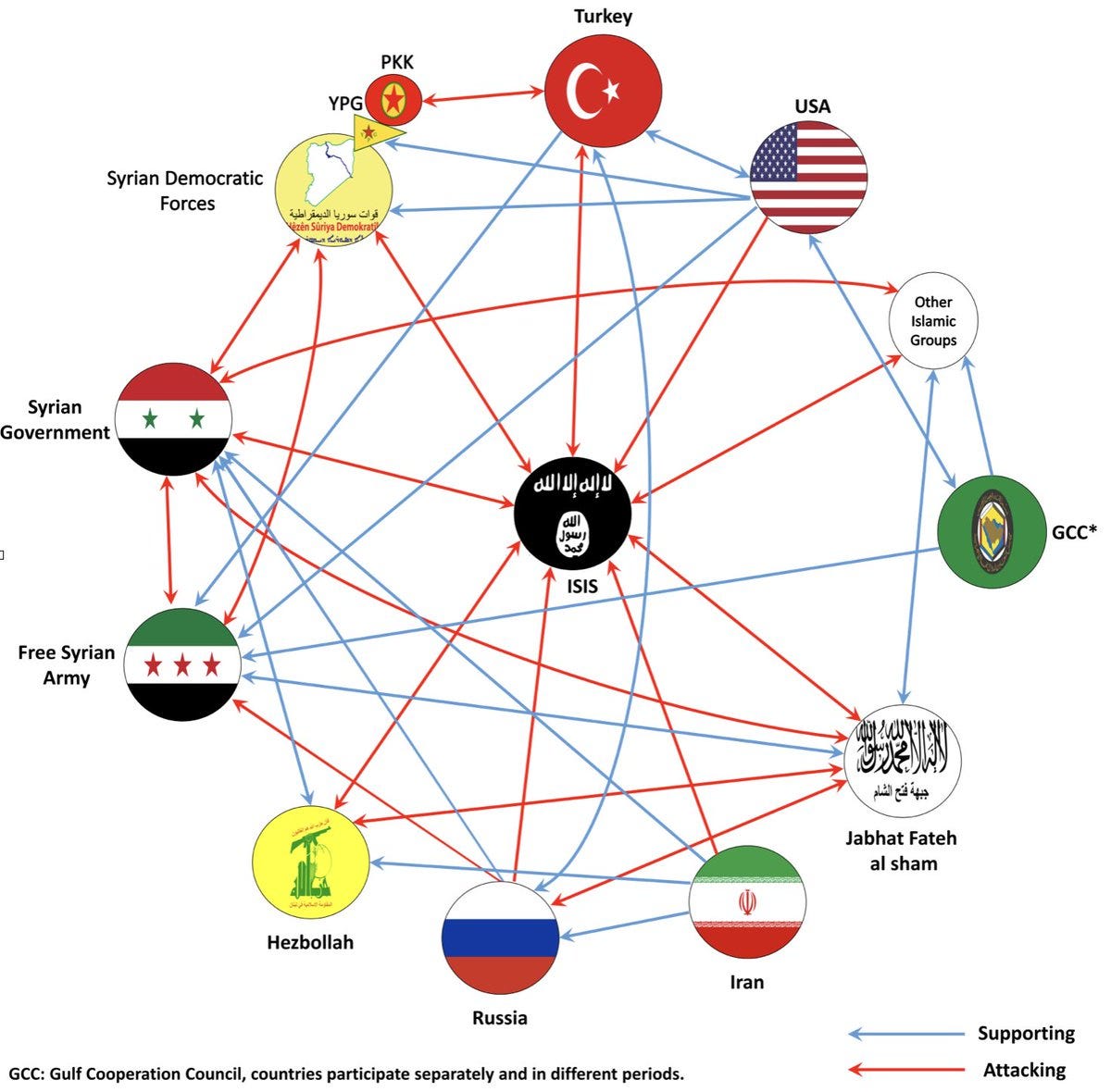
that's not Syria. But the events that you were involved in and the folks you helped lead and Task Force Lion that you wrote your book about, it has a lot to do with the events going on in Syria right now and some of those players, some of those confused international streams talk for a little bit as a stepping off point because there are there have been Americans on the ground in Syria and in northern Iraq for a very very long time that are under fire right
now and just kind of give people an idea, you know, what was that connection and how does that connection bring us through to today's concerns.
Yeah, thanks, that's a that's a great question, you know, so like try to try to set the ground here. You know. Task Force Allon was a it was an advised and assist task force and it had its its origins in the early days of the counter ISIS campaign in a Rock and Syria. The Marine Corps ponied up a couple of Advised and Assists teams, one based at
Alasade and one based at Alta Cootam. There's two air bases there, and their whole role was to advise, assist and enable the Rocky security forces in the fight against ISIS. And so by the time my team got there in twenty seventeen, really what the mission was still overall focused on countering ISIS, expelling ISIS out of a rock, but the conflict had really it really morphed into something much
broader than that. And one of the one of the groups that I won't say we got sideways with, but was really a constant thorn in our side the entire time were the she and militia groups that were part of the Iraqi Popular Mobilization Front. And what we what we learned very quickly was that, you know, all of the she and militia groups, we called them the SMGs. They were part of the PMF, the overall Rocky Popular
Mobilization Front, but not all PMF units were SMG's. And what we learned from our leaders at c Jtfoir and there and the coalition is conflated the two at your peril, and even over time we were compelled to not even refer to those groups as she and militia groups or SMGs. So we were highly encouraged to use you know, less
confrontational terms like non compliant PMF. And there was a reason for that, And the reason was that in twenty fourteen, when when ISIS was just barreling through a rock, cutting through the country like a like a hot knife through butter, the Iraqi, the uniformed Iraqi security forces, primarily the I Rocky Army, they pretty much crumbled and uh and they went in all directions and and largely allowed Isis to take over large swaths of a rock, and the only
unit who really stood up initially against the invading ISIS forces were the SA militia groups, groups like teb Asbola who we referred to as ah and the Saba Hawk Brigade which you know AA b Or, and these small Shea militia groups, the SMGs. They were these mobile, in some cases lightly armed, in some cases heavily armed, but very aggressive forces that that didn't buckle in the face
of ISIS. And so over time there was the realization there in the coalition and especially in the Iraqi government that it hadn't been for the militia groups, then ISIS would have they would have lodged themselves in Baghdad, and and probably the whole thing would have been lost. What what comp and so and with that was the understanding that once ISIS was finally expelled from a rock, the s m g s and the p MF they they were going to be an enduring part of the you know,
the security apparatus in a rock. What made that so challenging and difficult for a lot of people like me and my team to accept was that a lot of those those SMGs, they were directly influenced if not flat
out controlled and directed by by Iran. They're you know, largely supported, influenced, and and given their marching orders, and so as task Force a lion during the time that I was over there, as we worked with the Iraqi security forces to move farther and farther west and expel the ISIS forces that were there in western aland Bar Proper. In each operation that we did with the Iraqi army, the EMF also had to be a part of it, but as an American commander there, I was prohibited from
coordinating with or working with the SMGs. We had tribal militia forces with us who were also technically part of the PMF, but they were largely Sunni tribal forces who worked with the Iraqi commander that I was advising and
the soft units that worked alongside us. They had the authority to coordinate and work with and partner with the Sunni tribal militia forces, but like me, they didn't have the authority to work with the SMGs, And so the SMGs and the other PMF units they were they had to be a part of every operation we did, largely especially the final operation we did that that moved on the border town of Time in October and November of
twenty seventeen. And so by the time the big operation that we did called Desert Lion with the IS, by the time that was largely complete and the Iraqi Prime Minister declared al Ambar Province liberated and secured and Ice expelled, we still had the challenge of just a host of these SMGs there in western al Mbar with US and then beginning to kind of do their own thing, taking direction from no one but people like Abuel Mahandas and
cost some Silamani and their masters in Iran. And so meanwhile, while all of this was going on, but the ISIS fight in Syria was going heavy as well, and you know, we had that we the US and the Coalition had units that were in Syria supporting the Syrian Democratic forces who were the you know, the counter ISIS largely Kurdish militia forces that they were, but they were also opposed
to uh Assade rule. So this whole thing became this this really like hard to decipher mosaic of all these different units that all had different plans, different different alliances, different capabilities, and it was just you know, in a nutshell, it was really hard to understand, and at the same time it was hard to do the things that we needed to do to support the Rocky Army without getting sideways with the PMF and the SMGs, but at the
same time maintaining our own force protector posture because we were unsure of, you know how what was going to happen if we had to deal with these people had on because one of the things that we always remembered was there were elements in some of these SMGs. Some of these were the same guys that were fighting the Americans in their early days of the Iraq War, and so there was really no love loss between the Americans and the SMG.
¶ The Complexity of Syrian Factions
Well, it appears that Abu Mohammad al Jilani, who's the head of the HTS, is a Sunni Muslim, and which would make him, I guess opposed to the Iranian Shia Muslim forces. But he was he was part of Al Qayiti, was part of ISIS at some point. I mean, is it possible that that that person who was in that position could convert from being a global jihadist to being a let's free Syrian from the Assads and go from there.
Yeah, exactly. I mean that's what makes this whole thing so complicated and just I mean flat out crazy, right because you know everybody is now saying, all right, Jilani and HTS they're in there, they deposed Bachelor al Assade, and everything's going to be rainbows and unicorns after this. Well maybe maybe not. Like you said, Jilani was a silaucist. He was a uh you know, his his organization wasn't
was an offshoot of al Qaeda. He fought with al Qaeda in Iraq, and he has publicly said that he is trying to moderate the position of HTS and that organization to make it more inclusive, less less extremist. But at the end of the day, HTS is still on the US Foreign Terror Organization's list. Here here's the thing, this is, this is what concerns me. And I'm always always wary of making comparisons to to other wars, other conflicts, because there will always be people that come out and say, nope,
it's completely different. And that said, what this really reminds me of is it reminds me a lot of the Afghan Civil War, where you know, there was a Soviet backed government in Afghanistan after the Soviets left. The minute Soviet aid dried up, the Afghan government in the Afghan military couldn't defend itself against all the different factions in the Northern Alliance and then through the Taliban in there
as well. And at the end of the day, the units they marched on Cobble and took over was the Taliban. And and I think that there were a lot of people out that there were that were like, hey, yeah, great, the freedom fighters they have, they've won. But everybody knows what happened after that was there was okay, great, they've taken over the Afghan government in the country. But then the infighting begins. And I think that that's something that happens a lot of times when there is a government
that's overthrown when there's a revolution. Is that victory over the defending government, that's just the first step, and what comes next is going to be the real question. I think there's going to be a lot of infighting between
¶ Comparisons to Historical Conflicts
the different groups. There's going to be a lot of bloodshed, and you know, ultimately the people who are going to pay the price are going to be the Syrians. They've already been dealing with this, and so you know to eleven or so, and really throughout most of Asad's almost twenty five years in power, they're going to continue to be the ones that pay the price, just like the Afghanis war in Afghanistan after the civil war.
It's when I was trying to get my head around it. And when you look at there's a variety of pretty good maps out there that outline because it is it is a nation with a majority but a lot of not insignificant minorities, and these maps will outline, you know,
where your religious groups are. Mostly in the west. When the Sunni hst took Hama and then Homes Homes or ever you pronounced it, and then moved on to Damascus, they separated the coastal area which is mostly Shia and Christian, and over near the Goal on you have the drus And who we've been partnered with for a long time. To the east, I think it's like ten fifteen percent of the population are Kourage and Yezide over in the
far East. But in that juicy middle you've got the cities and it's thirteen percent of the population were Shia Alawite, mostly who the Asad clan came from and I ran worked with them Hesbla that's been taken a beating pretty hard. So you have a very similar mix where just like in Afghanistan, we're doing our best to figure out the largest cohort, which were the Pashtune, but then you had the tadd Jeeks, the Juzbecks, you had the Hazara who
are also Shia in the middle of the country. So a lot of people were thinking, Okay, the rebel forces have taken Damascus, and it's kind of like that meme from the movie that came out last year Civil War where it's like, oh, you're Syrian rebel group. What type of rebel group are you?
Yeah? Exactly exactly.
So this really if people expect this situation to become really peaceful, I don't see how you get there, because the only secular power that's been around there was the old early starting them was the nineteen fifties, the Bath Party in Syria, just like you know Hussein's Bath Party in Iraq that that'sn't a dust been in history, and what's left behind with there's going to be no love lost because of the Iranian proxies and what they've done, and it's it's going to be a mess, And I
think what's dangerous And I'd be interested for you because part of it is we have a close connection to the Kourage and Yezidis are erstwhile NATO allies Turkey, they have troops in country, they have their own little rubber group that they're supporting. There's the Russians in the far west.
So it's not just it's worse than Afghanistan in a lot of regards is you don't have the native battle going on, but you also have state actors, some of which border it, that are actively involved internally, not just with proxies but actual there. Russia has other distractions. But I keep looking for what the Turkish game is going to be as this chaos goes forward.
Yeah, I mean that that, you know, you hit it on the head when you were talking about the different religious and ethnic groups and the localities of where they are. You know, there was a there was a great map that I found yesterday that I was looking at and I think, I mean it was like from like two o'clock yesterday, and I think it's already changed. But you look at these different colors of who's where and it's a pretty good representation of how the ethnic groups in
that region. And I think everybody knows this. They don't adhere to international boards. So you have the that Kurdish population across the northern part of Syria that also stretches into a rock and into Turkey. And you've got that the sunny center that goes from you know, the bottom half of a rock into the center of Syria that
also stretches down into Jordan. So if people looked at a map that was based more on the ethnic groups, it would look nothing like you know, what we think of as the modern day Middle East and the levant you know that you were talking about the meme of
you know what kind are you? I mean, and all the different groups in there, And what that reminds me of is there was a there's a movie that came out years ago about the genocide in Rwanda, and there's a scene in there where there are a bunch of reporters at a press conference and the person from the Department of State is giving this press conference about you know, what's happening between the Bouchiers and the Tixies and how terrible it is and this, you know, we're looking at
a genocide and you know, one of the reporters raises his hand and says, which side is the good guys? And and there's no, there's no answer to that. If you look at the map of what's going on in Syria and a Rock, and there's no there's no one group that are the good guys, and it's everybody has their own interests. Everybody had all these different groups have
their own backers. And I think you know what what we saw with the Syrian army and and the bachelor Alissad's regime is when when Russia and Iran and Hasbola, when when they were overwhelmed by their own issues that they were dealing with and they just couldn't support Massad. Yeah, his forces crumbled really quickly. So what you know what this looks like going forward, I don't know, because, like you said, Turkey is is one of our significant, significant allies.
We still have interests in a Rock and that's that's why we're still in there. And at the end of the day, like you said, you know, I think everybody can agree that that bachelor Alisade, the guy was a bastard.
¶ The Future of Syria and Regional Implications
You know, there's there's there's no two ways about it, and and Saddam Hussain was a bastard also. But even even after I had done two tours in a rock between two thousand and eight and twenty seventeen as an advisor, all the way to twenty seventeen and twenty eighteen, when I would sit down and and just you know, have chai and smoke some cigarettes with my Rocky partners, they would still talk about, you know, Saddam was the guy
was a bastard, but he kept this place together. And that's that's been an underlying theme I think with the at least with you know, the Iraqi Army, was that this place fractured after the strong man was gone. And then I think there's a good chance we're going to see something like that in Syria as well. Yeah.
One of the interesting aspects of this is that this seems to be many people are pointing to this being being bad for Russia, bad for Iran, and I'm thinking, Okay, well, if this guy is bad speaking of al Jawani, maybe he's just the has the movie a lot of recording movies as master Commander. Maybe just the lesser, lesser of two weavils. I mean, we're just we'll have to go
along for the ride and see what he's actually gonna do. Now, he did engage and has engaged for a while in some kind of pr campaign just to show his moderation. He was, you know, they reopened a Christian church, uh, and I guess it did or wherever the place is. And there's some other aspects of what he's been doing to try and show the world that he's not the
fire breathing monster that we may fear. But I don't know how much of that it's just some kind of uh, smokescreen and how much of that is reality.
Well, that's that's a great point. And I think even to a certain degree, and I have to be mindful about how I say this, but one of the ways that has Bulah in Lebanon, one of the ways that they established and maintained their legitimacy there was they didn't only focus on the militant arm that went around killing people,
you know. They they really fostered their their political arm as well, so that they would become part of they could become part of a government apparatus there, they could become a ruling organization or a governing organization as it were, and they're not just focused on you know, violence and and and overthrow. And I think that's maybe one, maybe one of the things that differentiates a group like them,
or potentially HTS, from a group like isis IS. I don't know that ISIS really has a plan to truly govern, you know that if they're stretching all the way from Iraq and the Levant all the way down to isis a down in Central Asia and Afghanistan, I don't know that they have a plan or an ability to moderate
what they're doing. And to your point, you know, Jilani and HTS, if you if you think of if he's a rational actor, you know, maybe he is going to see it as yet we need to kind of tone things down a bit and just become, you know, a a regional burning body that keeps keeps it inside the house, keeps it inside the family in Syria, and doesn't attempt
to project it outside the borders of that country. Because I think that that's when you get actors like the United States and others, that's when we start getting nervous. Is Hey, Okay, we've got this new group of people who are in charge there, and what actions are they going to take outside of their borders. That's going to compel us to get involved again.
Yeah, I think, you know one of the really big losers here besides the Syrian people. No I did. I saw two reports today that on the Turkish border there are a lot of Syrian refugees who are trying to go home. So that's that's interesting. If that trend continues, that's a good secondary indicator that that maybe the applied
optimism that you and Mark were talking about. You know, maybe this son of a bitch is the best ton of a bitch we're going to find, and maybe he'll he'll tried to make sure that because you look out of his point of view, what references in that part of the world. Does he have Libya Odyssey dawn? Yeah, that was the dawn of it, an odyssey for the
Libyan people. That's still mad Maxistan, and then we have the unending civil war in Yemen and too regards how sectarian he is, if everybody's lucky, he'll look at it and try to find some way not to have Syria degrade down too.
There.
But I think the big loser here has got to be Iran is they have been using Syria and defending Syria as a way station for them to support their proxies Hesba lah He also had Hamas and the Houthis down south. It was great to have that because the Iranians directly and indirectly via their proxies, they've been coming at us. They've been coming at everybody. So probably the most interesting briefs that are going to come up this
week are going to be in Tehran. That has really got to impact act what in some ways had been a very successful influence operation on their part that really kicked off in two thousand and three in Iraq. This this does set them back quite a bit.
Yeah. Well, and along with that, I think that this is going to be a problem potentially for a rock as well. And that's only because, if not only because you know, from what I've read in the last twenty four or forty eight hours, upwards of one to two thousand Syrian troops actually went over through the Alkeyme border, crossing into the area that I was in with Task Force Lion, just to get away from what was happening
in Syria. And so you know, and I'm only going to assume that the MG's like kh that were so
predominant around the Al Khan district. I can only assume that they are still there, and you know, I don't know if they're going to act as a welcoming party for all these Syrian soldiers and what they're going to do with them, and are they going to are those Syrian army refugees, are they going to become you know, fresh recruits for the Shea militias that are they're still in a rock I don't know, but it's I think it's a problem for the Rocky.
Government as well. Yeah, it's uh. I blame Psychs and Pico for dividing the Middle East the way they did.
And you know.
That the borders, the borders have never made any sense. Anybody's been out there knows that that it really is a collection of plans and other groups held together in some cases, as you already pointed out, by strong men. The only way they made it work but was by having dictators dominate things. And we've seen very few countries that have been able to in that area, that have been able to do anything without having a an assade or a uh, some other gangster guy in charge who
won't you will tolerate no dissent it is. I mean maybe Lebanon back in the days, back back before the blow up, uh there it was, you know, it was kind of an interesting and wonderful country, but now it seems to be hesbal of playground to a certain extent. And we should probably talk about the fact that Hesbula's defeat by the Israelis opened up the the corridor.
For these.
This h HTS folks to come float down and take Damascus and get rid of a side.
Well. Yeah, and that's and that's been one of the really fascinating parts of this to me as well, as you know, there are all these people right now, and I mean myself included, as I've watched this over the last couple of days, who've said, how can this happen?
How could it have happened so quickly? And and what I'm reminded of is how the SMGs in a rock, how they operate, and and they were it was really it was a fascinating constant because they operated so differently from the way the Coalition did, and also from the
way that the rocket and security forces operated. The SMGs like kh they were they could move so quickly, they were so mobile and they had a level of, for lack of a better word, a level of audacity that a lot of a lot of other units didn't have and just by shooting straight up the highways, going head on into it and going to fisticuffs. And it seems a lot to me, it seems a lot like HTS
did the same thing. And it's funny too, because in the last day or so, one of the guys that I follow on Twitter and Blue Sky, James at Gravity's Rainbow. You know, he wrote this kind of snarky article about the sixth generation of warfare being highway centric, and you know, the points that he brought up were one hundred percent ballot that we have these you know, these tactical and operational thescussions about flanking maneuvers and you know, exploiting the
enemy's critical vulnerability. But ultimately, what it always seems to come down to is people just barreling up a highway into the objective. And that is kind of it seems like that's kind of like what HTS did, and sirious, they just finally got the momentum, the conditions were right, and they just started going from population center to population center, and you know, the Syrian army wasn't prepared, the regime
wasn't prepared, and they really exploited that scene. It's you know, it's kind of I mean, it sounds kind of weird to say, but it's kind of admirable. But it's also kind of scary at the same time, because that's also largely how how Isis got its foothold in the rock. They just started driving and didn't stop until they were finally compelled to stop just short of Baghdad and Herbal.
That's interesting and interesting point, and it's true. We've seen it over and over again. We've even seen it and in the Russia Ukrainian conflict where in the Dawn Bass a lot of these battles are over intersections. We even saw it in Syria. But before when things got really furry, when all this started around Damascus, it was almost the Battle of the clover Leafs. Where do you put your
battalions on the intersections? On three ninety five around DC the same idea, and that has to do with movement, but it also has to do with the fact that that there's almost especially now with the Russians gone, there is hardly any air component up there. Besides the Turks and the Americans. So that does give the ground component perhaps a little more flexibility to do what they're doing. And I wonder if a lot of this has to
¶ Historical Context and Military Logistics
do with we still study a lot of the Napoleonic era US Civil War. We had a lot of open territory, though you did have the railroads in our Civil War that was an issue. And we also have our National Training Center, which is this wonderful, big open desert and we were able to play around with that, especially during the desert storm. But I want to putting on your
your your kernel's hat. Are there things that we've been doing recently to better exercise I know we've done some urban training facilities, but are there some things that we can do to better better think about how to either operate or to attack. What does seem to be up creeping up more and more is what Dwight Eisenhower said was when he wanted to bring the Interstate Highway system to us. It was, you know, Germany started something there with the ability to move a lot of forces really fast.
Well, and that's you know, going back to my time with Task Force Line. I mean that was the main supply routes, the MSRs that led that you Chris cut through a rock, and that led from where we were at Ala Sade all the way out to the border. Those were our lifeline, and as we started building our series of fire bases and outposts they led up to
all time. They had to be resupplied and they had to be sustained, and the only way for us to do that was to bring in sustainment elements from the army and our own organic logistics to just move up and down those roads over and over again. And there was a significant force protection component that because we knew that the ISIS fighters and al Mbar they were not completely they weren't completely dissolved out of the battle space.
And so every resupply, the convoy that went out, every sustainment convoy that went out, had to have a significant force protection component to it because it would become so vulnerable transporting all the fuel, all the ammunition, all the Class one, etc. And it's it, you know. So if we take that problem and then ignify it to the end degree about what our operational logistics lines look like in a place like say the Indo Pacific, it is like it's the very definition of a wicked problem. So
I mean, I can, I will. I'll tell you that from from my experience with with the Task Force, one of the best things that we did, uh in that regard with with the logistics and the resupply was our We didn't just focus on the big blue arrows of of the operations and and the higher level things. We focused a lot on the individual capabilities of of the marines and the soldiers and their abilities to protect a logistics convoy and to defend themselves. And those were lessons
that are learned over and over again. But we really drew on the lessons of what happened with the maintenance company in a rock in the in the opening week of the war two thousan three, when that army convoy, you know, full of soldiers who were unfortunately not trained to do anything except really drive trucks and they got ambushed in nazarea and it was it was a massacre.
Those are the lessons that we pulled on so that by the time we had to do our own sustain and effort in western now Ambar, we felt very comfortable going outside the wire with these convoys that were a mixture of you know, US Army and coalition trucks, as well as multiple Iraqi contract trucks. We felt very comfortable going outside the wire with them and able to not just protect them, but to protect ourselves as well.
Yeah. I thought one of the most interesting things I read today was it sent common announced that there had been seventy five attacks on ISIS air attacks on ISIS by I guess US Air Force assets. And I'm thinking, well, okay, why would you do that in the middle this? And then I'm thinking, well, who could be the big disruptor if they if they decided to act at the lines communication of this force, this HTS force, would I just
be that problem area? And is this just an effort to what's the word I'm going to use to suppress their ability to do that?
And I don't know.
I don't know the answer to that, obviously, but I thought it was really interesting that they want to trouble to announce that and they And I also note that that one of the concerns about uh Slanny is that that he has a ten million dollar bonus on his head, and yet he's one of the few of these leaders who's still walking around without out swallowing some kind of missile.
So it's interesting how much support he's actually gotten in the background and whether this attack on the ISIS forces was was part of that effort to.
Kind of help him move along well, and that I think that's a great point you bring up about, you know, is what's ISI is potentially going to do in the middle of all this. If you look back to twenty twenty one and to withdrawal out of h Kaya and Kabble, you know what, the there was all the focus on, Okay, what what's the Taliban going to do? Is is the US and the coalition is evacuating the suicide bombing that
¶ The Evolving Threat of ISIS
killed so many people with someone from ISIS K it wasn't the Taliban as far as far as I recall. And that's that's that disrupting factor that that enemy like ISIS is able to employ. It is kind of they're they're not so polite reminder of we're still in here and we're still a player.
Yeah, there's there is so much going on back and forth here, it's it's really hard to keep track. For instance, there's a lot of things that have just become almost part of the geography and in the Middle East and in the Eastern Mediterranean that is no longer no longer there. For instance, earlier today, the Israeli Prime Minister in net Yahoo, he went up to Mount Herman and the Goal on Heights.
He and part of a speech he mentioned there's been a separation of forces agreement that's been around almost as long as I've been that the Syrian Army simply abandoned, and he made the decision to go ahead and move Israeli forces into the former Syrian army positions so nobody else would slide in there. And so that whole understanding about the border, and I think what we saw in Lebanon as well, nobody is I don't think, is going to give the un assumption of any doubt when it
comes to security here. So there's a big question mark in that volatile area. And then from what I've seen in open source, the Russians were pretty much given an offer they couldn't refuse to abandon their naval bases and Tartis and elsewhere on the coast, and they have been there for decades as well, which gave the Russians an
¶ Geopolitical Dynamics in the Middle East
influence in the Eastern Mediterranean from the Suez up to the Wall. First separate of what's going on in the Black Sea. So you have all these these areas that
were static and assumed that are disappearing. And the one car that I keep waiting to get pulled is in the east, the Kurds in the Yazids going up to the river there that they've had a very bad experience in recent history and long history with sunny fundamentalists and how they treat people, regardless of what happens in Damascus, how you come to an arrangement after they've basically been running their own area to the east for a while.
What are those things that you see as some trip wires that could make this unstable situation start to flame up with all against all again, because it seems to be that the regime has fallen and people are coming into place, but it's not all on all bloodbath kind of what we saw in Libya and that fell apart. Set you there.
Sorry about that. I had my mute button on. That's a great question. I'm still trying to figure out the technology. You know. The first thing I think about is if Aa Sade is no longer there, if his government has fallen, and if one of the principle responsibilities of a government is providing essential services for the people. That if the Syrian government no longer exists and it can't provide those essential services, then things are going to get bad really quickly.
That was one of the things that was one of our first concerns in twenty seventeen, as each urban center fell and the Iraqi security forces moved in and Isis withdrew, one of our first concerns was what is what's the local government going to do to get the water going again, to get the power back up, And if that doesn't happen, then people start getting upset really quickly. And you know, that's something that happened for sure. It happened in Afghanistan
in the mid nineties in their civil war. Okay, great, the Taliban has taken over, but how long did it take them to really become an effective, quote governing organization that could provide the essential services and at least to the elements in Afghanistan where those things actually existed. Syria was I've never thought of Syria as like a backwater country.
They have they have had a relatively modern government, relatively modern economy, and if all those things are now suddenly gone and it's just a bunch of different groups with different interests and it's this free for all of Hey, we're going to try to figure out how to get along.
That will become that will get overcome very quickly by you know, Maslow's hierarchy of needs, and that's the requirement for food, clothing, and shelter and not to not to feel like you're not gonna be able to survive, you know, another couple of days because you don't have what you need to actually live.
Yeah, it's interesting to raise that point because I have the feeling that the the Turks may take a hand in that, because they really want to be able to control that gained back part of what was the Ottoman Empire at some point, and they've had all these south pointed out early. They've got all these refugees sitting on
their border. I can't imagine they wouldn't be more than willing to move the camps, the tents and all the other stuff those people are living in further south into uh into Syria, and you know, start providing some of those services you're talking about now. You know, it's a little hard to tell because Erguan is h He's theoretically an ally of ours, but you know, he's got his own agenda and he's much different than the Turkish government I remember from the times I lived there way back when,
and it is a whole different model of wax. But you know, there is a port facility available that they can get stuff into the country if and if the Russians have gone out, and there was I've seen all kinds of contradictory stuff on that, by the way, that the Russians think they have an agreement with the incoming HTS to guard the Russian facilities, and then I've seen it otherwise that the Russians have bailed out and there
are some Russian forces trapped behind the line somewhere. But I don't know what the status is on that well.
And you know, i'll tell you what else concerns me in that regard to is Okay we talked about, you know, with no central government there and no governing body that can get the essential services turned back on, it can very quickly spiral into a massive humanitarian crisis, and which is really a it's going to be like a crisis
on top of a crisis. Because I don't know if you all ever listen to Dan Carlin and his Hardcore History Hardcore History podcast, but one of the things he talks about in warfare is the idea of the double victim. You know, a person or a group of people who are already in a bad set of circumstances and then they have another terrible set of circumstances put on top of that. And I think that's what we risk happening in Syria, where there's been this ongoing civil war for
years now. The place is a wreck, and now, you know, add the disruption of this on top of it, and it can very quickly turn into a humanitarian crisis, which then there will be there will be calls for international intervention and crisis response and disaster relief to go in there to to try to at least ameliorate the problem. And now we're in a whole other set of circumstances, because like you've brought up, it's not it's not going
and just be HTS or HTS and isis. It's going to be all of these different groups backed by all of these different countries, each of which has its own particular interests and its own particular for lack of a better word, biases. It's going to make the operating environment and there incredibly complex. And you know, and I'll throw out a jab as well. I don't know that setting up a CJ lots. You know, they're at the at
¶ Humanitarian Crisis and International Response
the port. It's going to do any good this time. So no, oh kah, that was that was a cheap shot, I admitted, but uh it was. But I live in this world, guys, Yeah it was. It was on target.
Though. Is that the one thing you you mentioned a little bit that kept tapping me on the shoulder that I think, You know, we talk about people think about Afghanistan, and you think about South Sudan, you think about what's been going on in the sahell, but that's not Syria is not a third world country. First of all, you know Syria, Damascus, that's been a significant area of civilization
since the recovery from the Late Bronze Age collapse. These are a people with a deep history and even in modern history, the post colonial Syrian Republic under the Assads, it had education, it had good infrastructure, not very effective military, but a modern military, and all the trappings of a developing country, if not anything else. Matter of fact, there was a few years Ago, a US Navy Islamic chaplain
who got his degree from studying in Syria. So though he got in trouble and get MO, people can look it up if they want to. And the shame is is you can look at situations where countries like this have fallen into factional fighting. Who were advanced countries, you know, like when Yugoslavia fell apart again, that was a developing country, a little more developed in Syria, but not much more.
And the international community at that point had the routine where everybody could you know, America will lead the way, but everybody else is going to contribute. You're all going to get your piece of territory and we're going to have a combined force go in there for etc. And
so forth. But in the last quarter century thirty years there, because of the poor performance either an execution or outcome from those who were tasked and the international community to make those things that maybe brief well but didn't turn out too well happen. There's no appetite for that, especially in the US or anywhere else to do it. So ultimately this is going to be something the Syrians are going to have to find a way to work out
amongst themselves. But again, like we talked about earlier, there are external forces that are that do have their players and their supporters. There's there's no I don't think any international solution because I think if anybody starts to talk that way at the UN or in Brussels or I know, it's not going to happen in DC. People just want
to look at Libyan go. And your point is, so this, this, this is something that's going to be a test case, I think on what happens when you don't intervene like we did in Bosnia and we did in Afghanistan, stuff like that. The world's learned a lesson about that recently.
Yeah, they've learned a lesson. And I'm I'm not so sure. I was going to say, I'm not so sure it's been a great lesson, But I don't know that any of the lessons that we've learned in the last you know,
twenty or twenty five years have been great. But you know what, what one thing that I think that that we have to prepare ourselves for is, you know, if we assume that things are going to spiral there, at least for a while, are going to be kind of the the breathless calls, you know, within within our own country and probably throughout the international community, of what are we going to do to fix this? We'd have to do something. We have to go in there and do something.
And like you said, you know, what are we going to do? Set up some sort of icaff style uh, you know, coalition to go in there and set up shop. You know, it's the un going to to go in uh, you know, say like they did in in Somalia. I don't know. Without without a without a clear cogent plan and a serious consideration of what the second and third order effects are going to be, it's just going to become a mess, just one more mess in the US sentcom and and everybody is going to be wringing their
hands about it. And as much as I hate to say this, it's going to become one more distraction from what I think the real threat is and what you know, what the ball is that we need to keep our eyes on, and that that ball is not in uh in the Middle East. Yeah.
I was once upon a time I was involved in the civil affairs thing of Kosovo. I had no business being there doing that. But h cos you know, some of these things are easier. Kosovo was close enough to the rest of Europe that it wasn't that big a deal. They didn't get bombed all that much themselves. I mean, we bombed a lot of other places. But uh yeah, I I you know, how are you going to get the aid in, who's going to deliver, how you can
to protect it? All that stuff. And we've got all these other things going on with the Russians and Ukraine and all the other messy tidbits of modern life. We've already we've already seen that the corrupt organizations like Hamas will steal the food that's meant to be given to the people so that they can claim they're giving it to the people or selling or whatever they're doing with it. And you just hate, hate to try and imagine how
this would work. I think we're still dropping food to the Kurge if I'm not mistaken, in that north northeast corner of the country. Yeah, well, I'm having trouble with this stuff. But you'd think, you know, all the Arab countries would rush into help their buddies, right, yeah.
You would think. I mean, you know, like again, I'm a snarky guy, I don't try to even hide it anymore. But you know, I think it was I think there was Donald Rumsfeld who said in two thousand and three, Hey, you know, freedom and democracy it's messy. I mean, yeah,
it is. It's just that if we go in there with you know, all the power and strength and resources of the United States, whether it's alone or it's part of a coalition, I think everybody asked to understand the fact that we're not going to be welcomed as saviors. You know, We're not going to be welcomed as the people who came in and delivered them from all of this.
What will likely happen is everybody will, at least after a while, everybody will look at us and say, yep, there's the US sticking its fingers again in a place where it doesn't belong, and it's just making the problem worse.
Yeah, part of me looks at the whole situation, and you know, I think everybody's in full understanding that the US is not going to fix this problem. I will just try to mitigate its second and third order effects. The Europeans have no desire nor any capability to affect anything there either, and at the end of the day, if you want to go back, history winds up hitting
the same roads again. Is you can you can see that the major players that are going to push the ball one way or another, it's going to be Turkey and Iran. Russia's got other concerns and she's bled white anyway.
The Israelis, they're just going to find somebody who will help secure their border on the goal on and but really, I think I think the power player here for both proximity capability and demonstrated will to actually act is going to be the Turks, and uh not everybody there is a big fan of doing that part of if somebody asking me, you know what, what's your money on it? I think we sit back and see how much the Iranians can make the Turkish drive to make something useful
out of their neighbor difficult. And that also is brought with all sorts of issues.
¶ Reflections on Military Experience and Future Implications
Yeah, couldn't agree more. I'm going to be sitting here with my bucket of popcorn watching.
I mean, it'd be the best thing to do.
Seth.
We're pretty much eating up this hour. We're in the first report stage of this, so it's things are so unclear and you hate to put down any bets at this stage, but let's talk about this book you've got coming out with the Naval Institute Press. Tell us about it and when we could expect to see it and where that people can pre order it.
Yeah, thanks for that. So, yeah, you know, as we talked about I was, I was the commander for an advised and says task force in twenty seventeen and twenty eighteen in Iraq with the Iraqi Security Forces in Western Island Bar. Now you know, the team that I was with and the task force as a whole really just accomplished some amazing things in the short nine months that
we were there. And as I have typically done whenever I've deployed with Marines, I kept the journal throughout the time that I was overseas, and not too long after I got back, I turned the I reviewed it and turned it into a book. That book is again called nothing here worth dying for. It's hard to say that the book is just about working with the Iraqis against ISIS. It's a book that it's a book about teamwork. It's
a book about building a team. It's a book about being true not only to the people you work with but also being true to yourself. And it's a I really believed that it's kind of an underdog story because the team that I was with, not a whole lot
was expected of us. We didn't have a whole lot of resources going into it, but we knew what the mission was, We believed in the mission, we believed in each other, and the relationships that we forged within our team but also with the Iraqis and our coalition partners really enabled us to do something that really hasn't been done in recent memory, and that was a small you know, Advised and Assist Task Force headquarters, you know, falling in on a DASK Force at its height was about twenty
seven hundred people that included all of US uniform services and multiple coalition countries and really supporting the Rocky Army in its push across the western alandbar in the fall
of twenty seventeen. It's a story that I put a lot of put a lot of work into, and I really believe in it because at the end of the day, I think, like my so the stuff that I've written, it's about the people that you work with and you know, the trust that you have to have with each other to get the job done in some of the more circumstances.
Well, Setha. You know with all your books, they're just great reads. If people want to see recent history in a nonfiction way from the point of view of you
and your Marines. It's a great thing. I highly recommend to everybody, and I look forward to opportunity when the book comes out, come on and we can dig into some of the details, because there's a great story there that's not just about what happened, but there's a lot there that reflects on a lot of the events that are happening right now and it can't happen down the road. But we really appreciate you taking an hour today to come visit with us on mid Rats.
He had a blast. I appreciate the opportunity and I will certainly look forward to talking to you guys again real soon.
It's always a pleasure.
And thank you everybody for joining us for another edition of mid Rats. And until next time, I hope everybody has a great Navy Day and Marine Corps cheers.
Molly need to replies, worry Paddy, Mike, my lonely one to marry me and to leave.
A friend of becondily for you being to blame Mola fairly love me, silly faulding your name.
It's a long way to differ, It's a long way. It's a long way to differ, Ny through the.
Queen God b Becdi farewell, don't well.
It's a long long way to Differay. But my life, my