



So it's a really great shuth until the old man he collapsed on the cross and that was really heavy and at the ambulance in and they sort of arriving at the Schnuffen. Yeah, it was really had coming to that said with a cross and all that.
Evening, everyone, Welcome to Midnight Chats, the music interview podcast for late night listening.
My name is Greg Cochran, I'm Stuart Stubbs and.
Stu Tonight's guest on the podcast is someone who has had a distinguished career is putting it a little bit lightly?
Really, do you want to have a.
Go at trying to sum up our guests kind of contribution in what you spoke to them about.
Yeah, there's a lot to get into with Anton Corbin a bit different for us actually, not a musician, a photographer and a filmmaker who has played such a huge role in music since he started his career as a photographer in nineteen seventy nine. He's from Holland, the Netherlands. Sorry it's from the Netherlands. He moved to London in
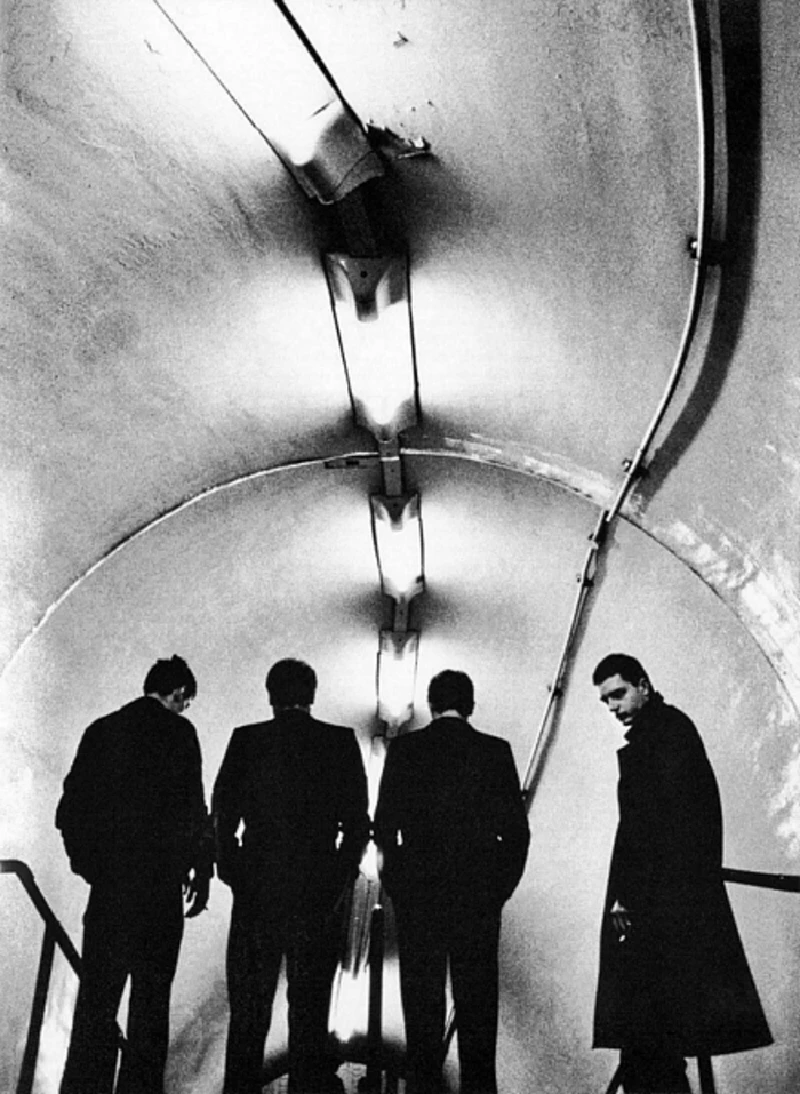
nineteen seventy nine started shooting for the Enemy. He ended up taking some very famous photos of Joy Division in bayswater Tube Station, and that put him on this path of shooting legends after legend after legend within music. He worked very closely with Depeche Mode and You Too. He became creative director for their visual outputs. Anton's the guy that shot the cover of the Joshua Tree by U two. He then started directing music videos, including loads of Depeche modes.
He's the guy that made Enjoyed the Silence for Depeche Mode. He made Heart Shaped Box Greg for Navana.
Yeah.
I mean it's like insanely iconic.
Anton Corbyn's work, and the great stories about Kirk Vain in this by the way.
What he's done every time you think, oh, that would be quite a good career. If it ended there, then it's like another thing. He then started making films. He made that incredible Joy Division biopic while the Ian Curtis Barpik rather Control, starring Sam Riley. That then opened a door for him to make a huge Hollywood picture called The American with George Clooney, which we talk about ever so slightly here. I could have spoken to this man forever because I'm a big fan of all of his work.
I start off sort of gushing towards him at the beginning. I'd like to apologize to the listeners and to Anton for that. But the reason Anton was in town to speak, we did this face to face. In the summer of twenty twenty three. He was promoting a new documentary film called Squaring the Triangle, which at this point you can see on streaming. I know it was on Netflix and is hopefully still there. It was on a plane I was recently on as well. Greg little humble brag for
you there. Yes, it's called Squareen the Triangle, and it's about a legendary nineteen seventies artwork design company called Hypnosis. They are the company that created some of the most ridiculous album covers of the seventies, worked very closely with Pink Floyd. Dark Side of the Moon is one of theirs. The Man on Fire on Wish You Were Here that
was one of that. It's a really great documentary all the stories behind these really elaborate, ridiculous images that ended up on album sleeves for people in the seventies at a time when essentially people were just spending obscene amounts of money on their album art. That's how I managed to get Anton Corbyn to sit in a room with me. Basically, he's a legend. He's an absolute legend in the visual side of music from seventy nine onwards. He's been there for the whole thing.
And also this is something a little bit different for us, as you said, like Anton's not a musician, but somebody's like legendary contribution to music culture for decades. I wondered what He's quite softly spoken, and it's very like down to earth and when he delivers a story, he's just like even about whoever it might be you two or the Rowling Stones, he sort of does it in his very quiet, kind of grounded way. I wanted to ask if he was if he was what you were expecting.
It's that very you know, strong Dutch accent. I think it's very calming, and it makes him so modest. I think he seems like a very modest guy. And you know what I took away from meeting Anton Corvin. When I'm sixty eight years old, if I look half as good as Anton Corvin, I will be very pleased, very stylishly dressed. As if I've not made it clear already, I liked him, like or love love. This is Anton Corbyn, my number one here tonight on Midnight Chat.
I hope you enjoy it. Thank you for coming onto the podcast my pleasure. I'm a big fan of yours and actually your work was there right at the start of my career, actually because when I first left university, my first job was an enemy magazine. Really yeah, and it was this was two thousand and five, which I was there for two years. If I'm not mistaken, I don't think you would photograph him for them at the time I was there. I think you'd left long before,
in eighty five, okay, right, yeah, we missed. We just missed each other.
Yeah years.
Yeah. But when I got that job, I worked on the photo desk. I was the junior photo researcher, and I had no experience in it, and I didn't I didn't necessarily even have a huge sort of love for photography, I guess at that point. But working there, they had this huge archive, this photo archive, so my days would be spent in there looking at lots of old prints, including lots of your old Prince. And subsequently, since then I started my own magazine and photography has been a
huge part of that original photography. So, yeah, you were there from the very Your name was a name that I sort of became very familiar with very quickly at Enemy. So you left in eighty.
Five, Yeah, and I saw the enemy, did you about five years later?
Okay? What did you see them?
Over? Right?
Right?
Well, the rights because I had to write some of my pictures that they had signed that at the time, and they're going to put on book out there, some cheap rock photography book, and I really didn't want to be part of that, and they went ahead anyway, and I show them and they settled and I was allowed to take all my pictures out of the files. So obviously I missed a fuel because you found.
Some Maybe I misremendering this. Maybe the conversation would always be it's a shame we don't have Anton's pictures.
That would be a better conversation.
I remember that your your name was used a lot though we you know your name was. That was how I was introduced to your work and your photos. So when did you start there? And did you start there as soon as you arrived in London?
Yes, I mean what happened, wasn't In early seventy nine, I went to the enemy with some bunch of pictures to show to the then editor Neil Spencer, and I showed them and he was really entojestic and he wanted to publish a couple just for the sake of it.
And I said, well, if I if I come to live in England, would you give me some work and he said sure sure, So on that fake promise, I moved to England and then half you later knocked on the door and said here I am, are you And I said, well, you know you said you would give me some work. I did this picure. Oh yeah, yeah. So he took me around to the big room where all everybody was working, with piles of stuff on people's desk. They're all typing, and he said, this is Anton and
he's a great photograph from the Netherlands. Anybody got some work for him? And you heard. So they were silent and people looking up from above whatever was on the desk, and one guy started to sing, I hate the fucking Dutch they're living in Oliver Clock. There was some punk singer that I was unaware of, so I took it personal and then slowly people started the type again and that was it. But there's no introductions in they couldn't get us, but one guy, Tony Stewart, he called me
a week later. He said, Oh, there's a there's a gig at the Marquee, Bill Haley, can you photograph that? So it was sprinted like a poster stamp in the Enemy. But that was my first commissioned work. And then some photographer got ill who was supposed to photograph Joe Jackson as a feature, and then they called me last minute and I went and Joe liked my work, and the Enemy liked my work, and suddenly I was doing covers for the enemy, and I worked for Joe for a bit and it was a great time.
What was your first So, what was your first cover for the Enemy? Was that Joe Jackson shop?
No, it was a story by Nick and on rockabilly, So it was rockabilly kids in a club, okay. And then the second one was the week after was a selector.
So this is this is seventy nine, when you when you sort of arrive in the UK.
Yeah, October seventy nine, and the first cover was in January eighteen.
I've heard story from you, I think on an old film talking about when you got here. Maybe like within two weeks you went to see Joy Division and you introduced yourself to them backstage?
Correct?
And where was that? Where was that show where you saw them?
I think it was The Rainbow, which.
Is in Finsbury Park.
Yeah, yeah, I don't think it exists anymore.
No, it's like a big sort of church now. Yeah, yeah, it was the Rainbow, the venue that had a retracting roof. Did it have a roof that? Maybe that was in the sixties, though I heard a rumor that it was it had a roof that could come off to make it an outside of.
It, right, Okay, I don't well anyway, I arrived in October and I saw Joy Division early November or they wouldn't have the roof off.
Did you come here because of Joid? Like Joy Division was a Was that part of the reason you came here because you loved that band?
Yeah? I lost the music and I wanted to be closer to where that kind of music came from. And I'd been for a Dutch magazine or I've been a few times to England to photograph for them, and I always lost my pictures so much when I the ones I took in England. More than the ones I took in Holland, so I felt that it was quite a natural kind of environment for me to shoot in. And then when ann Pleasures came out at all, I just have to go there because it's so fantastic what happens there.
I wanted to be part of it. I don't want to wait till people get well known and then come to Holland. So that they were the main motivators to go there. And I sold myself as an important photographer in the Netherlands, and they hadn't toured the Netherlands yet, so I think Rob Breton said, Okay, I think you
should do it. And I had a basement flat in Bayswater and the only tube station I knew was lancas the Gate, so I asked them to come to Lancaster Gate and being the only place I kind of knew, and they came Sunday morning was very cold, and they were standing there outside the tube station, shaking with a cigarette in their hands and underdressed English boys, you know, big cold but nothing underneathed kind of thing. And when I cast generally because I was a smoker, he stood
outside the same same way. You know. It was in the winter. He stood there trembling. I thought, well, that's a good sign.
What was it like? You mentioned that when you when you were still living in the Netherlands, but you'd come here and photograph. You like the way those photos looked more than the ones that you were taking back. Now, what was it about them? Was it the light or was it what you were taking photos of? No, the light is the same as in Holland. Really it's overcast most of the time.
No, it was I think partly me because I was excited about being in England and being ware it happens, and just I think the surroundings. I like people's yeah, determination to get out of the council flats and make something of their life. And they gave everything to the music, and I at the time gave everything to photography. You know that, I know fallback plan.
You know.
It was all or nothing for me, and I gave photography everything I had and holand I lift for a year in the Brottle and here I left six months in a in a in a squad after I got kicked out in Baigrod and I lived in Dlston the squad so and I was but I was photographing Bowie, you know that just went on.
We were always good at it. Did you always get the sense that when I mean, how old were you when you picked up a camera and seventeen and did you did you just know you had an eye for it?
At no point in rubbish, I used to go a camera because I was so shy and I didn't there to go to a concert where I knew nobody because I was just moved parents to a new city and hadn't come to school yet. It was in school holiday, and that means that you don't know anybody. And I felt that if I carried a camera, you know, it gave me something that I wouldn't have it out of it.
And this is my father's camera and I took a few photographs on it then it was a daylight concert, you know, and I sent them to a magazine just because I didn't know what else to do, and I was so obsessed by music in the music world, and they published a few and I thought, oh, that's it. That's what I'm going to do for the rest of
my life. We're going to take pictures of bands. And of course, the first year I was at school and I photographed my father's camera in the provinces of where I was living, and nobody purposed any of the pictures. And then the next school holiday I worked in factories to earn my own camera. And then I saying, you know, I tried to photograph and nobody purposed any of the pictures. But at the end of the second year, the enemy of all and if you're like my bigs, you're small
but thought that says, you know. And then I tried to get into the art academy and nobody would have me. I tried to do three different ones in Holland, so I'm self taught.
Really, I'm surprised to hear in a way that you're that you're shy, because that action of moving to a different country is quite bold. And then when you get there to go to a gig of Joy and of joy the vision who are quite an intimidating bunch, or they certainly seen that from their music and their look and everything. And then to get backstage and say can I take your photos? That's all of that sort of stuff is quite bold. Yes, it is I confidence stuff.
I think the camera helped me, you know, it sort of pushed me forward and moved England. I went with my then girlfriend towards far better to arrange things than I was. She she she found a fled she found it and the other so alone, I couldn't have done it. But yeah, I was driven by something to make contact with people and photograph them. Those you know, I did everything to be able to photograph people.
I think so around that time, I mean, it's sort of it's the very end of the it's the very end of the seventies. So Hypnosis, who the new film is about. I guess it's kind of winding down, isn't it. That ends in a two two, doesn't it? But were you so you wouldn't necessarily cross paths or worked with them because you're also just starting out and they were at that point you know, the kings of graphic design and album artwork. But were you aware? Were you aware
of that then? Did you did? Was that? Because Hypnosis is actually to me, I saw the film the other week, by the way, and enjoyed it. Even to me, it's like a name that I sort of sort of half know now but didn't really know. But back then, did people know it? Then? The photographers know it, creatives know what Hypnosis were what they were doing.
I'm sure that everybody knew because in that world at least because there's a lot of books out on Hypnosis. You know, they did this series of books called Album Cover Album, which there's a lot of their stuff in it, and they insignated that. I mean, they were very It was bo I think was very clever in his in his reeling and dealing, you know, but I wasn't professional proper, you know, so I would never be hired by Hypnosis to photograph or anything. And I didn't think of that either,
you know. I wanted to be published in the enemy those for me the highest good, and then records leaves game secondary and you didn't even think about exhibitions.
And one of the things that I really loved about the film is this sort of time span, this seventies sort of decade really where the rock industry was completely ridiculous and there was so much money and there was so much excess, and that story that they say in the film about the statue that they put on the top of Everest McCartney for poor McCartney for the Wings greatest hits, which they could have probably done anywhere, but they you know, it was a time of excess, So
they did it there because somebody, I think Paul McCartney even said we should put it on Everest. Are you interested in that well, because I've always felt with your photos and your work that it's all quite understated and I can't imagine you shooting those sort of covers that Hypnosis were doing, and it's much more sort of simple for you. Is that fair?
Yes, totally. I didn't dream of these things. I'm a very hands on kind of guy, so I would always myself and I was shooting black and white. I didn't have an assistant till I did the Joshua Tree I think that when that started. So yeah, I did everything myself, photographed, myself, made the point, myself developed my film, sprinted my photographs, dropped them off at the enemy or whatever. You know.
It was a different times. I I was also from a generation of the bunk and a Postponk generation, not off the Pink Floyd generation.
I mean in terms of that side of the music industry that you walked into. I guess starting with that meeting with Joy Division and then all the enemy stuff, what do you remember from the music business at that At that point, I was born in eighty two. I think for my generation, one of the reasons we think that the past was better than now isn't necessarily the
music itself, although obviously some of that is incredible. It's the way things worked and the fact that you could walk up to Joy Division and say can I take some photos and they would say yes, and you didn't have to go through chats and labels and lots of people. I suppose that's the punk right, But was it was it all like that? Was it as easy as I think as I would like to think and sort of regret missing out on.
I like to think it was easier. Yes, I think there was less of an organization protecting everybody, and now it's overprotected and everything has to be approved and everything, you know. I think what happens now is a lot of people who are young then and older now, and they're competing to kids who are fifteen or sixteen and looking so young, so that that's difficult to not be retouched, you know, in the photographs, and complete control is the whole idea of them. And as a PHOTOGRAPHERY, you also
want complete control over your work. So that's a flash point.
You mentioned that you for a long time to have an assistant your travel, just you and your camera, which I think I imagine was part of the appeal for lots of people that they knew you were like an unfussy guy, especially for the punks.
Yeah, I think it's different if you appeal of somebody's doorstep on your own other than three assistants and lights, you know, it must be different. It must be more invasive. I think a big group and I never filled home with lighting things and all that stuff.
Yeah, do you ever have rules that you put in place to the people you're shooting. The reason I say that is because I heard a story. He's obviously this is a very wildly different style photographer to you, But I heard this story that David Bailey has a rule that when he shoots someone, whoever it is, whether it's the queen or you know, a man in the street, he insists that they come completely alone, and they can't. They're not allowed to bring their agent or their manager
or a pr or anyone. And if they do turn up with somebody else, then I just sent away and the shoe doesn't happen. And that's his sort of terms.
Well, obviously I tell people it's not a circus act, you know, when I'm photographing people, so I don't really enjoy an audience. But I've never said you can't bring your friend or whoever, or your dog or or your manager, you know. But I just remember I did have shooted Billie Idol in the early nineties in LA and it involves writing something on a piece of glass and stuff, and he wasn't sure and he had to call the manager and he came over to judge it first before I could photograph it.
So because he wasn't sure about the way he'd written it, or he just didn't know about the concept behind.
The concept, you know, it seemed alien to him. I think, okay, but it's a very good picture in the end. Yeah, and they they let me photograph it. But it's you know, managers also feel that they need to and their role sometimes, so it's just annoying.
We have a magazine as well, and we do a lot of our own photo shoots, and it's obviously a complete different world to the one that you started shooting in for all of these reasons we're talking about, and you know, people not being sure of things and everybody maybe wanting to look cool, and I mean and I understand it as well.
Me do, because you see what people call themselves photographers these days. It's awful. Yeah, so I don't blame people to check it out a bit.
There's a great photo that you took of you two all in drag. I think, oh, yeah, what year would that have been? That photo?
That would have been ninety one?
Okay, Obviously you've got a very very close relationship with that band now and probably did already at that point. Yeah, oh yes, did it just come down to that? Were they game for that? Because that to me, what's amazing about that photo, other than the photo itself, is the fact that you've got that band to do that well.
I think we all want to do to move away from the Joshu Tree and Redelham kind of honest kind of look. And the music also was very changing with Acton Baby. It was a very different kind of record sow they signaled for change in musical direction and I wanted to follow the Uputy photography, so we just spent any direction. You know. We did a lot of different
kinds of shoots and that was one of them. And dressing up we did it during Carnival in on one of the islands in Spain and Portugal, so it didn't seem so odd in that sense we're doing it there because everybody was dressed up outside. But you know, it was also the fun element of that not being expected of you too.
I mean, it's it's it's true, isn't it. Like the greatest photos are the ones I think where artists or actors or whoever's in the pot is kind of fully trusted the vision of the photographer doing it.
Yeah, and you know, I mean you two also knew that if the pictures didn't turn as well, they would
never be seen anywhere. But I also did a shoot to the Stones once for Rolling Stone magazine during the Voodoo Lounge album era, and I said, Okay, I'd like to do it, but I'd like to bring some masks, you know too, because I didn't like the Stones pictures of the eighties and nineties, so I was so safe all in studios, and I liked the Stones in the sixties and seventies when they took risk and the very exciting pictures. So I wanted to hark back to that period.
And then it went through some pr person and they said no, no, no, way. I said, well, fine, but then don't expect me to fly to Canada to do a shoot that I don't want to do. And then Mick called me and said, what was this thing with the masks? Explain it to him for and on that and he said, okay, you just bring the masks. So I did. Then they did the bugs and was very successful for them.
I mean that sort of high contrast black and white photography that you do, it's got this gothic feel to it. But one thing I wanted to ask you was a lot of the artists that you've photographed, and you've you know, you've kind of the list is kind of obscene of the amount of that the sort of legends I guess that you've photographed, but a lot of them are quite sort of these dark, brooding characters as well. From Nick Cave, Patty Smith, I've got a list here, Tom Waite's Depeche Mode,
obviously Joy Division. They're all these sort of dark, introspective characters. Are you attracted to shooting those types of people rather than the spice girls?
Say? I wouldn't mind children, suppose girls, but I think that I feared towards people who gave everything for what they're doing, because I did the same in my photography. So there was that kind of link or desire to photo up people that felt I put everything into their work. I'm attracted to that.
That's a really good way to sum up all of those people I've just mentioned.
I guess. But there's also a practical thing. It was that when I started photography, the people I photographed and the magazines that I knew were all printed in black and white. And I thought, the only way to get your pictures published in these magazines if you make them
in black and white. And same with Joy Division. I shot it in black and white because my only chance of publishing one of these pictures was in magazines that wrote about these bands that had no hits and that they were all printed in black and white, and me, it was in the early days, only black and white.
Yeah, I hadn't even thought about that.
Joy Division the hit after Ian died, and then you would photographed in color to burishdi smash it. But we never got that far.
Yeah, And I suppose that's the other thing, isn't it, Like hindsight a wonderful thing. And those photos that you took of Joy Division now are legendary, iconic photos of an iconic band.
There weren't at a time, but there was nothing logic about but I did.
Yeah, at the time, when you went and introduced yourself to them, they weren't the world renowned Joy Division. They were just a punk band that you liked. Yeah, the postpunk band that you're into in your career. Where does film and getting into like music videos and then films? Is that just a Was that just a natural progression for you to from photography.
In retrospect, It was, but it wasn't natural to me at all because I was shy, and I find that sharing ideas or being forced to come up with ideas for a video was not natural to me because I'm intuitive kind of a photographer and I'm very influenced by documentary photography. So I have to find something, but to
plant in advance. That's very hard for me. But what happened was that I did pick people's photographs of press and then also sometimes for album sleeves, and I said, well, these days we need one more thing, and that's a music video. Why don't you do that too? So that's how that started reluctantly, and then I found my form. Actually only I think with Depeche Mode, because there was no budget.
That would be Enjoy the Silence.
No, not that way. Before that, that was for Question of Time eighty six and such a low budget that I had to shoot myself the film myself, and then it became slightly more a moving experience. Before that, it was basically a selection of photographs put together to make it look like.
Before Enjoyer Enjoy the Silence. What's your starting point for that, because it's the It's the one with Taika walking around with the detecture and the king as a king.
Yeah. Yeah, he's dressed as a king and walked around to the deck chair. Yeah. Well, it's difficult. I don't By the time, I think five videos for Depeche Mode in black and white and almost Super eight, I all filmed myself. Then they The first single that came off that album called Violated was Ah Personal Jesus, which I don't in color in black in on Super eight in Spain,
and then second of us Enjoy the Silence. And I only had this idea of this king walking with the duck chair through landscapes and all he needed was peace and silence and sitting somewhere looking at things things we all can achieve that it doesn't matter if you have money or not. And I came back the idea to the band and they didn't like it, that they couldn't visualize it. And I have to admit that I was really better in describing my ideas, so that didn't help.
And they said, could you please think of another idea because we think the song is so beautiful, one of the best things we've ever done. And so I went back and then I couldn't get the idea head out of my head and there was no space to get another idea, and so I went back with the same thing. I said, I think it's really good the idea, and they were like, okay, just do it. That kind of attitude and it's bus I think twenty thousand pounds or something.
It was shot in two locations in portugalal location in Switzerland and on Scotland, and then the rest of my little studio in London, the black and white stuff, so it was a tiny team.
You know, it's all comes back down to that trust thing again, right, You've been working with them for so long that even when they didn't like the idea, they're like, okay, that's were they happy with it in the end?
Oh amazing, because the feedback once it was an empty in America was enormous and it was incredible, and Chris Martin lost the so much he wrote a song about it by the video called Fever of Vida that.
What I love about about that video is that sort of color saturation. There's an echo of that in Heart Shaped Box.
Yeah, but it's a chieftain a very different show.
But that I rewatched that video yesterday knowing I was meeting you. It's so iconic, you know, like the film Squaring a Circle. One of the things that's so great about that is how iconic all the things that are being spoken about, all of those brilliant pieces of artwork, but that you know, you've sort of got your own canon of that as well. And Heart Shaped Box, I think is up there. You know, it's one of those
sort of very iconic moments of the nineties. So that was your idea as well, that concept, No, it was not okay.
Now it could came up with it the dyea. He made drawings and road things and he faxed them to me and I added a couple of things to it. But yeah, I know, the whole genesis of that was his idea, and he was fantastic with that. He was a great artist. Cart and we made the film and he wanted to have this technical look, which we couldn't get because technicol it didn't exist anymore. So we shot in color, then transferred to black and white, and then
got some people in Mexico just across the border. Because everything sent in San Diego to hint in every single frame. It took weeks and weeks and weeks, but the result was very beautiy.
It gives it such a sort of disturbing beautiful quality.
To Yeah, which is great because I had some videos with Mtfy turned down because there were two didn't fit the guideline or whatever. But because of the nice collar, they never looked at the embryos hanging in trees. You know, no problem. It's so weird, isn't it a sleight of hand? Yeah? Totally.
Was it a cheery shoot because it's such a sort of haunting video.
Yeah, but you know, that was a really great shoot until the old man he collapsed on the cross. It thought it was a different thing. He had a balkance or something. He didn't know about and that broke and that was really heavy, and at the ambulance in and they sort of arriving at the snuffs, and I bet they did. Yeah, it was weird coming to that set with the cross and all that.
I'm wary of time because I know it's limited. One thing I was going to ask you about Depeche Mode. I am from Essex myself, Okay, my dad lives in Basildon. Did the band never take you there at any point?
I went there for the first shoot I did to them. Yeah, in a pond in rolling boats, okay, in eighty one.
I mean, I was going to ask you about what you thought about Basildon, but but I won't.
Don't. Don't.
What was that the first time you did you meet them? Because that is a band that has been a huge part of your life, and that relationship with them.
Is reluctantly Because I was head photographer for the Enemy, the chief photographer, so I got all these assignments, and as it was a weekly magazine, the turnover was huge. I asked to do the cover of the Depeche Modes, so I did, and then News Records asked me to work with them for some other stuff and I turned it down. There's too poppy for me. And they asked me twice in the next few years.
This is when Depeche Mode are doing Can't Get enough that era. Yeah, when they were really poppy, you know, that was a very very pop thing.
And now I love these songs, but not then, And I don't know. I was reluctant to like these songs. But I only started with them when the video had to be done for a question of time, and the stipulation was it had to be done in America because they were on tour. The The only reason I said yes because I never by the time done a video in America. I didn't care who it was for, you know. So I did the video and then didn't hear back from them at all because they all had gone on
holidays by the time the video was finished. And nine months later I got a call say, and we work on new material which you might come in and listen to it. So then I asked, was after another video and another video? And then there was all before I did photography for that.
When they when they said they were working on new material, and you went, I heard it, Had it? Had it changed? Had it got more into your liking at that point. Always it wasn't still the pop stuff.
No, it became you know, it became the Violated album, and that was fantastic. So I started then with Strange Love and and Never Let Me Down Again, and then Behind the Wheel, Yeah, a great song.
How then does a film like The America and come about and fit into your world? Because I actually didn't know that that was your film until yesterday, and retrospectively now it does make sense having seen it in the style of it. But that is sort of seems so far away from from everything that you've done.
I guess, yeah, I just slowly, I guess, moved into more things that are an experience for me. After Control, I got all these other music bios offered, and I thought, I'm not going to go that direction. You know, if I do an all the film at all, which I never thought I would because I thought Controllers of one
film I might be able to make. Because of all the awartive gods, I got so much attention, I got an agent and all that stuff, and then I got this script I called a very Prideful Gentleman I think it was called There was an a very English book. I thought, well, I don't want to work again with Englis actors could have done that, But I do want to make something that's fictional because I don't have a very different experience. I don't want to control film to
be a lucky lucky break, you know. I want to see if I actually can make a film about other things. So I went into Color. I want wanted an American actor to have that experience, and like I said, I wanted it to be a fictional story. So I changed some things. I actually wanted to make a vestern, but I put some vestern elements into that film, and you know, I looked what I could do, and George were interested to work with me.
So and did you enjoy the experience of because that's obviously not just you in a camera or you and one assistant. That's a huge team and you're in charge of this huge moving thing. And did you did you? You've obviously done that on control as well.
It's obviously so there was a it was a transition in a way of control because I was smaller and that felt more. Yeah, something I had to handle on also, financially, all my money went into that film, which I still don't have back because there was some other irregularities there. But this was a proper American studio film, so it was quite a different experience, and I wanted to have that experience. I wanted to see if I can actually
function that way. And I mean there's some bits that I think, okay, but overall, I'm very happy with that. And it's also the kind of film nobody makes anymore. So I think that's quite beautiful about it.
Did you enjoy it?
Yes, I mean I found it very stressful, to be honest, but it's also yeah, I think about it with real love because you spent a few months in one place and that was a brutto in Italy. This is a great place, beautiful, so you never have that photography. You go in and out of all kinds of places, but here you stay in a long time. From where you rent something, just stay in.
Yeah, well I loved it and I loved the new film. And then Tom, thanks very much for coming on Midnight Chats.
It Stewards, thanks my pleasure.
Midnight Chats is a joint production between Loud and Quiet and Atomized Studios for iHeartRadio.
It's hosted by Stuart Stubbs and Greg Cochrane, mixed and mastered by Flow Lines and edited by Stuart Stubbs.
Find us on Instagram and TikTok to watch clips from our recordings and much much more.
We are Midnight Chats Pod. For more information, visit loudan quiet dot com