



¶ Intro
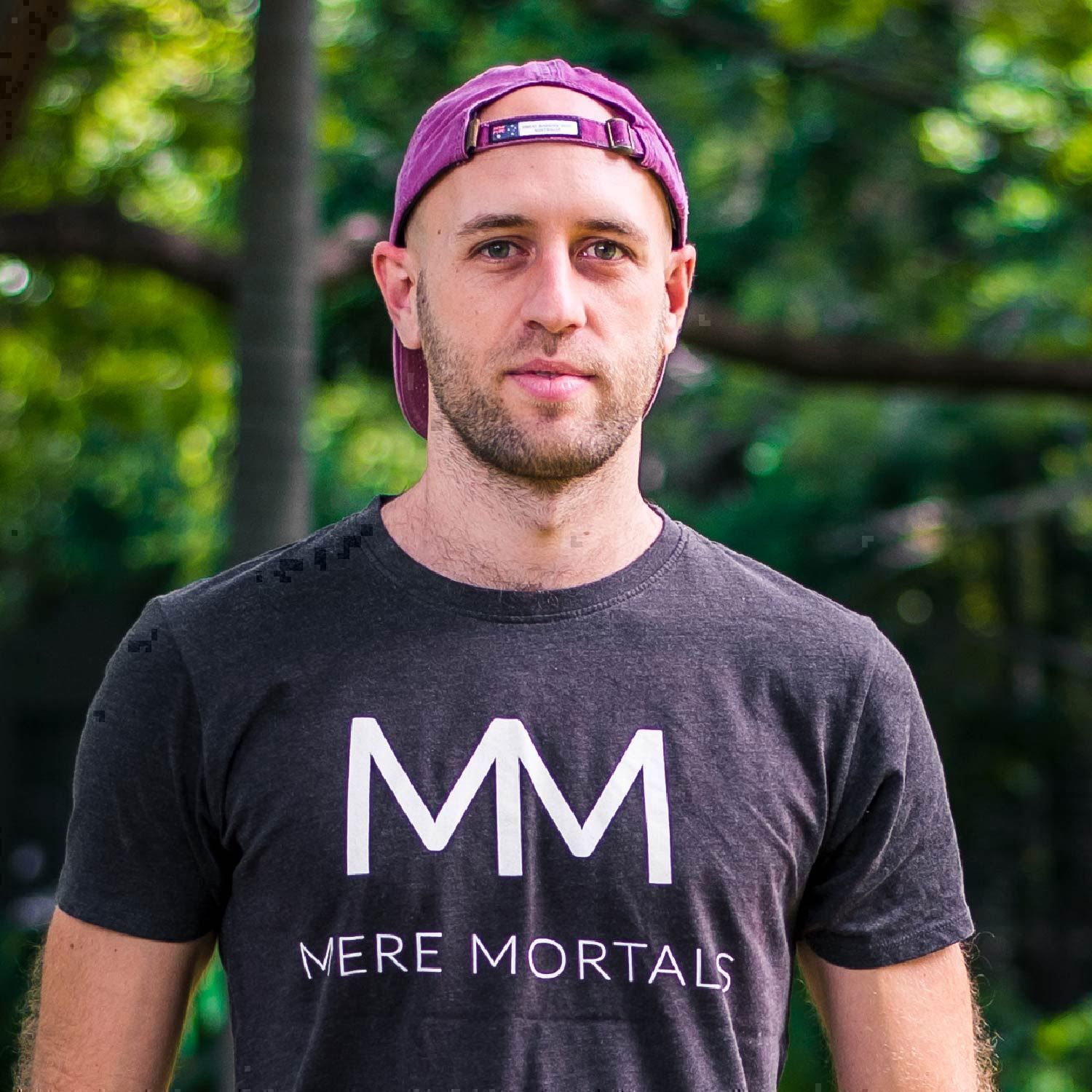 Kyrin Down
Analyzing tokenomics, you're gonna have a bad time. Oh, yeah. Well, hopefully, we're not gonna have a bad time here. Welcome, everyone, to another episode of the Mia Morpheus podcast, number 10 today, I believe. I am coming to you live on the 03/31/2025. My name is Kyrin. Welcome. Welcome. Welcome. Welcome. Hope you're all having a a fantastic time. And indeed, this is, as you might to myse, this is the podcast where I pump your bags.
Okay. No. None of that's gonna be going on today. In fact, it's gonna be a rather sour and down note for two reasons. One is I'm slightly sick, so if I sound extra nasally today, apologies. And also is because I just don't like this topic. It's it's tedious. It's very serious. It's necessary. It's one of those things that you have to make sure you do your due diligence on, and investigate. But it's also just
I find the word so boring. It's one of my, hate, hate words, that I have a continual basis or a list of. In any case, we are going to be going into the tokenomics of the Morpheus podcast. Going to talk about why projects even need a token in the first place. The superb property rights of Bitcoin and Ethereum merging the two best aspects of of these, two protocols and their structure,
and just exactly how the Morpheus token is distributed. So let's jump into it, and we're gonna start off with why I have a token. And
¶ Why Have A Token?
I have chapters. Use them. Skip forward if necessary, if you wanna jump to the actual numbers and things like this. But we're going for a bit of the high level overview here. And so that overview is that if you are here and listening to this, it's probably because you want, these sense uncensored, decentralized, individualized super agents that can act on your behalf with a Web three wallet. That's kind of the whole point of this thing,
the Morpheus project, and it's certainly why I am here. And if you've come this far, you'll likely agree that this will come from the open source world. And I've talked numerous times in the first initial episodes about why I think there has to be this. But if you look around, there's plenty of open source projects that don't have tokens. Why does this need one? And this is actually a part of a broader question. And I think why do any blockchains,
let alone individual projects, need a coin or a token? So I'm gonna talk about something dumb because it contains two dreaded words, but I I feel it explains a lot. And this was, Murad Mahmoudov's, meme coin super cycle thesis. And, he presented the this kind of panel or not a panel, a talk at, Token twenty forty nine in Singapore last year. And let's just shelve the meme coin and super cycle
portion of this because that's the most ridiculous stuff. But I think he makes a great point in that many times, the token is the product and that the tech is basically relevant. So to quote him, the crypto industry is a token production industry masquerading as a software production industry. Okay. It's pretty bleak, but I I think in many times, in many cases, he's actually rather correct in that. And, you know, you might have a modicum of technical utility,
but a large portion portion part of the value of a token or a coin is the mimetic potential, which is whose whole thesis and, you know, I'm not gonna get into that. And this goes all the way from things like Bitcoin, which if you've been to any Bitcoin meetup, they can have religious type undertones to it or and the maxis certainly have these these, you know, Puritan values, to the vaporware of certain coins, which have nothing really underneath
underlying going on them, maybe a really good salesman at their head to the dodgiest of dodgiest memes. And, you know, I'm willing to hear out and acknowledge that many of the advantages that crypto can offer, the peer to peer nature of it, the censorship resistance of it, self sovereignty, etcetera, etcetera. But again, why do you need a token if you can have all of those things without it, such as with a stablecoin? So if you think of a stablecoin, for example, you can
utilize it peer to peer. In many cases, it can be decentralized in many cases with the, you know, rye and and, the, ones that you'll find on DEXs. Certain of them will have, you know, censorship in them and pay and that they can block payments and things like this. But you could certainly see that there's a lot of utility in these things and, you know, it's it's not a it's just a token, of a already underlying fiat basis. Now, of course, fiat
money is going to, you know, infinity, essentially. So you wouldn't wanna have them as a long term saving things. But in terms of the trading and peer to peer nature and using it for everyday activities, there's, you know, the point 001%
you'd experience in a in a trade on a daily basis or point zero one, whatever it is, is not much. It doesn't matter. So from my point of view, the reason that you would ever have a token or a coin is the ability to participate economically in the project and benefit from the success of it in providing value. And this is why companies exist. This is why stocks exist. This is why bonds exist for the government level of this.
And this is why, you know, capital formation and all of these sort of things exist. So this is the only real reason I can see why you would have a token and a coin is to participate in this. And this, I guess, gets into the next section here, which is about rigged games and fair launches.
¶ Rigged Games & Fair Launches
So you can provide value in many different ways. There is the speculative kind, which is what you'll see more in the meme coin type world. And then there is the real world tangible actually changes behavior of people, improves productivity or improves efficiency. A lot of crypto at the moment is the ability to participate in the speculative kind.
And unfortunately, there are many rigged non transparent games with the presales, the hidden wallets, the discounts to VCs, the semi locked vestings, the heavily weighted insider distributions,
which all create a strong external incentive to dump and little internal incentives to build and create. Once again, if you go to, Murad's talk, a large portion of this is talking about why he thinks meme coins have come up is because they're actually better, funnily enough, at doing a fair launch where it's not, you know, a lot going to the series a's and the series b's and the team and the seed found.
And with only a tiny portion going as an airdrop to airdrop farmers, perhaps even or community and then the ecosystem as a whole, whatever the hell that means. And you can see what eventually happens with a lot of these coins and tokens as they gain popularity in terms of getting listed on exchanges. They're just plummeting value and it's a big extraction event. So these are not the scarce, not transparent, not predictable things. Well, sorry. These are,
yeah. And, essentially, they are they have weak property rights to the whole point. And you cannot really own part of the product or network, because the way that they are distributed at the initial portion is unfair and, you know, has all of these, hidden transparent things, non transparent things, which are not good. So instead, you do want something that does have the transparency that is more fair and equitable and everyone has a ability to participate, from the from day one.
And typically, these need to play take place over a longer period of time. I think for distribution purposes, there's just something about the time aspect of things going out that needs to happen. But also so that the crazy market manipulation is only temporary. I think and this is talking about fair launches now. You know, BTC did it perfectly. The immaculate conception, if you've heard of that phrase or meme before. Ethereum, you know, less so. It still had
a little bit of, insider sort of things going on there, but it it was still pretty good. And Morpheus, I think, has done a reasonably good job of it as well, certainly in the top 1% of of launches in terms of how it's been distributed out to people,
as compared to many of these other projects, which do have the seed rounds, which do have the insiders and teams and things like this. So, you know, a lot of these, are not sex speculative, when I'm talking about the the fair launch ones because they are trying to seal solve real pub real problems. With Bitcoin, it's trying to solve broken money. With Ethereum, it's trying to create digitally enforceable financial smart contracts. And with Morpheus, obviously, it's the smart, agent creation.
I explained why I think the the distribution needs to go out into the four buckets, as I mentioned in the last four episodes, and also why protocols need to provide a token to build out as well and why it can't be done via a standard, you know, stock or something like that, especially when you're talking about open source and decentralized systems. So let's jump in to, I guess, some of the the property rights and the actual numbers. Yeah. I know you're feigning for it already. So
¶ Hard Cap & Distributed Emissions
speaking of property rights, David Johnston, wrote a piece on why Morpheus has, two of the critical ingredients of both Bitcoin and Ethereum, these being the hard cap, aka the, predictable scarcity of Bitcoin, this being the 21,000,000, but also the distributed nature of the Ethereum missions to capital coders and compute, AKA the miners. So, you know, Bitcoin is better for the hard cap. You know, the certainty of what's to come. It's why I personally,
like Bitcoin so much. It's much more easier to understand than any other project, including Morpheus. And we'll talk a bit about the the messiness that that comes later. Yet Ethereum was better for awarding the varied participants because with Bitcoin, it only goes out to the miners and, you know, they eventually have will distribute it out via just, you know, game theory and selling things that are valuable and, you know, to cover their costs and stuff like this.
Whereas Ethereum was much more from the get go going out to capital, people who, participate in that to minors, obviously. And then I believe people who even coded, directly, to build Ethereum out got a portion of the initial, 72,000,000. So can you actually have this hard cap which Ethereum lacks?
And this is one of the things I dislike about Ethereum is is just it's so hard to understand what it's gonna be like in one month, let alone one year, let alone ten years of, you know, how much supply is gonna be out there, how where is it gonna be, etcetera etcetera, because it has all sorts of burning mechanisms and things. And sometimes it's inflationary, sometimes it's deflationary, etcetera etcetera. So can you actually have the hard cap,
but also have distributed emissions combined? And sure. Why not? So with Morpheus, there'll be a max of 42,000,000 tokens, full stop. And this is talked about, numerous times of how the they actually get distributed with 24% to each of capital code compute and builders or p k a community with the 4% set aside for the production fund, which you can if you wanna think about it in a way, it can almost be thought of as a foundation.
And once again, this is talking about why it's not at the immaculate conception of Bitcoin, but it's it's still pretty good. For the first sixteen years, the emissions are predictable. And then after that, there's a burning function is introduced. The end effect of this is that they'll continually go out over time, but in a decreasing manner such that there will still be rewards going out, yet the total amount of more in circulation
can only ever be lower. So, you know, after the first sixteen years, it's just getting distributed out, but it's still kind of getting burned with the mechanism. I'll touch upon this shortly. In sixteen years, that's where you could ever have the max, and, then after that, it goes down. And you can see that on the graph here.
Probably easiest to to look at it, using this more supply curve graph that I've got, listed up on the screen here. So what's up with the and and this obviously combines the, hard cap of Bitcoin. In this case, it's 42,000,000 with the distribute more distributed supply of Ethereum, which is going out to not only three, but it's also including including builders in there as well. So what's up with the sweet 16?
¶ Sweet 16
Why that sixteen years and then after that going out even further. Well, if everybody claimed the token supply, that was allocated, it would be exactly 42,000,000 on year sixteen, which is AKA 2040, because Morpheus was launched in 2024. On day one, each bucket rewards out 14,400 tokens and then decline by 2.468994701 with some extra numbers at the side there of Morpheus each day. So 14,400 for the builders bucket, for the, coders, for the capitals, and then also for the compute.
These will then decline as by that number I mentioned until they all reach zero on day 05/1933, which is in sixteen years. And this also works out to being distributing 42,000,000, with the protection fund as well. Of course, in effect, this has a similar halving like quality, that Bitcoin has where after four years, there are 18,400,000.0 tokens in circulation, which is, you know, it should be 21,000,000 if it was gonna be exactly half.
After year eight, there's approximately, three quarters, AKA 31,500,000, which should be either just below or above that. And then on year twelve, approximately seven eights, which is 39.4. Once again, it's just roughly it's not exact. I already talked to me, previously in a in an episode about the the meme potential of the 42,000,000 number. Where did that come from? Is it the answer to life, the universe, and everything, AKA Hitchhiker's Guide to the Galaxy robot, computer?
And similar to how Satoshi just picked 21,000,000, all the numbers that he he was working with just worked towards that. Vitalik initially just picked 72,000,000. I tried to do some research on why. I couldn't find any reason why he picked that number. I believe the sixteen years is simply just a random number. It's nothing super special about it as far as I'm aware.
Will it make distribution better? I don't know. We just hit year sixteen of Bitcoin, which leads us onto the messiness. It gets messy. So is it ever not messy?
¶ It Gets Messy
Is a is a question when it comes to tokenomics and why I I kind of dislike this topic in general. Because even if it's not rigged against you in terms of the meme coin gains, the, you know, VC funded, vaporware chains, all those sorts of things, it's it's bloody confusing. Even if it's not rigged, it's bloody as fuck confusing. I sometimes feel like I have a handle on on Bitcoin. It's like, okay, yeah, I kind of I kind of get, you know, how it's distributed. I get the 21,000,000.
I get the time type, type of initial distribution when it was only Satoshi and, you know, a handful of people mining mining stuff. But then if you if you dive into it even more, it gets more confused confusing because it's not actually 21,000,000. It's it's like 20,999,900 blah blah blah blah, Satoshis, and it's a little bit short. It's, you know, with the difficulty
adjustment, you're not actually having a halving every four years if you're everyone says that. It's actually slightly more or slightly less than that depending on the amount of mining that's going on. What happens if the fees get too high or too low? What happens when they run out after, you know, 2140, I believe it is for Bitcoin? All of these sorts of things, you're like, even if there's a number, you can kind of understand it.
The way it interacts as a whole with the system always gets confusing, always gets messy. Ethereum is even worse when it's sometimes inflationary, sometimes deflation inflationary schedule, and that depends on gas and fees and all this sorts of shit. It's like, I don't know. It just gets messy. And I think all of them are always messy. And, you know, more is just as messy in many ways.
The buckets all started at different times. So do they all end at different times? What happens after the sixteenth year? How does that burning mechanism work exactly? I know it comes from the AMM, the automated market maker, but which plays into the capital bucket. But as you remember from episode six, I still didn't really have a full handle on that. So
it's all of this stuff is is rather confusing at times. And many times I think it's kind of like how I talked about the technical limits where you can dive into the technical limits of things and try and understand
cryptography. And then you're like, okay, I should probably understand a bit of coding to understand how it works at this level. And then it's like, okay, well, you know, SHA two fifty six, I should probably understand that. And then it's like, you know, all types of elliptic curves and things like this, and it just gets confusing as fuck. I kind of feel like the the tokenomics is much similar.
You need to do your research, understand it as best as you can, but there are limits and levels where you just have to tap out and go, I don't know exactly what's going to happen here, but I understand enough to go. It's it's probably above board. It's probably gonna work out best in the end, but, you know, everything in life is inherently riskly. So, important to remember that as well.
¶ Why Time/Yield Matters
You might be going, okay, man. This is a long winded way of talking about economics and tokenomics. And you're correct. And it's gonna get even more longer than that because there's one specific thing I wanted to touch upon just before we finish. And I already talked about this in the capital episode, AKA the techno capital machine. But I wanted to dig deeper into this,
idea of not having principal at risk and why using only the yield makes a difference. And this is in particular talking about the capital bucket where it all started for Morpheus, back in February, March of '20 '20 '4. And, so as you might remember, you to participate in the initial fair launch over that, ninety day bootstrapping period, You would put some staked ETH into a contract, and only the yield of that was being, contributed to the the pools, the liquidity pool.
You would end up getting a proportion pro rata of Morpheus tokens, and your capital was never at risk. And it's kind of funny. I I wanted to dive into this because most of this is psychological. When you drill down, when you think of why it was that case, why didn't we just use Ethereum and just buy it much as, like the Ethereum people did when you sent in a certain amount of Bitcoin and you would get a certain amount of Ethereum tokens back, in compensation for that.
And I think most of this is just drilling down into why money is psychological in many cases as well. So I did a book review recently on The Price of Time, The Real Story of Interest by Edward Chancellor. Recommend at least checking out the review, of course, on the mere mortals book reviews. And the most important part of it is the idea that interest is a value
on time and on risk. And this is not a new idea. It's kind of well known, but if you ask most people what is interest, it's like, I don't know. It's kinda like, what's inflation? It's just like, fuck. I don't know. This this stuff's complex and much if you think tokenomics are messy, try try explaining inflation to someone. But essentially, it's the idea that money is worth more right now in this present moment
rather than in the future. So that if I was to give some money to someone, I'd need to be recompensed, for this in the future if they were to give it back to me. So they give me back what I gave them. But then also, like, a little bit extra to recompense me for the idea that the money is worth more right now rather than in the in the future. So the same thing kind of applies here, except that when you're using the staked ETH yield, we kind of view it psychologically as more uncertain.
It's money a k a. It is money in the future, the the yield from that. And therefore, it's already more risky and less valuable than the capital that we have right in the moment, which is the actual ETH underlying the staked ETH. So with the capital bucket of Morpheus,
you will never actually have your capital at risk. It's always the yield from whatever you're using. And at the moment, I believe it's it's just staked teeth, but there's proposals to, use it for any of the other staking, type systems such as Solana, such as USDC. And I think there was even a thing with Bitcoin, but I didn't understand how Bitcoin has any yield, but whatever.
And it creates this interesting and I think healthy dynamic where I hold on to my capital and I view that much differently as these kind of rewards that I can get, which are more uncertain than they're in the future, AKA the dividends, the yield, the interest, which you might call it of the stake teeth. It feels less risky, and that's because in a way it is. It is. If I am using those to to contribute and to get rewarded in in Morpheus for that,
it is actually less risky in a kind of technical basis. And David also mentioned that, for many people, and this is myself included, that when they participated in the the fair launch and with the capital bucket, which is still ongoing and still will go on for the next sixteen years, the they had Ethereum, but it wasn't even staked and that they actually stake their Ethereum
to then participate in this. So it's, like, even less risky. It was essentially just using something that you weren't even already getting. Hence why for many people, it was probably even less risky. So that was just an interesting more psychological aspect. It doesn't really have that much to do with the tokenomics of the actual project as a whole. But it there is something to do with, obviously, with fair launches and the time nature of it,
and distribution nature of it, which plays a part in all of these things. And all of these little individual blocks, building blocks, I think, play a part in having something that is launched fairly and which has good tokenomics, which gets us on to our last
¶ How To Have A Bad Time
section here. And it's a helpful question to ask is in is any of this good? Is it good that there's a hard cap supply of something or that it's deflationary or that it's distributed amongst four buckets instead of three versus one?
Is it good that there are power factors that are being introduced to all of this to incentivize long term holding? Is it good that it was only using stake d at the start? The only real answer to all of this is that as long as the incentives, it encourages the incentives of having the ultimate goal, which is a private, uncensored, decentralized AI agents, everything else is irrelevant,
in a way. And that the only way we'll find this out by is by actually trying it out and seeing what happens. So if funnily enough, in a way, you need to have the the tokenomics. They're they're kind of irrelevant, but they also just need to be aligned in a way such as that they're encouraging people to build, to create things, and not to take behavior that is, short term and very selfishly interested.
A Bitcoin is would talk all the time about the short term time preference versus long term time preference and how Bitcoin's structured in a way where it's in it incentivizes people to think long term. And when you think long term, you can create really ridiculous stuff like La Familia De Sagrada in Barcelona with the church, which is still being built to this day and is, you know, a marvelous piece of wondrous architecture and and building.
And you compare that to a, you know, a modern size skyscraper that's built in three to five years and falls down when there is a earthquake in Burma or in an Asian country like there was recently, and you see shit just falling down, which is not good. So
it's a reminder here that if you're here to get rich, you wanna get rich quick, you're gonna have a bad time. And the purpose of all of this, ultimately, if you go on for an even meta level, is to create a better world and a world that you wanna see and I hope is better in whatever
better definition means for you. For me, I think AI agents done well can make actions that are more efficient, that bring people joy, that provide utility, that mean they have to spend less time on manual, busybody, stupid input of, you know, numbers and shit into a computer, and that ultimately we can pursue the things that bring us meaning joy in life. And I would argue that for 99 of the population, the reason that they take certain actions is to get money to, you know, pay for the lifestyle,
the life things that are needed to do whatever it is that they do outside of work. There's very, very few people who would do the work that they do their job without getting paid for it. I fortunately am one of them. I don't get paid for this stuff. But and and if if I do get paid for it, it's on a voluntary basis. And, you know, I get to pursue the things that I wanna do,
and that bring me meaning and joy. And I would certainly want more people to be able to participate and live in a world that is like that. I think AI agents are a huge part of it, and this is why I, care about Morpheus. Now if that sounds good to you, if you think, that something like that is valuable and you're bringing something of value, creating something of value, valuable things are valuable.
So you might get wealthy as a side effect of that. But I think it's important to remember the the whole reason, the whole point that you're here is, and especially when you're talking about tokenomics, is for the thing that is being created and not for the fucking token itself. You know? It's the people get this quote wrong a lot, which is,
money is the root of all evil. It's it's not. That's not the actual quote. It's the love of money, which is the root of all evil. And it's the when you're in love with money, when you're focused too much on the tokenomics
and not on the actual things that money can provide and bring to you and you can utilize in this world, that's when you're gonna have a bad time. So just a a call out from me to as a reminder to remember all of that. And thankfully, hopefully, we will never have to talk about tokenomics ever again on this podcast. Yay. So let's jump into the last section here, the value for value.
¶ Value 4 Value
This podcast is available anytime, anywhere for anyone. You can find it in almost all of the places, all of the places that I physically can put it, the video aspect, the audio aspect. And I, intend to keep it like this. I'm never gonna have any ads on this. I'm never gonna have any sponsorships. Everything that I do here is because I want to do it and because I think this is important and valuable.
Now if you want to contribute back to this, if you find some value from this podcast, I just ask that you return that in some shape or form. Sharing this with a friend, word-of-mouth is critical to small podcasts and things like this of letting them know, hey. This tokenomics
episode was really good. Lots of valuable information in here. And, you know, also going and checking out any of the other mere mortals conversations, mere mortals book reviews, mere mortals emotion, any of other podcasts that I and my cohost, Juan, do is super, super valuable. Providing feedback, joining in the live, I do these 11AM Australian Eastern Standard Time on a Monday, for at least the next six weeks before I go traveling.
Talent wise, you could provide graphics, audio quality, memes, Discord answers, help me out with the website. All of these sorts of things are super valuable. And then finally, the last portion, if you want to, provide some value in a monetary form, you could send some more to me. I've got a address down below. I've got the stake reference. So if you are going to contribute to the, capital bucket, you can use me as a reference, and I think I get a bonus or something.
There is the mere Morpheus builders bucket, which you can also stake to, and that is a a way of, providing value to me. Finally, there's some PayPal links down below. And also, you could stream this if you're listening by the audio on a podcast app like Fountain, Truefans, a modern podcasting app where you can, use the lightning network and stream payments to me. So lots of cool stuff there. Many different ways to provide value.
Ultimately, look, the the podcast goes away if I don't receive any value back in these shapes and forms, because obviously it will mean that it's not valuable and that I shouldn't waste my time on it. So, I really enjoyed doing this. I'm going to do probably another six episodes before I finish off this season. And then hopefully towards the end of the year, can re rekick it, restart it back up, after I've traveled
around Europe for a bit. But, you know, we gotta see. I I really would love to see some feedback and appreciation for the for the podcast as well. So that's it for today. Thank you very much for tuning in. I really do hope you're having a fantastic day wherever you are in the world that we never have to talk about tokenomics again and chat for now. Car now. Bye.