



¶ Intro
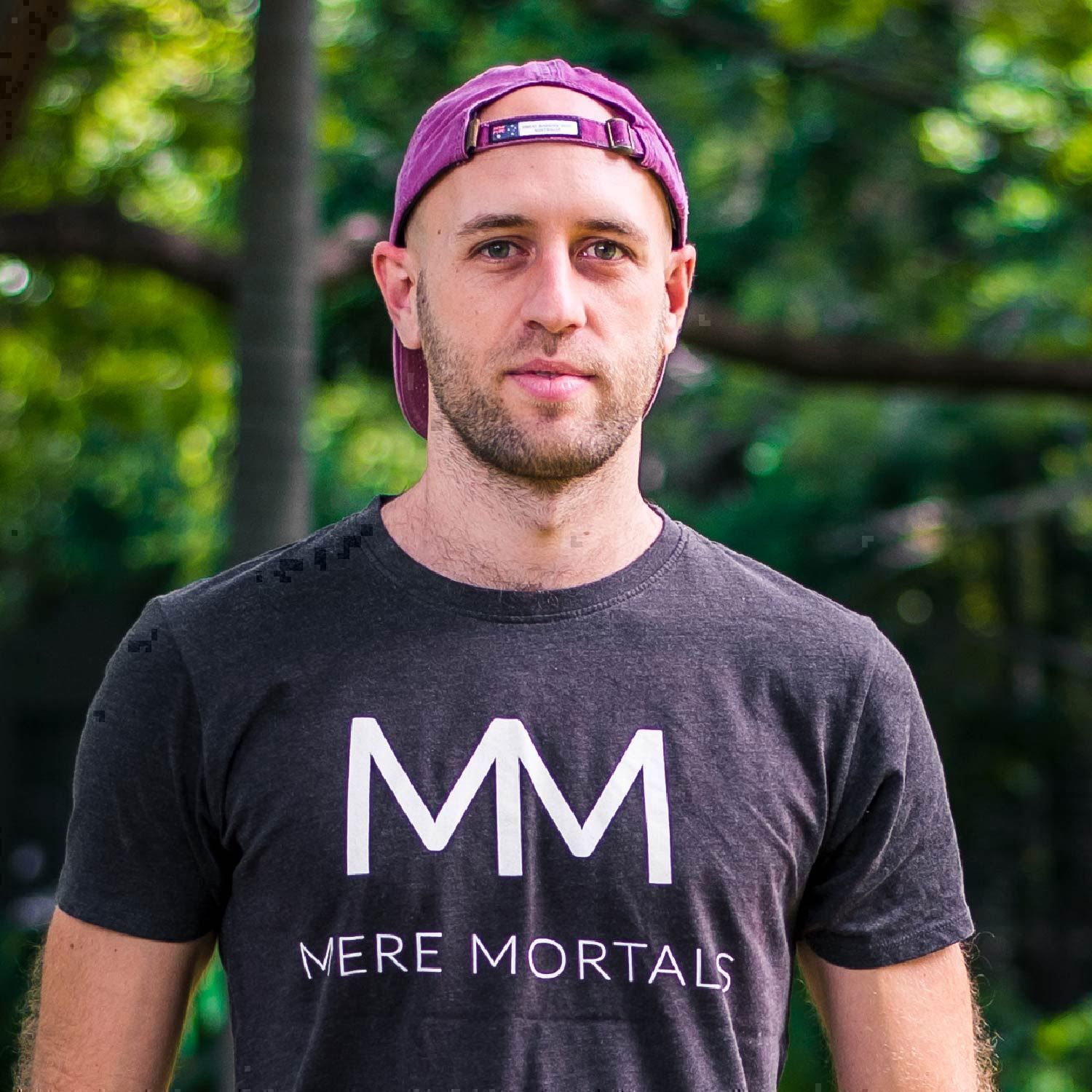 Kyrin Down
Won't somebody please think of the children? Oh, yeah. Welcome, everyone, to another episode of the Mere Morpheus podcast. Episode four here. I'm your host, Kyrin, live on the February 17 at 11AM Australian Eastern Standard Time on a Monday. Would love if you come join me sometime. And as you might surmise, this is the podcast where I think of the children. Okay. No. We're actually focused on Morpheus AI here, but I will actually be touching upon,
children today in this and in a kind of negative context. So just be prepared for that. Probably not the lightest of topics, but it's one that is is definitely needed. Instead, in this episode, we're gonna be really examining unrestricted AI and thinking of the children, this this kind of hysteria, h I h a I stereo, if you will, and why I think the media likes to portray this in particular with regards to open source. We're going to be talking about the inevitability of some human action.
And also why I think common law, IP law and patent law is kind of in danger or it's gonna be, it's gonna be some changes needed for that definitely. And why the negative externalities that can kind of come from AI aren't gonna be coming from the open source version. It's gonna be coming from, other ones.
¶ Deep F'AI'kes
So let's just dive right into this into the deep fakes, deep fake eye cakes. I'm trying to do a little bit of puns today. It is what it is, and it's not great is gonna be my summary of this section. So just jump into here. And we're gonna start off with a rather uncomfortable question. Should someone who creates images of child pornography using AI go to jail? This is one of those ones where it's like
a very uncomfortable topic, not something that a lot of people like to think about and boils blood and is very taboo. But we're gonna we're gonna dive into this today. From my point of view, it's a victimless crime in the sense where someone who is obviously not in the norm and very much in the minority in terms of people, why they like child pornography was a very good question and probably has a lot of reasons and answers for
that. But in this case, if they're just simply creating it from, you know, image generate image generation, there is no actual children involved in this. It is being consumed by other people who also enjoy this type of images. It's a it's a rather victimless crime. Should they go to jail? I would say no for that. Is it morally iffy? Yes. What if it is based upon the image of an actual child? And this is we're getting into the deep fake deep fake ice sort of question.
And this is actually just a variation of the most probably extreme variation of a lot of taboo topics, whether it is related to pornography, sexual acts, of, humor, of label, of, violent images of whatever it is that you want. You're able to to now create deep fake AI images of all these sorts of
things and in a very realistic human context. If you just jump onto Venice and use, I think it's pony realism, that one, you know, you can just type in whatever prompts and it'll create a very good looking person or a realistic image of a person, they're actually all usually pretty good looking as well. I should try actually asking to create an ugly person.
But you can do this with with real people as well, you know, asking it to do it of a famous public figure. And I'm sure there are ways of inputting it into actual people that you know in your real life. Now this is where I think there's the the question of morality butts up against what is actually enforceable. And so if we look at something like Fortune and rule 34, if you don't know what rule 34 is, if if it exists, there is porn of it is that and
this that that rule 34 absolutely exists. And if you jump on a 4chan, you will find a lot of it there. And what you see on these sort of places is that you'll find a lot of morally repugnant things, things that you would say, like, like, that's, why would you say that? Why would you do that sort of thing? Yet, and they probably have broken some sort of law. Now, in extreme cases, they were it's a actual child pornography or actual violent acts or things like that.
I'm pretty sure there's there's probably a lot of FBI and agencies on those kinds of forums, investigating those sorts of things. But there's plenty of other examples where you could say, you know, they someone admitted jaywalking someone admitted to doing something like this or this or that. And whilst they might have broken a minor law, and therefore should be held accountable for that.
The ability to prove guilt is difficult. The damage done is rather small, and therefore it's kind of practically unenforceable. And this not only happens, of course, on on fortune, that's just where people will will talk about it, but in everyday life and in many, many contexts. And I'm I'm kind of the opinion that the deep fake the deep fake hike is here to stay as long as there is a thirst for it as there will be for, just, you know, pornography in general, for
gore videos in general. You can find plenty of those sites on the Internet as well. There's going to be a creation of that as well. If people are willing to consume it, if they don't care if it's AI, which I think we're at the point now where we can start to say, no, you know, people don't care if it's a deep fake version. There's, that's going to proliferate. And the enforcing of that is just not going to be
possible. And that's why I have this meme, one of my favorite memes on the on the screen here. It is what it is, and it's not great. And this is one of those ones where I think we're we're just gonna have to accept it. This is very much in the unrestricted AI well realm. And you'll probably hear, okay, this is why we need centralized companies to to stop this sort of behavior.
And I just I think we're at the point where it's like there's enough technology out there that you, one, you're going to try to crack down on open sources is crazy and ridiculous. And the more you do that, the more you're just restricting actual use cases of which can bring benefits to people because the motivations of people who want to create this stuff is like they'll do it no matter what. They'll, you know, they will run
their metal servers on in the, you know, month basement or wherever to create these sorts of things. There's there's not a chance of you stopping it and the actual ability to to enforce it, I think is is not possible. So this is actually just a variation of
¶ F'AI'ke News
another topic, which is fake news, fake news, and misinformation. Of course, this always actually seems to come from a political context. And from what I can tell, and it's usually because, you know, this person voted for X, Y and Z thing and it was, you know, they did that because it was based on untrue information. And if fled only knowing the truth, the only rational option would have been to vote for, you know, ABC party.
And, you know, if only they knew the truth, the world would be a better place. This brings up a lot of questions related to what is true, what is real. After reading that book, I think I mentioned it last week or the week before on semantics, the tyranny of words by Stuart Chase. He brings up two really good points related to there's just a lot of topics and the big ones, kind of sex, religion, politics, where
if you try and use the word capitalism or communism or something like that, it means fascism was the example he used in that book. It means so many different things to so many people. And if you were to survey them, the actual definition of the word is so squirmy,
undefined that you can't have a productive conversation of it. It is you're just talking past each other. Your words lose meaning. And when you're getting to this state, nothing is true, of course, because you can't agree on on things. So me personally, I'm pretty much of the opinion that when the things like mathematics and hard sciences of physics are probably the only things that are kind of objectively true, even that's kind of squirmy when you're getting into quantum, the quantum world,
and anything that's in the human world, there are variations. You can use some language to say, you know,
the apple on the tree. But even in the example in the book review I gave, you know, I could be talking when I say apple, you know, I could be talking about the the an actual apple you eat, I could be talking about the form of an apple, the shape of an apple, I could be talking about the company, of course, I could be talking about, you know, Adam and Eve's apple, which has many connotations attached to that as well. So, you know, everyone is wrong and right at the same time.
One of the good examples of this is a is a great advert from 1986 of, actually created by The Guardian of all things, The Guardian newspaper in the in The UK. And it showcases different points of view, shows a skinhead man running towards a woman. And, you know, it's got this voiceover just saying, like, explaining how different points of view can alter the situation.
And then shows the sorry skinhead men running away from a car, then a different point of view, same skinhead men running towards a woman and then a skinhead man grabbing a man and his briefcase and you're like, okay, like, man, it's changing so much. And then finally, you see, he's actually saving the man from a bunch of bricks falling upon him. Now, the most hilarious thing about this advert, of course, is that it's related to a newspaper, a media outlet, which reports on like, just subjective
things as well. The news is is the is one of the most subjective places ever. And they're presenting it as like, an ever increasing vision of showing how this man is actually, you know, you're getting to the final point where you've got the best viewpoint of understanding like objective reality. Okay. The skin hen man is actually a good guy.
Yet I think you could zoom out again and see, like, you know, what if he's just in a city full of of rats and thieves of, you know, Gotham City and, he's doing this just because, he actually needs the to save the man's life to be able to ransom him or something. So, of course, the the hilarity of that is is is nice. So when it comes to deepfakes and fake news,
once again, I you know, how are you going to stop this out? How are you going to stamp this out if there's a fake news just in regular media outlets and the regular Internet? Why why would an unrestricted AI be any different and why would have a centralizing of that into companies or governments being able to to, you know, make sure that we're only getting the safest stuff. Why would that work any better? I've, of course, actually glossed over all of the positive things that come from deepfakes.
So for example, if you have, visited the Twitter, the X account of Doe Queen, if you're in the crypto realm, I would highly recommend it. Fucking hilarious. Really, really good videos. So for entertainment purposes, you know, deepfakes are actually really interesting and amazing. And, can you do this of yourself? You know, is that allowed? Is, doing it of other people? Is that allowed?
And there's plenty of information that, whilst not factual, factual, can actually bring about really good results. You know, basically anything that you tell a child, there are rules of thumbs where you say, you know, don't cross the street. No. You know, monsters don't exist. These sorts of things where a lot of times like the factual or you're talking about Santa or something, you know,
factually you will say something that is incorrect, but the rule of thumb is to protect them to to help them. And once they are of age and they can get to a a place of, you know, cognitive understanding of, of nuances and things like that, then the, you know, the more factual answer is is the best one to give. So is that misinformation? Are we lying to our kids all the time? Is that a bad thing?
You know, I think the trick of all of this is, my my kind of baseline rules of thumbs is you want to keep things free and open and choice, have choice. So the fundamentals of free speech of, you know, Bastiat's concept of the ability to protect your life, liberty and property, I think we we want to apply those same sort of things to open AI, on your open source AI so that we're not just restricted to get it from a certain place, from a certain source.
Choice is everything. And I think what we're going to see with mainstream media, I think that's still to come of of all of these these types of, of things. They'll they'll have you believe that the only place to go to is the is the the safe versions. And I just don't believe that's the the best way of looking at things.
¶ Common As 'AI'r
There's a book that I read once as well called Common as a Common as Air by Lewis Hyde. And I've got this common as AI. And it's a fantastic book. It's the sort of one that's actually really boring. Like, it's boring as hell in a sense because it's on IP laws of copyright and not patenting, you know, the probably driest of subjects you can you can get into when it's particularly related to the law realm. But he he touches upon how these things
were were first coming up. So the comments, for example, and these are things like wood in a forest, nursery rhyme, the air that we breathe, you know, the river, water running from a stream on on land that is not claimed by anybody. These sorts of things are the comments and how they're enabled and protected by by self governance.
And this I. E. Being the stakeholders all having a a a say in the process and of why there are norms and values that arise naturally and without kind of coercion and force of how people can decide how much wood to take from the forest without, you know, essentially decimating the forest of using a river or water that's connected to multiple pieces of land and not polluting that for the people who are downstream or for if you're upstream of them, of
things related to nursery rhymes and you know who owns that. The he showcases in this book how modern IP laws and copyright have essentially now become tools for unjust persecution and rent seeking. A great example of this is, check out the James Joyce Estate. So the the, I guess, the ancestors of James Joyce, the Irish writer, some of the worst books you'll ever read in your life. Just try out, try out some of his books. Nevertheless,
people seem to enjoy them. So, you know, kudos to them. And they are just merciless in their prosecution of people, of scholars, of anyone who wants to use parts of his work. And, you know, you'll you'll see people try and use some of his portions under fair use laws, which are kind of contradictory to IP laws and copyright and things like that. And they they just go after them like they are absolutely the I'm trying not to use too strong words here. They are
bad people when it comes to that sort of stuff. And I think the the modern world actually is going to need a real shake up when it comes to copyright to IP and patent laws, because when we see particularly IP, because what we're going to see with this access to to open AI and this is probably where the media is also going to come in here and say, you know, these you can't use open AI, you can't use when I say open AI, I mean, open source
AI, not the open AI company that isn't that open. The the reason that you can't use these things or shouldn't use things, it's like they're stealing from artists, think of the artists, they're stealing people are just stealing from, you know, JK Rowling. Probably not a good example with her because she's
obscenely rich and people don't take to tend to take the the sides of these obscenely rich people. But, you know, they they're using all of these other people's words. They're they're just stealing it. And I I'm kind of getting once again to the thing where I don't know if you're gonna be able to stop it even if you, want, like, the genies out of the bottle.
The even if you tried to clamp on the open source stuff, there's still enough repositories out there. There's still enough people who have, you know, trained models for themselves of learned how to do it on bare metal. It's still going to happen. And how are you going to be able to enforce these things? I just don't see that possible. So I think there's going to be my thoughts are still related to what Lewis Hyde talks about in his book, which is the the idea,
I like lightning, for example, as an idea, you shouldn't be able to patent or patent or copyright that. There's a really funny story I remember of, there's this company that allows you to buy stars. And they set up some sort of like, you know, semi official, you can buy a star and name it. And this lady
bought the sun, you know, the star that's that feeds feeds the earth and makes us be able to live here. And, she was then like, oh, but I I bought this thing. You guys are all using my sunlight. I I should be able to, you know, tariff the the entire world, essentially, which was, you know, kudos to her. A funny, funny little story. I like I like the the hootspah. But, this is one of those ones where it's like, okay, you can't you can't actually, like, own
own light, for example. You can't own lightning, but you should be able to, be able to invent something and own the invention of that. So the lightning rod, for example, is what's used in this book. And I a potential scenario I actually see happening related to AI is that
companies will perhaps claim certain weights. So, it was getting into the weeds slightly of of how these large language models work, but the weighting system is how they base on what words to say to the next inputs or the the probability of of putting this in here and and, putting this out there. And I it would be really interesting if if companies were claiming, like, trying to patent weights. I think that's something that might happen.
And I think that would actually be a really bad thing. So I don't think you should be able to do that. The the process of getting to those perhaps, you know, the invention of that, but the actual idea itself of just a string of numbers, I don't I don't think that's something that that should be copyrighted or put under IP laws. So what about people, you know, stealing other people's works, for example?
This is an unclear area, because I do believe there should still be incentives for creation if you want to create a, but but can these be held together by norms, informal norms and values? So say someone trying to create a brand. So let's take Gary Vee, for example, with his VeeFriends. He's trying to create a what he would describe as a Marvel Sesame Street Cinematic Universe type deal of these characters. And, you know, the things like Gratitude Gorilla, Karma Kiwi, stuff like that.
And they they have, you know, attributes. They have qualities to them. And he's trying to create this this brand around them. Should anyone be able to come in, hijack those characters for their own purposes, you know, say to a, an AI, you know, like create these images and then I put it on a shirt and sell it. Oh, these these brand, this brand, I want to create a
a comic out of it, which he's also he's doing. I want to create a children's series out of this, which he's doing. Should you be able to, you know, to just take all of the stuff that he's created and compete against him on that? I don't know about this. Like, I don't think that's fair, but also how do you stop it? Can we create will those informal norms and values around commons arise again? And when it comes to this new world of of just abundance of being able to create things.
I don't know. I don't know when it comes to that. And after all, you know, he himself is simply merging together two commons that are already there physical animals in the real world, as well as character traits that humans have of gratitude, of the concept of karma and things like this. So this is where I'm kind of like iffy on this topic.
How how is this going to change in the in the world? I don't think clamping down on open source AI is the answer to this of making sure that every company that is building has an AI product, that they're they don't allow you to ask it to create Elmo in a, or allow it to reference, other people's images, for example, and things like this.
I don't see how that's practically going to be enforceable and how that will work without just pretty much trashing the the industry and the benefits that can come from these things. Yet, it's Yeah, I'm still still a little bit iffy on that.
¶ Responsible AI
The final one that I think that'll come up is related to responsible AI. I was reading a slightly dated Forbes article, everything's kind of slightly dated if it's smaller than like three months old, of
trends for for twenty twenty twenty five for AI. And I came across this gem on responsible AI. And, to quote, there's also a growing awareness of the harm that can be caused by the irresponsible use of AI. Many of us are now aware of the dangers of AI bias and hallucination and understand that mitigating this takes concerted effort.
I'd really love to see some of the data backing up what these dangers are of what this, you know, of the the the damage, I guess, of the harm of these things because the media really loves to just focus on doom and gloom. The AI is going to destroy everything that we love. It's and stuff like that tends to get hysterical about stuff.
I think there are plenty of genuine ways where you can have negative effects coming from, the ability to interact with large language models of them to be able to act in the world of agentic AI of things like this. A short list of this would be, you know, loss of human agency, value alignment, superintelligence, autonomous weapons, cybersecurity risks, job displacement, social unrest from rising Gini coefficient perhaps.
But all of these, I think, are either be being caused by AI actually being in the hands of a single entity or a government or would happen whether or not it was coming from an unrestricted, so to speak, source of the of, an AI that is coming from from open source AI, I e, something that is unrestricted. So in this case, it's like, what would be the reason for cracking down on on these open source models?
Because it's just it's just going to arise from these are genuine questions of things that probably should be talked about and will be talked about certainly lots.
Yet the I'm concerned and one of the reasons and we'll eventually get into how Morpheus ties into this, that I'm concerned of that future where these things are portrayed in the media and people actually believe it And they believe that the, you know, there's popular support of of measures that are related to cracking down on, unrestricted AI. And I just don't think that the the negative things are really actually going to come from having unrestricted AI. It'll just be from AI in general.
You don't get people voluntarily working on a transparent protocol because they want to create bad things. I'd love to see, if anyone has a an example of this, I'd be really interested in it. But having something that's open source and that has, you know, let's let's create a nuclear weapon, an open source nuclear weapon or something like that. I just don't really see that happening.
And that's because most people aren't bad. They don't want to do bad things. They just want to live in the real world and, you know, survive, get by with their families, have fun, find meaning in life. There's plenty of debates of AI to come in the future. But everything that I've seen from history, I don't I don't think that indicates that, that mixing open source and AI is going to result in a catastrophe. So these are just a couple of the examples I've kind of gotten here of why I think
the things the media are going to say. These are some genuine questions and some things that should be looked at. Yet I don't I'm just concerned that the the backlash is going to be unrestricted AI equals bad. We need to clamp down on things which are unrestricted, and which are, of course, the open source models. So this is going to be, I guess, my my little summary
¶ Sum Up Of The Need For DEAI
of the of the need for the Morpheus project. You know, the first was kind of an intro, I guess, into into the project itself. The podcast myself. The second episode here that I did was upon censorship, AKA stopping you from being a nuisance, with your medicine questions and, and the sorts of topics and why you need some privacy with your AI and why you're not going to want to go go towards a centralized company for that.
The third was on extractive AI agents, I. E. The scammers, the state advertising companies, AI AI advertising, perhaps. And this fourth one is just kind of my final setup on on why I think the media is gonna be talking about why open source AI is bad, unrestricted AI is bad, and how it's gonna destroy the world. And I just don't think the, actions that can come from that are good. Anything that is trying to restrict AI, I don't see that that working well. So
this is going to be like my little final section of the setup period. I'm now going to be focusing on the actual project itself. So in the future episodes coming up, I will be talking about the white paper, the four different buckets, the token itself before moving moving on to perhaps perhaps more forward looking things related to open source on the actual industry, perhaps of longevity, separating AI and crypto,
a couple of different things related to this, which are much more specific to the the Morpheus token itself. So thank you for bearing with me with me for this this section, these first couple of episodes before I get into the real kind of like meat and potatoes.
¶ Value 4 Value
So this is a value for value podcast. I want this available anywhere, anytime for anyone unrestricted, unrestricted me and Morpheus.
And all that I ask is that you provide some value in return. What did you get from this podcast? You know, how much would you pay for for listening to this, for your time if you were going to equate it to going to a movie, for example, or something like this? Of course, when I say pay, I mean, you can return that value in many different shapes and forms, time, talent, and treasure. What I'm still really looking for at this moment is some feedback on the actual episodes themselves,
what you think, I could do differently, what you would like included in this. Those those sorts of things are very beneficial and helpful for me. And even if you're listening to this well after the fact, please reach out on any of the links that I've got down below in the show notes.
And, you know, joining in on the discord that we have for the mere mortals podcast, you know, even jumping over onto any of the book reviews I've I've mentioned, because I do that in mere mortals book reviews, got the mere mortals conversations, and my friend Juan does the mere mortals in motion, which is a fitness podcast. You know, jumping across to any of these, it's also really appreciated and, and checking them out.
And, yeah, we'll leave it there. I will get on to talent and treasure in, I think, some of the coming up episodes, how you can support the show financially. But we'll leave it there for today. I really do hope you're having a fantastic day wherever you are in the world. The future is bright. Don't get sucked into the doom and gloom of the, Hysteria, the HIsteria. And until the next time, ciao for now. Karen out.