



¶ Intro
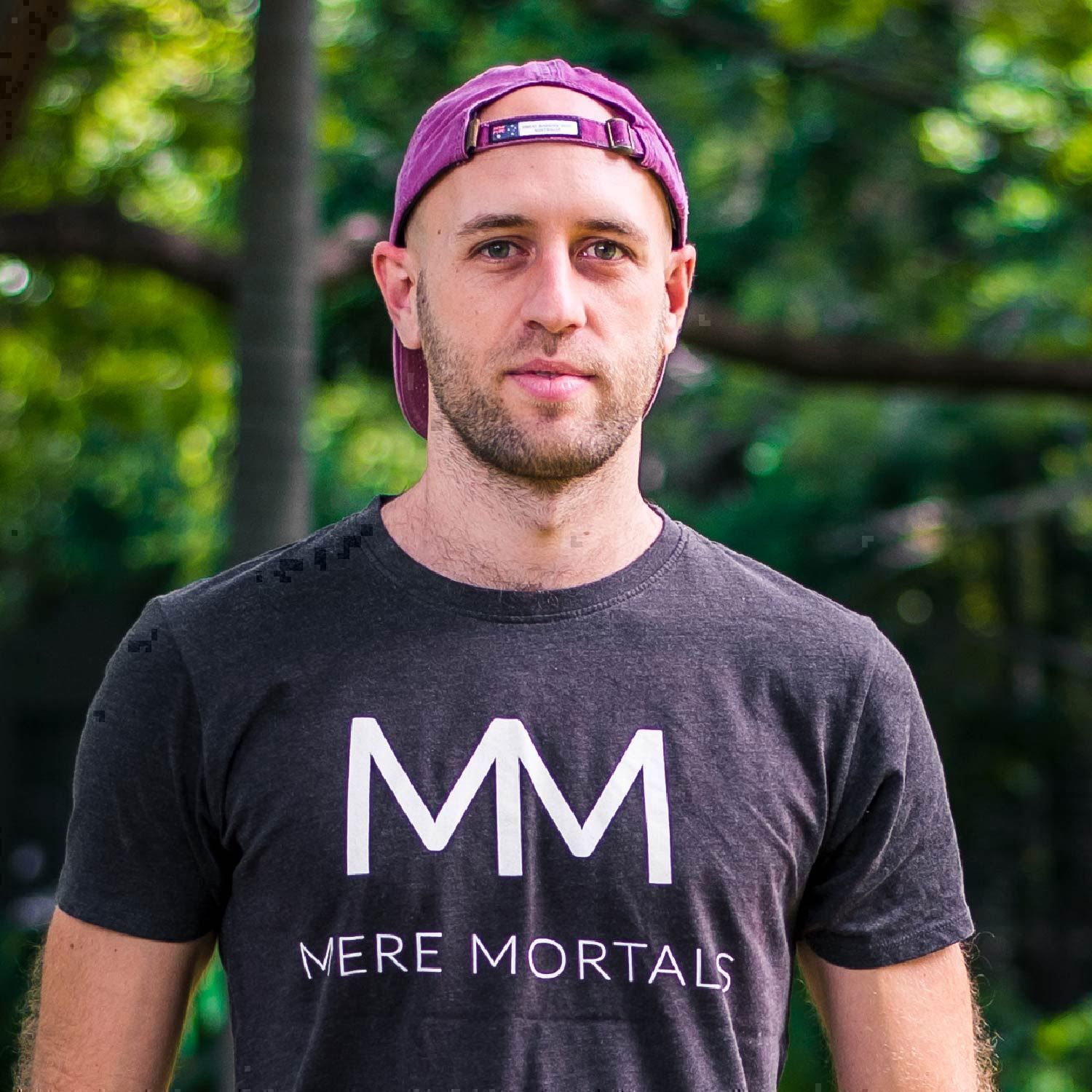 Kyrin Down
This is your last chance. After this, there's no turning back. You take the blue pill, the story ends. You wake up in your bed, and you believe whatever you wanna believe. You take the white pill, you stay in Morpheus land, and I show you how deep the rabbit hole goes. Welcome everyone to another episode of the Mere Morpheus podcast. I'm your host here, Kyrin, live on the 02/24/2025. And as you might smart, this is the podcast where I take copious amounts of drugs. No.
That is not correct. Maybe we'll save that for later. Who knows? But no. This in instead of the podcast where I dive into the world of the Morpheus AI network, And in particular, in this episode, we're going to be diving into the origins of Morpheus, the white paper. Where did it come from? How did it originate? What are the fundamental concepts you'll see in there? What are some differences you might see in various versions that are floating around, and where some of the ideas
differ in reality from the original ideas that were on the paper. So we're gonna be diving into all of that.
¶ Where's My Email?
Let's gonna start off with a question. Where's my email? Where is my email? So dive deep with me into the lore of a year and a half ago. So it's really not not that old. So on 09/02/2023, an email with the white paper was was spread around, titled Morpheus and the subtitle network for powering smart a smart agents with the co authors being Morpheus, Trinity and Neo. Now it's actually kind of hard to pinpoint where it originated from.
Its final form, I guess was this one final form in a sense, where it had a substantial form was this email that was passed around on the September 2023. But the ideas were for this were floating around much prior. And it's likely that it was discussed back and forth with with various people in the smart agent d AI community, a decentralized AI. And this is how it kind of reached its, I guess, like, culmination.
Now if you are unaware of who Morpheus, Trinity, and Neo are, they are fictional characters. They're from the Matrix movies. So, you know, if you're tuning into this much in the future, and you haven't seen the matrix, definitely go see it. Those are fantastic movies. First one especially is just perfection, groundbreaking. Very, very awesome. Now, I don't know who else was on this list of the initial email,
being passed out on this set September 2. So the only confirmed one that I know is David Johnston. And from my trolling of the GitHub of the morph of the smart agents slash Morpheus AI GitHubs, it appears that on the September eleven of twenty twenty three, he actually posted this and he actually misspelled the the document as Morpheus as in with an extra e after the r, which you'll actually find within the white paper a little sneak peek there if you're if you're diving into that.
And I also believe that he was the one who created the discord that is, commonly used now for organizing all these Morpheus on 09/14/2023. And I say that just because his was the first post and boosting on there. So like me, you might be wondering just how deep does this conspiracy go? Is David Morpheus? Is he the creator of this? I would say it's I I mean, technically, I guess it's possible, probably
improbable. I'm not sure why you would obfuscate all these sorts of things and go to that sort of lengths. But no, no, the actual question you should be asking is how does one get onto this cool kids email list? Why wasn't I part of it? And well, honestly, you have to probably be a bit of a nerd, to be honest. Also not a lurker, which I typically am. And you actually
can't it's not really a cool kids list because this is the sort of thing that gets passed around before something is cool. So it's almost the un definition of unpopular.
But, yeah, this is, I guess, for people who are interested in these sorts of concepts and things like this, this is how you you get access to the the groundbreaking, the the true stuff, the juicy stuff from the very beginning, much like if you were in Bitcoin before Bitcoin was even a thing, you were on the, what was it, the cypherpunk
hacker email list or something like that. So you have to be deep into the weeds of niche communities if you want to be on the receiving ends of of these sort of white papers and stuff like this. And I'm sure there's plenty of white papers that get passed around, which never make it into fruition because the ideas aren't so good or, you know, it just never takes off things like this. A couple of little Easter eggs here before we jump on to what's actually contained within it.
September 2 is actually Keanu Reeves birthday. Once again, he was the main actor in of Neo in the more, in the Matrix movies. And so hence, maybe why this was I'm not sure if this is a confirmed Easter egg could just be dark. I mean, you know, one in 365 chance of of that happening. And it could have actually been the birthday of the other actors or actresses in that movie as well. So, you know, maybe maybe that's an Easter Easter egg.
You'll also find some pretty fun things if you're reading the original stuff, such as the Morpheus token was actually meant instead of the m o r ticker, it was actually proposed to be MTN, the mountain, I guess, token, which doesn't have the nice ring and name to it and also is terrible for puns. So I'm super happy that it got changed into
this, this final form. The email itself that David received said something like this traveler find below a proposal for launching Morpheus network for powering smart agents. The paper lays out the token economics, tech stack, and means of calculating proofs for fairly rewarding the community, coders, capital, and compute providers with tokens. This paper is freely given to the smart agent community and is available in the public domain, free of mind, Morpheus. So that is where we kind of originated for.
¶ Update Me Bro
Now a little bit of housekeeping here. Just update me bro. For simplicity sake, I'm going to kind of cover the general themes of the paper. And it's a little bit tricky because there's multiple versions floating out there now. Now, if you want the like original original one that you could have seen in the email, this you can find on the 10/24/2023 blog post on David's medium page,
medium blog, and I've got that linked in the show notes. You can also find the modified version on the more.org website, which cuts out like, a lot of the unnecessary things that have been changed. I actually there's still actually quite a lot in there. As I was going through it, I've I've developed a whole list of things in here which, unhelpful, need to be changed. So I might actually be doing that myself shortly.
And, the reason you might be saying like, well, but the white paper, like, it should be the cornerstone. It should be the the thing set in stone. Well, you know, things change. That's that's that's the problem. And, ideas that are perhaps not fully fleshed out or that need
changing probably should be. So the reason you'll find this is on, the GitHub disclaimer. Some parts of the white paper can be updated due to latest technical and tokenomics improvements. Updated version is in development. So I've combed over both of these pretty recently and extensively for research for this. And indeed, there are many minor things. Some would maybe say major things that needed changing. But the overall thesis of what they were trying to do with this paper,
is still relevant. And so I will be concentrating mostly on those port portions. You don't need to know about fully home or home homomorphic encryption. I don't need to know about that either. And the Friedel test, which is referenced in the original one. So I'm not going to be going over, like, the deep technical stuff that is within that because as I said, a bunch of this is actually outdated as well. So in my review, I've kind of split it into these rough sections.
I'll be going over the intro, aka just the general context. A lot of this I've kind of already covered in the previous four episodes. So this section will be short. Token rewards economics, AKA tokenomics, the roadmap AKA timing slash future vision, contribution AKA how to contribute, for the four buckets for the four c's, the fees slash tech stack AKA the philosophy, and finally, the conclusion, a. K. A. How to save the world. So enter Morpheus.
¶ Enter Morpheus
I've already covered the historical context in especially in terms of the negative light, why I think decentralized AI is needed, why it's not going to be,
optimal if we only have centralized sources, things like this. So I'm just gonna jump into this last section here, which has the advantages of Morpheus, which I haven't particularly talked about before. So to quote, being web three native, the user can buy or sell crypto, send stablecoins, access smart contracts, use dApps, and DeFi services, which no LLM,
AKA large language model, is connected to today. Regulatory barriers faced by centralized companies prevent them from offering these tools to users so their models can chat about tasks but not act on the user's behalf in a web three context. I think this is pretty much bang on. I've yet to see any centralized company even talk or hint about offering things like this. So that, yeah, this is pretty much, you know, the pioneering edge of where you're going to see these sorts of things.
You'll also see this with regards to small models that people are doing on their own. But it does actually talk in the paper why you probably need this extra layer to be able to incentivize people to work together. Because just doing things on your own, you're not going to have the API services, the infrastructure, the network to be able to actually create agents which are
broadly useful in a larger scale. So to quote some more running on the, so other advantages, that Morpheus has right away, running on the decentralized public infrastructure is cheaper than paying chat g p t a license fee for every new user.
I'm not sure about that one. I don't personally, have haven't used that, so I can't say. The user can maintain ownership of their business or personal data. This avoids leaks, hacks, and attacks by and attacks from competitors. I do believe that. By rewarding developers for contributing code, not just to Morpheus, but also to build more specialized agents, an app store slash agent store type experience for users will develop. I firmly believe that'll happen.
And then finally, with persistence of data prompts in history owned by the user, the smart agent protocol becomes the best solution for interoperable interoperability in the world of LM, LLMs and agents. Well, some mouthfuls there. So that's the the general intro to this. That's how they frame it. And
actually quite like that they're focusing on the positive things instead of the negative stuff like like I did. But, this is a good way to start off and enter into Morpheus what it is trying to do and why it is needed. So in the Jerry Maguire film, we have the famous quote, Show me the money.
¶ Show Me The Money, Show Me The Incentives
Show me the money. Well, I actually want to show you the incentives instead. So the incentive of the Morpheus network is is much like Bitcoin in that it's the coin itself. In this case, it's actually a token, which is on the arbitrum, ETH layer two network is where it originally started itself. And if people find it valuable, then it will rise in utility and price. And
if probably if people are finding it, valuable, it's because it's actually got some utility towards it. So it's kind of this flywheel of getting things off of the ground. Now, in terms of the actual token, 42,000,000 in total that will be emitted over sixteen years. It was a fair launch distribution with no pre mine, no insiders, no team, nothing like that. Everyone was just interacting with a contract for the initial,
bootstrapping period. This wasn't in the actual white paper, but that period was in, 2024, the start of 2024 when that was happening. I'll cover the fair launch in future episodes. The purpose of this is that there are five buckets to distribute these tokens and that this is ultimately to motivate the key stakeholders. And so who are these? Well, these are the capital compute code and community.
And so there's going to be 24% of the total tokens distributed allocated to all of these people over this extended time period with a 4% little bucket here of as a protection fund. So what are these people? Well, the capital, will be via staked ETH to give it the initial bootstrapping
and liquidity. So AKA people who are just doing putting capital into the to the network. The code is for creating out the network and smart contracts. So this is what these buckets are for. Compute for providing the API calls to power the AI, and accessing it. Community, and community. I I call it the four c's, but you're gonna constantly hear builders instead of community.
So just keep that in mind, is, to enable front end applications and engaging tools with the protection fund for being when the inevitable bug is exploited. So I guess just talking about this, they also mentioned that it's a chain agnostic. So wherever the people are who wanna build, who want to contribute to AI is where Morpheus should be and
should actually be helping and part of that and making it easy. So even though it started the token on on the Ethereum layer two, it can spread out, it can bridge across to various different chains. But there's going to be this hard cap limit of 42,000,000. So ultimately, we we I guess the whole point of this is that the the network or the want the software, AKA the more token to pay for the hardware, AKA the GPU compute, which is kind of like how Bitcoin works as well. This is how the miners
are rewarded. You know, they they secure the network and they do all of this work, they get rewarded in the thing, which then pays them so that they can buy the thing. You know, it's once again, it's this flywheel concept. Now, this is going to be very different from Morpheus. And I'll touch upon this shortly of why
the, you know, security and stuff is being all done with via Ethereum that's already handled. So the token itself is more for these specific utility cases for for the people who are trying to interact with this, the stakeholders, I guess, of, people who use AI, who provide the services for AI, who build the agents for AI. And once again, for the, capital, which is to power all of this thing to, you know, this continual flywheel loop. So I will be doing,
you know, a token I feel is only as good as the behavior it incentivizes people to do. So show me the incentives. And this is one of the cases where I see, okay, I think the incentives are aligned here. The the token is being given out to people who have a stake in this and who are actually going to be providing value to the network and utility and things like this On the actual buckets themselves, how you can access them,
how it's divided up within the buckets, the token, the emissions, all that sort of stuff. I will be doing a tokenomics blur. I really hate that word in future episodes. So just stay tuned for that. We're not going to dive into that in this area because that will take forever. So
¶ Are We There Yet?
are we there? Are we there yet? When when token when launch when utility when smart agents when you know, App Store? Well, this stuff takes time. So let's take a road trip. Yeehaw. And there actually really is no roadmap for this. We do have this section here talking about the, I guess, general direction of what what the more token should look like over time as it's gaining wider circulation when it has deep liquidity, strong organic demand, what it's like at the time of launch.
So it's it's kind of similar to how Satoshi in the Bitcoin white white paper similar just states that fees over the long run will compensate for the lesser block rewards. It's the essentially the same idea here. So, in the near term, everything will pretty much be valued simply from the the capital liquidity, the staked ETH that initially funded the pool and, you know, gave gave the token value, I guess, in essence. And
that I would still say is is the case. That is the thing that is mostly driving this, because we're still yet to really have that ability for people to easily access a smart agent and the, you know, smart agent app store. It's being built out. It's getting closer to some sort of fruition and being able to connect and things. But and certainly on a larger scale, it's not in the medium term. As the network grows, people see utility in owning the token, what they can do with it.
This will then take over, I guess, some of the capital that that's needed in terms of the stake teeth. And then on the long term, it's essentially going to be all based on utility and holding the token itself will give you so many things that you that's why you will value it because it can give you these smart agents, because it can give you access to compute, because, you know, providing data will give you
the the more token which can be sold on later if you needed to and things like this. So if you jump on the on the website, for example, the whole point of this section, I guess, was just as a general, like, timing sort of deal. It's nothing set in stone here. Nothing is like roadmap. We're going to follow the roadmap or things. That being said, if you jump on the website, you'll see these, you
know, little progression thing that certainly looks like a roadmap. Genesis, Frontier, Homestead, Metropolis, Serenity. These aren't actually part of the white paper. These have nothing to do with that. That's just a general concept that someone else has created in terms of how they think the direction will go. And so, you know, well, we won't really need to cover that. We can ignore that. That's not particularly important for what we're talking about here.
¶ Who Gets To Decide?
Now, with all of this, you might get to say who gets to decide, you know, and in terms of the white paper, this is probably the most dated section of the whole thing. For example, it states that everything needs to have a node running for for you to be able
to contribute to the system. The path for all proofs in Morpheus starts with downloading a copy of the Morpheus full node. This includes a local copy of the open source large language model on their machine. Once running a full node, the user is in a position to contribute to any of the four functions of the network. I never had to do that. You know, I, provided some capital in in in terms of staked ETH, and I didn't need to do anything to do with nodes. And ultimately, I
don't think this is the path forward. So this is this whole section here, I think it's probably the most dated part. And for example, the original version was talking about this compute proof registration reward, which had this, you know, detailed documents and arguments and things like this. And this was largely just supplanted by, the Eric Voorhees Yellowstone model. So there's plenty of things in the white paper, which is just
you don't really need to know about. It's it's above and beyond, especially the original original version, the AKA, the one sent around on 09/02/2023. And so portions of this you can just gloss over entirely. And look, we have a lot of these ways of acquiring more, but a lot of it seems subjective. You know, who gets to decide what is good code, for example? Is this compute better than others? What stops someone from just farming?
How are we you know, there's incentives, there's a token with some liquidity. People are going to try and farm it. How do you how do you stop bad actors and things like this? It doesn't talk about this in the white paper, but atomic governance is essentially how this all works. Once again, I like to compare this to Bitcoin because this is a network that we already see running well at a large scale. And it's like, well, who gets to decide what gets into Bitcoin Core? Who gets to decide,
you know, who the who host the the white paper? Is it Bitcoin.com or is it Bitcoin.org and things like this? And essentially, the I will once again cover of this in the future. More of this to come in future episodes, especially on atomic governance. But there's, you know, there's there's the immutable stuff that's written in code that needs to be there, you know, trust but verify as well, this sort of thing.
But there is always going to be this kind of subjective bit when humans are interacting with things. And so this section of the white paper, I guess, details the rough proofs. For example, capital is is much easily more easily calculated. It's simply pro rata based on how much you provide over how long a time period. The code
is based on waiting system of full time equivalent work. So it requires requires like a little bit of negotiation with the maintainer of the the repo and the compute community is very much similar. I think a lot of this has actually changed with the introduction of of staking more into the equation and and kind of showing showcasing who you think is deserving of of block rewards or token rewards, daily rewards, based on
who you think is providing value. So it's an individual decision that I can make as well as a holder of the Morpheus token. The whole point of this section, I guess, is it's a free you know, it's it's based on the fundamentals. It's an open source project with a fair launch. Anyone can access the token. And if you contribute to the network, you can get rewarded from that. There is always going to be infighting
in open source projects. There's always going to be disagreements and things like this. But the whole nature of this is that it's out in the open and anyone can see and choose to participate and no one is forced to. So that I guess is is the sum up of of this section for myself.
Jumping on to the, I guess, last ish section, we've got the magic numbers. Woo hoo. I love magic numbers. So I hope we've all done our homework and not have only watched the, the Matrix movies, but you also have your towel handy and have read the Hitchhiker's Guide to the Galaxy. Because you might be asking, what the hell? 42,000,000.
¶ The Magic Numbers
Why was this number chosen? Well, obviously, if you've if you've seen that, I don't think I've done a book review of The Hitchhiker's Guide to the Galaxy. I've done one certainly on the restaurant at the end of the universe, you know, by Douglas Adams. But you will know that 42 is the answer to the ultimate question of life, the universe, and everything. So I'm guessing that's why it chosen either that or Morpheus is twice as good as Bitcoin because 42 is is twice as big as 21.
Ultimately, like, who knows? It's probably neither of those things. Maybe it was just like a nice number. You can divide it up with this decay rate over sixteen years. Like, okay. Well, let's just choose a number which will work out nicely. And so, you know, the more decay rate, for example, is 2.468994701 every day. Once again, the conspiracy, what is going on here? How can we investigate this deeper? The the magic numbers, is is kind of irrelevant
in in essence. And they state in the paper, the less numbers, the better you want the free market to choose things. So for example, fees, and and things of that, like in act in terms of accessing compute, you just want that to be a free market and using the Morpheus token is going to be how that is, how much are you willing to pay, how much more are you willing to stake, how much are you willing to utilize your token? That's how it will determine the kind of utility and access. So,
you know, there's not many numbers in this in terms of fees, in terms of this is how much should be paid to do this. It's literally just here's how much there is, here is how it's getting distributed, and and that's pretty much it. The only place where you might question this and say it's a little bit different is the, 4%. So that's the protection fund. And, this will come in very useful in a, especially because Morpheus wants to be chain agnostic. It's going to be is
chain agnostic. It's already on a couple of different places, such as on the Ethereum layer two base. The that requires bridging and that requires smart contracts. And certainly there are going to be hacks. There's going to be crazy shit happening. As I record this a couple of days ago, that was the Bybit hack of the largest, I think it was 1,400,000,000.0, of I think it was mostly Ethereum or all Ethereum in in history.
That that stuff's not going to change like that's going to continue. So there's a story from the early days of Bitcoin in 2020 when there was this bug that meant a lot of transactions were reversed. People acting in good faith got hurt, miners, for example. And so Gavin Adresen personally stepped in and distributed out of his own pocket Bitcoin to those people who were financially harmed from from this bug that that's, you know, kudos to him. Amazing.
This is one of those times where it's like, okay, it it's probably good to have a similar sort of thing already in place, for for being able to do that. So as far as I'm aware, that is has got some details around, you know, what constitutes a hack. How would you be able to distribute this? Once again, this is all open source. You can go into this and
check it out for yourself. There would be discussions around it as well, I imagine. And I look, I will admit personally that I still need to do a lot more research in terms of who has access to what wallets, how is this distributed? Is there multisig involved? What kind of decisions would be made? So, you know, I'm still at the the learning phase, much as many of you would be, especially if you're jumping into the mere Morpheus podcast to to understand more.
So there's certainly much more that needs to be investigated by me. And don't worry, I'll be doing that on future episodes and we'll tell you about what I've learned. This section also covers, I guess, the tech stack. As I mentioned, a lot of this is already heavy lifting done by Ethereum. So there's stuff about z k proofs and all sorts of things which are way over my head, like, totally over my head. So I
honestly read it and didn't understand it so much. And I'm I I don't care about z k proofs and stocks and shit like that to get into it more. So I'm just going to take that as it is.
¶ Conclusion
Coming on to the final conclusion here, and I guess this is just a section where I'll I'll state out what they've, read out and read out what they have, put here. So we are close to an important moment in history. With Morpheus, everyone will have a powerful personal
AI capable of thinking with them and taking actions to benefit them. In the same way the personal computer and the search engine empower the individual, we have the same opportunity with personal AI today. The smart agent protocol brings together the right mix of capabilities with LLMs, agents, and Web three. Morpheus extends those capabilities into a public network capable of accelerating the mass distribution and usage of smart agents.
We believe the economic alignment of incentives is ultimately how we secure the best outcomes for the coming of AGI. Help us secure an open source permissionless and free future for everyone. Yep. That's that's pretty much it. And that's that's why I'm on board with this. Why I think this project is necessary and useful, has utility and will be a greater good for for the world. And I think it's needed. So that is my little review here of the white paper. I once again, it's,
I would encourage you to read things for yourself. It's it's good. One of the reasons I do book reviews and I love reading so much, it it forces you to sit down and really contemplate what what it is that you're reading. You know, if you've got an audio book on, if you've got a podcast on, you're listening to me. First of all, thank you. But second,
you won't be getting the deeper learning and insights that are available. Personally, I don't believe unless you are listening to a podcast in a dark room with your eyes closed and just soaking it in. Hopefully, my voice is tranquil enough for that. I'm not not so sure what you can probably do better, to be honest. Grab a grab a an agent to, to read out the white papers for you. That's that's probably a better way of doing that. So this is a final section here of value for value,
¶ Value 4 Value
where this podcast is available anytime, any place for anyone, anywhere. And, I intend to keep it that way. There's never gonna be any advertising. There's never gonna be any sponsors. I detest and am concerned about the amount of influence that that has on on news outlets and media and sources and how people access things on AI. And so I run the value for value model, which is where I give all this value to upfront. And all that I ask is that you return some in,
some sort of form. Now you can do this in time, talent and treasure time. The simple stuff, you know, sharing this with a friend's word-of-mouth is crucial to podcasts like this. And so, you know, sharing it via a link, you know, sending it to anyone this is available in both audio and video form on on YouTube, and then wherever your favorite podcasting app is.
Talent, you know, if I've got some things wrong, please, you know, reach out, leave a comment, tell me what I've got wrong, what I've misinterpreted, what you think I should talk about in future episodes, what you would like to hear of things that I could do to improve this experience for you. All of those are immensely valuable. So reaching out via any of the, links I've got down in the show notes would be super, super valuable.
And treasure, I will be talking about that shortly. I will be providing a link where if you want to provide some, some sort of benefit back to me for doing this, if you value, the value this podcast in terms of actual monetary forms, which is very much appreciated because it takes a lot of time, energy, equipment to all do all of this stuff.
I will be providing a link in the following episodes of how you can use me as a referral for you Stake Deeth or if you even just wanna stand send some Morpheus my way, things like that. That will be coming up in the future. So
what is coming up in the future? Well, I'll be doing four episodes on the on the four c's. So capital will will be next week. I'll be doing an episode on the tokenomics and then atomic governance. And then I've got a whole list of sections here of of just, I think, things related to open source, how networks work, and how Morpheus beyond the, I guess, technical details, interacts with the realm of, I suppose what you would call the more philosophical
or effective philosophy, which is what I talk about on the mere mortals podcast. This is part of the mere mortals podcast networks as well. So if you enjoy listening in to me jumping over into any of the book reviews that I've mentioned,
conversations I do with my friend Juan. We've also got a fitness channel and I've also got one on the value for value philosophy. So plenty of things there for you to interact with if you want to interact more with me and what I'm doing. So thank you very much for tuning in, for joining in, and, I am live here. I'm doing this live on 11AM Australian Eastern Standard Times on a Monday. Would love for you to join in. That would be super fun. Until the next time. Ciao for now. Cara now. Bye.