



¶ Intro
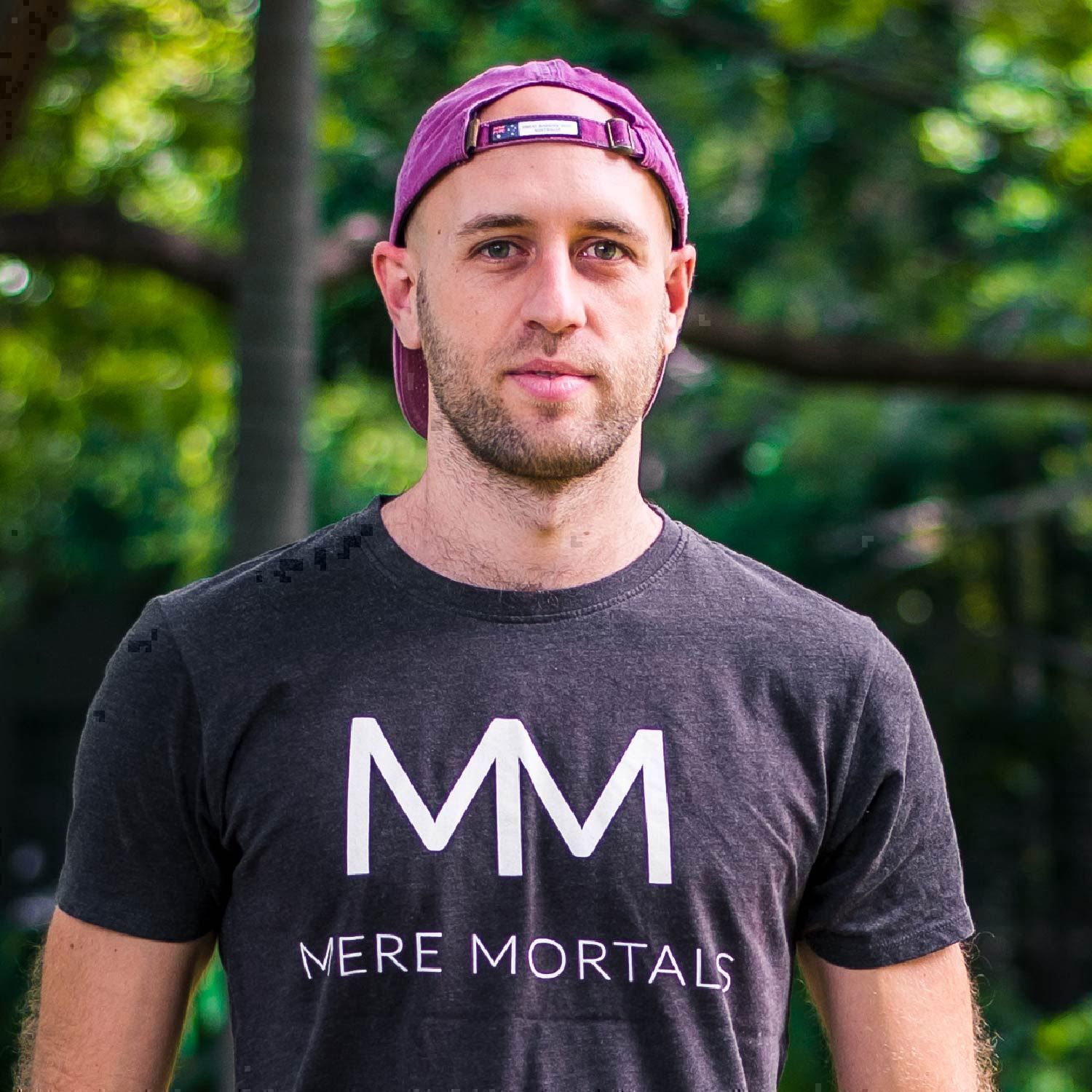 Kyrin Down
Do you want an extractive super agent or individualized super agents? Welcome, everyone, everyone, to another episode of the Mere Morpheus podcast. I'm Kyrin here live on the 02/10/2025. And as you might surmise, this is the podcast where I promote the idea of an agent singularity
that we will just use one agent, the agent that will rule us all. Okay. No. No. I don't believe that's actually gonna happen. But, instead, we're gonna be talking today about super agents and extractive agents and bots and why I think we will want super agents and how Morpheus is gonna bring this all about. So we'll go into some definitions. We'll go into,
why we need to avoid extractive agents, how they're gonna try and extract from us, what the idea of a super agent is, and why I think Morpheus will will bring this about. So let's jump into something just right at the start here, I guess, a definition. If you've ever joined in on any of the mere mortals conversations,
¶ Agents Vs Bots
you'll know that we actually like some definitions. I find it very helpful to put words into a specific state so that we all can kind of agree or at least know what we're talking about. And if you'll find in some of the the book reviews I've done in the past, such as, Stuart Chase's The Tyranny of Words, just how
semantics are really much needed when it comes to certain words. And I think agents versus bots is going to be one of these. So let's talk about agents and bots. And I think the, you know, this is a rough definition here. AI agents can understand natural language, analyze large amounts of data and adapt to changing conditions.
Bots, on the other hand, are more limited and typically used for simple repetitive tasks. And so what you'll see is that agents are a more broad scope, they're able to take multi step interactions to act independently, whereas bots really are following a simple, defined and set path of how they can interact and what they can do. And I think it's important talking about this now because there's some people on the internet. There's people on the internet, oh my god,
who are saying that like, we're already we, you know, we're creating these agents, they're doing these amazing things. And I would really disagree with that and think we've just got some interesting bots. Perhaps they've got some unique aspects to it, but we're not really seeing this dive into agents as of yet. And so
we're we're mostly in the bot stage, but we can see some agentic qualities to certain things. So, for example, I'm referring to things like the Siri and Alexa of being able to interact with them and then being able to access different portions of your network, whatever it is, and do things there of using chat as a as a customer support type role on your website, for example, or something like this
of autonomous vehicles. Even the underlying technology and how that works, I think is got some agentic qualities to it, and even, you know, financial assistance or there's probably ones in certain areas where it's like, okay, they're evolving a bit more beyond stupid bots, which just automate certain repetitive tasks. I think there's probably going to be some consumer facing agents coming out soonish, like the next year or two.
But we're we're still very much in the stage where it's it's like what you mostly see a bot and that the agent future is still yet to come. And what we're seeing now is not really there. So I just wanted to get that as a as a starting point to say, okay, we're we're we've yet to see agents and their when they do come, their utility is just going to be so great that,
you know, if you think bots are useful now, agents are going to be the absolute next step. So the question, I guess, would be do we want an agent singular
¶ Do We Want An Agent Singular?
or perhaps something a little bit different? So what kind will we want? I recently heard people talking about how he was watching or listening to a, a podcast, an episode, video or an audio of
these two kind of chat bots talking together. And they're talking about poo and pee. And he was actually finding it more interesting than what he described as two chodes, who would, and I guess that would be people like myself and my co host, Juan, on the the mere mortals conversations, where he finds that the ability for an agent or a bot, in this case, a chatbot to to access all human knowledge,
everything that has ever been created, and that their their conversation is much more compelling and interesting than two random dudes on the Internet, for example, two talking heads. And, you know, it was this conglen conglomeration of all the wisdom of the crowds. I was, I was actually debating whether to call this episode something like the stupidness of crowds, because there's certainly a, a huge, tremendous benefit that you can see from the Internet and the access
to of everyone to give their knowledge to that. And when I say everyone, relatively speaking, I think it's still only internet adoptions at like 64%. And we certainly aren't putting everything that we have on the internet has been ultra beneficial and life changing. There's no doubt the ability for humans to communicate a broad scale to access ideas, information from around the world and different languages in different countries from different perspectives
has been huge and changing. But are we just gonna want one agent which will have access to all of this dollar knowledge and data and to have like a a singularity agent, if you will. And I would argue, no, we're not going to do this because how do we use the internet as individuals? We don't just access one site in there is everything on there. And then we just use this one place, no matter how good it is at conglomerating of ordering, of putting information that we might perhaps enjoy
up to the top. We don't use that. We sift and sort through various mechanisms. So if you just think of the search mechanisms, for example, you have not only Google, but all the other different search engines. We have YouTube, for example, we have medium or social media is about sifting and sorting through the people that you like, the information that you want to access the the knowledge or the entertainment or whatever it is that you're you're trying to get from, your perusing.
Now to find it the subset of people talking about the info that you're interested in. And we can also see that there's not just like one account, I don't just have a Chiron account that I use on the internet. I have a work one. I don't have this, but personally, other people might have one that they construct for their kids. So it's like a personal one, but that's account connected to them. But, you know, for other people. So, we have that. You could have one that's experimental.
You could have, yes, a personal one, but even one perhaps for like a self, business or a side hobby or something like that, such as myself. I've got multiple YouTube accounts, one for, you know, the mere mortals, one for the book reviews, one, you know, personal one, all sorts of ones. So I think that's this idea of having a singularity of information, of access of an agent that will access all of these things is is probably
the wrong way of looking at it. And so the Internet is not just one site and we're not going to just want one agent, which will be the, even if it's personalized to us, it's not going to be just this one entity.
¶ Or Agents Plural?
So we're probably going to want agents and with the s in involved, they're plural. So we'll want individual agents. And I think we'll want it to have access to all of the data, but not necessarily use it it because there's a lot of shit stuff on the Internet that is not useful. So personally, for example, of something a bit more concrete, how I've envisioned the future of myself using agents,
I would have one which would be a one arm handstand coach for myself. So this would have, you know, specifically be looking for the one arm handstand related information that you'll find on the Internet, which is relatively small. It's not that's a rather niche hobby. And I would also give it access to my data, my training, how I actually operate and the things that I do to to try and achieve this.
I would have perhaps a podcast helper agent. So this is one that would be more for creating clips of posting where I want it to post of interacting with people, perhaps in what would be a mere mortal sense or a chiron sense in terms of how I run my podcasts.
And so it would be less likely to be off the cuff and how I would joke around with friends, for example, I would probably want a personal companion one, this one would maybe be one that doesn't even access the the Internet per se or accesses it but doesn't
feed back into it. And so this is where I would be much more willing if I if it's proven to to be private and locally stored that I would, you know, be willing to share secrets or some of those things that I talked about in previous episodes, which are so personal that I wouldn't want them being shared with everyone everywhere, anytime the opposite of this podcast,
perhaps even a a finance agent. And and then that last example, perhaps I'd give it access to my journal, which I've kept since 2013 and has the most personal stuff on imaginable, which I only keep locally and which does not exist anywhere on the internet. I finance one, one that I could feed in information that I've kept once again, over the years of stocks of Kryptos of, of, just general macro investing, budgeting, all these sorts of things that I keep and how this I could, you know, say
I like these sorts of things that these sorts of people say that makes reasonable sense to me. The way they present, I think, is reasonable as well. And then then it can give me recommendations based on what perhaps those people would would, say in response to a query of myself, planning a trip or, you know, budgeting for having kids or something like this. So this is how I personally view how I would access agents and how I would use them.
Perhaps there would be an umbrella of me accessing them all via a single place, whether this be on the laptop or the phone or there's some sort of browser that I use, or, you know, these are where it's like, I'm not the tech visionary that is so attuned how with how people
respond to UX and UI and things like this. So I think there's perhaps going to be a Internet of or an agent type of model, but there's going to be a lot of personalized and individualized uses for how I personally would would jump into these things, for example, and how I would want it to to edit it myself and how I would want it to interact adapt depending on certain contexts and situations that I am am using it for.
But but Kyren, you might say, sounds like a lot of work and we're all lazy. We, people aren't going to be fine tuning their individual agents for these specific things, aren't facts, facts and data data. So when it's accessing the Internet, like it'll have everything and then it can sort through everything itself. And I'd definitely say no to this. There is a reason why you would want to exclude certain information, for example, or only want it to to access certain sources.
One that's really relevant to me, I guess, and and might be interesting for those out there, is in the podcasting world. So Spotify, for example, states that it has 6,500,000, podcasts on its, on its network. And the definition of that is probably pretty loose. And I would actually say technically wrong because a podcast, has four elements being an MP3 or AAC, file contained within an RSS feed with no DRM management and is available to download.
Spotify doesn't have the RSS feed component of that for many of its shows. So I would classify that as not a a podcast. The Joe Rogan experience whilst on Spotify was not a podcast because it was exclusive to there and so didn't therefore have an RSS feed.
And if you go somewhere like the podcast index, for example, the other open source community I really am part of podcasting two point zero, they state on theirs that judging by more their more strict technical definition as well as a bit more of an interpretive, idea of what a podcast is, such as applying some arbitrary limitations of
it having more than one episode and be more than ten seconds in length. And the reason for this is because probably a million or 2,000,000 of those podcasts on Spotify are people just grabbing their phone and going check, check. Is this thing working? Check, check. So is that a podcast? Not not particularly. No. And they state there's actually 4,400,000.
And with the added benefit of seeing that only 10% of those are really active with a with an episode being dropped in the last ninety days, Not to say that old ones that, stand the test of time and have been finished such as, some that I've done, for example, aren't podcasts, but we can kind of see, okay, there's two definitions. One is off by, you know, is 1.5 times larger.
And you would want the nuance to go, okay, I'm going to trust more the podcast index definition of what a podcast is and how many there are versus Spotify who have obvious reasons for wanting to promote just how big they are and how many podcasts they have and things like that. So we're going to want the these agents to be able to cull through specific examples like that and go, this source of data is much more important and relevant than this source over here.
So do we then have to make them individually? Do I have to spend all this time teaching it? Like, go find this information over here, do this sort of thing, exclude this, exclude that. And that's going to be obviously impossible. There's no way to be able to do that. So I think the agentic future is going to be somewhat like a will have the framework of of an agent model
right out of the bat. So this would be something like, you know, the social media platforms for Instagram for photos and videos, for example. And that platform will have mechanisms which are relatively easy and which will probably learn from yourself behind the scenes of, okay, this sort of
data or the the algorithm, if you wanna call it that, will learn, okay, Karyn likes this sort of thing. He doesn't like this sort of thing. He finds this useful. He doesn't find that useful. I might be able to edit this manually with some things such as, you know, clicking likes on the YouTube and not not interested in this, following engaging simple tasks that I can do, which don't feel like work, which don't feel like me
having to edit my agent manually and tell it to do this and not to do that. And but perhaps I can do that, as well. And this is how I really envision these sort of agents becoming about will have the frameworks which we will then interact with, and we can then individualize them to our our personal, tastes.
¶ Super Vs Extractive Agents
There's this portion here of a recent article David Johnston wrote about, super agents and extractive AI agents. And, you know, it's a variation of the term of of smart agents. What is a super agent? Is it super necessary? I I wouldn't have thought it's really that necessary to have super agents, but this is also the dude who who coined the term DAP. So he's obviously got some mimetic terminology of of influencing lexicon, so definitely wouldn't fade that. So I will run with it for the moment.
He states in this to benefit from having a fiduciary agent, that can spend money on your behalf and act on your behalf. With third parties, it must be one individualized. So this is controlled by the individual's private key AKA a web three wallet. Two, open source. So the settings and biosystem prompt of the AI is transparent and probably is also adaptable and editable.
I would add to that. And three, private, where the super agent is continuously able to access distributed brainpower, store context and memories private to the individual. And this is pretty much how I envision myself interacting with these agents as well.
Unless it's private, unless I can edit it, and unless it has I can give it access to, you know, some sort of the ability for it to influence or act on my behalf, I'm not going to be interested in in using what would perhaps be an extractive version. So you could say,
but why do I need like an open source one? Why why does it need to be private? Why why does it need to have access to a wallet and be able to act on my behalf? You know, portions of these are because of utility. Portion of these are probably related more to your ethics and frameworks and morals and how you want to interact with things. But we could have many agents coming out from companies that's going to be decentralized enough. Right. That's going to be fine to work with.
And this is where it's also like, are they gonna have your best interests at heart? David in his, hypothesis that these agents will be extractive and, definition time again here, extract value from humans based on propaganda, trickery, false information, in other words, manipulation. And the way that they're gonna be doing this is by gaining access to your data and selling it on, which many companies do at the moment. We see this as a very popular model,
by influencing you to use certain services or or byproducts. This is the more advertising sort of thing. Feeding propaganda into search results, you're definitely gonna see state actors, interested in that. And also even just straight up trying to fleece you hackers, malware, you know,
people just trying to drain your wallets and things like this. So you've got these these kind of like two paths that you can see on your screen here, you can go down the extractive AI route and, and be having interactions which are either right on the surface, trying to fleece you and steal your money and that sort of thing from your wallet. The
perhaps a little bit more on the mid surface where you're like, oh, okay. I can see it's advertising. I can see it's trying to influence me to buy certain products or use certain things. Some people seem to like this. Me personally, I hate advertising, but that's just a bugbear of myself. And then props the the more subtle versions, the more covert, ones will be where your results. That's the, and I'm not just talking about search results, but also the way your agent will act will be based on
the things that perhaps the state wants you to do or certainly that a company would want you to do or not want to do. For the first example. So barring you from accessing certain websites or interacting with certain other wallets, which it deems as a no no,
such as if you're in The US and trying to do anything with people in Iran, that's a big no no go. And you might go, oh, but why do I care about Iran? Things like this. You know, it for me, I know an Iranian dude at the gym, and if he was ever in some trouble and needed some help or his family did, this is one of those times where I'd be like, yeah, you know what? I'd I'd maybe want to be able to send money overseas to someone in Iran. I'm in Australia, so I don't know if I can do that legally or not.
Maybe this is one of those cases where it's like if it's an action that I want to take and, why why is it that the government or companies would have any influence on this? So we'll get to this final section here. The I've kind of laid out my view of of how I think the future will be. You're gonna want the super agents which are controlled by you, influenced by you, but not necessarily created by you and don't require
a tremendous amount of effort. And you're going to want multiple of them rather than a either singular one, which has access to everything, but which is, I don't think, going to serve your your use cases and your utility and match how you interact already on the Internet and with other people. And you're you're not certainly not going to want the extractive ones, which will be influencing you in in undue ways, which aren't helpful.
So where might I acquire such an agent as this is, is what you're asking.
¶ Where To Get Them
David argues that the the attack on open sources in that article is is kind of done, that that that battle's already been fought and won by the open source. You know, like, I just saw a recent article here saying how DeepSeq was being banned by all Australian government accounts. So if you work for the government, you're not going to be allowed deep seek on your phones and it's it's banned from there or any device that you interact with in a government capacity.
I personally don't think the the government and state's involvement with trying to shut down open source is is over. I think I think that's going to continue in the future. But we'll leave that for the moment. I think the incentives to build and create these types of individualized super agents are not going to come from companies, they're not going to come from a state sponsored program or something like this.
It's going to come from the open source community. And this is where I really look at the Morpheus network and go, this is this is where I see the incentives being aligned to create these things. People will do it, out of their own free will. I think there will always be tinkerers. There will always be creating people creating things like these, but it's it's more this marketplace that I'm talking about. Where can you go to find the
the one which is the most private? How can I find the one which is has the most utility and is able to interact the most broadly? Where can I find one which has already been tuned to a certain level to exclude certain sources of information such as
the other information just coming out from other AI is just pumping out and hallucinating shit? Where can I find one that's actually trained on human knowledge and not just human knowledge that has been manipulated and distorted by another AI, for example? And this is where I see the Morpheus network coming in, aligning incentives, particularly talking here about the builder bucket, that 24%, which is aimed for people to create these agents. Basically, this is this is how I see it happening.
And so while you might might see, you know, AI agents with a meme token kind of attached to it, which is the the current rage here in the, the start of, 2025, I don't think that's the way forward in terms of the long term access to these things and incentives and alignments with the type of agents, the the super agents that David and and kind of I also believe in. So there's
the the type of people who build on these sorts of things. And I think they will come and gradually find their way to the Morpheus network because they're going to be the type of people who are concerned about privacy, who are concerned about, you know, keeping things open source, transparent and editable.
It's funny. I love privacy, but I also love the openness and transparency. And this is one of those times of kind of paradox where you're going to have to realize it's it's beautiful and wonderful to have both of these things, but you have to have it in the correct order in the right places. And this is where I I think the, you know, people are willing to put their capital time and energy to get these type of it, things
are gonna be drawn to the Morpheus network because it reflects the ethos, the principles, and the the morals, I guess, on on which they were founded. So that's my little spiel there about, agents and, why I think we'll need them in the future. Let's jump into the value for value section here to finish us off.
¶ Value 4 Value
This is a value for value podcast. I want this available anytime, anywhere for anyone. And this is gonna continue to the future. You're never gonna see any, undue agents or or sponsors or of networks of advertising of fleeces on this particular podcast. So I provide all of this value upfront, and I just ask that you can return some value in return. Now I haven't dived super deep into this. And I should probably at this moment say,
Karen, you you made like three episodes of the Morpheus network, and you barely even talked about it. And that's because I really want to lay out the problem. I think I see the solution, the opportunity, the utility of AI, and why I think the Morpheus network is going to help build and grow that network and has those principles which I deeply care about.
But I want to lay out the problem first. And I want to talk about things like agents, the future, why I see the future going in a certain way and why I'm willing to invest my time, energy and capital into, the Morpheus network. So I will be going on to more in grid in granular things, I will be talking about the the white paper, the different buckets,
how it grew out the law. As I mentioned, I think in the last episode, I've got quite a few different topics to talk about here, and I'm just looking at on my phone. But I'm still probably gonna be doing another one or two episodes more of of laying the foundations of of where we're at currently before I get into more of the deep dive of the actual, you know, what's the tokenomics? How are these builder buckets created? What does capital compute,
community or code? What what how how are these all constructed together to, to fit into a coherent project and narrative that I'm I'm trying to talk about here. So value for value. And, you know, a lot of this was not inspired, but influenced by David Johnston's article on super agents. It's just on x. So I'll leave a link down below, which you can access that and give that a read. I'd highly recommend that. And if you wanna contribute
back some value right at the stage now, I would just recommend give me some feedback. This is what I'm looking for at the moment. I want to know what you think about this podcast, how you would alter it differently if you were to do it. What things do you want to hear more about? These are valuable information that you can provide back, and I will be talking more in the future about how you can provide some talent and perhaps even treasure,
and support this financially as well. But we'll leave it there for today. Thank you very much for joining in. I do hope you're having a fantastic day wherever you are in the world and looking forward to this AI future. How do you imagine yourself interacting with agents? I would love to know these things. Leave some comments down below. And until the next time, ciao for now. Cara now. Bye.