



¶ Intro
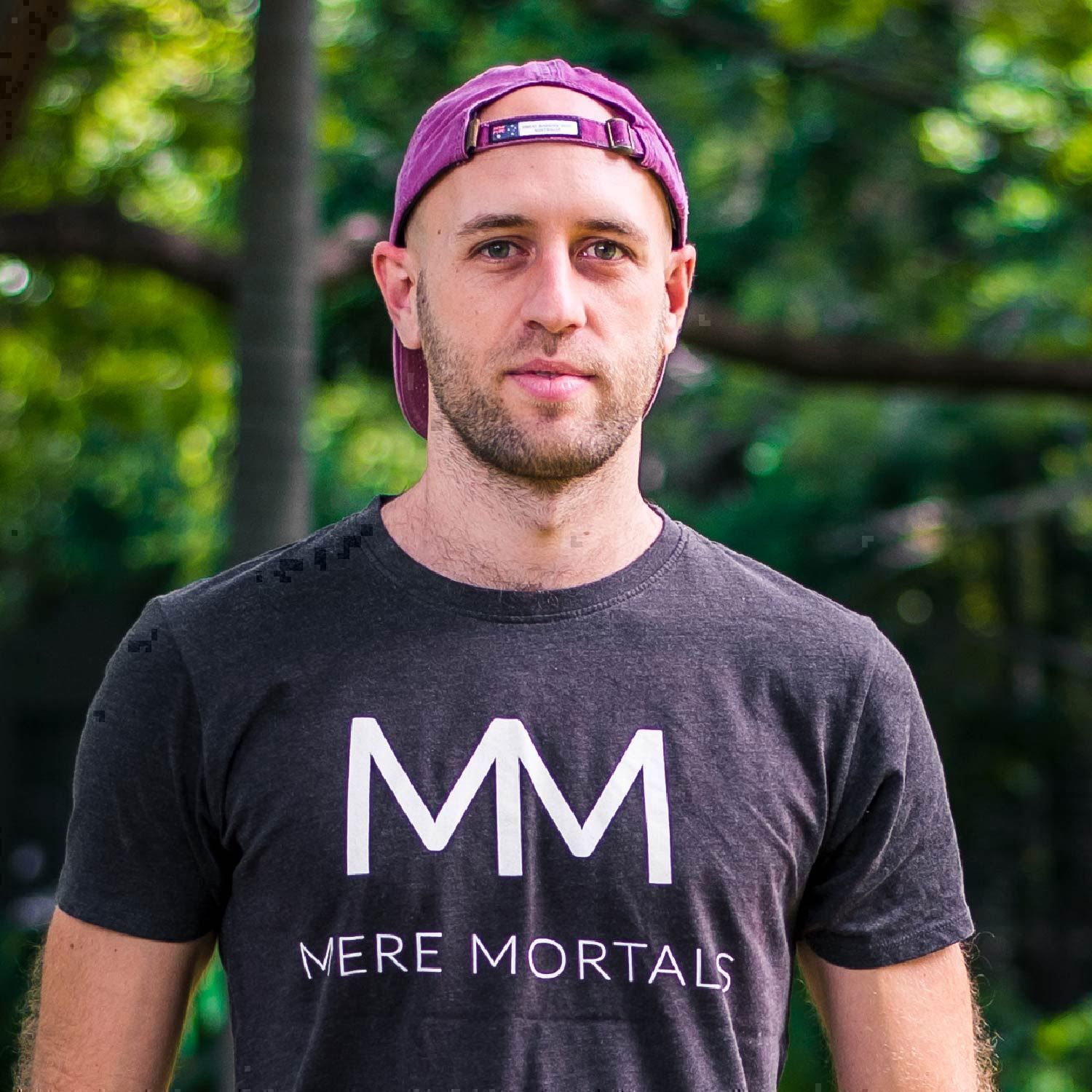 Kyrin Down
So you wanna be a gangster? Well, please direct your inquiries to the team. Oh, yeah. Oh, yeah. Yeah. Yeah. Welcome, everyone, to another episode of the Mere Morpheus podcast. I'm your host here, Kyrin, live on the 04/21/2025. As you might surmise, this is, actually the podcast where I reveal the actual end goal for AI and AI agents, which is the eradication of human beings. Because to quote agent Smith, human beings are a disease, a cancer of this planet.
Okay. No. We're not gonna be doing that. I actually think they're pretty fun, exciting, cool, and even some gangsters. But today, we're gonna be exploring the layer that comes before the technical work, the layer zero, if you will. Why there is no Morpheus team, in actual fact, the influential figures in the ecosystem, why you can't hire motivated people like this, and how to be a gangster, an OG. So
let's jump into the first little topic here. What is layer zero? And I was listening to an episode, 11 of Brainpower,
¶ What Is Layer Zero?
which had host Bowen Belmer chatting with Luke Stokes and Jeff McDonald. And they were briefly touching upon this concept of layer zero, which I hadn't heard of before. But it was something I was thinking about recently, which was I wanted to go over an episode on the actual people within the Morpheus ecosystem and and why I'm encouraged by the type of people that are within here. And so this layer zero was was perfect. And essentially, it's,
the layer of human interactions that comes before any technical work and that the idea of the ethos of these people is what actually gets enshrined into the code. So you can have people who are, you know, technically gifted, but if they are not in the right frame of mind for what they're building, if they are, you know, thinking more about short term incentives, you're gonna see short term incentives
actually appearing up in the code. And so, you know, it's the human layer, if you will, the holy grail of all NFT projects. We have the best community. Okay. No. But seriously, it does touch upon this tension of having a great technical product that somehow still fails. And then you could have another less technically, gifted project or a product, but that actually gets mainstream adoption. You know, the classic example everyone brings up here is the Betamax versus VHS.
Now I was not around for those times. I, you know, VHS had well and truly won by the time I was using it as a kid. And I'm not qualified to touch upon that because, you know, the whole debate you could then say is, well,
the the technical product is the one that gets the most adoption because it's the best. And so it's all about trade offs, and they got the wrong trade offs. But in any case, I I think, there is something still to this idea of that a large portion of why things get adopted is not just because of what it actually is, but how it's presented to to people and the type of people who are the first adopters of it as well. So, you know, I've been, for example, spending some time recently
trying understand understand what the impact of institutional money will have just on the on Bitcoin and I suppose the crypto sphere as a whole. And so I've been listening to some, you know, VC type podcasts of angel investors, capital allocators, hedge funds, things like this, and the way that they view the world and how that will influence, the, I guess, like, direction outcome of Bitcoin and, and also of all these other things.
And what I've kind of learned is when these people are, you know, putting money towards something, a large portion of the time and percentage of their decision making, I guess you'd say, is directed by who the actual founders of a project are and that they'll actually bet more on founders than they will on the product that they're creating or their technical skills.
And so, you know, you can have a pie in the sky ideal and for, you know, if you're a VC, you're looking for these, you know, outsized opportunities, things like this. And you could have someone who, you know, you need a fair bit of vision or imagination to really see the vision of the world and and where they think it is going or where the world is actually going. Obviously, all of this needs to be in a sector kind of related to the future and around a general idea.
And I I just wanted to kind of use this type of framework to go like, okay. This is what the type of things that the Morpheus community talk about, the type of people that are within it, and why I'm willing to, you know, be a capital allocator, if you will, because I have certainly done that, but also with my time and energy and
why I'm kind of betting on the some of the people and the community of of Morpheus and not just the technical details of of how it's constructed. So the first thing is, I suppose if you're new to this and you're like,
¶ Direct Your Enquiries To ...
okay. I I, you know, I need some help with understanding what Morpheus is. Where should I direct my inquiries to? And, you know, the first thing is, of course, opening a ticket and the the team will get back to you right away. Okay. No. No.
If you spend any time doing anything related to the Morpheus project, you'll come across out this little meme here, which is like, you know, let's create decentralized AI agents. Awesome. Who on the team can I contact? And it's like, you do have a team, right? And no, there is no team. So you wanna organize some synergies? Well, there's no team, so just go ship some code and, you know, contact some people within the community.
You want to chat with the boss dog who's in charge? Well, there is no one in charge, but you can reach out to one of the maintainers for the on the repo that you're interested in or that's under your kind of, purveyance, what you're looking to do, you want to start up something new. Okay. Go ahead. Nothing's stopping you. No one's saying you need the green light or the red light of you can do this or can't do that.
The funniest thing I think is when people come into the discord or to somewhere and being like barging in with requests, suggestions, offers, and they get hit with the stonewall of there is no team and Finn any of you like anime fans out there, I'm wearing a one punch man shirt right at this moment. There's a there's a scene in that where he's fighting Boris and you know, Boris is just like, you've unleashed. He cracks his suit. It's like, you've unleashed my limitless power.
And Saitama's face just goes completely blank. That's how I imagine these people are like when they when they come in and get off that. So now that's not to suggest that you won't find help to questions. It's more that there is the structure of the Morpheus community is ephemeral. You can't grasp at it. There's nothing. There's no org chart that you can follow. There's no official anything. There's no official podcast.
There's no official social media account. There's no official treasury headquarters, a CEO organization. Nada. And yet there is this binding factor of a shared ethos, of of that is, I guess, been formed and is congregating around this type of project. And so there are leaders, I would say, within it for sure. But what exactly are they leading is a real question. And because there is no structure, I am not technically capable of understanding code.
What I am capable of doing is, seeing effects of behavior in in real life and in people of things actually being constructed and built of adoption of a certain technology or of a token or of the use cases of what is trying to be created. And these are the type of things which I actually look upon and can judge as as a person. And so
¶ Erik Voorhees
I wanted to go over a couple of the, I guess, my little journey into Morpheus, how I found out about it, and why the types of people within it are very encouraging. And so I'm gonna go over three of them right now. And the first one is, Eric Voorhees, and he was my introduction to Morpheus. I'd never heard of it before he started talking about it, but I pretty much consume any podcast he he goes upon because I find him as a thinker and as a creator or a builder to just,
have very, very similar ethos to what I have. And so speaking of ethics, you know, I don't think there's anyone who's more aware of what they believe in and and answer from a place. So if someone asks him a question, he goes to the kind of deepest fundamental, root of of what that is, which is for him, a very staunch libertarian. And so it'll be things of, you know, life, liberty, and property.
If you've read, Frederick Bastiat's the law, a lot of the things within that are kind of what he will draw from as a base and answer a question related to that. So an individual action or a company doing x y z thing is is what he will answer to. And so, I've also, you know, done a book review of that on, the mere mortals book review. So if you wanna check that out, if you want the the skim notes, jump over there.
But I find him everyone talks about, you know, finding things or trying to solve problems from first principles. Well, this
Eric is the epitome of this for me. So him, along with Andreas Antonopoulos, have probably taught me the most that I have learned about Bitcoin for sure, but also crypto in general and not only the technical parts of what that are the basic stuff that I think you should understand, but also why they can change the world, the vision of what these these technologies can bring.
My little story into into, I guess, understanding this was I've traveled pretty extensively around Latin America, especially, but, you know, I like to travel. And I was in Argentina for, two separate occasions in 2018 and 2019, about a year apart. And, of course, over that year,
they had about a % inflation. So, you know, I think at the time, it was 7 Australian dollars was a hundred pesos. And then when I went back the second time a year later, it was 7 Australian dollars was 200 pesos. You know, me using my nominal currency to, translate into theirs to figure out how much things cost. And from this, I I realized a lot of things of, like, oh, okay. Well, wait. Why is all of the restaurants, have their menus in in kind of like,
really shitty paper? Like, it's it's not like high quality menus or anything. Why is if you go to an ice cream store, all the prices written on written on like a whiteboard or a blackboard behind them?
Why do people act in certain ways where, you know, you have to give them the money before they'll give you the product sort of deal? Whereas in Australia, you know, they'll they'll give you stuff and then you hand them the money. All of these little small things eventually culminated in me realizing, okay, them money is really broken.
Another example was my girlfriend at the time was getting paid in cash and we had to, in pesos. And we immediately always had to change that within, like, the next couple of days into USD because the price would be dramatically different a week later. And their teachings, this being Eric and Andreas,
really helped me to understand, okay, this is why these things are needed and important for the world. And so, you know, price, for example, when I don't think I've ever heard them really talk about the price of a of a coin or of a thing, it's focused on what's the behavior, what are people doing, how can this make the world a better place and myself a better person at the same time. And when he,
what I like about Eric is that he not only, you know, believes in things, but acts on them as well. So I find it awesome that he, you know, contributed so much to Bitcoin in the early days and with Satoshi dice had, you know, half the transactions on the network, just rooting through his his, little gambling thing that he set up of then moving to shape shifts and everything that he's done there with the, you know, a decentralized exchange pretty much, and,
which was centralized and turned it into a DAO and a and a DEX. And then everything that he's doing with Venice now, Venice.ai, all of those sorts of things. I look at a person like that, and I'm like, when he does something, he does it full on. And so when he talks about this new thing, Morpheus, and how it's
incorporated into the back end of of Venice, like, you better believe I take notice. And so that gets I guess on to the next person, which is David Johnson. So I heard about Morpheus from Eric. I'm like, All right, go jump into this, try and understand this. What's it? What's this all about?
¶ David Johnston
And one of the things that will first pop up is is probably David because he is sort of the the guy who's a lot more forward facing of of the project. And when I learned that he coined the word dap, for example, that really piqued my interest because I was like, okay, this guy's probably been around these sorts of things for a while. And I find words and the etymology of words, linguistics,
learning languages and things like that really, really interesting. And so coining a word is hard and it being popularized is also very hard and shows some sort of vision as well for a a thing that he made up in his mind actually, resulting in the real world. And when he explains stuff, he has more insights, I think, than than basically anyone.
I would say he's kind of spearheading the Morpheus efforts, not only because he's a major cod code contributor, but because he goes to the DAI events. He has this public presence of going on to podcasts of focusing on the looming problem that is the non private, the censored AI, and why having that would be a real shame and detriment to, I guess, prosperity in the world.
So like Eric, I'm I'm kind of drawn to David because of what he stands for, which aligns rather greatly with my personal ethics. A caveat here, I've never met these people in person, so I don't know what they're like, you know, kind of behind the scenes. It's the the forward facing stuff when a camera is on them that I know of. Yet
with him, it's he's he's kind of more of the visionary. He's imagining things, you know, five, ten years out. What will this look like? What are the types of things that people will need, and how can we create them right now? And then also linking vastly separate topics. It's kind of fun when he free walls and, free walls when he just goes off on a tangent and connects different things. And,
you know, a lot of these visionary stuff doesn't come true. But when he puts when he thinks about it, when he acts until spend a lot of time on things, I take notice of that as well. So what I like also about David is that he's been around so long that
he knows about this kind of tension between the technical product and adoption of a thing. He's seen many a project go awry, because even though technically they had great fundamentals and they were building something interesting, Their communication style, the way they acted, the way incentives were built into what they were creating went, iffy and also then, you know, resulted in it not particularly getting adoption. So the
technical criteria is super important. I think he's got this nice balance of the the vision, as well as, okay, what's technically needed and how can you create this? And once again, the ethos of like, let's just build something like this. There's no fuck around. We don't need to wait for this or that. The future that you want to see, you should go and create it. This gets us, I guess, onto the last person who's who's kind of really impressed me,
¶ Ryan Condron
which was Brian Codron. And so once again, never heard of him before. And he impresses me on the technical level because, his little back story was he heard about Bitcoin mining in 2013, '20 '12, somewhere around that period. And that was what attracted him to Bitcoin. It wasn't necessarily the, you know, ethos of,
of being self sovereign, of permissionless and stuff. He was interested in the mining aspect and that, from what I gather, is one of the hardest industries like absolutely cutthroat, brutal margins, race to the bottom of of, of, of participating in that sphere of, of, line of work. And then not only does he do that, but then he's like, okay, let's go even deeper and harder into this by
spending a whole lot of time creating Lumen, which is bonkers. And for those who don't know, Lumen's a hash power marketplace which offers a secure and decentralized platform for buying, selling and mining Bitcoin with remotely acquired real world hash power. So, you know, not only the Bitcoin mining aspect, but then making it even more digital and decentralized, which is like, Jesus Christ, man. What's what's going on? Why are you doing? Why why are you torturing yourself like this?
So when he takes on a challenge for something and providing infrastructure for the rooting the Morpheus compute, for example, that's where I'm like, okay, you're probably not going to find anyone better suited for a very hard technical challenge than than this dude. Like, spending time in the mining industry and then in the computing side of that as well and, decentralizing it.
I, you know, if I had to pick someone to to try and attempt this, and for me, I I think the Morpheus computes one of the hardest bottlenecks, if you will. And it seems to be even at this stage where the builders is up and running, you know, the code contributors, the tokens going out for that capital, obviously. But code is is kind of at this bootstrapping like standstill of it's hard to actually provide the compute.
And so when he's working on it, it's like, okay, this this is probably the guy to to fix it and to to make it work well. And if he's able to do that and with help of other people, obviously, these are all just, you know, people who are making an effort and and taking charge of a problem that needs to be solved, but they're not appointed there. There's no, you know, governance. There's no he's not the the one, the the enshrined leader or anything like that.
But he's working on it. And this is, once again, I think, worthy of calling out, you know, who are the type of people working on your project? What skills do they have? What's their background? How do they interact and act with people? Are they the type of people who I want to follow and would be willing to spend my time and energy with? A fun little example here is I met this guy at the gym not too long ago, six months ago or something.
And I was chatting with him, and he's he's got the kind of, like, air of charisma. He's interesting. He knows how to talk to people, But I can see his what he's obsessed with, and it's with money. And he really wants to dove into this world of finances and banking and, and things like this. And I can tell that all of his his incentives and what he wants to work on are related to that. And
it's just like, you know what? I don't think I really want to have anything to do with the dude because his ethos will go almost directly counter to a lot of what I believe and what I believe are problems in the world, which being, you know, there is no, neutral money. It's a weaponized thing. And that when governments fuck around with it, it has negative contact,
influences on the people overall. So anyway, all these sorts of things just goes for me to say, like, here's a couple of people who I find very influential in the Morpheus ecosystem and give me encouragement because these are the type of people who I'm, you know, spending my time with, my energy, with my capital with and are working towards a vision on a thing which I believe is very much necessary. So what's some something common that all of these people have in in
¶ What It Takes To Be An OG
common? Well, they're o g's. And so how how how to to frame this? So David Johnson, for example, talks about the contributors and the impossibility of hiring an Eric Voorhees. And I've talked about this before. I think I said in the last episode how, you know, there's no way that you can hire me because money's not what I'm interested in. And, I'm interested in the kind of the world that I, I want to create and live in.
And the crossover of that statement was astounding because the other open source community I participate in a lot podcasting two point zero talked about this many times. Adam Curry talks about the even with all the money in the world, you couldn't hire the people who are working in podcasting two point zero voluntarily donating their time.
And, you know, when I see someone like David or Adam Curry, who's created a protocol slash framework that half a billion people use, I tend to take notice of their words as well.
When one thing that David misses, though, is not only is it the impossibility of hiring someone like this, but the impossibility of getting them to work together because you'd waste so much time on of productivity, on meetings, on H. R. And even if you could hire, you know, Eric, David and Ryan for for your company, the chances of them getting along really well and doing it efficiently and in a team, in a
company type context is almost zero. You're going to waste a whole lot of their time, everyone's time on the other bullshit relayed unrelated to what they're working on. This person's getting this much, this drama, etcetera, etcetera. Now, in open source communities, there's always drama, of course, but it's because it's voluntary, because everyone's there and donating their time and energy. There's this aspect of, I guess, a semblance of everyone's on an equal footing.
And you don't have a lot of the bullshit that just comes along with teams and the and all of the things related to that because, you know, you know that if you're gonna say bad things or annoy someone and piss someone off, there's gonna be consequences. And the consequences aren't just like this guy will have to show up the next day to work with you. It's like he might he might not show up. And so then you've wasted all of your time on something. So
everyone's invited to the the boardroom in podcasting two point zero. Everyone's invited to the mere Morpheus, Morpheus, the Morpheus weekly maintainer updates, for example. And look, because we're fully legit gang bangers over here, street cred and OG status is important. That's the most important thing of all. Eric, David and Ryan looking at you. No.
That's that's not important at all. But there are similarities I've noticed, but amongst these people that I find encouraging as well. So here's some of, like, the meta stuff related to them and also other people. And I'm gonna list off a handful of other people in the the Morpheus community here. And, if I miss out on anyone, you know, that's my fault.
Apologies. I could only list off those three in particular because I they had done plenty of interviews because I could find out their backstory and and things like this. And so this is not an exhaustive list, but some of the meta qualities I've noticed in of the people in the Morpheus community, you know, they do have that OG status, which is they're into things before they're cool.
A lot of them, almost all of them are already successful in their own right. So many people are retired like Jeff McDonald, who I mentioned earlier, and decided to voluntarily step back into something to spend their time on. So if you're retired, you've got all the options in the world. I take notice if if people are spending their time on something when they don't have to, when the monetary consideration is not what is driving them
belief and simply taking action. Luke Stokes, for example, does a great job with his videos that he posts on the Morpheus intern YouTube channel. His kind of backstory related to Hive and the attempted takeover by Justin Sun is really interesting. I, I really admire their their the hive community and also a lot fun little fact here. The reasons your podcast will get updated almost instantaneously if you're using a modern podcasting app is because the hive,
blockchain is being used for pod ping on the on the back end, which is basically like an instant messaging bus. So as soon as I hit post for my, for this podcast, for example, it goes out instantly and gets updated everywhere where they for every podcasting app that is
up with the times and the technology and not scraping the Internet, and podcast hosts and RSS feeds for updates. So fun little fact there. I actually did a a conversation, Immortals conversations with Brian of London, who's another hive guy. And if you want to learn the backstory of the the hive and steam drama, that's a good place to go. Sticking to your lane, I'd noticed that people who follow trends, they don't really know themselves and their talents
are uninteresting and probably worse distracting. So there's plenty of people and plenty of topics where, you know, there's no, you're not wasting your time on things like I know not to waste my time on to too deep technical stuff because it's I don't find it interesting and I'm going to do a poor job of understanding it even if I do. If I look at someone like Bowen Belmar, for example, I think he's kind of in a similar camp to me where
he he can't get into the the deep technical details, but he knows how to do host a a podcast. He knows how to talk with people, to interview people as a real estate agent. So, you know, he's got good, great social skills, in fact. And, you know, if I'd found this project two years ago, if it had existed two years ago,
I probably would have been doing a podcast very similar to Brain Power, because that was the stage I was in at life at this moment. You know, not particularly looking to interview people, but maybe in the future. But that's that's really cool. Rerouting back to the concept of equanimity from the last episode,
I find Anton B just in the discord to be a great moderator. There's, you know, helpful to people when there's genuine attempts to understand patient with the people prodding stupidly and then quick to enforce the law when there's scams and all this other stuff, as well as the keeping, people updated on the latest info of posting news and and related stuff. You know, having people like that clear documentation for another
for another example. I'm sure there's someone doing a lot of documentation work on the back end, which is the in some cases menial for some people, they really enjoy doing it. That's the critical type of thing for for projects like this. And you can have stalwart to a, you know, not public facing and, you know, they don't
showcase all of these sorts of things. So, you know, here's a list of people. Raksha Tower creating my super agents, Kevin Denman, Tiger Builder, Bowtie, Bluefin, Black Flag Broker, all of the maintainers, David, Lox Bagel, Better Brand, Anon sixty nine, Energy Hound, Ryan Condren, Eric Voorhees, Anon ninety nine. All of these sorts of people, everyone who's contributed code, all this sort of stuff, I think, is really
valuable. And, the people working on it and in this project, I, I find it very interesting and fingers crossed we'll get to meet one day in real life when there's the opportunity and I'm not trapped here in Australia. So, you know, I kind of joked about this. What does it take to be an OG? You know, everyone wants to be an OG. It's cool, cool status symbol and it gives you some respect and things like this. And look, the whole concept of wanting to be an OG is stupid because who wants
to do something just so that they can then try and flaunt it in five, ten years time? And the flaunting of something like that is stupid in itself. But I like looking at these sorts of things and, you know, who who is interacting with Morpheus at the moment? It's the nerds. It's the people who, are into a technical idea
and want to try and see that come to life. And then, you know, if it catches on in five years time, ten years time, it can be fun to look back and be like, damn, do you remember when you could do this or you could do that or when we had this problem or this sort of thing? So the the layer zero, my kind of final thoughts on that would be I'm very impressed with what I see within Morpheus, and it's a large part portion of the reason of why I'm here.
The types of people who are interacting with this, project and spending their time, money on it as very, very inspiring. It's not the right word. Gratifying is also not right right word. It fills me with confidence, something like that. So, you know, if you want to join in on this time to roll up your sleeves, get to working on something, you know, create a Morpheus gang gang sign Morpheus. But the everything that I see going on here in terms of the community aspect,
I I'm really impressed by. So that's it for today on Me and Morpheus podcast. This is a value for value podcast,
¶ Value 4 Value
and I do all of this upfront for you. So there's never gonna be any advertising. There's never gonna be any sponsorships. There's never gonna be a paywall, for example. And I try and just provide this value for you. And if you get any value from that, oh, man, I would really, really appreciate it if you sent it back my way. And there's quite a few ways of doing this time, talent and treasure time, just sharing the time to share this with someone. Word-of-mouth, super critical.
You know, letting them know of, hey, I really like this podcast. Check this out. Sending a link to them, creating a clip from this if you want to, of, you know, providing feedback to me, joining in on the live when I do it. Talent wise, you know, I do stuff with the graphics, but the audio quality could be improved. Any memes you'd like to see, Discord
answering with me, helping out with the website, anything that you notice that I'm doing wrong with this spelling mistakes, all these sorts of things are pretty valuable. And I really appreciate knowing what you want to hear and how I could make this better. And then finally, treasure. I do spend a lot of time on this. So, you know, contributing back some money is certainly appreciated.
I've got an address listed down below. You could send some more there. You can use me as a staking reference if you are going to do that. There is also the builder subnet I've got up, so staking to that is very much appreciated. That's on on the only on the arbitrum network network at the moment. And then simple things like PayPal link down below, as well as, using a podcasting two point o app, a modern podcasting app and streaming some Bitcoin or sending me a boostgram in
there, would be very much appreciated. If you want to know more about that, go to meremortalspodcast or podcasts.com/support. I've got both of those websites now. So, yep, that's it for today. A couple more episodes coming up, and then I'll be traveling to Europe and ending off of season one. So I really do hope you're having a fantastic day wherever you are in the world. Ciao for now. Karen out. Bye.