



¶ Intro
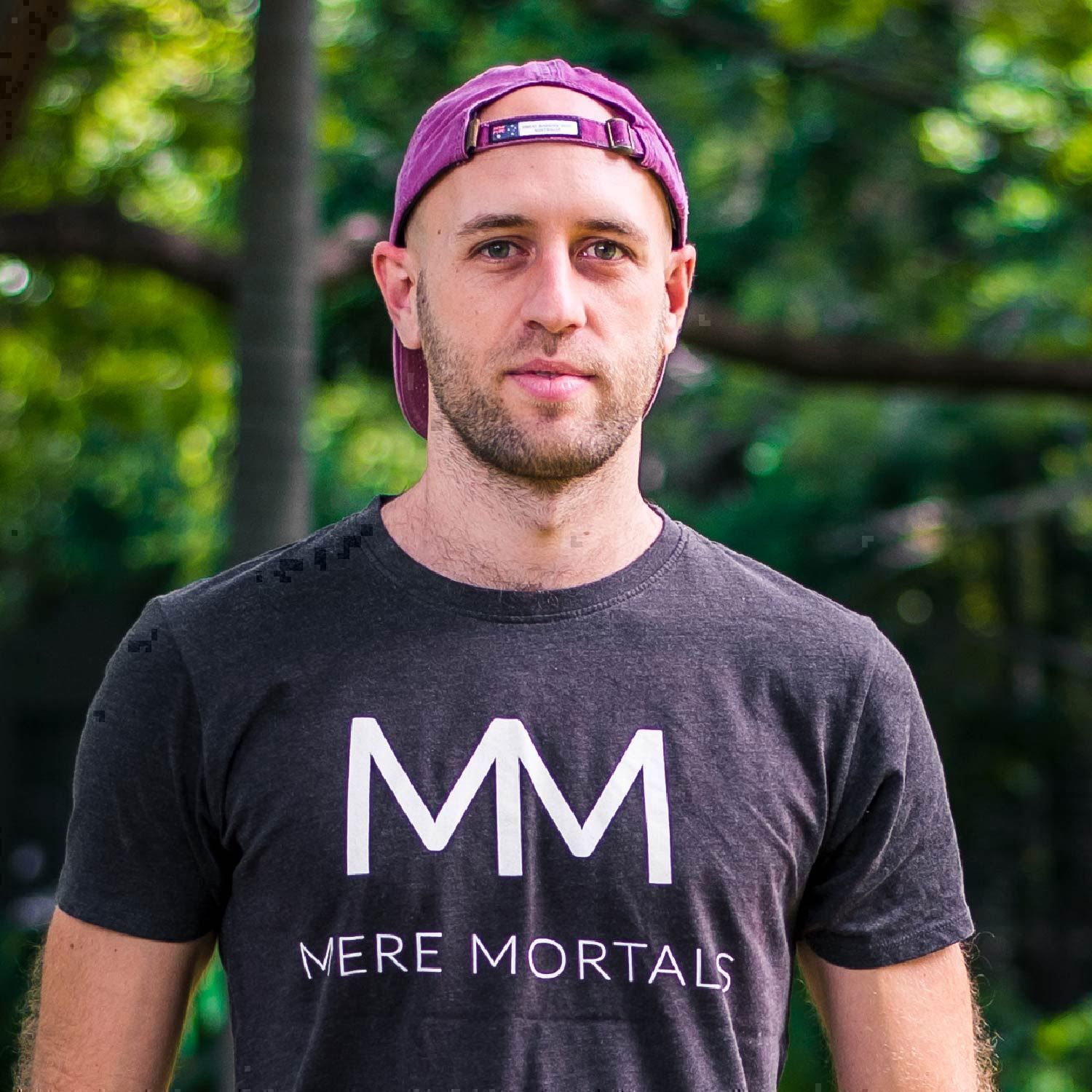 Kyrin Down
Sooner or later, you're gonna realize, just as I did, that there's a difference between knowing the path and walking the path. Oh, yeah. Welcome, everyone, to another episode of the Mere Morpheus podcast. Episode number 16 here, the last episode, in fact, of season one. I'm your host, Kyrin, live on the 05/12/2025.
And as you might surmise, this is the final wrap up episode where I put it all in a neat little bundle. Very methodical, very disciplined. I have an order. Okay. No. I actually don't have much of that today. Today is gonna be a bit of a, I'd say, a free form episode. I definitely will be summing up some of my final thoughts, but it's going over a couple of topics, some notes that I had
that just didn't fit into a episode just of itself. And, I'm really gonna be talking about things like atomic governance. I'm gonna be talking about, the networks winning over time and why I think the future is bright for AI and for Morpheus. So let's jump right into it. Atomic governance.
¶ Atomic Governance
I mentioned this before. So what is it? Well, essentially, open source maintainers get to decide resources and how they are allocated. This is done as transparently as possible, and there are still responsibilities. And if the community, for example, decides, that a certain person is not behaving as they should be or if they don't like what this person is doing, they can get replaced.
And it's a very informal system. There's no formal procedures. There's no locked type bureaucracy. There's no rules nor regulations dictating what happens when this person does this or that this should be followed in this manner. Essentially, it is a voluntary group of people, I guess, deciding to work together and a naturally forming group and leadership arises, but it is not a set in stone sort of thing. Now initially, I had promised a full episode on atomic governance,
and I'm not actually gonna do that. And there's a reason for that. This is because when I first heard of it, I thought it would be a kind of widespread philosophy with principles that'd be diagrams, so perhaps maybe be so some workflows interleakage between people, and I'd be able to say, like, okay, this is how this runs and this sort of thing. But like I mentioned, it is very informal.
There still has to be decision making. There still has to be code being put out and responsibilities and things like this. But it is actually none of that. Nope. Nada. And I actually think that's kind of brilliant in in a way. It's, better than I even expected because it's very similar to the value for value model, which is what I believe in very strongly, which is that
the best way for people to work together is on a voluntary manner. It is deciding without these strict formal procedures or, you know, set and so install a salary or things like this. For example, you might look at things like DAO and governance and, you know, people have been trying to do this for a while. But the problem with DAOs is like you just can't vote on everything. I've had my own little play in with them and and systems where governance is a more of a voting thing and it's just
too much work. It's too much, you know, it's meant to be getting around the bureaucracy of normal governments and normal, institutions and companies and things like this by, you know, it's anyone can get in and anyone can have their say and things like this. But you just end up with a different type of, of inefficiencies and wasted times and things like this. So, I like this quote, the Dow that governs the least governs the best. Jefferson probably.
And I think that's actually really good. So, the Morpheus runs on this system. There is a bunch of different maintainers. I've talked about them in a previous episode. I think it was in layer zero of how there is numerous different people running the numerous different, code bases and the, what did I say before? The,
maintainers or the open source maintainers of a certain section of the project. And I think that's just super healthy. I think that's probably the best way this can be done, that there is no rules, there is no regulations and things like this. Sure. You would. I initially had written down like there's no drama. That's definitely not the case. You can look at what's going on with Bitcoin Core at the moment and,
all sorts of, you know, debates and things like this. But this is honestly the healthiest way. There's going to be disagreements.
The you know, you might think a relationship without any disagreements is is one which is the, you know, most healthy and sound. But no, it's it's when disagreements can be worked out and aired in a way that is, I guess, healthy and allows for the truth to emerge because the truth is not always pretty, which actually gets on to this next point I had here, which is the persistence of man and machine.
¶ Persistence Of Man/Machine
And I've only participated in in, you know, a couple of open source projects, podcasting two point zero, I mentioned most because that was the one I'm most deepest in probably. And I what I've noticed is it's it's like most types of groups and communities, which is that people come and go, and that's not an indication of something not working or that something's awry. And usually the coming and going is due to these disagreements.
I don't like this person. This person does this or that. I don't like the direction the projects is is happening, and I I feel my voice is not being heard or or things like this. And, you know, I don't think that's an indication that something's going wrong. If anything, it's an indication that something is going right, which is that people can come and go as they leave,
can come and go as they please. They can't leave as they please. And this is where, you know, I, for example, even though I'm very invested in terms of monetary, in terms of my time, in terms of my energy, in terms of my thoughts into the Morpheus project, I'm gonna disappear for, like, two months now as I go traveling to Europe in a couple of days' time.
And whilst I'll still keep lurking and watching, and that is my normal default default mode, in all manners of most almost all manners of Internet life in terms of communities and things like this. I and I participate by doing, you know, podcasts and my own individual thing, but it's not usually as part of a group discussion. You know, I'll still be around and looking with my, you know, voting with my thoughts and actions and things like this. And I think this persistence is
what I'd notice in in, I guess, like, the healthy projects is that people tend to come back. They'll go away for a while and they'll, you know, disappear. They'll have a disagreement. They'll, you know, not like what this person did or not like this, or they'll have some drama going on in their life or something that's, you know, taking up a lot of their time. A new baby, a death in the family, a new job, traveling, whatever it may be. And that's
eventually, they'll they'll come back. That's kind of the sign I I see of of healthy type behavior. And, you know, why do they come back? Usually, it's because of the reason they joined in the first place. A shared vision of a strong, few view of the future of where the future is going. And usually, it's built on positivity, optimism, and hope because the negative type communities, which you can find out there tend to
splinter and have a hard time of maintaining people because, you know, just being negative all the time isn't pretty fun. It's not a great place to be around. And when people come back, it's almost whether they like it or not, they're just drawn back to the thing. And that's kind of like the man side of things, the the human side of things, the persistence of machine.
I like what David has said many times, which is that the reason why Bitcoin was persistent was because the software could pay for the hardware. And I think Morpheus has a very good and strong chance of doing this exact same thing. The way the four buckets are set up to reward the, you know, four types of people can participate in the capital, the community, the code, and the compute, that just makes sense to me. You know, you could add a fifth one in. You can make a third one, and
it would, you know, you could make arguments. You could have an exact similar project with almost everything the same, but one or less. And, you know, maybe that would work. But for me, this this makes sense to me.
And that over time, the persistence of compute of agents will be will be seen and that it's not gonna be the flash in the pans or the relying on, you know, the kind of casino gambling that you'll see with other AI agent protocols, you know, whether that's, you know, I'm just named some of the the big ones, the virtuals or AI 16 t and things like that.
I think the the real test of how Morpheus will hold up is not in this next upcoming bull run, which will probably be over the next year or so, but in the next three years, will agents be developed, deployed on all of these other places? Or are they going to see that somewhere like Morpheus, which has the steady drip feed of continual, you know, more tokens going out of being able to pay for the compute, to pay for your time,
for people to put capital in and get rewarded for that over time. I think that's the the way that you'll see the persistence of these AI agents starting to emerge in the Morpheus ecosystem versus some of these other places. So, you know, the the bootstrapping the actual utility, I think, will take a lot a long time for these things to to really emerge, to have these, you know, agents which and when I say agent,
the definition can get rather hazy. One of the things I've started to think about is an AI agent was one who will do things that you don't ask it to do and perhaps even not do things that you ask it to do. You know, it'll have this ability to reason and do these complex tasks, which might involve counterintuitive things or things that don't particularly you didn't think of and that it is smart enough to do. So, you know, the bootstrapping where you have to get the the
the someone be able to, you know, get rewarded for more tokens for creating the agent so that the agent can go out so that it can gain popularity with other people, so that more more is attracted to it so that the, you know, developer then has more time to have to hire more people or get more compute to power the agent. You know, all of this just takes a lot of time to set up. Morpheus is only a year old.
I think it's gonna take a a lot more time until we really start to see the the benefits of a strong network forming, which gets us on to the next point. Funny how I am managing to link these together so well. You'd maybe even think I designed it this way. So networks win over time. I did a book review a while ago of one called The Square in the Tower by Neil Ferguson.
¶ Networks Win Over Time
It's a bit of an average book. I'd actually recommend looking at the book review so you don't have to to read it, in terms of the whole package. But there was a couple of things in it that I think really showcased why networks are valuable and with the amount of examples and, I guess, examples through history of how networks have been forming and taking over from,
the hierarchies that used to be the the standard case. So, you know, if we look back a thousand years, we don't really see networks that much. We see hierarchies, whether it be king or queens, whether it be a dominance in trade of a particular, company, you know, Dutch East India, for example, or of a certain type of technology, which is only in one place, and that allows this place to become much more dominant.
Think of things like, you know, gunpowder or perhaps even in Japan where it was the, you know, certain types of steel making, which allowed samurai class to form, all these sorts of things. The advent of technologies in the, let's just say, eighteen hundreds onwards because the word, network was formed a little bit before that, but networking as a verb was really only in the late eighteen hundreds where it started to become, into the English language at least.
It allowed, networks and networks effects to dominate in terms of, trade, in terms of communication, talking things like the Telegraph. And, you know, it's very much easy to see in the last, you know, twenty five years, quarter of a century, since the February with the networks of social media and communication and things like that really becoming the, you know, most valuable assets in over that time period.
And then, of course, Bitcoin being the prime example of a pure network, which as it gained more adoption, as more people got into it, its value increased over time. I've been chatting with my friends and just random people lately, you know, my brother and things like this. And what's that what they've shown and not even talking about AI, it's popped up randomly is that many of them and in a very quick sec succession have, decided, like, you know what? I'm gonna pay for ChatGPT.
This is becoming so useful, so much part of my daily life that this subscription is worth it to me. It's becoming a necessity that they're willing to pay for. And I see this as a super positive sign for Morpheus and the AI agent future, which I particularly envision, which is, you know, the first is that the demand for AI is real. I see it with my cohost, Juan, with the business that he set up with someone.
And though it did not eliminate jobs, it stopped new jobs being formed because they can now, use it for some very heavy documentation stuff, which would have required many, many people in the past. And now he doesn't need to do that. The agents will be using services like, the large language models to, you know, scrape data to I mean, the agents are kind of built on the elements.
And I just think as long as there is lots of inference being used and whether that comes from a centralized company like Chat GPT and OpenAI or from the decentralized places, as long as there's a choice of them, I think that is super, super healthy. For all of that ChatGPT allows, you know, it disperse
as much as well. So you might be thinking like, oh, but doesn't that just mean agents will come from these places where, you know, people are paying for them, like my brother, like my friend, Manchu. And I I just don't see that being the case. The the networking is what is important here. And, these places, whilst they can have integrations in and do things, I just don't see the full spread of what humans will want and what will,
you know, probably inevitably come at the front. What are the gonna be the most popular agents at the start? It's probably gonna be the stuff which, you know, people will, and when I say people, I mean, the broad spread, perhaps media will will cover as a negative thing. It's gonna be porn agents. It's gonna be the gambling agents. It's gonna be the, you know, drug type agents or the, you know, ones which are recommending medicinal stuff or things like this.
Those are the ones which will be the most useful for a, you know, a small minority of people. Once those use cases are approved, they will then leak eke out into the larger ecosystem.
But, of course, you're not gonna be able to have a gambling agent on with, that's connected to or owned or operated by ChatGPT. That is not gonna be the place where that's gonna come from. So I see the rise of just the use of AI as as, and when I say that, I mean, talking about the inference, obviously, as a super positive and the more successful these companies get because more people are using it, the better that's the,
I guess future is looking and that it's the network, the integrations of of agents, which is, going to be the most important, the most valuable thing. And I just don't see those coming from these centralized places. They're probably going to have to originate from a decentralized place where, you know, an individual developer or a group of people can get together and work on things and access stuff, which is not gonna disbar them from asking, you know, can you
create a a a version of me that's black? Or can you, you know, create some porn or use this IP that is the funniest thing was when I was asking for, I think it was chat g p t to download some audio files that I owned that I put in an RSS feed, and it's saying, no. No. No. You can't do that. You know, that's, that's, IP protected and stuff, which is not the case. You give up digital rights for, for an RSS feed. That's that is what a podcast is.
And even though I own it, it wouldn't let me do what I wanted. So, yeah, those are just a small example there of of where you can go. Okay. Like, this is not gonna be the place where these agents will originate. And I was talking about, you know, the more use cases of of things being created and more demand and more energy efficiency creates more demand.
¶ More Energy Efficiency Creates MOR Demand
This is slightly counterintuitive, which is a trend which I I love to see. I love when your intuition gets flipped. And I had a note for ages about why DeepSeek is actually a boon for NVIDIA. It's old news now, I guess. DeepSeek, for those who are perhaps coming into to this, from the the future, the bright hopeful future, DeepSeek was a Chinese model, came out in January 2025, so about four months ago. And this caused a huge drop in Nvidia's share price, you know, 18%, something like that.
And the reason was because it found a cost effective way to create rather accurate LLMs for 20 to 50 times cheaper than the current models of chat UPC and the likes. And suddenly you get you know, this is troubling times for NVIDIA because, oh, well, if it's 20 to 50 times cheaper, people are gonna buy 20 to 50 times less chips. Nvidia is doomed, you know, and and deep seeks are gonna gonna swallow it up.
The thing with this is, this is very shortsighted and is not gonna be what happens in the long run. History is replete with cases of how lower cost energy, creates new use cases. Two books I'd recommend reading, How Innovation Works by Matt Ridley. Book review done on that. Of, yes, you when the energy costs get lower, people start to use more energy, funnily enough. And then this drives the demand again. The Second Curve by Charles Handy is the, other book.
So in these, they'll talk about how, you know, easing natural gas deposits to mine or to extract would, run out in the early twenty first century, and hence oil and coal would become more expensive as we relied on it more. What we actually saw was that the need for more energy meant than shale gas, shale gas became viable. So if there is a demand or a like a little a pinch that you might feel, we get innovative. We find new ways of uncovering, unlocking new types of energy of,
and when this does happens, we then create new demand for it. So you might think, oh, energy is getting more expensive. We're going to drive our cars less. That's not what happens. Things become a necessity in our life. We're willing to pay a short term price increase. And what this short term price increase does is means that, oh, we need to find new ways of getting cheaper energy. And then this happens. So, you know, necessity is the mother of invention. We we've all heard of that.
AI demand is only gonna go parabolic. The more, you know, the cheaper that Deepsea makes it. It doesn't mean, like, we're gonna use less. We're gonna use more of it. It is gonna go fucking bananas. And a lot of it will be wasted and inefficient for sure. That is what always happens. But the waste and the inefficiency
allows new use cases to be formed. It allows people to experiment. It allows, you know, people to, you know, a funny little example, which I like, is that I one of my friends in podcasting two point o, James, he hosts a thing called, what what's it? Pod News, which is basically like news about podcasting in general. And so he gets a, a lot of, he's a journalist, so he gets,
what what do they call it? It's like the notes from a company, press releases where they're saying, like, hey, this is our exciting news coming out, and they'll typically send it to him. And what he's noticed compared to, let's say, six years ago was,
you know, he used to get these, you know, detailed press releases, and then he would have to kinda or or he'd get a press release of sort of some sorts. It would be have some details in it, but not be, like, too extravagant. It wouldn't be too crazy. What he's now noticing is that they're getting longer and longer and and filled with more details and flowery language. And he's going, oh, okay. Like, these people are using AI to bump up the press release to make it more exaggerated, to make it sound better, to make sure it's, like, squeaky clean and there's no mistakes or anything like that.
And so they're getting longer. And so then he's now using AI to go, oh, can you give me the shorter version of this? So what we're seeing is someone starting with, like, a piece of information using AI,
expands it out, sends it over to him. He then gets it and then expands it back down. So you're adding a whole lot of inefficiency and waste in that because they could just send him the thing directly to him, and there wouldn't be any need for AI involved. So you might go, wow. Incredibly inefficient, boiling the oceans, using all the water. But the that certainly is saving time in the process.
And whilst it's kind of wasting a bit of time as well, probably if you looked at it as as a net effect, the time saving for both him and for the other person in terms of actually creating this press release and then him having to, you know, filter out even the bit of noise that they would write out by hand
is making it much more easier and quicker overall. So this is where I certainly see, you know, just the, the more use cases there are, the more everything that happens with AI, the the wiring signs would be is, I guess, like people not talking about about,
you know, not finding these huge boons in terms of of cost savings and things like this. And video is going to be fine. DeepSeq is going to be fine. And AI and Morpheus is going to be fine as well. Which gets me on to my little last point here. I guess every action matters.
¶ Every Action Matters
I sometimes have this lackadaisical attitude towards certain, topics when it's, you know, the large sweeping events of history and your place in it. There's not there's not much you can do. You know, your vote. We had a recent election here in Australia. Your vote doesn't matter. It's one vote of 20,000,000 or however many people vote in Australia. It's a pretty high percentage. I think, like, 9097% of the adult population. The your your individual vote doesn't matter. Saving one extra dollar
doesn't matter. Your life in the grand scheme of the universe doesn't matter. But, you know, honestly, that's just the cynical part of me, the part of me that keeps me on guard for scams, for, ward off being fooled or doing stupid things.
And that's the the true belief is that I I do believe that way you you know, not every single tiny little thing matters, but certainly, if you're passionate about it, if you're committed to it, where you put your money, AKA your capital, where you put your intellect, AKA your brainpower, your code, where you put your energy, your compute, and where you put your time in terms of building and community, it certainly does matter. I'm very hopeful for the more fierce project.
All the episodes I've done have really allowed me to dive into it much more deeper than I typically would for something new like this. And, you know, the first four episodes laid out what I see as the the problems, the negative side of things, the, the problems that currently exist and why agents will come about and won't come about from the places like OpenAI, OpenAI, or why they won't be as effective or as interesting.
I laid out and, you know, because they're centralized, because they're non private, because they're censored. Episodes five to 10, they're all about the technical details of the Morpheus project. So the white paper, the four c's, and the tokenomics.
And these final episodes were about the kind of nontechnical aspects, I guess, if you wanna call it that, of the interactions between the people, of the community, of vision, of why I have a lot of hope for this project, why I'm invested in it, why I spend my time and energy here. And it's because I I have this vision of the future of AI agents and the boon that will be to humanity and society is at large. And I want it to be the type of, you know, vision that I am, the vision that I envision.
I want it to not be dystopian. I want it to embody the principles that I care about in life. Things like, you know, non coercion, things like open access for anyone, things like, following the truth and the truth being one of the most vital things. All of these I view coming from something like Morpheus. I really hope it is Morpheus. That would be great. If it's another project, I'll be on the lookout for that as well.
But that is what I'm very much interested in, invested in, and why I will continue to support the Morpheus project as well. So, you know, I hope you've gotten benefit from these episodes. I hope that you, have enjoyed them, that you're have a similar hope, a similar vision, and are willing to work hard towards it. So, you know, that's gonna cap me off for season one here.
¶ Value 4 Value
Thank you very much, everyone, for joining in. As I will like to mention, this is a value for value podcast. So for any value that you got out of it, just please return it in some shape or form.
The best that I think you could do is just sharing this via word-of-mouth, telling someone who, is in need of some education perhaps, so in need of some encouragement, in need of, trying to understand why AI agents matter and why the type that they come from and where they come from is important and, you know, direct them to an episode.
And there's other things that you can do in terms of talent. If you notice there's any thing wrong with the feeds, if you think I missed some things out, if you wanna add some comments onto any of the videos or, to me personally, please reach out. There's plenty of links down in the show notes. And then finally, some treasure. If you wanna support my efforts, here, you can do that monetarily as well. I've got my,
ETH address down there so you can send me some Morpheus if you want. You could use me as a reference if you're staking some capital, and you can also contribute and stake your more to the Mia Morpheus, project, which is on Arbitrum as well if you are in the builder side of things as well. So that's gonna be it. Thank you very much. I
as I mentioned, I'm gonna be traveling. I'm really looking forward to going to Europe for the first time, so that's gonna be exciting for me over these next two months. What do I envision for the me and Morpheus? Well, it's gonna go into hibernation for, I'd say, at least half a year. I'll go traveling. I'll come back. I probably want to see more developments, more things going on with Morpheus until I decide, I can really start doing some episodes again to start highlighting things.
Probably I will highlight projects next time if I had to guess what I would do. And yeah, no no set plans for season two, but likely there will be one at some point. But, you know, who knows? The future can, throw
out lots of different things at you. So I really do hope you've enjoyed. I really do thank you for joining in. A lot of gratitude on my part. I do see the the streams, the downloads, and things like that, and it does mean a lot to me. So I really do hope you're having a fantastic day wherever you are in the world. Ciao for now. Cara now.