



¶ Intro
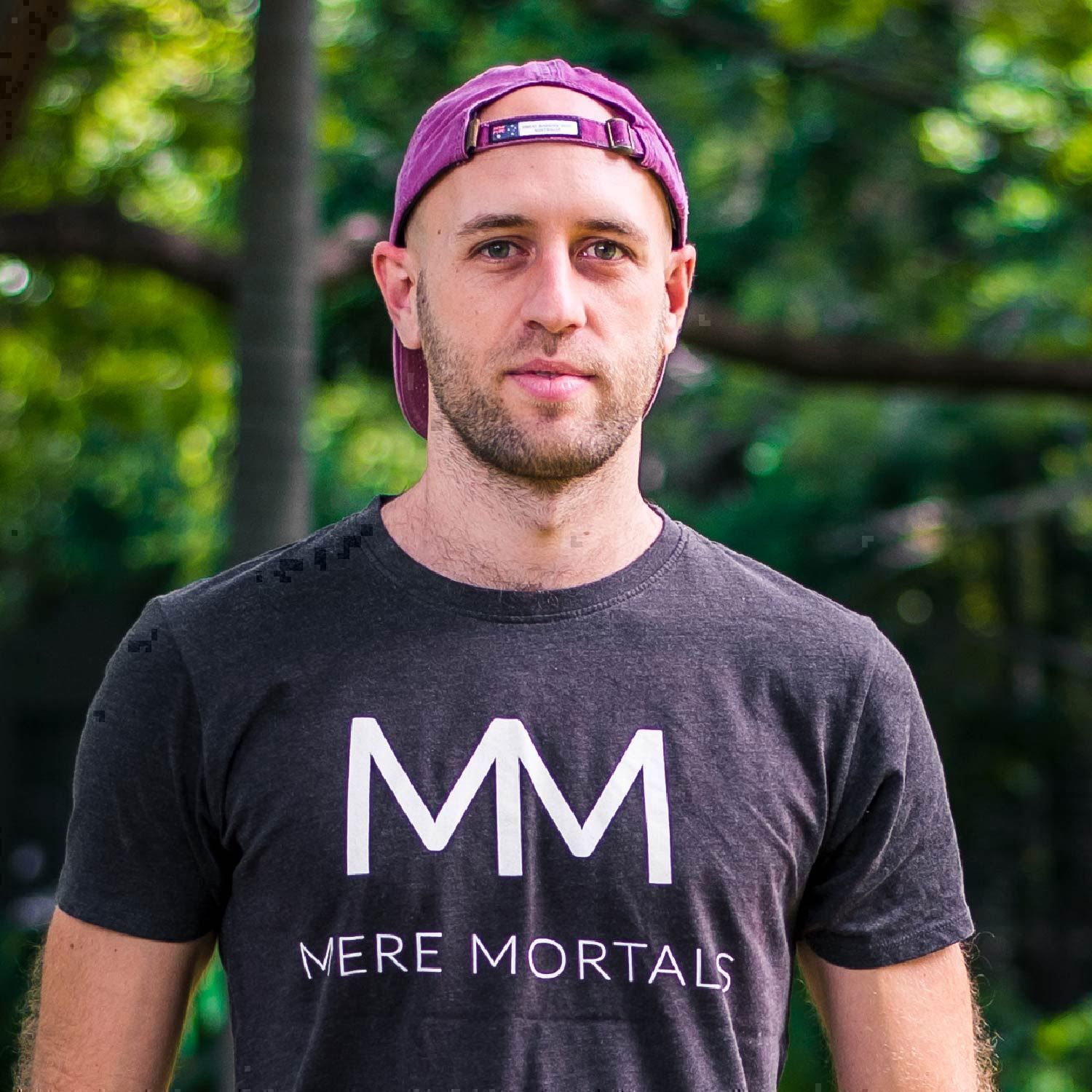 Kyrin Down
Where in the marketplace am I gonna get my agents? Oh, yeah. Where where indeed? Welcome everyone to another episode of the Mere Morpheus podcast. I'm your host here, Kyrin, live on the 04/07/2025. And as you might surmise, this is the podcast where I heap the praise on the Google and Apple Play stores for their wonderful, distributed, fair, equitable products
that you can find within there. No, I'm not gonna be doing that today. I've heard actually a lot of developers complain about those certain stores. So no, instead, we're going to explore the concept of a decentralized agent store, a decentralized store of various kinds, in fact, because
we're gonna be exploring why there is no parallel for for dApps, decentralized apps, and a store for that, how it might look, and why I think Morpheus is the place for this kind of thing to be birthed. So let's get into our first question for today. Is this decentralized?
¶ Is This Decentralised?
And if you're a normal person, you probably just threw up in your mouth. Why on earth would you touch one of the most annoying and unproductive arguments in crypto? Crypto uses anything remotely to do with the crypto industry industry? Is this decentralized? And the reason I'm going to touch upon this because
I I think it's kind of important when we're talking about the decentralized agent store that we actually have a little context for the definition of what it is and how it might look like. And so, am I a masochist for for doing this? Well, obviously, but, you know, let's just dive into it anyway.
And here's a couple of just things that I've seen over the years, people talking about decentralization, the pitfalls of of it and my kind of like little thoughts on this and how it will play into a decentralized agent store. So there's no real in the indefinable or sorry, definable boundary point of some something saying this is decentralized or not. But there is a kind of binary scale
as well as another rating scale. And so the single fixed moment set in stone of time, this is decentralized. No, you're not going to find that. But at any given moment, I think you can apply the zero to one scale and then also the one to 10 scale much like you would come to rating attractiveness of a of a partner or something like that. So you know let's say there's a girl you would like to make sweet sweet love to or if you want to put it more crudely bang and you could rate her
with the one to zero scale, which is simply yes, I would or no, I wouldn't. And I feel like decentralization is is kind of like that you can look at a protocol and say, yep, that's decentralized or no, that's not. And then you can also use the one to 10 scale, which is much more on personal preferences, also on things like, you know, the lighting of the day, how her makeup is, did she wake up with a smile in the morning? All of the quirks and preferences
that go into that. And you could rate it on a scale of one to 10. And this is somewhat also being used to rate her against other women. And you could do the same thing with protocols. I think, you know, you look at Bitcoin and Ethereum, which which one of the two is more decentralized or centralized? And then you go to a certain meme coin or a, you know, random new layer one that's come out or something like that. And it's only got five validators and three of them are the same person or
at with the same entity or something like that. And this is where you can use these kind of rating scales and go, okay, yep, it's a zero one. And it's also measuring on a one to 10. You know, the the protocol gets fat and lazy finds a boyfriend,
and and you're like, oh, this is this is not so decentralized at all. But then, you know, has a breakup with that certain boyfriend. Next thing, you know, it's at the gym and you're eyeing up this hot piece of protocol over there and you're like, damn, that's pretty decentralized. So you can use this kind of rating scale. It's layered. So if you're using a certain thing on it, there doesn't necessarily be need to be this
constant stepping up of it, every single portion of it. So, I kind of go with the utility aspect as my main determiner of when something has kind of catastrophically failed. If your front end fails, but there's eight others that are very similar to that, you know, the whole protocol is not now invalidated. Just because a certain,
Bitcoin wallet, for example, goes away doesn't mean like, oh, you know, Bitcoin's not decentralized, whatever. You don't need to have every single portion of it. And a recent example of this is actually in the crypto podcasting world and in specific using lightning payments where of the roughly 10 ish apps that you can use for sending micropayments to your favorite podcaster, and they're using RSS and they've got their lightning address in their in their, RSS feed.
About five of them were affected by the albepocalypse, which was Albi a I don't know what you call them, a lightning wallet provider, I guess, of, of a large scale, decided that with all the regulations and stuff in The US, and this is pre Donald Trump getting in, It was too hard. They were being viewed as money transmitters or things like this. And so they said, like, hey, we're going to actually make this a paid service. If you're going to
use our things, you'll need to be a paying customer. And this affected probably about five, six of the 10 apps. And so you could have gone like, oh, you know, this isn't decentralized at all. Like, there's no I can't use my favorite app, but it's like, okay, no, you can actually still you just have to pay for it now. And there's also five other apps which you could go and use different ones like Fountain or True Fans, for example. So I think what we're seeing,
and the arguments that a lot of time are like picking on individual things and it's just like, okay, Yes. Sure. This one thing isn't decentralized. But if the base protocol is and which is the the last little bit, and that needs to be the rock solid part because people are always gonna play games like paper get Bitcoin market manipulation, DDoS attacks against certain chains and filling it with rubbish and all this sort of stuff. But the core ability for an individual to interact
must remain. And when I'm talking about an individual, I'm thinking mostly still an individual person if they have enough fortitude to, you know, interact with the the code on the most basic level and still being able to transmit to the mempool and things like this. This is the the core ability. And if that sort of stuff is is now non permissible or non achievable, then yeah, sure, you've got a serious problem. And so you can't have nodes, code
validators or any of that stuff being susceptible for someone pulling the plug. And then look, I'm bringing up all of this because these are the things that the Morpheus ecosystem and if there was to be a decentralized agent store, must must have. And so when I think about these things, you know, a decent centralized agent store, it must be tying into a core concept of anyone being able to provide an agent.
And I think this is doable via the the builders where anyone can actually just use, you know, a small transaction, put their subnet on the, I guess, chain in a certain sense on on, certainly on Arbitrum at the moment, but also base. And that that's the core ability that must remain for people to be able to do that. And then therefore, a store which is showcasing all of these agents
must have access to all of these. And so, you know, you do have must have the core ability for someone to be able to provide an agent. And so this this idea of a decentralized agent store has been around since the beginning. And I'm gonna quote here, from the Morpheus white paper, which is,
by rewarding developers for contributing code not just to Morpheus, but also to build more specialized agents, An app store slash agent store type experience for users will develop with persistence of data prompts and history owned by the user. The smart agent protocol becomes the best solution for interoperability in the world of LLMs and agents. So we can see like this this idea has kind of existed for a while, and the Morpheus ecosystem is about providing this type of experience
for someone to be able to come in and use a an agent. So however, something like this isn't easy and we can see this in the example of dApps. So decentralized apps. And there's a bit of a hard pill to swallow here, which is
¶ A Hard Pill To Swallow
we've got certainly decentralized applications. And David Johnson, the idea, the originator of that term was also very prominent in the Morpheus ecosystem. But where the hell's the dApp store at?
Because in my experiences of using the various different chains, I've tended to find that you can find websites and places where it'll cover the ecosystem, for example, and it'll typically showcase things like different types of wallets, tokens, marketplaces, gaming, education, developer tools, bridges, all of those sorts of things.
Yet there's I wouldn't exactly call that a store type experience and it's lacking, I think, some of the critical components of a digital product store. And when I say that, I'm typically thinking of the Apple, App Store, which they use on your on your mobile, but I believe probably also for computers as well. I don't know. I don't have Macs, Or the Google Play Store, very similar Chrome Web Store
back especially when there used to be payments. Everything on there is free now. But that that did used to actually have paid extensions that you could use. And to a certain extent, places where you can buy digital products like ebooks or music or software packages online, those are what I'm typically thinking of when I'm thinking of a kind of digital product store and therefore a decentralized agent store. So one of the the
critical components, why is there no dApp store? Well, there doesn't seem to be a place where you can do a direct payment for a decentralized application nor have a reputation system attached to the various types of products that are there. And why is this? Well, when I think about the payment aspect, it's certainly not lacking due to having a shared currency or token because all of these chains have their own, coin or token.
When I think also of the stores in general, you know, most of the the things that I listed before, like the bridges, the wallets and stuff like that are free. So you don't have to pay to access them. So you could be thinking like, oh, that's why. But if you think of the Apple Play Store, Google Play Store, 95% of those applications within there are free as well. So it's certainly not that.
You could be arguing, you know, crypto apps are too varied and don't share common threads. But once again, if you think of all the various random stuff that you can find within app stores, for example, they are the and the centralized app stores, then you'll see like all the same things kind of exist, you know, software tools for creating notes of games, of things that will improve your phones and performance of
fun fashion, whatever it is. There's millions of different things out there. So it's certainly not that as well. And if I had to guess it, I would say it's actually linked to the other reason,
¶ Ratings & Reviews
which is that these there's no ratings and reviews. And so you can have, you know, a protocol without a decentralized store, but then you really would want one, where there it has actually the ratings and reviews kind of built right into it. So when I think about these things, you know, if you're buying a product in person, it sure would be nice to know what the other people have thought about this product. And I'm thinking of the typical experience of going to like a grocery store or something.
And you sure, that would be nice, but it's not really necessary because you can also feel it, touch it, handle it yourself. And you've usually got five to six other very similar options of the same thing, you know? So yeah, sure. It would be nice to have a ratings and reviews of these, but, you know, cheese is cheese. You kinda you kinda know what you're gonna buy when you're when you're getting this thing. Whereas with the digital products, I feel it's much more of a gamble as to
what is this thing? What can it do? How can I use it? Will it be usable on my software device and things like this? And this is where you need that kind of trust component, to get into introduced. Now with centralized stores, digital stores, you you've got all the KYC things. And so you get pretty high surety that whatever is the rating is,
that you'll see. And this is where I'm typically thinking of the star ratings of, you know, one to five stars, but also the review sections where people will write a review or a comment on their experience using certain applications or from what they've bought from that digital store. It's it's usually a real person. It's and those things I think are designed to
filter out all of the bots and stuff like that. And so even if it's like a low quality comment, it's still a low quality comment from an actual person. Whereas a dApp store, if you're thinking about it, would have a real problem with bots and things like that coming in where it's very hard to actually pass out like, is this a real thing or is someone just spamming it so that they can get their
dap to the top of the list and, you know, therefore kind of game the system in a in a way? I think of this kind of a similar parallel to the YouTube comment system, which is I find highly valuable at times. And you can go into certain videos, go into any, like, crypto related one. You know, I don't even think our podcasts are that crypto related, especially the the mere mortals conversations, which is our main one, yet that we will still get, you know, numerous comments of the
typical scam bot type behavior. Hey, I've got 12 seed words and, you know, locked in a Tron US account, USD account, and then they list them all out. And the scam there is therefore, you know, you you would see that and go, oh, I could just get access to this. But as soon as you put in any any money or any ether or whatever it is needed to pay gas to get it out, it just gets siphoned off immediately. So
there's all sorts of shit like that that goes on. Now I personally try and clean up all of those, but if you go to other people's, they just let it run free. And therefore the comment and the rating, the comments on YouTube are just trash. There's no value within them. Whereas if people do clean it up, you actually get the real people. And when there's real people in there, you actually get some really helpful stuff. So those are kind of all my thoughts of like why the
paps is an adapt store at the moment because even though that would probably be something that's useful and valuable, trying to get around the the rating and review section, which is necessary for a store, a digital store like that.
No one's found a a good way of of being able to create something like that. And maybe, you know, maybe the ecosystem is too too still too small, and it's not worthwhile having on any of these particular individual chains and things like this. So where's my Dagen store then? You know, the decentralized agent.
¶ Where's My dAgent Store?
Let's see if that word makes sense. Dagen. Where's it at? And why do I think that one would even be created for this? And I think this is where the structure of the Morpheus token plays a part in the whole ecosystem around it in that it is built in to have the ratings and reviews kind of put into it. Now, it solves these two missing links of the direct payment and the rating and reviews by the actual token itself. So when I'm referring to this, I'm referring to the staking
that is associated with the builder subnets. And so not only does this serve the purpose of obviously incentivizing people to create agents, which is a whole portion of what Morpheus is about, but also the way to access agents, which I think is likely and showcase just how popular certain agents are. And this is where I imagine this agent store coming in.
I can't imagine a world where people are actually rating and reviewing individual agents, even though I think this is going to be absolute absolutely a huge thing, having smart agents, that you interact with or a smart agent that interacts with other ones on your behalf, a personalized one. Will you have one or will you have many? I I don't particularly know on that case.
Yet I do think that this is gonna be such a huge thing that you will need to find a way of sorting out which ones are good and which ones aren't good. And so this is where individual rating of agents, I don't think it's going to happen. I'm not going to be clicking one to five stars on individuals, agents on a particular store and then leaving a review of that. I don't think that's probably going to happen just because they'll change so much and it would be so varied, perhaps perhaps.
But I think it's actually much more likely to be done with the the staking component, which is part of the the builder subnets. And so an obvious problem with this is, okay, well, why how will this produce a rating or review section? And I think it's more about the the rating of showcasing
what is valuable and and what's not. And so if I am directing stake to a certain agent because it gives me access to that agent and gives me rewards and benefits from that, that I think is the reputation system, if you wanna call it that, which will expose
over time which ones are the better ones and not. Now you could almost immediately say the typical problem with staking is that, well, anyone can just get a lot of the Morpheus stuff, especially in these early days where it's not very distributed, the token,
and they are just gonna stake it all to themselves and they can get more rewards. And so they're not gonna they're gonna get rewards from the, ecosystem, create their own subnet, direct it to themselves, not do an iota of work, and therefore nothing of value is being produced. And this is indeed a problem that I think just sorts itself out. A system that encourages this will eventually die by its own sword because
nothing is being created of value. And therefore, yes, it will go to zero over time because nothing's being created. So the, you know, solution we've got to we've got to do something. Where where where can we fix this? Is simply time itself and distribution. And I think the the thing with all of these things is the bootstrapping period at the start is the most important portion.
Bitcoin, Ethereum, all of them could have died within the first three, four years if they just had, you know, like, 5%, ten % bad apples who were just fucking around and going for max extraction things like this instead of genuine people who were trying to build and create something. I feel like Morpheus is very similar to this where, yeah, sure. If you had five, ten, 20 percent bad apples come in and just go for max extraction, then, yeah, it's it's gonna die.
What I see, though, is that my observations of the the community, the people acting within it at this moment is that they are genuine, that they do care about a world of having private uncensored agents and having access for anyone to these things, and that this is what will kind of get you through the centralized to decentralized phase of having, the the token distributed people being able to stake and these type of decentralized stores
popping up or decentralized store popping up, which gets me on to, I guess, the the vision, the Morpheus salesman vision. You know, what do I, the Morpheus salesman,
¶ The Morpheus Salesman Vision
evangelical salesman here, envision, actually? Well, I'm not too sure, to be honest. You know, will it be one store versus many stores? If it's that case, you typically think if it's decentralized, it must be many stores. But, you know, I I don't know. Will the agents, will these stores be referencing like an on chain register of agents, or will it eventually abstract away and become more centralized when people just, you know, upload an agent via a quick easy website or something? I don't know.
Will I be buying or renting an agent in this type of world? Will I have an agent that is already seeking out other agents in the storefront on my behalf? Now all of these things are stuff that I personally cannot foresee. And all I can envision is just the world where agents are very popular and in use. How that actually looks, I think you'd you'd be guessing, to be honest.
When people envision the future, some people have a very clear vision. I certainly do not. All I know is that, you know, I want to be slapping the roof of the the agent store and saying this bad boy can fit so much fucking agents in it. So that's kind of what I envision for these things. And, you know, this is why I keep a close eye on on these type of projects and products and see, like, is it moving
closer towards this type of world there that I imagine or is it not? And, you know, you just gotta
almost in these types of stages when you're getting real early into it, take that bit of a gamble. What I actually like about Morpheus at the moment is that it's not too popular. Not that many people know about it. So the ones who are finding their way into it via typically word-of-mouth, hopefully maybe via this podcast as well, is that they're getting into it and seeing like, oh, this actually has some real obvious utility benefits, incentives for me to create
something that is wonderful, amazing, productive, efficient. And these are the type of people that you want interacting with, your your protocol, your your stuff right at the beginning. And then, yeah, sure. Five, ten years down the line when there's pure monetary people who are jumping in and and doing their thing, that's that's okay because the the core base has has already been built. So, you know, what
¶ The Forbidden Offramp
of all the things that I can envision and what am I actually looking out for? I'm looking out for the forbidden off ramp. And so what can I actually see and what do I think will happen? Well, what I imagine popping up straight away is what you'll see with every new technology is that you've got the the road leading straight to the productive use cases that are legal. But then there's this forbidden off ramp of drugs, of gambling, pornography.
I see there being porn agents. I see there being gambling agents. I see there being drug agents. I see there being evading financial sanction agents. I see there being all these sorts of things which are, you know, socially taboo, if we were gonna put a word to these types of things popping up, of course, they are mixed in with the stuff that is more productive or or use cases that are legal, but perhaps aren't as fascinating. They don't get the attention.
They aren't as spicy and interesting to use right at the right at the start. And much like how, Satoshi Dice was providing a, what, like 50% of the transactions on Bitcoin right in the early days, which was gambling. And the Silk Road certainly was providing a lot of transactions on there as well.
You eventually see like, okay, once people recognize, oh, this can actually do this and it moves further away from all of those things that I just end up mentioning, then it breaks, I guess, into the more mainstream consciousness and isn't just the Dagen store, the danger store, perhaps of recklessness of all the worst parts of humanity
because it is just socially taboo. Now why is this? Why does new technology always seem to do this? I don't know. It seems like a centralized places just tend up end up leaning more conservative, conservative, not in the political sense, in the idea of no new ideas of changing ossification of puritan values of things like that. Why? And, you know, I don't know. And this is why I really hope to see the fun, exciting stuff,
finding a new home. And I really hope that home is Morpheus. And I hope that these agents, are the ones that we see, you know, potentially an agent that is the boyfriend girlfriend of many people in the future, that type of thing. These these are the type of things. And then society at large is like, oh, God, the youth of today are dating non real people. And it's like, you know, this is just the world people. It's moving on. Get, get, give it the times.
So that is kind of my little vision here of dApp stores, decentralized stores, agent stores and all these sorts of things. And I'm going to be looking out for it and I hope you are too. That's going to end today's episode. And you might have already realized that I've already covered, I guess, what you would call the core infrastructure parts or the structure of the Morpheus project, the four C's, the, actual
creation of the white paper of what's within it and things like this. And so, yeah, sure. In these last episodes, I'm leaning towards more subjective things that I find interesting about the project, which I draw parallels with other projects that I find interesting related to open source, related to governance, related to how people are interacting with it. These are all the sorts of things that I'm going to be talking about in the next couple of episodes. And
yeah, with with that, this is a value for value podcast. I provide all of this available anywhere, anytime for anyone. The mere Morpheus
¶ Value 4 Value
podcast store, if you want to call it that, and everything's free. And you're never gonna see ads on here. You're never gonna see sponsorships. You're never gonna see, agents of particular name being paid for me to call out. What you are gonna see is just my pure genuine thoughts, and I hope that I provide value with these podcasts. With that being said, I do hope that you provide some value back to me for that value in
compensation for the value that you have received upfront. There's many different ways you can do this. Time, simply share it with someone. With podcasts like this is very helpful to have this word-of-mouth. Hey, check out this link. Hey, Karen had some interesting thoughts here. What do you think of this? Etcetera, etcetera. You can also share some talent with me of anything that you would like to see audio wise, topics, suggestions that you would like to hear of music, graphics,
things about memes, memes that you wanna see. I try and make them fun. And so with all of that is very much beneficial. And then finally, some treasure. I do have my wallet link down below. So if you want to send me any Morpheus, if you want to use that wallet as a referral for staking capital, If you want to stake to my builder subnet, all of these within that same wallet, me and Morpheus podcast for that as well.
And yeah, I think we'll leave it there for today. Thank you so much, everyone, for joining in. Another couple of episodes remaining until I am traveling in Europe, and we'll be closing off the end of season one. So with that being said, I do hope you're having a fantastic day wherever you are in the world. Ciao for now. Ciao for now. Bye.