



¶ Intro
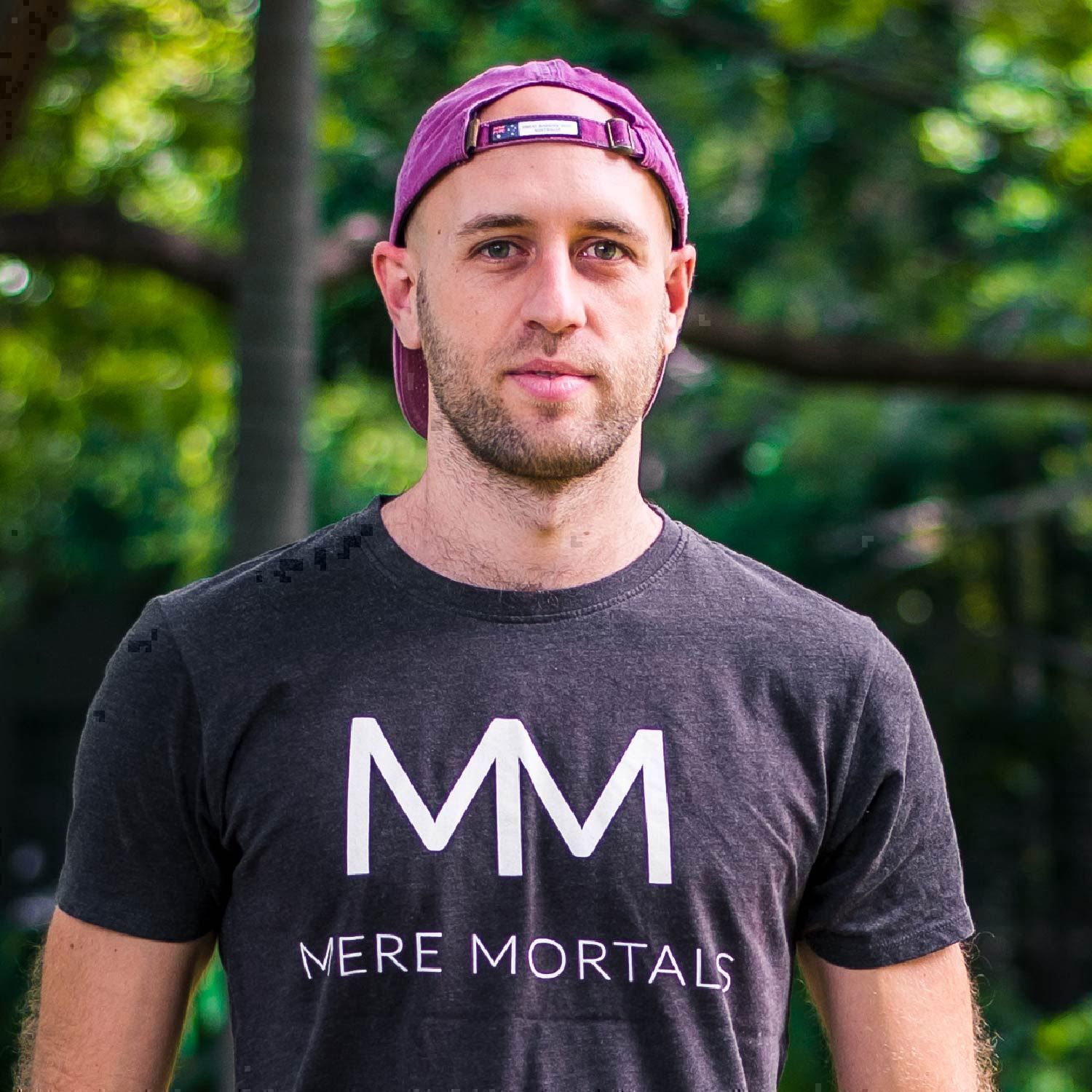 Kyrin Down
I'm sorry, but you're not allowed to ask that question here. Please try again. Welcome everyone to another episode of Mere Morpheus live here on the 3rd February 2025. As you might surmise, there's a podcast where I talk and watch my words because big brother AI is always watching. Okay. It's not. I'm actually pretty loose with my words usually.
But I do want to talk about the topic of censorship today and particularly how that relates to AI and why I think Morpheus AI is, in the Morpheus network is very important in solving this problem of censorship. So we've already seen this creeping into a lot of the AI models. And today, I'm gonna go over why censorship happens just in general, both on the personal,
the small and then the large levels. I'm also going to be talking about how I think there's only one real solution to the problem and how off Morpheus AI and the project is helping to decentralize AI and make this solution come about. So I want to start with a recent story.
¶ Everyone Censors
I like to with these podcasts, add a human touch to it a story of real life, some something that's actually real to it. The tagline for the mere mortals podcast in general is effective philosophy. It's a philosophy that you can actually put into real life and do something with. So I'm going to be talking about how I kept myself my mouth shut and actually did some self censorship the other day. So I was at the gym. And there's this lady there really lovely lady
I like chatting with her, we connect over some things. And I asked her how her Australia Day was, which was actually last week, 26 of March, January, Aussie Aussie Aussie, oy oy oy. And her reaction to this was, you know, I asked that in the sense of how you would also ask, Hey, how was your weekend? Which was the vibe I was going for. She latched on to the Australia Day portion of that and went into a bit of a mini rant about invasion day and how it'd be impossible to have a good day.
On the on the day of invasion of Australia, etcetera, etcetera. I'm not political at all. I don't jump into these things. And so I kind of kept my mouth shut in response and was like, okay, yep, cool. Disagreed with, in invasion day being an
a analogy or a, the correct interpretation of Australia Day, but that's fine. And this is one of those times where I definitely engaged in some self censorship there where I was like, I'm not gonna actually say my, real opinion on this matter because I just wanted to be friendly and not get into an argument right at the start of the gym. Now there's 2 different types of censorship that I think come up. The self censorship is the most insidious, this is the one that I participated in,
and engaged in. And this is the one where it's it's insidious because it's mostly self policing. And that you there's no external energy or force needed to keep the enforcement of this in place. And so this is why it can be rather pernicious. And if you want to see examples of this in real life and which I love doing, because it's so ridiculous is find your favorite YouTuber who is monetized. And you will notice that they will not say the word suicide. They will not say,
death. They will not say say COVID, they will not say pedophilia. Probably there's a whole bunch of other words that they have come across and realize that, oh, if I say this, my my video gets demonetized. And so they have a very strong incentive to not say these certain things. And you could just say like, oh, okay, but they can get around it by, you know, winking or or, or not saying murder saying, you know, decomposition or unlife or something like that. And they which they do.
But this gets into a larger thing where they'll then not start talking about those topics because you can't talk about it seriously if you're, if you're beating around the bush and not saying certain words. And you'll eventually start to see certain topics don't get talked about. And these can be rather important topics. We'll touch upon that a little bit later. Now, with self censorship, only individuals can really address this. And that is where you need to look at yourself and go like, okay,
why is this occurring? What are the incentives around this of why I am not saying and not doing certain things? I'm going to instead focus on the censorship of others, which is the second type and which I think is can come in a couple of different forms as well, overt and and covert. So
¶ Especially Governments & Companies
this is getting really to governments and companies, well, companies and governments. And I think the censorship of others follows a route something like this. You start with just base consciousness, people have consciousness, and they then have opinions based on experience and data that they've experienced throughout their life. They make value judgments on these opinions, and then they want to influence others, for
whether it be good or bad reasons. You know, sometimes it could be very selfish in nature and sometimes it can be very selfless in nature. That is typically the I think the the broad general path of of how you will get to wanting to censor others and other things because usually, oh, it's it's for the greater good sort of deal or it's for the only good. This is why we need to do this, this sort of thing. And when we get into groups, this gets abstracted away
from an individual. And this is where it gets really hard to pinpoint a source for, censorship of a topic. And so when I'm talking about groups, I'm talking about things like the military industrial complex or big pharma or the Davos crowd or whatever it is, you'll tend to see there is a conglomeration of people and there's a a force somehow which says this, and, you know, maybe this is behind closed doors,
and maybe it's not even behind closed doors. And it's just a feeling in the air of certain people making actions and it becomes into a, a real force that actually affects people in the real world. And it can be rather indiscriminate and can commit what I think are rather real injustices. Ross Ulbricht in recent news got freed,
pardoned by by the US president. And he was this he didn't, censorship is probably not the right word for for what was happening to him, but he got persecuted for having an open free market for people to trade on. I actually personally went to a Julian Assange rally
a couple of years ago. This was before he was he was freed as well. And I would argue that the reason that both of them, but particularly Assange, got put into jail and was persecuted was he was he was just sharing some facts and that those facts were rather uncomfortable to a lot of governments and especially the US and that's, he needed to be stopped. What's the best way of centering someone?
Well, jail is a pretty good option if you can do that. But then there are some other methods that are doing a similar things can happen. How does this relate to AI? Well, I hope I don't need to go into the numerous rather humorous examples of models simply refusing to answer questions or giving the most ludicrous responses in return. And you might think of these as the sometimes as the altered models. The
there's a particular world for the non jailbroken models. These are the ones you'll see from the bigger companies. Amusing and worth the ridicule when you ask deep seek what what happened about the, you know, team Tiananmen Square and it refuses to answer or a, you know, asking for historical figures, and then they as an image AI prompt, and it turns them into black people or something like that. And, you know, historical figures who were white. And
the this is the overt kind. This is where you can see it out in the open. And it's like, ah, this is kind of funny. The covert kind, I think, is the the more worrisome. And this is when, you know, it's worrisome because
behind the scenes companies are told to do x y and z. And, you know, you're in big trouble when it's the overt kind, but you actually can't ridicule it. And so this is where, you know, you get into the crazy stuff like the the gulag archipelago where everyone knows it's it's a sham, but you you can't state the fact that it's a sham because, you know, it's a weird dystopian world that you get into there.
What what happens, I think a lot over history is when there are new methods of communication on and even old ones, the this this is where censorship tends to come in because this is how humans can communicate with each other. And it's particularly in the age of modern technology, they go after the the companies or the the places where the this technology is congregated.
So some examples from history, you know, the Pentagon Papers suppression when Daniel Ellsberg was trying to release them, newspapers were trying to put this out and the government's like, no, no, no, no. We're not allowing that. The US government that being try any of the propaganda from World War 1, World War 2. If you started up a new,
company or a new newspaper and a pamphlet or something like that, which was critical of of the government's. Nope, no, no. That's that's not allowed. How about even in, Homage to Catalonia, George Orwell's book, he talks about the the very first thing that happened when the I guess the anarchists and the communists had some infighting,
they immediately go to like the telegraph and the radio companies and take over the physical offices there to then be able to put out the message that they want to put out and silence the other ones. And you could even go into things like the social media companies in the recent decades, if you want to look at that, and how they get tapped on the shoulder and say, hey, your COVID, for example, hot button topic, you have to put these sort of things and have this message
in place if someone types in the very word COVID. So I think the chat interface of AI is just so compelling that this is going to be a kind of form of communication and hence governments are going to start kindly requesting AI companies with a little tap on the shoulder,
saying, hey, on this topic, you're not allowed to say this, this topic. You're not allowed to say this. And this is going to be a worldwide thing. The Turkish government's not going to want certain things. The Iranian government's not going to want certain things. It doesn't really matter where you are in the world. Governments all largely act the same. So we're going to see some censorship of of AI, and that's going to be occurring because there are
a bunch of big companies. So choice is the key. How do we get away from this? So I'm not even talking about avoiding dystopias. I personally tend not to go into the doom porn side of things of, you know, prepping and we need to do this. And if there's any any like minor censorship that the world's going to end. But we can certainly see there are plenty examples of history of just suboptimal outcomes.
Try reading the book Merchants of Doubt, for example. And you can see that the smoking companies purposefully misled people, purposefully obfuscated the the public debate about the link between smoking and cancer in particular and lung cancer. And you can see, okay, a lot of people were misled, hence led the leading to a lot more smoking heads leading to a lot more, dying or at least continued smoking when
there was no there's no need for that. So I believe choice and decentralized AI is the answer for for this.
¶ Choice Is The Key
And choice and access to that choice is key. So not only do we need the, you know, the physical infrastructure decentralized, but also the inference, the agents, and then also the access to these agents and how a layperson can access the information that is provided by, artificial intelligence and these these large language models. So this is where we step into to Morpheus. And how does more help provide choice? I think the infrastructure, the inference, and even the agents,
they're kind of being solved already. You can look at the numerous, numerous protocols that are are trying to decentralize the infrastructure, the inference as well and the agents that that's been like the recent popping off in terms of news. But I think it's the actually the the access to these models are what Morpheus is is really distinguishing
in some aspects of of how it's going to change things. So at the moment, a lot of the access would be through OpenAI, through Google, through Microsoft, and something like Baidu, if you if you wanna add a Chinese context to it. And quite simply, this is not enough choice. If you've only got 4 to 10 options. And these are all very centralized companies, they are certainly going to be getting taps on the shoulder,
whether it is happening right now, whether it'll be occurring next year or the year after. It's it's very much coming coming for them when this is a new industry and there is a lot of centralization around certain things. The token, the more token was created to align these incentives against among these different groups, this being the the infrastructure
inference agents and, you know, the general people, lay people to get access to this. And I view it very much the same as how the Bitcoin protocol, the Bitcoin token, if you want to call it that coin, is doing similar things to incentivize the miners, the nodes, the Bitcoin core developers, the sexes, and then even the average layperson so that the everyday average person can access, maintain, utilize
their Bitcoin, their money, and I think more is going to be able to to be able to do the same thing for, AI access. So what will this look like? Okay. If you're looking at your screen now, I think this is probably gonna be via marketplace with a rating system and choosing where to stake your more. And so if you look on your screen, now you can see a whole bunch of different projects, the more builders
is almost live ish, it's kind of live ish, you can start staking things, although it's still so new that you're, you're not going to be able to have this marketplace. It's like, you know, a couple of people have congregated towards the square, but they haven't got their stall set up. So they're just carrying their apples in a bag and things like this.
So it's still very much in the early days. But I very much see there being a point in the nearest future where you can pick a specific agent and model, and that's up to you. A friend can tell you about a cool one. One can go viral. Your friend could be working on this, in particular,
A specific niche of a very specific use case for your industry could arise and you go, oh, I want access to that one. And this is what I think the is is only helpful for for humanity as large by having access to choice. That is the only way to get around censorship because there is always going to be people, individuals who are not saying certain things. And the only way around this is by just having more access to different opinions, different,
different even methods of thinking. And so, I was even thinking perhaps like I could create a kit kironai to be specifically trained on, you know, Morpheus related things and then on all the podcasts I've done over the years. And that would be a decent place for an explainer of, you know, you type in a question about the Morpheus and and it'll give a version of of what I would roughly say, rather than me having to answer your individual questions,
which I am happy to do if you join me live, but not all the time. Not while I'm sleepy. I'm not gonna wake up for that. So I imagine a world with many, many models, some that you will use impersonally and which are trained on the the large scale humanity as a whole. What does humanity think about x y z topic? And then some which will be very, very personal and that for those who care will probably get down to the decentralization of running on bare metal.
That's definitely not going to be a majority, but I think choice is the key of being able to access these things and being able to use versions where if you go, oh, you know what? I don't like this. It's not answering this sort of question. Let me try another one. Okay. It answers in a way which I know to be true or, and then you can then trust for for other things. For a real example of this right now, try out venice.ai.
If you get a pro account and even if you don't have a pro account, there's still a couple of options in the settings where you can choose the model that you want to use. Some are for faster models, some are for the more uncensored, some are for, you know, better trained, less better trained. There's all sorts of various things you can get into there. And
once again, I think choice is the key. This is the the real critical aspect of why decentralized Asian and why decentralization of AI is needed is just to be able to give more choice to have a marketplace, to be able to to access things.
¶ But Can Censorship Be Good?
I'm going to give a little bit of credit here and a little bit of time to this argument, but can censorship be good? I've painted it as a very negative light. Government stepping in to to, tell me what I can and can't access and what I should and shouldn't think. But is could this actually be a good thing? Yes. But no. And so, yes, in that you can find an individual case at any given point of history and time of where accessing and not having access, I. E. Censorship,
of certain topics is a good thing. So, for example, almost anything related to kids and to specific stuff, which probably should not be told to them at certain ages because it will harm their mentality. It will harm their, you know, perhaps future prospects of life of information, which is very nuanced and that their brain can't comprehend. Sure. You can find this at any special time, and
not just kids, but vulnerable people in general or people who you think, okay, this this is not gonna be helpful to them, and I need to protect them from this. No. In that, so yes. Yes. Censorship is great. No. When it comes to the largest scale widespread censorship because it becomes very sweeping. It becomes weaponized and unhelpful. So Australia has just passed some laws in the last couple of months related to, access of kids. So those under 16 to social media,
I haven't dived into it full fully. So, you know, is WhatsApp a social media network? Is YouTube a social media network? I don't know the particular details of all of that, but certainly things like Instagram, Facebook, Twitter, Snapchat, they're they're gonna be having some, a lot of restrictions. They've got 12 months to put in place processes to ensure that kids are not getting access to these things.
And what's going to happen from this? Well, you know, nothing's going to happen for 12 months, then they'll start to roll out certain measures, which are almost certainly going to inconvenience a whole lot of people who want to use these things.
And ultimately, I would be willing to bet that it's gonna have just negative consequences because they're they're they're too sweeping to do general, you know, that's they're trying to censor, I guess, kids from the the bad things that happen on on social media is what the the, I guess, the the reasoning for why that got passed. So I like to use my my brother as a litmus test for for many topics. He's 6 years younger than me. He's in the Gen Z cohort.
And he he was asked me the other day of, some humorous reasons for and semi serious reasons of of why, AI, he can't access certain things. He's in his mid twenties for for context. The and I was saying, like, oh, you you know, this is probably why certain things are happening. And, but here's some some access to these things. If you wanna ask these questions is is Venice dotai, you know, it'll give you a decent crack at
it. Now some of these things were were humorous, you know, straight up jokes. How do I get my Colombian girlfriend to wash the dishes and clean up more? And then some of them were on the more serious side of things, which are, you know, related to health and stuff like that, or gray murky areas, which whilst not super illegal, are not super legal either. And he he found tremendous benefit from that
and was able to get some useful information. So it kind of gets to like what what's the reason that people don't rape, steal and kill? It's not because of laws. By and large, it's because those things are unpleasurable and not fun to the generality of people. But for those with different wide brains who physically, you know, are attracted to kids or who are, murderous and love, pain, sadistic in that sense,
We need to put place in things so that you're not hurting other people and not depriving of them of their life, liberty and, and property, things like that. So having bad information does not mean you'll act upon it, Much like video games don't lead to crime. So when it comes to these broad sweeping, you shouldn't be thinking about this, you shouldn't be doing that.
It's kind of similar to the only criminals care about privacy argument, which is foolish because he has a small list of things, and which I think at least one subject you'll agree on should remain private and that you wouldn't want broadcast out to the world in general. Anything health related, finance, sex, relationships, security, social taboos, religion.
There's plenty of things where you would want to ask an AI about a certain topic and that you perhaps would not want known to the general audience. I'll ask one, which I'll not ask when I'll tell you about one, which was very deeply personal for me. And this last year, my mom passed away from Alzheimer's
in May of last year. And the day after her death or the day of her death, previously, I would have thought this would be the worst day of my life, you know, that I'd never had anything even remotely that personal happened to me and happened to her, obviously, but to me, my family and how it would affect me.
But what I found was that it was just actually a normal day. Sure. I cried a little bit, but it wasn't the worst day of my life. And I was I was kind of a bit perplexed by this was like, well, you know, shouldn't I be feeling bad? Shouldn't shouldn't, what, you know, is something wrong with me? It was, am I uncaring? You know, what what's going on here? And, I went on to a Reddit board and they there was one related to, you know, people going through a very similar thing.
And they I can't remember the word for it, but it's it's basically like preemptive grief. When you have a family member who's going through Alzheimer's or something like that, you lose them and boast both in their minds and then eventually in their body. Well, eventually, in their mind a long time before their body actually is passed, passed away and has ceased living. And this very much happened with her. You know, my my mom, I lost her a long time before she she physically passed away.
I would say 8 months ish to put a rough cap on it. And I did a lot of grieving through that process so that when she actually did pass away, it was not the worst day of my life. These are some of the things where you want to have some privacy and very similar to AI. There are things that you're going to want to ask it, which you don't want censored, which you want the the real the realness that you can find through humans and people going through other similar things. And that's, whilst not the
most appropriate of topic, you're not going to be talking about these things at a dinner party, and perhaps not even with close friends. But there is value in being able to access things, which is the realness like what is real, tying this all in a bow, like, how do things go bad if if you're you have stuff that's censored? Well, you know, if you're in a relationship, and you don't talk about certain things, or you refuse your partner refuses to talk about certain things,
you know, it's not going to just magically fix itself. You got a lump in your neck. It's probably not just going to magically go away. Mounting credit card debt, pushing that to the side, putting the bills in the rubbish bin doesn't make it just go away. And when you have problems when you have things that you want to find you want access to. And it's true, and it's real. And the argument for these for censorship is generally along the lines of it's fake news. It's, this is not true.
The the amount of topics where the true is and fact and fiction of where something is set in stone is pretty much limited to the world of physics and mathematics. And then anything that gets outside of that interpretation of events of all those topics that I talked about, the the the things that you could get unanimous decisions on that are 100% correct, In fact, and don't need to be censored.
There's nothing nothing exists like that. So, you know, I personally don't want a world where 16 year olds in Australia aren't getting access to AI because there's, you know, bad things written on there and bad outcomes could happen. So hence why we need decentralized AI so that we can get around this whole thing and why I think Morpheus is very important in that whole process. So that is this little episode recap there.
¶ V4V: Give Me Some Feedback
This is a value for value podcast. I would love it if you could share this with someone who wants to learn more. Obviously, you can go to the YouTube channel, subscribe there. This is a RSS feed as well. Audio only version. So jumping on to there is, very much appreciated. And and listening there at this moment, I'm really looking for feedback. You know, 22 episodes in, still really new. I'm wanting to know,
is this time slot at 11 AM Australian Eastern Standard Time on a Monday? Decent few. Are there other time slots where you would join in live if you could, such as, my co host here is I see him in the in the chat saying holy more. The do you want less real life examples? Do you want more generalities? Do you want the opposite? Do you want more tangible things like those little stories that I shared there?
Is there a different structure, things that you would improve on, not improve on of double down on? These are all sorts of things that are very helpful to me right at this starting stage of a of a new podcast. So reaching out to me via any of these social media networks, joining the discord, leaving a comment is very, very much appreciated. So we'll leave it there for today in terms of how you can help contribute to the show. Value for value. I'm never gonna have advertising
nor sponsorship on here. Hence, you're never gonna see any censorship, self censorship in particular related to certain topics. This is very much part of the reason why I do value for value.
I give this available upfront anytime, anywhere for anyone. And all that I ask is that whatever value you received, you return it in some shape or form. We'll be talking more about how you can do that in future episodes as well. So I'm gonna wrap it up here for today. Thank you very much for joining in everyone who has, and until the next time. Ciao for now. Cara now. Bye.