


¶ Intro / Opening
This BBC Podcast is supported by ads outside the UK. Hej, Alexandra Rappad här. Jag spelar Veronika Gren i serien Veronika. Jag undrar om du har sett ner. Som är tillbaka med säsong tre. Den här utredningen som jag håller på med, den börjar bli. problematisk för oss. Vilma Veronica försong tre nu, bara på Sky Showtime.
Du, jag skulle ju köpa några nya palsrält i lagret. Det kanske blev lite mer grejer. De hade ju allt, hade en skrivbord, jag köpte en sån, och kontorstolar. Och så hade de en skitsnygg tippkort. Vi har inredning för hela arbetsplatsen. Välkommen till AI Produktion. This is the BBC.
¶ Jimmy Webb's Early Life and Musical Roots
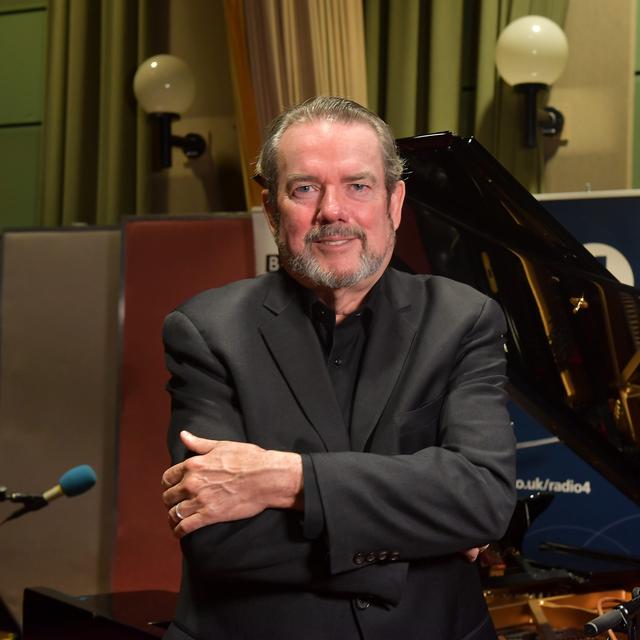
Welcome to Master Tapes and to Jimmy Webb, live at the BBC Maidavel Studios, one of the most successful songwriters of all time. He's penned hits for artists including The Supremes, Frank Sinatra, Barbara Streisand, Richard Harris, and of course Glenn Campbell. Wichita lineman Galveston by the time I get to Phoenix MacArthur Park
Didn't we? The list goes on and on. Everyone a classic. Just some of the hundreds of songs written by Jimmy Webb. Jimmy is the youngest person ever to have been inducted into the Songwriters Hall of Fame. The only artist to have won Grammy Awards. in the categories of music, lyrics and orchestration, and in nineteen sixty eight, two of his songs Scooped eight Grammys in one night. Jimmy Webb, welcome to the show. On Jimmy, Elk City, Oklahoma.
think that city would be stretching it somewhat. Down in that part of the country we would call it w a wide place in the road. It was small place. Elk City. Yeah. It had one elk. Yeah, I was only there for actually a few hours because that's where my mother delivered me. My grandparents' farm was a dozen miles away.
And I grew up in that agrarian circumstance. You know, I'd worked with my hands, I pull cotton and collect baled hay from the ground and throw it up on a flatbed trailer. Right. It was vigorous and um it was austere. yw'n yw'n yw'n yw'n yw'n yw'n yw'n yw'n yw'n yw Was it a strict religious upbringing? Oh, it was very strict. It was a goldfish bowl upbringing.
And my mother put me on the piano bench when I was six years old and we had a kind of a work contract that if I would play the piano for an hour every day She wouldn't hit me with a stick. It seemed to work out pretty well because uh by the time I was twelve years old, I was the church pianist. And I was laboring my way through
I was thirteen, fourteen years old and I really wanted more out of my music than that. So my mother sent me to a uh piano teacher in Oklahoma City named Susan Goddard and she was a kind of genius. She finished with me, I was able to do that. That's really amazing. Well, I missed a few notes there, but you know, uh uh y Glenn Campbell used to say, you know, if you play it perfect, they'll want it that way every time. You know, so
¶ Defying Parents, Dreaming Big
What was the first record he ever bought? That's a an interesting segue because I was out on a tractor in the middle of a wheat patch, uh listening to my transistor radio, which was the first subversive instrument preceded the internet by a number of years. I was not allowed to listen to rock and roll at home. My father had gotten a crazy idea that rock and roll was about sex. Can you imagine? What was it?
So I wasn't allowed to listen to Elvis Presley, but out in the middle of the field And then uh Uh He had this like high, gorgeous voice. And I went home and I wangled a dollar out of my father, which was no easy task. And I also got the car keys. And I drove twenty two miles to a little town called Beaver and I bought Turn around look at me by Glenn Campbell on Crest Records. The first record you bought was a Glenn Campbell record. Yeah. I brought it home.
I wore it out. When I got finished with it it was just about this slick, you know, it was this grand piano. Did you have any ambition at that I mean obviously you had no idea that you would even meet Glenn Campbell, let alone go along to work with him and become his musical partner in a way, but did you have ambitions at that time to write your own book? Well, this may sound like a tall tale, but it's actual fact. I was very religious. It was a necessity for me to be religious.
But I got down on my knees that night and I prayed, Dear Lord, one of these days can I write a song just half as good as Turnaround Look at me and can I get Glenn Campbell to record my song? And I started writing songs for Glenn Campbell. How naive can you be? Well of course I've prayed for it, so it'll happen obviously, and I'll just get ready. I'll write some Glenn Campbell or something. I must have had written forty or fifty of'em. I had a bunch of'em. Seriously. What age were you then?
I was fourteen. Fourteen years old you're on the tractor and then fourteen years old in your dad's car to go and buy that record. Yes. We could drive at fourteen because it was harvest. But you weren't allowed to think about writing songs according to your dad. As far as he was concerned, that was just there was no way you're gonna become a songwriter. We weren't allowed to dance.
Our movies were censored very carefully. We were only allowed to see certain movies. I can remember asking my father if we could go see Pal Joey, and he said absolutely not. That's full of sin, you know. It was a fairly strict thing and and what I was doing in my head was subversive. I was really thinking about being a secular songwriter and working in the music business.
¶ Motown West Experience
You started writing these songs and you realize you had the knack for it, you could do it. You had the melodies in your head, your family moved to Los Angeles. And soon after then, you joined Motown Records, or you're writing for the publishing arm of Motown, Job. Was it very much like a production line? Did it feel like you had to knock out the songs for the artists almost to order? It was very strict. Mind you, I w I want to clarify this. I was on the west coast. It was called Motown West.
Detroit was another thing. That was where Smokey and Martha and the Vandalas and that's that's where they were all working. But we were connected to them and I heard those tapes come in. I heard My Girl the first day it was played in the office. And I said, that's going to be one of the biggest records of all time, My Girl. But yes, everything at Motown was formulaic. So they had names for everything. You know, this was a drum break, this was a bridge, this was a chorus, this was a verse.
so that we all knew what we were talking about. And they actually taught me how to work an audio board. They gave me f first just small orchestra parts to write and then eventually they would give me a whole orchestra to write. It wasn't just about learning how to construct a song, it was actually about how to record the song and then bring the orchestra in.
They taught me everything and they even taught me the backroom stuff about marketing and promotion and it was really kind of a dream and it ended too soon because my boss at Motown got fired and then I got fired. But not before you'd written I mean there's a lot of Jimmy Webb credits on some of those Motown records and there was the four tops Do What A You Gotta Do, there's a Supreme song. was pretty big deal for me, you know.
My father had moved back to Oklahoma and was pastoring a place called Cheyenne. And uh I remember the day I called him up and said, Dad, you were wrong. You know, I just made three hundred and fifty dollars. You know, I had this check in my pocket for three hundred and fifty dollars. He said I wouldn't make it. Of course, three hundred and fifty dollars in Los Angeles it lasts about five minutes, but
He was wrong. Look, how could a kid be so lucky as to walk into that sort of a situation and the people themselves were just angelic to me. They they treated me like a little prince. Spoil me really.
¶ Birth of By the Time I Get to Phoenix
And while you were there you wrote quite ambitious narrative song about a guy who heads out on the road. Mind do you know who that guy is, why he was out on the road work why he was heading to Phoenix and to Albuquerque? Oh yeah, he was me. It was something that I desperately wanted to do. I thought that she had it cut. Yeah. And you'd left so many times in your thought line. You know, look, nothing was gonna part me in Hollywood, man. I'd been waiting to get there for my whole life.
And I thought I'm not gonna let this chick run me out of town, you know. So you left in the song instead. I mean that's the great thing about uh being a songwriter. You can live vicariously, can't you? You can you can put yourself out on the song. Uh it was in my mind to leave her there. Good therapy. Some people have taken issue with that song, taking that song a little bit too late.
Can you get from Los Angeles to Phoenix by the time she's uh rising and then get to Albuquerque by the time she's where is she then? She's at she's at work and then and later she's in bed again. It's it's a long journey. Well, it is, but I had a fast car. By the time I get to Phoenix performed live at the BBC Maydevell studios by the man who wrote the song, Jimmy Webb. Thank you so much.
Jimmy, an all time classic that one. Not right for Motown. I mean you wrote it while you were there as part of that later. This is sort of skirting issues that sometimes are like a little politically uncomfortable, but I was the only white kid in the building. and they had projects with white artists. They would put me on those projects. And one of them was Paul Peterson and he had had a couple of hits. One of them was My dad now he is a man. You know, it was like one of those things.
He had another hit called She Can't Find Her Keys. And so they wanted me to do a song for him, so I wrote By the Time I Get to Phoenix for Paul Peterson. He hated it. Yeah. He hated it. It sort of came back to me actually. Interesting though. Take by the time I get to Phoenix. Just take it away. Okay. And can you take that up up and away and that other square one that didn't we? Can you take that too? My god, you'd written all those songs while you were still a main time.
They let me walk with a a packet of hits.
¶ How Phoenix Reached Glenn Campbell
So you offered that song, well Jimmy Rivers took that song first of all, didn't you? Well, when I went over to Johnny Rivers Yeah. Johnny Rivers really did a lot for me in my career. He had cut by the time he got to Phoenix, but again he was rolling with one of the great hits of all time. And he called Al DeLore, who was Glenn Campbell's manager, producer at that stage.
And the thing about Glenn was he knew everybody and he'd played with everybody. So he had made an album with Johnny Rivers called The Long Black Veil in like nineteen fifty nine. And Johnny had always had stayed friends and He knew Glenn was trying to get a hit. Glenn had cut Universal Soldier, he had cut Gentle on My Mind. both really good choices, kind of off the beaten path, but nothing had cracked through.
And Johnny called Al Deloria and said, Come over. He says, I want you to hear my test pressing So Al came over. Johnny put on changes, the album, and two cuts in it was by the time he got to Phoenix. And he just went over and lifted the needle off and and said, Al, I want you guys to cut that song and Al said, I don't get it. Why are you giving this this song? He said, You know that's a stone cold hit. And he said, Al, you can only have one number one record at a time.
But what he was really doing is he was doing it for me and he was doing it for Glenn. Within weeks Glenn had that song up and running.
¶ First Encounter with Glenn Campbell
So Glenn Campbell gets hold of by the time I get to Phoenix, nineteen sixty seven. And that's the start of this partnership. Do you remember the first meeting with him? Very different characters, I guess, because you were a young kid, West Coast, long hair, bit of a hippie. And he was a more conservative character.
I wouldn't even say I was a bit of a hippie. I would say I was like a whole hog hippie. Well, in fact I had just been to the Monterey Pop Festival and I had gone up to join the flower power generation. And I had long hair, of course. I had a red bandana. I found a yak vest shop and I bought myself a yak vest, which hadn't cured out exactly right.
I had some raggedy jeans and I had some Indian moccasins. So I walked in, you know, I mean I I brushed my hair out. I wasn't an unkempt person at all. I took showers and things and Glenn is impeccable, you know, the hair was always quaff like the and he'd have like a a short sleeve striped shirt on, and then he'd have a rodeo belt over a pair of like faded Levi's, just the right color now.
And some supple, soft leather cowboy boots and he just always looked like a boy toy. He looked like a doll. He looked just like he looked on T V all the time. And I walked up to him and I said, Mr Campbell, I'm Jimmy Webb and he was busy with his guitar. And nobody can be as busy as a guitar player when he wants to be busy. And he adjusting his bridge and he he kinda looked at me and he went back to his his aunt.
And I said, Mr Campbell, I said, I'm Jimmy Webb I said, I wrote by the time I get to Phoenix He looked at me with those eyes and he said, When you gonna get a haircut? Like, you know, if you wanna be in my group, you know, you're gonna have to cut your hair first. Was it a difficult relationship at first then?
Well it was just politically tough because America we had worked ourselves into a dichotomy in Vietnam where you had half the country who were ready to hit the streets and you had, you know, your Republican contingent who thought we were gonna win. And Glenn hung out with Bob Hope and Bean Crosby and John Wayne. So there it is in a nutshell. That's the other side as far as I think. Really the other side, yeah, definitely.
¶ Glenn's Voice and Grammy Wins
What did he bring to that recording, his version of Phoenix? I mean, there is a beautiful, yearning, bittersweet quality. Which I guess is there within the song anyway, but then he does he tap into that? Yes, he had a five octave range. His voice was like a piece of curved glass. There were no grains in it, there were no kinks in it. It was freakishly perfect, actually.
But that's not what made him a star. What you hear when you hear a Glenn Campbell record is really a very subtle but very plaintive cry. a kind of weeping in the way he modulates the tone. Unmistakably you hit in Wichita linemen. You just hear this pang of sorrow That's just invested in the voice. And it's done without a lot of arpagios and dilations and tricky things. It's just done with the slightest bending of that pitch. in certain register where his voice sounds like it's crying.
And yet a great singer needs a great song and you provide for him. First of all with Phoenix. And one night in nineteen sixty eight of the Grammy Awards there are two songs in contention by the time I get to Phoenix and Up, Up and Away, which have been recorded by the Fifth Dimension. Very different sound there, the vocal harmonies and You or those two songs together won eight eight awards in one night? We did very well that night. I was nominated twice in the song of the year category, so
Yeah, but I mean you're associated with eight winds. I mean what does that do? Mm-hmm. Right. The fifth dimension won best new group. They won Album of the Year, Record of the Year, Single of the Year. Up up and away one song of the year. Amén. Yes it did. I thought it really could you know who I was up against? I can't remember number five, but I do know the two songs that I was worried about. And one of'em was Gentle on My Mind by John Hartford, which I think is an e exquisite song.
And the other one was probably one of the most unique and interesting records even today that ever came along was Ode to Billy Joe, Bobby Gentry song. And I thought that thing really has a has a shot. And I've got two songs nominated.
So I'm not gonna win because half of my votes are gonna go to these people over here and the other half are gonna go over there and John Hartford's gonna be standing there with general on my mind. Now that's really what I thought. So I just got good and drunk early. But uh particularly up up in a way, with that really breezy, summery West Coast pop melody thing. I mean it it made you associated with a certain kind of sound as well, and you were s sort of scene.
despite being deep in the hippie movement. But seen as a kind of a mainstream songwriter putting your odds with Guilt by association. But I mean, Yeah. In terms of lifestyle and you say you're at the Monterey Pop Festival I was on stage. I was standing back when Jimi Hendrix essentially set himself on fire. because he demolished the guitar and then he poured lighter fluid over it. and he lit it. I know that he expected a ball of fire, but it was a huge ball of fire
You must have sensed there was something in the air. Things were changing. What did that mean for you as somebody who was writing in a more conventional way? Well, I wanted to be with my people. I wanted to be one of the crew, one of the kids, one of the crowd. And I was having trouble with that because I was also working with Frank Sinatra. I was covered heavily by Barbara Streisand. people like Stan Kenton, Maynard Ferguson, It was like
how do I get over there where all the kids are? It was kind of a problem for me. The first pop artist who was really c contemporary and hip and part of the scene whoever reached across the aisle and said to me, You know, Jimmy, I'd like you to write something for me was Artie Garfunkel. Right. And once I knew Artie Garfunkel I met David Crosby and then I met Joni Mitchell and All of a sudden I was I was happier because I was I was sort of meeting kids my own age and
¶ Creating Wichita Lineman's Imagery
We're gonna play us out of this first part of the programme with one of your best love songs, in fact one of the greatest songs I think ever written, Wichita Lineman. Conceived, I guess, as a follow up to By the Time I Get to Phoenix. So we need something else like that one. I mean'cause lyrically, musically, thematically it's on similar.
I remember exactly what he said. He called me that afternoon and he says, Jimmy, I need another song. I need a song to follow by the time I get to Phoenix. He says, Can you write me a song about a town? And I said, Well, tell you the truth, Glenn, you know, I'm getting a little burned out on the town thing. You know, and he said, Oh, he said, well, that's too bad. Could you at least make it geographical?
So it's rooted in a place but it also features this kind of lonesome protect who was the line man? Oh the lineman was I saw the lineman many times when I was a child or when I was a little bit of a Guy fixing the telephone wires, the telephone In a certain part of the country where literally there's no contrast, it's just a horizon. and a very, very long line of telephone poles disappearing into the distance.
You see him up there and he's sort of talking on the phone and as a child, you know, your imagination goes wild. You know, Daddy, why is the man on the pole? You know, why is he talking on the phone? Oh, shut up, I'm trying to drive, you know. But the m image remains, the lonely figure sort of suspended against the endless sky really of the Badlands.
¶ The Enduring Power of Wichita Lineman
And that idea that he is alone and he's thinking of the girl somewhere far away. Billy Jewell said it the best. He deconstructed Wichita Lyman one night at the Songwriters Hall of Fame. He had me in hysterics. Because one of the things he said was, So then it goes, and I need you more than want you. Well, that kind of sounds like a dip. But then he says, And I want you for all time. Jeez, I guess he really needs her.
And then he said afterwards he said he sort of got serious. Wichita lineman is about an ordinary man. Thinking extraordinary thoughts. And when he said that, the tear ducts in my eyes just opened. Tears just flooded my face. Because he had his thumb right on the nerve there. That is absolutely wonderful, isn't it? And also you have in that song you have that kind of I was gonna say a riff it's not even a riff, a refrain that did.
I remember when I was a kid and I'd forgotten this until just recently actually when I was writing my book, this this sort of came back to me. that when we were kids that we could walk up to the wires and that they actually were singing'cause you get used to singing I hear you singing on the wires, I hear you singing on the wires. You sing that ten thousand times.
some of the real meaning of it actually goes away. And suddenly I flashed on this sound that the wires used to make. And it was a high humming almost like a note. Well it was a note. And as children, those are the kind of things you notice. Well, as you get older you forget them.
Wonderful stories. There'll be more stories of Jimmy's life in music in the second part of this edition of Master Tapes when we'll have more live music and of course questions from our audience here at the BBC Maidervelle Studios. But for now, my thanks to Mr. Jimmy Webb.
This is a download from BBC Radio 4. Each two-part edition of Master Tapes consists of my interview with the artist, which you've just heard, and then a second program in which the audience at Maidavale Studios gets the chance to ask someone. This is a sort of two-for-one podcast, so enjoy the second half of Mastertape.
Welcome to Master Tapes and to Jimmy Webb live at the BBC May of L studios playing Wichita linemen. Just one of the many classics that he's written for the likeness of Glenn Campbell, Richard Harris, Frank Sinatra, and Barbara Strong. I get By the time I get to Phoenix, Galveston, MacArthur Park, didn't we? Classic recordings of songs written by Mr. Jimmy Webb, my guest in this edition of Master Tapes. In the first part, we heard how Jimmy grew up in Oklahoma and Los Angeles.
A lifelong musical partnership with Glenn Campbell. Now it's the turn of our studio audience to ask the questions and we'll have some more live music from Jimmy at the Maidervale Piano. And Jimmy, usually at this point I ask my guest about
¶ Crafting and Revising Songs
Who they're writing for. But in your case, are are you always writing primarily for yourself? And I ask that because invariably your songs are written for other people or they end up with other people singing. Well, it's a good question. Am I writing for a specific artist, like Glenn Campbell, for instance, which tall lineman was written for him?
And it was a hit. It sold something like forty million records. I'm not bragging about that record. I'm just saying that that is a one instance where I wrote a song for an artist and it worked. the vast majority of songs that I've written for artists, they haven't even recorded them. I'm not real successful at getting inside an artist's head. And so on the surface level, I tend to just write the best songs that I can write.
And then I sort of I'm at I don't know, at the rummage sale I put my stuff I put my stuff out on the table and y you you take what you want, you know. Sometimes it works. Sometimes it works, sometimes it doesn't. And this I n I know that's not a very scientific method. Well, we've just heard your own live version of Wichita Lyman. And we stay in Wichita now for our first question, which comes from a Londoner, from Christine Mannington. Christine.
It's claimed that Bob Dylan recently said that Wichita Linesman could be the best song ever written. You've been quoted saying it was not complete when Glen Campbell recorded it. What's missing? When I turned the song over to Glenn and Al, it was the way you hear it. And I had included a little note saying, notice this song isn't finished with like a little pirate skull and crossbones.
Then I I don't know like how many weeks it was before I ran into Glenn, but it was a length of time. So, you know, in the way songwriters will I said so I guess you guys didn't like Witch Taw linemen, huh? And he said, Which tall lineman? I said, yeah. And he says, We got that. But Glenn, that song wasn't finished. It is now. What Glenn had done is just detune a guitar to get it down in that Dwayne Eddy range and just play that. Played the melody.
And I could have never been more wrong in my life. It was finished. So you intended another verse there then? I was gonna drop another verse in. Did you ever write it? No. I think that in that particular case it was gilding the lily. Yeah. Part of the charm of it is that it is minimalist.
When you finish a song do you usually just send them out there and let them go or is there often an urge to go back to them? Do you sometimes come back years later or hear them on the radio and think actually I should have I could have done that. I always do that. I'm I'm obsessive about it. I'll give you an example, if you like. There's a song of mine called The Moon is a Harsh Mistress. And the very the very thank you. Very first couple of lines. Yeah.
That's the way Judy Collins recorded it. Golden sails across the sky. So years went by, and one day I'm listening to it and I'm going. That's dead wrong, said What it should be is No, it's correct. It was originally golden sails across the sky, and I changed it to Golden Sail Across the Skies. Right. So that's the kind of stuff that I listen to. I mean you would You wouldn't want that running around in your head.
Let's have another question from the audience. And this one comes from a huge fan of yours, somebody who apparently has also played with your sons. He's the lead singer and songwriter in a great group called The Magic Numbers. Romeo Stoddart is here. Yeah, he's my he's my pal for so many years.
Do you think that as a writer there's a window of time in one's life when all the stars align and you're in tune with something greater and you're at your creative peak? How do you keep hold of that spark? Well, as always, there's an elaborate kindness to this man and the way he's asked the question. He knows as well as I know that there are times when the stars aren't exactly aligned and you go through periods where you don't get the satisfaction from songwriting that maybe you once did or
you write something that you think is really good and it gets turned down and it and it makes you start thinking about your own perceptions of your own work, which really you have to trust as a songwriter. You sort of have to Put the bit between your teeth and say no, this is what I'm going with because I'm not sure.
It may sound outlandish, but this is really what I mean to say, so I have to go with it. There are moments of uh I think dreadful insecurity, and then I think are there are wondrous Flashes of surety. when you're godlike and you know that this song I mean, you get the first two lines down and then all of a sudden it it's like channeling Irving Berlin, you know, I mean, it's gonna write itself. and it's a brush, it's a narcotic no, it really is. I mean it's physical.
That feeling when you know you're on to a song. It's like a hound who has the scent. It's so interesting that you describe it like that. It's all in the same moment. And then suddenly it's finished and you're just on such a high that you can't wait to call it's two in the morning and you can't w wait to call some innocent person. and make them listen to your song.
But it's a discipline Jimmy as well though, isn't it? I mean you say the songs come to you, but do you sit down have you ha ever had in over the course of your career a routine? Do you have to go to a writing room at nine o'clock in the morning and write for eight hours? Does it work like that? One thing is for sure. If I'm not seated at the piano, nothing's gonna happen. Now, having assumed that position, one raises one hand and plays. Then God could speak.
But God isn't gonna speak to you if you're like down by the fishing hole twiddling your thumbs. So I do have a puritanical streak that says At least you gotta go sit at the piano today and give it a chance to happen. Every day do you d I mean Keith Richards talks about the guitar he has to play it every day? Yeah, because some days I'm doing interviews and
And I'm performing a lot. Actually do spend a lot of time at the piano. But I'm talking about those long, serene moments of just uninterrupted boredom that you eventually it's the proverbial blank sheet of paper really that you're looking at. And sometimes you're looking at it and you're sort of looking at your own mind. And that's terrifying'cause if your mind's blank then y you really are in trouble. My mind, musically, has never been blank. I don't know what that feels like.
Okay. Let's have another question about songwriting and uh and and what makes a great song? This one comes from Julia Castle from Surrey. She says she's got great memories of Sunday afternoons listening to Glenn Campbell singing The American Cities Seeming So Romantic and So Far Away. Julia.
¶ Anatomy of a Lasting Song
What makes a song have longevity in your mind? Well, I still think there are great songs. Some people don't believe that in fact Paul Simon in in in a private conversation told me that melody would disappear and that lyrics would disappear. And I've watched a kind of erosion of those things take place Some of the songs that we hear on Top forty today, I think that their shelf life is very short.
Songs are remembered in many cases because of their historical surround. And I know that when my father came back from the Second World War with this battered silver tongue guitar, He played I'll Be Seeing You, which I can still play every single note of right here, right now. I'll Be Seeing You, Harbor Light. The nearness of you. Out of these great conflagrations came songs that the memories of those times were so pervasive and so intense.
that they carried the music along with them. But I think that the ingredients of a memorable song are a I'll say catchy, I sort of mean original in a way. but a very provoking and interesting melody. Something that's not the same as everything else that you've ever heard, something that maybe goes off in a little bit different direction and comes back, something that has satisfaction in it, some tension.
I think the lyrics of a memorable song almost always tell a little story and it's the story you remember. Smoke gets in your eyes is a great example of a standard that has a little story because it has a little hook at the end. And what the songwriter's working towards is that last line which is When your heart's on fire you must realize smoke gets in your eyes. That's what he's been selling for the last three and a half minutes.
I think that memorable songs really do have those hooks in them, those lyrical hooks. And then to be honest with you, there's the kind of singability factor. Like I think that Jules Stein's It's a wonderful, great, perfect song. But nobody could sing it. The only person who could sing it was Barbara Streisand, because it goes.
people. It's not something guys are gonna sing in a bar, you know, with a pint of Guinness, is it? And I love the song, I absolutely love it. But I think that there's a really a singability factor.
¶ MacArthur Park's Surreal History
Well let's put another song to the test. One of your songs with the greatest longevity, first recorded by the actor Richard Harris, in nineteen sixty eight. A number one hit single for Donna Summer in what was it, nineteen seventy eight? And its lyric provides the title of Jimmy's recently published autobiography, The Cake and So I hope you don't exp No reference. Richard was lucky.
And he he had a immediate affection for me. I me I became his mascot. Ah Jimmy Whippet. Tonight after the rehearsal, you see, we're gonna I'm gonna teach you how to drink. I made immediate progress as a Put my arm around him. Richard, we gotta make a I said it to everybody when I was drunk. I always said, let's make a record. On the ground I thought that I had skated. He went back to England and everything was fine. And three weeks later I got a telegram that said
Come to London, make record. Love Richard. The tickets were there, the hotels, everything was set. And someone left the cake out in the I mean still one of the most strangest lyrics in pop, isn't it? It's a surreal lyric, isn't it? It is but it's also a lyric about it. I mean I don't feel that the meaning is ambiguous at all. Well once you have it in context that it's really about this girl, after all the loves of my life, you'll still be the one and so on and so forth.
In fact, the way that Richard Harris sings it all the way through is MacArthur's words. The place in Los Angeles is called MacArthur Park. He just over time and time again, MacArthur's. What why? What happened there? Could have been the Pems. I don't know, but I've seen other singers develop glitches uh when they're singing and Then you can't throw it up. And then you sort of can't get them to do it any other way. That was that was a well lubricated session that one as well, though, was it?
Well every night was a picture of Pim's He never staggered out of the place, but he liked his pims. And we worked hard on MacArthur Park, trying to get MacArthur Park, but couldn't get it. And so finally we thought, Well, the best take we have is MacArthur's Park, so it's MacArthur's Park. Jimmy Web playing McArthur Park live at Maiden. Dank u wel. Dank u wel.
Let's move on. Another question. This one comes from Steve Vincent. He's from Bradford. He said he's been a Jimmy Web fan for 50 years. Steve.
¶ The Joys of a Songwriter's Life
appear to have the best of three possible worlds. As a composer, you get to write the songs. As a performer, you're able to give the songs your own personal interpretation, and then your songs are performed and recorded by some of the greatest singers in the world. My question is which, if any of these, gives you the most pleasure and satisfaction? I feel a little self conscious about answering'cause I think it reveals a lot. I do love to hear covers, it's thrilling.
For instance, when I heard James Taylor singing Wichita Lyman, it was a transcendental moment. It was like, that's James Taylor, he's singing Wichita Lyman, and I the luckiest guy in the world, or what? Okay, I mean I feel that. I can remember the first time I heard Mr. Sinatra singing one of my songs on the air And I was driving and there was almost a serious car accident because I I just
I'll tell you what flashed through my head. That's history. That will always be there. And there's something umbling about that. As I grow older I found out that my passion for better or worse, my passion is performing. the contact that I have with the fans. the people who come rushing up to me inevitably and say, Oh, I didn't know you wrote all those songs and I never get tired of hearing that. So It's really wonderful. And I take s so much energy from people.
It's almost like a Frankensteinian moment. It's like if I didn't have this wonderful energy to feed off of Would I wilt, would I dwindle, would I lose that green fuse of light, you know, that Dylan Thomas talked about? You get proprietorial about the songs. You say it's a humbling experience to hear somebody like Sinatra recording one of your numbers. But I mean are there times when you think actually you haven't done it justice, you've done it a disservice.
Well, no, I don't know. I heard him the other day uh on a live album. It was a live Sinatra show. And he was singing, didn't we? He absolutely butchered the first four lines. It was like such a hodgepodge of lyrics that were almost right. It goes like this time we almost made the pieces fit. This time we almost made some sense of it. He sort of started out by saying this time we almost made the reasons fit. I've got an answer for this one. I've never complained about the chicks.
Given your liberal political leanings, how did it make you feel to be name checked in Gil Scott Heron's seminal nineteen seventy song The Revolution Will Not Be Televised? The implication being that you were part of the establishment that he was railing against. Did you ever have the opportunity to discuss that?
No, no, I didn't. But it was pretty amusing because at the time he had never seen me, he didn't know me. He was writing about I think a concept more than he was a person. But it's interesting that he also name checked Johnny Cash. And Glenn. And Engelbert Humperdink, I believe. Ha ha. So And the lyric was something about the s the revolution will not be soundtracked by
Yeah, and he's he we but he was sort of casting a very wide net there. I tell you honestly, I quoted it at the beginning of one of the chapters in my book. It sounds kind of silly now. You know, there was the fact that my first job was at Motown, for instance. My first big record was w with an African American group. I spent all my time with them. They were like my brothers and sisters.
Well I think the implication was that you're part of the establishment though, wasn't it? Because of some of the songs, the mainstream nature, the fact that you had songs sung by the likes of Barbara Streisand and Tony Bennett and Then I'll repeat. I think it was a very broad brush. Absolutely. But also I'd like to point out that the revolution was actually televised.
¶ Sinatra's Impact and Father's Pride
Frank Sinatra was a great one for being on stage and before singing a song, he would credit the songwriter. He always thought it was very important to give credit where credit was due. So that must have been amazing for you. Songwriter, when he was doing Didn't We, for instance. I mean, one of your greatest songs, and sung by so many of the great singers. But Sinatra loved that song, and he did it many times. This time we almost made the reasons fit. And got it wrong.
Yeah. You know he was a great guy. You've referred to him as Mr. Sonatra. Yes, well I was so young when I met him that I was introduced to him as Mr. Sinatra and I and I continue to call him that. And now it's almost a point of pride with me that I call him Mr. Sinatra. Were you scared of him?
I was scared as hell of him. I was afraid I was gonna end up in the back of a car up in Palo Alto somewhere, you know? And I feel like he still might be listening in, so I'm I'm very careful to call him Mr. Sinatra. But he he was a great guy. He was so wonderful to my father and the generosity really shone through when he shared the credit on stage, time after time after time after time.
For Didn't We and some of the other songs by the time I get to Phoenix, which he did. He once said that was the greatest saloon song ever written. I'll take that, I'll wear that on my chest. He would sit in a you know overstuffed chintz armchair. And sip on one glass of Jack Daniels for perhaps an hour and a half, and maybe have two cigarettes and listen to thirty songs. He loved to listen to songs. Play another one. And you just play for him and you just sit there.
I would play as long as he would listen. Wow. And sometimes he'd say, Well, I think I'm gonna do that and it was like He just said he was gonna, you know, do Well one of the things he said he would do was whatever happened to Christmas. And he just sort of casually said, Yeah, I think I'll do that. There's a lovely story in the book when th you are backstage with Mr Sinatra and your father. And Sinatra takes your father away to the table, who's playing cards, losing a lot of money.
But it just reminded me that earlier on and you said about your father not wanting you to become a songwriter, in the book you say your father said, Don't do this, it will break your heart. So then for him to see Sinatra singing your Well my dad well mister Sinatra insisted on taking dad out to dinner and we we all went to the jockey club and I sort of split off'cause I had a date and they were talking about World War Two.
They were into the minutiae of stuff, like they were talking about how ugly the Andrews sisters were and stuff like that. I really kind of felt left out and they were having such a great time together that I left. But from then on my father was a maid man. He had a spring in his step. He got himself a diamond pinky ring. And you know, it just changed his life to meet Mr. Sonat.
Wonderful stories and you made your father a very proud man. But that is all we have time for. Remember to head to the MasterTapes online pages to listen again to previous editions from some of our previous Master Tapes guests, including Randy Newman, Tom Jones, Sinead O'Connor, Rufus Wainwright. Paul McCartney and many more. Now playing out with a live version of his song, Didn't We, ladies and gentlemen, Mr. Jimmy Webb. This time we Yeah.
Thank you for listening to this edition of Master Tapes. Presented by me, John Wilson. The producer was Paul Cobra. Head to the Master Tapes pages of the Radio 4 website where every episode is available for download, along with videos and photographs from the sessions. This is the BBC. Det finns bara en plats där det här känns rimligt. Ha ha ha! Nu alla filmer från 99 kronor på filmstaden. Hej, Alexandra Rappad här. Jag spelar Veronika Gren i serien Veronika. Jag undrar om du har sett mils.
Jag tror inte du fattar vilka det är det har att göra med. Som är tillbaka med säsong 3. Den här utredningen som jag håller på med. 감사합니다. problematisk för oss. Streama Veronica säsong tre nu, bara på Sky Showtime.