



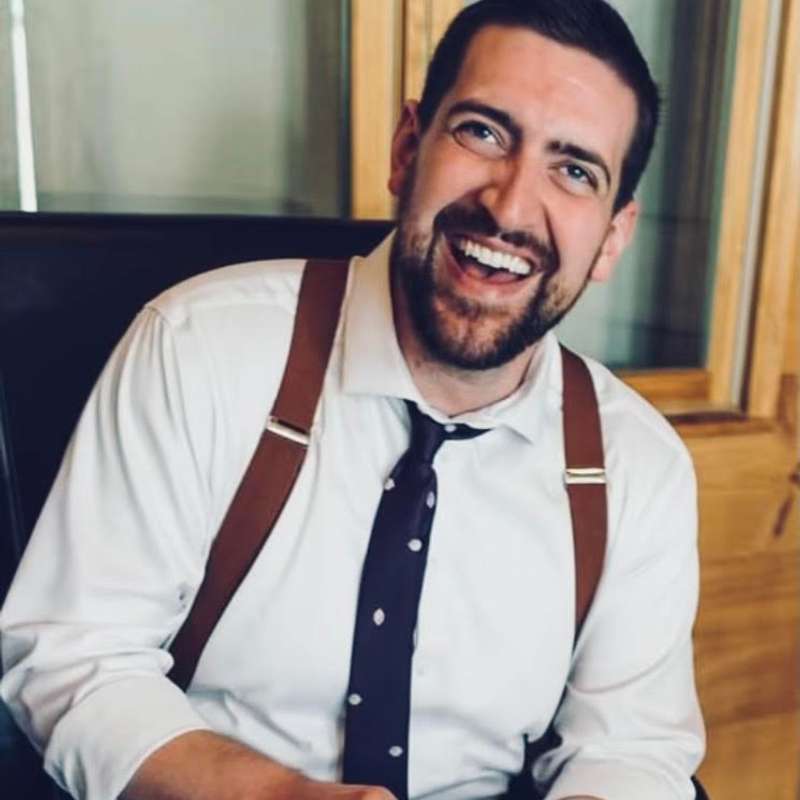
 Zack Carter
Ironically enough, before we even started this particular video, Mark was like, I've been feeling kinda anxious about this video today. I was like, dude, I've been feeling anxious about this video. It's kinda like Voldemort. You say the name and it appears. Like, we've been feeling great up until now that we're like, we're gonna talk about anxiety, and we, like, feel it. So, first off, anxiety is built into our brain. It's necessary for survival.
 Mark Odland
Welcome everyone to the Lion Counseling Podcast. I'm Mark Godland, founder of Lion Counseling, certified EMDR therapist.
Zack CarterAnd I'm Zach, counselor and coach. Good to see you, Zach. Hey, good to see you.
Mark OdlandOur mission is to help men break free, heal deep, and become the lions they were created to be. Today's topic is anxiety. That gnawing feeling in the pit of your stomach. If that's something you're going through, then this episode is for you. And in our conversation today, Zach will define what's good about it and where it gets us in trouble.
And he'll teach you research proven strategies that you can use to help to help you conquer it. I'll throw in some extra insights from a faith perspective and tell you what, if anything, you can do if the anxiety still doesn't go away. And make sure to hang around till the end because, Zach has a super practical tool that you can use to feel better fast in real time. Alright. Let's get into it.
If you're looking for help in your life, reach out to us at escapethecagenow.com or the link in the description box. And if you're getting value, please subscribe and hit the bell. It helps more guys, find this content. Alright, Zach. Anxiety. Anxiety. What is anxiety?
Zack CarterWell, ironically enough, before we even started this particular video, Mark was like, I've been feeling kinda anxious about this video today. I was like, dude, I've been feeling anxious about this video. It's kinda like Voldemort. You say the name and it appears. Like, we've been feeling great up until now, then we're like, we're gonna talk about anxiety, and we, like, feel it. So, first off, anxiety is built into our brain. It's necessary for survival.
Right? So what does it actually do? What are the components? It's essentially three components. One, it speeds us up. Your brainwaves, you go into what's called the high beta brainwave which is gonna be a brainwave that's moving really fast. Heart rate is gonna increase. Breathing is gonna be very quick. Your body is preparing to either fight, flee, have these responses. So first off, stress, this stuff speeds you up, right?
And it's a response to something bad happening into the future. So anxiety is focused on the future, right? So when like depression might be focused on the past or a current problem that you just can't figure out, right? So if depression is focused on the past, anxiety is focused on the future. So it speeds you up focusing on the future. And the last thing is it's focused on uncertainty. Okay? So in depression, bad things happen. And so you're sure of your future. I've got a bad future.
I've got a bad present. And it's hard to dissuade you from the belief that something, your life is gonna be terrible. Whereas anxiety is I have no idea what's going to happen in the future, but it's probably going to be something bad. Right? And so when me and Mark are working with guys that are struggling with anxiety, I mean those are the things that we're focusing on.
Can we slow you down? Can we talk to talk you through uncertainty? Is the future threats as dangerous as you think it's gonna be? Right. So in some situations, like, if if you're driving on the road and a car swerves in front of you, heart rate's gonna speed up, pupils will dilate. Right? You go into you go into a tunnel vision mode. That's that all or nothing thinking. I need to either get out of this way, get out of this car's way or I'm gonna die. Right?
You see a short term bad future. If I hit this car, I'm going to die. That's that short term future. But you're not sure what's going to happen. Right? So that whole body, that whole system, the whole thoughts, the whole emotions all work together to keep you surviving. So that's kind of my definition of anxiety that you speed up. It's a response to a future threat, so you're looking at the future, and uncertainty. That's that third thing. Mark, do you have any thoughts on that?
Mark OdlandNo. I I I appreciate that, Zach. I mean, I think so many people think of anxiety as purely negative when you're you're kind of talk I mean, I I think it's helpful to hear that it serves a function. It serves a purpose. And there are times in life where we do need to speed up a little bit.
We do need to be alert. We do need to face some kind of perceived threat. But if we're honest, right, sometimes, like like we talked about before our podcast, like that little gnawing feeling in the pit of your stomach or in your heart area, Sometimes it's not even easy to pinpoint where it's coming from. And I know at least for me, sometimes I don't even slow down long enough to even, like, name it, identify it. And then I just try to stay busy, push my way through it, and then there's this, like, low level under the surface that's just kinda gnawing at you, and you know it's not good for you.
It it's it's unnecessary. Right?
Zack CarterMhmm. %. Like and sometimes we don't even know that we are anxious. Like, we just get you know, especially as men, we just, like we we have, you know, two emotions. I feel mad. I feel fine. Like, those are the two things that we know. And so, like, oftentimes, fine is a little bit of stress in the background. You're like, I'm fine. It's a, like, % what you say is like, okay. Here's this thing, and I just kind of ignore
Mark OdlandYeah. Yeah. No. There there's there's something to that. Yeah. I think that that's a classic one when I'm doing couples therapy, and I'll ask, like, the guy, what are you feeling right now? And he'll be like, good. We're fine. And I'm like, that's not an emotion. Sorry, man. We're we're
Zack CarterI get.
Mark OdlandAngry, happy, sad, you know, something in that ballpark.
Zack CarterRight.
Mark OdlandBut I get what they're saying. Right? It's like the absence of perceived negative stuff is fine. Right?
Zack CarterWell and according to the 12 step programs, fine stands for f'd up, insecure, neurotic, and emotional. So if you're fine, that's that's actually what you
Mark Odlandwant. Okay. Yeah. Wow. Zach, you're being really judgmental today. I don't know if I can handle this.
Zack CarterI I this is what the 12 steps say, you know? I did the edited version. So Yeah. What are some what are some ways that we can maybe decrease this the this anxiety? So I have one that I'll start with, Mark. Is that a is that I
Mark Odlandlove it. Yeah. Bring it on.
Zack CarterThat. I it these are actually evidence based ways to decrease anxiety. So number one, we're looking at behavior. So back to your physiology, right? Your body is beginning to speed up, right?
And so if you understand that that's part of anxiety, you can hack the system and slow yourself down. So what are some things that you can do to actually help to slow down the system? Well, ironically exercise. So exercise actually speeds you up. But what it does is it burns off excess adrenaline, lower stress hormones, better sleep.
So that does actually slow the whole system down. It improves emotional regulation. And my favorite strategy that I give to clients is what's called box breathing. And so box breathing is a form of breathing meditation and super easy, super simple to do. You want to do it for at least three minutes, but you're going to inhale through your nose for four seconds, inflate that stomach, that diaphragm.
You're going to hold that breath for four seconds. You're going to exhale through pursed lips like that for four seconds. You're going to hold that for four seconds. You're going to put this on repeat for at least three minutes. That's what the study shows.
You want to do it for at least three minutes. And what happens is you slow down that central nervous system. You slow down those high beta brain waves. Anybody who I've taught to do this, they're like, I love it. This has really, really helped me.
The exception when people say I tried the box breathing, it didn't really help. I usually say, well, how long did you do it? Like, I don't know, a few seconds? You've got to do it at least three minutes to slow everything down, right? You need to be able to slow down that high beta brainwave, slow down the breathing, slow down the heart rate. Right? So then the so then your emotions and your thoughts say, oh, maybe I'm not in danger. So that's one way to hack the system. Any any thoughts?
Mark OdlandNo. That's that's good. I mean, now I'm realizing in this in real time that me climbing inside a cardboard box and breathing panic in a panicky way is not what you're supposed a good call. That's not box breathing. That's not box breathing, being in a box. No.
Zack CarterIt's not.
Mark OdlandNo. Yes.
Zack CarterOkay.
Mark OdlandThank you, Zed.
Zack CarterYes. So if you wanna do it wrong, do it Mark's way. If you wanna do it right, do it how I explain it.
Mark OdlandAnd then ironically, when I work with a lot of guys, a lot of the business owners that I work with. When we start asking the questions, like and this is gonna probably get one of your next maybe the cognitive stuff coming up later. Mhmm. It's like, kinda keep stripping away. Well, what if that happened? I lost my job. Well, then this would happen. Then what would happen? And eventually, ends up you're in a cardboard box under the bridge. There it is.
It's like that is not gonna happen, man. Like that is that is not gonna happen. But emotionally, their body's responding like it's about to. Mhmm. And because they haven't identified it, they're just living with this existential dread almost. Everything's gonna fall apart, and they just haven't put it in its proper place. Right?
Zack CarterSo Yeah. %. Well, that'll tee me off. We can definitely talk about thoughts then if you want to go to that. Yeah.
So what do we do about that? And you are essentially doing one of the strategies that I would encourage clients is that we challenge the thoughts. So what are a couple common things that the brain does when it's stressed out? So I've already given one example earlier in the podcast of the all or nothing thinking, right? So when you're in the car and you have a car that swerves in front of you, your brain goes into all or nothing thinking because that's a survival strategy.
I swerve the car or I die. Those are the two options, right? And so in a situation like that, all or nothing thinking benefits you. You want to think all or not. You don't want to think nuance. Nuance takes too long and you run into the car. All or nothing, you swerve out of the way. Right? But then you can have like a business setting where you say something like, I'm terrible at sales. If I started a business, I'm going to fail.
That's all or nothing thinking. It's either I'm going to be amazing or I'm going to fail. And oftentimes we fall into the middle. Oftentimes there's more nuance. And so if you ask yourself, so this is one of my favorite cognitive behavioral therapy tools is to ask yourself, is the thought 100% true? Is it 100% true? And oftentimes, I'll talk to clients. And they're like, no, it's not 100% true that I'm terrible at sales. I just got a sale yesterday. Right?
So okay. So if we do the evidence, if we collect the evidence you find out maybe it's not that you're terrible, maybe you're average. Maybe you're average at sales but you're improving. Right? That's a very different thought than I'm terrible at sales.
And if you are actually terrible, okay, let's figure out do you need to do a different job or how do we improve? Right? If you have to stay at that job, how do you improve? Right. Because you don't because being terrible at sales doesn't have to be a permanent thing. You can get better at things. Okay? So all or nothing thinking, second second one is catastrophizing. So you you referenced this that like, I'm gonna get fired. I'm gonna lose the house.
I'm going to end up in a box was kind of the the example you gave. That's what we call catastrophizing. For some people that does happen. It happens But for a lot of people, that's not the case. Right? And so catastrophizing is just immediately going to the worst possible outcome. Oh no, the boss called me in. I'm getting fired, right? It's not like, oh yeah, he just needed to ask me a question. Or yeah, maybe he had to correct me on something, but I'm not getting fired, right?
And so a strategy that I use with a lot of clients is playing out three scenarios, okay? Let's talk about the worst case. What is actually the worst case scenario as you walk into that boss's room? Okay, maybe it is getting fired. But oftentimes, it's not. Oftentimes, it's, yeah, he's probably going to tell me I'm not doing this right. And then he's going say, all right, go change it. Right? Oftentimes, that is the worst case scenario. Right.
We ask, what's the best case scenario? Maybe he wants to promote you. Maybe he wants to give you more responsibilities. What's most likely? Most likely it might be something more like, hey, you know, she calls me in to tell me he needs me to get something done. I get it done. And then that's the end of it. Right? So play that out in your head. If you commonly do that catastrophizing where you look at the worst possible scenario, play it out.
Okay. What is the like honestly, the worst case scenario? Like, is the best case scenario, and what's most likely? Where where in between? Any thoughts on that?
Mark OdlandYeah. Yeah. No. I you know, I'm thinking too how I mean, it's interesting on this journey that we're on. You know, we work with all kinds of guys. A lot of them are pretty high functioning, pretty successful. Different backgrounds, different belief systems. Right? So some guys are not religious at all. You know?
Some have major doubts or atheist or agnostic, but a lot of our clients do come from that Christian perspective and and wanna incorporate that into our coaching or into our into our counseling or therapy sessions. And this this tool that you're mentioning comes in really handy if you can tap into that kind of reservoir of faith for some of these guys. Right? So, you know, I've worked with guys who are struggling with chronic illness. Right?
And it's uncertainty about whether or not it's gonna be terminal. Right? It's a certain kind of cancer. They're trying to treat it early. You know, everything seems like it's gonna be okay, but in the back of their mind, they're like, if I'm honest, like, I don't know.
Bad stuff happens even if you've got a strong faith that we live in this broken world and our bodies can fail us. Right? And so to be able to, from that faith perspective, go to the worst case scenario and say, you know what? We're gonna hope and pray and believe that that's not gonna happen. And if it does, then what? And for that person who's coming from that place of faith, it's like, okay. And then what is, oh, that's not the end. That's not the end. I I have hope. Right?
I I have hope that this life isn't all there is and that god's gonna be there to help take care of my my family. And and, again, you know, everyone has a different belief system and kind of the truths that they can pull from in that situation might vary from from guy to guy. But I just wanted to throw that in there that, like, sometimes sometimes the worst case is legit and real and concerning, but even that doesn't have to be the end of the story, right, depending on where someone's coming from. Mhmm.
Zack Carter%. Yeah. %. And I I think a lot of guys find a lot of comfort in going to their faith when they reach a situation where they can't control. Right? And some some some of the things that we do with clients is acceptance. Right? So sometimes it's we can change. And then if you can't change a situation, how do we accept it? How do we deal with that?
Which leads us into our third strategy. So we have behavioral strategies, we have our thought strategy, emotional strategies. If you heard me say it once, you've heard me say it a thousand times. We got to name it to tame it. We have to name the things that we're feeling.
So by just stating, if you're feeling scared, if you're feeling anxious, if you're feeling overwhelmed, if you're like, I'm not saying that to nobody. Okay, that's fine. Just say to yourself then. However, if you do have the ability to talk to someone about it. Right.
You know, that's that's Mark and I's job. What we do is we have a belief that if someone can sit with us and name the things that they're going through, even if we don't have practical solutions, oftentimes it makes it this much better. Right? It may not make it 100% better, but it takes the edge off just a little bit just to talk to someone. So even if it's not with a counselor, talking to a spouse, talking to a friend, talking to a family member, these things can be very helpful to kind of let out some of that steam, let out some of that build up, Yeah.
Right? So bottled up emotions, they often intensify. Right? So first off, either say it to yourself or find someone and share what you're going through. Don't just say I'm fine. Right? Hey, I'm actually kind of overwhelmed right now. I'm actually honestly, I'm nervous. I'm kind of scared about this thing happening. I'm kind of anxious.
And you'll probably find most people won't judge you. Most people will be like, yeah, That makes complete sense that these things are falling apart in your life and you feel a little overwhelmed.
Mark OdlandYeah. Yeah. That's that's huge. And I think as guys, you know, in our places of work, for a lot of a lot of guys we work with, it's it's not a place where you can be like, hey. I'm feeling really anxious today.
And, like, your coworkers are like, I mean, you could get ripped to shreds depending on the environment. Right? And and so, I mean, hopefully, you had a supportive work environment where you can be more real. But for a lot of guys, you know, they're not great at sharing how they're doing at work. They maybe haven't invested in maintaining a lot of their friendships.
Mhmm. And and so it all falls on their wife. It's like and that's even assuming that the relationship is in a decent place where they can be real with that person, right, with their wife. And and so I I really like what you're saying about kinda spreading out the emotional energy. Right?
Mhmm. I'll talk about that with clients as well. Like, it's it's really important to have a pastor, have a couple buddies, you know, yeah, and and and your wife. And and, yeah, a counselor or a coach, that can be a really powerful tool, to not just, you know, triage if you feel like you're in crisis. Sometimes that's what it takes for us to get the help we need, unfortunately.
But it can also be a tool to just make a good life better, you know, to say, I I don't wanna settle for status quo. I want to identify these negative beliefs, these patterns that have me stuck, that keep me from reaching my full potential. And and that's exciting work for us to do too is to just I mean, before our session today, Zach, I know we were talking about you just celebrating, you know, celebrating the clients that get to the end of their course of counseling. And they're like, I am different than when I came in. And and to your credit, you're like, man, they're they're the ones doing the hard work, and that's that's the truth.
But but we are so privileged to be in a position where we can walk with them and and be kind of that supportive guide. And so, yeah, I think that's I think it's really powerful to have that space to talk through, and and sometimes we've got a good nugget of truth or advice. But, man, half the time, these guys, deep down, they know the answers. We just it seemed just needed to draw draw it out of them. Right?
And in the act of talking out loud in in a space where you feel supported and encouraged and have some accountability, it's like the light bulb just goes off. You get to see it in their eyes. Like, man, I know I I I I I know this. I've I thought it many, many times, but just saying it out loud to you, Zach, or saying it out loud to you, Mark. Now it's, like, really clicking.
I'm like, yeah. That's how it works. That's we're we're wired to be in relationship. We're wired to support each other. So yeah. So I think it's great. I think it's absolutely amazing that you're taking guys through that process and and challenging them within this framework of that supportive environment.
Zack CarterYeah. And I I I to your point, I loved you bringing more nuance into it because sometimes it's not as simple as like just going and talking to somebody. And so if you find that you don't have friends to talk to, you don't have a romantic partner, You can't talk to your coworkers because sometimes it's not appropriate. Sometimes you're in the workplace and it's not appropriate to talk to your coworkers about, I'm feeling really lonely. Like, okay.
That's probably a lot of times that might not be appropriate. Right? And so what you're saying about having to find those people, and that that does take work, that is difficult, but having those people really can help decrease that anxiety, decrease that stress for sure.
Mark OdlandWell, and and I just really appreciate it as, know, we've launched this podcast, Zach. Like, I know you've really picked some really powerful topics that are really resonating with a lot of guys. And and so if if if you're listening right now and and you have another topic that you think would be helpful to for Zach and I to talk about, just throw it in the comments. We right now, we're at a place that we're growing fast, but, like, we actually try to read every comment that comes in and respond if we can and take it seriously. So if if you got ideas, throw us throw it, you know, throw it at us and and we'll see
Zack Carterwhat we can do. Yeah. Absolutely. Yeah. And we we already so many people have commented and so many so many stories, so many people are hurting. And so, yeah, we we've been really finding lot of pleasure out of talking to you guys and helping you guys, everybody that's been commenting. So thanks for everybody who's already been doing that.
Mark OdlandYeah. Definitely. Well, I
Zack Cartercan I can give us, you know, a takeaway? And so if you're listening to this and you're like, what can I do? Honestly, the place I start a lot of clients on is box breathing. And so if you're like, man, I'm I'm anxious. I'm stressed. Alright. Set yourself a goal of right now, as the video ends, set a timer for three minutes. Breathe in four seconds. Hold four seconds. Breathe out four seconds.
Hold four seconds. So you do that for three minutes. Pay attention to how you feel before. Pay attention to how you feel after. You're gonna notice a drop in anxiety. You're gonna notice a drop in feeling stressed. It's actually a lot of fun on my end when I do it with clients in the meetings because they look kinda high when we're done.
They're like like, and I do too because I do it with them. It's always it's always funny to watch just the expression of the person in front of me as as they they they look amazing. They look like they're having a good time. And so that's where I would start. Right? So we gave you a lot of different suggestions, but that's a really good place to start is go practice box breathing for three minutes. If you enjoy it, okay. Set a goal. Do box breathing three times a week for three minutes. Right?
And Yeah. Just start to build that pattern into your life.
Mark OdlandThat's incredible. I mean, I think sometimes we forget that some of the simplest tools, some of the simplest strategies can actually make a big difference. And breathing is one of those things because it has a direct impact on our physiology, on our on our nervous system. And I think combining that physicality with some of these thought strategies that that you mentioned, Zach, I think are are really practical takeaways that that guys can use right away. And they if they just put one into practice, like the box breathing, like you're saying, like, it can make a difference.
Right? And, I mean, I don't know what you if a guy's sitting at a desk at work, can he do box breathing without someone noticing, or does he should he kinda, like, sneak away to his car? Or what do think?
Zack CarterBoth. Like so, yeah, that's a great question. Yeah. So, like, on your lunch, do it. Like so, like, lunch is, like, right in the middle of the day.
So if the day has already been stressful, eat your lunch, go out to your car for five minutes, do some box breathing. You could do it at the desk with your eyes open, you know, especially if people aren't looking at you. I don't know if I recommend it or not. I have to think about it more, but I've had some clients say Yeah. Oh, I do it while I'm driving. Okay. Maybe. Just be really, really safe. Uh-huh.
But, yeah, it's it's, you know, it and even if you can't do the full three minutes, you know, just doing some deep breaths can really just help slow down. But, yeah, that's a that's a great question, Mark.
Mark OdlandYeah. No. I I I appreciate that. And and, you know, just to throw out there too, if if you're struggling with anxiety and you have the guts to try these self help techniques and then you have the guts to try to get a coach or a counselor to walk through it and you're still really, really struggling with the anxiety, well, then as as counselors and a therapist, then we say, okay. What else is going on?
We're using all these good strategies. And in those cases, and this comes into more my specialty, would be could there be some unhealed trauma that just you keep butting up against, and it's keeping the truth from kinda getting from the head to the heart and sticking.
Zack CarterYep.
Mark OdlandAnd in those cases, EMDR therapy can be a powerful transition. Again, we've talked about this either, like, after or before CBT strategies. So there'll be another episode on that, I'm sure. We'll we'll get into that at a later time. But, man, if this episode helped you and just and wanna check out the one right before, make sure to subscribe, hit that bell so you never miss out.
And as always, if you're looking for help, reach out to us at escape the cage now dot com or in the link in the description box. And before you go, if you don't mind, please drop your thoughts down below in the comments. We'd love to hear from you. And this is a very cheesy chat GBT idea I got, but it but it suggested to me, Zach, that if there are loyal listeners who have, like, listened through the whole thing to the very end and they haven't tuned out in the last minute because I'm talking so much, they should write beast mode. Beast mode in the comments because that will be like, man, they're still here.
They're one of the the tried and true, the loyal the loyal followers, the lions. So take that
Zack Carterone. Love it. Right in beast mode. I'm gonna go do it now. Alright.
Mark OdlandWell, we we we might be the only two
Zack Carterin beast mode. Okay. I'm feeling it. I'm feeling it right now.
Mark OdlandAlright. Good stuff. Well, as always, Zach, good to see you.
Zack CarterYou too. Bye, everybody.