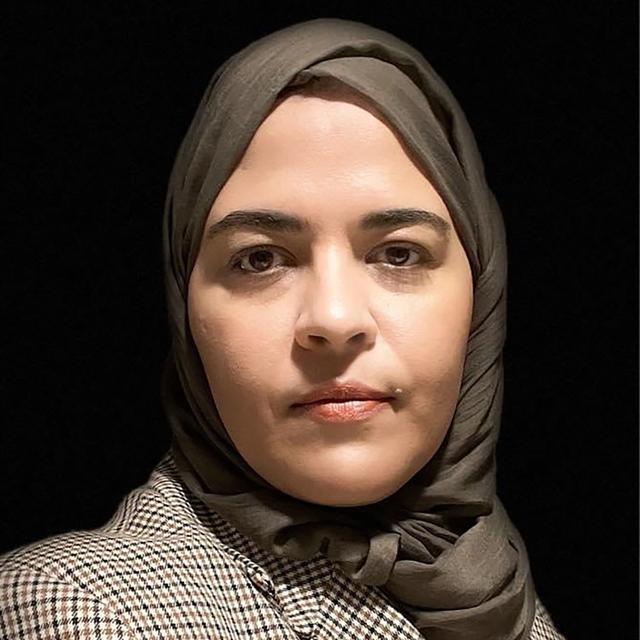



I'm Rabbi Ami Hirsch of the Stephen Wise Free Synagogue in New York, and you're listening to In These Times. As much as each of us would like to think we would always stand up for what is right, it's truly rare to find individuals who refuse to compromise on their morals, who do not fold even under social, financial, or familial pressure. Joining me today is one of those precious people.
A writer, analyst, and activist, Dalia Ziada was born in Cairo, one of three children of a school teacher and a military officer. She studied English literature in Egypt and earned her master's in international relations from Tufts University. For her central role initiating Egypt's 2011 revolution, CNN called Dalia one of the eight agents of change to watch in the Arab uprisings. And Newsweek recognized her as one of the 150 most influential women in the world.
In October. After Hamas terrorists infiltrated into Israel, committing the worst atrocities imaginable. And despite the anti semitism she'd grown up with all her life. Dalia dared to articulate support for Israel and its right to respond, and she paid a heavy price. Forced to flee Egypt, she's speaking with me now from an undisclosed location somewhere in the United States. Dalia Ziada, it's such an honor, truly, to have you be part of the podcast, and welcome to In These Times.
Thank you so much, Rabbi Gersh. The honor is absolutely mine. I'm very happy, uh, to appear with you. First of all, tell me, uh, are you still in hiding? And tell us, uh, anything that you can about, about your circumstances now. So actually, yes, at the beginning I was in hiding. I had to leave Egypt in November. I mean, this was, uh, immediately after I made an interview with, uh, the Institute of National Security Studies in Tel Aviv University.
It was a Zoom interview, actually, and I was commenting on what's going on in Gaza, the war between Israel and Hamas. And I said what I believe in, that Israel is leading a war on behalf of everyone in the region against terrorism, if not on behalf of the entire world. And I said that if Arab countries are thinking straight, they should be backing Israel rather than backing Hamas.
Unfortunately, after that, it seems that this interview gave a license to the people who were angry against me for a while because of my statements in support of Israel, especially after the October 7 massacre, when I went out and I spoke up about what happened.
On that day, I, like, took on myself the responsibility to tell my fellow Arabs and Muslims and Egyptians about what happened on October 7th in contradiction to the lies that have been spread by the Egyptian media, the Arab media about that day. So, this all together ignited a wave of hatred towards me, a huge backlash came from the radical Islamists who actually took extreme measures beyond the act of only sending death threats.
They even went to my mother's house looking for me and they wanted to punish me for, for being, for not being a good Muslim, for daring to defend the Jewish people. In their eyes this means I'm not a good Muslim and also the other side of the attack which was It was really devastating to me, and I didn't expect it at all. I didn't see it coming at all.
Came from the Egyptian state in the form of state sponsored media campaign against me that accused me of being a threat to Egypt's national security, of being a spy to the Israeli Mossad, and also legal claims filed by lawyers who have. indirect affiliations with the state, accusing me of committing high treason and other crimes that are punishable by either death sentence or in best case scenario life sentence. So I had to leave Egypt with a broken heart.
Cairo in particular is the place where I was born and lived my whole life and it, it was really breaking my heart to leave like this and without any hope of going back simply because I dared to speak the truth to the public. You fled Egypt. You felt that your life was threatened. If you were to have stayed in Egypt, you might have been imprisoned or even worse. Exactly.
I had, like, if I remained in Egypt, I would either face being in prison right now because of the four legal claims filed against me, or being killed by some fanatic Islamist in the street who would think that he's doing this to please God. Are you able to tell us where in the world you are? I don't want you to reveal anything that is dangerous for you. Right now I'm in the United States in, uh Like, one of the main cities in the United States.
Great people who are surrounding me, friends from all backgrounds, literally, who are, some of them I knew from before, some of them are new friends, and they are doing everything they can to make sure that I am protected, I am well. And that I will get over this crisis. And they are, by the way, the people whom I call the good people. They are liberals, open minded. Uh, they know how to disagree on certain things like political opinions.
And so while at the same time not taking it to the level of hatred. Do you feel, what do you feel? Do you feel threatened? Do you feel sad? I imagine you have family in Egypt. I don't know whether, are you in touch with them? What, what, what are your feelings now? My feeling is like.
You know, my father always used to say to me, my late father, actually, he died a while ago, and, uh, I remember when I, when I always was angry because of how people treated me, or how my colleagues at school were not nice to me, or so, he always said to me, Always disregard the circumstances around you, just focus on who you can be. He always said to me, be the flower in the trash. And, uh, this has remained with me forever.
Actually, I remember every time I feel the need that I have to step up and do something, even if the circumstances around me would not allow this. So thinking about this right now is really what's comforting me, is what's comforting my sense of homesickness, because honestly, I'm terribly homesick. I tell you something, you may be laughing at me when I say this, but actually sometimes I open Google Earth. Just to virtually walk in Cairo street. So it's, it shows you like how homesick I am.
But every time I remember that I did this for a good cause, for a good reason. For, for standing up for people who were assaulted for no good reason at all. Like I, I, when I remember that, I feel really proud of what I did. And if time goes back and I knew that I will be facing all that. persecution I'm facing right now because I said the truth, I think I would say it again.
I would not hesitate for a moment to stand up for the rights of the women, the children, and the innocent Israeli civilians who were assaulted on October 7th. And up till now, many bad people in the world are refusing to, to, to, to help them get their rights. Or to help them get justice simply because they are Jewish. So let me ask you to detail that a little more. Do you remember where you were when you first heard the news of October 7th? Was it on October 7th? It is.
Yeah, actually I was like a few days before that. I was in the United States, uh in Washington Speaking at the Atlantic Council.
It's a big think tank in Washington, and I was speaking about the the new dynamics of relationships in the Eastern Mediterranean and me and everyone on my panel, I had like someone sitting next to my right from Israel and someone to my left from Turkey and we all were very optimistic about how the Eastern Mediterranean is changing, the Middle East is changing, and we are watching peace happening. I returned it back to Egypt on October 6th.
The next morning, I woke up to the news of this massacre, this horrible massacre, but unfortunately it was not reported in our media as a massacre, as, as a terrorist attack. It was reported as a clash between Israeli soldiers and Hamas militants. That's all they have said. And of course, if you live in the region, you will know this is. like news that we keep hearing every couple of weeks. So it was not like big news to me.
But a few days later, I was invited to, um, a video conference that was organized by the ministry of foreign affairs and the ministry of defense in Israel. And they went very clever actually, because first of all, they made it in Arabic and they invited Arab journalists, writers, activists from all over the region.
And the goal was to show us what happened on October 7th, the truth about what happened on October 7th, because Nothing was said about it in the Arab media, and it was actually twisted the other way by making it appear like Israel woke up one day and decided just to kill some Palestinians, you know? It's not the other way around. So the videos I saw were, were so horrific, were so horrific.
It's the unthinkable, the unimaginable, the way Hamas militants assaulted innocent civilians that day in Israel. Still, it was. So shocking, I can't even describe to you. They were not just killing randomly or so, they were torturing people before killing them. You had no doubt that what you were hearing was true, right? Because even to this day, there are people who are denying the evidence that's very stark. But when you heard it, you had no doubt that you were witnessing the truth.
Absolutely. Because it was not just hearing, we saw the videos, they showed us the videos collected from the houses, the kibbutzim, the streets, from everywhere, like from, even from the forms of the Hamas militants, there was evidence, like I saw this with my own eyes. Actually, I felt very angry after this video conference, not only because of the brutality of what I've seen, but also for the fact that Arab media has been lying.
And they only lied because these people are Israelis or Jewish, you know, not if, if this happened in any other country in the world, I think the reporting would have been more fear than this. So. At that moment, actually, I decided to be the flower in the trash, as my father has always been saying. And I said, okay, someone has to speak up.
Someone has to tell the truth to the Arabs who do not know the truth and to the Muslims who are thinking that the Israelis are leading a war on the Palestinians. So I went to my social media platforms, which are I have a very good following there. So I said, okay, this is a good way to speak the truth, to tell what happened on that day. And I did. And unfortunately after that, I received a horrible backlash, first on social media and then in real life.
From who did you receive, from fellow Egyptians, from Islamists, from people around the world? It started from Islamists first, like radical Islamists, we call them the Salafists in Egypt. They are on the very far right of the Islamist spectrum. These were Egyptians who were responding or people just From everywhere. From everywhere. from East Asia, you know, from everywhere, but, but they were maybe Islamists.
But then what was really shocking for me after that is how my neighbors, my relatives, even like ordinary Egyptians who I'm 100 percent sure are not radical or anything. They are just normal people started to attack me too. And they even started to accuse me of not being faithful to Egypt enough, not being a good Muslim, things like that. So it was, it was really shocking.
And then in a matter of only a few days, things escalated to find out that the Egyptian state itself has joined the public in this rhetoric, and they decided to use me as a scapegoat. to prevent or to defend themselves against being attacked in the same way by the public outrage. Because, you know, the mainstream in Egypt and most of the Arab countries were very supportive to Hamas, uh, or are very supportive to Hamas. Did it, it, it must have surprised you a little bit, at least.
I, I assume that you had expected some criticism from some people, but the extent of it, the level of it, and even from people who, as, as you said, were neighbors and friends and normal people, not radical people. Did that surprise you? Oh, absolutely. Especially that this, like this backlash, this reaction from the general public in the Arab world to the October 7 massacre and the wars that happened after that.
This reaction was It's really unexpected at this moment of our history for several reasons. We have been seeing these initiatives happening between different countries. I call it the peace momentum, the reconciliation momentum that was happening in the Middle East for a while, for about five years or seven years now. We are not only seeing normalization initiatives between Israel and Arab countries. It's like the case with some Arab Gulf countries, Morocco, and so on.
But also we've started to see that Arab countries and Eastern Mediterranean countries that have always been in conflict with each other, they started to outreach to each other and make rapprochement and reconciliation initiatives and so on. Take, for example, the case of Turkey and Egypt, Turkey and Israel, Israel and Lebanon. And the list goes on, even Arab Gulf countries like Qatar, UAE, Saudi Arabia, the list goes on.
So we thought for a moment that, okay, we are living the momentum that will prevent Iran and its proxies in the region. From doing something as tragic as what happened on October 7 and actually as someone who's who's lived in the region and has been observing this change very closely, I thought that. It's hard now for the general public in Arab countries to go back to the moment when they were deceived by the rhetoric about Hamas being the good guys and Israel being the bad guys.
Because we have seen with our own eyes, especially in countries like Egypt, for example, that Hamas. We're the ones who attacked our security when we were weak during the Arab Spring years. It was not Israel. On the contrary, Israel helped Egypt get rid of the terrorism in Sinai and so on. So for a moment, I believe that my generation was aware that, I mean, the generations that went through the Arab Spring has grown aware that. Israel is not the enemy and Hamas is a real enemy.
Hamas and all the terrorist organizations like Hamas, the Houthis, Hezbollah, and so on are the real enemy. So, believe me, I thought like I'm doing the things that the people will accept and also the Egyptian state will accept because the Egyptian state has been in war against, uh, terrorism in the region also for a while, so.
So, this sudden shift of abandoning Israel and siding with Hamas for pure, pure domestic political and economic reasons, I know that happened on the side of Egypt, Jordan, and even some Gulf countries who appear to be like the most liberal in the past years is very alarming. And, and. Tells a lot about the future of the region. So help us understand, what do you think are the reasons for the shift, as you said, very early on after October 7th? I've been to Egypt twice.
I think I must have led groups of maybe 50 or 60 rabbis, maybe even more, maybe up to 80 or 100 rabbis to Egypt on two different occasions. On one occasion, we met with the former president Mubarak, but we also had a chance to walk through the streets. Um, And I don't want to say that they loved Israelis, I don't want to say that, but, you know, we were American Jews and our impression was that the Egyptians are such hospitable people. They're so kind and so warm.
And this was, of course, after the peace accords were signed between Israel and Egypt. They, they had complicated feelings about Israelis, but we didn't, as American Jews and as spiritual leaders, as rabbis, we didn't encounter any kind of intense feelings of hostility towards us. To the contrary, we found the Egyptians delightful people. What do you think is going on? Why would the Egyptian government act the way they would and why are the Egyptian people still hostile to Israel?
And does that hostility also extend to Jews? Thank you for speaking like this about Egypt and the Egyptian people. And also let me add one of the great signs of progress we we've started to see in Egypt in the past five years or so is that we started to see changes in the text book in, uh, regarding how they are talking about. the Jews, about Israel. And we started also to see the Egyptian government like taking initiatives to restore some of the synagogues in Cairo and Alexandria.
But all of a sudden, I think what Hamas did on October 7th, because it happened at a time when the general public in Arab countries and in Egypt. In particular, are suffering from the consequences of dictatorial rule, which is influencing their day to day lives, which is creating a state of public outrage against the regimes.
I would say autocratic regimes, not religious regimes, you know, so what happens that created a momentum for the Islamist groups in the region that the current autocratic regimes in Egypt and other countries has been fighting for a while and even removing them from power like the case of the Muslim Brotherhood in Egypt. So what Hamas did, offered the juxtaposition to these autocratic regimes, who do not mind cooperating with Israel in economy, security, and so.
So they said, they offered like a new picture, like, look, we are standing for What they call quote unquote justice, we is the justice of the power for the Palestinian people. And so, uh, we are fighting against, we are causing problems to Israel. We are not cooperating with Israel. This somehow resonated. With what the general public believes in, and unfortunately, it's not a matter of like, it didn't happen overnight, of course, it took years and years for this to happen.
Years, decades, actually took decades for this to happen. Let me give you one, one example, Egypt and Israel had a war in 1973. And they had a peace treaty in 1979, despite this fact, despite that we have a peace treaty with Israel up till today, there are in the Arabic textbooks of primary schools, there is a lesson, a complete lesson that takes one week about the October war. And there is a museum.
of the October War in Cairo that students, after studying this lesson in school, they go and visit. And unfortunately, in this museum, you will see like Israel highlighted as the enemy and our historical enemy and that it will always remain the enemy. Every year we celebrate the anniversary of the October War or the 1973 war with Israel. And never ever there is a celebration of the peace treaty with Israel. It's not even mentioned at all. What's the reason for that?
Because Egypt and Israel do cooperate very strongly behind the scenes. Even during this Gaza crisis, the peace treaty has been good for Egypt in every way, at least in terms of domestic resources, support from the West, and as some kind of acceptance, if not integration. with international bodies. And was an offshoot of the Muslim Brotherhood, which is a mortal enemy of the Arab states in particular of the Egyptian government. Why would they foment animosity towards Israel?
Over many decades, and in particular, since October 7th, it's almost as if Israel is helping the Egyptian government to do their dirty work for them. Unfortunately, that's true. That's true. So the issue about why, um, this relationship between Egypt and Israel is not, uh, getting on the right track yet, despite all the cooperation between the two states in the past few years and the peace treaties that has been in place for over 40 years.
The fact that this relationship or this Israel Arab conflict in general took several layers beyond or above its actual core. The core of the conflict was mainly an Israeli Palestinian conflict over a piece of land. It started like this, but then because of domestic politics in Arab countries, like for example, at the time when Egypt has the free officers revolution in the early 1950s and then the rise of a new republican regime, new military led republican regime.
We started to see that they needed to create an enemy, an enemy that will, will unite or will help create fear that unites all Arab countries around Gamal Abdel Nasser, who was the leader or the president of Egypt at that time. So Who is the easiest enemy to create in the region? It was Israel at that time. And all of a sudden, the conflict that was supposed to be only an Israeli Palestinian conflict has become an Israeli Arab conflict.
And then it took a whole new dimension and a whole new complication. Above that, in the 1918 and 1980 and 1990. Buried. There was a very strong rise of the Islamist rhetoric in Egypt and in Jordan also, by the way. So at that time, the Islamist rhetoric was very strong that important sheikhs and imams would come on TV and speak like superstars, you know, they are on TV all the time and This is how I think the regime at that time was thinking this is how they could control the people.
So they, they exaggerated in using this religious rhetoric and unfortunately part of it was taking the Arab Israeli conflict into a new level of complication, which has become a Muslim Jewish conflict. And these Imams started to dig deep into religious texts, religious holy texts of Islam, to search for texts that are demonizing the Jewish people and demonizing the concept of Israel among the Arabs and portraying Israel as being a foreign body that is forced.
All the region and that we all Muslims will be God when all the Jewish people are eliminated or all Arabs will be God when all the Israel, when Israel is eliminated. And they started to promote that. So of course, unfortunately, over years, it has complicated the, the very simple conflict that was happening between Israel and Palestinians over a piece of land, which by the way, It would have been very much easier to negotiate if it was only kept to this limit.
However, it has now become a Muslim Jewish conflict and an Arab Israel conflict. So that's why every time this conflict is being renewed or came to the front once again, it, it comes with a lot of complications. It's not as simple as we are looking from outside. So you're in the United States. You've, you've been here now for a couple of months, several months.
I don't know if you've had a chance to visit American campuses or you're observing what's happening on American campuses and on the streets of some of our cities. We were taken aback. We in the Jewish community were taken aback by the ferocity of protests and animosity and anti Semitism that erupted in the aftermath of October 7th. And it shook some of our alliances because most American Jews are liberals. They define themselves as liberals.
And we were part of these great institutions of Western civilization. The media, the universities, higher education, women's organizations, civil rights organizations. These were all part of how American Jews saw their destiny in, in the United States. And we were not only part of them, in some cases, we helped to build these institutions and led these institutions. So if you take a look at American campuses nowadays and, and the extent of Not only the anti Zionism, but the fervor for Hamas.
How do you explain that, and what do you think American Students and people who define themselves as on the left of the political spectrum, what do you think they're missing? What do you know that they don't know? Actually, yes, I, I visited several, uh, university campuses since I came here, either to speak about the situation in the Middle East or trying to figure out for myself what's happening. Also, I studied in an American university in Boston myself.
So, I can see the difference, I can see the change, the shift that's now happening, and I can sense how shocking it is. I have a theory that explains why this happens. I believe that anti Semitism in American universities has existed for a while, for at least a decade or so. We have seen, for example, the BDS campaigns against Israel, a lot of negative rhetoric about Israel, many misinformation about the reality in the Middle East and so on. But it was limited to an extent.
It was limited to the political extent. It did not go beyond that. Until, I believe, in the past few years after, you know, the Arab Spring experience and the fight against Islamists in the Middle East and so on, these Islamist organizations like the Muslim Brotherhood and its brother organizations, their members had to flee the Arab countries because they were fighting against them. So where did they go? They went to Europe and to the United States.
And they started to abuse the open society culture in these countries. To promote their perception or their rhetoric about the Middle East, about the politics of the Middle East, about Islam, about the Israel Palestinian conflict, and so on.
So, we started to see them also, also the fact that they exist in universities, they exist also in several decision making bureaus right now in the United States, and they also thanks to the social media and follow ons, and so So these Islamists somehow were able to infiltrate into the groups of young people all over the United States, not only in universities, but also in the leftist movement, for example, that's now happening in or have been happening in the United States for a while.
They were able, these Islamists were able to infiltrate into these groups under the guise that there are a minority as well, and that they represent the Muslim minority. And they started To promote their twisted version of the truth, to promote their lies to these young people.
So today, for example, one of the things that make me laugh, although they are very shocking actually, is some of the slogans that some of the young Americans here are saying when they are protesting against Israel or protesting in favor of Hamas or so. Some of them, for example, label Hamas as freedom fighters. Not as terrorist organizations, all of them called the Israelis as white colonialists.
And I'm sure the people who said that know nothing, nothing about the Middle East because if they know, they will realize that more than 60 percent of the Jewish people in Israel today were originally from Arab countries. And there are also Arab Israelis and there are even African Israelis. So saying that, you know, Israel is a white colonialist, uh, something was really funny to me.
And even what was even more shocking to me is that I saw some women and some people from the LGBT community in American universities. In Washington, who are carrying slogans in support of Hamas? And I was like, saying to myself, do they understand that Hamas would kill them in a heartbeat simply because they are from the LGBT community or because they are women? Yeah. Do they understand this? Of course not. They don't.
So I think they are somehow influenced by this Islamist rhetoric that they're Beers are saying to them, Islamist beers are saying to them, I mean, and also this long anti Semitic movement in American universities that has been going on for a while. So it's really sobering because these people are the most educated. The most intelligent, the most well read, and what you're describing is a level of ignorance that is bottomless.
But nonetheless, it's not that they're not capable of investigating the truth and understanding the truth. I mean, it, it, it, it's obvious to even casual observers. That any person from the gay and lesbian community, from the LGBT community to, or liberal Christians who would try to assert themselves in Gaza would be persecuted. And if they wouldn't be able to be stopped, they would be killed.
So I think, I think what you're implying is that there's, there's a real moral crisis That's affecting the key institutions of Western life. What's at stake for Western civilization in this struggle that has become so intense in the aftermath of October 7th?
Oh, there is a lot at stake for Western civilizations and Western countries if they continue to let the This, uh, twisted rhetoric about the Israeli Palestinian conflict going on, if they continue to let this anti Semitic movement to win the hearts and minds of young people in American universities and European universities. And so, because actually, if you go back to the textiles of the Muslim Brotherhood, the papers they were writing about their plans for their future.
You will see texts written about sabotaging the West from within, and their campaign was mainly about let's travel to these countries, live there, create second and third generations there, and let these generations lead the public opinion and thus sabotage the Western civilization and replace it with an Islamist way of ruling and way of living. So, It's very dangerous. We have to, and by the way, this is not papers that I discovered myself or they are randomly on the internet.
These came as a result of FBI investigations that took years and years to investigate into the Muslim communities here in the United States and how they separated between. extremists, radical Islamists, and moderate Muslims. Unfortunately, the moderate Muslims, although they are the majority of the Muslims who live worldwide, they are not organized. Moderate Muslims are more liberal, more open minded, but they are not organized as well as the radical Muslims, Islamists are.
Because the radical Islamists have a political motivation moving them. But for the moderate Muslims, the issue is mostly about individual relationship with God and like we should, we don't feel like we need to impose our religious beliefs on other people. It's not the case for the radical Islamists. They are very well organized. They know what they're doing. They have long term plans that goes for decades and they are determined to make it happen.
And we are seeing the fruit of this now of what's happening in Western countries in reaction to a simple conflict that does not need much investigation to understand. It's a terrorist organization attacked a number of civilians in their homes on a holiday morning. What do you think, like, Israel would do?
What Israel did, the reaction of Israel, fighting against Hamas and chasing Hamas terrorists, is the reaction that any country in the world would do if its citizens are attacked in a similar way. But unfortunately, this is what's not what's being told here. This is what the people are standing for. They just ignore the fact that there are women who have, who have been raped on that day, children who has been slaughtered in a very, very brutal way on that day.
And innocent civilians who were killed on that day or kidnapped and so on. And they are just focusing, Oh, look, Israel is coming. killing the women and children in Gaza and they are killing the Palestinians. Okay. But who is really killing the Palestinians? It's not Israel. It's Hamas. Who started this war? Who initiated this war? Israel did not want to go to war, honestly. And we know that Israel did not choose this war. It's Hamas who did this war. And if Israel did not react in this way.
There, there would have been a problem, actually. And the fact that the women and children are dying in Gaza now, it's not the fault of Israel. It's the fault of Hamas, who are hiding, Hamas militants, who are hiding in the tunnels and letting the women and children, the Palestinian women and children, above the ground, facing the horrors of war alone, and even being used as human shields.
For the Hamas militants, if you, if you see, for example, how Hamas leaders, uh, who are now living in Qatar, Turkey, and other countries, they come on Al Jazeera TV and they speak very proudly about the bloodshed in Gaza. And the more the blood in Gaza is, the more successful they are. So they don't even care for the blood of their own people. I mean, Hamas does not even care for the blood of the Palestinian people. They want more and more of it.
How do you deradicalize so many tens of millions or maybe even hundreds of millions of people, and in particular the Palestinian, much of Palestinian nationalism is defined as opposing Israel as opposed to, you know, building up Palestinian society. How do you deradicalize generations that have been raised. on this hatred of Israelis and hatred of Jews, and that forms the essence of their identity. Speaking from personal experience, I'm someone who grew up in Egypt.
In every Friday in our mosques, I hear the sheikhs and imams praying or cursing the Jewish people and cursing Israel. So I grew up believing, and also our media all the time speaking about Israel being the enemy, so I grew up believing that the Jewish people and Israel are the enemy.
So, yes, I was thinking like these people at one point in my life, but later on, when I started to be exposed to the experiences of the Egyptian Jews who lived in Egypt, and I was very lucky actually, because in a pretty young age, like in my teens or so, I started to see these people and communicate with, to work on religious freedom initiatives. And so, so this somehow Like, this detangled the thing that is causing the problem today.
I was just telling you about how complicated the conflict has become. It started as an Israeli Palestinian conflict over a piece of land, and then it became an Arab Israel conflict, and then later it became a Muslim Jewish conflict. So for me, it went backwards. And I think if we adopt a strategy that takes, that helps de radicalize people based on this backward approach, this will help. Meaning that we start first by highlighting to the people that it's not a Muslim Jewish conflict.
Muslims and Jews has, has lived together forever. And they, and especially, especially in countries like Egypt, like, you know, Egypt and the Jewish people, their history is very, very intertwined. It's very, very connected. So people need to understand that the Jewish people is part of our culture as Arabs, is part of the culture of Egyptians, is part of the, of the cultures of Muslims even. So we are not enemies.
So, if we, like, dismantle this part first, the Muslim Jewish conflict first, and then we go under that by working on more peace initiatives between Israel and Arab countries to dismantle the concept that it is an Arab Israeli conflict, because it is not.
Arab countries still can make peace treaties with Israel, still can work with Israel, still can have very good relationships with Israel, and integrate Israel as part of the Middle East region as it deserves to be, actually, and deal with that regardless if the Israel Palestinian conflict is resolved or not.
So when we dismantle this, I think if we solve like this religious This dimension and this Arab, Arabism dimension of the, of the issue, it will be much easier after that to look into the Israeli Palestinian conflict itself.
And, and bring it to its real size once again, its real small size once again, and focus on the issues, how, how to make a better life for the Palestinians, how to make a better life for the Israelis, how these two people can live together on this piece of land without problems. We can then negotiate about all of that. It will be much easier. But first we need to work on the religious dimension and the pan Arabism dimension. And to be honest, this will take many years.
But we should start, you know, I, I feel exhilarated speaking with you because I share so many of your values and we're both liberal, religious people and you know, if you and I had to make peace, I think we would be able to do it if, if. If the people gave it to us to resolve all these problems, I think over time we'd be able to do it. So tell me, before we finish up, how would you define your liberal religious Muslim perspective? What does that mean in your life?
And our People here are listening. They don't see a screen, but I see that you're wearing a hijab and you're voicing values and opinions that most of us in the liberal Jewish world would subscribe to immediately as well. So how do you see your liberal religious outlook on life? And how does that bear on your day to day action? Thank you, Rabbi Hershey, for bringing this point. It's very important because actually many people believe if you are liberal, you are not religious.
And if you are religious, you cannot be liberal. Although, actually, if you are religious enough, if you're really religious, if you really have a very good relationship with God, you will understand that God did not create us to fight with each other. He created us to coexist with each other, to love each other, to make each other better. I think this is the reason why we were given free choice at all.
Because it's the essence of liberalism, actually, this concept of free choice, which exists in Judaism and exists in Islam also. So, people tend to disregard all of that and just focus on if you are religious, of just to be defending your own religion and just disapprove everyone else, disagree with everyone else. But no, I, I am a big believer in freedom of choice. I'm a big believer in humanity. And a big believer in the fact that we all belong to the same human family.
We all worship the same God as the same creator of the universe. We humans are not in competition. We humans are here to live a happy life, to make the world a better place, to make each other's lives more prosperous, more comfortable. So this is, I think, why, what we're supposed to be doing. That's why I believe that liberalism is a way, actually, liberalism is a solution for all our problems.
Liberalism does not contradict in any way with being a religious person or a practicing religious person. On the contrary, a good religious person would be even more inclined to the liberal side of everything more than on the more radical side. I say amen to that. I want to ask you one final question. Do you want to go back to Egypt? And do you expect to be able to go back to Egypt? You know, from all my heart, yes, definitely I dream about the day I will be able to go back to Egypt.
But, unfortunately, this is It's not possible anytime soon. There are legal claims filed against me. Two of them has been, have been forwarded to the court already. If I go back to Egypt, I will immediately be arrested at the airport and sent to jail. And then after that, I may be sentenced to death or sentenced to life.
So despite all the pain I'm feeling right now away from Egypt, I don't think there is I hope that I will be back there soon, but I'm determined to live my life and to keep my voice loud about the things I believe in, no matter where I am. And I think that I will be able to make myself a new home here in the United States.
And I'm sure with the great people who are surrounding me right now, great people like you, Rabbi Varshiyo, whom I'm meeting on my way and giving me a lot of hope, I think I think I will be able to survive and hopefully, hopefully one day in, after all this personal crisis is over, I'll be able to go back. Hopefully. Dalia, I want to thank you. You're a remarkable person and I wish you all the best. Good luck. Keep your voice out there. Keep doing the hard work. You can inspire so many people.
Thank you so much. Thank you so, so much for these kind words. Dalia Ziyadah is a marvel. Of all the people I've interviewed on this podcast. I think I most resonated emotionally with her. She is a rare, precious, and beautiful soul. One woman in a patriarchal region who stands up for truth and justice. Who refuses to compromise her dignity to those who speak falsely and act with malice. Why would anyone seek to harm her? She represents the best of us.
Embodying the most admirable qualities of the human creature. From where does she summon this courage? It's a remarkable thing to behold. Because, while we would all prefer to see ourselves like her. We always tell ourselves and teach our children, stand up for principles, stand up for what is right. Deep down, we know that when push comes to shove, we would not meet the test.
Or, at the very least, we have sufficient doubts that we would be able to muster those reservoirs of bravery and integrity that lie hidden deep in our human composition, so as to marvel at people who do. Most of us will compromise our principles and slink from standing up for what is right when pressure is placed upon us. In our daily lives, it could be social media harassment, cancellation, abandonment of friends, or perhaps loss of career opportunities.
I'm not even saying that it's wrong to retreat from the fight. Each of us needs to weigh every decision we make in terms of costs and benefits. We have many responsibilities to family, friends. Those who rely on us, and to ourselves as well. I'm simply pointing out that most of us are nowhere near as courageous as Dahlia, and will not come close to paying the price that she has. And deep down, we know it. And this is the reason we admire people like Dahlia.
The qualities she exhibits, the strength of character and conviction, the price she has already paid for speaking truth. For her refusal to compromise her basic integrity are so rare. Not because most people don't know in their hearts that murder, rape, and kidnapping are wrong, but they will sublimate their outrage to the force, coercion, and social pressures placed upon them. This is how murderous, oppressive, and unjust regimes survive year after year, decade after decade.
I'm convinced that there are more good people than bad people. But the good people remain silent, or are coerced into silence. Thomas Jefferson wrote, All tyranny needs to gain a foothold is for those of good conscience to remain silent. He was right then, he's right now. It is not courage alone that we admire in Dahlia. Physical courage is morally neutral. The sad truth, if we brush away all the political rhetoric. Is that terrorists can be courageous too.
They are often willing to lay down their lives in service to an idea. If only they were not courageous, they would be easier to deal with. Therefore, courage can be dangerous. History's villains were courageous too. But they were courageous for the wrong things. This is what we admire in Dahlia. She is courageous for the right things. Human dignity, truth, justice, compassion, liberty, freedom, peace, coexistence.
The well worn phrase, one man's terrorist is another man's freedom fighter, is, at its core, a cynical, even nihilistic view of the world. It's simply not true. There is right and wrong, good and evil, life and death. Even if locating what is right, good, and life affirming, It's often a complicated and uneven process. We need people like Dalyazyana.
We need them more than we think because much of what passes for morality today is really moral, miasmic, myopia, blusterous self righteous preening. A kind of egotistic and narcissistic virtue signaling. Dahlia herself spelled it out for us. October 7 was an attack not only against the Jewish people, but all people.
And if those who claim to represent justice, freedom, tolerance, women's rights, civil society, view mass murder, gang rape, and kidnapping of grandparents, parents, children, and babies as freedom fighting, then our concepts of right and wrong, justice and injustice, freedom and oppression have become corrupted. We need people like Dahlia to set us straight and guide us out of the fog and mist purposely sowed within our central institutions to confuse us and undermine Western values.
We need moral teachers and moral guides. We are born with moral potential, but like every other skill, moral talent must be activated. We must learn to be good. We need moral training. We need moral discipline. This is why the failure of America's top educators and spiritual leaders to respond to the moral evil of October 7 is so devastating. We need to practice morality, not merely think about it.
We need to habituate ourselves daily to moral living and train ourselves daily for moral discipline. If we have such moral exemplars. If they offer moral example in word and in deed, and if they demonstrate moral courage in defiance of cowardice or convenience, there is yet hope for humanity.
To paraphrase Robert F. Kennedy, each time a person stands up for an ideal, or strikes out against injustice, they send forth a tiny ripple of hope, and those ripples build a current which can sweep down the mightiest walls of oppression and resistance. Until next time, this is In These Times.