



Welcome to Berry's In the Interim podcast, where we explore the cutting edge of innovative clinical trial design for the pharmaceutical and medical industries, and so much more. Let's dive in.
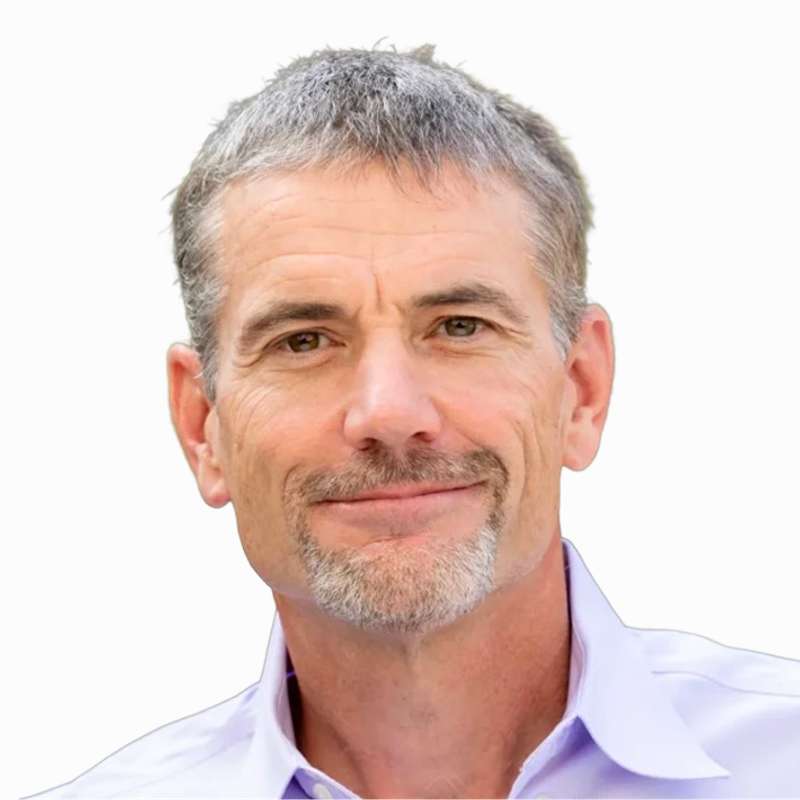 Scott Berry
All right. Welcome everybody to in the Interim. This is a podcast where we dive into clinical trial science, uh, clinical trial design, innovation in the clinical trial space. We frequently do it from a statistical standpoint, but we'd love to jump into multiple innovative trials, and we have a wonderful guest today. We have Dr. Meredith Buxton joining us today. Meredith is at GCAR, but her history of. Innovative trial design goes back a long ways, so welcome Meredith.
Thanks. Thanks for having me. I, I think back to, I think it's about 15 years in terms of my. Time with hanging out with you and Barry and working in this space with you directly, but probably a little bit more
Scott BerryYes. Yes. Uh, and, and a longer history with Don,
Yes, much longer.
Scott BerryYes. So, uh, your history goes back, uh, lots of platform trials. It starts with I spy two. Um, and it might be nice to talk a little bit about I Spy two. Um, maybe I'll let you introduce I SPY two.
Sure. So I think it goes back even a little bit, uh, further than that, which was the original I Spike program, which was designed to be just a correlative study for patients with Neo, uh, getting neoadjuvant breast cancer care and, uh, trying to understand, I. About that patient population. And then once that study was completed, the question was, can we now look at how patients respond to investigational therapies? And there had been some concern that it had.
Been in the cooperative group space and uh, it took time to get each trial up and running in that space. And that wasn't unusual. Clinical trials take a lot of time to build and operate, and then we tear them down and then we build the next one. And so I. When the team came together, Laura Esserman, Anna Barker, Don Berry, uh, myself, a large group of clinical investigators.
Um, the decision was like not to, to sort of accelerate those timelines, that they didn't wanna wait in line, they didn't wanna wait to go through this process every time of building new programs. So I-SPY2 was, was born. And It served as one of the first master protocols. So building a platform in which we could study many different investigational agents against standard of care for, uh, women getting, uh, neoadjuvant breast cancer care, and um, you know, just.
Really trying to figure out the space as we went along. So what does a protocol look like in that situation where you're building it once and using it many times? What does the operations look like? What is the, you know, what are the data collection tools, etc And so it really was at the forefront of that, uh, in terms of trying to accelerate timelines for evaluation of drugs.
Scott BerryYeah, so, so in, in many ways, a, a precursor of many of the modern, uh, platform trials. But you're, at the time now, you're doing a trial where you're bringing multiple investigational arms in, you're doing, um, personalized medicine in the sense that you've categorized women in eight different subtypes by the way you created terminology.
Yes.
Scott Berrya, a subtype was a. A creation of something you had to avoid subgroup, you didn't want to use Strat, you couldn't use things that had already been named. So a subtype is a, A characteristic, and it was their hormone receptor status, or HER two status, and their MammaPrint status, and you're looking at differential efficacy. Compared to a common control, you're doing adaptive randomization, a among the different groups, uh, Bayesian model driving this. At one point you're updating RAR even daily
Yep. I remember. I mean now we've realized that may have been a little bit aggressive, but yes, there was updates to and building systems to be able to handle all of that updating of data and updating of probabilities in real time. Yep.
Scott BerryYeah, so a, a huge part of this story is probably the operations of this. The, you know, the, the ideas of this are, are, are groundbreaking in many ways, but to then run this, to have the data, to have an algorithm, to run this, to update the RAR, the data aspect of this. Now this is a phase two trial. Uh, within this setting, and you ran this entirely within UCSF entirely what became Quantum Leap, uh, and in some ways created technology to run I Spy two.
Yeah, I mean, actually one of the biggest supporters up front was the foundation for the NIH, who served as the initial sponsor and really got the program up and running with. Uh, the team at UCSF and, and the 20 medical centers around the US and then it moved over to Quantum Leap. Another, uh, you know, in that case, uh, a nonprofit that was really designed to be a vehicle for this as well.
Um, but we were, we, you know, you go, I go back to what you were saying before, we were creating terminology terms like graduation. Right. And, uh, futility arms would graduate and that would allow us to know that they would maybe be successful in a subsequent phase three or, or, or drop for futility. We were not seeing benefit above and beyond standard of care, et cetera. So we were creating terminology, we were creating new ways to think about data access. About blinding in a trial, right?
So traditionally in a trial you would might be a placebo controlled and blinded to it, like the assignment, it was an open label trial, but we were blinding you to an arm's performance, and that was unusual. So that meant you couldn't know how many patients were on an arm at any given time. And so just really trying to bring the community together under this new construct, you know, industry.
The clinicians, the advocates, the IRBs, just with this whole new idea, I think was, uh, was, was a lot of the battle. Right. And it really set the foundation for, I think, a lot of the subsequent trials that have come out, including ones, you know, that I have, uh, built subsequently. Yep.
Scott BerryYeah. Yeah. And, um, I, it even announcing a particular arm and being able to provide the data for that, while other arms are still in the trial and all that. How do you publish this? How do you publish the results within a subset of patients? Uh, do you do the model, do you give the data? Uh, it, it was incredible innovation in this, even backing up, you're writing a master protocol and probably the first master protocol that was written very modularly.
Where there was an overall master protocol and you would just insert a modular appendix for a new drug. Um, and it, it didn't change the protocol. It would be there and you could remove it and the, the master protocol would, would continue on like that. Really the first time this was probably ever done on.
Yeah. And then the other part is the. The two part consent, right. I think it's now become a bit standard with, um, master protocols. Now when you're adding many different investigational arms, you consent patients to the screening process and then you don't wanna overburden them with too much information with regard to many arms that they may not be eligible for or may not, uh, be randomized to. And so creating this screening consent and this treatment consent, and that was really.
Built in the early days of I spy, sitting down with the IRBs, sitting down with the patient advocates, you know, sitting down with the clinicians and the sites and saying, what do you think would be feasible? And that came out of those conversations. Actually, the patients who said, we, we want less information. We wanna be informed more regularly, and we want less information at each, so we can really make clear decisions. So, um, you know, that was all built out of ipy.
Scott BerryYeah. And you guys did something really quite cool. Is. You could, you were concerned about IRBs, so you essentially brought them all together in a single get together where they could all talk and you could explain this.
Yeah, and it was, this was really the, uh, the genius of Laura Erman. So she said, we're gonna bring them into a room. We're gonna get them all to agree and. Uh, it was funny. The position was, okay, these are the 10 things we're gonna get them to agree to, and if everybody will walk out of the door, you know, it was sort of understood. What are we gonna agree to upfront and. Get them on board for that and really, you know, sort of like not let people leave the room until we were all aligned.
And I think that accelerated the timeline, right? That was the biggest concern is with the startup. And it does, master protocols do take a little bit longer to ramp up when you're trying to open this many sites and you're trying to get agreement for a longstanding infrastructure with lots of different.
Uh, complex elements, like you've said, the adaptive randomization, the now, the time machine was built in, I spy the original time machine, so using the, the non concurrently randomized controls, all of that. And so, you know, getting agreement upfront really accelerated that timeline. And in fact, the IRBs in the end did not have issues. When they came back to us, we got a conditional approval for the, the review pretty quickly was more around how we were communicating this to patients.
So it was more about the patient facing, not the concepts of the trial, but how do you explain this to patients? And so those were the pieces we were sort of, uh, tinkering with in the end to get the IRBs up to approve it. But I think we were all surprised, but pleased that that process. Of bringing them together, um, uh, really did accelerate it. And that's really was always the spirit of I spy, bring everybody together.
I think even in the design phase, so way back in, uh, the mid to late two thousands when it was being designed, bring everybody together in the room, industry, pa uh, patients. Clinicians, uh, research scientists and say like, what, what's questions we wanna ask and how do we ask that? And so, uh, getting buy-in early was always really important to its success.
Scott BerryYeah. And, and, and I, spy two was an amazing success. Uh, 28. Plus or more arms, I think it's now morphed on to IPY 2.2 and, and that, so, so you're, you are there, you joined Barry consultants for several years. Uh, uh, founded our clinical trial strategy group where we really saw the, the beauty of IPY two, the beauty of platform drives the amazing. Um, efficiencies of platform trials and we want to lean into this. So you came to Barry to help us with that.
Um, working on a number of platform trials at the time and a number of other diseases. We'll talk about them 'cause they end up at GAR sort of interestingly. Um, but then, and a big question at that time, and we were, we were working on the design of a number of trials. A big question is who's the sponsor of this trial? And it was a design. You're working with a patient organization. GBM Agile was a discussion of a huge number of groups.
And there's a big question, and there was a, a hole in this as to who's going to actually sponsor the trial. Uh, within this multiple pharmaceuticals, companies may can't come in, and in some ways this is the beginning of GAR.
Yeah, I mean, I think the time at Barry was really, and the clinical trial strategy group was really about the fact that the I Spy two model could be replicated in other spaces. It required a lot of curating, right? It wasn't just a matter of you could write a protocol and you, you could hand this over to anybody to run that. There was a real. Uh, sort of complex inner working of statistics and operations and et cetera.
Um, and so the clinical trial strategy group was really about how do we disseminate these learnings, uh, around, uh, the space. And, and then GCAR, uh, came about sort of in that same idea. So. Um, and how, how do we disseminate, how do we support the community in terms of these learnings and, and building and running these trials effectively? Because we know, just 'cause you write a trial doesn't mean you can operate it well, right in, in this complex space.
So the thing for GCAR that's really interesting is the trial that GBMA Agile trial. So it came about really from the community. You know, Anna Barker brought together a large group of community, you know, statisticians, scientists, international, US-based. Uh, pharma companies, et cetera. And they took that model of Icey two and said, well, how can we do this in the, the glioblastoma space?
And then came up with this design, worked very closely with the FDA, you know, turned it into not just an a phase two study, but to have a component that allowed for drug, you know, new drug uh, applications, a phase three component, a confirmatory phase. And then the question became who would run it? And it didn't naturally sit in any one home, so it couldn't really sit.
Although, you know, obviously pharmaceutical companies run their own platform trials to evaluate their drugs or their drugs in combination with other, uh, investigational drugs from other companies. It really needed to be drug agnostic. Right. And company agnostic, just like about testing and learning from the disease. So that wasn't the right fit. It couldn't really sit in one academic center. We're talking about a registration level. Program international.
It needed a, a certain amount of, uh, infrastructure bill that I don't think any one academic center could have. And, uh, advocacy groups like the, uh, pancreatic Cancer Action Network who have the resources and did build a master protocol, I. That those are not, that's not really the sweet spot, right? The sweet spot is not to run a a, a research unit within an advocacy organization, so that didn't really make sense in the GBM space either. And so GCAR was really founded out of necessity.
Really the fact that I. There wasn't really a home for this. There was a commitment from the, from a, the community to run this and how to build sort of an independent nonprofit to serve as the sponsor for this trial, but not just this trial to like disseminate the learnings from this trial to.
Run other programs in the space and really in a lot of ways, serve, serve as an honest broker of all the collaborators, the clinicians, the, the patients, the advocacy organizations and the industry partners and, and regulators as well. So that's how GCAR was founded, and it was really founded with the support of a few members of that original like network of investigators involved in the uh, GBM Agile build. Yeah.
Scott BerryOkay, so GCAR is, uh, uh, an acronym for the Global Coalition of Adaptive Research. Um, and, and it's a non-profit. Um, and it originally, the first trial it was involved in is GBM Agile, agile, as you described in that, but it's now adding more trials. I an interesting part of the, the development of this, um, within this, um. Is, uh, the people behind it? Far Mars, uh, feels like a hero in the development of GCAR.
Yes. So he, uh, farmers EF today is our chairman of the board. Um, he came to GCAR through, uh, some of our. Leadership, Tim Klossy, Brian Alexander, others like that. Sue John Baugh, who was, uh, is at the National Foundation for Cancer Research and was part of that original knowledge network.
Unfortunately, you know, his family was, was hit directly with, uh, you know, hi his, his wife passing away from GBM and had really wanted to be able to support, felt the importance of this program, felt the importance of this organization and really I think. Was the reason, you know, that really brought the group together and formed the organization. He and Sue John, uh, Tim and Brian, uh, you know, are the founding members of the organization, again, with a real commitment to, to the space.
And has continued to be, to be so, and really again, this idea that we are, as a nonprofit, we have the ability to support other initiatives. We have the ability to build other initiatives. Like our goal is really to be that, uh, collaborator with many players in the space and not just in the GBM space. So,
Scott BerryYeah, so, so GBM Agile's created, you're the sponsor of GBM, and I'll come back to sort of what that means and, uh, how much time you spend talking to pharma and, and you know, where your time gets spent in all of this, um, in it, but. Uh, soon after this covid hits. Um, and Remap Cap is a global trial. Oh, well, it's not global because it's sort of everywhere, but the us um, and it's running in the uk, it's running in Australia, running in New Zealand, the eu.
Uh, and I, I do want to not, um, minimize the role that I Spy two played in Therapeutics Discovery in Covid. So, uh, essentially every government operation, warp speed, the UK government, every government, um, uh, remap cap, the only way to, to explore what works as a therapeutic, let's ignore vaccines in this. What works as a therapeutic for treating Covid was a platform trial. You couldn't go out and spend two years and design a single trial for a single drug. Take it down.
Everything had to be a platform trial. So Remap Cap is one of these global platform trials, and I think it's hard to believe these would've been as productive as they were, as strong as they were without ICE by two i, I don't know what would've happened without Ice by Two. But then Remap Cap comes and GCAR becomes the US sponsor for remap Cap.
Yeah, I mean, it was really interesting. I think we all felt when the world shut down in February and March of 2020, we all felt a little helpless, right? And wanted to do something, especially those in, in research, right? We felt like, and in healthcare we had an obligation, um, to do something.
And I think, uh, the lead in the US and one of the original drivers with you with REMAP Cap, Derek Angus, I. Uh, came to Brian Alexander, one of our board members, and talked about some of the challenges and find again, with this idea of needing an organization that could serve as the regulatory sponsor, uh, and bringing together US sites contract.
You know, we can talk a little bit later about what that means, but, uh, and so we immediately, when, when I got the phone call from Brian immediately said, yes. Like, we felt this was our way to help in any little way we could. Funnily enough, I kind of laugh at that. All my friends were, I thought, you know, it would be a quiet time. It was probably the busiest I've ever worked. I mean, remap was like 24 hours. My friends were like making sourdough starters and you know, learning new hobbies.
And I was 24 hours a day trying to kind of turn this into a. A trial that could evaluate, because it started as a comparative effectiveness study. And then try to elevating it, especially in the US to support registration, right. To really evaluate drugs at a different level.
And so, uh, we came in to do that and really, you know, I. We, the design is just sort of the next level of I spy, and I think the next level of GBM Agile in terms of the ability to layer in different treatments and the modular nature of the protocol and the consent form. And, you know, it, it's really the next level, um, uh, under the in and then the way that the community worked together globally.
I think we not only served as the US sponsor, but we really tried to help other regions as best we could to try and bring up some of the standards as they needed it. You know, obviously many of them are very experienced trialists, but for example, I think in Japan it was sort of a new space for them helping them to get up to the, the, the processes and standards they needed to meet the registration requirements. So,
Scott BerryYep. So now you're, uh, it really, so GCAR is looking to get involved in a number of these efforts, um, and it's, it's incredibly needed within the space. While, while we advance the science of platform trials, it's still relatively novel. It's new. Amazingly effective. So GAR is now involved in GBM Agile, it's getting involved. It was involved in CO uh, PTSD platform trial, multiple other ologies, neurofibromatosis, uh, pancreatic cancer. Biac TRA Tract cancer.
Ovarian cancer, multiple diseases. And I know you're talking to other groups in this, so tell me about it. Maybe individually one of these GBM Agile, uh, and, and I know you're working daily on pancreatic cancer. A huge part of this is. You build this trial, the infrastructure's there, the, the, the operations part of it's there. You're working with regulatory, now you need arms in the trial, which is largely pharma. How much of your time do you spend talking to pharma?
lot. I mean, especially with, I think what happened, the reason why we have several initiatives in development is I think we really, again, feel like we can support. These different communities is needed. And I, you know, if we were to just do it at a time that was easy for us to say, okay, once this one is open, we'll open the next one. I think, you know, it, it, that would be ideal, but I think we feel really compelled by all of the, the need in the space.
And so we jump in as quickly as we can to help in any way we can. So, you know, I do spend a lot of time in, you know, we have a team led by Rob Murray within our organization who's really. Does most of the, the heavy lifting around that. But I think, um, you know, spending a lot of time educating on the value of this. And it, it isn't right for every company, it isn't right for every patient. We know that.
And so educating on the value of it, um, we, we spend a lot of time with, with industry creating comfort level. I mean, in a lot of ways they think about it as they're giving away their baby. Uh, to you and that they'll see them when they graduate college and you know, like you're handing off at a very important critical development time in their life. And we keep explaining, no, we're raising them together, right? It's a collaborative effort. And so there's a lot of
Scott BerrySponsors tend to be helicopter parents to their drugs. Is that, is that the
Well, understandably, you know, you're not, it's not the norm if you're looking at a clinical development plan that includes, you know, an approval path where you would hand it over to somebody else, right? You wanna, it, it, so that's, it's understandable the level of, um, commitment, uh, you know, nervousness they have.
And so, you know, we spend a lot of time creating the comfort level with the ability to kind of run it here and, and to show them, especially with, with GBM Agile, I think we've done. Enough. Uh, we have enough data, and we probably should write it up at some point to show the, the value proposition that we, we have sped up evaluation timelines. Uh, we have been able to cut the costs.
We've done, um, you know, they've done fair market assessments and then looked at our price because we've got this infrastructure that GCAR's invested in. And we are not rebuilding it every time. There's a natural cost savings with that, the shared control arm, etc So yeah, I would say it's a good, good part of my, it's a good part of my day.
Scott BerryYeah, so I, a lot of people ask about that discussion in pharma is I, and a lot of these, these platform trials, I was involved in one effort, epa, it was a EU based trial and it never enrolled a patient, it never brought a pharmaceutical company in. So I figured the, these really need the. Four really important stakeholders for them to be successful. Patients have to want to come in. Um, pharma has to want to bring a drug into it. Regulators have to like the trial and like what comes out of it.
And then sites have to want to be a part of the, the, the platform in this. And the mo, I get asked a lot about pharma. Um, that discussion you have with them, part of it is financially this is a good deal for them. Uh, part of it is a huge part of this is then timelines and the regulatory perception of the data they're gonna have out of this. How do those discussions have, is it, is it hard to convince pharma to come into the a platform trial?
Uh, you know, yes and no, right? I mean, I think once there's comfort level, you always start with the concept and the design, right? There's gotta be comfort level with this approach. Um, then we talk a lot about the. Operational elements and how we've built it to meet standards that would, uh, we hope industry would feel are equivalent. And then we talk about pricing. So we really feel like the story speaks for itself. Like if you jump to pricing.
You know, it's, it's a little, um, it's a little, uh, challenging, right? Because they don't know all, people don't know all the pieces of it. I think a key thing is regulatory buy-in, though, you know, the perception is what do the regulators, uh, think about these? And so we do try to communicate and get feedback.
Uh, from all the stakeholders, including the regulators pretty early so that we are not coming in, in and building a program that maybe an, you know, investigators would love to see, but industry isn't interested in, or FDA doesn't think is like the right, doesn't answer the question, right. So it is, it's sort of a dance between all of those. But, um, I think, you know, in a lot of ways you could say this is a great vehicle for small. Biotech, right?
That they may not have the resources in-house and they're, they're handing it over in a way, although we're not a CRO, right? We're giving them all the kind of services. But we've had large industry partners too, because I think they see that the community working together the patient community, the clinicians is at a level that's hard. It's hard to build on your own. So I think there's value for lots of different stakeholders.
Scott BerryAnd is that conversation a lot easier? So A GBM Agile has had multiple arms in. You've had great success enrolling patients, collecting data, you can show them that, that this, this happens, uh, and you have others where you haven't enrolled a patient yet,
It is much hard. The first arm is always the hardest, right? I mean, it was in I spy two, uh, it was in GBM Agile, right? Uh, and then if. So that's always the hardest is to get the, and then I think sometimes once you get the engine running, others see, really understand. So as much as you can reference another program and the successes of it, I think that helps. But ultimately there is some element of, there's a benefit to being the first partner, right?
You get a lot of say in the initial build, right? You get
Scott Berrywell, but, but to back up, the worry might be, do they have to pay for a more startup cost being the first one? Are you able to finance this in a way that they don't have to pay for the startup? And so it is a good thing to be the first one.
Yeah, I mean that's, that is, that's the, you know, the, there are certain elements around not having, so we, we didn't sort of dig into this, but. The time machine, right? Not having a bank of controls that you get to use in terms so as the first, you don't have that, so that is a negative, right. In a way, at the same time, you get to have, you get to be part of the design at the front.
Not to say there isn't arm specific customizations or companies can't customize as we go along, but there is a different level of, you know. Picking vendors and picking processes that they get to have. Uh, but in terms of the infrastructure build, I think that's the part where GCAR, uh, you know, we have been around for enough time. We have received enough philanthropic support. We continue to work with our advocacy partners to. Uh, to gain additional philanthropic support.
We do, uh, we, it shouldn't, it shouldn't cost the initial pharma more than others because we have that the infrastructure supported through external means. So.
Scott BerryYep. Yep. Uh, so you have a number of great efforts and, and by the way, a number of these are patient and advocacy groups coming to you because they want see more drug development in their area. GBM Agile was a big part of that. You, you haven't jumped into easy diseases off the tree Yes. In this, and there's a
yeah, I mean, I kind of laugh because people will be like, well, have you gotten an approval? And I say, well, you know, we hope to soon, but you know, it's been 40 years in, in glioblastoma and what we, we've been Eva able to evaluate, you know, five drugs and we're on our sixth and you know, the sixth drugs are in the trial. Seventh is entering in a couple of, in a month or so. The eighth is on its way, it's in development. Like we are accelerating timelines and hopefully we will get a win.
We will get a win soon. But, um, to your point of the advocacy organizations, each, each program is a little bit different and even the way we work with our collaborators, so you're right, some, in some cases they've come forward. The children, uh, the Children's Tumor Fund has come forward and, um, they are really driving this effort in neurofibromatosis. And had been part of an effort in Europe called EU Pearl to build out a master protocol for that.
And so they've really been a driver in that and brought us in. Um, you know, when I think about the Cholangiocarcinoma Foundation, and they've had a seat at the table since the beginning, they, their CEO or executive director Stacy, their CMO Juan, he is. Side by side helping us build this as our medical lead, so am along with the clinical community.
So these are models that, and where we've really partnered in a different way with the advocacy groups, whereas in others it may be they are a partner, but they're not involved in the day-to-day of the, you know, the build and the, you know, industry engagement, community engagement. So,
Scott BerryYeah. Okay. So now, now I'm gonna ask you to look forward a little bit. So, so Ipy two, you started working on Ipy two, and I don't know if you envisioned the. Amazing innovation that Icey two was when you're, when you're day to day solving problems. But, um, the amazing effect that had on covid, the amazing effect it's had on clinical trial science.
And you see the huge efficiencies of these platform trials working in the different diseases and all this, you know, looking ahead 10, 15 years, is this the new way of drug development? Are we gonna be able to do this in tens and hundreds of diseases?
I hope. I mean, I hope so. I don't think it's right for every disease, but I definitely, I feel like we could still do it better. We can, there's still refinements and innovations in the design. And the operations particularly that we're, we're trying to push forward. You, you know, but I, I do. It would be ideal in the future if we're looking in the future, if these could really be embedded. I think the way that REMAP in the US was trying to do it within clinical care, right?
They were enrolling patients right in there, in the clinic. They were collect, they weren't collecting separate data. They were pulling data from the EDC. I think if we could embed it, that's if we could do that, I think these could be more standard because again, I think there's a lot of inefficiency. We all know that in the clinical trial space, I think these are one solution to improve that efficiency. So. You know, I, I see a longstanding future for them.
And you know, even as we think about other models where we think about external controls or, uh, you know, synthetic controls or things like that, it does feel like there that the future of this, there's, there's so much more we could be doing with regard to platform trials.
Scott BerryYeah. Oh, that's awesome. That's awesome. So, so Meredith, I appreciate, I appreciate you coming on. It was fantastic. Um, and we will be talking some more. So thank
Yeah, I'm sure we ha
Scott Berrythe interim.
I'm sure we, I'm sure we have a meeting in the next day or two about some trial, so.
Scott BerryYes, yes. All right. Appreciate it. Thank you, Meredith.
Okay. Take care.