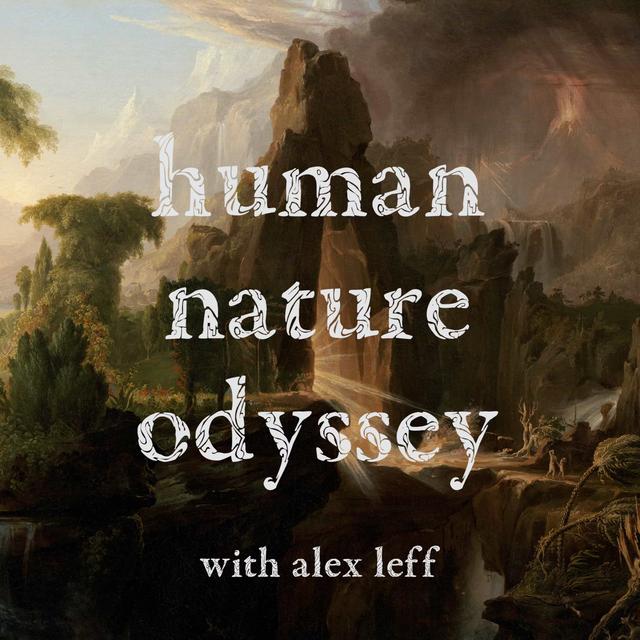



It's dark and heavy, like a dream. There's the smell of damp earth. Your body is part of the soil and your limbs are heavy. Suddenly there is light. You are pulled from the ground by your creator and sculpted into form and from a mere clump of dirt. You become a human being. Your neck is a bit sore, but overall you feel pretty good. Everything is new. The world is just being born. So when you hear the songs of birds, they sing for the first time.
You are the first person to look upon the world and breathe its air and feel the weight of your body as a living. Being. And here, God planted a garden named Eden. Come walk through its soft and flowing ferns. Enjoy the vibrant sight of crimson's and fuchsias of the flowering plants. Here, the babbling brook and streams rest in the cool shade. Feel the warmth of the sun. This is the Garden of Eden. And God created you to care for it. You and your partner are naked without shame.
Naming the plants and animals. You share the garden with. This will call a giraffe, and that will be known as a flamingo. And this. This will be a dandelion. And God speaks and says of every tree. The golden dome is from each one of the tree, of the knowledge of the removal. Thou shalt not eat of it. For in the day that though it is thereof, thou shall shall be dog. But when God's not working, a serpent appears. Bullshit, the snake says.
Obviously, God knows that if you eat from the tree of knowledge, then your eyes shall be open and you shall be as gods. I say go for it. Well, that sounds convincing enough. You decide to take it back, and we all know what happens next. And God, who is beyond disappointed as he's casting you and your partner out of the garden forever, proclaims, because the host of the tree person is the ground for those secrets and sorrows shall those delivered all the days of my life?
Thorns also in thistles show it bring forth to be in the sweat of those first down so you through to the return onto the ground and the world changed forever. Welcome to Episode five of Human Nature Odyssey, a podcast exploring mythology, history and where the two meet. I'm Alex. Today, we continue our exploration of Daniel Quinn's 1992 novel, Ishmael, about a telepathic gorilla sharing his insights on humanity. If this is your first time joining us, welcome.
It's totally fine to start from here. And if you want to fill in the gaps of previous episodes later, that's great. And if you've been along for the entire Ishmael ride so far. Glad to have you back. Now, being a gorilla, Ishmael is able to inspect humanity from the outside. And when Ishmael observes all the many human cultures, societies and nations, he sees us as essentially divided into two groups the takers and the levers.
I grew up in Take Your Civilization, and chances are you probably did as well. According to Ishmael, the takers emerged 10,000 years ago, grew into the dominant global macro culture we live in today and are causing worldwide ecological catastrophe. Ishmael believes we destroy the world not because we're inherently greedy or innately flawed, but because we are held captive by taking mythology, a very powerful story passed down for thousands of years.
Put simply, take your mythology preaches that the world belongs to us and that we must conquer it. This is a story we can't seem to stop acting out the levers, however, have existed for hundreds of thousands of years as hunter gatherers, and some continue to exist today and in all this time, unlike the takers, they've managed to not destroy the world. They do so not because they're more noble or ignorant, but because they enact a very different story. Believer mythology.
So if we and taker civilization have an earnest desire to leave behind a livable world to future generations, it would be worth investigating the origins of our taker mythology and what Weaver mythology might be. Instead. And Ishmael suggests one of the best ways to do this is by exploring a very ancient story that still holds great influence across our culture today. The story of the Garden of Eden. Growing up, my rabbi, Arthur Wasco, had an interesting perspective on these ancient stories.
To him, the most compelling question wasn't whether these tales were historical truths or simply fictions. But why do we still tell them? Why are these stories still so important to us? And that got me thinking that myths are like an incredibly powerful mirror, reflecting back the worldview of those who tell them and also who created them. And these biblical stories weren't just crafted by one person.
The Bible is a composite of many different tales taken from different sources and brought into one. In fact, biblical scholars, based on the writing style and language use, can trace which parts of the Bible were compiled from different sources and when they may have been added. For example, most scholars believe the Garden of Eden story is actually older than the seven day creation myth.
Even though chronologically it comes after, it also seems that one version or another, the Garden of Eden was passed down as an oral tradition for centuries, if not millennia, before it was ever even written down in the sixth and fifth century B.C. We can't know how long ago it was first told, but as we'll discuss in this episode, there's reason to suspect it's been passed down for a very, very, very, very long time with some key changes along the way.
Now, that's a pretty epic game of telephone. I like to think about when an ancient story like this would have first been told. Who were the people who first imagined this fable about God? And a couple of nudists and a very tempting fruit? And can we use their story as a mirror to learn anything about them? Because little did they know this story would more than just catch on. Could they have fathom that one day it would be retold on every continent and translated in over 2000 languages?
I mean, damn, talk about going viral. And when it was first being told. Why did this particular story of all the stories catch on in the first place? Is it just like a really good story? Back in the day, were there not any better stories out there? I mean, come on. You're telling me some ancient society can come up with something better, maybe with more epic production value, like a super strong king who goes around slaying monsters. Well, guess what? The Sumerians did tell a story like that.
The Epic of Gilgamesh. And back in ancient Sumer, almost 5000 years ago, the Epic of Gilgamesh was an all out blockbuster. When the Sumerians first invented writing. Gilgamesh was the first story they wrote down, making it the first written story in all of human history. But could you tell me the story of Gilgamesh right now? If you bumped into your neighbor at a 7-Eleven and asked them to recite the tale of the old Sumerian king, would they know what the heck you were talking about?
No, I don't think so. The Epic of Gilgamesh didn't get passed down. In fact, for thousands of years, we didn't even know it existed. The writing was only recovered and translated in 1853. Meanwhile, you go up to literally anyone you've ever met and ask them to recite the Garden of Eden. They'll probably do a pretty good job. And all these millennia later, there are billions of people alive to whom this story provides profound influence and meaning in their lives.
Because to us, the Epic of Gilgamesh is just a story. The Garden of Eden, however, is still an act of myth. Biblical commentator Jay Snodgrass, great name, describes the myth as, quote, a hit song that catches on through the culture. You hear it on the radio for the first time and you're already singing along. Maybe it's a bitter song. Maybe it's too sweet. Maybe you don't want your musician friend to know you like it. But for reasons you can't explain, the song restores a balance. Unquote.
He goes on to put the power of myth another way quote Anybody can tell any story, but for it to become a myth, it's got to awaken a sleeping truth within a community of listeners. It's got to answer a question you've been struggling to formulate in words. Unquote. So in the case of the Garden of Eden, whatever that question was, not only does it still resonate with us today, but it must have really touched on something very important to those who first told it.
So something must have happened a long time ago. Something big and notable and perplexing inspired a group of people to tell a story about it. And Ishmael theorizes the major event that first inspired this story was the very birth of taker's civilization itself. What we call the agricultural revolution. To get a better look, we're going to go on a field trip to my fifth grade classroom and here you'll find me at 12 years old, sporting a poofy haired bouquet.
We're in the middle of a lesson on the agricultural revolution and just how big the changes it brought were. Right now, fifth grade, Alex is diligently working on a class project drawings that depict life as hunter gatherers before agriculture and life as farmers after. If we look over his shoulder to see his drawings, which are currently collecting dust in his parents basement, you'll see a roaring river turned into controlled irrigation channels.
Then there's a wild boar with big, scary teeth being turned into a cute domestic headed, smiling pig. On another page, you'll notice stick figures putting down their bows and arrows to cultivate neat little lines of fruits and vegetables. In fifth grade, I was taught the agricultural revolution was the beginning of everything important and anything that came before it was just pre-history. This was still years before I first read Ishmael or went through puberty.
But later from Ishmael, I'd learn how humans actually lived for hundreds of thousands of years before agriculture. Think of how many things happened over that time, how many people fell in love, how many arguments were started, jokes were told. Songs were sung. Entire ice ages came and went. Ishmael argues that the reason we call that pre-history and consider agriculture the real starting point is because the agricultural revolution is the beginning of taker history.
Take your civilization at its core is an agricultural society. It's only made possible by and entirely dependent on agriculture and it still is today. Even if you and I aren't farmers ourselves, the vast majority of the food we eat is not hunted or gathered. It's farmed. And before the takers. For most of human history, we find not a single evidence of farming. Which is pretty freaking odd.
If you believe civilization is the most superior advanced form of society and that humans are supposed to farm and build cities. And even stranger still on the agricultural revolution began. All the hunter gatherers didn't throw down their bows and arrows, shout Eureka and immediately adopt farming. Instead of being a sudden watershed moment for all of humanity.
It was more like a gradual tidal wave, slowly spreading to new communities over millennia, sometimes by voluntary adoption, sometimes by force. Many communities chose to not adopt agriculture, seeing their hunter gatherer lifestyle as a more appealing way to live. So our hunter gatherer ancestors weren't just sitting around the campfire thinking, Well, this sucks. Waiting for some kind of technological breakthrough that would finally make everything better.
In fact, the transition of farming came with a lot of disadvantages compared to hunting and gathering. The first farmers would have spent much more of their day doing physical labor, were more susceptible to infectious diseases like smallpox, measles and tuberculosis, which originated in domesticated animals. Compared to hunter gatherers, the first farmers had a less diverse, nutritious diet and were more likely to experience famine when their limited food source failed.
And the first farmers could expect to live shorter lives on average. And hunter gatherers. Initially, life expectancy actually went down. Why then adapt? Agriculture, in addition to some of the material benefits like food surplus allowing for the greater division of labor. What if the first farmers committed to an agricultural lifestyle because they viewed themselves and their relation to the world entirely different than they had before?
Ishmael proposes that the agricultural revolution and more than just a changing lifestyle and technology was the birth of a fundamentally different mindset over many generations. We can imagine the revolution like a ground shattering earthquake, ripping a major chasm in the ground. On one side, you have takers who began to believe they were supposed to rule the world and do so by force. On the other, you have the leavers who believed something else.
Let's consider these two different ways of life and the mindsets that would justify them. Ishmael defines mythology as a story cultures, an act we act out, and Ishmael explains. Every working mythology begins with a premise, the premise of Take the mythology is that the world belongs to us. In the Book of Genesis, for example, God explicitly gives Adam and Eve dominion over the world. And you can see this in the behavior of take your civilization all around the world.
We act out taking mythology like it's an imaginary game for grown ups. Ishmael believes all cultures enact a story, including levers. And for many years, our inquisitive gorilla friend read about various lever cultures in the present. And in the past, he studied how hunter gatherers generally behave. What specific stories they tell, and came to believe that the premise of Weaver mythology is the exact inverse of the takers. Takers believe the world belongs to us.
Believers believe we belong to the world. That's the imaginary game weavers are playing. And it comes with a very different logic, with very different results than the takers. It's worth mentioning that some Weaver societies do practice a form of agriculture, but these versions of farming reflect the premise We belong to the world. Like Silver Pastor, where animals are encouraged to graze along tree lines, which actually improves the health of the forest. Or selected burnings using ashes.
Fertilizer, regenerating the soil. Takers practice a specific kind of agriculture, and it's the one that's come to dominate the world. Daniel Quinn, in his later books, calls this totalitarian agriculture picture vast fields of single types of crops where all pests and weeds are removed. Ishmael believes what the difference comes down to is control. The takers totalitarian agriculture seeks total control of their food supply. If the crops fail, if there's a flood or a drought.
Takers engineer more control to make sure this doesn't happen next time. Hunter gatherer levers let go of that control. If there's not enough to eat, generally weavers can go somewhere else and find food there. Because if you believe you belong to the world and build your culture and mythology around that premise, then you leave a certain kind of faith in the hands of the gods.
As Ishmael puts it, you trust that the gods have the knowledge of which species and forests and rivers should live and who should die. The takers, on the other hand, take the life and death of the world around them into their own hands. To see this in action. Let's travel back now to a time even further in the past than my fifth grade classroom. Let's go back in time. 2/8, zero years ago.
We're finding our way through tall grassland, towering old growth, cedar forests and shaded rivers teeming with life. This lush place is the Middle East, a.k.a. Mesopotamia, a.k.a. the Fertile Crescent, a.k.a. one of the places where the agricultural revolution began. This is before the forests will be felled for farmlands. The rivers will be dammed, and the decertification as a result of thousands of years of totalitarian agriculture will lead to the sandy expanses.
We will one day become familiar with in our own era. But right now, in between the Tigris and Euphrates Rivers, a group of people is beginning to act very differently from their weaver neighbors. Let's picture the agricultural revolution from the leavers perspective. The forests they once hunted are being toppled. The valleys that were once home to all sorts of fruits and vegetables and medicinal herbs are being replaced by carefully cultivated fields of wheat.
The wolves and leopards and lions are being exterminated just because they're predators. What would it have been like for believers to witness their neighbors starting to behave this way? And most importantly, what story would the levers have told their children to help them understand what they were witnessing from afar? Ishmael suspects that this this was the origin of the Garden of Eden myth.
After all, the Book of Genesis and all the stories in the Torah or Old Testament take place in the very same region. The Mesopotamian Agricultural Revolution began. And Ishmael proposes this story didn't originate from the takers inside the revolution, but from the levers on the outside looking in. Let's consider the Garden of Eden as a metaphor for hunting and gathering. There's food all around you cultivated not by your hands, but gods. All you have to do is gathered in the story.
Hunting and gathering is romantic, portrayed as a leisurely paradise compared to the toil of agriculture, where food only grows from your labor. Think of God's punishment at the end of the story, God says cursed is the ground because of you through painful toil, you eat food from it all the days of your life. It will produce thorns and thistles for you, and you eat the plants of the field by the sweat of your brow. You will eat your food until you return to the ground.
With this in mind, we can see how the myth might have been a way to explain the agricultural revolution. And if this theory is true, which we'll never be able to really prove, it would actually explain some of the inconsistent seeds with the story that have always perplexed us. For example, Harvard law professor Alan Dershowitz wrote about how God forbids the knowledge of good and evil and threatens Adam and Eve that they'll die the day they eat it.
Quote It is quite remarkable that a holy book, which reports to be a guide to conduct, begins with a clear rule that is immediately disobeyed and a specific threat of punishment which is not imposed. What are we supposed to learn from a God who fails to carry out his very first threat? Unquote. An 18th century philosopher, Voltaire asked, quote, Why did not God want man to know good and evil? It appears to my poor reason that God should have ordered man to eat a great deal of this fruit.
Unquote. It is a bit weird from our cultural perspective that the knowledge of good and evil is a curse and that agriculture is the fall of man rather than a cause for celebration. After all, Ishmael questions if a Tinker Society were to come up with its own creation myth, or did they not call it the fall, but something like the ascent or the liberation? Well, the Babylonians in ancient your empire, did tell a different story about the agricultural revolution.
That story was called the Babylonia A Process. And in that story, a divine half fish, half man guy teaches humanity the gift of farming. In this story, this knowledge isn't a curse. It's a blessing. And this fisherman, God, is revered. Similarly in ancient China, another originating place of the agricultural revolution. There's the myth of the divine farmer, the legendary first emperor who invented the plow, the hoe and irrigation. In this story, farming isn't a punishment either.
But the Garden of Eden story, where agriculture is a punishment, clearly has a different perspective. When the levers are met by takers, they usually have two options to be exterminated or become takers themselves. So we can imagine that the Weavers who told these stories about Adam and Eve eventually became takers. In order to survive as takers, they would have changed the old stories a bit, as well as adding new takers stories about kings and temples and eventual monotheistic God.
But a few inconsistencies remain as clues that the original message may have reflected a different mindset. So what Ishmael does that I find really fascinating is try and reimagine the Garden of Eden story and how it might have been told by its original Weaver storytellers from the Weavers perspective. It might seem like the takers are behaving as if they have the knowledge of the gods, the knowledge of who should live and who should die. How did they come to this dangerous belief?
So let's pretend we're sitting around the campfire thousands of years ago among our fellow weavers. As we listen to the story, they tell their children about the world as it once was, and why the people around them started acting this way. This next parable is inspired by one in Ishmael. It's the story of how the gods acquired the knowledge they needed to rule the world.
One morning in the Garden of Eden, when the gods of the world were still young, they gathered in the towering branches of the Tree of Life. Here they were discussing the care of their creation. One of the gods began. So here's what I'm thinking. Right. In this meadow, the grasses grow long and are dense and thick. Let's sprinkle a swarm of beetles and let them eat from the tree of life. Another God responded, That would be good for the Beatles.
My concern is they will feast on too much of the stress the boars and the buffalo, the goats and the gazelles would all go hungry. That would not be good for them. Another guy agreed. That's true for the grasses and those who eat them. The bringing of beetles would spell disaster. You must consider the boars in the buffalo, the goats and gazelles. They are all our children. They also must eat from the tree of life. I mean, yes, but the Beatles are our children too. One will be their turn to eat.
Do they not deserve to be fed and take care of? Just then a leopard appeared from the grass and the gods became distracted. Oh, the leopard looks so hungry. Let's send it to pheasants for its dinner. Now, that would be good. Oh, okay. I see. So what do we care about? Leopards, but not the pheasants now, huh? I don't think the pheasants will think that's very good. But look, the pheasant is getting ready to eat one of your precious beetles.
If we don't send the leopard, the beetle will be the pheasants next snack. Well, it's plain to see that. What is good for one is evil for another. Huh? Then how are we to know when it is time for one to live and for another to die? So in the garden, the gods planted a new tree. This was a very powerful tree. And its fruit bore the knowledge of good and evil, of the tree of life. All creatures, large and small, were welcome to eat. But the tree of knowledge was for the gods alone.
The fruit soon ripened and the gods shared it among themselves. And their eyes were opened. And with this came the knowledge of good and evil. 040. Oh. It all makes sense. For now, the leopard will go hungry and the pheasant will be spared. The grasslands will be a feast for the Beatles and the boars and buffaloes, goats and gazelles will all have their feast in turn. Yes. Today, those whose time it is to go hungry will do so in peace. For they shall know.
The gods have the knowledge to tend the garden. That same morning, while the gods eat from the knowledge of good and evil. Adam and Eve began to wake up. They stretched their limbs and walked among the other creatures of the garden. Of all our children, these two possess a most spirited curiosity and a keen intellect. I like their funny noses. That was a nice touch. Oh, thank you. They are quite clever, but I wonder if their curiosity will ever lead them to the Tree of Knowledge.
Oh, you're right. That would be a problem. I gotta be honest, I don't see what the issue here is. So what if they from our fruit wouldn't actually have any effect on them, right? It only works on God. Yes, but what if they believed and worked on them? What if they started to act as if they had the knowledge of good and evil? Oh, exactly. They could delude themselves into thinking that good was really just what was good for them. And what was evil was only what was bad for them.
Well, they'd probably grow up out of that eventually. But if they were to behave that way, they might not grow up at all. They would consume the whole garden or as much as they could before they destroyed themselves. Let us warn our children before it is too late. The gods realized of all the trees of the garden, only the tree of knowledge of good and evil could destroy Adam and Eve. And so the gods said to them, You may eat every tree in the garden.
Save the tree of the knowledge of being from the eat of that tree. You will die in this version of the story. Adam and Eve never actually obtain the knowledge of good and evil. Sure, they eat the fruit, digest it. But what if the fruit doesn't actually work on people? So when the gods forbid Adam and Eve from eating from the Tree of Knowledge, they're not being mean or unnecessarily withholding.
They just know that if Adam and Eve mistakenly believe they have the knowledge of the gods, it would ultimately lead to their own destruction. In this case, the gods were giving a real warning that on the day we eat from the tree of Knowledge is the day that we die. Wait a second. Adam and Eve get banished, but they don't die. Well, consider that in Hebrew. The word for Earth is Adama. So Adam means of the Earth and the Hebrew word Eve means life. So they're meant to represent all of humanity.
And in just a few thousand years, since the birth of Take Your Culture, just a geological instant, one day in the life of the gods, acting like we have this knowledge of good and evil has brought the world to the brink of extinction. Maybe the gods were right, after all. But in the taker version of the story, the one we tell Gods orders to not eat the forbidden fruit is sometimes seen as just a test.
And we past God told us to have dominion over the earth, and being kicked out of the garden is just the tough love we needed to get on the right path. And from then on, takers have known exactly what to do. It was our divine destiny to conquer the world. At one point, Ishmael asks the narrator an interesting question quote When did the agricultural revolution end? Unquote. That's the thing. It didn't. As the narrator puts it, quote, It didn't end. It just spread. Unquote.
From the river valleys to the mountains, across oceans and continents, taker civilization continues to make these ancient stories come to life. Perhaps that's why people in over 2000 languages worldwide could repeat this story today. On some level, we recognize these aren't just mythological events that happened in the past. But like true mythology, they are unfolding all around us. For instance, in 1846, as white settlers advanced west across North America, U.S.
Senator Thomas Hart Benton commented, quote, The white race alone received the divine command he means to have dominion over the earth, for it is the only race that has obeyed it and the only one that hunts out new and distant lands and even a new world to subdue and replenish. The red race has disappeared from the Atlantic coast. The tribes that resisted civilization meet extinction. This is a cause of lamentation with many.
For my part, I cannot murmur at what seems to be the effect of a divine law, unquote. We won't even get into how messed up that quote is, but you can see in this example how influential the taker version of the myth has been in our real world. Not only do takers believe they have divine dominion over the world, but that the humans living as levers must be converted or killed.
This genocide of Weaver peoples, erasing their ways of life and the people who practice them, has also been present since the very beginning. Ishmael believes there's actually another story from Genesis about this genocide and that this would have been originally told from a Weaver's perspective as well. The story of Cain enable. If you missed the Cain and Abel episode of the Bible, it goes something like this. Adam and Eve have two sons, one named Cain and the other Abel.
Cain is a farmer. Abel is a sheepherder. When Adam is on his deathbed, his two sons make offerings to God for their father's blessing. Cain being a farmer, offers God the harvest from his field. ABEL Being a sheepherder offers God a sheep. God rejects Cain's crops and accepts Abel's sheep. Cain is so jealous and enraged by this that he murders Abel, his own brother, as punishment. God exiles. Cain. And we're told he goes off to become the first builder of cities.
God favored Abel and his clever way of life, which Ishmael points out is a weird ending if the story were created by takers. It makes a lot more sense if we consider the story being told from the perspective of nomadic pastoralists or sheepherders like Abel. As Ishmael says, quote, So you see that your agricultural revolution is not an event like the Trojan War.
Isolated in the distant past and without direct relevance to your lives today, the work begun by those Neolithic farmers in the Near East has been carried forward from one generation to the next without a single break. Right into the present moment. It's the foundation of your vast civilization today, in exactly the same way it was the foundation of the very first farming village. Unquote.
In the taker version of the story, eating from the tree of Knowledge is sometimes seen as the birth of consciousness. Adam and Eve weren't self-aware before, but now they are in this interpretation. It's their consciousness that God forbid and now demands them to conquer the world. And if they destroy the world in the process, it was all consciousnesses fault.
But if we see being banished from the garden as a metaphor for the agricultural revolution, we know that human consciousness existed long before that leavers have the ability to reason, tell stories, make scientific inquiries and so on. So consciousness isn't inherently self-destructive, but it does make self-destruction at least more of a risk. That's what's so mythologically potent about the Garden of Eden story. We are unique in the community of life.
There's something special about us that doesn't necessarily separate us from the rest of life, but does differentiate us from it. We have consciousness. Sure, other species are conscious, like crows and dolphins and octopi, and maybe many. But we are self-aware in a very particular way. We tell stories. We create mythologies. These are incredible powers that, as far as we know, only we possess. They allow us to peer into the past. Imagine possible futures and change the whole world.
And with that comes the incredible temptation to eat the forbidden fruit and imagine ourselves as gods. But we've tried that. It's not working. Ishmael proposes. Our greatest task as humans is to be the first to have this consciousness, to have the temptation to think of ourselves as gods and learn how to still live in balance with the community of life. This, then, is the vision of Weaver mythology. This is what we should strive to as a species.
Hearing this, the narrator gets inspired and suggests that what if humans were able to be, as he puts it, quote, consciousness trailblazers, unquote. So if over hundreds of thousands, millions of years other species were to develop a self-awareness and struggle themselves of their own God temptations, we could lead by example of how to not be at war with the world, but belong in it. Make peace with it. Here's how the narrator enthusiastically puts it.
If you'll pardon his male centered language, quote, Just think in a billion years, whatever is around, then whoever is around then says, Man, oh yes, man, what a wonderful creature he was. It was within his grasp to destroy the entire world and to trample all our futures into the dust. But he saw the light before it was too late and pulled back. He pulled back and gave the rest of us our chance. He showed us all how it had to be done. If the world was to go on. Being a garden forever.
Man was the role model for us all. Unquote. I think Daniel Quinn, the author, has the narrator suggests this rather than Ishmael saying it, because Daniel Quinn also is excited by this grandiose idea, but perhaps not so sure. We can't really know. In response, he writes that Ishmael agrees and says, quote, Not a shabby destiny, unquote. So we aren't doomed to destroy the world, destined to be alienated from the community of life, forever banished from the Garden of Eden.
It's not human knowledge or consciousness. That's the problem. It's believing the world is ours to control and that our reason for being is to rule it. So thousands of years after the story was first told, takers are still acting like they have the knowledge of good and evil and are still committing genocide against their Weaver siblings. Adam and Eve are still taking a bite from the tree, and Cain continues to murder Abel. The story is stuck on repeat.
What if the trick isn't simply to stop telling the story, but to change how it ends? What if Cain stops murdering Abel? What if Adam and Eve spit out the fruit and stop acting like they have the knowledge of good and evil? What would happen next? Thanks for listening. So today we got our mythical and metaphorical. On the next episode, it's time we get a bit more practical and scientific. Until next time, I hope you'll consider what it might mean for us to return to the Garden of Eden.
How might we find our way? Talk with you soon. Everyone, this week on our Patreon, we're sharing the first special bonus episode, a conversation with author Jay Snodgrass, whose book Genesis and the Rise of Civilization greatly inform this episode. You probably remember some of the quotes I gave of his earlier on. And if you enjoyed reconsidering the meaning and origins of these biblical stories, then I think you'll find our conversation fascinating.
I want to play you a small segment here, and if you'd like to listen to the full conversation, you can go check out our picture. So here's a few minutes of my talk with author Jay Snodgrass on his book Genesis and the Rise of Civilization. Something that I love about Genesis or your genesis. Genesis of the Rise of Civilization. It picks up where Ishmael left off. So Ishmael really is focusing on the Garden of Eden and the Cain and Abel story.
And you just continue and show how, like the flood is something that we can analyze through this lens. And then the Tower of Babel is something we can analyze this lens for folks who forget or are not familiar with it. All the people of the world unite and create this massive tower towards the heavens and and through their unity, they're kind of like challenging God's sovereignty. And, you know, you talk about how this word Babel is, I'll quote from the book is meant to remind us of Babylon.
And the Hebrew word Bilal means confusion. So it's kind of like this commentary on the actual historical empire of Babylon, but mythologizing a little bit to be something that I think feels quite relevant today, thinking about how the story ends and that, you know, there's this almost we can think of it as like a globalization, you know, in that part of the world of globalization and this interconnected economy and this massive infrastructure project.
But then you know, the people stop being able to speak each other's languages and they they scatter once again. And I kind of feel like the era that we're living through now, we can imagine ourselves just kind of building this global Babel. But despite being more interconnected than ever before, you know, we're able to watch the tiktoks of people all around the entire world.
We still seem to naturally just be creating these new languages, these different ideologies and ways of understanding what reality is and finding even with how interconnected we are, our cohesion seems to be slipping. I'm curious what you think about that or how you think about the Tower of Babel story. You know, the Tower of Babel and the separation of the cultures which possible that that's how the author came upon ruins, Sumerian ruins, and said, who built this giant pyramid,
the ziggurat of earth, and then abandoned it. Hmm. So I looked at the the Tower of Babel story as a story of retried retry idolization here in North America, like some of the the earth mounds, the pyramids, the cities that were built by the indigenous peoples of North America that were then abandoned mysteriously. Of course, it really looks like those big cities where you can see the the granaries, you can see the the obvious, you know, division of labor, you can see hierarchy in the tombs.
Archeologically. We can look at all of that stuff. And then we can say, what happened to those people? And the most convincing, you know, response that I have found is they seem to have separated into smaller groups and decided to become small, interdependent, egalitarian groups. Instead of kings, you had elected representatives. If we were going to measure two cultures, which one is more primitive? Which one is more advanced?
I think we would start first with who's got the tools, who's got the big buildings, the monuments, the money, the bombs, the weapons. Right. But somebody else could look at two cultures and say which one is more advanced? In which one would you rather be the poorest person? Mm hmm. You know, in which one is there more security sharing? People taking care of each other?
People look at people idolize, ancient, you know, whatever, like Egypt or whatever they say, Oh, you know, I wish I could go back and be Cleopatra. It's like, Yeah, but what about being the poorest person in ancient Egypt? But, you know, if you're looking back at some of the indigenous cultures, it's like, oh, I would rather, you know, be in a egalitarian, a cooperative society. I would probably enjoy that more than I would enjoy being like King Tut.
Because, man, then you're always looking over your shoulder, right? Yeah, yeah. You've got all the stuff, but you can't you can't trust anybody. Right. You're asking about the Tower of Babel. And, you know, I think we have examples of that in the past. And I think if there's going to be a future for the human species, I think if human beings are still around a thousand years ago, I think that they're going to be telling the Tower of Babel story about about us about now.
Yeah. And they're going to say like, yeah, everybody was trying to do this global economy thing that was making 1% rich. And finally, maybe there was some disaster shake up, whatever. But but finally, a lot of people just just walked out. You know, I would rather live in a in a in a in a village of long houses as long as I knew that the other 299 people in that village, that they all had my back and that they need me.
And if they respect me and they know my name, you can listen to the rest of our conversation at Patria, CNN.com slash human nature odyssey. There's all sorts of additional materials there that dove deeper into these ideas and topics, including interviews with bonus guests. You'll find writings, transcripts of episodes and audio extras. Your support makes this endeavor possible.
What metaphorically once began as a tiny outpost in the howling wilderness, has grown into a little village and will soon become a small town. A town in balance with the howling wilderness, of course. I'd love to see you there. So leave a message in the Patreon and be a part of the conversation. Our theme music is Celestial Soda Pop by Ray, which you can find the link in our shownotes.
Thank you to Gary, Mark and Jesse for feedback on this episode and you to our voice actors Ariana, Arthur and Ariel.