


It's interesting to to note is that app chains at least in the in the broadest sense of sort of like an app specific execution environment are winning. Like in the first cycle they were sort of Ronin and flow and step in the cycle there was DYDX hyperliquid. It's clear that there's product market fit for large projects doing like app specific
environments. Most of them are going for L twos nowadays rather than L ones, and I think that makes a lot of sense, which is also why initial design makes so much sense. Allowing teams to build entire Cosmos SDK chains in whatever VM they want as roll ups on Initia and have instant access to basically everything they need
from explorers. Liquidity integrations, rewards kind of all the participants of a world that's so fragmented in terms of, you know, L twos that care about themselves and their growth, users on the L1 stakers. How do we align all these people? And we've basically built a very robust economic framework that lets us do that, which is called
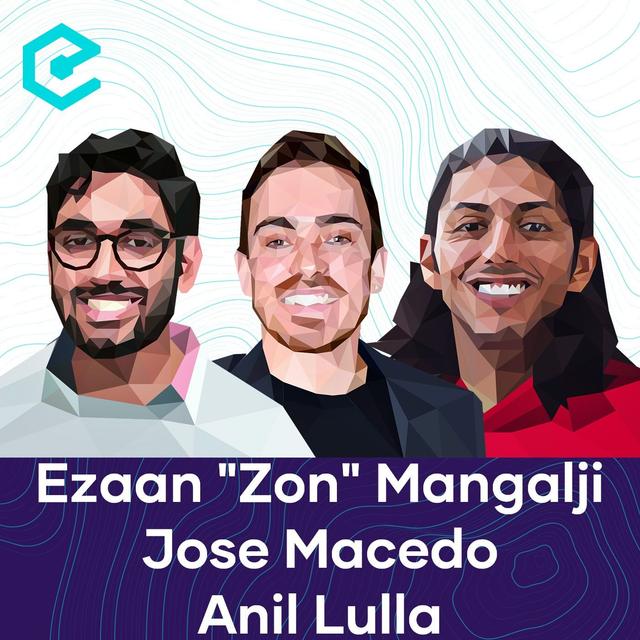
Initiative VIP. Welcome to Epicenter of the show which talks about the technologies, projects and people driving decentralization and the blockchain revolution. I'm Brian Crane and today I'm speaking with Zon who is the Co founder of Initiia and we are joined today by two very special guests, guest hosts. So Jose Macedo, who's the Co founder of Delphi and he runs at Delphi Labs part and then Anil who is the CEO and founder of Delphi.
So Initia is a layer one blockchain that's designed around deploying customized interconnected or interval, as they call it, roll ups. They've just launched. So really excited to dive into initial today. So just before we get started, we'd like to share a few words from our sponsors this week. If you're looking to stake your crypto with confidence, look no further than course one.
More than 150,000 delegators, including institutions like Bit Go, Pantera Capital and Ledger Trust Course One with their assets, they support over 50 block chains and their leaders in governance or networks like Cosmos, ensuring your stake is responsibly managed. Thanks to the advanced MEV research, you can also enjoy the highest staking rewards.
You can stake directly from your preferred wallet, set up a white label note, restake your assets on Eigenia or Symbiotic, or use the SDK for multi chain staking in your app. Learn more at Chorus .1 and start staking today. This episode is proudly brought to you by Gnosis, A collective dedicated to advancing a decentralized future. Nosys leads innovation with Circles, Nosys Pay and Metri, reshaping open banking and money.
With Hashi and Nosys VPN, they're building a more resilient, privacy focused Internet. If you're looking for an L1 to launch your project, Nosys Chain offers the same development environment as Ethereum with lower transaction fees. It's supported by over 200,000 ballot errors, making Nosys Chain a reliable and credibly neutral foundation for your applications. Gnosis Dow drives Gnosis governance, where every voice matters. Join the Gnosis community in the
Gnosis Dow forum today. Deploy on the EVM compatible Gnosis Chain or secure the network with just one GNO and affordable hardware. Start your decentralization journey today at gnosis dot IO. Cool. Well, thanks so much for coming on guys. This is this is going to be fun and it's kind of a different format than we usually do, but I think it's a it'll be a good one. So maybe we can just do some introduction. Let's just go around, maybe Zon, do you want to start? Sure.
Howdy fellas, I'm Zon. As Brian initially said, I'm one of the Co founders of Initia. We just launched. It was pretty awesome. I think we launched the initial L1 plus around 10 layer twos all in different VMS all at the same time. It might be the largest orchestrated multi chain launch ever probably. I don't think people usually launch multiple changes at the same time. So this is probably the only one that happened, but also I guess the largest.
Yeah, I'm sure we'll dive further into it, but pass it over to Aniel. Yeah. So I'm one of the Co founders of Delphi. We've been early supporters of ZON and the initial team for a while now. So it was super excited about this launch and yeah, excited to be here to talk about Initia. I'm sure Josie and I will talk about our whole like, you know, app chain thesis, the failure with it and then how we kind of it up, you know, diving down an initial rabbit hole.
Yeah, I'm, I'm Josie. I split my time between Delphi Labs and Delphi Ventures. Adventures actually LED this initial investment and known ZON for for a few years now. And yeah, hoping ZON can make app chains finally work and avenge our avenge. I think all of us on this call have been bullish Cosmos, which isn't, which isn't ideal, hasn't been ideal. So hoping hoping ZON can run it back and make make app chains finally work.
Inshallah. Brother, Yeah. Maybe zon you get so you were building on Terra before. I'm curious, what were what was your experience building on Terra and how did that led to you starting Initia? Yeah, So I I wasn't just building on Terra. Before that, I worked at Terra as a smart contract dev. It was like my first time getting into smart contracting and building in crypto. Before that, I was just a
regular software engineer. I played a lot with Ethereum but never actually built contracts there. And so Cosmosome and Terra were my first time, you know, actually doing that. And it was a lot of fun. I thought it was really interesting. Cosmosome was cool. I got to learn Rust for the first time. All these new principles when it comes to building smart contracts. And the craziest 1 is just that stuff doesn't execute automatically and like something has to poke a smart contract to
move. And that was just like a crazy paradigm shift in my mind. And as a opposed to building in Web 2. And so that was a lot of fun. I got to build some really cool applications. And then I left Terraform to build my own project with my current Co founder Stan. And it was an options project that was basically hooked into Anchor along with we had a lot of the ecosystem teams ready with integrations.
And it's really exciting because Terra as a chain was like one of the most vibrant ecosystems out of any blockchain that existed
at the time. Obviously a lot of it was fueled by Anchor, which we know was super unsustainable, but it was like this crazy run that was happening in Cosmos, and Terra really was all of Cosmos. And I think it was somewhat propping up the app chain thesis to a big extent because we're like, hey, look, this one app chain really succeeded, but none of the others really also succeeded in their own merits.
And so once Terror collapsed, I think that with it, a lot of the app chains and Cosmos just crumbled. And obviously the project that I was building, that didn't make any sense anymore. And so we scrapped that return money back to our investors who funded us back then. And then basically a few months later, we're thinking about what to build next because me and Stan still want to do something.
And we started basically thinking about Initia and rebuilding the app chain thesis with a much heavier guiding hand, one where you shape it's creation, the first few app chains and how everything comes to play rather than leaving it all up to an open source system. Yeah, that was kind of the the beginnings of that. And when I was working on Terra is when I first met Jose and Anil.
I think at the time they were on the labs team working on Astroport. And that's actually How I Met my Co founder Stan. He was designing Building Uni V3 or concentrated liquidity pools press report and I was supposed to help build it. So thanks, Jose. You're welcome. So yeah, let's talk about the app chain thesis more generally. I mean, I guess if you sort of zoom out, right, then the thing that everyone competes for the most in crypto, I would say is like application developers,
right? And application developers have a lot of different options today. You could build, maybe you need maintenance, but you know, fees are high. So that's probably not the preferred choice for most people. But you have things like Solana and Bass, you know, that are at the top, right, where you can just build your smart contract on there. Or you could say you build your own L1, right? So that has maybe struggled a bit, but it's still happening quite a lot, right?
People still build their own L1, whether it's like, you know, a kind of totally new L1 or whether it's maybe Cosmos chains or you know, some other people competing trying to compete there, maybe like Avalanche and and some others trying to go in or there's roll ups, right? And then roll ups again. There's many options where you could deploy on an existing roll up or do your own roll up and you do your own roll up. You can do it on Ethereum, you could do maybe some sovereign
roll up on Celestia, right? Or you could build on initial rights like interval and roll up. How maybe for any of you guys, how do you guys see the sort of pros and cons here and the state of the app chain thesis? So, yeah, I think that the the trade-offs and I think one thing that's interesting to to note is that app chains at least in the, in the broadest sense of of sort of like an app specific execution environment are like winning.
You know, we've seen it and, and across all cycles, right. Like in the first cycle, there was sort of Ronin and flow and step in, in this cycle there was DYDX, Hyperliquid Blast abstract converge. Now, like it's clear that there's product market fit for large projects doing like app specific environments. Most of them are going for L twos nowadays rather than L ones. And I think that makes a lot of sense, which is also why initiative design makes so much sense.
And I think the the main reason that people do this is because sovereignty and customizability matter, right? Developers want to control the ground they build on. They want to be able to build fully vertically integrated experiences. They don't want to necessarily compete for block space face like uncertain costs. They might want to customize parts of their stack.
They might even want to be able to like rollback state if they need to, right, without relying on an L1 having to do that if there's a hack or something like that. So I think there's a lot of reasons for going into an app specific environment. And I think that thesis is winning. The thing that didn't win was like Cosmos, right? Or, or I guess like Cosmos SDK has done, has done well, has done OK, but Cosmos, so like Adam is a token and and sort of the tokens in that ecosystem
haven't really done well. And to me, Cosmos just sort of misunderstood the role of an of, of like the hub that a hub needs to provide to app chains, right. And I think part of it is because it was conceived 10 years ago before anyone who was even talking about L twos and most of the design decisions were made optimizing for sovereign chains rather than
roll ups. But the second thing and most important, I think, is that it's sort of misunderstood what projects want from like their hub, right from, from, from, from a hub, like the realities of what they want. Like they thought, oh, well, all they need is like this optional
security. But actually that that's like not at all the, the, the stuff that's most pressing, like the the hardest things about doing in app chains and the biggest trade-offs in launching one versus launching on an existing chain is simple stuff like wallet integrations. Like you have to do your own wallet integrations. You have to do if you're, if you integrate with a centralized exchange, they need to integrate with your chain. It's way, way harder to get that done.
Block explorers, like there's no block explorer even some of the like biggest change today. I mean, Solana block explorer is notoriously crap, right? You don't have canonical bridged assets with, with liquidity, right? So you won't have stable coins. You're going to have like this, this alphabet soup of stable coins with different, with
different prefixes. And then there's like the intangibles, which is the, the business development and ecosystem development, which is actually like one of the most important parts, right? If you're a high project on Solana, you get a lot of benefit from that. Like there's a bunch of people that go farm your AirDrop people are active on like Solana Foundation tweets.
You people will be active on your Discord just because you have that ecosystem behind you of everyone that owns Seoul and wants your project to succeed because it's good for Seoul. And all of this was missing from from Cosmos. Like there was no, there was no unified way to bet on Cosmos. Like it never happened, right? And at the same time, every time he launched a new chain, you faced all these issues. And so there was just, it was just very costly to build an app
chain. And this doesn't even go for the fact of like bootstrapping validators having to to payout inflation, fragmenting UX. And so initially just sort of from my perspective, really reinvented like rethought from first principles. What does what what do you want from a hub? Assuming we go into this sort of roll up centric app specific world, what do these roll ups
actually want from a hub? And then they sort of rebuild it from the ground up, thinking about all these things and like solving kind of all the problems. And I really I've just I've just rambled for a while. So maybe he's on. You want to come in and say how you guys did that or sure. Yeah, I think Jose is right, right. Like there totally are two ways
that crypto scales right. We, we all know it's either the fast chain or the app chains and everybody's working on the fast chain Cam. I don't know what's actually going to win in the long run, but I can, you know, put my horse in the race for the app chain thesis because it seems like it's the natural evolution, right?
It's an application's final destination is what we call Anisha. And it's because apps will want to capture their value and potentially make customizations that lead them to winning one specific vertical because they've altered something that lets them edge out competition on that sector. And that's the way we've kind of
seen things play out over time. You know, you have perp Dexes on every chain, then one actually takes it seriously, builds their own chain, and they just fucking win, right? And this is going to happen along other verticals as well. So I think the option thesis will play out. Now. It's about how do we make this very easy? What do teams need? How do we get more of them to build? And I think Initia is just designed in the right way to provide these teams everything they need.
But if you look at some of the other options, they're just still so infeasible, right? Like building a Cosmos layer 1, you get the flexibility, but it's still God damn hard. Building A roll up on Ethereum, very easy, right? You have so many Ras solutions but you fragment all the infrastructure because these Ras solutions give you like 10 DA options and 15 interrupt solutions and all these oracles. And you need shared standards across a multi chain world for
UX to properly work. And then you have no customizability like OP Stack, arbitrum, orbit. These things are great, but you can't like for example reorder transactions. You can't use a different type of virtual machine. The choices that do matter for developers day in and day out are things that you can't edit, but you get to change the DA layer. Like those are not what's actually interesting.
So at Initiow, we've kind of combined the best models by using some of the hindsight in history that we've been through as builders in Cosmos, as well as big users on Etherium. Allowing teams to build entire Cosmos SDK chains in whatever VM they want as roll ups on Initia and have instant access to basically everything they need from explorers, liquidity, integrations, rewards. And then ensuring that we have a very tight hand on what the product UX looks like.
So what does it actually look and feel like for end users interacting with 15 different roll ups? And do we control those touch points so that over time we can get to a world where it feels like 1 and the initiate team can envision that and build that ourselves? And then lastly, like how do we ensure that value is retained?
And how do we align kind of all the participants of a world that's so fragmented in terms of, you know, L twos that care about themselves and their growth users on the L1 stakers, like how do we align all these people? And we've basically built a very robust economic framework that lets us do that, which is called initial VIP. And what that does is it essentially just distributes rewards to users that are using applications, simple as that.
And as a layer 2, to get more rewards, you have to build use cases for the native init token and basically care and have a reason to care about it. And that's either you build a demand sync or integrate the native token on your chain, or you try and influence holders on the layer one to vote for you.
And so in this way, we kind of make sure that everybody still cares about in it. I like to use an example that initiatives like the federal government and roll up to like states within the US where everyone has their own sovereignty, but they still care about the ultimate growth of the
entire country as a whole. And I think having this Federated stance will allow us to build this app chain future correctly at 1st, and then in the future we can think about how to properly decentralize the control of everything.
Yeah. I think, like one of my favorite, you know, things that you guys have focused on your approach is, you know, the target customer in the immediate near term is has been like definitely deaths, right building, especially with the flexibility that you have, you know, supporting EVM move VM Wazmi VM desk, can, you know, build using solidity move web assembly, right, like kind of
anything. But I think what's really cool about it is I think at the end of the day, the end user is going to also like reap all these benefits, right? And kind of curious, like, you know, what loaded kind of get more into, you know, how the launch went. You guys just launched recently. What you know, how did it go?
I know you guys launch with, you know, like, I guess like 10, you know, Manisha's like, you know, curious which ones are you maybe not most excited about, but which ones are you like most surprised about coming to market this fast? And which ones do you think are necessary for like users who are going to start bridging the initial like how's that experience and what what can they do right now or in the near
term? You know, launch is never as smooth as you see, as you think it's going to go. Everything always has some problems, but I would say things went relatively smoothly, at least on the L1 side. I think one of the things we've seen in the past is just when an air drop happens, chains always break because you have like hundreds of thousands of users just trying to spam transactions
within the same like 2 seconds. And so we built a really nice batching system that essentially just batches requests and then we do 1 transaction that sends like 100 people their air drop at one time instead of each of those being its own transaction. And so that really helped make sure that the launch went smooth. And then in terms of layer twos, you know, we, we did our best to have all 10 and their front ends
live before the public launch. But I think it was actually around all 10 chains were live, but maybe only around five of them had their front ends up. But over the weeks since launch, all of those have come online now. So we're in a good place and we have, I think, 5 or 6 more roll ups that will go live over the next month. So that's pretty exciting. And there's quite a few things that people have been doing on the chain. The first and foremost is we have the system called intrine
liquidity. We use our inflation to basically build a hub of liquidity on the L1 that's accessible, but you also stake that with validators. And so I think there is like a $15 million in it USDC pool on the layer one that has a pretty good APY. Obviously NFA don't ape into that pool if you don't want to, but that has been pretty awesome to see just that growing and people actually using the system. And then the first VIP distributions happen within the
next three days. I think that is one of the most exciting things to have been watching because there's a gauge vote on the underlying layer, one where stakers vote which roll ups they want to receive rewards through the VIP system. And watching that evolve has been really interesting. So right now you basically have people playing some games behind the scenes with these whales stakers to try and incentivize them to, you know, vote for their roll up to allocate them
more rewards. And you kind of see a little bit of dominance moving towards like the Defy applications for these because they obviously are trying to sustain larger amounts of TDL. But what's interesting still is that even if you are not a Defy application and you still get some of the votes here, that is probably hugely advantageous for you and your users because you're not trying to maintain 204050 million TDL in a lending market.
You're trying to give a little bit of boost for doing actions in a game, and VIP basically just helps you bootstrap that. I think one of the things about bribing behind the scenes is that it's a little bit SUS. If you don't know the right people, it's going to be hard to get the gauge vote up. But that is why I'm excited about platforms like Cabal, which kind of make this transparent.
I think you guys are investors in Cabal, but it basically allows anyone to, you know, provide incentives to voters to vote for them inside this Gage vote and that'll be good once it becomes fully transparent. But the the economy has been pretty exciting. I think like so one of the ones that I point to is Kamagotchi. They're a fully on chain game, just probably the most cracked game that I've ever seen get
built. That is all on chain and it makes perfect sense for them to be their own roll up because they capture the value from their sequencer. I think in the past four days alone, their sequencer is minted like 15K worth just off of transaction fees. And like that's, that's already a very awesome sign, right? There are paths to being profitable as a roll up because you aren't distributing these fees back to a set of
validators. You're just keeping these rewards and you know, 15K in four days is like probably enough to sustain your runway for a small team of people. And it only increases as your game becomes more exciting or you get more users. So that's pretty cool to see. And then they also held a public sale. Their token is backed by baseline. I think they raised over like 2 or 3 million in that public sale, all on chain. That's pretty awesome for a
young healthy economy. And then a couple of other cool projects that you might want to look at are Echelon and Inertia. They're basically just lending markets, but Echelon has I think maybe like 300 mil TBL across Aptos. And now on Initia, they have an early lending market for in it USDC, Tia, some of these other assets. Yeah, it's, I mean, what have you guys been seeing? Have you tried any of these roll ups yet? Not yet, Maybe just liquidity providing on one O 1.
Thank you. Honest work. Yes, Sir. I've seen some of these NFTS going. Crazy too. Yeah, the Stargaze team, they deployed A roll up called Intergaze, which is basically just Stargaze but as a roll up, which is pretty cool because they are definitely one of the last remaining builder teams in Cosmos and they have just been launching a few collections like Twosies, Raccoons, Enyas. Those have been fun. Yeah.
I mean regarding the launch, right, maybe one thing briefly to mention, since we have this group together, I mean we of course one, right. We've been working with Inisha for a while and and now worked also with Delphi, right to launch the first Delphi validator. So maybe a Neil like. What was the thinking for you behind behind doing a validator for initia? Yeah, to be honest, Brian's been annoying me for a while to do, you know, to have Delph. I do it.
It's first validator on, you know, some chains, right? And to be honest, one thing that we always discussed internally was like, we wanted to make sure, you know, we, we feel like it's kind of like a, a big responsibility of us, like, you know, tying our brand or kind of like using our brand to kind of hike have this vote in confidence. So we honestly didn't really think about it till, you know, we really started getting excited about the initial
launch. And, you know, I think we kind of chatted with Brian and said, Hey, is this possible? And, you know, didn't even realize how closely you guys were working together. I think it made a lot of sense. I think our team's super excited about that. It's, it's gone like, you know, really well since we first started. It's like a whole different validated business that we've launched.
So, you know, maybe we'll do more, but I think for now, we're we're pretty excited to, you know, see how this one goes. And to be honest, I think Delphi as a whole, the way that we kind of have like operated and learned in the space is like, you know, rolling our sleeves up and getting our hands dirty. And I think the validator side of crypto has been some, you know, side of business that, you know, obviously with people like Brian and our network, we've been able to learn a lot from
that. I think like actually getting our hands dirty and getting involved helps us just understand it way better. And I think initial was a change that we wanted to kind of support and kind of get like as close to as possible. Yeah, let's talk about the the whole economic model because that feels like one of the most
interesting parts. I mean, I think we on on a high level, right, like proof of stake chains have basically so far right used their native inflation to incentivize people to stake and, you know, secure the chain. And you know, that makes sense, right. But of course, if you think of like the success of a chain, people just staking and securing it like it's not enough.
And, and especially, you know, liquidity is such a crucial thing and you know, we've seen Bear Chain do something very interesting there with proof of liquidity, which is, you know, we, we'll see how it works in the long run. But it's definitely, I mean, for us as a, as a validator, it's been, you know, very challenging, but very interesting, right, To like really understand how to optimize this and how to generate higher rewards. Now you guys have done this like enshrined liquidity.
How how have you thought about designing this? And maybe also in reference to the Bear Chain model like. Where do you want to differ here in terms of how it works? Yeah, I think the the justification here is, you know, chains are interesting because of their apps. That's why users come and use them. So what can we do to ensure and help apps win? And what else does an ecosystem need, right? Where should inflation really be going in a network? And it's not to staking. Why is that?
Well, if you're staking inflation and your security budget is the vast majority of your inflation and like one of the highest rewarding things to do, you're directly cannibalizing your own ecosystem. If I'm getting, you know, 1020% stake tokens with the L1, which is probably like the most secure and safe thing I can do with my tokens, and a lending market is paying 6%, I'm never going to go lend my tokens there because I'm just going to stake them.
And so I think using that security budget and inflation in a way that actually adds value is hugely advantageous and probably the way that most new chains are going to move towards in the future. You can get to a level of security that is safe enough by using tokens that would otherwise not be able to be used. So for example, in our case, we allow investors to stake their tokens for around the base inflation rate, which is around
2 to 3% APY, so relatively low. The rewards are locked and vested over the same four year vesting schedule, so you know you're not going to be cheated on. And now we have built up layer of security and economic stake that is enough that we need. So instead of using 40% of the supplier to pay the stakers, let's use it to do something meaningful. And we basically do two things. One is intra and liquidity and the other is VIP.
So intra and liquidity is built basically just to incentivize the initial L1 to be a liquidity hub for all of the roll ups on Initia. You know these, one of the interesting things about Initia is that no team is building a general purpose layer 2, right? We think that is like a losing fight. Every layer 2 on Ethereum is a general purpose layer 2. And the difference between them is the color of their apps or their branding. Really just not interesting. We won't be able to build app
chains. Focus on one thing, go try and win on that vertical. And because of that, you're probably not building a DEX on your chain, or you're probably not trying to build liquidity on your chain or you don't want to do that. And so the initial layer one acts as the base hub of liquidity for everyone. And so we repurpose a lot of the inflation for 25% of the entire supply for staking basically LP tokens with validators. This allows us to just build a hub of liquidity for major
assets. And because of how interwoven roll ups work, it's all accessible from L twos. So right now it's just in AUSDC. We might add other pairs soon, probably in it SUSDE from Athena. And then if there is enough demand for assets like ether BTC, we'll build like for that as well using the same inflation. And the second part of inflation, another 25% of the supply is basically to VIP and this is allocated to users of Layer 2 applications.
As mentioned earlier, layer twos get rewards based on how much in it they have plus a gauge vote on the layer one. And then on each of these layer twos, the teams set metrics on chain on what users should be doing to receive these rewards. So if I'm Echelon, for example, I need to lend in IT and lend USTC. And for that reasons, those on chain metrics count for my VIP scoring and I'll get in it
rewards based on that. And these rewards aren't just distributed upfront and they're vested as escrowed in it. And basically the way to unlock these rewards is by maintaining your engagement over time. So it's essentially A programmatic air drop system where every two weeks users are being air dropped rewards and they have to keep using these chains to unlock these rewards. And this is a vested interest program that's happening on the L1 or it's happening on the L
twos. So it's based on the L2 activity, but you get these rewards on the L1 directly to a user. So, you know, it can't be a team can't just give it all to themselves and then take some of that. They can set an operator Commission just like a validator. Yeah, I think the the launch has been pretty cool. You know, we have probably around these 10 roll ups around 30 to 40 million TBL and all of that is natural.
I think one of the things I've seen from a lot of chain launches this past cycle is TBL deals before launch. So that right when you launch the chain you basically have like a few 100 million or even billions of dollars of TBL. But this is an incredible waste of money almost always, right? The vast majority of this TVL has no mandate. So it's just sitting on the chain. Or it's in a form that is entirely useless, right? Like not to throw ether Fi under the bus.
Amazing team. We have weeth on the initial one. But like a weeth ETH pair is probably not going to do much for advancing your economy on chain, but maybe a stable pair with a native token or, you know, in an ETH USDC pair might. And so a lot of the liquidity is basically just a way to show on Defy Llama that you have larger numbers and you pay for that in tokens that were usually at some sort of seed valuation rather than the currently trading price. And these tokens are kind of
phantom tokens. Props to teams like Bear Chain which did this at least publicly so everyone knew how much rewards were being admitted for these pre TBL farms. But there's other teams that essentially just promise investors lock tokens at a discount to bring TBL on the chain and these tokens just will suddenly appear in the circulating supply because they actually came from something
like the foundation. And I think that's a pretty unhealthy habit that the industry has gotten into, and I'm hoping that we can do things a bit more cleanly going forward with Initia. Yeah, that's a big thing you
guys have done. I think done things the clean way at every turn, like whether going out to community round at the same like lower round actually than the than the last BBC round, the way you've launched the float, being transparent about it and stuff launching at a lower valuation. I think all these things, you guys have done things the right way. Let's see if it pays off.
Hope it pays off. I think like one thing I, we kind of spoke about this a lot leading up and we're when we're advising teams on this is that like there's a reason everyone does things the wrong way, right or like the the wrong way. Like there are a lot of benefits to launch and get a higher valuation with a scammy float. Like all, all the stuff that you see, I think I guess most egregiously in like the movement type situations, there are like benefits to doing that.
And I, I hope that like I think initials, probably the the highest quality project that's done things the, the right way. There are a few others, but you know, I'm and I'm hoping it can like start a trend because yeah, it's, it's, it's cool to see. Yeah. I mean, I think there's, this is definitely sort of ties into what this a little bit of a
crisis in the industry. I would say at this point, right, where we have all the seasoning tokens launching and people trying to manipulate the price, the FTV, the TBL and you know, it works until it doesn't work. And, and then I think we have seen now the, the, that just retail, I think it, it worked in the past, right? Because, Oh, it looks great. And then retail users would buy it and it will kind of sort of sustain. And maybe you could sort of fake it till you make it type thing.
But then I think users have woken up to that, right? And they're like, well, these, these things are like down only and like, I'm not going to buy it, right? And so we see basically almost all the new launches struggling, right? And, and, and just going down and, and not being able to sustain it and everyone worried about the unlocks that are coming. So I think different ways are needed. So it's very cool that you guys are going that direction.
Yeah. I think what matters is just how long do you expect to be working on this project and what is your time horizon. The incentives are just totally not set up for you to be a long termist in crypto and by no means possible, right? And no, I just think that initially can be huge. I love my team. I love the people that we're working with, and I hope to be working on this for years to come.
And so if you have that mindset, I think, you know, starting some are reasonable and growing with your ecosystem and with the project only makes sense. But we'll see what happens,
yeah. Yeah, I I think like even even the most long term teams and that we work with on the venture side or even the consulting side of Delphi, like, you know, once you have a token live because of the short attention span that, you know, the community and like a lot of, you know, people just within crypto has there's just so much pressure.
I I think like we really loved how long term you and Stan have been thinking about initial and like, you know, just the amount of time you put into even the launch. Like I'm curious, you know, one year after main that like what's like a single stat that will tell you and this just like working or not like what like for you guys, like what are you guys thinking about, you know, long term, obviously not, you know, price or anything like that, but I'm curious what you
think about. Yeah, I think number of roll ups is a great thing, but I think it's very easy to be number of roll ups doesn't actually matter. What matters is probably more so like. There's a well known ecosystem with over 100 roll ups. Yeah, yeah, exactly. I think all that really matters is a few applications. So rather it should be metrics like revenue generated by roll ups, right? Stuff like the fees that are actually generated.
Are these teams making money? Like how profitable are these roll ups users that are cross pollinating? That'll really show if you know this interwoven thesis is working out where you have all these app chains that users can move between very easily. And then probably TBL is just a standard metric to to look at across the roll ups. But I think the biggest 1 is really just revenue.
One question I have it, it feels like Initia and the app chain thesis generally is like a bet on crypto innovation, right? That that hasn't happened yet because I don't know if you agree with this, but to some extent, like if sort of Anatoly and some of the Solana people are right that the only use cases are minting and trading tokens, then then I think Solana or something like it is is probably the right design,
right? Like a a monolith with with shared state, like all the deep applications, shared state and stuff is probably the right design. So I think to to to believe in the app chain thesis and an initiate you, you sort of have to be bullish long term like crypto innovation. And I'm curious how yeah, how you feel about that. And also also the other two like yeah, how do you guys feel about that?
Are there are you bullish at this point or and are like what applications like pockets are you most interested in and especially for you and Anisha Zun? Yeah, I think you're right. It really just depends on like, how hard are people going to start tinkering? Are we going to start getting some interesting experiments?
I've been thinking about it like when a new PlayStation comes out, you know, you get some of the same games that you had before, but then a few years down the line, people start taking advantage of all the specs of the PS5 and you get the fucking most awesome games possible like Elden Ring. And so I'm thinking that's, you know, it's a similar bet here with the app chain thesis, right?
That now that it's actually easy to do this, teams will spend a bit more time and want to control their stack and we'll build something super interesting. The problem is what is going to be built and the spectrum is so huge in the the design space. And I think the Initiate team itself has a range of ideas that we want to experiment with, but it's hard to say exactly what will be done.
And what I think is also interesting is these new virtual machines that are opening up the design space too. Like Move has only been around for so long, but it is a phenomenal language to work with. But I think the viewpoint that new virtual machines will unlock net new applications is totally wrong because based on examples, we haven't seen any net new applications on after Sir Sui. We just see the same things written in Move. And I think that's just about express expressivity as a
developer. And so I am bullish on experimentation, but I totally think that it takes time for those experiments to play out. What about you? You guys curious? Yeah. I mean, I do think there's strong evidence that, you know, defy or financial use cases is, is just is the thing that like block chains are incredibly powerful for. And I think that's also where sort of the the blockchain advantage really comes in, right? Because the composability in Difi is just amazing, right?
You can like do something and then it leverages this protocol and then use a token, some other protocol and maybe borrow against it and do something again. So I think if you compare like the traditional financial system and the on chain system, then I think that kind of composability and and define innovation there does feel like really the unique
superpower. Now, of course, I think what it does open up is now you can maybe financialize and incentivize like a much wider range of stuff than you can in the traditional world. Like you can start having maybe, you know, social networks that have some kind of incentive component or games or now. Yeah.
I, I mean, I think social networks to me has been one of the things where, you know, even from the very beginning, I felt like if you look at something like Facebook, right, Facebook managed to get this enormous scale, but you know, the users who, you know, the power users who really like helped make it a success. They didn't benefit from the
success. So I, I've always felt that like if you could build something like a social network type thing where you have much more of an incentive alignment and the people actually driving it forward can benefit and you have sort of markets that actually work. You know, that could be like extremely powerful. I don't think we've seen that yet, right? I mean, you had some, some brief spikes with like friends tech and, but like, you know, it didn't really make sense.
They weren't well designed. So I think that is one one example where as a category I feel, you know, very bullish on in the longer term gaming, I don't know as much about. So I but I I could see see that also being 10. Yeah. What do you think, Anil? Yeah, I think, you know, obviously within Delphi, we talked about this question a lot.
And I think like when it comes to app chains, we've, you know, to to your guys point, I think we've really seen specifically not just D5 but like perp Dex's kind of be like the biggest winners and it's like option pieces, whether it's DYDX, hyper liquid, etcetera. I think more broadly though, you know, the way that I see crypto, I've I've said this a bunch, it's just like like humans, like most powerful human coordination
tool, right. And I think that actually becomes more and more useful with kind of like all this abundance that's created with things like AI going forward. So yeah, I I'm still very bullish on a lot of these use cases that we have been investing over the years, even though, you know, something like gaming, obviously we were, you know, big investors and big proponents of like AXI and, you know, Alluvium and stuff way back in the day.
I do think games have like this big potential of being this like, you know, every, I think year in crypto, you always, you know, are hoping for, you know, 1-2 or three like big, you know, mainstream applications that kind of like not just, you know, show off the power of this technology, but also on board a lot of the masses that maybe aren't in crypto yet. And I think games are still like a bet that our team still it, it's very hard to make that bet 'cause I think a lot of them
won't work out right. But I think we've invested in a lot of like really strong teams that are to think about this and like the right way. And you know, we're all obviously hopeful that like one of those works out. I think when it comes to like, you know, D5 and it's place in crypto, like I think I go back and forth on this honestly, I think like when I first got into crypto, I was super excited
about D5 for sure. But I still thought that like there was this huge potential for, you know, a majority of like long tail use cases. I mean, D5 would not be like the biggest portion of this. And I think over time, I've kind of come to realize that D5 is kind of like the backbone of all these other use cases anyway. And what percent is that? Is that like 5060% of what crypto will actually like enable is like 8090% is the thing I kind of go back and forth on.
And I think like is like the question of like, you know, us doing research, us building, us investing to, you know, figure that out. I think the next big boom for applications will be once ZKTLS is like here and ready, right? That's you can just bring anything from anywhere on chain and create primitives for it. And that just widens the scope of what we can bring on chain by like, you know, trillions,
right? Right now, it's actually still pretty hard to bring new assets on chain, whether those are like RW as and no one cares about like a wine bottle. But once you have like the ability to bring someone's gaming data on chain or like their scores and stuff or their medical records, these are all things that ZKTLS just like enables a lot quicker. And I think that's when you have the next boom of crypto and I'm pretty excited for that.
So, so just CKTLS basically means, right, like you, you have some sort of VEP session and then you can verify the results from that, write it back on chain. So let's say if I the medical record thing, I log into my I don't know, medical website and then you can verify some data that it shows there leveraging SSL, right? And then and then you can verify it on chain.
Yeah. So I think like, you know, ideas like medical records on chain have been always one of the things that people have said block chain is great for. And it theoretically it makes sense. We've just never gotten that, which is kind of crazy and like no one has done it. Well, yeah. And so maybe ZKTLS will make that easier, but you know, I'm just looking for more fun things to do on chain.
And I think, you know, like allowing people to bring their, you know, World of Warcraft or their league data on chain and start trading stuff for the ways that we can start to stack financial primitives here. And maybe I'm lending against some of my skins or who knows what can be created, but the the design space just becomes so much bigger. My kind of take although is, is that basically crypto is in the through of disillusionment stage.
And like, I don't know, I've been speaking to a lot of teams recently that have sort of like been building for a few years and are now seeing like big optics. And, and this is everywhere from like sort of world coin to like stuff in the energy space, like the decentralizing grid stuff that we've talked about for years. Like all these things have been building in the background for like sometimes 7-8 years and are really starting to see like
optics. And I, I think eventually almost all the things that people imagined in 2017 will end up happening. It'll just take much longer than everyone expected. Kind of like how it happened with the Internet, right? Like all the most ridiculous, like laughed at ideas that people had in the in the late 90s ended up happening. They just happened like way later. So yeah, I don't know, I think the same thing is going to probably end up happening in
crypto. It's just tough because at the same time there's a lot of very overvalued like vaporware because of just the nature of public mark, like giving public market liquidity to early stage things. And so you have like these these like 2 forces happening at the same time. Yeah, but but I'm, I'm pretty bullish on a lot of these different applications like coming to market. And I do think it's kind of a no brainer to me that like every, pretty much every asset will,
will end up on chain. Like you're already seeing it. And like stablecoins, anyone who's ever owned a stablecoin for, for a sufficient amount of time just knows it's like you'd rather have that than a Fiat dollar in a bank account. It's, it's just better in, in every way, right? You don't have like a bunk bank like cucking you every time you want to make a transaction or asking you to go into the asking
you to go into branch. Like, yeah, it's, it's seamless, like interoperability with any, anything you want to do with it. So I just think that's going to be the case for like every asset and you're seeing it with stocks. I think Super State just announced today they're like bringing stocks on chain, you know, a few people working on that too. Yeah, I, I, I'm pretty like, yeah, I'm, I'm pretty sure on that one. And that's just like the defy use case.
Like I'm, I, I sort of think there's no way to, to put the cat back in the in the cat back in the bottle. Doesn't sound right. Genie back in the bottle. Yeah. Don't know why you'd put a cat in a bottle, really. Yeah, I think it's, I think it's going to. I think it's going to happen. I, I, I think this goes back to like what we were saying earlier about like patients, like, I think the crypto industry has this kind of like mental illness of just like wanting everything
to be done like ASAP And now. And I think like one thing I always think about is taking a step back and thinking about how far we've come even since like when we've got into crypto. I think, you know, a lot of like the successes and headlines that you're seeing week by week right now or would be things that like you'd be in disbelief in that, that we would even have the opportunity to see even like 6-7, eight years ago.
So, yeah, I think like to your point and and to Zon's point, as you bring all these assets on chain, I think another cool part is like all this, you know, experimentation, all these maybe dumb games that people view as like not value productive at all have actually been, you know, making the end for more robust, have made like a lot of these mechanisms, design decisions
like way clearer. So when these assets do get on chain, we have like we're not starting from zero and have to go and work through all those things while we've, you know, bring these assets on chain. So yeah, I mean, I'm super excited about that. I think like, you know, one thing I've learned, you know, building Delphi at at large is just that like, you just got to be patient. This stuff doesn't happen overnight. But you know, if you take a step back, like progress is being
made. I wanted to ask about one thing that maybe goes a little bit more technical regarding initial. So if you think of the app chain, I mean, one of the big struggles with if if you look at Cosmos, but if you look at app chains more generally has been, you know, the the fragmentation of user experience and the challenge with liquidity as well, right? So you'd have basically the nice thing in Solana or here you might, you have all of this liquidity, everything is there.
Now you have different chains, it gets fragmented out. You know you guys are addressing that, but like how exactly are you guys solving that problem? So assets are all issued on the initial layer one or the vast majority of them. And then to and from roll ups. There's essentially two ways to bridge, but to simplify things, let's just say they they all use
IBC. And so if you have USDC on one roll up and you want to send it to another roll up, those tokens transfer through the layer one because IBC has pairwise
dependencies. If I went from roll up A to roll up B directly, I'd get USDC 1. And if I went through the layer one from roll up A to initial layer one to roll up BI, get USDC 2. And So what we do is we essentially route all transfers through the initial layer one and access this hub because that's where all the liquidity is. And because of that, you can have fungibility of these assets where if I'm sending USDC from one roll up to another, I'm going to get the same version
and we're not going to get any new token standards essentially. That's just the key way that we avoid liquidity fragmentation. Cosmos was created as as kind of a web design, but really it should have been more of a hub and spoke. And so we just said let's hub and spoke this thing. That that was kind of like the original actually even design an idea around the Cosmos Hub was that you would have this kind of
hub and spoke IBC routing thing. And then I think it was just a sort of to some extent it was a, you know, failure of execution, right? That that didn't happen and that you ended up having more of these like pairwise IBC thing and then that you know, didn't end up. Everything was a bit too permissionless. Yeah, you got to start off a little bit permissioned, you know, bring the thing into the world the way you want it to be brought in, grow it a bit, and then you can start to give it
the reins. It's like having a child. So it's kind of it's kind of a theorem probably is maybe trying to go towards as well ways in in their way slow methodical research you way. The nice thing is you have everyone using the same standard, right, Whether that's to get into Initia, you use layer zero and then around Initia use IBC. All the standards are the same. And that means we're going to have consistency of assets, but we're also going to have consistency when it comes to
trust assumptions. So as an asset issuer, if you trust one roll up, you're going to be able to trust the other roll up in the same way. You're not going to have to look into the details and see like, how is this roll up run? What's its sequencer set up? Do I trust this bridging or not? Because they're all going to be the same. And those are going to be enshrined at the L1 level.
And once you have this consistency of shared standards, we can start to build a lot of better UX experiences over all of this. I think the UX that we have right now is not bad, but there's definitely a lot of work to be done. We're currently going to do a full redesign of the initial app. The initial bridge page is going through a change. We're going to change a bit of the way that you connect to wallets. It's already nice that you can use EVM wallets on any virtual machine chain.
I think that's just the biggest blocker for getting anyone into Cosmos is they have to download a Cosmos wallet. So I'm never going to switch from my Rabi wallet. And so I need to ensure that would work on Initia as well. And so slowly we'll, we'll make this user experience better. We have the assets all nice and unfragmented and the economy is just getting started and I'm excited for where it goes so. Maybe final topic with Delphi, you guys are investors in Asia
right now. You guys were on the validate initial, you invested in a bunch of initial projects. I think you guys have, you know, you guys have done some research reports right on initial, so a lot of involvement already. I don't know is there anything on the lab side you guys are also doing with initial? Not right now, probably a bit early for that. We could maybe, maybe, maybe do something in the future. But yeah, not right now on the
lab side. But yeah, as you said, pretty active on the ventures and and research side. Yeah. So people should definitely check out that research report. I think if people want to go deep on initial and that's probably the best place to go. Yeah, I think we'll make it public actually for this pod. So we'll drop it, jump in the show notes and everything like that. Cool. So Zon maybe to to end off what's what does the road map look like? So if you think of like the next
two years, what are the most? Important. I can tell you the next two years, but I can probably tell you the next six months at least. OK, let's see the next 6. Months, next six months is getting more roll ups that we are already working with live and out to mainnet adding more assets to intran liquidity. Revamping the initial app bridge and wallet widget to have a better UX and then probably tweaking initial VIP.
So VIP is great in the way it is right now, but it only allocates rewards based on the gauge vote and the balance pool. And I think more interesting ways to allocate these rewards will show up over time. And so we want to make sure that we're consistently evaluating and adjusting our economic models. I think people usually don't change the parameters of their chain after it's live, but these are totally things that you should tweak.
It's basically like changing, you know, the Fed rates, whether you want savings or people spending. And so we're going to continue to adjust these things and that's probably what the next six months looks like. Awesome. And then like what about, you know, devs and users, like what actions should they they be taking if devs want to build on Initia, like what's the process of that? And then, you know, if users want to get set up and everything like that, what's the
process for that? If you are a user looking to get in, go to initia dot XYZ slash on boarding. There's a whole flow there for connecting your wallet, bridging in funds, seeing what apps you can play with, just getting in there. If you are a developer, docs dot initial dot XYZ that's your place to go or my DMS. If you want to yap. You can hit me up at at It's always on E on Telegram or Twitter if you have an interesting idea. Always love to chat.
Cool. Well, thanks so much Sam for coming on and thanks so much Aneem and Jose for, you know, doing this episode together. It was really fun and I'm super excited how this initial is going to play out and what what's the impact going to be for, you know, sort of the larger weight of how people build in crypto. Definitely, yeah. I appreciate you guys. There's nice to be on. Yeah, yeah. Thanks very much. Thank you Amigos.