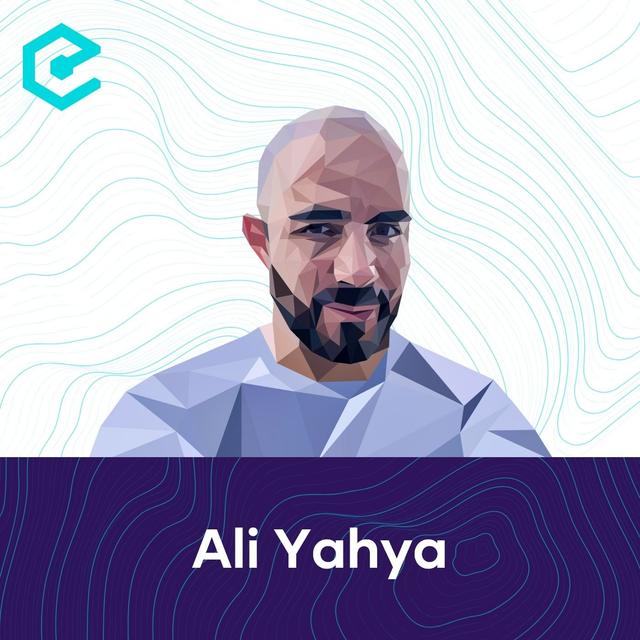



Welcome to episode of the podcast was talks about the Technologies projects and people driving decentralization and the global watching Revolution. I'm Sebastian could do. And I'm here with my co-host mayor Roy. Today, we're speaking with Ali. Yeah, he is a general partner at a 16z course. They are a Massive fund which Bears? No, I don't think that you do. The proper introduction, everybody knows it. Who a czr and the type of the Investments they've made.
But we're going to be chatting with Ali today about a bunch of stuff, including a 16 sees thesis. Also taking a step back and looking at fundamentals of crypto networks. And some of the broader banking in political crises that have been happening around the world in the last few weeks and months but first. Yeah. Thanks for joining us and may be starting off by giving us a little background and how you became part of the team at ACC. Yeah, sure thing.
Thank you, 7 mirror. It's great to be good to be here. So yeah, maybe I'll give you a little bit of a little bit of my history. I was I was originally born and Mexico City was born and raised in Mexico and throughout my childhood that I was fascinated by technology, I was very into engineering and to the things that humans have built I was always in awe of things like you know, fast cars or planes or like tall buildings all over.
Superlatives like the kind of the great things that humans could build and I was particularly fascinated by computers and by Robotics and Prospect of AI and you can have a whole that whole world and very much wanted to pursue a career in engineering. And so I kind of saw it looked like toward the us as a place to study as a place to to kind of make a career. And in the end I ended up going to Stanford to study computer science focused on systems in
particular. I really like to like, right. Code. And that was like that track. That would that would expose you the most to large, like programming, programming projects and programming experience. So focused a lot on distributed systems Operating Systems computer, networking computer security, those were all of the fields that were most interesting to me. And this was, by the way, I like my undergrad started in 2006. This is before crypto was a
thing at the very tail. End of my undergrad degree. In 2010 I was doing research with David Meza areas at the at the computer security Lab at Stanford and that's when we all became aware of the of the Bitcoin white paper. I still have a few emails like in the lab of us being like out
like isn't this. So cool thing we should just like play with it and we all we all like downloaded it played with it, we minded but I think most of us that specially certainly I did I missed the implications of how important that was going to be so even though I was playing with it and minded I didn't track anything. I did attract any of the private
keys. That I was that I was mining with it so that was that ended up being later on like three years after the, after that until 2013, when I started to become more clear, what the applications really were? That was my first very visceral lesson in the space. And I kind of that kind of likes was be, became a seared in my memory as a, as an experience early on. And I feel like many people who bit in the space in a while, have similar stories but I was fascinated by it.
So I kind of was Was following it closely. Since then at the time there was no, there were no word, really many ways of working on it full-time. And I was also, as I said, I was also interested in Ai and so I actually, I joined Google first. I joined Google X and I joined this robotics project called replicant which had been started by an open, which is this abomination of a bunch of different robotics projects and the mission was to build an operating system for fleets of robots.
And that was that Nice because it kind of married my interests in distributed systems and then also machine learning and Robotics. So the very fun project to work on for two years that that that that ultimately it was a project that was that exit actually became the everyday. Robot project, just now a real real thing at me it's like it's alive is now public, you know how X is super secretive about about everything but but it's now a project that people can
talk about it which is nice. But after that I moved over to Google brain. Where where I did a little bit more of the same Act, was distributed systems for machine learning generally and I was working closely with the robotics team at Google brain. It was a core contributor tensorflow, to make tensorflow, more capable to work in that
kind of environment. And then finally, in 2017, like all throughout this time, by the way, it was still kind of fascinated that crypto Google of course will never touch crypto with a thousand foot pole. So I could only really Follow it and play with it in my own time. All right, in my roommate at the time was was one Bennett or the founder of protocol Labs. So we were, we were close or like teasing. You may be my best friend and we were kind of contemporary since
school is we we go way back. We were living together at the time and talking about all of this stuff. So I was fascinated by the space. I won't point they got connected to Chris to Chris Dixon, York firm. And we kind of hit it off and he and he essentially Said like hey you should you to join. We should start a crypto of crypto farmed because back then the firm was simplest investing. We Chris was investing in
crypto. He's been investing in crypto since 2013 or so but it was all entirely within the context of the meaning of the main farm. So the thinking was we should build a dedicated team for crypto and really double down and that was his pitch to me and to me that's all I can operators like that. I love the space is super interesting. I was frustrated that Google is such a big company. It's very hard, actually, get things done. So I dropped, I kind of do.
I joined the firm in 2017? It was christened me at first, and then, we started to build out the team. We've recruited a few other people, and then since then, we both out the entire think they're equipped. So vertical here at the firm, and we're now, we're now up to 80 people or so across a bunch of different functions. And the idea is to not only make great wrestlers, but to also support every portfolio company in every way we can.
And I'm happy to talk a little bit more about the way that we tend to work with Founders, but that's the story. It's been five years now and it's been quite a ride and and it's been awesome and really great. That's a, that's fascinating story. I didn't realize that your roots at the crypto went so far back. And that's like many of us you have been burned early, right? Yeah. But by not realizing the implications of what you were getting involved in.
What you mentioned that you you think that Google will never catch crypto with a ten-foot pole or perhaps even longer pole? Why do you think that is? And why do you think Google hasn't embraced? Do because there's such, like, a forward-thinking company on so many other, you were two goals and industries, but crypto seems to be something that they are incredibly hesitant to Tasha.
Although, although recently, there were some announcements that they were implementing like, if their Cloud offerings, like some MPC services, and things like that, this seemed to indicate that they are you open to providing infrastructure services to crypto companies? But at least I got the payment side or on any of the higher level. Ex of the stack there, there's they're quite absent.
Yeah, well, I could go into an hour long rant about Google, that would consume the entire podcast, but I think that maybe the core reason that that Google will will likely never do anything. Significant in the space is it's just a classic innovators dilemma. It's just the fact that crypto is such a disruptive technology, the fact that crypto works by being fully open by being open source and by the centralizing power as much as possible.
Well, the fact that that is at the core of wood crypto is about is entirely at odds. With the entire business model that Google The Google leverages to survive. And so in order for Google to actually truly move into the space and actually do something meaningful, it would it would
have to disrupt itself. It would have to disrupt the core business models that drive it today and because as a company is no longer really found or lead, you don't have very and Sergey there as involved as they used to be.
And because of the fact that it's atrophied, and all these ways and that is become, I mean, they could, I think it's fair to say that we come up, more complacent company than it used to be. It's just very unlikely that for them, to for them to do anything that disrupting everything that they do now, it seems to be in to be much more incremental and seems to be in service of the core business model that has
that has powered them this far. So, yeah, I think I have not holding my breath for Google to do something meaningful. Well, they do have all of these like little little experiments because Google does still have this kind of Freedom. Where you, as an engineer, you can use your quote-unquote, 20% time and play around with things.
And there are a couple of teams that are maybe experimenting but it's hard to imagine that we will actually invest heavily in and make it up core part of what they do, for a portal of the above reasons. It may be that Google is like the is like the IBM or the HP of Our Generation. Oh, no, for sure. I agree with that completely. I'm glad that this was point and so if this size it, yeah good.
The innovators dilemma is probably the biggest culprit here and that's the case for many, many companies not just Google. You know, we could say the same thing about Microsoft or or Facebook or although you know there have been some I think other types of Miss interesting experiments there that You might leverage purple at some point, but in a very different form than what we know, and they'll sort of thriving for as people have been in space for long as
we have. So, just maybe zooming in a little bit on a 16 SE and, and the, the, the, the crypto team you may said it's 80 people. What does that, what does that look like? And you know what are the, you know, what are the key roles there? I'm curious because I'm also starting a Fund.
And, you know, there's a lot of things that I think I have to learn from other funds and even though he's ECG is a massive organization and like, you know, is nowhere near the size that I'll ever use bar to get to the understanding sort of what the course, core support structures. There are and and support functions. Yeah. Give us a bit of an overview of what the team looks like.
Yeah, of course. So the whole the vision from the very start was to was to build a vertical within the firm that mirrored. The original, a 16z form factor but was very tailored for crypto specifically it. So originally mayonnaise is easiest firm. The whole vision from the start was that, it's a, it's essentially, a platform The Firm that not only makes Investments, but but is truly a partner end-to-end across Many different functions to help the companies in our portfolio succeed.
What that means for crypto is that because crypto has certain big differences from traditional traditional companies. There are things in ways that we can help that that are fundamentally different. They require building out the team differently. This was an example of that. One of the observations that we made was that because most of the work in crypto. A test to be open source because it the work that's done tests to be out.
In the open, it's actually possible for collaboration to happen between organizational boundaries. And that means that as a as a venture firm, we actually can get involved in some of the core technical challenges. That some of our portfolio companies are facing which is something that would be much more difficult to do in any other sector of technology that you can.
You imagine, for example, in the world of Biotech in order or in the world of, like, I don't know, deep like Enterprise software in order to get access The code base or to the intellectual property that the company is working on you. You really have to become a full-time employee, as it would be difficult in those worlds, to contribute technically to contribute to the core science and technology. That each of our portfolio companies are working on.
Whereas in crypto, this much more is much more collaborative environment. The fact that it's all open source actually changes the game and makes it makes it possible for us to build the research team, which Is led by Tim roughgarden. He's a former professor at Stanford was actually my purposely we get took all of his classes and these were these were some of the most interesting and hardest classes that I ever took it.
He's a Pioneer in the world of algorithmic Game Theory and he's also extremely deep in the space. So he in a sense he's a bit of a bit of a unicorn are very few people who have the kind of knowledge and breadth of the traditional literature the academic literature around distributed. Systems and Game Theory and mechanism design. But who also deeply understand the crypto and blockchains and bring those two together to do what he's been on the podcast search and this distance great
own accord. We have course. And he was he was actually the person who who did the formal analysis of our VIP 1559 and and actually got the community or helped get the community more comfortable with incorporating. Yet be won by 1592 aetherium. So he's the head of research and under him we have a team of World-class researchers across cryptography, distributed systems, economics Game Theory mechanism design, and we're still going to be open to, to
continue to expand that team. And the idea there is a is that they can really help our portfolio companies at the very least, understand what's been done before. And then also, we can help them, think through some of the open-ended problems that are actually research problems in that team, works very closely with our engineering.
Just headed by a lazarum. You may also know as any labs are in, is our CTO and head of head of research and under him, we have a team of, of, I get extremely senior, very sort of, they like better and like, like a smart contract Engineers. A security Engineers people who build build things and they work closely with our research team, and our portfolio to, to actually produce a production grade code. And and so Much of the work that they do tests to be open source
again. If the idea here is that we want to contribute, we want to help our portfolio solve open-ended problems, but we also want to help community at large. So, all of the work that we do is fully public and we publish all the research papers and all of the research content both in our website. And then also on in a reviewed conferences, on the research side and then we publish all of the code that our engineering team. Produces in our GitHub repo, right?
So it's all it's all. So those two teams work closely with our portfolio and there's a third important team which is very different from from a good traditional Venture side, kind of the main firm and that is the Regulatory and policy team because as you guys know that's that's obviously, look at a huge open, open. Kind of question in the space. There are no bright lines is to what is regulatory compliant,
and what isn't? And as a result we have to take we have to be very smart about about how we navigate. Negate, the regular regulatory landscape.
And so, we have a team that includes that includes people from people who have been extremely senior, just about every regulatory agency, including, for example, Bill Kahneman, who, who was the person who actually established the framework for decentralisation at the SEC who established for example, that that ethereal should not be considered a security in part because or largely because It feels like the fourth prong of the how we just the fact that
it's that there's no managerial and entrepreneurial efforts of others because it's fully decentralized is allowable frame working from him and so he he works closely with us and and and watch with a portfolio company step to think through some of the regulatory constraints it. So then it's important to have both of those three teams. The research engineering and Regulatory policy teams in the same room often with the portfolio company to be able to
explore at the same time. All of the possibilities on the research and Engineering side, but then also the constraints, like, how do you design a protocol? That also is also compliant and doesn't doesn't run afoul of by Securities laws or a male, like a comprehensive regulatory constraints. So, those are the three important teams that are fairly unique to crypto and other.
No other vertical. At the firm has has those those teams just yet and then beyond that we have like the more traditional the traditional team That the help of Performing companies and the ways that you'd expect. So for example, we have a big recruiting team to help our
portfolio. Companies recruit at at every level recruit both individual contributors people like software Engineers product Managers generally product or ux people, as well as Executives. So higher, like, if you want to hire like a general counsel, for example, which is again, super important given the regulatory piece to the recruiting team is
an important function with. We also have The kind of the biz Dev Market Dev team which helps with Partnerships and that team is connected to just about every team, every every entity, every individual important, individual, and the space, and also outside of the space. So we want to connect our portfolio companies to potential Partners to exchanges.
Maybe also Partners from the traditional world, like, we want to connect them to this to a company like, like stride for resale companies, like that, that team is basically the connector of everything and beyond that we have the marketing team, which, which helps base helps us basically produce all the content we do, but it also works closely with the portfolio companies to to shape the narrative to pick maybe sickly help them tell the story of their company and we
hope especially around born in moments like announcements or or for example, if there happens to be some kind of Crisis, we can really be helpful at managing the ER and that the cons around around moments of Crisis. That's a very important theme. And then finally, we have the network operations team which is the team that allows us to participate actively in all of the networks that we were involved with.
And so that involves staking our tokens for example, for layer 1 block chains and involves voting or tokens for protocols that have on chain governance it involves delegating or tokens to other players in the space. So as to increase of the centralization of these networks.
So for example, we have this this delegate program that in that involves many University watching groups that are very eager to learn a lot about space and would like to participate and some of the governance conversations that happen for for protocols. Like you to swap and compound and protocols like that, like that. So we very actively have a whole process for for bedding, the
various different delegates. That we can potentially do get tokens to as a way of including more voices in the conversation and making the space more more decentralized. So that was a bit of a rat. That's that's maybe the full rundown of the, the various different ways that we work with the portfolio. And that's how the team is
structured. So only for those of us who don't know, a lot about the Venture Capital business you started off as partner in the the in the crypto arm of a sixth easy and then you became General partner I think a couple of years back. That's right. What does a partner do and what is a general partner do in this in this organization structure? General partners are responsible for ultimately making investment decisions and in the whole investment team works together at at finding the best.
Founders being connected to everyone in the space thinking through what our thesis for this place is it's always an active conversation and we have many meetings internally to discuss what we believe to be true. And what we think might be interesting to invest in. So it's a fairly flat organization and that Dee has a very active role in making any
one particular investment. And then the, the one distinction is that ultimately, a general partner, is the one who makes the final, the final decision of whether or not to invest. And also is the primary point of contact with, with the portfolio company thereafter, do the whole team again? I got it should basically, went through the whole team that ultimately, the portfolio company will work with and the general partner ends up being more of a router or like a psycho, you need help.
The majority will let me let me connect you to create the go. You start to dim or there's an engineering problem to talk to edit. So it's really a team effort. Like we all we all work very closely together and we're different from many other Venture firms in that we really do work as a team and is not as if every investor has its own
his or her own mandate. And it is is like a little bits like survival of the fittest that which tends to be the case in other places where there's just less teamwork and each person is more of a solo actor. Here we do have a ballistic General thesis for the space. We all believe it will be ball.
Kind of crafted it together. We debated constantly and we work closely together to make sure that all of our companies are supported Let's let's maybe talk about the thesis a little bit or, you know, to the extent to whatever extent we want it. We could we could probably talk about the thesis for a long time. So what is the, what is a 60s?
These pieces when it comes to crypto, Yeah, well the the heart of it starts with the, with the Insight, which I think by now is, is now better understood that a blockchain is a computer. It's a the best way to think of it as a is a computer and it's not it's not some sort of database or Ledger or whatever you not. There are many. Many other terms of people like to use to describe blockchains another right model to think about. This is a new paradigm for computation.
It is a computer that has special Properties. If you if you look back at the history of computing, every every Paradigm along the way as introduced something that's qualitatively different and that's what that's what kind of demarcates the different, the different phases of competition.
And that's also what allows for the kinds of applications that we can build to expand and to enter kind of bleed into more aspects of Our Lives. As we started with things like minicomputers and mainframes and then we moved on to personal computers and then we had cloud and mobile. Men, the whole kind of Internet chapter. And now we contend how we have. We have blocked it and if you look at previous waves of computation, new kind of computing. Paradigm.
Is that, for example, take mobile Tend to actually be worse than previous paradigms, in many ways, maybe in most ways. Like, for example, a mobile phone is a slower computer, then a personal computer and it doesn't have a keyboard and it has limited battery life and it has a small screen right in and it's it's kind of maybe clunky to use it first. But it has one key feature that personal computers don't have.
And that that it fits in your pocket and that it has a GPS and that it has like this all of these and mobile features that that actually unlock new kinds of applications. Did you couldn't possibly built? It on a personal computer which include things like uber, for example, right? Or include all of the, you know, the things that we love about about like the mobile Revolution, the kinds of things that people have built over the past couple of decades.
So our contention is that blockchains yes. Like there are criticisms of them that are true. Like, for example that they are very slow conduction is a computer. It's a very slow computer. It's an expensive computer run but There are features that block his have the traditional computers don't have. And in particular block, chains are a kind of computer that allow developers to write programs that have a life of
their own. In a sense, these are programs that can make strong commitments about their own behavior in the future. These are programs that run without interference from anyone from including the people, who originally wrote them, including the people who run the actual physical. Machines that execute the logic of those programs and including the people who interact with those programs. As they run these programs can run free of interference from all of those.
All of those players. And that's a very powerful thing in particular, is powerful, because it can create a kind of trust that a normal program that runs in a computer that someone else controls cannot engender. One way of putting. This is our credit to Chris is that blockchains invert the Relationship between software and Hardware.
We're traditionally Hardware has power over software because whomever controls the hardware can turn the the software off or can change it into whatever they want. Whereas in crypto on a blockchain is the reverse. The software actually has power over the hardware. The hardware is actually just provided as a commodity by various different. Participants who have an economic incentive to participate. But, we do not have any kind of control or what the software
does. Does. And that's a very powerful shift that has never that has never happened in history of computer, computer science, having a network, and the software have power over the hardware. That's what's unique. That's what's different about blockchains. And as I mentioned before, the powerful thing about this is that it can create applications that have a different level of trust.
The first application of that was Bitcoin, where the fact that you can trust that Bitcoin will only have will only ever have 21 million Bitcoins and that As we processed in a way. That's that is, well, defined in that is valid, and that no one can really subvert the logic of how Bitcoin works.
And that's the first example, what is the very simple example and we contend there's so many different different things that you can do. Like, now that you have this primitive, you have this kind of program that can make commitments. What can you build with that? Some of the applications that you could build might be Financial in nature of Finance lends itself.
Well to this space because of the fact that it requires trust so you can build maybe more Enid Financial Primitives like that, that maybe the whole like defy world, you can build exchanges. That are decentralized that have assembled property of trust, ready? Or you can build a landing platform. You can build stable coins. You can build some of the interesting divide Primitives of people have experimented with, but you can also build these.
I have nothing to do with finance and I think one of my favorite examples, which is fairly topical these days is the whole, the whole world of of social media. Because you can conceivably build something like a decentralized social network that is truly decentralized. And doesn't have a monopolistic 44, billion-dollar Tech Giant in the middle that can control who you get the follow. That can control who gets to follow you.
That controls what you see, and has like, the one given algorithm one given duration, mechanism that controls would you feed contains. And instead, you can build something that is decentralized. As were you as a user control your own identity, you as a user control, you get to follow and
get to follow you. You maybe even control the algorithm that's used to curate content and you have control over your feet and it could be a whole Marketplace for different kinds of recommendation, algorithms, that is competitive, and people and people participate in it.
And then you can do that with crypto in the same way that you can build Bitcoin and it has the same property that you can trust that the network will maintain and will commit to certain rules, that, that will be up out throughout time that cannot be changed by some kind of central operator. So, that's basically the heart of the pieces, and there's that there are many applications that but that's where it where it starts. Yeah, that's interesting.
Way to you know I think if you still if you ask a lot of people today what is a blockchain? I think like 90% of people will say it's a decentralized database or it's like a decentralized ledger or yeah. This. This idea of a decentralized letters Ledger still permeates and and I think there is a shift You know, in there it is in the
industry. That is that is leaning more towards this idea that it is a computer and, you know, like it sort of started that way with etherium as the world computer. And then it went to decentralize Ledger's like in the whole like mid 2000s with or 2010s with like Enterprise trying to build whatever their private probably attend that whole thing. Yeah, old and blockchain not Bitcoin.
Exactly. Yeah. It's so I think a lot of that narrative came from that and now Oh, it's it from from what I'm seeing, like, teams that were looking at. And the narratives that we see, at least, like, I'm pretty, I'm fairly well connected like, in the inner chain, ecosystem, those, those narratives are starting to come back again and I think it's quite positive
because it really does. I think a line, well, like I said with the with the evolution of computing and, you know, it might very well be that if you go back to the example of mobile. Mobile enabled, new types of applications that are are well-suited like for people who are not who are not stationary, right? It's like their applications that are well suited for for Mobility through their mobile. Right?
We're here, you know, the types of applications I think we will discover is types of applications and sort of like self-serving the what I'm about to say. But the types of applications that that require Typically that will require trust in a person or an entity and what will realize you know, as as crypto and decentralized applications become more mainstream is that, that that this will be the defining factor. And yeah.
So let me you've started off in my Stead these blockchains at distributed computers and the key property is that programs running on these computers are able to credibly commit Something about their future Behavior to participants and because then able to credibly commit about simcha behaviors in action and end up getting applied to finance because those sorts of commitments are important in finance.
Yes. From this Viewpoint as it the you see particular verticals in the crypto area but you can subscribe to that are you know, especially Code or especially bullish about. So, what I mean is you can scan across crypto, you have the crypto gaming area, then you have the Storage storage area, on a Computing Services area.
Then you have defiled, you have these exchanges, you have this data sharing area data dolls, Etc, right, are there any particular areas that you are especially when the shop out and believe that in twenty twenty years? That those one or two areas are going to be a massive success has the power law successes. Yes, absolutely.
So I think we want to be other ways in which trust really plays an important role in the world of software is, is this notion of platform risk, which is directly in the web to world has been a huge source of risk for any startup that is potentially building on top of some other companies, apis. And I think you mean you really are, we're all kind of seen this. There would have been many Art ups, for example, that built on top of Twitter, apis, a long
time ago. Remember, like Tweety and there's a whole kind of set of companies that we're doing interesting things, and composing different, kinds of web to apis, but that ultimately because those apis are controlled by a centralized company. The company, the central company can change the rules and can decide to move against the startup. That is starting to get big. And instead charge more or
instead, like change. Something about how the apis work, such that the central company, captures more value, and then maybe the startup ends up dying in. This happen has happened time and time again, where there's certainly kind of like the Tweety Twitter, or example.
There's Zynga Facebook. And it's also, by the way, they it's back to to kind of the world, the world of operating systems where we You have operating systems like, Microsoft Windows. Also, subverting, the functionality of some of the applications that are built on top. So platform, wrist has been at the game and technology is and software for a very long time. And I think it gives you some insight as to how crypto can be used for things that are no longer Financial in nature.
So when you can build a program that has a kind of API that is committed to that that the program committee. To not change it. Then you neutralize platform risk and it has a result allows startup companies to build on top of that program in a way that, that it is no longer possible in the world of web to these days.
If there's a company that comes pitch outs, for example, you could they come to pitch our main main father consumer phone with an idea to build a product that depends entirely on the apis of Instagram for the apis of Google or whatever? That's a non-starter because it is now very well known that,
that, that that won't work. You cannot build a massive company on top of the apis of a company like that because at some point sooner, or later, right, whoever runs that centralized company will change the roles and they will want to capture more of the value which is doesn't work. So now, I think this is, this is, by the way that enables composability in the world of cricket, in fact that you can neutralize platform risk, the fact that you can actually build
on top of the theory. Mmm, And not worry that if you remove change the rules on you and we'll try to take a bigger cut of the, of the money that you're prod product makes that's huge. And in fact, that that continues
even above that, right? The fact that you can build a product or a start up on top of the unit swap where you can build a startup on top of some of the, some of the applications that are already running on top of the theory on because those applications also make commitments. Then you can actually you can actually trust So, I give you one example of a vertical or above sort of an area that's super interesting, which is that of social media like
decentralized social media. The fact that you can build a decentralized social network that has rules and has apis that that can be trusted in perpetuity is very interesting. Because now, now you can have a social network where the social graph is I kind of like a public good, right? That exists on chain that is owned, collectively by all of the users. You own your node in the graph and other users on their own notes.
And then all sorts of startups can build on top of that, same social graph, you can imagine a start of building, one particular client, that gives you one of you into the social graph and that may be the size to curate content in one particular way. But someone else can build a client to that's different. That has a different interface that maybe maybe Like highlights different kinds of content. Maybe one of them is kind of like Instagram and another one
is more like medium. I don't know, but it's the same social graph. And this is what enables the composability and none of those startups that are building on top of the social graph, have to worry that the rules will be changed from underneath them and that and that as a result, there they'll go out of business. So that's one very interesting vertical where where there's notion of platform risk plays a role where crypto I think in crypto in the trust feature.
Is that crypto provides really make a difference but there are many others. I think another one, as you mentioned gaming, is another interesting area where you can look at the history of gaming, you can look at examples like Fortnight, right? The fact that people pay a lot of money for for in-game items that are purely cosmetic.
Right the fact that these in-game items don't actually change Gameplay at all, they only change the way you look in the game or that the kinds of little emotes that your Can make and it's a is like a multibillion-dollar Runway business that's fascinating because the company at the center of it has full control over that economy. Imagine if you could actually build a crypto economy into a game, such that the Indian items that you buy are actually yours,
right? Such that you can actually take them out of the game and maybe even take them into another game. If it's a standard, for example, that multiple games begin to support Then maybe maybe your character does, it actually isn't just specific to one game. You can actually take it from one game and into another game and this becomes a much larger economy that spans multiple different kind of digital universes.
And this is what people like to call the metal version of become, a word has been co-opted and it's a very overloaded, but but it's an interesting idea and it's born bottom-up. And again, the trustee does really matter here, right? Because it's important that you do, you trust that you actually own the things that you own. That's what allows us ecosystem to emerge. So that's another interesting area, maybe a third one and then I'll stop.
I'll stop ranting is is the area of media generally and maybe I'll lead with an example. So we were, we were investors in a company called sound XYZ, which is a decentralized music streaming platform, which I think is a super interesting application of of crypto. If you look at the music industry, historically, The record labels have an inordinate
amount of power. And the reason for that is that they control the catalog instead of some sort of company like Spotify. For example, cannot really negotiate against the record labels because any one of these record, labels controls so much of the historical catalog that. If they pull out Spotify becomes almost unusable because now it's
missing. I kept third of the music and the total value proposition of being able to provide you with every song on you You might want to listen to is no longer hold up. So the record labels have enormous, leverage, they take a huge cut in a Spotify has to take a cut and so therefore there's only a sliver that's left that that it actually goes to the artist.
So the artist is royally screwed and if you actually look at the numbers, there are something like 8 million artists on Spotify and only like 14 thousand of them. So 14,000 out of eight million make more than 50 k per year. Which is hardly a living, which is a say basically no one makes any money on Spotify. The only people who make money are like, be the very head of a distribution.
The kind of a Taylor Swift's early, some sort of a daisies of the world and then everybody else makes 50k or or less likely much less in order to actually make any kind of money on Spotify. You have to have millions if not tens of millions or hundreds of millions of tramps. It's insane. How much, how much traction you have to have as an artist. To make any money on Spotify. So sound sound is a little different.
So you guys remember SoundCloud from before SoundCloud was As Nice Guy, music service, you as an artist can upload music. And it had this cool feature which was that you can as a user, you can comment on the track as it plays on the website. Such that other users can then see your comments, right? So as as the music plays and it rolls over the time at which you left your comment, they can see what it was, which like was like a cute idea.
This kind of social Dynamic around a piece of music. So sound too bad idea. And if their initial their initial product idea is that you can actually make that comment an entity. Meaning that say as an artist you upload a piece of music and there's 100 and of teas for that
piece of music. Whoever buys those entities, if you have one of those entities, you now have the right to add a comment to the track and if you sell you an empty, then the comment is a few years and then whoever pulls the empty. Now the new The new folder of the end of T. Can now add a comment as well. So this creates a bit of a little seven, guys can look a little market right for these
energies. The beauty of it, is that 100% of the money that is recouped from the sale of these entities goes to the artist or maybe like 95% of vitamin A small percentage of it goes to sound the protocol, so that's great. But the more important piece of this is that as an artist, you now have a direct relationship with your super fans. These are the people who are willing to buy an entity to add a comment to your track. These are the people who truly
believe in your music. I would truly truly like your music and it's not only a relationship. It's an economic relationship, you know, they're quick the wallets and that's a community you can. Now start doing interesting things, you can, for example, I don't know do like backstage passes for the people who hold any one of these entities or you can have like a Discord group
that is token gated and only people have any of tea. he's of this kind can can access it or any other kinds of benefits where you as an artist now have like a more direct relationship with your with your fans and it's connected to this idea there's this great blog post by David Kelly called 1,000 true fans which which argues that all you need as an artist or as a Creator to make a living online is 1,000 true fans and his logic is if you define a true fan as someone who pays you, ten
dollars a month, You do the maths right 1,000? True fans, each paying you $10 a month. That's a hundred and twenty thousand dollars a year. All you need is a thousand two events. Clearly on Spotify, that doesn't work, but you need them. You need millions of fans to actually make any kind of living. But if you had a more direct economic relationship with your fans, you can actually make a living and so sound. This is basically exploring how you can use crypto to do that right.
As an artist, you can, you can build a community of two fans and have an economic relationship with them. They pay you at Least ten dollars. That's that's more than you could make on Spotify. All right. So far, by the way, they played out like five million dollars, it's not as a content creator getting to 1,000 true fans. Even for just five bucks a month is not easy. Ask it's not, it's not easy to get there but making it you're right. You're right for that to happen in your things.
Like, patreon have definitely shown how this model works, right? Like I think patreon has a similar type of model and and one that is very different from say like a Spotify model. You know, I think like those there there were probably you know just as many musicians 50 years ago that were making zero dollars. They just weren't streaming but I mean of course like that.
But the the platform allowing this, you know, does a lot does like allow opportunities for people to achieve those goals.
You know, there was that something you were missing earlier about you know the the platform risk and recently in the last year or so you I used to have this idea that like blockchains are immutable rules that are embedded in the Block Chain and the smart contracts are immutable and like that's it. And, you know, you could you can sort of like, deploy there and be assured that like your, your code will be run in perpetuity forever. And then, and then there was the whole Juno whale thing.
And I don't know if you followed this, this particular part of
Cosmos drama. But essentially a governance boat on Juno which is a smart contract chain in the cosmos ecosystem that The runs cause the walls and smart contracts, a governance boat decided that funds that were held essentially, by an individual who had received airdrops for for reasons that I'm not going to get into here, were were to be clawed back, essentially, and because because, you know, the rules of the airdrop had not specified certain Provisions
about people holding other people's funds or whatever it is. So there's a whole blog post about it and and if that's not enough the people who were meant to take those funds as sort of transfer them into a treasury so that they could be effectively managed or whatever made a mistake when transferring the funds and lost like tens of millions of dollars or maybe even hundreds.
I mean it was a massive catastrophe but it just showed me that I just that I realized that you know what like blockchains do have this immutability Aspect is sort of like this. This like, this is this platform risk Assurance, when they arrive at a such a state that governance is solid enough that the governance and incentives are aligned, such that validators are not going to screw, you know, the user base or you account holders.
And I think there's a delicate balance between validators users and application developers that really mirrors. Is kind of governance that that we know and soda from from, from, from our, everyday lives, and democracy and sort of like
human governance. But when it comes down to it, like, blockchains are our mechanism for, for executing human decisions, and the power, balances that exist in the real world can also exist in blockchains, you know, how do you reason about that when when thinking about You know, this whole idea of platform risk and eliminating platform risk. Yeah, it's a really good. It's a really good point.
I think that the way to think about this is that a blockchain gives you an enormous design space on top of which, you can build, all sorts of different things, including different kinds of governance systems, which I think is an exciting.
Some really exciting thing because now it is possible for a thousand different companies who are building different, ecosystems to Run a thousand different experiments about how to run a governance system for their Community which actually gives us insight about governance.
Generally and it gives us inside the maybe can translate to be on crypto and it's in a way that was impossible before where like I think before crypto if you wanted to test a new kind of sort of political governance system you had to spin up at a whole civilization Institute, your new experimental governance system, wait 10,000 years and check to see if everyone has died or if it has somehow Baird. Well or not.
Whereas now it seems like you can run much more isolated experience experiments with with a network that maybe does one simple thing and has a community that governs. It you can come up with a new governance system that hopefully does better than other governance systems and some will do well in others in others won't did. I think over time we will figure out what the best practices are. Maybe we conclude that one token. One boat is not the right model because it leads to a kind of
total credit outcome. Maybe we can. Glued that the governance system has to be restricted in some way so that you can't call back tokens. Maybe that's not something that's within the purview of the governing system. Maybe we concluded. We need different kinds of stakeholders.
Like like maybe you have token holders is that as one camera and the governance chamber and then there is also like actual applications or drivers of volume or drivers of activity in the network that also have some say and have some ability to participate in the Governance process is a very big design space and I don't think we found all of the answers and I think that some of the, some of the initial experiments are interesting. I think, for example maker is
pioneering what pioneered? I think. One of the one of the initial models for governance with the mkr token and the way that that govern is works for level system, which is very complex. But but it was interesting that we learned a lot from it. Then also compound was also initially at one of the One of the Pioneers until can base Governor governance with their governance module to get that. As I forget actually technical the code file governance, a file
or something. And I think, since then we've seen, we've seen many other experiments and it's exciting to see. I think what when you think people may try in it and along the way there will be failures like the one that you described. But I just think that that's part of the learning process In my cup. No Journey. One of the things that I found very hard is making sense of it could provoke an valuations by
that. I mean is, you know, pick pick any random coin and you often have this sense that okay, if this coin is trading at 100 million, that's awesome. And if it's trading at 10 billion, I'm not going to buy that coin, right? You often have this kind of kind of gut gut instinct. Where what? You invest in depends on the market cap of the think. When you're looking at yet, there is no good way to Quantify
or think about it logically. So I'm actually curious how a 16z as a as as professionals that make these decisions day in day out. How do you How do you think about valuation and what makes sense? And what doesn't Yes, it's a great question. Well, and I think this, this often is, is a conversation that we tend to have on a case-by-case basis. It's a very much depends on the kind of network.
The kind of protocol, the kind of product that we are looking at their different models, for different kinds of things, especially when it comes to different layers of the stack. So it's for example, we can, we can work through this tag, something that exists at the at the user interface, like client
level. An application that's may be communicating with protocols that run on chain but that it in and of itself isn't on chain and that maybe has a more traditional business model by something like a wallet where wallets business model is to potentially just take decrease on all transactions or something like this that's straightforward. We don't have to spend too much time on that. We use traditional methods of
reasoning evaluation in decades. If we move one level down that there may be applications that run on. And there are protocols, that provide that for example, like, one on top of the theorem and this could include some of the some of the D5 protocols like you in a swap or, or compound or, or like applications. Like I mentioned like sound that
XYZ as like a non chain. Component is a protocol that runs on etherium oftentimes in those cases there's this is by the way, I think apparently like a misconception about space people take good. People think that all cryptocurrencies are just like fully - in most cases there is still some notion or something that resembles Revenue side where there's like a fee that's being taken by the protocol on
chain. The see a crewman accrues to some Unchained Treasury and the token has some claim on the treasury or Pez a potential claim down the line based on governance, potentially. And in the same way that that may be the shareholders of the company have a claim to the assets on the balance sheet. And to Future cash flows, talking holders. Similarly, have that kind of claim over a protocols treasury course, is fully decentralized,
right? So there is no, there's no company how when we're talking about the protocol. There's no company that controls the treasury and it's just a broad ecosystem, which is by the way, it's why the token is not a security fact that it's a fully decentralized ecosystem, where there aren't any asymmetry of information. It's just all one chain and it's all open source. And so, for those, for those networks, are those protocols, it's also reasonable to think of it.
In terms of the traditional methods of allowing a company, like, what is the current, the current Revenue, the current cash flow and do, what is our thesis for? What that, what? That might look like in a in the
long-term future? And we believe that this protocol will somehow become like a fundamental piece of the crypto world, and if crypto is going to it, Going to ultimately reach billions of people, then you can make some argument for why it will be much bigger than it is today, but the methods are still fairly fairly traditional in those cases. And then there's the question of how you would value a layer one block chain. So, something like, like
etherium. For example, the good news, is that even a blockchain like a theorem, which is a later one block chain and the token serves many different kinds of purposes. Also has a notion of Revenue and that comes in the form of eith getting burned with every
transaction. Thanks to VIP 159 that that is a form of Revenue because it it is taking it out of circulation and that's mathematically equivalent to essentially doing a distribution of that amount of money to all eat holders so you can use that at least to reason about the value of f. But there are many other drivers of Value for the ID token.
For the sort of the fact that if is used for staking, makes it a kind of productive asset such that you can actually earn money by holding it and owning it in the way that validators in the Network's do. And that provide that, that drives some value to the Token because because it's a productive asset, think of it as capital.
It also is the courtesy with which everything gets paid for in the network, you need Eve's to pay for From, in the network which means that people have to buy it to be able to use it. Here, I am to be able to participate, which is another driver, which gives the token. The kind of monetary premium people begin to think of it, as kind of money. That is also may be a good store of value.
And as a result, we took a probably just hold some amount of weeks longer term, which, which drives which provides value to the Token. So that there are a number of different in there are, there are more. Maybe we can keep talking about the drivers of value for a token likies but we tend to think of all those things and try to at the very least, get some quantitative sense for for how all of these interplay, but it's very hard.
It's very hard to make it a very quantitative analysis for what a layer 1 Block Chain, should be worth and people had tried. I'm sure you guys have heard of them of the, basically, the application of the equation of exchange to to layer 1 block chains, which is that equation, a equals to P Q, which is used to Value for x foreign exchange currencies. Like, one currency with respect to another.
You can think of it here, IAM as a kind of like a like a sovereign nation state that has its own currency in a material, and it has one export. And that's the central as computation, then you can apply the equation of exchange to try to Value V in that way. And there's a term there, which is the velocity of money. Like, the more it gets transacted, then the less valuable it is because it's not being held. So that's the intuition.
But if you actually use that model to try to, Predict the price of view, you're going to be completely completely out. So we we take all of those factors as input and then we think about what the future might look like if we believe that there's a whole thesis that we have about, how there will likely be a handful of winning smart contract, architectures.
The won't be 1000 and there won't be one will probably be a handful in the same way that there's a handful of winning processor architectures and the winning ones will likely be if I get if we're right about grip doing crypto, will we? Millions of users and will become this major phenomenon in a whole world. It's akin to web to will be built on top of web, 30, then we strongly believe that each one of these winning smart contract, architectures will be worth
many, many trillions of dollars. So that's kind of how we think about it and we just try to imagine what the future looks like. And then back back, back track from there to try to like then make an argument about what the what the token should be worth today and then make investment decisions. In that way. So one curiosity is so it makes a lot of sense, right? But if you have Walnut Valley because a traditional business,
okay? Present value of future, discount, present value of future cash flows, easy. When it's a protocol. Well, if it's a protocol like you this job, you can still still view it. That way any, you need token, maybe maybe we will that way. And can you can have some kind of rational Model for it, but it comes into each area. You can have a rational evaluation for it, but then the some kind of Premium that needs to be added because the market is attaching some kind of
monetary premium. And if you ignore it, it's going to be hard to justify the values at which each is practically trading in the market. And then to get the Bitcoin, man. You really can't see any Court Revenue stream at all and then it is entirely some kind of monetary premium which really hard to approximate do I get
that right? And then so my question would be, do you think other in ones L1 tokens with also have monetary premium in the future or is the market kind of Already won by Bitcoin in in any sir, it's a good signal question. We think that the touching on this and other pieces for for why there will likely be a handful of winning architectures. Did the thinking is that no one watching can fully cover the trade-off space? There are there are many different things that you can be
optimizing for. You guys, may be familiar with the scalability. Trilemma. There are number of different optimizations that you can try to make and it's very hard for a single architecture. To just be the god blockchain that basically takes the whole thing. And this is similar, by the way, to, to just traditional Computing where you have CPU architectures, that are intended for general-purpose computation, like x64 and arm and things like that.
Which by the way themselves have big differences between them. But you also have different kinds of architectures that are optimized for completely different things like gpus. That are optimized for parallel compute and optimized for gaming, and now, they could turn out to actually work quite well for machine learning and AI, is there? Similarly, we believed that there will be a handful of different kinds of architectures for smart contract, platforms.
That collectively, cover the entire Trail space. But no one in architecture Will Will just win win everything. And I think that that's maybe the reason for why they won't be one. We also have to argue have to make the argument for why there won't be a thousand of them. And and the reason there is that there are very strong Network effects as if you do have to block chains that are fairly similar and are differentiated with respect to one another.
I think that the equilibrium state is for is for one of them to ultimately win and that's that's because of the self-reinforcing feedback loops involved. The fact that there are network effects at every level, there are no visible security level because as a validator, you To validate on the blockchain, that's more secure and the voucher that will give you the biggest reward, which is the bug chain that has, highest token value, and so.
So with that, that results in a self-reinforcing feedback loop that causes one way back when causes one box into when there's also Network effects at the application Level where because of composability you want to build your application on the blockchain that has all of the other applications because you can use those other applications as building blocks, this is the whole notion of, like, Lego building blocks in crypto.
The fact that there is no platform Allows you to leverage other smart contracts that are also running on the same Block Chain as inputs to your own application and you don't have to necessarily reinvent the wheel, which is another reason.
You you're more likely to build on top of each theorem and you are on top of a random new Block Chain that has nothing on it and at the same applies at the Integrations level they give for watching is already integrated into all of the exchanges in all of the wallets and all of the interfaces and clients a new Block Chain has a hard time I'm displacing all of that, I'm competing against, I guess, all of that.
So the network effects of think reduce the possibility that there may be many different block chains that are all identical to one another. So that I think precludes the possibility that there will be a thousand blockchains. This was a result. Like I think my strong belief is is will probably end up with something like five. I don't know. Like some handful of different kinds of architectures, all of which will likely be.
Very big is that. So small number that support, all of the decentralised competition in the world and I think as a result, it's likely that token for each. One of them will will have all of the same factors that drive value grief, right? Including the stake, including the fact that there is a monetary premium because people use it to pay for things in those ecosystems, but take all this with a grain of salt, you know, Phil. See it says it is very hard to predict future.
This is just, this is just one way to look at it. In your experience, investing in, in some of these protocols I'm sure like a 16z comes across the case, where then is the split of Revenue. May not be may not be clear at the time of admission. What I meant when I might mean is like maybe I can only take a practical example like the Yuna
swap case. So where you have Unis, more open apps will build the protocol and for a long while did not actually want to launch a token and then out of the competitive Dynamics, with sushi swap, they were forced to almost their hand. Was almost forced to go into the direction of launching a token. And when I personally, look at you Eunice walk like a rational evaluation of the uni token is made for me hard by the fact that how does the revenue gets
split between these two. These two entities, there are many of these protocols in which that is like fashion. Evaluation is hot made hard by the fact that there is a foundation and there's a there's a community Treasury and the Dynamics of that may not pick to you. Up time now for me as an external as an external the market participants. The only thing that is available is the but for a 16z in such cases, you you, you would have
the option to invest it either. Republic token or the regular of the founding team. Do you have any kind of General guidelines for when to prefer one? Over the other or how to think about the state of space. Well, we primarily invest very early stage and and at that stage, it's often too hard to know whether the value will ultimately be captured by some token of the team decides to build or whether it will be captured by a company.
A traditional company that company builds the the team Builds on top of, on top of some protocol that maybe it's just open source as so as a result, the structure that we've landed on is one where everyone involved. That includes the team and it also includes investors like us should get both things. They should get both an equity stake in the company. In the case that the tuck that depth, the team decides that that's that's the path that they will take. Maybe they decide not to even
launch a token. Maybe they took us about the wrong thing. May just want to build a traditional business and it's too hard to know that a priori. So in the case that that happens, you want everyone to have Equity or and then also, I think if it in the end, It is actually a token and token is what captures the most value. You also want everyone to have the token and the reason this is important is just for alignment reasons, it is what everyone to
be on the same boat. No matter what happens. If the company succeeds, everybody succeeds no. And and then did this also by the way, maximize flexibility. It doesn't constrain the founder 22 absolutely necessarily launch token because the investors expect that or to just build a revenue earning business again because you can investors expect that as investors, we are on board, we're on your team, no matter what and everyone's aligned.
And we found it, that that is actually the best structure. And we don't try to predict a priori, you know, where the value is going to be captured because that can impose constraints on the founding team that you don't want to impose that early. Yeah, that's that's really
interesting. And, you know, I think for us as we think about how we want to construct a portfolio is also this altar alliance with what we look for when investing and and certainly, you know, they're there has become I think a sort of standard that most teams raising in crypto will you know will raise on on a silly future Equity agreement and and then and then a token warrant or something like that. So it is quite commonplace. To have that sort of agreement
with teams that are raising. Yeah, maybe just before we wrap up here. One final thing, I wanted to touch on taking a step back and looking at the events of the last couple of weeks is, you know, how has the firm you change? Or say, how does the firm advise companies and teams in your portfolio to protect themselves
against, you know, up? Federal Banking crisis or the shutdown of, you know, perhaps like the bag that they're working with or or more broadly, you know, economic crisis that that might, you know, have them have their treasury be wiped out or, to some extent you even regulatory risks. Like, how do you approach these sort of, you know, risks that are inherently tied to the system in which crypto Operates in order for teams to be better prepared against these types of
events. Yeah, it's it's a really good question and it's a hard one. I don't think that there's a truly great answer and by the way I think that everything has been going on with a banking crisis is is actually just a reflection of the failures of centralized Finance.
So in a way like it kind of highlights the way the reasons that you actually actually decrypt out and being able to have the transparency such that you can tell, you could, you know, whether an organization or a protocol is solvent or not. Um, is some of the essential is a part of the central, ethos of the space, but given that we are still embedded in the traditional Financial system and our company still need bank accounts in order to advise really just comes down to
diversification. You you want to not be entirely
concentrated with anyone back. You want to maybe split up the company's assets across three bags or so maybe maybe you can hold some amount of capital on chain in the front of you, as you see As well it's another it's another way of diversifying but that's really ultimately the only answer like borrowing like most companies in the space at the moment cannot get bank accounts with the big G sub organizations, like the banks that are so big that they're too big to fail.
They fail because those Banks don't want to bank crypto companies. And so then as a result, the only other option is to is to maybe get three bank accounts with other more Regional banks that are more friendly towards Do as a way of of minimizing the risk that any one of them might
fail. Yeah, I think that's sound advice and certainly, it's what I would have encountered so far in the last last two weeks, as the dust has settled and people are starting to reason about how they want to reduce that risk. And certainly for us, you know, we were, we were about to start working with one of the banks that was shut down.
And, and now are thinking, okay, well mean, we probably need to engage with several Banks exactly as we set up our our structure so that it makes a lot of sense. Yeah, this has been really fascinating really do this conversation. And yeah, all the insights, you provided here and so would like to leave our listeners with one final thing, where can people find you? Or you know, some of the things that you mentioned the the work they succeed, Zeus doing the research, Etc.
Yeah, absolutely. So we are a 16z crypto.com. Probably, as you can see, crypto specific content and that's where we all are in this where you can find us, and then personally, I'm on Twitter at alive underscore eat. Great, thanks. Lyle you. Thanks for coming on the podcast. Thank you so much, guys. This was so fun. Really appreciate it. Thank you for joining us on this week's episode. We release new episodes every
week. You can find And subscribe to the show on iTunes Spotify, YouTube SoundCloud or wherever you listen to podcast. And if you have a Google home or Alexa device, you can tell it to listen to the latest episode of the epicenter podcast, go to epicenter dot TV /, subscribe for a full list of places where you can watch and listen, while you're there, be sure to sign up for the newsletter so you get new episodes in your inbox as they're released if you want to
interact with us guests. Or other podcast listeners you can follow us on Twitter and please leave us a review on iTunes. It helps people find the show and we're always happy to read them but thanks so much and we look forward to being back next week. Or other podcast listeners you can follow us on Twitter and please leave us a review on iTunes. It helps people find the show and we're always happy to read them but thanks so much and we look forward to being back next week.