


Epicenter is turning 10 this month. It's incredible to think that we've been doing this podcast now for a decade and we're inviting all of you to join us for a very special 2 hour live stream celebration on December 20th. Brian, Maher, Frederica, Sunny, Felix, and I will all be there and we'll be joined by lots of special guests throughout the live stream. It's going to be a lot of fun and we want you to join us for this very special occasion. The live stream starts at 1700
UTC. That's 9:00 AM Pacific Noon Eastern 6:00 PM CET and there's going to be a lot of Epicenter trivia. We'll be sharing some fun stories and anecdotes from 10 years of doing the show, and there's a special PO out for anybody who joins the live stream. So join us on December 20th as we celebrate a decade of Epicenter. Go to youtube.com/epicenter podcast. You'll see the placeholder for the live stream there. You can subscribe and get notified.
So we hope to see you there. And now back to this week's episode. This episode is brought to you by Gnosis. Gnosis builds decentralized infrastructure for the Ethereum ecosystem with a rich history dating back to 2015 and products like Safe Cow Swap or Gnosys Chain. Gnosys combines Needs Driven Development with deep technical expertise. This year marks the launch of Gnosys Pay, the world's first
decentralized payment network. With Agnosys Card, you can spend self custody crypto at any visa accepting merchant around the world. If you're an individual looking to live more on chain or a business looking to white label the stack, visit gnosispay.com. There are lots of ways you can
join the Gnosis journey. Drop in the Gnosis Dow Governance form, become a Gnosis validator with a single GNO token and low cost hardware, or deploy your product on the EVM compatible and highly decentralized Gnosis chain. Get started today at Gnosis dot IO. Chorus One is one of the biggest node operators globally and will help you stake your tokens on more than 45 networks like Etherium, Cosmos, Celestia and Dydx.
More than 100,000 delegators stake with Chorus One, including institutions like Bit, Go and Ledger. Sticking with Chorus 1 not only gets you the highest yields, but also the robust security practices and infrastructure that are usually exclusive for institutions. You can stake directly to Chorus One's public node from your wallet, set up a white label node, or use the recently launched product Opus to stake up to 8K ES in a single
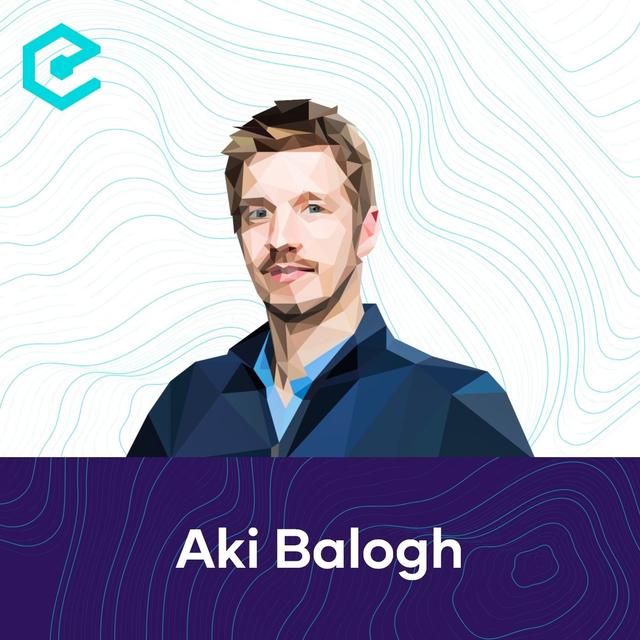
transaction. You can even offer high yield staking to your customers using the Chorus API. Your assets always remain in your custody, so you can have complete Peace of Mind and you can start staking today at. Chorus .1. Hey hello everyone, welcome to Epicenter. Today I am talking to Aki Balog, who is the cofounder and CEO of DNC Link.
This is a kind of a visionary project that's figuring out a new architecture to bridge Bitcoin from Bitcoin to the other ecosystems like Ethereum. Now of course, a lot of projects have tried and implemented commercial systems to do similar things, but they have a really cool architecture that minimizes the trust required in the bridge of technology. So please welcome Aki to the to the show. Hi, Aki. Hey, thanks for having me.
So tell us, tell us first about how you entered into the crypto ecosystem, into this madhouse. Well, I'm very happy to be here. I came in full time three years ago. I guess. Just a quick background on me. I've been a developer since I was like 9 or 10. I went to computer science undergrad or actually instead of high school. I did college college degree in CS and then BBA undergrad. And yeah, I I was in AI for over
10 years actually. I was in AIVC or machine learning big data VC when the no sequel stuff started in 2011. So I got into data management. Then I actually heard about Bitcoin in in 20 like 2011, 2020, 12 actually. But I didn't have the space to kind of the mind space to get it then because I was building an AI company, an AI marketing tech company called Market Muse, which I founded and LED for
eight years. And so when I stepped away at Market Muse and you know we put ACEO in there to to run it, I thought this would be the perfect time to to come to Web 3. It's just the amalgamation of a lot of things that I was interested in finance, crowdfunding, data managing database tech you know self sovereignty, empowering people you know giving people good options in also interior you know in developing countries.
I was born in Hungary and in a smaller town called Debrett San and we grew up in you know Boston and Michigan. So it just all of it came together and finally had the mind space to to get into the space and my father had been a scientist all his career and so also with market muse I just I found my niche's you know finding technologies that that could really be developed into products and and figuring out how to productize and commercialize it.
I did that with my last company. I I am a co-author and two patents or I guess I I don't know what the term. I have two patents in the area of topic modelling and semantic keyword analysis and so when I came to crypto I wasn't I wasn't a cryptographer. I I don't think I I I have that background but but I found this this opportunity, this white paper that Tadge at MIT had published and I'm at the DLC
community. I met some brilliant people and I thought this would be an area where we could, you know, I I could help in. And then I found my Co founder, Jesse. And then we've been kind of, you know, trying to be active members of the DLC community for over 2 years now. That's really cool. I'm curious if you have any regrets switching away from EI to Web Three and then maybe one year into your journey, Chad GPD launched and such a huge EI boom kicked off.
It was funny that I yeah, I was in AI when two, maybe arguably too early before before this and and missed out on the big run up of, you know, Bitcoin and EI heard about both. I just couldn't really participate. And then I came to crypto. It crashed and AI went up it. It's sort of the joke but but you know, I don't I I don't really honestly don't have regrets because I'm really focused on building things that add value for society. I know that's always a like a thing founders say.
But for me it's it's true that you know I, I love my, my father's kind of love for invention and kind of primary research and you know basic research and and I always wanted to build things that just really make a difference. And and you know I think AI helps in a lot of ways. Web three helps in a lot of ways. On some level these are all infrastructure and it's really about what we build with these with these tools. But I'm still somewhat involved with some AI companies.
Actually our friend that introduced us on show is heavy into AI. We talk about it almost every week. So you know, but I'm, I'm happy to be here and I'm, I just want to make a difference with you know with our work and that's we're we're getting a lot of that here And and I think the timing now is very strong because you know we've got the halving coming up. We've got Bitcoin ETFs launching.
You know Bitcoin has sort of crossed the chasm it's in use by people in El Salvador and other places on a mass scale. And and that's what attracted me to you know to to this bit you know to building on Bitcoin, quote UN quote. I think that the time has come for this to be, you know, more easily usable than before. Right.
So you mentioned that you started out meeting Dash and the DLC community DLC standing for discrete log contracts and that's kind of like the core pillar on which your commercial efforts are for the inventing on top of top of that. So let's start there. What is a discrete log contract and why were they invented? Yeah, yeah.
So Hedge also is probably most known for his other invention, the Lightning Network. So right before he published the Lightning white paper, he published this white paper on DLCS entitled, like smart contracts on Bitcoin. The the original idea was how can we, you know, add some sort of logic to Bitcoin? And he kind of, you know, proposed a math around it where basically you can have, you know, two parties. Alison.
Bob you know put some Bitcoin and make sort of a bet like maybe like a sports bet and then you have this off chain entity quote UN quote Bitcoin Oracle Olivia the Oracle that decides who won the bad and then there's a you know cryptographic patch proposes A cryptographic way to to kind of to to execute this is so that the so that for example the off chain entity the Attester does not know who the parties are it's just signing you know outcomes or publishing at the stations And then the
parties you know the basically the big the big invention that we also utilizes when the when when the users deposit Bitcoin they pre sign the addresses where it can go. So you have predefined everything up front and and it's sort of a secure system. And so there was a company called Short Bits, Chris Stewart and Nadav Cohen were primarily driving that and they had built the community around this.
They had implemented the first DLC technology and so they were really the thought leaders driving these discussions and they had these monthly DLC kind of meetings and we would talk about this back and and and kind of implementation of it.
And so when we came into the scene that's those were the you know people we we met and we it felt like there's a you know big opportunity here but also that community was sort of running into some challenges because there wasn't it was hard to get liquidity on it. There wasn't like a market for sports betting with DLCS mostly because people didn't really know what DLCS are and and like how do you find your peers and you know what kind of bed and then who is this mysterious
Oracle that just happens to know everything that was always a the
quote UN quote Oracle problem. So so anyway we we just thought we could kind of you know as the new people coming in maybe give us some fresh eyes and and so we actually started looking at DLCS in a different way as a user locking Bitcoin with a protocol and the Oracle being like an Oracle that we're familiar with like a price feed Oracle like chain link or 5th and they're being kind of a blockchain involved And and I can kind of describe that more but we basically repositioned you know
the narrative and our understanding of DLCS and that's what we're building you know around now and I think that's what people will will find you know very actionable. That's really that's that's really cool.
So actually like if we wrap our heads around the traditional DNC as envisioned by Dash, like if we have our heads around this sports betting framework that maybe he had in, in his mind while writing the paper and then it has this party which is the Oracle. And then if we switch the Oracle from being a single centralized party to being a protocol, when you make the jump from singles, endless party to protocol, that is when you get from the discreet log contracts to DNC
link. So maybe we first start with kind of unpacking, unpacking the original idea, which is like a sports bet. So I'm kind of imagining this as, let's say the two of us, Aki and Maher A&M, we want to bet, I don't know, let's say a Bitcoin on the outcome of a of a game. So maybe it's a, maybe it's a soccer match. There's two teams in the so I'm kind of imagining it as the two of us putting money into into a transaction output.
So maybe I'm putting in one Bitcoin there and you're putting in one Bitcoin there. And then the realization is that at the end of the bed, what can happen? Either two Bitcoin can come to me or two Bitcoin can come to you. Nothing else makes sense. So in a sense, I sign, AI sign a sort of transaction. But it's not a transaction I sent to the blockchain.
I signed something that says in some scenario in the future two Bitcoin could come to me, I sign that and I also sign in some scenario in the future, two Bitcoin could go to A and you do the same. And then these kind of signed transactions require a signature from some centralized party which is called an Oracle. And this Oracle can kind of observe the match, get the results of the match and choose the correct transaction to sign, sign it, and then resolve the
bet on the Bitcoin blockchain. Is that right? Yeah, yeah, that that's pretty much it. You can I I would just add in the original design too and and in the way some protocols use it, you can have kind of virtually any number of outcomes. Right now we have seen as we have done as high as 10,000 outcomes. So you could have you know 1 1/2 and half and whatever different splits.
But but yeah, we also found that you you easiest way to think about it conceptually is like it all goes to Alice or it all goes to Bob. That's a that's a very practical you know way to do it because then other data you know can be handled logic can be handled in more sophisticated places elsewhere so. So that's a good example. That's the thing you you stick with that and so yeah you you basically have these a set of outcomes. I I also describe it like an if then else statement or if then
statement. So if this condition happens then send it to you know a I'll send to B you can do something like that. And so these these create these kind of pre signatures they're called CE TS contract execution transactions and basically these are all predefined upfront.
So you know both party both you know Alice and Bob signed them And then Olivia the Oracle has kind of a a special role because the Oracle is not a party to the two of two multi sig for security and privacy reasons of course but the the Oracle does publish there. There's a Oracle announcement in the beginning which is like hey you know Alice and Bob basically
choose the oracles. So and you can have one or multiple oracles and we we could talk about that too but let's say Alice and Bob choose this particular Oracle publishes an announcement, hey you know this is the Oracle and the the the Oracle uses this private key to publish like a number for each outcome basically. So you can think of it as just a
number. So you have you know outcome on outcome 2, they each get it on so one time use number and then the Oracle uses that Nos in conjunction with this private key to publish you know two public keys. You know for outcome 1, outcome 2 and then later when the outcome is known the Oracle publishes it's at this station which is basically just another number corresponding to whichever outcome one and then the the the again the Oracle is
not a party to the multi sig. So what happens actually is the Oracle publishes this number into a public space and then Alice or Bob, either Alice or Bob can grab that and you know and and execute the transaction and then either Alice or Bob have to actually execute it. The the gas fees were also paid up front at deposit time. But you know presumably whichever party is the qualical winning has the incentive to execute the transaction. That's that's the base kind of
DLC design. So, so that's really cool, right? Like so. Now of course we know that in in Ethereum because you have a during complete Ethereum Virtual Machine, you could you could write how far should be distributed in every outcome and
Bitcoin lacks that. But what discrete log contracts are saying is if any financial interaction, if you can define the set of final outcomes and it's a finite set, not an infinite set, then you can use the finiteness of possible outcomes as a way to constrain the system and through those constraints reduce trust in a centralized party. Right. Like that. That seems to be the the essential insight, yes.
So So maybe you know maybe you can take an example of a set which is like not finite, where if I I had to create a coin running on top of Bitcoin then how that the set of people owning that coin evolves is maybe massive because new users that nobody knows what their addresses are have to appear and they have to get the coin set of outcomes is infinite.
Maybe hard to put into a DLC like format, but a bet is something where because the set of outcomes is finite, you can use that as a constraining mechanism to reduce trust. Yes, exactly that. That's exactly the idea. So maybe the paper, looking back, of course with the benefit of five years of hindsight, maybe the white paper was not aptly, you know, it was called smart contracts on Bitcoin, but it was actually just an if then statement on Bitcoin.
But it's still quite powerful. It's a you know kind of a low level feature, but this it does get into this idea of like an on chain escrow or an on chain kind of lock box which is which is extremely powerful given the utility of Bitcoin, right. So in in our case where it's like your A&MA&M lock their funds into ADLC and there's an Oracle Olivia O and the Oracle is the one that's going to resolve the bet and A&M have already pre signed the future and outcomes that are possible
with their funds. What is the trust assumption on on N? On O? On Olivia? Well, that that was the other issue in this story is Olivia has to kind of somehow magically know all the outcomes of any kind of bet you might or you have to pick an Olivia that happens to know what that you know outcome is. But how do you even measure an outcome? If I'm measuring what the
temperature is, do I measure it? This part of the house, that part of the house and my outside, You know, you can have different real answers from different contexts of different
perspectives. So that's where we, that's why when we first started looking into this, we you know we actually reached out the chain link and just you know they and you know kind of as a disclaimer, we have a close partnership with Chain Link. They were our first investor via a grant because they also got excited about this theoretical idea of Bitcoin Oracle's. But you don't need Chain Link to
use the DLC there. It's a completely different layer, but they've been very, you know, progressive and and helpful. So we reached out to you know to chain Link and we realized well chain link strength and as the strength of many Oracle systems as you have a diverse set of parties reporting quote UN quote truth and they pick like a you know midpoint or some you know specific reference value and
then that is used. And and then that kind of guided us to well, if this is really less, maybe less of a sports bet and more of AD 5 or financial tool because now you have these prices and so you can do things with Bitcoin that trigger based
on certain prices. And so that kind of started moving us into D5. And then as we were doing that, I mean a bunch of things happened last year, but you know, one was sort of any kind of centralized or trusted party was, you know, not not all of them, but many of them kind of failed and and and you know, kind of spectacularly and losing
a lot of money. So we felt that we're, you know, on the right track by enabling, you know, a decentral, the more decentralization we can kind of build around this DLC concept, you know, the more people can benefit from it. And that's kind of, you know, go at what's what's set us down the
path we we have gone. So in the in this traditional bet example, is it is it the case that the Oracle, the Oracle cannot steal any of the funds because it's it's the outcome of all the funds going to. The Oracle isn't in the pre signed outcome set in the 1st place, so the Oracle cannot steal funds exactly. The worst the Oracle can do is say is tell the users well I'm never going to publish this nonce or this resolving information ever.
Your funds are stuck so you'd better give me half of your funds to make them unstuck. Otherwise they always stay stuck and get 0, so it gets extort or by by. It's like not being live but it can't steal and that seems to be just model here. That, that's right. It's essentially like a form of smart contract risks or or
risks. But yeah the the Oracle can censor the transaction which then pushed us of course in the direction of having multiple oracles, you know where you have a threshold of you know five O 7 or or whatever and and and that that will then reduce it. And of course, of course, the more Oracle's, presumably you know, getting the data from, you know, reliable sources you know, the the more that risk drops.
So, so now like, OK, so in the beginning it's kind of like one party that's that's running the Oracle and you're now moving into the space of, OK, not one party but seven or nine or 11 or however many parties that together behave as the Oracle so that you can protect against this like liveness, this, this
liveness problem. So I so that that is that is something that's easy to understand, but you're also using it to somehow bridge Bitcoin over to Ethereum, which does not feel any obvious then obvious jump. So how? How does that work? How does that piece work? Yes. So you know it. It took us a while also to sometimes with technology and actually this often happens in, you know, universities and research labs. You have a basic invention, but the application is quite
unclear. So it took us also two years basically to to kind of go in that direction and it was a set of kind of aha moments collectively for our team. So the first aha moment was, well, if the liquidity doesn't exist between, you know, you and me doing this, then maybe it should be a human interacting with a protocol like AD 5
protocol. A simple example of that is, Gee, it would be great if I could just put my Bitcoin in Ave. Well, maybe I could use the DLC to kind of enable that in in some form. So, so that was, you know, one one step.
But then you know another big aha moment was, and this one actually happened recently for us is if you're locking in, you know, with the protocol, then you might want an outcome where there's like a quote UN quote liquidation where you know, there's a second outcome where all the funds go to bond.
You might want that, but you might not want that because you know, in the case of for example, and I'll get into kind of our rapid coin product, the LCBTC, like we don't want to be ever in a position where we could rug the protocol, you know, we could RUG the Bitcoin, right. That would not really scale or that would not be useful.
So, so then we realized well wait a moment we actually need to you know kill can a can a person lock Bitcoin with themselves like is that possible And it it turns out it is because the there was another feature of the DLC which people had not really focused on where there's kind of a like a liquidation payout address. So you can have you know Alice puts in and obviously this would be then a one sided BBTDLC in terms of a depositor. So Alice puts in one Bitcoin.
Bob doesn't put anything because it's just a protocol and and there's outcome one and outcome 2. But in the case of outcome 2, the Bitcoin goes back to Alice and the so the Bitcoin goes back to Alice in both cases. And in that case, Bob is what we call our protocol wallet where basically it's just an administrator for the DLC. And the reason you would want an administrator, well, a couple
reasons. But one reason is you know if the user like let's say the Bitcoin needs to go back to Alice, but either Alice or Bob need to execute on that at the station, we can't assume the user's going to be at their wallet. But the but the protocol wallet can just constantly execute these and just, you know, actually make the Bitcoin move. So.
So now you know the user can basically lock into this kind of lock box, this kind of on chain escrow where it's secured by Bitcoin, not by another chain, not by another validator set, whatever, but actual just secured by the Bitcoin chain. And then you know you can have any kind of implementation, any kind of software determining you know what basically what options are presented to the user and how you know what governs the unlock and what you know what data source this Oracle kind of
comes from. And then we also had one last kind of insight. There is the this thing that this off chain thing that publishes the attestation, it's actually not an Oracle if chain link or PISS is the Oracle and chain link. PISS sends a signal to Ethereum and Ethereum smart contract fires a signal or an event and that goes to this thing that what is this thing.
And so we very creatively because it publishes an attestation, we called it an attestor which is you know which is very, very simple but effective. And so the the Attester actually gets a signal from a smart contract chain or smart contract and actually can check it on chain. That's another advantage of DFI we realized is you know you can actually check and and validate on chain before you publish the attestation. So it takes out all the kind of it.
It reduces the the the you know the the issues that could go wrong with that Attester and and basically so then you have this DLC attester or attesters and then we started building you know kind of around that and and and it went from there and then that all of that led us to this idea of you know why don't we have a bridge or or DLC implement DLC as a way to bridge Bitcoin to E using the system where you're locking it with yourself your quote UN quote self wrapping it's a term I
made-up but you know yourself wrapping you are the only person that can ever get the deposits. And so you end up with this decentralized kind of escrow layer on on Bitcoin where instead of sending the Bitcoin to somebody's deposit address or to a custodian or whatever to some pool you actually each individual deposit gets its own DLC.
And you have all these DLCS you can see on chain, they're all just you know UTXOS on chain and and then you can see the all the all the ETH logic or the other smart contract logic on the other chain. And then you have this off chain a tester which doesn't make any decisions. It's just translating a smart contract signal to Bitcoin settlement instructions and that kind of gave us the architecture
we have today. That sounds really cool because like he said, a tester, it's not a single A tester, There are multiple A testers, it's a multi single of a testers. But the A testers could not steal my Bitcoin and I am locking the Bitcoin on my side, and I'm just locking it by myself. And then I'm getting something on Ethereum and I can use that Bitcoin like a normal ERC 20
token on Ethereum, yes. And then the Ethereum protocol emits some kind of signal when I want to bring that Bitcoin back. And the attestors are just translating that signal. So that seems to be the advertised capabilities. And they seem really awesome because the trust equation is like, OK, you are not, you are trusting X out of Y of these attesters to be live. That seems to be the trust equation. And the capability you get is you can migrate Bitcoin off to Ethereum.
And I presume if you can do for Ethereum, you can do for other ecosystems. Exactly, exactly. And you can use it in the same way from any ecosystem which is quite quite powerful. Bitcoin L Twos as well and anywhere. Right. So that feels very attractive. The mechanism behind it, I I don't understand it. So maybe maybe like let's say unpack that, let's unpack that a little slowly, right. So maybe the maybe the first question is kind of for a bridge
to be effective. If I have Bitcoin and I send some Bitcoin to whatever thing on this side, so DLC, let's say one Bitcoin there and it goes on to Ethereum. If you assume I'm going to do useful things on Ethereum, then it will always be the case that that Bitcoin could remain half with me and half of it might end up with something else, some other party. It could be protocol like compound or it could be it could maybe I made a payment on his
helium or whatever. So if that's going to happen but on Bitcoin only, I can someday recover the Bitcoin. How can you have a pungible token on the Ethereum side when I am the only party that could recover it on the on the Bitcoin side? Yep. Yep. So, So that's a great, that's a great point that we when we started. There's also another related challenge which is like which EAF protocol wants to manage a Bitcoin address. And so probably none of them are very few, not none, but very
few. You know, so we came to, you know, we talked to partners like Maple and and so on. And it's like hey, you could have this and you could have even in the case of a liquidation and you could have this outcome to liquidation go directly to you. But then you need, you know a place to manage it and you have to do all this other infrastructure and regulatory, you know, who knows what other implications that would have. And it wasn't like a really good pitch.
People are not excited about it. And that's when we kind of that kind of led us to a simpler mechanism where you're just locking with yourself. You're literally just you're the you lock your Bitcoin and the fact that it is locked on on in this DLC which also kind of comes in with the built in like proof of reserve because you can see on chain is it locked you know open, is it locked, is it funded like you can see is it closed you can see all that on chain on Bitcoin at any time.
So, so basically it's just this like self locking mechanism which which is like a little bit of a, you know, you know, kind of twisted idea to to get kind of wrap your head around because like we're all familiar with escrow providers in finance. When you're buying a house, you put some money in escrow and if the deal goes through, it goes through, if not, you get it back. That's familiar. But here the escrow provider is actually the chain itself, the Bitcoin chain, which is kind of cool.
And I neglected to mention that all of this was like support for this stuff was really added, a lot of it or some of it was added in Taproot like Schnorr and and and something called PTLC. So Taproad was also kind of needed to make this, you know, viable or feasible. But but basically, yeah, that that's it.
So basically in DLCBTC you lock with yourself and the presence of this, the fact that it's locked, let's the bridge mint DLCBTC which you can use and then when you're, you know, done using it, you can burn it and the burning action unlocks the Bitcoin and sends it back to you. And you know, in the case of a hack, if the hackers hack the attestors and they're publishing outcomes then that you just get your Bitcoin back earlier like it tanks the DLCBTC token, which
is not great. So we don't want hacks. You know, if if like the hacker could kind of the the attestors don't know who these parties are. So they could kind of randomly unlock parts of the reserve behind the LCBTC, which is not good. So security's still critical but in the case of an attack you get your Bitcoin back and and and that's it and and so you're pretty much, you know you're not left holding the back so to
speak or you're not left. Neither us nor the you know, nor another party could like drain the pool because there is no pool and and that's kind of the value out of, it's a very simple application of DLC. There's no the 2nd outcome basically doesn't really matter. It's just the locking mechanism
secured by these attasters. So maybe one way of thinking about it is that, so in the beginning we are imagining this as like Alice that's kind of locking Bitcoin on one side and then printing an ERC token on the other side. And Alice is kind of like a retain user, if you imagine Alice as not being a retail user, but rather as a market maker of some kind, right, That this is a, this is an individual. They would like, I don't know,
thousands of BTC. It's not an individual, it's a corporation with thousands of BTC in its treasury, like Michael Saylor's company for example. Yeah, Michael, we're we'd love to talk to you if you're listening. And so when they print Ethereum on the other side, they basically they could sort of create kind of like a fungible Bitcoin coin on on the Ethereum side and they can basically have that coined transfer and and they are there to always make the other other side.
So if the coin ends up in the hands of a different person, and that different person wants that coin back into Bitcoin, they could always go to this corporation and kind of get the Bitcoin back, but then it becomes a trusted set up. Exactly, exactly. So no, but you're exactly right. So the, the, the, the depositors in this are like, if you're familiar with WBTC merchants, they're like DLCBTC merchants, they are KYC. That's also important for for
regulatory reasons. They're like you know companies institutions that are exchanges, market makers, Bitcoin depositors could be like Bitcoin miners, companies that hold Bitcoin. You know asset managers who hold clients Bitcoin like it. It can be any of those you know sources but it's important that you know they they set up these you know DLCS and and because there's sort of an an issue with retail because it's kind of an unusual maybe UX people are used
to like a permissionless like peg in peg out, send the Bitcoin, you know you send in one you get you know half out or whatever. This is not that you know this is clunkier. So you can have something we call like quote UN quote DLC abandonment where you know retail like or somebody pegs in maybe they lose their private
key. They've abandoned that that that is not not actually part of the reserve at that point that is like fake you know kind of liquidity and if the the token drops and that could be an issue if there's a lot of that. So so the depositors end up being merchants and and then retail gets you know, can use DLCBTC as a safer you know wrapped Bitcoin than other alternatives.
But then they should go to the, you know they need to go to a centralized exchange to redeem it which is exactly what I do with WBTC, you know when I use it so and and other forms. So basically, yeah, that that's kind of that ends up being the the structure, the logical conclusion of this.
Yeah. OK, so I actually know how to express the the limitation of the DNC link protocol and and express it. So the issue here is because if you imagine party A depositing something on Bitcoin and getting a DLC link Bitcoin on the other side, and then the only party that can go back is party A itself.
And similarly, if you imagine that interaction for party B, there are two two types of DLC link Bitcoin on the other side, one from party A and one from party B. And those two bitcoins are not fully fungible across each other because their origination DNC contracts have rights assigned to different parties, and those different parties have different
liveness risks. The two Bitcoin on the other sides are not fungible with each other and ergo they cannot be represented as the same ERC token and that is a limitation of. Of the protocol. But that limitation is coming in, ultimately from the fact that Bitcoin doesn't have a smart contracting system. Yeah, exactly. It's that's exactly right. And actually not to further confuse the situation, but you can actually, when you log Bitcoin in the DLC, you can also
represent it as an NFT. It's really it's really a unique you know locking and the NFT can have the address of the UTXO where it's locked. So but but the issue we ran into there of course is that you know D5 protocols aren't really set up for NFT 5 and and even today when people think of NFTS 90 some percent of the time they're thinking of you know pictures and stuff and they're not yet thinking of it as a financial
asset. But I say that because developers who want to implement DLCS can implement them as NFTS and you can also you know do different things with ordinals and then have an ordinal backed NFT. But that's like, you know, nobody really. It's a very, you know, it's like another mindwatch. So, So what we found was in order to make this interoperable, it would need to be an ERC 20.
But it wouldn't have that limitation that you, you know, you described where if Alice, you know, refuses to peg out, you know she doesn't have to. But then the liquidity is less or if Alice cannot peg out maybe the, you know, because of just
not lose on the private keys. A simple example or if Alice, you know, pegs in and then you know changes like swaps, the S, A/B, TC for USDT and then the price shoots up and now they have to spend a lot more to like peg out that they might not want to peg out because financially or economically So it it's kind of creates that complexity. So the solution it can only be just institutions where they have you know treasury management strategies and they have you know professional kind
of risk managers involved. But for that audience it's it's very powerful because now you have a way where you where it the counterparty risk is not, I cannot say it's zero, but it's reduced to a significant extent, it's trust minimized to a significant extent over other options and and that's very
powerful. You know in the practical world we live in where there's all this you know Bitcoin that already exists and and or or all this liquidity and then more about coming in it's you know it it it creates a powerful instrument or way for then that kind of takes us down the path of you know we can provide you know the user could use different financial instruments on you know EVM and options and hedging and things like that treasury management things you
know it through this mechanism with the you know and and there's no there's there's physically no way the Bitcoin can be stolen that's sort of the but if that's just the one headline we gain with this then then that's you know that's
that's a big deal. So maybe like the way the picture the DLC protocol is when you when you imagine a party like I don't know Coinbase could be one but it could also be like Bitcoin Swiss in Switzerland or Sebel Bank on Switzerland or in the future many like these companies that are building you know market makers or things like that. So these companies can essentially take their Bitcoin from the Bitcoin network bridge them over to Ethereal and this bridging process is quite trustless.
They need to rely on the liveness of these additors, but they they only need to rely that on on a subset will remain live. And so with with very low trust they can bridge them over to Ethereal. And then these parties could be issuing fully fungible Bitcoin ERC 20s on on on Ethereal that in the end finally retail users would likely use to basically do anything they want to do in in D5. That is kind of like the the end goal that your protocol could brings. Exactly, exactly.
And and the the requirements for using this DLCBTC bridge can be kind of more simpler or more easily accessible. You know, we just have to qualify this an institution. They have a way of safeguarding their private keys, you know, kind of standard stuff and and and then they can, you know, and obviously with centralized exchanges, The good thing about Bitcoin with exchanges is there's a lot of it already. So they already have large amounts of Bitcoin.
So it's not like listing a new, it is listing a new token. It's a synthetic token. But but it's a it's an easier one from a lot of standpoint. And then, yeah, retail can then use it. You know, hedge funds, you know, can trade against it, whatever. You know, it can be used in finance in different ways, but but you just know that the underlying security model is a decentralized security model and not centralized. And so there's less of that kind
of counterparty risk. And then, yeah, you still need like the exchanges and stuff to participate. I would probably say that that just is kind of a endemic to the financial system overall. Like if, you know, if if we are on one exchange and they refuse to redeem, you know, maybe we should have more exchanges, You know, we can kind of work with
that. But that with any kind of financial instrument, you know at that point it's like an economic system and there are the good news is there are a lot of economic you know systems like that that we can you know leverage and risk management processes and even we can look at insurance and things like that.
Right. So presumably it should be possible to for kind of this financial institution that's that's doing this, this kind of bridging to have a system where they bridge from Bitcoin onto Ethereum and it lands directly in some kind of uniswap pool against USDC. So as a retail user I could deposit USDC into the pool and get kind of BTC, that institutional BTC or directly into a transaction and then I can do things with that.
So BTC. So kind of like that that flow that hand over to the user is kind of like made really easy. But the one thing that does that seems pertinent here is do you sense that there is like there is like an argument here that you have one blockchain Bitcoin and then you have other blockchain bit Ethereum. And if a professional company is moving stuff from this chain to that chain that they are a money
transmitter. And if they are a money transmitter then they are subject to various forms of regulation in the in the United States and one of which is to actually get licenses in 50 states. And that being a difficult part of your protocol getting traction? It's a great question and we worried about this a lot earlier this year until we realized that you know innovation. I mentioned around that the payout address of this, like all the payout addresses basically
can be set to the depositor. So if there's no scenario in which we can ever receive funds and the, you know the funds are all directed by immutable smart contracts running on various block chains. And we also mean the, the, I think the, the with any kind of of course, you know crypto or financial protocol, there's some risk. You know this is a synthetic asset, it has risks, but the because the risk profile is really the attester.
So you know there isn't anything really on the Bitcoin side that would constitute money transmission. And then the Attester is just, you know, running software we made to execute instructions it gets from a protocol that the user has chosen to trust. And so the user has self wrapped and chosen the protocol and that protocol is directing, you know, our node operator partners, you know, the nodes running there to
kind of fire these instructions. We are completely just a software you know, provider in that definition. There's, you know, I, I don't, I'm not a liar, so I can't say 0, but there's near 0 or like maybe on the list of, like on the crypto hit list, we're at dead bottom, most likely.
So. So that seems, you know, so then I can sleep, you know, while at night, 'cause I'm in, I'm in New York. And we take, you know, regulation seriously, especially because our, you know, our target market, our institutional Bitcoin depositors, of course. So we are reaching out to the CFTC to you know kind of have conversations and get their initial feedback that kind of
thing. But on the other hand you know we kind of even just looking at chain link, I believe chain link as the financial Oracle provider is not subject to CFTC or ICC you know regulation for that service. So our tester which doesn't even do that much probably is is quite safe but but we are you know proactively there could be things we don't know as as engineers. So we are reaching out to the CFTC. Cool. So let's talk about kind of the, the environment around this technology.
What does your company look like and how is it financed? And yeah, and how are you developing this, this protocol? Yeah, Yeah. So we you know I guess I would characterize our company as we have two, two focus areas and we
have had this from from day one. One is the commercial business where we are you know selling this, this we're pitching the idea of you know Bitcoin holders, institutional Bitcoin holders gaining yield or or buying you know financial, you know derivatives options, hedging products or or taking loans on their Bitcoin in a safer way. And we're you know we're presenting that you know we're
presenting the options. Obviously we're not a broker dealer so we're not like doing loans and stuff but but we can just showed that DLCBTC gets them a step closer to working with these protocols they want to work with in a safer way. So so that's the commercial side and that you know we we also take a mint, you know fees on mint and burn so when people you know peg in or peg out we take a fee in Bitcoin.
So that's you know that's our business model and then the we don't have the community side where we just support the DLC community kind of honoring short bits and and all the stuff that they did to set it up and all the other participants in the
DLC community. Right now it's Atomic Finance 10101 Lava. There's like a few of these crew that have been around for years Tebow Crypto Garage like the the and they've been doing just working on this and and so we want to get more people building on DLCS. We want to get more chains obviously you know on the on the community side I want to focus on every, every chain. Bitcoin L, twos you know can use this to enhance their their peg in and peg out into their ecosystem.
So we partner with them pretty much anyone you know ordinals, you know Bruins BRC 20s, you know whatever you want to might want to lock into DLC, you know to wrap it to get a representation on another chain so they can do more advanced stuff like auctions or lending. You know, we want to support all of that. There's also some work that's been done on DLCS on Lightning, so it could have taproot acid. So, so we're just kind of a you know, a just a general, you know
advocate of DLCS there. And then we can also leverage the infrastructure we've developed for to support the commercial side and make that available for developers that obviously a highly subsidized cost. So you know you can access our tester network. There's there's other things that we built too like these the CE TS and the original design they were just stored in the Alice and Bob's wallets. So we have you know other storage to provide redundancy so the CE TS don't get lost.
You know, Bitcoin wallet integrations is actually probably most of our, you know, work is in order to actually do this DLC. The Bitcoin wallet you can use any, you know, ERC 20 wallet doesn't matter, just it's an ERC 20, it's fine. But the Bitcoin wallet has to have a feature, has to have a capability to to lock this DLC, to actually create the DLC and do these signatures that requires something called adapter signatures.
So anyway we build, you know DLC support using basically all open source stuff and stuff that we developed to to make it kind of easier to to build in. But we have sort of like a wallet SDK if you will for for plugging in. So we have plugged that into leather wallet which used to be called Hero and X Verse and now we are hoping to talk to you know, Ledger and OK X Wallet and so on to to just have kind of widespread adoption of this DLC signing capability.
So that's also you know big focus that then benefits everyone who who wants to you know use DLCS. So I think we made some good progress with those two wallets over 2 / 200,000 people use either leather or expers. So that's a good start. And then obviously once for our customer base, once we're at Ledger and Trezler and any kind of hardware wallet then you know then then then there's institutions can can create DLCS from there too. So that's a big goal of ours in the next few months.
So what's the current status of the protocol and the? So let's let's start with the protocol first, the the Addester network and the the code that you need on both sides, the TDM side and the Bitcoin side. What's Seriously? Yep, the code it so we're live on test net. Last Saturday actually, we demoed the DLCBTC bridge to ABCD Capital on investors and OPX Ventures. They had a Bitcoin hackathon and so we just I just yesterday posted the the test net demo on our YouTube channel.
So it's the first time it was shown publicly and the second time I had seen it. So anyway we've got that in test net and then in SO for the Attesta network we've got a couple of verbal commits from the Republic and all nodes and this week through through you I met Chorus 1. So we would love to have just top tier attasters.
We have been when we launched we're just going to have six attasters and us as the 7th, so you know six individual attestation or certain node operator companies and the main job of the Attester is just to safeguard the private key that's that's the most important thing. So. So that's why we are kind of, you know, reducing risk by
having six different ones. And obviously for some degree of censorship resistance in the future, we might have a token that lets anyone run in a tester and stake the token and that would be a a broader set of decentralization we're implementing also something called well we're implementing an MPC solution potentially one called Frost, but but it might just be a different MPC to where like an infinite tester has opened ADLC or participated in the opening of ADLC and it has
to leave the network. Maybe the company stops doing this or goes bankrupt or something happens. Then another tester could take its place from another provider and we can heal the the network. So, so that's the last feature we need to implement and we have already done one smart contract audit through Coin Fabric. Now we are selecting the second smart contract audit firm. So all of that together we
should be ready to launch. We're also getting verbal commits on the initial set of Bitcoin depositors for our initial set of merchants. We have some investors who are you know who who have been early movers in Bitcoin like like Bitcoin miners like a water drip capital in Asia and and some other big we have another Bitcoin whale who is invested. So basically getting some Bitcoin lined up. So we have some initial liquidity, you know picking it out to all of that we will launch on in March.
So I think we're on track to to hit the March punch date. And then you know we'll start creating a curve pool and maybe other decks's and having at least one centralized exchange and then having at least a market maker and kind of build up the ecosystem from there. Really cool. So I'm I'm actually curious that like there's there's a space of a lot of protocols, a lot of companies that have built Bitcoin bridges in the past. Who do you respect the most in
these alternatives? Yeah, you know, great, great
question. I mean just in the in the space of Bitcoin bridges I have to really say hats off to Threshold TBTC you know that that team there I was fortunate to work with someone from there for a few months just even helping think through this project and I think they've they've they have a different system something based on the keep network or keeps which was I think invented like four or five years ago or developed but but they're really in terms of you know their goal
of having Bitcoin in E4D Phi in a Safeway. I think that vision we share that vision so we're really big fans of of what they've done and and they also have done a lot of really smart engineering and and and so on. So it's really, it's really cool. But basically, you know, we, I mean we we try to be respectful to everyone, but we, we love people who, you know, don't see it, don't see block chains as sort of religions. It can, it can kind of go down that way.
And of course everyone, if you are invested, I mean, one of the goals is of course to have ownership. And when you have ownership in something, of course you have some human biases where you favour that over other things that you don't know or are less familiar with. But it should not as elevate to the level of religions where you know they're warring or so on you know so.
So anyone who you know wants to have Bitcoin in Ethi Fi or Bitcoin in Solana or any other chain D Fi or you know D Fi rebuilt on Bitcoin in different ways also great. You know anyone who's kind of you know is open minded to two
or more things. We we we love those kind of inter interdisciplinary people and and so and and so we also like to talk to developers a lot and people who are you know close to the engineering behind this stuff because I mean I've sort of simplified a lot of you know math and so on some of it I understand some of it I don't but there's a lot of you know the devil's in the details with the engineering.
So, you know, our our hope is that by getting DLC capability and infrastructure to to a lot of smart people, they'll come up with more unique and more interesting solutions. That we haven't thought of. So we see DLCS as as not it's not a layer two or anything, but it's like a technology that people can build on and there's a lot of it like building on Bitcoin interest that's going on.
So I think we should you know really look at building on DLCS and and there as even in this call we mentioned several different parameters that are very impactful that you can choose on how you design the application. So you can have different applications and and that's great and we can support also sports betting not to poo poo that that's a big industry in in the real world.
So that's one thing or you know there's so many others that we've heard especially when it comes to like ordinals and the new types of assets you can put in. So anyone who's building and is open minded, you know, we respectfully. Cool. So if people are interested to connect to you or to the DLC link work with, where should they go?
Yeah, I would start with you know started our website DLC dot link and kind of an all Inge to the first company we partnered with Chain Link, but again not strictly affiliated from a technological standpoint, although we respect them tremendously. We are looking at Chain Link proof of reserves. We're looking at chaining CCIP. So there's, you know there's there's a lot of, you know, partnership there. But anyways, start with DLC Link, our docs are there docs dot DLC dot link.
Also I usually recommend our videos. We have a video on our own page, it's one minute long, it explains it. We have some blog posts around, you know, how does this at the station work in detail. You know, what are things you need to know about the testers, What are the things you can do like advanced features. This enables for ordinals, people building with ordinals or other Bitcoin based assets. You know, we try to just have you know content that describes it it.
We're also now making Chinese language, Mandarin language content, so that because now we're working with diverse audiences, in the future we should have Spanish and other languages as well. And yeah, we're just, you know, drop us a line. There's a chat bot. You can join our Discord. I'd be totally remiss if I did mention that. Join our Discord. The link is on the bottom of the website. There's also a a ADLC community telegram for engineers
specifically interested in DLCS. We'll put that somewhere on the site. It's not there today but we'll we'll get it added and and yeah, just you know engage with us, ask us questions. Come to our Discord, ask questions, and we're here to help. Cool. It was great to chat with you. OK. And I wish you the best of luck for for the upcoming launch. Thank you so much.
I'm, I'm glad we got a chance to go through on a technical level because as you can see, this is like a set of meandering, you know, startup discoveries over 2 years. So I'm I appreciate you taking the time to kind of walk through the full picture. Cool. And thank you to our listeners for tuning in to the episode. I'll catch you in the next one. Thank you for joining us on this week's episode. We release new episodes every
week. You can find and subscribe to the show on iTunes, Spotify, YouTube, SoundCloud, or wherever you listen to podcasts. And if you have a Google Home or Alexa device, you can tell it to listen to the latest episode of the Epicenter podcast, go to epicenter.tv/subscribe for a full list of places where you can watch and listen. And while you're there, be sure to sign up for the newsletter so you get new episodes in your inbox as they're released.
If you want to interact with us guests or other podcast listeners, you can follow us on Twitter and please leave us a review on iTunes. It helps people find the show and we're always happy to read them. So thanks so much and we look forward to being back next week.