



¶ Introduction
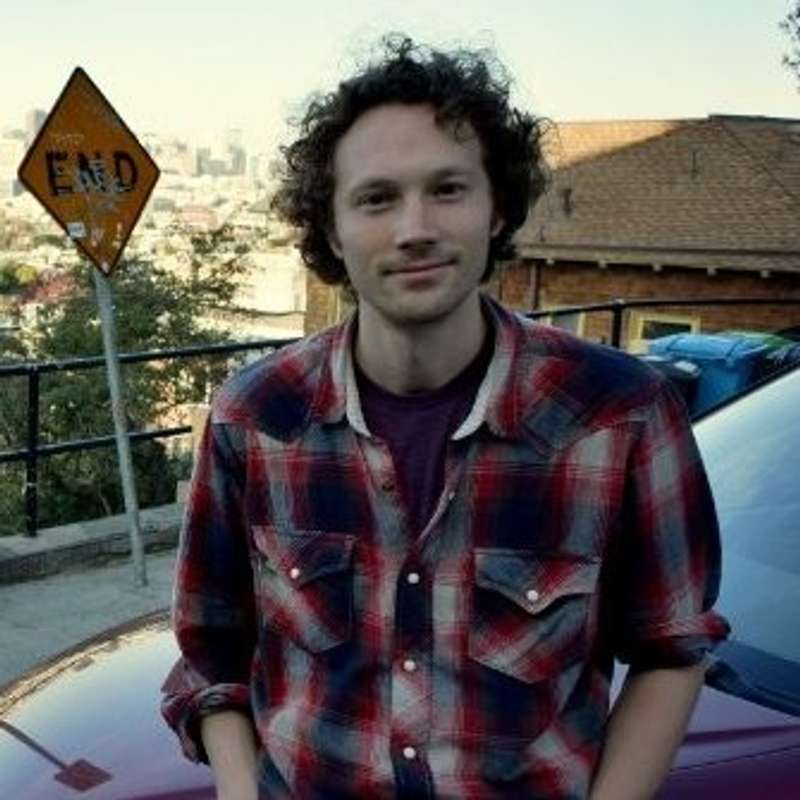 Sam Harnett
Okay, well, if we do something different, maybe it'll affect the listener a different way. And the idea was, let's use sound as a vehicle to sort of grab attention in a different way. And I would argue that that's the lasting impression that I feel like in media, it's so hard to get when you don't break format.
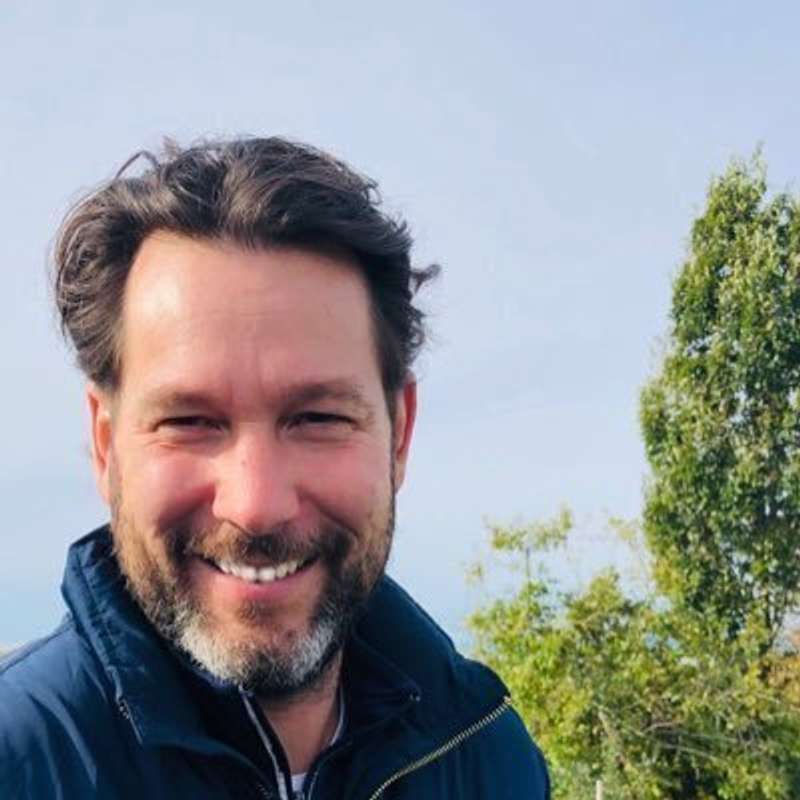 Neil McPhedran
Welcome to Continuing Studies, podcast for higher education podcasters to learn and get inspired. I'm Neil McPhedran, founder of Podium Podcasts, an agency for higher education podcasters. Jennifer-Lee: And I'm Jennifer-Lee, founder of JPod Creations, podcasting is broadcasting. We want you to know you're not alone. In fact, there are many of you higher ed podcasters out there and we can all learn from each other. Please also join our community at HigherEdPods.com.
So Jen, in this episode, we speak with Sam Harnett and Chris Hoff from the Ways of Knowing podcast. These guys are super interesting. I'm really excited about this conversation. After years in public radio, making and mixing stories that Chris and Sam say all sounded exactly the same, they wanted to make a radio show slash podcast that didn't tell you a story or what to think, but they wanted to do a show that was all about sound, instead of the language in the narrative.
So super interesting where they have netted out. I really enjoyed this conversation. Jennifer-Lee: I agree. I really enjoyed this conversation as well, obviously being in radio and loving sound. This was the perfect interview for me, plus you. And unfortunately, we are a week late, not because Neil and I are lazy, but because we had some tech issues. We had serious tech issues, like everything.
We had an issue with our recording original interview and Chris was so kind to book another time with us. Jennifer-Lee: And then we had a fighter jet show. We had a fighter jet show in that rebooking, but near the end of this interview, there's a couple of answers from our conversation that we've stitched in after the fact. So you might catch that, you might not catch that. But that was really kind of Chris to do that.
But yeah, it seemed like everything we did for this episode, we hit up against issues. And I think all podcasters, Jennifer-Lee: Sound issues too. Yeah, ironic sound issues when, Jennifer-Lee: Which is ironic because if you listen to this podcast, we're going to get into it in just a second, it is like a piece of art. It's beautifully crafted.
And actually, I'm going to say that I don't think, obviously didn't plan a fighter jet show, but actually it's kind of fitting once you listen to their podcasts that there were sounds in behind. So it's kind of just ambient. It's all about this episode. So, uh, let's get into it. Welcome Chris and Sam. It's really nice to have you here on Continuing Studies.
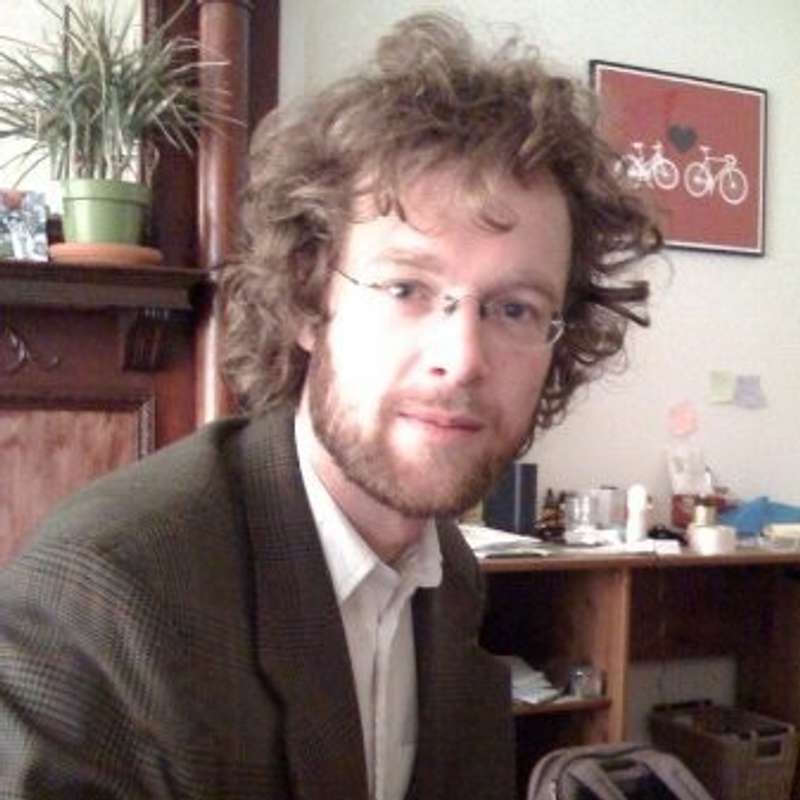 Chris Hoff
Yeah. Nice to be here.
Sam HarnettThanks for having us. Jennifer-Lee: Yeah. I'm really excited to have you guys on because I think you're probably the most unique podcast we've had on to date
Chris HoffThere we go. That's something. Hey, that's big praise coming from Chris Hoff.
¶ The World According to Sound
Neil McPhedranOkay, why don't we just start with what is The World According to Sound and maybe just sort of a quick little insight into your background into podcasting.
Chris HoffWe started this about, god, nine, ten, years ago actually in 2015, and Sam and I come from the public radio world and really the show was a kind of a reaction to the most forms that you get in public radio. Like we really started off as a, as like a strict sort of show focused on sound and not on, you know, narrative and not on talking. So we made this very short ninety second show for a couple of years.
Each episode was ninety seconds and it focused on just like one particular sound, like the sound of mud pots at the Salton Sea, or the sound of a grizzly bear eating a carcass in Yellowstone National Park. And all we would say, we would kind of tell you what the thing was. And then we just listened to it for like a long period of time. That's kind of like an uncomfortable period of time in the public radio world.
And so like we did that for a few years and that morphed into this live eight channel sort of surround sound show that we toured with at universities. We would, you know, set up this ring of speakers. People would sit in the middle. We'd give them eye masks and turn off the lights. So it's this total, you know, sensory deprivation thing. And we did that for three or four years, and that took many different forms, too.
And we finally landed on this thing that we're doing now, which is maybe slightly less sound focused, but still sort of driving our, you know, concepts and our narratives. And we're doing work now with universities on, like, really focusing on humanities work, I would say. That's the sort version.
Sam HarnettYeah, and the impetus for The World According to Sound, as Chris said, was to do something that was a reaction to public radio. And the ninety second convention and the focus on sound were just constraints that would break us from doing the traditional public radio narrative, interview, uh, information based piece.
And then, as Chris was saying, we did this traveling live show where we had, we took all the sounds, we put them on the speaker array, and we did a show at Cornell, um, and when we were at Cornell, we met a professor named Jeremy Braddock. He brought us to Cornell for a semester to do a residency, and it was at that residency that we thought, okay, you know, we've been doing this work as kind of a commentary on media and public radio.
And we've been really trying to experiment with the form and see what we could do with audio. And at Cornell, we met all these professors who had this, all these, this great intellectual work, and we thought, oh, we can actually, using these things we've been experimenting with, we can sort of bring, uh, academic work to life in a new way. And that's when the Ways of Knowing project started.
And the basic impetus of Ways of Knowing is how can we take what's happening in academia and represent it in audio without reducing it, uh, without sort of pandering to somebody to give people kind of what they want or dumbing academia down. Um, but still make something that, that lots of people in the general public would like to, to interact with. So, so the, the goal is in every season to, to make something that, uh, honors the work in academia, but also enlivens it through sound.
¶ Sound and Memory
Jennifer-Lee: Yeah. And I thought it was so interesting to listen to, and my background is radio as well. So, you always want to make sure that you're obviously doing things unique to get the listener to take that journey with you. So I love the fact that it started from there, but I also was thinking that this podcast is very David Lynch esque. It reminded me very much of like, well, I don't know what they call it because it was a few years ago, I guess the continuation of Twin Peaks.
And they have an episode in season three that, you is very similar to what you guys are doing. There was no actors or cast and it was just like weird sounds and lights and photos for like an hour. And everyone was like, what did I just watch? And, uh, for your podcast, what I love is like, it does that, but you are learning a lot of things. I was listening to the one that touches upon industrial revolution.
And I actually have to say, I found like the sound effects of the gears turning very soothing.
Chris HoffYeah, I kind of like that. But it's also like the thing that you, your takeaway from that wasn't like, oh, I learned about, you know, mechanistic materialism, but your takeaway was like, the sounds is kind of what arrested you. And that's what you remembered.
And I, I feel like that's like been a big thing in this work is, you know, Sam and I have made hundreds of these feature stories for public radio and no one's ever come back years later and told us that they remembered a story that, that we did on, you know, gig workers or the homeless, but people remember hearing ants crawl over microphones, like five years later.
And so there's something to that, like the memory, I mean, when you hear something you just aren't used to, and you attach it to maybe a tiny bit of information, that thing really sticks in a way that me telling you that, you know, the intricacies of homeless policy in San Francisco, that'll just never, that'll never stick.
Sam HarnettAnd that gets it back to again, why we started The World According to Sound. I mean, I was a reporter at KQED, I was doing all this, I report on tech and labor. Like I'm proud of the reporting, like I had a beat, like I established a narrative. I think that was really important and missing from the discussion of technology and labor. But as Chris was saying, I would do these stories on all things considered or morning edition or marketplace.
And people I know would call me up and be like, oh, I heard your story this morning. I'm like, oh, what'd you think? And they couldn't even remember, like, the most salient details. They're like, oh yeah, it was about, they know the topic. It was about gig workers, or it was about Uber, or it was about Airbnb. And I started thinking, you know, I worked really hard on that story, and I, you know, it was like, I thought pretty good.
And then I realized, oh, the problem is that it's just, there's a format to it. There's a set length, there's a set narrative arc, there's a set way that you present the stories and the quotes. And that's when Chris and I, uh, kind of united, we had a long talk about that, and I was like, okay, well, if we do something different, maybe it'll affect the listener in a different way. And the idea was, let's use sound as a vehicle to sort of grab attention in a different way.
And I would argue that, yeah, you, that remembering those gears, I bet you also remember some of the information, or the ideas, or the concepts, or you have a feeling for it. That that's the lasting impression that I feel like in media, it's so hard to get when you don't break format. Jennifer-Lee: Well, sound creates a memory just like smell does, right? And so I think it would be a great tool.
And more and more younger kids are using it a little bit to create more podcasts for kids kind of like this, because I feel like for me, I would have learned more and been able to retain the information. Like I said, I'm probably going to remember the gears turning for a long time and that information because it was interesting.
I was just telling Neil, I said, it's like, it's a visual element, even though it's not a visual element, because I could picture the gear and then remember the actual history around the industrial revolution where it was helpful opposed to you guys just droning on, even though I'm sure you have great personalities, I'm sure you wouldn't make it boring, but droning on about the industrial revolution.
¶ Humanities and Sound in Podcasting
Neil McPhedranI'm curious, so now the focus is the humanities. Is that your interest that sort of took you there to focus in on the humanities? What we just were chatting about, that it's audio and it just lends itself nicely to bringing the, academic side of the humanities to life.
Chris HoffI actually think probably the sciences lend themselves more to sound, but
Sam HarnettI agree. I would have said, I would have said the exact same thing. Yeah.
Chris HoffYeah. So actually I think what we're doing is kind of harder. I mean, once Sam and I both come from the humanities background, so like we do have interests there, like a lot of like sort of theory, philosophy, stuff like that, you know, literary criticism, but also just like, it's obvious. It's painfully obvious, you know, working in public media, or just media in general, that humanities are totally marginalized. Like, maybe once in a while you'll get a social scientist.
You'll never hear from like an English professor or a philosopher. It's all just like political scientists, economists, big time. And of course, like the hard sciences. And so it's just like, for us, like humanities have a ton to offer that people don't even think about. And so we just thought this is a way for us to actually highlight those things.
Neil McPhedranIt totally makes sense. And as you were talking through that in my brain, I was just thinking, yeah, I work with a lot of university podcasting. You're totally right. None of them are humanities.
Sam HarnettWell, I think established mainstream media, like, even the sort of, the representation of science is sort of a caricature of science. I would argue kind of like a hyper rationalist take, like a scientist comes in to deliver a fact or to justify an opinion. And it's sort of being used, I would argue, in like a not very deep way.
I think, you know, if you look back at like the whole debate around climate change, like the ludicrousness of having all these scientists come on, like, oh, yes, I believe in climate change. And oh, here's one climate change skeptic scientist. And like, are we really transmitting deep ideas about what's happening in science to the public? No, they were being used again, because the format of a lot of mainstream media requires like a simple stance on the side, a simple presentation of a fact.
So you're getting a very glancing blow from the sciences. So yeah, again, we, by going to the humanities, we wanted to go hard away from that. It's like, okay, there's all this great work happening in the humanities and social sciences. We're taking a non traditional approach to the way we're making audio. That maybe was why it was like a good fit.
¶ Producing High-Quality Soundscapes
Jennifer-Lee: Your production, I have to say, it's probably one of the best production podcasts I've ever heard because it's just so crisp and clear. Do you guys do all the sound effects or do you hire someone else to do that? Or does that come from your background?
Chris HoffNo, we do all that. It's just Sam and I for all this stuff, which is actually a bit of a problem. Sam and I are good and talented, but no, it's just like, Jennifer-Lee: It takes a long time to make it sound that good. I mean, a lot of the recordings too is stuff that we've actually recorded over the years. But of course, we've taken stuff and borrowed stuff from other people. It's not like, but yeah, all the conceptualizing, all the mixing and all that. It's just Sam and I.
Sam HarnettYeah, I think it would have been impossible to start this project without the background that we have. I mean, between us, we probably have thirty years in public radio. Chris is primarily a sound engineer and I was primarily a reporter. So we had like different skill sets. And then we spent a lot of years, like the first few years, The World According to Sound was really a side project where we were just experimenting and also like teaching each other stuff.
Like I learned how to mix audio from Chris. I'm still learning. So yeah, the only real reason we can do it is because we had those skills and because we had like a friendship that we could work well together. But really like, if you listen to the science and metaphor show, I mean, I think that thing took us a year. I mean, not we were working on other projects. We probably each worked several hundred hours on that two hour podcast.
And I think actually should have been a team of four or five given all the like research, reporting, mixing, interviewing. I mean, it's just so many things went into it.
¶ Importance of Sound Design
Jennifer-Lee: I know a lot of people are probably listening, that's a lot of work for a podcast, but that's why your podcast is so successful and so good. And I think a lot of people could take some of that knowledge. Yes, it doesn't have to be fully, high produced like you guys do, just use a little bit of elements, even if it is an interview format, even if it is a solo podcast, I think a lot of people need to just need to tighten up their sound quality.
A lot of messages are getting lost because more and more people are just hitting record and maybe not editing or getting it like smoothed out by a professional editor. And because everyone wants to be free and loose, that's fine, but it still needs to sound properly because I'm not going to listen to like five minutes of fuzz. I think part of the issue right now in the audio world is that it is very easy to create and distribute your own podcast at the lowest quality level.
I mean, anyone now has a microphone and a distribution channel and can interview people. And I think actually, you know, there's something powerful about that. And that can be done to reach a huge audience as some people do. But there's so much content now, to differentiate yourself, I think you have to think about format. But that actually doesn't mean, I think, to do something very necessarily like highly produced in terms of sound design.
Like I think it, actually in the structure of how you think about your interview show, or how you think about your narrative show like the whole format. Like what's the approach, like what's the intent? I think there's lots of creative things that could be done on a kind of lo fi level. It requires thinking about format instead of content. Now everyone thinks about content. Oh, we're going to talk about this. Like well, how are you going to talk about it?
What's the structure of how you talk about it?
Chris HoffAnybody can just do a sort of rambling, you know, you can get whatever, two people together and just talk about X and they're kind of, if there's no structure to it, why would you want to keep on listening? If you feel like it's actually going somewhere, that requires a lot of, you know, pre production and it's like a lot of thinking the thing through.
What everybody's sort of, you know, motivations are, especially like in the academic humanities world, professors are just, I mean, I don't know what, why people are, like who their audience even expects to be. If they're just sort of recording themselves talking to their buddy for a half an hour, like, I don't know what they're even trying to really go for.
Sam HarnettThat's another thing to distinguish us too. Like the academic podcast, it is about the intellectual work that we were representing and transmitting, but it is also still about making like kind of novel things in audio. So we have like an kind of an ulterior motive. Like in the science and metaphor show is a really good example of that. Like instead of making, you know, individual podcast episodes, we made like a two hour podcast. The whole thing is sound design. The audio is spatialized.
It's like this kind of journey. Like that for us was to make a thing that would be hopefully something people would want to listen to for, for many years and a thing that's interesting in part because of its intellectual content, but in part as a piece of audio.
¶ University Collaborations
Neil McPhedranI love this line of thinking beyond just the content, but thinking about the format and how much you two put into thinking about the format and listener on the other end. It's really interesting. I think that's a great challenge for us all to not just think about the content, but to think about the format and to put some consideration into there and consider the audience as well.
And to your point about the, just a professor just sort of decided to hop, you know, a couple of professors or whatever hopping on a mic or talking. I think that because the bar is so low, they're mistakingly sometimes is this attitude of, oh, their colleague has had this show for three years and look at the success they're seeing and they want that too. And so they just think they're just gonna, couple of guys, hop on a mic and away we go.
But there's so much more to do to be considerate about that we've just discussed here. I'd love to dig into how each season is different, but also each season is a new relationship with another university. Can you unpack that a little bit for us? Because you've worked with a number of different institutions over the last couple of years, if I have that correctly.
Chris HoffWell, we've released three sort of seasons and each one is with a different university. It's been a University of Washington, Johns Hopkins and University of Chicago. And we got two more coming with Claremont McKenna College and Cornell and then, yeah, probably some other stuff after that. But those five are sort of definite and,
Sam HarnettI mean like sixth season will be a follow up with the University of Washington.
Chris HoffOh yeah, right.
Sam HarnettYes.
Chris HoffRight. But like the, I mean, you know, it's, it really depends, again, on what you're, we're trying to make this our livelihood, essentially. So, like, money and resources are an obvious factor in that. And so we sort of cast a wide net and, like, we are working with people who do have at least some funds, you know, to help us make these things. So that's, like, one thing.
But the other thing, too, is just that, yeah, like, every university or humanities center at universities, like, they have different interests. And that to us is really exciting too. 'Cause like, so for example, we just released a series on the role of metaphor and science with the university of Chicago and under humanities center there, the Institute on the Formation of Knowledge. And that topic just happened to be something that they were super interested in at the time.
And it wasn't on Sam and my radar, but they sort of brought that up. And we thought, oh yeah, that seems like a really good idea. The ideas aren't all from us, but it's just like being at different universities with different sort of faculty, like people just have different interests and we kind of say, okay, that's going to work in audio or it's not. But yes, it is a sort of give and take. Like it's not, it's not all just us.
And I liked that there's all these different institutions and some are, you know, public schools and some are private schools. And I think that's really good too. We don't want, you know, a bunch of podcasts made just like Yale's and Harvard. It's like, it's nice to be with other kinds of institutions too.
Sam HarnettAnd I would add, so basically every season is a different university and a different topic and a different format. And for us, it's really about finding a topic that will lend itself to sound so that we can do something sonically interesting, doing something that the university is excited about and can use, and you can use. And as Chris said, it varies.
Sometimes it's a university wants to highlight a certain kind of research or a certain kind of idea, and sometimes it's more, you know, they want to have something that students can really listen to and get excited about taking courses. There's like a wide range of what the desire is, but the partnership works because the university wants to make something sonically ambitious and interesting and academically rigorous.
And we think it's an idea that we can do something really interesting in audio with, and that intellectually, there's some depth. I mean, the science of metaphor, again, when we first talked with them about that idea, I was like, oh, it's so broad, it's vague, and science, we usually kind of steer away from it. But then I realized, oh, metaphor is this thing that people don't usually associate with science.
And through the history of metaphor and science, we can offer critique of the way science is often portrayed in contemporary culture as something that's like hyper rational and kind of divorced from the humanities. So there's like this critical angle that was of interest to both of us. I think maybe that's like the third piece. You know, so it has to be something that's, we can do something sonically with, something that's intellectually rigorous.
And I think it is something that there's some element of critique in it. Chris and I both find interesting.
¶ Future Topics and Ambitions
Jennifer-Lee: Is there a topic that you would love for a university to do that you've never done yet? Oh yeah, there are a bunch. There's one like, again, I spent ten years covering tech and labor. And I really, there's a couple things in that reporting that I would love to work with the university to do a deep dive series on. One is about, is really about the story of economics and like how economics has kind of dominated cultural thought in a very powerful way. And I'd like to like trace that.
Like how econ as a discipline sort of became very homogenous. Like there's a very uniform way of thinking across econ departments and how that is like bled out into policy. And that's something I would love to do. And then just tech and labor. Again, there's, I think there's a big story to do there on work and what we think of as labor and looking at the conceptions of technology across time and how technology has been represented in certain ways and has a certain perception in public discourse.
So there's a two. Chris, what about you?
Chris HoffYeah, actually, I mean, there's a couple, but, uh, we're working on this topic right now that actually is really interesting to me. It's really about like the sort of present state of not just humanities, but like of the university of the American university. And it's, it sounds like this really broad topic, but really we're sort of interested in like these questions of why it's so expensive now, like all these things that are kind of obvious to a lot of people.
But, like, the reason for this seems to be that sometime post World War II, after the GI Bill and all these people sort of got access to college education, a bunch of middle class people got into college education, this seemed to be, a real sort of fear for the ruling elites.
Basically, I was really interested in sort of how the American university has become sort of so profit driven and seemingly corporatized, and how you have this dichotomy of super left leaning faculty, ideas are all very left leaning. But you have administrations and real power structures are super right leaning, and that's where the actual power is.
And so like, this combination of these two things, you have this mess now where you have all these culture wars going on at these universities, and there's this really sort of, to me, this really interesting kind of nexus between these sort of left and right powers kind of battling each other. But of course it's all couched in universities are all leftists and Marxists and they should kind of be reigned in. But that's just not the truth.
Like the truth is the power of universities lies in conservative, you know, sort of principles. And I just think that's a, I'm just really interested in that.
Sam HarnettIn a nutshell, the documentary slash podcast is gonna be about the neoliberalization of higher education. It's basically why is higher education so focused on profit? That's what all students are thinking about. How can I make money? Universities are, you know, trying to build their endowments. Everyone's fighting for professors and grants. And, and that's what, again, as Chris was saying, when you think about higher education, it's like, oh yeah, it's a liberal, it's leftist.
It's always progressive. But if you actually look at how higher education operates in America, it has an extreme profit motive that seems to align very much with conservative ideals. Yeah, I'm really excited about this podcast project because it's gonna combine a lot of reporting and critique along with sound design stuff that we've been working on. Jennifer-Lee: I think it's great.
I feel like you could dive into so many things on that because I think there's a lot of people talking and things that I've listened to lately or seen on TV is that, a lot of them most successful people don't even go to post-secondary education or they drop out. So what are they learning that we aren't learning in school? A lot of people are like, oh, I don't even finish this, and they, they go on and like make millions of dollars and stuff.
Sometimes I feel like education, that's a whole deep rabbit hole to go into, is like, what are you learning and is it appropriate for what you need?
Chris HoffRight? People who go to universities feel like they need to make money coming out of it because you're spending fifty thousand dollars a year in tuition or whatever. So if you're going to university, you're going to make sure that you have a skill that can earn you money. Like, you're not going to study philosophy, you're not going to do linguistics, you're not going to do classics. You're going to do business, science, whatever you can make money with, engineering.
It's like impossible to go study a thing for its own sake. Everything is now about the bottom line. Yeah, I'm not just going to learn art history and go on my merry way, but that's just, to me, that's the opposite of what a university should be. If you want to do the other thing, go to vocational school or, you know, do an apprenticeship, but you go to a university to become like a, a person. I don't know, but whatever.
¶ Creating Evergreen Content
Neil McPhedranWow. I love it. It's super interesting discussion. You guys are really up to some interesting things for sure. I do really like back to Jen saying how unique you are. I mean, like, obviously your dedication to audio, high production is so unique, but also how you're working with a multiplicity of institutions, some of which are topics led by them.
Some are topics of interest that the two of you have, and then you're finding the university or academic team to align with, I think is really a really interesting way to think about this. I also think that we kind of like quickly glossed over it, but the recognition that what you are creating is evergreen. What you're creating isn't just a season and hey, university come along with us for a season and that's gonna be 2023 and we might move on to 2024.
Each one of these is yes, a season, but it's also a body of work that is there to, you know, explore and come across two years later.
Sam HarnettOh, exactly. Yeah, that's exactly right. Because the, the cost to make these is so high or requires so much time and effort that it wouldn't be worth it if it was just, you release it, you get the people who are followers to listen then, and then it's over. Like the real idea is that these are again, evergreen for years, or, you know, hopefully even longer.
So the University of Washington was the first season we did, and every episode featured the work of one professor as a kind of entry point into a Way of Knowing in the humanities. And we're doing a second season with them because they were so happy with it, which is great. And their idea is that they're going to send these episodes to incoming students, hopefully. And I think, again, that's like really great of the series with the idea that it would draw more students to take humanities courses.
And, you know, that could be done for years. The science and metaphor show that we just made, we spent a long time on the sound design with the idea that eventually we could turn it into one of our eight channel live shows. You know, we could take the sounds, as Jen was talking about, like the sounds of all those gears. We could put them on our speaker array, and it could be this sort of immersive sixty minute show about science and metaphor.
And so that's something that could happen, you know, maybe not next year, but maybe in a couple of years. We're working on a series with Cornell about media objects. Every episode is a different object around us that influences the way we communicate and think. And things that we don't normally think of as media. So the first episode is going to be on the push button.
On how buttons sort of shape the way that we communicate and think, and those are extremely heavily sound design, they're like kind of sonic essays. And that's a similar thing that we're thinking about it is like, this is a thing that could have longevity. We're making them, those actually, the Cornell series, I would say that the most is like we're doing actually like intellectual work on our end, like we're working with these professors to do a bunch of research, include all this media theory.
So that the episodes themselves could maybe be something that a professor uses to teach. Maybe freshmen media theory students would listen to these episodes that have like references to Kittler and McLuhan, and a bunch of other media theory folks, but in this like sonic way that's very different than how you would digest written material. So we're always thinking with each of these projects, it's always different, like what the avenue will be. But, you know, this isn't just a podcast.
It's always like, okay, this is like, we're going to do this concept in audio and make a thing that hopefully will, could be a teaching tool or it could be a way to recruit students. It could be turned into a live show. We did a museum exhibit a few years ago with some of our audio. And that's the thing that we're thinking about maybe doing again. So it's like, okay, maybe we'll work with maybe the media objects thing could eventually be some kind of installation someplace.
And for us, that's the only way that we see a future for us as a business. Is basically we need to make content because, you know, we want to make really highly produced content. And the only way to get enough money to do that is to make stuff that it's so good that people are excited about it and it has longevity. And if it doesn't, then we're kind of cooked. And you know, the jury's still out. I mean, we've been doing this now full time for what, three years now, Chris, or two and a half.
We've got funding for another year, year and a half, you know, and hopefully grants will come in. Hopefully more money will keep coming in so we can continue to work, but it's a, it's a bit of a gamble. But it seemed a better gamble to us than to make the low bar stuff and try to break through. Because A, we're not interested in that. B, I think often it's kind of harmful to just like pour more content in.
¶ Audio vs. Video
I think you could end up doing more damage than good in the media world. So this seemed like the kind of only path for us. Jennifer-Lee: I think you guys are on the right track just because I've seen a lot more. I know you're not scripted, but you kind of fall into that scripted podcast with huge productions. And I think as people consume content, I hate to say the new way because it is a newer way.
But then at the same time, a lot of the stuff people are doing is very similar to radio plays and things like that. It's just kind of having a resurgence, but in a younger demographic. Because they're saying that so many young people now just consume way more audio than they have traditional aspects. So I think you guys are cutting edge.
Neil McPhedranAnd it's, there's so much being in the podcast space. It's like video, video, video, video, old video, you know, last couple of podcast conferences I've been to. It's like video. We need to be doing video. We talked to our Spotify rep and it's, you got to do video. So what you guys are saying is the opposite here. It's like, there's something still about audio.
Back to the beginning of our conversation with Jen talking about that one episode with the wheels turning or whatever, and how that creates a memory. I think we're very short sighted to want to try to do video as podcasters, which is hard. And instead, hey, maybe we should focus a little bit on the audio format and remember that a lot of people are listening to us while they're driving or while they're walking the dogs or so on, which is how we sort of interact with audio.
But what you guys are doing is just really awesome.
Chris HoffYeah, I also think it really depends on really like what your motivation is. I think, you know, if your goal is to make money with this stuff, that probably means you're going to need to get advertising for it. Um, which probably means that, yeah, video probably actually does make sense because people like watching video. But like, our whole model is not that at all. Like, we actually don't want advertising.
And frankly, it's also, for me, I don't really like watching, like, the whole point of an interview show is just two people talking and giving me information. I don't really need to see them. It's not interesting to me to watch just two people talking. Listening actually makes more sense.
Sam HarnettAnd I would say the whole video thing seems very much driven, as Chris said, by ad revenue and also by internet platforms. And I got news for you, the internet platforms don't give a shit about you. And look at Facebook and Twitter and, like, LinkedIn, like, yeah, or even Spotify. They're all, who knows what they're going to be doing in a couple years, you know? Will Twitter still exist? Will some other person buy it and turn it into their personal megaphone?
You know, like, you just, I think, uh, making content based on, on the internet companies and internet platforms is a very dangerous, slippery slope. And so, yeah, you're gonna invest all the time making video and then a couple of years they'll change the algorithm and they won't care about video anymore and then you're screwed. So, and let's remember, you know, millions and millions of people still listen to the radio.
I mean, we've gotten an interview on Science Friday coming up about the science and metaphor show and several hundred thousand people, if not one or two million people are going to hear that. I really actually think, you know, the public radio or the radio audience is not something to be neglected. I mean, they're still huge and they are dedicated listeners and they're sort of proof that audio doesn't need video Jennifer-Lee: Well audio they say will never die and I truly believe it.
I think radio, especially here in Canada, it's just changing its vessel going over to podcasts because our radio is seeing a decline, but it doesn't mean that people aren't listening to audio there. It's just, we got to keep making great content that people are going to want to listen to. That's really it. I could get into it with you guys about video podcasts because I, I totally agree. I think there's a searchability factor. I think you have to be on for that.
But I think some podcasts don't need video because the video looks like they're recording it in their grandparents basement and I just, I can't deal with it.
Neil McPhedranAgreed. Well,
Sam HarnettWe all agree, no video on your podcast.
Neil McPhedranOr at least start by being more intentional with your existing audio and your format. Jennifer-Lee: Or set up your Zoom screen properly. Don't have half your head missing. Yeah. There you go. Anyway, it's so amazing to have both of you on, uh, today. Thank you so much. And it was really interesting unpacking and hearing more about your journey and looking forward to tuning into more seasons and more episodes ahead.
Sam HarnettAll right. Thanks for having us.
Chris HoffYeah. It's been great being here.
¶ Conclusion
Neil McPhedranWell, Jen, that was great. Really interesting, uh, conversation. And I just love digging into some of the more interesting parts of podcasting from an audio perspective with two incredible audio nerds. Jennifer-Lee: I love audio. And I think that's the thing that a lot of people don't appreciate enough in podcasting or in radio. And it's kind of circling back now because I know companies that are doing full productions, but they're all podcasts that are scripted.
And so they have all these huge soundscapes. And yeah, it seems like a lot of work, but it really, when you listen to their podcasts, it makes a difference. You feel like you're there. Not to say that everyone needs a full soundscape, but I definitely sound leads you into the story. Yeah, totally. I also really liked their approach. I think it's super interesting how they're working with different universities and institutions and faculties for each season.
And how they're, um, being true to what they're trying to achieve, which is focusing on the humanities using audio as such a key component of it and really leaning into that, but then working with different folks for each season and really just changing it up each season. So like their episodes were like eight minutes or something like that.
Then this season, the first couple of episodes come out or like over an hour, and then they've got these longer form projects, almost like research projects that they're digging into. That also really opened up my mind as far as how we can work within this field of higher education and how we could collaborate more on a given season with a given focus of a given topic and think about more of it as evergreen content. Jennifer-Lee: Not to always bring it back to radio, but I'm going to.
The thing that they understand and it goes to the length of the episodes is, you don't always need a long episode and really your content is going to dictate the amount of time that's needed to tell your story. If it's eight minutes, if it's an hour, but just be strong. And that's the same thing we're always taught when we're in broadcasting is like say it sixty seconds, say it five minutes, but it better be strong, no matter the length that you do it. And they, they do an amazing job about it.
And I think that's the thing that, you know, in podcasting, everyone's trying to figure out is what is the perfect length. There is only a perfect length for your content and your content only. Some people are better at telling longer stories. Some people are better at telling shorter stories. It doesn't matter. You don't all have to be the same. It's whatever stronger for the listener to go on the journey with you. Right.
And the one consistent thing that they're leaning into with Ways of Knowing is using audio and really high production audio, as this vehicle for telling their stories and, and just taking us into this really interesting place. So, well, I think that's another episode. Jen, why don't you read us out? Jennifer-Lee: So thank you for tuning into the Continuing Studies podcast, a podcast for higher education podcasters. We hope you found this episode informative and inspiring.
If you enjoyed the show, we encourage you to follow and subscribe to our podcast on your preferred platform so you'll never miss an episode. But if you found this episode, particularly valuable please consider sharing it with your friends and colleagues who also might be interested in a higher education podcast. We also invite you to join your peers on HigherEdPods.com where you can connect with other podcasters in higher education and learn from others in the field.
Thank you for being part of our community. We look forward to continuing to bring you valuable insights and conversations around a higher education podcast. See you in the next episode.