



¶ Introduction
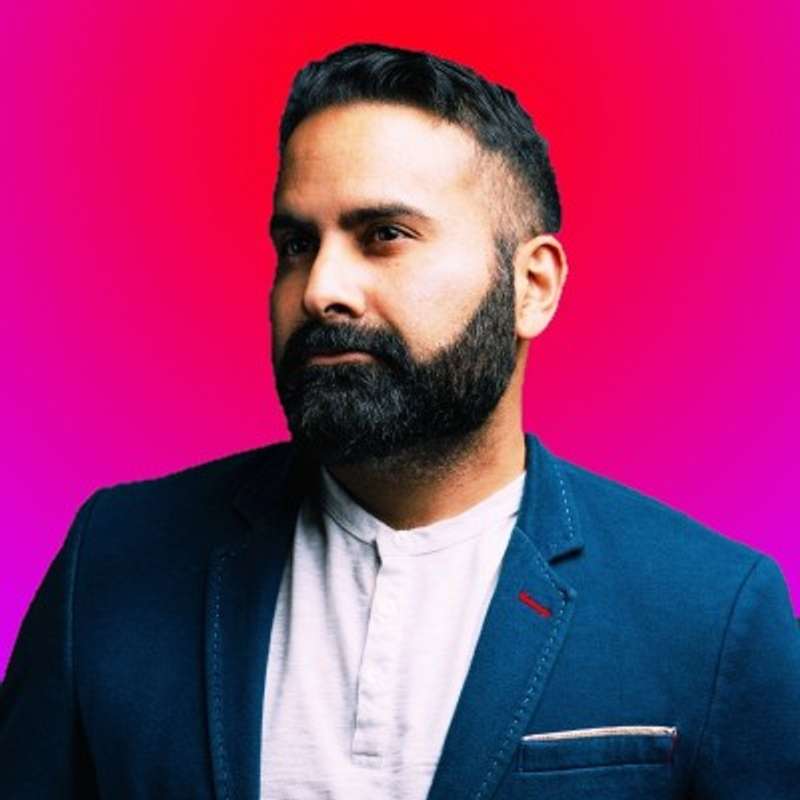 Imran Ahmed
Discovery is always a problem for every mode of entertainment. How do you get in front of the eyes? It's marketing, right? But the one thing that they weren't discussing and how I was thinking about this trust and transparency, and the question I asked was, is there Rotten Tomatoes for podcasts?
 Neil McPhedran
Welcome to Continuing Studies, a podcast for higher education podcasters to learn and get inspired. I'm Neil McPhedran, founder of Podium Podcast Company. Jennifer-Lee: And I'm Jennifer-Lee, founder of JPod Creations, podcasting is broadcasting. We want you to know you're not alone. In fact, there are many of you higher ed podcasters out there, and we can all learn from each other. Yes, that's right. And we've been continuing to do cool things on HigherEdPods.com.
We've got a lot of cool features that are gonna be coming out in the next month or so. We'll let everyone know when that happens, but we're continuing to move forward and do some really interesting stuff with that directory and community. Jennifer-Lee: And of course, the first ever PodCon conference is coming up really quick. Yep, we're a few weeks away, so looking forward to it and hopefully see some of you listening there. Jennifer-Lee: And I'm really excited for Chicago Mix popcorn.
Nothing's better than going to higher education podcast conference and then having some Chicago Mix popcorn as a snack. I like it. Well, today on this episode, Jen, we are chatting with Imran Ahmed, also known as. Captain Ron and he runs Great Pods, which is essentially the Rotten Tomatoes of podcasts. Jennifer-Lee: Yeah, and I think it's great. We need more rating systems out there for podcasts 'cause there's really not that many out there. And I like the fact that we're gonna talk to him.
Yes, you and I can leave reviews on these podcasts, but what I love about it is that he actually has legit reviewers too on it.
Like he has people from like the New York Times and publications in the UK that are avid critics, because I think that's something that, you know, we used to have Siskel and Ebert for movies and things like that, but we've kind of gone away with that, with the way that media has been, you know, changing, in the traditional media of the newspapers and things going, or things moving to digital publications.
I felt like the, the critic was going and everyone was kind of being their own critic, but I like the fact that there's still, people that do the hard job and are legit. So I'm excited that it's all rolled into this platform. Yeah, that's right. I think it's a really interesting site. This is a little bit of a different of an episode in that we're not talking to a higher ed podcaster per se, but I think we do talk about a lot of things that are super applicable to all of us as podcasters.
And we get into things like categories and how to categorize your podcast and why that's important. And so, yeah, there's a few really interesting things here that I think are super applicable to all podcasters, but especially higher ed podcasters. Jennifer-Lee: And how to make your podcast more searchable. That's something all higher ed podcasters can use. So definitely a very valuable episode.
And I know that sometimes we don't love critiques, but a good critique could also help your higher education podcaster get to the next level. You know, people critique papers in the university. Our work gets critiqued all the time. No difference. It's how we learn. So let's get started. Let's get into it. Jennifer-Lee: Welcome back to Continuing Studies. Today we have a really interesting guest. So Neil, I'm not sure if you're a big Rotten Tomatoes fan, but I am.
I do watch it to look at different suggestions for movies. So today we have Imran on and he is the founder of Great Pods, which has been touted the Rotten Tomatoes for podcasts. How are you?
Imran AhmedI'm great. Thanks guys for having me on. This is so exciting after seeing you, Jennifer in London. This is so exciting. Jennifer-Lee: Yeah, I know Neil was like, how'd you guys meet? I was like, we were drinking in a pub.
Neil McPhedranI had such FOMO that you all were there. We chatted before we hopped on here, we're actually on a WhatsApp channel together as well too, and everyone was talking about it and sending pictures of meeting each other, and I had such FOMO.
¶ Building for Trust and Transparency
Jennifer-Lee: Well, like I mentioned before, Great Pods is supposed to be the Rotten Tomatoes of Podcasts. How do you come up with something like that?
Imran AhmedOh, wow. I mean, the best part about podcasts is refining that story, and the hardest part about podcasts is refining that story because there's the long version and the short version, but I haven't found the medium version, so I'll try my best. I personally started off in the podcast space, radio space at college radio, had my own Bollywood program here in Southern California. There I used the TuneIn radio app. This is 2010, so I was podcasting my stuff, but also listening to live radio.
TuneIn had podcasts as well and radio. I was looking for a new job. Applied there to the, from Southern California to the Bay Area. Moved up there, worked in customer support all the way to operations and sports marketing, but I was still in the audio entertainment space, which is podcasts and live radio, which was awesome. I loved it, you got to listen to whatever you wanted to throughout the day and not get in trouble for it.
And throughout that time, I was in customer support, and the marketing and operations. You get emails not only from customers, but also reply back to your email marketing campaigns. And whenever we would feature something, you know, you'd go to any app and there's always a feature, a carousel of some kind. Those are editors, those are people, humans featuring that content. A lot of it was around the transparency of it all. Who are your people that are featuring pushing this content to us?
We don't know who they are. It's too anonymous. I'd get a couple of those emails, I'd read those emails, frontline. I see 'em. I'm like, I get it. I get it. But there was also a level from a private company being, you wanted the privacy of your employees as well. So protecting that privacy. 'Cause we didn't technically sign up to be an editor and put our name, or a feature, could like put our name up out there. We wanna do the behind the scenes work. So that always stuck with me.
That was the start of it all. And then fast forward now to Himalaya podcast app. I worked there for a couple of months, pandemic started, and then moved back home back down to LA and started Great Pods. And what stuck around with me during that timeframe, after TuneIn and during Himalaya was where is the trust and transparency behind podcasts and podcast recommendations? The industry, if you remember Clubhouse was a big app during the early pandemic and it was booming.
I remember distinctly, there was one conversation happening up on Clubhouse and I was listening in and I think there was some Bar Stool people and some other Paramount people. It was just a random group of higher execs, uh, whatever. And the one thing that stuck out with me is like they all talked about a discovery problem. Discovery is always a problem for every mode of entertainment. How do you get in front of the eyes? It's marketing, right?
But the one thing that they weren't discussing and how I was thinking about this trust and transparency, and the question I asked was, is there Rotten Tomatoes for podcasts? Are there podcast critics in this space? So I just started asking that question after the eight years I spent at TuneIn, and I finally asked the question, are there critics out there? And then I went down on the Google search of finding out if there were any, because I watched Roger Eberts, Gene Siskel, right?
The Siskel and Eberts of the world, movie critics. Whether or not you liked their reviews or not, you still liked them because of their trust and their transparency. They're critics, they know what they're talking about. And so that really stuck out with me when building the Rotten Tomatoes for podcasts, for Great Pods, is building that level of trust and transparency. And you know who these reviewers are.
So that existed, it was about me pulling that all together into one side and aggregating that information for, for you guys to decide on what to listen to, right? You come into Great Pods, you look up the reviews for it. Do you want to listen to it or not?
¶ The Business Behind Great Pods
Neil McPhedranSo it's a website directory of reviews and then, but also key, you've got other tentacles, right? You've got an email, which must be a, a very important part of the strategy. I can subscribe to the email. So I've got inbound, I've got reviews coming in once a week through that email, correct?
Imran AhmedYeah, so I have just like a normal business. I got the site up, the newsletter, email package is going. We got analytics as well with Google Analytics, Clarity. Those are the free ones as well as Amplitude, which gives a freemium version, but it's a little deeper in their analytics. So we got the analytics also running in the backend, and I've learned a lot on the engineering side. I'm a non-engineer. It is a lot of learning. It is a lot of work, and we say that AI could do a lot of this.
We still need humans. I know there's engineers, there's less roles, but it's still needed. It's not like it's not needed.
¶ Rewriting the Rules of Podcast Categorization
Neil McPhedranYeah. What I'd love to dig into is the website. I did a deep dive, like the categories are quite deep, so you're not just taking the Apple regular categories. Your categories you've created are way wider and they're more, at least in my mind, they were more focused on the kind of things I might be looking for. So it's not just a business podcast, there's a bunch of sublayers and they're more attuned to what kind of thing I might wanna listen to.
So there's like a marketing, you know, one for example or whatever. I think you, you can find a spot in there, at least what I thought. The categories are so wide that I can find a lot of things that would be of interest to me and you know, so on and so forth.
Imran AhmedYeah. As I started learning about building a startup in the last four years is that, you know, building this out, you kind of make your own rules. There's no guideline that you can't, you start developing the guidelines as you go along in this process. So I develop guidelines on who I consider a critic. I was like, am I allowed to do that? It's like, yeah, you're the person creating this product. You're the professional, right? Like, I'm in this space, so I'm a professional.
So those types of things that I was tinkering with, that includes the genres. The, the all podcast form when you go to the site. Like, okay. Because my initial research was showing that people were just tagging a lot of different genres in Apple. And honestly, I worked in the TuneIn backend, right? In operations. I saw how things were, genres were tagged, and how we tagged genres too. And it, it, sometimes it was an algorithmic, so I knew people were trying to cheat the system.
Uh, when I'd go to Apple or Podcast Index and check the genre, I'm like, you're straight up comedy. Why do you have like business attached to your genre? So all of the podcasts currently aggregated in Great Pods, I added the genres. But based off of the description and based off of the, the podcast index genre tags. So I will use some of that, but I question myself still. And as like with any startup and journey, it's not locked installed. I did this manually.
I, I was taught do things that don't scale as a very common thing. And when you're doing a startup, you have to do things manually before you can automate them. So you know personally how to deal with it, you know, the frustration that the user goes through, right? So that's kind of what I've been going through manually adding the genres, even separately, you'll notice there's BIPOC in there as well. I don't see a BIPOC category elsewhere, and these are made specifically for BIPOC.
So yes, there should be that sub-genre or genre in general. How I do that in the future, I don't know. I'm planning on the refresh of the website.
Neil McPhedranOh wow.
Imran AhmedSo all the manual work that I have gone through and for the last four years, how do I now automate that?
¶ SEO Tips for Podcasters
Neil McPhedranYou know, back to your point about Google data and Google analytics, you must see stuff come in there too, of just queries that are landing on your site to go like, oh, well there's a, you know, maybe back to your BIPOC example. Like there's people looking for that, and I've got podcasts that fit into the genre, so I'll create that genre. So I would imagine that that's something that evolves and you see from the data as well.
Imran AhmedYeah, definitely. If that's something helpful for your listeners, SEO bloggings, I'm not inventing anything new for the podcast genre. It's kind of just reinventing it or adapting it from a different industry. So SEO blogging is still good. When I started SEO blogging, looking up the Google search terms, so Google Search Console for your listeners, go to Google Search Console, set up for yourselves so you can look up the search terms. And I've used those search terms in my SEO blogging.
I'm like, what should I talk about? What should I write about? Not only gave me an idea for the blog, but also gave me all the key terms for it. And since then there's at least three of my blog posts that have remained in the top five, top ten pages for that year because it's so consistent, podcasts are so evergreen, that they could come in listening six months later from that episode release and then search on the blog post or whatever that topic is that they're searching for.
They'll land up in your blog post and funnel through the website because I'll put the actual review page on the blog post, so I'm internally linking to my pages as well.
¶ The Categorization Challenge for Higher Ed Podcasts
Jennifer-Lee: And I think sometimes people have a hard time figuring out what category they're in, specifically with higher education podcasters. A lot of people think, oh, our podcast is educational because we're in an institute, but maybe your forensic science podcast actually is a true crime podcast and that's where you should go.
And I think that's the hard part of higher education is 'cause we all think it's education and everyone wants to just go to that category but doesn't realize like, oh, wait, actually I have a podcast on mathematics. Where does this fit? I'll tell you that I think for me in higher education podcasts, one of them that stood out to me, okay, is the documentary style higher education? What's the true crime behind it? Right?
Or maybe something like, gimme that story, that drama behind something that happened like, you know, twenty years ago or still happening. I think the one that from APM stood out to me, Sold a Story. Which is about just educating kids from K through high school, like how this education system in the US and so on. So it was really well done. It has a drama. And so that one I would put educational on there, education or learning, but also true crime. But I manually do that, right?
So I don't disagree with you, Jennifer. I think that's going to be the next upgrade. And how do I make it so that, okay, Podcast Index it automatically, it doesn't matter what genre is labeled, whatever you selected. Okay, fine, that's imported, but maybe it's a crowdsourcing tool where you guys can also go in saying additional tags or additional genres.
So it's native to my site, native to Great Pods, where it's like you can put in BIPOC or true crime or something else based off of, you know, maybe Podcast Index doesn't allow you to do multiple genres. You can do it from a native standpoint. So I guess that would be my upgrade in a couple of months for me to discover and try to do. But I don't disagree with you. I think that is a problem.
Neil McPhedranI actually just wanna make sure that we focus in, this is a really important thing. The self categorizing your show is, you know, to your point, Jen, is like often done wrong. And I think there's this, well, we're gonna set up our podcast and we'll get it all up into hosting. And here, here's our category. And then you're off to the races. And, and your example is like a lot of higher education podcasts put themselves into the education category or learning.
And that's not necessarily right, but there is something important about getting those categories right. And taking advantage of the secondary and well, in the case of Spotify, when you're logging in for the first time into your Spotify for Creators, there's a third and you could even put a fourth category in there. So those are all signals for the platforms to know where to categorize you, which helps with your discovery.
And then for something like Great Pods, it's really important because that's for people who are looking for podcasts. So you want to be showing up in the right genre and you wanna be showing up in the right categories.
Imran AhmedAnd I don't add all of them too. I'll see it, I'll see a bunch of them. I'll be like, are you kidding me? I'm not adding that. Like I, I tag some other genres. Like I read the description, I know what you're trying to do, you're trying to beat the algorithm. But we don't even know consistently what Spotify's algorithm or Apple's algorithm, like if they're even taking up the genre. It could be in the case like Apple, where you go to genres and that's all it's used for.
It's not used in any algorithm. It could just be, go to comedy. Here's a bunch of the comedy podcasts that are ranked and so on. We don't know how they're used. That's why like building, also, you're like our, doing this manual work 'cause you know what you're building. And I love the transparency behind it. So if you have any questions behind the hood of my car right here, I'm more than happy to share it.
¶ What Makes a Great (or Bad) Review
Neil McPhedranThat's great. I think what I'd love to dig into is, as a critic, you see so many podcasts. What are some things that you see that are like, what constitutes a good review and what constitutes a bad review. What are some things that we can learn as podcasters from you looking at so many podcasts over the years.
Imran AhmedAnd I, now we're getting into my guidelines that I've developed. The number one thing for me in a great review, it can be a critical review, but still a great review, like well-written. So the definitely well-written, articulated. You have to articulate why or why you shouldn't, me, like why the user, listener should or shouldn't listen to this particular podcast. So it's simple, it could be the two, three liner. That's it. That's all, that's basically what I'm looking for, that's snippet.
I know what this description is about. You have the critical ear. Tell me why or why I shouldn't. So that's the basic outline that I require to index the professional reviews. It's basically the anti Apple user reviews where it's just like you can user bomb people, one star review. And just say, I hate that person, and that's it. And it gets published. And so there's nothing that tells me anything about this podcast.
It just shows me that this anonymous user has hate for this podcast on Apple user.
¶ Protecting Against User Bombing
Neil McPhedranOr the person that's being interviewed. We've seen that with one of the shows that we work with. They interviewed someone who is politically maligned right now and got a couple of one star ratings on the show from Apple only because that person didn't like that guest. And it's like, well, it's not indicative of the show. That's kind of a crappy review.
Jennifer-Lee: My issue I have, not just with podcasts, and this is the thing like because my family used to own a construction company, is with the Google reviews, these local guides can come on and put one star reviews and they don't mention anything. It's like one star and the person lives halfway around the world. Google's like, sorry, I can't remove it. It's legit and I'm like, I don't think it's legit. So how do you go through the process? Do you vet your reviews?
Imran AhmedThat's, add that to one of the lists of why Great Pods is created, is to protect against user bombing. That's essentially, in my pitch deck, I have a screenshot of like two, one star reviews from Apple user reviews. And it literally is everything I described of a anonymous username, one star, I don't like him and like, okay. And then you have the next screenshot, which is Miranda Sawyer.
You know who it is, from The Guardian, alright, publication, writing why you should actually listen to, the storyteller is amazing and so on, from The Guardian. And it's published with a link. Like who are you gonna trust? That user with the one star review, or Miranda Sawyer from The Guardian. So that's kind of where I, you protect against at the moment. Now, does that mean I won't have user reviews in the future? I'm not saying no to that.
It's just how do I figure out the moderation of it all? Does it become like a Reddit type of thing where there's community moderators? Do I have an AI tool, an algorithmic tool like Twitch does? Learning from other industries and how they moderate the content in an efficient manner, that's something that I would adapt to. Again, I don't think we need to reinvent it. Moderation and chat forums have been around for such a long time. How does Amazon reviews do it? Or do they even do it?
I've heard, I've been reading up reports that, thankfully, timely topic, I've been researching like, okay, well Amazon reviews, I'm sure there's user bombing and all that stuff, negative reviews happening all the time. How do they protect against it or do they even protect against it? And I've heard that they don't really care.
So in addition to the user review of the guidelines of the reviews, one additional fact is that one of my favorite reviewers, a lot of the big publications that review, that I collect the reviews from, are in the UK. So hence why I should have been in London anyway for the podcast show. But some from The Times UK, from The Guardian, the Observer, et cetera. One of my favorite ones is James Marriott from The Times UK.
He comes out with a once in a week column, but when he writes a one star, he doesn't give five star reviews. Give you a little secret on Great Pods is that the rating system is subjective based off of me if they don't rate the review. Because a lot of writers, they'll just write the review and that's it. I base it off of my sentiment analysis. I read the review and base it off of what they say is at a five star, four star, three star. If they have not labeled a rating there.
James Marriott already has a five star system, so I don't change anything of his. Like if you already have it, I will adapt it to the Great Pods rating system. When he writes one star reviews, that's what actually gets me to listen to that podcast because he has that British sarcasm and that British snarkiness, that I was like, oh, you're so nice, but you're really not. So I love the way he writes. So he's the type of professional snarky, one star reviewer that I like from a big publication.
And so his style of writing, but he tells me why I shouldn't listen to it, even though now I wanna listen to it.
¶ Why Higher Ed Podcasters Should Join Great Pods
Jennifer-Lee: That's the same thing, if Rotten Tomatoes is like, when I see that spilled popcorn, I have to watch it. And then I regret it halfway through because I was like, they were right. That popcorn spilled over for a reason. When it comes to a higher education podcasting, obviously Great Pods is a great resource. There are a few podcasts on there from the higher education family, but there's not that many yet. I feel like we can turn it around.
Why should our audience listening, or maybe even some of our past guests, put their podcasts on Great Pods? When I was starting off, I, how did I fit into the space? I had to figure out how to fit into the space. And especially independent podcasters. Big networks have an easier time to get reviewed. But how does an independent podcaster get reviewed but also get involved in Great Pods? So one of the rules that I relaxed was that I would add a podcast regardless of review.
So now I'm just building out the directory as a podcast directory. And the one thing that you cannot do on the site is if you search for a podcast and it does not have a review, it will not show up. When it has a review, then it will show up. One of the things that we were able to do is that regardless on whether it's visible on Great Pods or not, Google SEO will still index it. So that's a good thing.
So the advantage that I propose to your listeners is that by adding it to Great Pods, our Google SEO is pretty good. So when it comes to podcast reviews, you put in the podcast name and podcast review, we will show up on the first page as opposed the fifth or sixth or whatever page on Google SEO. So that's something I would recommend for users to get on Great Pods because our Google SEO ranking is pretty good.
The second thing is, especially for your audience, one of the things I added in the last couple months is that you guys can add the pod, I don't have to manually add podcasts anymore, so your audience can, and you know, they can select the genres that they see fit.
¶ Creating New Genre Possibilities
Neil McPhedranI was looking at it from the higher ed lens, and there is a lot, I would say most shows coming from universities, there is a spot for you. Like there's legal podcast category if they're from a law school, like so on and so forth. There really is a genre for the vast majority of university podcasters.
Imran AhmedWhich I will say is a potential collaboration for us. When that time comes, when I'm doing the refresh and refreshing the genres and how they're categorized, maybe we work together on how we categorize that. We can start with the higher education part and be like, all right, these are the different styles of genres that we think that are in the higher ed, and then we can ladder it for the site. I think that'd be great.
Neil McPhedranYeah, so any of the listeners you go to submit your show, we'll put the link of how to submit your show in the show notes. When you go and you look at the genres, you don't see something that fits, then let us know when we will let you know.
Imran AhmedYeah. Just reach out to them and it takes me like a five second fix in the database to add or delete a genre or fix a genre or something like that. So, that I can easily do.
¶ How to Become a Podcast Critic
Neil McPhedranAre you seeing, like, so you've been at it for a bunch of years now. You must be seeing that grow. Like you must be seeing more and more reviews of podcasts. As podcasts kind of grows and it's turning into more of a mainstream, if you will, you must also see the growth of reviews as well.
Imran AhmedIt's a mixed bag still. I think the, my initial start, it grew like probably the first two years and maybe 'cause also I was looking for 'em too, looking for these writers. Do they exist? Where are they? Why are they hiding? You know, even though they have their names out there, it was difficult to find these reviews. So with that understanding, is that it kind of, I'm still finding new ones. It's not growing like I, when I think of growth, I'm thinking like exponential growth.
It's not exponential growth. We're talking about like one person a month that I'm discovering or something or another, or maybe they're just doing a one-off job, but I've never seen that name before. I've added probably already four hundred names into the database as far as the professional reviewers, you know, they've written for maybe Esquire, but it's in a list format. But they still tell you why they like the podcast, so that's why I add it. Not all listicles make it into Great Pods.
But those people that just do once a year type of list. And then there's the weekly, there's the monthly, so there's inconsistency between it all. It's not this exponential growth that we're talking about.
Neil McPhedranIt seems like some opportunity.
Imran AhmedYeah, there's definitely, I encourage, I definitely, oh, a hundred percent. I don't like to disparage anybody who thinks about like writing at all. I'm not a writer. I don't consider myself a writer, but I've been writing that newsletter for five years, once a week straight. I mean now once a month, but because I'm actually building new products, so my time is spent away from writing the newsletter a whole lot now. However, I encourage that. I see differences.
For example, if you have a BIPOC audience listener that sees that, hey, I listen to a lot of podcasts. I listen to a lot of higher ed podcasts, and you think you can articulate, at least tell me why or why you shouldn't. You can start a Substack or a blog for free, I will index it on Great Pods. And if you do it consistently, add this to the guidelines that I was creating.
Number three, if you write consistently on a blog, a public facing like linkable source, I will consider you a critic or a professional reviewer and start linking your pieces. So it's one of the things I've lacked, I've seen in writers is black writers. I don't see black writers. If you think there's a need, if you think you wanna write a review once a month, just start writing a review once a month on, on your Substack. It's easy. It's free. I can link to it and start reviewing podcasts.
And then I can consider you a reviewer, but start doing it consistently. You can definitely grow in the US. A lot of the US publications are usually independent writers. A lot of 'em from Substack. That's why I say that too. And fewer bigger publications write reviews in the US. So that's why I leaned a lot more in my earlier conversation about the UK. The UK has a lot of bigger publications. They see the value in writing reviews for podcasts. They know it's mainstream.
Over here, even though it's mainstream, I'm not sure what the holdup is just quite yet. Jennifer-Lee: Well, I think, you know, the industry, and we learn this every time we go to conferences, it's so young still compared to traditional media. And I think one of the issues too is a lot of people don't realize like reviews, even just like Apple reviews, not even talking about reviews on other sites, are a great way to get exposure for your podcast. And I will look at people's podcasts.
I'll be like, you know, you do well in listens, but you have like one Apple review, or you have like one Spotify star review. And people haven't hopped on that yet. And I tell people, I say, really go out and find reviews and find those opportunities, like being on Great Pods, and other things.
Because even if it's negative or not, you're getting more exposure and it's helping add to that organic growth because everybody wants to find a way to expose their podcast, but they don't do any of these things. They just put it out on social media and they're like, well, I hope someone finds it.
Neil McPhedranWell, this has been great. I appreciate all your time today and I think there's some really good insights here for our audience that is thinking about discovery. I think for a lot of higher education university podcasters, the default is like, let's find my people in academia.
And this is something that is definitely outside of that world, but it's a great way to, back to the beginning of our conversation about discovery, and it's a great way just for your show to pop up in all different kinds of places as well too. So I really appreciate your insights and all that you're doing with the Great Pods. It's awesome.
¶ Tapping into Campus Resources for Podcast Growth
Jennifer-Lee: Yeah. As podcasters, we don't take advantage enough of these tools. Doesn't matter for in higher education or not. And even for higher education space, Neil and I have found that we will go to these massive institutions and they don't realize that there's other podcasts on their campuses. Yeah, that too. Jennifer-Lee: Their departments. And so Neil has created, which everyone should join, is HigherEdPods.com, and it's a network.
So when you go on there and we have over a thousand podcasts now, you'll find out there's so many podcasts in the higher education space. So they should all be on Great Pods, link them together.
Imran AhmedThat reminds me, one of the things I want to express is, it's like the relation I have with my campus that everybody has, you should have with your campus. But when I started Great Pods out, I didn't think I had resources. And as I Googled it and I went to USC in LA in downtown. So when I came back during the pandemic and I started Googling places in LA, startups, things like that, uSC popped up as an incubator. The business school had an incubator.
I highly encourage anybody that's even thinking about, just go to whatever the business school, the engineering school, to see if they have any resources, especially for alumni. If you're alumni, I didn't know that was available to me as an alumni, and now I'm in it, and it's provided a great starting point in community. Every cohort, every semester there's new bunch of students, alumni or faculty starting their own startups. And so we get to be a part of that and have those resources available.
Not only that, once I started going to campus and I go to campus at least once a week, the campus has five or six podcasts. As you mentioned, like other campuses, I didn't even know they existed. I highly encourage figuring that stuff out and use those resources as they are also available to you, as they have been available to me. Jennifer-Lee: Great way to end it, and again, we appreciate you coming on so much. Thank you for bringing me on. Jennifer-Lee: Awesome.
¶ Conclusion
Neil McPhedranWell that was a great conversation, wasn't it, Jen? I really enjoyed chatting with Captain Ron. Jennifer-Lee: I really wish he had like a extreme backstory for that. I asked him and there is no backstory, but still a cool nickname. What I really do love is this is a smart guy. He's got this great site, it's ever evolving. And it's something like we talked about in the podcast that not enough of us do this.
There are stuff out there, different articles, different rate your podcast sites, podcasts in the top ten, whatever that genre might be, and we can all submit to this stuff. Again, it just takes time on our end as the podcaster and as the higher ed podcaster, to find all these things. But that's something great for higher ed podcasters to do too. There are tons of articles out there that will probably mention your podcast. You just gotta submit it.
So really at the end of the day, it makes it more searchable for your listeners, and really that's what we want. We wanna gain more listeners too. So I thought it was a great topic for higher ed podcasters because we always talk about building the podcast, but we don't really talk about growing it. Yeah, I think there's some really applicable stuff for discovery. And some of the sort of mechanics of our podcast, like categories. So, well, Jen, why don't we leave it there?
Jennifer-Lee: Thank you for tuning into the Continuing Studies podcast, a podcast for higher education podcasters. We hope you found this episode informative and inspiring. If you enjoyed the show, we encourage you to follow and subscribe to our podcast on your preferred platform so you never miss an episode. But if you find this episode particularly valuable, please consider sharing it with your friends and colleagues who also might be interested in higher education podcasts.
We also invite you to join your peers on HigherEdPods.com, where you can connect with other podcasters in higher education and learn from others in the field. Thank you for being part of our community. We look forward to continuing to bring valuable insights and conversations on higher education podcasts. See you in the next episode.