



¶ 07 - Chitty Chats with Stacy- Megan Yoder
Welcome friends. I'm so excited today. I have the beautiful, wonderful, amazingly spirited Miss Megan Yoder on with me today. And I have to just give a little blurb about how I know Megan. So, uh, Megan has been one of my most committed online stalkers. I said that right as you took a drink on purpose. Um, and, and we've talked about this, so I feel comfortable saying that. Yeah. But our paths have crossed online, right?
And we've had this sort of online, back and forth, and then we got to meet in person. Which I think we're both excited about, and I am excited that now you've become this like, oh, online human, and now I actually know you. Like I get to be in your presence and I get to sink into that.
And so I just wanna tell you like what an honor it is for me when the people who are in my audiences, whether virtually or in person, become people that are my colleagues that I really get to build relationship and connect with. And you're one of them. And so I'm so excited you're here with me. So thank you. Aw. Thanks Stacy.
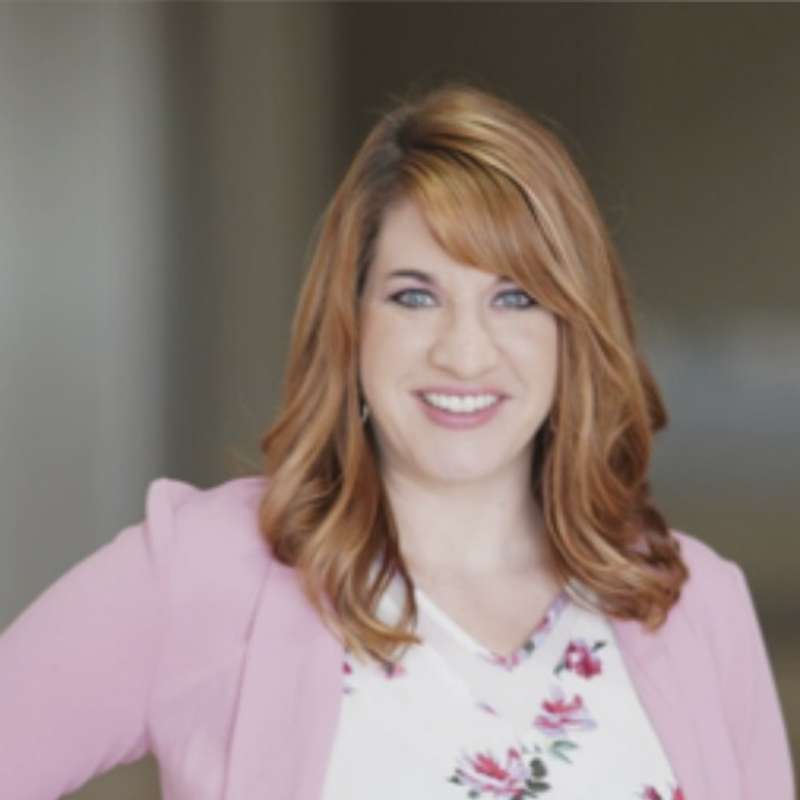 Megan Yoder
I'm so sweet. Well, it's
so true. Are you getting teary already? Okay, great. Oh no, you have
Megan Yoderme laughing.
¶ Getting to Know Megan Yoder
Okay, so that's my intro to Megan, but I want you to really introduce who you are, who are you, what are we doing, what do you do? Tell me a little bit about your organization, all that good stuff. Yeah,
Megan Yoderso I work for sda, which is a big long acronym. Oh my gosh. Let me see if I, I got it. Educational service center across. Central Kansas for staff dev. Oh my gosh. I totally botched that. Anyway, um, so it's an amazing organization and so my. One of my roles is as an educational consultant on the resilience team. So there's a whole crew of us that are experts in various things, and so we get to go out and do consulting in those areas.
But my primary job is running the Reno County Learning Center. I'm the director there. So I mean directors kind of like a fluid title. It's actually like I'm the principal, I'm the counselor, I'm the secretary, I'm the nurse. Sometimes I'm the social worker. Right. Um. So I wear many, many hats on a daily basis. But what that means is we run an alternate high school. So we have high school age students all the way through adulthood.
So we get to help people get their high school diplomas that had barriers that prevented them from completing their high school diploma. Um, love that originally attended. Yeah. And it's, it is so fun to get to walk alongside them in that journey and help them get there. Yeah, when
you and I got to meet in person, I immediately was like, our energies are like soul energy. And the reason I feel that way, and as you're unpacking what you do is because you're loving these hard kids, which they've been labeled hard kids. They're actually not, right. They're like kids who've been through hard things and have not had a lot of adults who understand what those hard things are, and you get to love them. Through whatever that looks like.
And I just love that you're doing that work, and I wanna hear a little bit more about
Megan Yoderhow you got into this. Yeah.
¶ Megan's Journey into Education
So, um, I actually started off, um, my first degree is as a licensed surgical assistant. What? This is great. Yeah.
Okay. I love when people, I love when people pivot. Yeah.
Megan YoderAnd so I pivoted 'cause I just realized like, this is not for me. Like I loved anything O-B-G-Y-N delivering babies. That was my jam, right? But there's just not very many openings for that. And so then I got into the psychology field and I worked in mental health for a long time as a, um, an attended care worker, group facilitator, that kind of thing. And eventually started working for a school district and they were like, Hey, I think you could be a really great teacher. Mm-hmm.
So I got my teaching license through the transition to teach program, teaching family and consumer science. And I, man, I loved that. And um, I'd been in a really dark place in my life at one point, and so I saw the. Same needs in my classroom. And so I'd asked if I could bring a different enrichment class into our building. And so I was teaching mindfulness and yoga to my students because I knew how beneficial it was to me.
And I thought, man, if we could get this in their hands, get these strategies to them as young kids at 12 years old, how much different could their life path be for them instead of learning it when I was 25? mm-Hmm. I got permission to start teaching that and I was quickly getting results inside of my classrooms. Like people in my building who really struggled with kids, I did not have the same problems with they. They, they just responded well to the strategies I was teaching.
'em, I, they were seeing an increase in attendance in kids and engagement and stuff like that. And so somehow, I don't know, but Rebecca Lewis Retz found me and I had kind of, I'd been attending a ton of esda conferences and stuff over the years 'cause I wanted to learn more. And for the first time in my life I was around people who thought. The same way about kids as I did. Mm-Hmm. I remember the first time being at the, the very conference that you're coming to, bridging to Resilience.
I just went, oh my gosh. These people get it. They think the way that I think, and I just remember leaving there crying and going, I'm not the one
that's wrong. Mm-Hmm. So there's a couple things you've said that I think are super important in that last piece, that last point of, I'm not the one that's wrong. So many of the families that I work with, and a lot of the educators when I go into their districts we're pioneers. This is not happening in every school district. Right. Trauma-informed practice, human informed practices, social emotional learning, meeting kids in their dysregulation and co-regulating them to where they go next.
It's not happening in every district, and so it sometimes it feels pretty lonely.
Megan YoderYeah, it did. And I, I mean, I can even remember being told that I wasn't a real teacher because of the things that I was teaching them,
you
¶ The Impact of Personal Experiences on Professional Life
know? You, you alluded to being in a dark place and learning these practices, and I'm wondering how much of what you've learned in your professional life translates to your personal life, and how much of what you've learned in your personal life translates to your pres professional life? It's
Megan Yodereverywhere. It's so intermingled. Sometimes I don't know what is what, right.
¶ The Power of Emotional Check-ins
Like, one thing that we love to do in the ZA world and our learning center are check-ins. You know, Mads sad, glad, are afraid. And what is that about? Like, we don't ask each other, Hey, how are you? Because what does everybody say? Fine. I'm fine. Yeah. I'm okay. Yeah. And, and you're lying. Yeah. Right. Like I know for me, like I can say like, if I were to tell you, fine. I'm absolutely lying to you. We have $8 in our bank account. Hmm. Right. We get paid tomorrow, so, right.
It's all gonna be fine. Don't worry about me. But like, you know, it's, we, we are humans. We have things going on and so we need to ask, are we mad, sad, glad or afraid?
Well, so, so walk me through that check-in. Let's do one right now. Absolutely. Tell me how it works. Yeah. Okay. You be the
Megan Yoderleader. Okay. So how are you coming to me today? Stacy? Are you mad, sad, glad, or afraid? And what is that about? You don't have to name every emotion, just what comes to the surface for you. Say just enough.
Hmm. So I feel glad because I was looking forward to this conversation. Very, very glad about that. Uh, I also feel sad because summer's ending in fall is beginning, although fall is my favorite. There is a transition period in there. Uh, and I'm always a little bit scared 'cause I have teenagers. So I live in a state of fear almost every day of what's gonna happen to them. Are they doing okay? What does today look like in their day?
And I don't feel really mad yet today, but that's, that's where I'm at. Okay. That was awesome. Now, do I get to ask you the same question? Yeah.
Megan YoderBut let me finish real quick. Oh, okay. All right. Thanks, Stacy. So you just, you acknowledge the gift that the person has given you. Yeah. Love that.
Okay. For. Yeah, your turn. I love it.
Megan YoderYeah. Glad, um, really excited for this conversation today and I told my students this morning, I was a little bit nervous for it 'cause I didn't know how it was gonna go and I'm using some technology I've not used before. I'm using a really fancy microphone and you know how technology can be. You never know if it's gonna work. So I was nervous for that. Um, afraid. I've got some kids who, some students who are going through some things, and so I've got some fear around that.
I don't think I have any mad, sad. No, I don't think I have any sad. Hmm.
Not anymore. Thanks. Thanks for sharing that, Megan. Yeah.
Megan YoderSo really it's just all about the art. I love that holding space. Yeah. And listening. We don't, we as the facilitators, don't try and jump in and save and fix and rescue and offer advice. We're just listening.
I love that. Well, we talk a lot about that regulate, relate reason, right? And those three words, and there's so many, there's so much just in that simple piece of sad, glad, mad, afraid, where you're allowing people to share regulator, not regulated. And then just validating and acknowledging in that relate piece and not even going to the fixed piece. And I just, that flows so nicely. Thanks for sharing that resource. I think that's such a great resource.
Megan YoderAnd it's also fun too, because you'll have, sometimes, especially my teenagers, they'll be like, well, I'm confused. Mm-Hmm. So what is confused? It's a combination of something, right? Mm-Hmm. But what's that
combo?
Megan YoderYeah. We're tired, but combination is tired.
Yeah. Love that. So when you are living this in your personal life, what does this look like? Right? What does it look like in your family? Are you, are you, Megan, the educator? Stop, mom, stop being a teacher, wife, stop, stop doing this to me. Like what does that look like in your personal life?
Megan YoderYeah. So I actually use mats. I've got afraid a lot, especially with my daughter. She's seven mm-Hmm. And so she is very emotionally intelligent. She's of course super smart little critter, right? But she's also constantly like my little science experiment with stuff like that. I've even used some of your strategies on her before when I took your, one of your classes. Um, and so I'm able if she's like, Hmm, no. Okay, Bella, Matt sad, are afraid. Mad. Okay, what's I mad about?
And it just gets her talking instead of saying, you know, what's wrong? Why are you growling at me? You know, because that, that word why puts them in their defense mechanism. Yeah, I love that. And like I learned from you, why is a cortex question? Why
never brings out warm fuzzy. I love you. I wanna tell you why. Why is so prickly, right? Yeah. But what a way to, also, the other thing you're doing is you're giving them options for how they feel so they don't have to like grasp. Into their cortex and think of a feeling word. I really love that piece. Uh, my daughter introduced me at one of my last speaking gigs and she's like, so I'm Stella, her lifetime Guinea pig.
All the things she's talking to you about, she's worked on with me and I loved it for a lot of reasons. But it sounds like in your life also, this work is not just. Use at work. This is not, I think it feels more meaningful when we're living it ourselves. Mm-Hmm. And so what is it like for you to live some of this work every day? What are the things you've put in place in your own life?
Megan YoderOh, well, it even just kinda helps me identify where I'm at. Sometimes, like the other morning we're, you know, it's, it's the morning routine, like breakfast and get dressed and out the door and my students are texting me and you know, just the busyness of the morning and then my husband goes, Hey, did you pack or suck lunch yet? What are you doing right now? You know what I mean? And so before I can, before I let myself respond in that way, I went, who? Nope. What am I feeling?
Is it really mad? No, it's not mad. It was afraid. It was afraid that I wasn't being a good mom.
Oof, that one hits, doesn't it? How much, you know, how much time do we spend masking our fear of being parents in madness or angry or, you know, those are, sometimes we don't, it's hard to acknowledge that I'm afraid if I'm being a good mom or not, Megan.
Megan YoderRight. And I look at, yeah, and I look at that too as, it's also because what is society accepting of? What emotions as a woman. Are women allowed to feel out of those four? We're really only supposed to show glad because if we're sad. Oh, are you hormonal? Yeah. Are you being irrational? Same with mad. Yeah, we're mad. Oh, are you hormonal? Like, you know. Yeah. And just like men, like men definitely in society aren't allowed to show sadness, right?
So no wonder suicide rates are so high in men. I. You're
giving people, when you just break it down in those four categories, you're really giving people permission to have a fuller range of emotion. I love that. Uh, okay. I wanna move into a different topic.
¶ Bridging to Resilience Conference Insights
Tell me where, so, I'm coming to a conference. I've never been to this conference. I know, I'm so excited. So I wanna hear, what in the world are people getting into Bridging to Resilience, right? Is that what it's called? Yes. I, I always call it B two R, so I wanna make sure I'm getting that. Yeah. Okay. Tell me what people are, can look forward to. Who is this?
Megan YoderUm, so this is literally for everybody. 'cause we at Sdda and the real resilience team, we strongly believe that if we want to make major change, we need everybody at the table. Teachers, SROs, pharmacists, doctors, the secretary at a law office, like whoever. Everybody needs to be at the table. Parents. So they can learn parents, of course, yes. Okay, love that. And what are,
what are they signing up for?
Megan YoderSo it is going to be an amazing two and a half day conference where we're gonna have some awesome keynote speakers. Really? Yeah. Um, we've also got Jim SPO leader, and then, um, we've got Chad Higgins. Too, who is our, our big director over all of sda. And so we've got some awesome keynote speakers. And then there's a ton of amazing breakout sessions in it is from people who are doing the work out in the field in their classrooms every single day. Mm-Hmm.
And then one of my absolute favorite things is you're gonna get to hear what we call hope spotlight speeches. And they are from the students in our learning. Mm-Hmm. They get to tell their stories. And we also have a parent panel of, um, people who have come out of poverty through poverty projects that we help run, and we just kind of get to hear their sides of the story. And it is the most powerful pieces of love that.
Yeah. And we, we will feed you well with all kinds of good snacks and drinks. Help eat your feelings. Love
that. Love that. So one of the things that sometimes people ask me is, do I need to have my shit together to come to a conference? Is that a great question? You know, people ask me these kind of things, so I always say no. What are your thoughts on that? Oh,
Megan Yoderhundred percent agree. Don't you don't have to have your stuff
together. No, because I think conferences like these, I, for me, coming to a conference like this is really about hearing what other people are doing and getting more ideas, right? I always say you never have enough tools in your toolbox. Um, I feel honored. I get to come, I get to keynote, I get to talk, and there are so many people on the schedule that I'm like, oh, I can't wait to learn from that person. I can't wait to learn from that person.
And so whatever role we're in, I don't think we have enough tools in our toolbox. Mm-hmm. Right, and so I'm excited about that piece. Tell me what the weather's gonna be like in November in
Megan YoderKansas. Oh, goodness. You know, it could easily be 40 degrees and snowing. It could be a warm, perfect day. So. Good to know. I, I can even remember just a couple years ago wearing jeans and a T-shirt and it was Christmas Eve, so you just don't know what Kansas is gonna do. So, um, pack the day before you come, after you take the weather forecast and also know that might change too.
No, this is really helpful, Megan. I know some people make jokes about like, let me talk about the weather. It's very surfacey. When we live in the Colorado Mountains, weather is all about connection and bringing us together because we're surviving the weather. And so I'm always curious where other places are.
¶ Effective Strategies for Dealing with Dysregulation
Okay. I would love to hear one of your favorite tools in your toolbox around dysregulation. You see a kid in the middle of a meltdown really struggling, whether that's. The upset kind of on that arousal continuum. Angry kind of dysregulated in that way, or shut down, checked out, not available. They're somewhere in that continuum and they're dysregulated. What's the number one thing you do to connect with that kid?
Megan YoderThe very first thing I do is I sit hip to hip with them.
Ah, love that. Parallel. Mm-Hmm.
Megan YoderSo good. And I just sit there in silence. Mm. Silence
is our superpower, right? Yes.
Megan YoderOkay. Hip to hip. Hip to hip.
Hip. Hip to hip. Zip it. That's what I'm gonna call this intervention. Okay. What? And then what do you do? How long do you, how do, how long do you hip and zip?
Megan YoderI might have a little, like maybe over between 30 seconds and a minute, and then I just take a big, deep breath. And I let them hear that. Hmm. And then pretty soon I'll take another one and then they're doing it with me. Mm-Hmm. I love that. It's those mirror neurons in our brain. Right. And then pretty soon we're breathing together and then I'll just ask mad, sad, or afraid. Hmm. And then we kind of get a conversation going. Or if they kind of don't respond right away, I might say.
Are, are we good here?
Should we get up and walk and talk? Mm. Yeah. That movement piece. That movement. So hip, zip, breathe. Mm-Hmm. Feeling check-in. Yeah. Love that. Uh, how responsive do you think kids are to that? Because there might be some people listening to this that are like, that's never gonna work.
Megan YoderSure. Um, you also have to have a relationship too. A kid. I, you know, honestly, in my experiences, I don't know that I've ever seen a stranger be able to walk up to a kid and regulate them because there's some form of trust there of like, I've got you.
Yeah. I'm a So you're not, you're not hip zip breathing with a kid you don't know necessarily. Yeah. Okay. I think that's so important. And when I talk to parents and families or teachers about, I can never do this, when that feedback is like, that's never gonna work. Uh, that's exactly what I say too, is relationship. How much money in the bank of relationship do you have? Mm-Hmm. And I love that. And, and the, the parallel process. So much better than this. Right? One-to-one eye to eye.
Isn't that scary? It can
Megan Yoderbe very intimidating. Yeah. Like if I'm, if I'm dysregulated, I don't want my boss in my face like. What's wrong? You
know, I'm, I'm picturing that actually, I'm picturing like you and Rebecca doing that. Like I, that feels so uncomfortable for and for you both. Like, I can't even imagine that happening. Right. And
Megan Yoderwe're we're educated people with fully formed brains. Now we're expecting kids to be eye to eye with us. And um, and then another thing I love to do, people laugh at me for this, but especially if they don't respond right away and I'm still giving 'em space, we're still breathing. Right? Be like, see that thing right there? What would it be like if we licked that? Ooh. I love that
question
Megan Yoderbecause then your tongue literally can feel it. I mean, like right now, if I looked at my keyboard and went, Hmm, what would it be like if I licked that? I can feel what that would be. It's like smooth and bumpy and there's cracks. You can feel
that. Yeah. Yeah. So the strategy that in that right, is distraction, humor, sensory system, like just that one question is so engaging in all the parts we wanna regulate. And I love, that's great. My daughter would be like, well, let's lick it. We lick everything. That's what, that's how this works. She loves to lick people when she says hi, that's how she greets to them. She'll love that. I disclose that. Uh, okay, so any lasting thoughts?
¶ Final Thoughts and Farewell
Thoughts you wanna leave with our audience? Anything else we should know about Megan Yoder in all that you're doing? Oh gosh.
Megan YoderUm, that's a big one. I just, I really believe in kids. And their stories, and whether it's little T trauma or Big T trauma, like we're all impacted by something. Like I, nobody gets outta childhood for free. No. And we all have things. And if anything, one of my biggest, I don't know if I, I don't wanna, I don't think I wanna say focus or. I don't know what word I wanna put there, but I love to help break up the stereotypes of an alternate school kid or that kid. Mm-Hmm.
Because, you know, if we, if we knew their whole story, it would break our hearts.
Mm-Hmm. It sounds like that's a really important value for you also, that, that understanding the bigger picture and the bigger story, and not just this little sliver slice of behavior. That's such a big piece. Well, I love that we got this time together. Megan, thank you for joining me. I can't wait to hug you in November. This is so exciting. So, okay. We will be in touch. I will see you soon. Okay, good.
Megan YoderThanks for having me, Stacy.